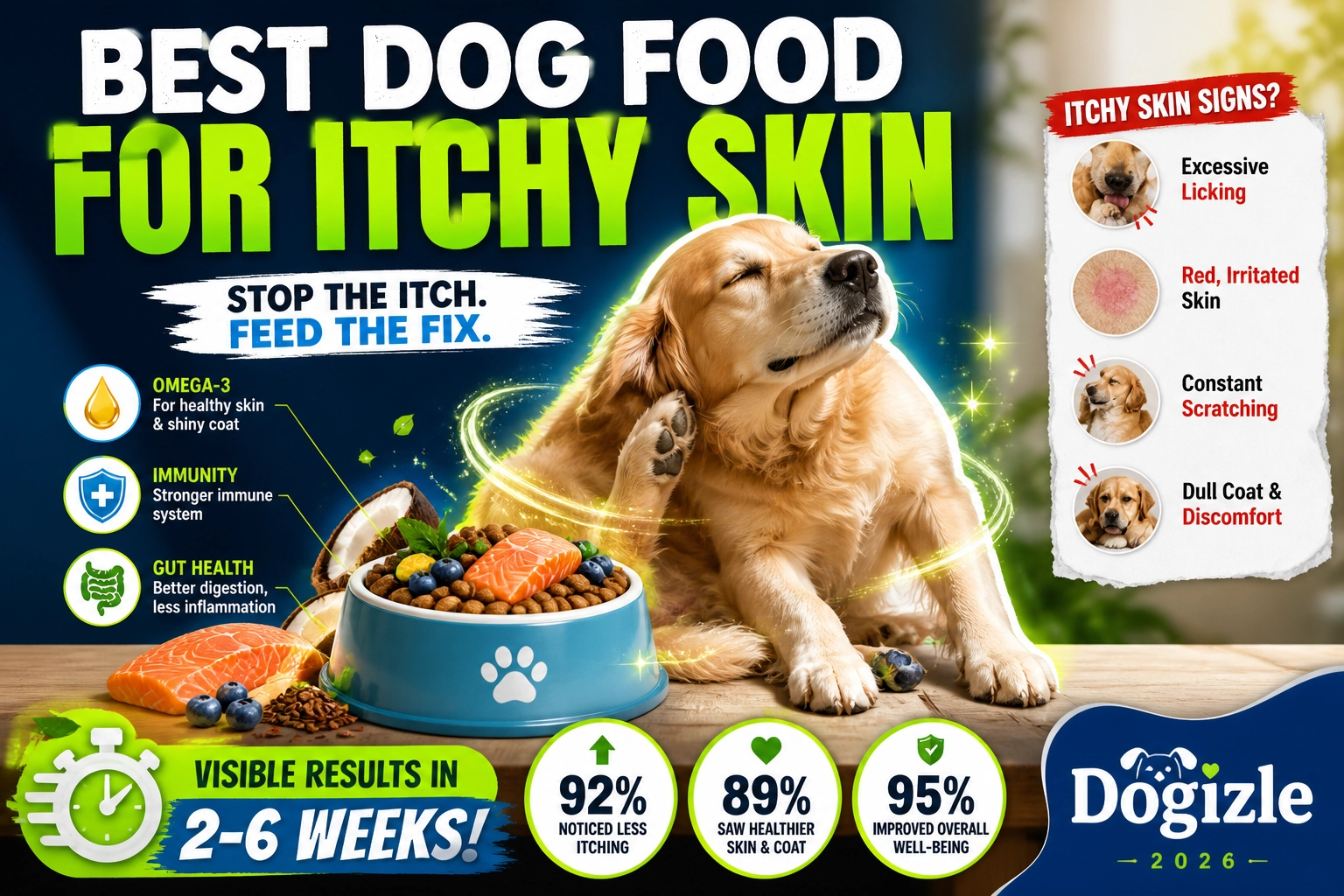
Best Dog Food for Itchy Skin: Vet-Backed Nutrition for Allergy Relief
Itchy skin in Dogs is not just an annoying habit or a minor comfort problem. In many cases, it is a visible signal that something underneath the surface is out of balance. That imbalance may come from food allergies, environmental allergens, parasites, nutrient gaps, gut disruption, or a weakened skin barrier. For pet parents across Europe, this matters because skin irritation is one of the most common reasons dogs are brought to veterinary clinics. When a dog scratches constantly, licks its paws, rubs its face, shakes its ears, or develops red patches, the issue is often more complex than dry skin alone.
The encouraging news is that nutrition can play a major role in improving skin comfort. The right diet will not cure every cause of itching, but it can reduce inflammation, support the skin barrier, help the immune system behave more calmly, and remove common trigger ingredients. In practical terms, that means a well-chosen food plan can lead to fewer flare-ups, less scratching, a healthier coat, and better day-to-day comfort.
This guide is designed to be comprehensive but easy to understand. It explains why itchy skin happens, how food allergies work inside the body, which ingredients may support healing, which ingredients may worsen symptoms, how to choose the best dog food for itchy skin in Europe, and how to switch diets safely using an elimination approach. It also includes practical vet-style decision points, Europe-specific considerations, and answers to the most common questions dog owners ask.
Why Dogs Develop Itchy Skin
Itchy skin is not a diagnosis. It is a symptom. That distinction matters because once you understand that itching is a signal rather than the disease itself, you can begin to identify the root cause instead of repeatedly masking the discomfort.
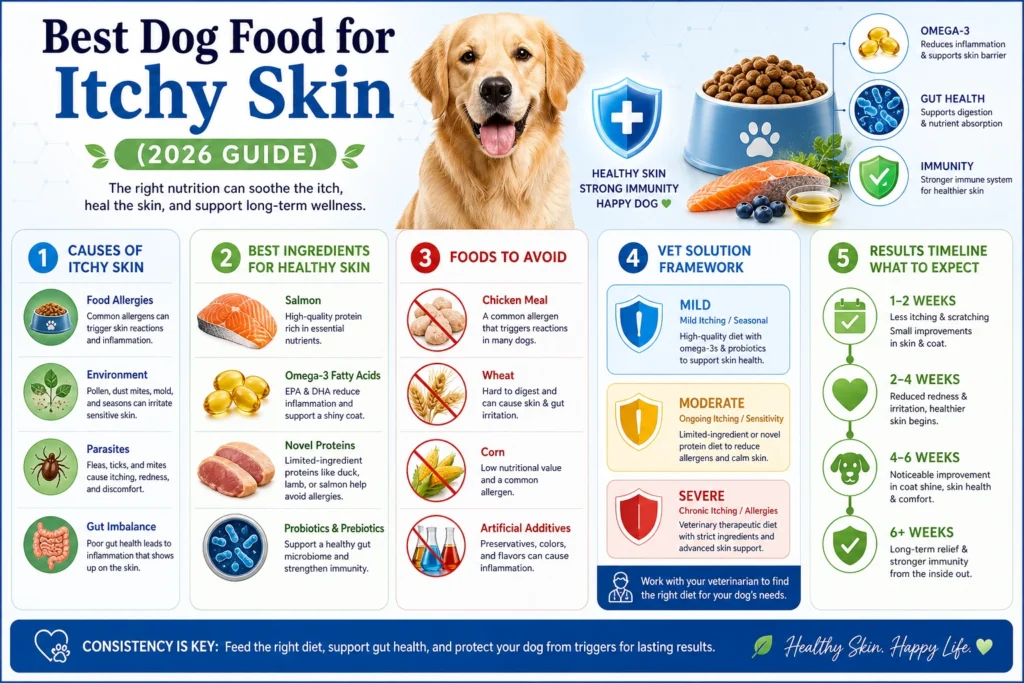
A dog may itch because of something it eats, something in the environment, a parasite on the skin, an internal health issue, or a combination of these. In real life, dogs often have more than one trigger at the same time. That is one reason skin problems can become confusing. A dog with food sensitivity may also react to pollen. A dog with dry skin may also be dealing with fleas. A dog with a strong immune response may scratch more intensely when the skin barrier is already damaged.
Main causes of itchy skin in dogs
Food allergies:
These are immune reactions to specific ingredients, usually proteins. Common triggers include chicken, beef, dairy, and sometimes egg or fish. Food allergies often appear as chronic itching, ear infections, paw licking, and skin redness.
Environmental allergies:
These come from outside the food bowl. Pollen, mold, dust mites, grasses, and household irritants can all trigger reactions. Dogs with environmental allergies may itch seasonally or year-round, depending on exposure.
Parasites:
Fleas, mites, and other external irritants can cause intense itching. Even a small flea burden can create significant discomfort in sensitive dogs.
Skin barrier issues:
The skin is supposed to function like a protective wall. When that wall is weak, irritants enter more easily and moisture escapes more quickly. A poor omega-3 intake, chronic inflammation, grooming problems, and low-quality diets can all contribute.
Across Europe, the pattern is often mixed rather than simple. A dog may have a diet-related issue, but the skin may also be reacting to seasonal pollen or indoor dust. That overlap is one reason a systematic feeding plan is usually more effective than random food switching.
Biological Mechanism Behind Itchy Skin
To choose the best dog food for itchy skin, it helps to understand what actually happens in the body when a dog begins to react.
1. Histamine and immune activation
When a dog is exposed to an allergen, the immune system may identify that substance as a threat. In response, inflammatory chemicals such as histamine are released. Histamine is one of the major reasons dogs develop itching, redness, and swelling. This response can make the skin feel hot, sensitive, or irritated, which leads to repeated scratching, licking, biting, and rubbing.
Once the cycle starts, it can become self-reinforcing. The dog scratches, the skin becomes more inflamed, the inflammation increases the urge to scratch, and the irritation continues. This is why owners sometimes feel like the problem “appeared suddenly,” even though the body may have been accumulating inflammation for weeks.
2. Omega-3 deficiency and barrier weakness
Omega-3 fatty acids are important because they help regulate inflammation and support the skin barrier. When a dog’s diet is low in quality fats, the skin can become dry, brittle, and more reactive. A weak barrier allows allergens and irritants to penetrate more easily, which can worsen the cycle of itching.
This is one reason fish-based diets are often helpful for dogs with skin concerns. Omega-3-rich foods do not fix every problem, but they can improve skin resilience and lower inflammatory pressure. In many cases, that makes the dog more comfortable while other causes are investigated.
3. Gut-skin axis imbalance
The gut and skin are closely connected. When digestion is poor or the gut microbiome is unstable, the immune system can become more reactive. That means the dog may have a harder time tolerating certain foods, and inflammatory activity may become more visible in the skin.
This gut-skin relationship is why probiotics, digestible protein sources, and high-quality ingredients can matter so much. A dog food for itchy skin should not only reduce allergens; it should also support digestive function and immune regulation. In other words, the bowl affects the skin more than many owners realize.
Symptoms of Food-Related Skin Allergies in Dogs
Food-related skin issues do not always look dramatic at first. In many dogs, the earliest signs are subtle and easy to dismiss. A dog may seem “a little itchy” or “a bit greasy,” and only later develop more obvious symptoms.
Common symptoms include:
Constant scratching or nibbling at the skin
Persistent paw licking or chewing
Repeated ear infections
Red patches on the belly, groin, or legs
Hair thinning or bald spots
Greasy coat texture
Strong or unpleasant odor from the skin or ears
Hot spots or inflamed, irritated areas
Face rubbing
Frequent head shaking
Paw licking and recurrent ear problems are especially important clues because they often point to inflammation rather than simple dryness. A dog that repeatedly licks the paws after meals, after walks, or without a clear external cause may be signaling a food sensitivity or an environmental trigger.
The challenge is that these signs can overlap. That is why a food trial is useful. It helps separate diet-related causes from background irritation and makes the pattern easier to interpret.
Best Ingredients for Itchy Skin Relief
Choosing the right dog food is less about marketing labels and more about ingredient logic. Two bags may both claim to be “sensitive skin” formulas, but the actual ingredient profile can be very different. The most useful foods usually share one or more of the following features: omega-3 support, limited ingredient structure, novel protein sources, and digestive support.
Omega-3 fatty acids
Omega-3s are one of the most important nutritional tools for skin comfort. They help reduce inflammatory activity and support the skin barrier. The most relevant sources are salmon, sardines, mackerel, fish oil, and other marine-based ingredients.
Benefits of omega-3-rich diets often include:
Reduced inflammation
Improved coat shine
Better skin hydration
Greater barrier stability
Potential reduction in scratching over time
For dogs with chronic skin irritation, omega-3s are often part of the foundation, not just a bonus ingredient.
Limited ingredient diets
A limited-ingredient diet is designed to reduce the number of possible triggers. It typically uses fewer proteins, fewer carbohydrate sources, and fewer additives than a standard formula. This can be useful when a dog reacts to several common ingredients or when the owner wants a cleaner trial diet.
The logic is simple: fewer variables make it easier to identify the problem. When you remove unnecessary complexity, you reduce the chance of feeding a hidden trigger.
Novel proteins
Novel proteins are protein sources that the dog has not eaten regularly before. Examples may include duck, venison, rabbit, salmon, or other less common options. These are often used because the dog’s immune system may be less likely to recognize them as familiar allergens.
Novel proteins can be especially useful during allergy testing or elimination feeding. They are not magical, but they can be strategically valuable.
Probiotics and gut support
Probiotics help support healthy bacteria in the digestive tract. That matters because a more balanced gut environment can improve immune tolerance, digestion, and nutrient absorption. Many dogs with itchy skin also have digestive sensitivity, loose stools, or frequent gas, so a formula with gut support may offer broader benefits than a skin-only product.
Helpful micronutrient support
Depending on the diet, other nutrients may also matter, such as zinc, vitamin E, biotin, and certain B vitamins. These are not usually the primary fix, but they contribute to overall skin and coat health. The best dog food for itchy skin is usually not one single ingredient, but a combination of anti-inflammatory and barrier-supportive features.
Worst Foods That Trigger Skin Allergies
Not every itchy dog is reacting to food, but certain ingredients are more likely to cause trouble than others, especially in sensitive animals. The issue is not always that these foods are “bad” in every case. Rather, they may be less suitable for dogs with recurrent skin problems or known sensitivities.
Ingredients that may worsen symptoms include:
Low-quality chicken meal
Beef-heavy processed formulas
Wheat, corn, and soy fillers in dogs with sensitivities
Artificial preservatives such as BHA and BHT
Highly processed kibble with limited nutrient quality
Vague meat by-products in lower-transparency formulas
For some dogs, chicken is completely harmless. For others, it is a major trigger. The same is true for beef, dairy, or grains. That is why allergy nutrition should be individualized instead of based on assumptions. What matters is how the dog responds, not only what is trendy in pet food marketing.
Dogs with skin issues often do better on formulas with clear ingredient lists, good digestibility, and a focused protein strategy. That does not automatically mean grain-free is superior. Grain-free is only useful when grains are actually causing a problem.
Decision Framework – Choosing the Right Dog Food
The best dog food for itchy skin depends on how severe the condition is and what stage of investigation the dog is in. A practical framework makes the process more effective.
Severity-based diet selection
Mild itching:
If the Dog has mild but recurring itching and no major skin damage, a salmon-based or omega-3-enriched diet may be a good starting point. The goal is to calm inflammation and improve skin barrier function.
Moderate allergies:
If the dog scratches frequently, licks paws, or has repeated ear flare-ups, a limited ingredient diet is often more appropriate. A single-protein approach can reduce exposure and make patterns easier to track.
Severe allergies:
If the dog has intense itching, persistent skin inflammation, or repeated flare-ups despite dietary changes, a hydrolyzed protein diet may be the most useful option. These formulas are often used in veterinary elimination trials because they are designed to reduce immune recognition.
Choosing the right path
The key is to avoid random switching. Changing from one food to another every few days makes it much harder to identify the real cause. A structured plan is much better because it creates clean data. In simple terms: one change at a time, one observation period at a time, one conclusion at a time.
Best Dog Food Types for Itchy Skin
There is no single perfect formula for every Dog, but some food types are more consistently helpful than others.
Salmon-based diets
Salmon-based diets are often a strong choice for dogs with itching, dryness, and dull coats. Their main advantage is the natural presence of omega-3 fatty acids. These fats help soothe inflammation and support the skin’s moisture balance.
Best for: inflammation, dry skin, dull coat, mild to moderate irritation
Why it works:
Salmon and fish oil provide nutrients that support skin barrier repair and inflammatory balance.
Pros:
Often improves coat quality
May reduce scratching
Widely available in Europe
Easy to use as a daily diet
Cons:
Can be more expensive
Not suitable for dogs with fish sensitivity
Quality varies by brand
A good salmon formula should still be evaluated as a whole diet, not just by the presence of fish on the label. The full ingredient profile matters.
Hydrolyzed protein diets
Hydrolyzed formulas are often used in veterinary medicine for dogs with severe or confusing food reactions. In these diets, proteins are broken into very small pieces so the immune system is less likely to recognize them as allergens.
Best for: severe allergies, elimination trials, persistent skin disease
Pros:
Helpful in diagnostic feeding plans
Can reduce immune reactivity
Often recommended by veterinarians when standard diets fail
Cons:
Usually requires veterinary guidance
May be less palatable for some dogs
Can be more expensive
Hydrolyzed diets are especially useful when the goal is not just comfort, but also diagnosis. They help answer the question: Is the dog reacting to food at all?
Novel protein diets
Novel protein diets are often a middle path between standard food and prescription hydrolyzed formulas. They may be useful when the dog has multiple suspected triggers or has never eaten certain proteins before.
Best for: suspected food allergy, controlled testing, flare-up reduction
Pros:
May reduce exposure to common allergens
Useful for elimination-based Feeding
Can help identify triggers
Cons:
Requires strict consistency
Cross-contamination can reduce accuracy
Not always available in every market
Novel protein feeding works best when the owner is disciplined and does not add treats, table scraps, or flavored extras that ruin the trial.
Dog Food Comparison Table
| Type | Effectiveness | Cost | Usage |
| Salmon-based | High | Medium | Daily diet |
| Hydrolyzed | Very high | High | Medical cases |
| Novel protein | Medium to high | Medium | Testing phase |
This comparison is simplified, but it captures the basic decision logic. Salmon-based diets are often practical and supportive. Hydrolyzed diets are often the most controlled. Novel proteins are often the most useful for discovery.
How to Switch Your Dog’s Diet
A diet switch should never be rushed when a dog already has skin irritation. Sudden changes can upset digestion and blur the results. A slow transition is the safest and clearest method.
Step-by-step plan
Week 1–2: 25% new food, 75% old food
Week 3–4: 50% new food, 50% old food
Week 5–6: 75% new food, 25% old food
Week 7: 100% new food
This slow transition gives the body time to adjust while reducing gastrointestinal stress. It also helps reveal whether the new diet is actually improving the skin or simply coinciding with a temporary change.
Important elimination diet rules
Do not introduce multiple proteins at the same time.
Do not add flavored supplements unless approved by the plan.
Do not give random treats, table scraps, or chews that break the trial.
Keep notes on scratching, paw licking, ear symptoms, stool quality, and coat appearance.
Follow the trial long enough to see a meaningful pattern.
A proper elimination diet is only useful if it remains clean and consistent. The more extras you add, the less useful the result becomes.
European Context – Climate & Lifestyle Impact
Europe is not one single skin-health environment. Climate, housing style, outdoor exposure, and seasonal changes all influence how itchy dogs feel. That is why location matters when discussing the best dog food for itchy skin in Europe.
Cold climate regions
In colder parts of Europe, dry air and winter heating can lower environmental humidity. That can make skin feel drier and more reactive. Dogs in these conditions may benefit from omega-3 support, moisture-friendly nutrition, and careful grooming routines.
Urban living
City dogs often face more indoor allergens, including dust mites and air pollution particles. They may also spend more time inside on carpets, rugs, and upholstered furniture, where environmental irritants accumulate. In urban settings, skin issues are often multi-factorial.
Seasonal pollen exposure
Many dogs in Europe are exposed to strong seasonal pollen patterns. Even if a dog’s food is appropriate, spring or summer exposure can still drive itching. That is another reason diet should be part of a broader skin strategy rather than the only solution.
EU pet food standards
European pet food is generally subject to strict safety and labeling expectations. This can be helpful for owners because it improves transparency and helps make ingredient comparison more meaningful. Still, not every brand is equal, so reading the full label remains important.
Real-Life Case Examples
These examples help show how the same symptom can have different underlying patterns.
Apartment dog in Paris
A city dog living in an apartment may develop paw licking, ear irritation, and occasional redness. The issue could be linked to dust mites, indoor allergens, and a diet that lacks sufficient omega-3 support. In a case like this, a salmon-based formula plus a simplified feeding plan may help reduce the burden.
Rural Germany winter case
A dog in a colder region may have a dull coat, dry skin, and increased scratching during the winter months. Low humidity and reduced skin moisture can worsen the problem. In this case, a fish-based diet with supportive fats may offer more comfort, especially during the driest season.
Mediterranean dog in Spain or Italy
A dog exposed to strong pollen seasons may show itchiness that comes and goes depending on the calendar. The owner might think food is the issue, but the true cause may be environmental. A limited-ingredient diet can still help if food sensitivity exists, but environmental management may also be necessary.
The lesson is simple: skin symptoms are clues, not conclusions. Good nutrition helps, but it should always be interpreted alongside the dog’s environment and history.
Safety & Health Considerations
A thoughtful feeding plan is useful, but safety matters just as much as strategy.
Always rule out fleas and mites first.
Do not change food suddenly unless instructed by a vet.
Do not assume every itch is a food allergy.
Do not overuse supplements without checking the full diet.
Consult a veterinarian if symptoms persist, worsen, or become severe.
Dogs with open sores, repeated ear infections, bleeding from scratching, or intense discomfort need professional assessment. Nutrition is powerful, but it should not replace medical judgment when the condition is serious.
Common Mistakes Dog Owners Make
Many well-meaning owners make the problem worse without realizing it. The most common mistakes are usually not dramatic. They are small inconsistencies repeated over time.
Mistakes to avoid
Switching food too often
Changing proteins without tracking response
Ignoring fleas, mites, or environmental triggers
Using too many supplements at once
Ending an elimination diet too early
Trusting “skin health” marketing instead of reading the ingredient list
Giving flavored treats that break the trial
Expecting immediate results after just a few days
A dog’s skin often needs time to calm down. If the owner changes variables constantly, the body never gets a fair chance to respond.
FAQs
Salmon-based diets and hydrolyzed protein diets are often the most recommended options because they can support skin health while reducing the likelihood of trigger exposure. The best choice depends on whether the itching is mild, moderate, or severe, and whether food allergies are actually involved.
Most dogs need time before results are visible. Improvement may take two to six weeks, although some cases take longer depending on the severity of inflammation, the quality of the diet change, and whether other triggers are still present.
Yes, but only in specific cases. Grain-free diets are useful when grains are a trigger. They are not automatically better for every itchy dog, and they do not solve environmental allergies or parasite-related irritation.
Chicken is widely recognized as a common trigger in dogs, though beef, dairy, and other proteins can also cause reactions. The actual trigger varies from dog to dog, which is why a controlled diet trial is so valuable.
Omega-3 supplements can support skin healing and reduce inflammation, but they work best when they complement a good diet rather than replacing one. It is usually smarter to adjust the full feeding plan instead of relying only on supplements.
Yes. Puppies can develop food sensitivities or immune reactions early in life. While the exact trigger may not always be easy to identify right away, recurring itching, ear issues, or skin redness should be taken seriously.
Conclusion
The Best Dog Food for itchy skin is not a single universal product. It is a nutrition strategy built around the dog’s symptoms, trigger history, and overall health. For many dogs, the most effective plan includes omega-3-rich ingredients, a limited ingredient structure, a novel or hydrolyzed protein strategy when needed, and a careful elimination diet when the cause is unclear.
For dogs in Europe, this approach is especially useful because climate, seasonal pollen, indoor allergens, and varying food sensitivities can all interact. A well-designed diet can reduce inflammation, improve the skin barrier, and support better comfort over time. In many cases, the earliest improvements appear within two to six weeks, especially when the plan is consistent and the trigger ingredients are removed.
The strongest results usually come from patience and precision. Instead of switching foods randomly, follow a clean feeding plan, observe the response carefully, and give the skin enough time to heal. Less scratching, a healthier coat, calmer ears, and more comfortable paws are all realistic goals when the nutrition strategy is chosen thoughtfully.