Can Dogs Eat Pickles? Complete Vet Safety Guide
Can Dogs Eat Pickles? — Worried your dog might get sick from a salty snack? You’re not alone. Many owners unknowingly risk digestive issues and hidden sodium dangers. In this quick guide, you’ll learn what’s safe, what’s harmful, and the surprising truth vets reveal—before that innocent bite turns into a serious health scare. If you have ever been eating a crunchy pickle while your dog stares at you with those big, hopeful eyes, you are definitely not alone. Dogs are curious, food-motivated, and often convinced that anything humans eat must be worth tasting. That is especially true with strong-smelling snacks like pickles.
So let us give you the clear answer right away:
Can dogs eat pickles?
Technically, a tiny accidental bite is usually not an emergency.
But pickles are not safe, not healthy, and not recommended as a treat for dogs.
Even though pickles begin as cucumbers, the pickling process changes everything. Salt, vinegar, spices, sugar, and sometimes garlic or onion are added during preparation, and those ingredients can make pickles risky for dogs. The biggest concern is sodium overload, but digestive irritation and hidden toxic seasonings can also be a problem.
This guide explains everything in simple, practical language so dog owners can quickly understand the risks and know what to do if their dog sneaks a bite.
Quick Answer (Featured Snippet)
Can dogs eat pickles?
- Tiny accidental bite: usually not harmful
- Regular feeding: not safe
- Main concern: very high sodium
- Extra risk: spices, vinegar, garlic, onion, sugar
Bottom line: Dogs should avoid pickles completely.
What Are Pickles Made Of?
To understand why pickles are unsafe for dogs, it helps to first understand what they are. Pickles are usually cucumbers preserved in a salty liquid called brine. That brine often includes more than just salt and water.
Common pickle ingredients may include:
- Salt
- Vinegar
- Water
- Dill
- Mustard seeds
- Garlic
- Onion
- Chili
- Sugar
- Artificial flavoring
- Preservatives
That sounds harmless enough at first, but when you look closer, the risks become easier to see. Cucumbers themselves are generally safe for dogs. Pickles are different because the cucumber has been transformed through preservation into a far more concentrated and seasoned food.
A fresh cucumber is light, crisp, and hydrating. A pickle is processed, salty, acidic, and sometimes spicy. That difference matters a lot for canine health.
Why Pickles Are Dangerous for Dogs
Pickles are not always “toxic” in the same way that chocolate or xylitol can be toxic, but that does not mean they are safe. Many foods are harmful because of their dose, ingredients, or effect on the body. Pickles fall into that category.
1. High Sodium Is the Biggest Risk
Dogs do not need nearly as much salt as humans do. Their bodies are much smaller, and their systems are not built to handle large sodium loads from processed foods.
Too much salt can lead to:
- Increased thirst
- Vomiting
- Diarrhea
- Dehydration
- Kidney strain
- Electrolyte imbalance
- Sodium poisoning, also called hypernatremia
In difficult situations, sodium poisoning can progress to:
- Muscle tremors
- Weakness
- Disorientation
- Seizures
- Collapse
- Death in extreme cases
This is why a seemingly small snack can become a serious problem, especially for toy breeds, puppies, senior dogs, or dogs with kidney problems.
2. Garlic and Onion Can Be Hidden in Pickles
Some pickle recipes, seasoning blends, and flavored varieties contain garlic powder, onion powder, or similar ingredients. These are dangerous for dogs because they can damage red blood cells.
Potential effects include:
- Weakness
- Pale gums
- Lethargy
- Reduced appetite
- Anemia
Even small amounts may matter, especially if the dog is tiny or has eaten the same ingredient repeatedly over time.
3. Vinegar Can Irritate the Stomach
Vinegar itself is not usually the main danger, but it can still irritate a dog’s digestive tract. Dogs with sensitive stomachs may react badly to acidic foods.
Possible reactions include:
- Nausea
- Stomach discomfort
- Excess drooling
- Gas
- Mild reflux
- Reduced appetite
A single bite may not cause major symptoms, but repeated exposure is still a bad idea.
4. Sugar Makes Sweet Pickles Worse
Sweet pickles often contain sugar or syrup. That means a dog is getting not only salt, but also unnecessary sugar.
Risks of sweet pickles include:
- Extra calories
- Weight gain
- Blood sugar spikes
- Dental issues
- Digestive upset
A sugary pickle is not a “safer” pickle. It is simply a different kind of problem.
5. Spices and Heat Can Upset the Gut
Spicy pickles may include chili, pepper flakes, hot seasoning blends, or other strong spices. Dogs are much more sensitive to these than people.
Possible effects:
- Mouth irritation
- Burning sensation
- Drooling
- Vomiting
- Diarrhea
- Abdominal discomfort
A spicy pickle is especially unsuitable for dogs with sensitive digestion.
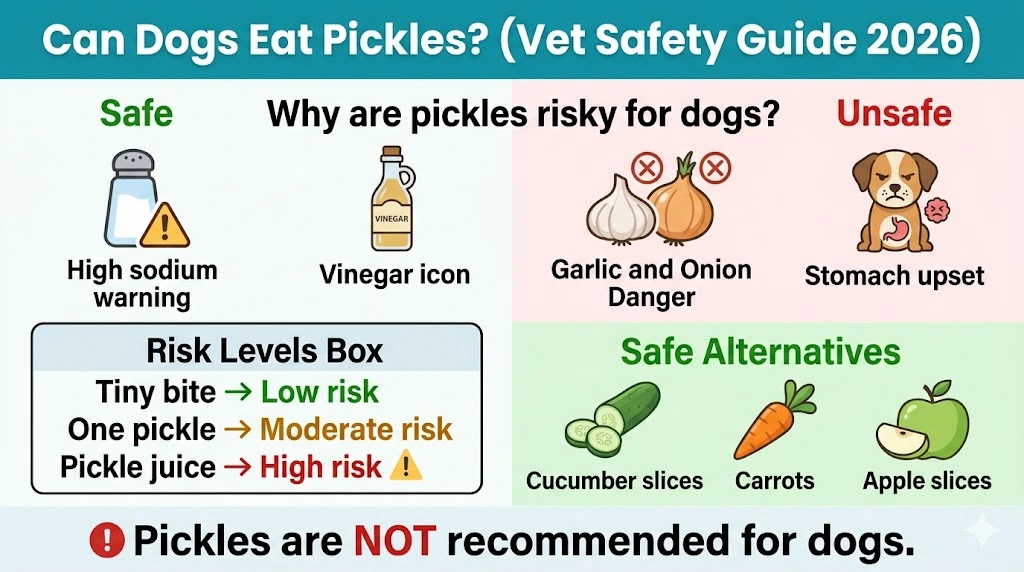
Risk Severity Table
| Amount / Type | Risk Level | Why It Matters |
| Tiny accidental bite of dill pickle | Low | Usually not a serious issue |
| One full pickle | Moderate | Salt content may be too high |
| Multiple pickles | High | Greater risk of dehydration and vomiting |
| Pickle juice | Very High | Extremely concentrated sodium |
| Sweet or spicy pickles | High | Added sugar, heat, and stomach irritation |
This table is a general guide, not a substitute for veterinary advice. A very small dog can be affected more easily than a large dog, and a dog with a medical condition may react badly even to a small amount.
Can Dogs Eat Different Types of Pickles?
Not all pickles are the same, but none of them are ideal for dogs.
Dill Pickles
Dill pickles are the most common type in many places. They may seem the most harmless because they are not spicy or sugary, but they still usually contain a lot of sodium.
Verdict: A tiny accidental bite is usually not a concern, but they should not be used as a treat.
Sweet Pickles
Sweet pickles contain sugar in addition to salt and vinegar. That makes them even less suitable for dogs.
Verdict: not recommended at all.
Spicy Pickles
Spicy pickles may contain chili, pepper, or hot seasoning. These can irritate the mouth, stomach, and intestines.
Verdict: unsafe for dogs.
Pickle Juice
Pickle juice is one of the worst versions for a dog to consume because it is highly concentrated and extremely salty.
Verdict: Never give pickle juice to a dog.
What Happens If a Dog Eats Pickles?
The reaction depends on the amount eaten, the dog’s size, the ingredients in the pickle, and whether the dog has any underlying health issues.
If Your Dog Ate a Small Bite
A tiny bite may cause nothing at all, or it may produce only mild signs such as:
- Increased thirst
- Slight stomach upset
- Brief discomfort
- Mild drooling
Most healthy dogs will not become seriously ill from a single small nibble, but monitoring is still smart.
If Your Dog Ate One Whole Pickle
One pickle can be enough to cause noticeable symptoms, especially in a smaller dog.
Possible signs:
- Vomiting
- Loose stool
- Restlessness
- Thirst
- Mild dehydration
- Reduced appetite
If Your Dog Ate Multiple Pickles or Pickle Juice
This is much more serious. Large amounts can cause salt overload and stronger digestive distress.
Possible symptoms:
- Repeated vomiting
- Diarrhea
- Weakness
- Trembling
- Confusion
- Excessive thirst
- Loss of coordination
- Seizures
This situation needs prompt veterinary attention.
Sodium Poisoning Symptoms in Dogs
Sodium poisoning, or hypernatremia, is the most serious concern linked to pickles. It happens when sodium levels in the blood become too high for the body to regulate safely.
Warning signs can include:
- Extreme thirst
- Vomiting
- Diarrhea
- Lethargy
- Weakness
- Shaking
- Unsteady walking
- Confusion
- Seizures
In severe cases, dogs may become very unwell very quickly. If you suspect your Dog has eaten a lot of pickles or pickle juice and is showing any unusual symptoms, veterinary help is important.
What To Do If Your Dog Eats Pickles
If your dog has eaten pickles, the correct response depends on how much was eaten and what kind of pickles they were.
Step 1: Stay Calm
A single small bite is usually not a catastrophe. Panicking will not help your dog, but staying alert will.
Step 2: Check How Much Was Eaten
Try to estimate:
- Was it just a lick?
- A small bite?
- One whole pickle?
- Several pickles?
- Pickle juice?
- Was it spicy, sweet, or garlic-flavored?
The ingredients matter just as much as the amount.
Step 3: Offer Fresh Water
Fresh water can help your dog stay hydrated. Do not force large amounts of water quickly, but make sure clean water is available.
Step 4: Watch for Symptoms
Observe your dog for the next 24 to 48 hours. Look for:
- Vomiting
- Diarrhea
- Extra thirst
- Weakness
- Restlessness
- Loss of appetite
- Shaking
- Strange behavior
Step 5: Contact a Vet if Needed
Call your vet promptly if:
- Your dog ate a large amount
- Your dog drank pickle juice
- Your dog is a puppy
- Your dog is very small
- Your dog has kidney, heart, or digestive problems
- Your dog shows any concerning symptoms
It is always better to ask early than to wait too long.
Real-Life Examples for Dog Owners in Europe
Many dog owners imagine only dramatic emergencies, but the reality is often more ordinary. A dog steals a pickle from a sandwich. A kitchen bin is raided. A plate is licked clean. These things happen.
Small Urban Dogs
In cities, many dogs are small breeds. Small dogs are more vulnerable because even a modest sodium dose can have a bigger effect on a smaller body.
Cold Weather Dogs
In colder seasons, some dogs drink less water. If salty food is added to reduced water intake, the risk of dehydration increases.
Active Dogs
It is easy to assume that active dogs can “handle” more table food. That is not true. Exercise does not make pickles a safe snack.
Healthier Alternatives to Pickles
If your dog wants a crunchy snack, there are many better choices than pickles.
Cucumbers
Cucumbers are the closest safe substitute because they start from the same vegetable family.
Benefits:
- Hydrating
- Low calorie
- Crunchy
- Dog-friendly in moderation
Carrots
Carrots are another excellent option.
Benefits:
- Crunchy texture
- Low fat
- Useful as a training treat
- Popular with many dogs
Apple Slices
Apples can be offered in small pieces, but always remove the seeds and core.
Benefits:
- Naturally sweet
- Some fiber
- Easy to portion
Green Beans
Plain green beans are also a smart choice for many dogs.
Benefits:
- Low calorie
- Filling
- Easy to serve plain
Pumpkin
Plain cooked pumpkin, without sugar or spice, can also be useful in some diets.
Benefits:
- Gentle on digestion
- Soft texture
- Often well tolerated
Pros and Cons of Pickles for Dogs
It can help to look at the issue in a simple pros-and-cons format.
Possible Pros
- Crunchy texture
- Tasty smell to some dogs
- Low-calorie in very tiny amounts
Major Cons
- Very high sodium
- Possible hidden garlic or onion
- Vinegar can irritate the stomach
- Sugar may be present in sweet pickles
- Spices may cause digestive upset
- No meaningful health benefit for Dogs
Verdict: the drawbacks outweigh any minor appeal.
Common Mistakes Dog Owners Make
Even very caring owners sometimes make feeding mistakes because the food seems “small” or “harmless.”
Common errors include:
- Thinking a little salt is no big deal
- Sharing sandwich pickles
- Giving pickle juice in hot weather
- Ignoring ingredient labels
- Assuming flavored pickles are safe if they are not spicy
- Forgetting that toy breeds are more sensitive
- Letting children feed scraps without checking first
A food does not need to be poisonous to be a bad idea. Pickles are a perfect example of that.
Vet-Approved Safety Tips
Here are practical habits that help keep dogs safer around human food:
- Treat processed snacks as off-limits
- Read labels before sharing anything
- Keep pickles away from the edge of counters
- Use dog-safe crunchy vegetables instead
- Train your dog not to beg at the table
- Store leftovers securely
- Avoid giving salty foods during hot weather
- Call a vet if your dog ate a large amount
Small preventive habits make a big difference over time.
Breed Sensitivity: Which Dogs Are More at Risk?
Some dogs are more vulnerable than others, not because they are “weaker,” but because their bodies are smaller or their health is more delicate.
Higher-Risk Dogs
- Chihuahua
- Pomeranian
- Yorkshire Terrier
- Toy Poodle
- Other toy breeds
- Puppies
- Senior dogs
- Dogs with kidney disease
- Dogs with heart disease
- Dogs with a history of stomach sensitivity
A large dog may tolerate a small accidental bite better than a tiny dog, but that does not make pickles a good snack for any dog.
How Much Pickle Is Too Much?
There is no universally safe serving of pickle for dogs, because the ingredients and sodium levels vary widely. A small bite of a plain dill pickle may not cause trouble, but the same amount could affect a very tiny dog more than expected. Once the quantity becomes a full pickle or more, the risk rises. Pickle juice is especially risky because the sodium is much more concentrated.
When in doubt, it is safer to treat pickles as a no-go food rather than a “sometimes treat.”
Why Cucumbers Are Safe but Pickles Are Not
This is one of the most common points of confusion. People see that pickles come from cucumbers and assume the two foods are basically the same. They are not.
Cucumbers
- Fresh
- Low salt
- Hydrating
- Light on the stomach
- Suitable as a snack in moderation
Pickles
- Preserved
- Salty
- Acidic
- Often seasoned with spices
- Sometimes sweetened
- Sometimes flavored with garlic or onion
The vegetable may start out safe, but the processing changes the nutritional profile completely.
Can Puppies Eat Pickles?
No. Puppies are more sensitive than adult dogs because their bodies are smaller, their digestive systems are still developing, and they can become dehydrated more easily.
For puppies, pickles are a poor choice for all the same reasons they are poor for adult dogs, but the risks can show up faster.
Can Senior Dogs Eat Pickles?
Senior dogs should avoid pickles too. Older dogs may have more fragile kidneys, heart issues, or slower recovery when their stomach is upset. Salt-heavy foods are not ideal for them.
What About Dogs With Kidney Problems?
Dogs with kidney issues should not eat pickles. High sodium puts more strain on the kidneys, and that is the last thing a sensitive dog needs. If your dog has any chronic condition, it is best to avoid salty human foods entirely.
Can Dogs Eat Pickles in Summer?
Summer is a time when dog owners may worry about hydration, and some people think salty snacks could help. That idea is not safe for dogs. Pickles do not healthily hydrate a dog. Fresh water and dog-safe foods are the correct solution. Salty snacks may actually worsen dehydration if too much is eaten.
Can Dogs Eat Pickles in Small Accidental Amounts?
A tiny accidental bite is usually not an emergency for a healthy dog. That said, “usually” does not mean “always.” Some dogs are more sensitive than others, and the ingredients in the pickle matter a lot.
If the pickle had garlic, onion, chili, or a lot of seasoning, the situation becomes more concerning. If the dog ate a large quantity, veterinary advice is wiser.
The Bottom Line on Pickles and Dogs
Pickles are not a good snack for dogs. They are too salty, often too acidic, and sometimes seasoned with ingredients that can irritate or harm your pet.
Simple verdict:
- A tiny accidental bite: usually not serious
- A full pickle: not recommended
- Pickle juice: dangerous
- Sweet or spicy pickles: unsafe
- Regular feeding: absolutely not advised
Dogs are better off with fresh, plain, dog-safe foods such as cucumber, carrot, or apple slices without seeds.
FAQs
Only a tiny accidental bite is usually not a problem, but dill pickles are still not recommended because of the high sodium content.
Yes. Pickles are bad for dogs because they often contain too much salt, plus vinegar and seasonings that can upset the stomach.
No. Pickle juice is very dangerous because it contains a concentrated amount of sodium and can quickly lead to salt-related illness.
A single pickle may cause mild symptoms like thirst or stomach upset, but it depends on the size of the dog and the ingredients. Monitor closely and contact a vet if symptoms appear.
No. Puppies should not eat pickles because they are more sensitive to salt and digestive upset than adult dogs.
Yes. Plain cucumber is a much safer choice for dogs and can be a refreshing, low-calorie snack.
Give your dog access to fresh water and watch closely for vomiting, diarrhea, weakness, or unusual behavior. Contact a vet if a large amount was eaten or if symptoms appear.
Conclusion
So, can dogs eat pickles?
The honest answer is simple:
Technically, a tiny accidental bite is usually not harmful.
But pickles are not safe or recommended as a treat for dogs.
The main concerns are:
- High sodium
- Vinegar
- Spices
- Sugar in some varieties
- Possible garlic or onion ingredients
Pickles may look harmless because they start as cucumbers, but the pickling process changes their safety profile completely. For dogs, there are far better snack options available.