Can Dogs Eat Pistachios — Safe Treat or Hidden Danger?
Pistachios are widely enjoyed around the world as a crunchy, satisfying snack. People serve them at parties, pack them into lunchboxes, mix them into desserts, and keep them on hand for everyday nibbling. They are often seen as a “healthy” nut for humans, which is exactly why many dog owners pause and ask a very important question: Can dogs eat pistachios?
The simplest and most accurate answer is this:
Yes, dogs can eat pistachios, but they really should not.
That answer may sound confusing at first, so let’s make it clear. Pistachios are not classified as a highly toxic food for dogs in the same way that chocolate, grapes, onions, xylitol, or certain wild mushrooms are. However, “not toxic” does not mean “safe” or “recommended.” In practical pet nutrition, there is a huge difference between something that is technically edible and something suitable for regular canine consumption.
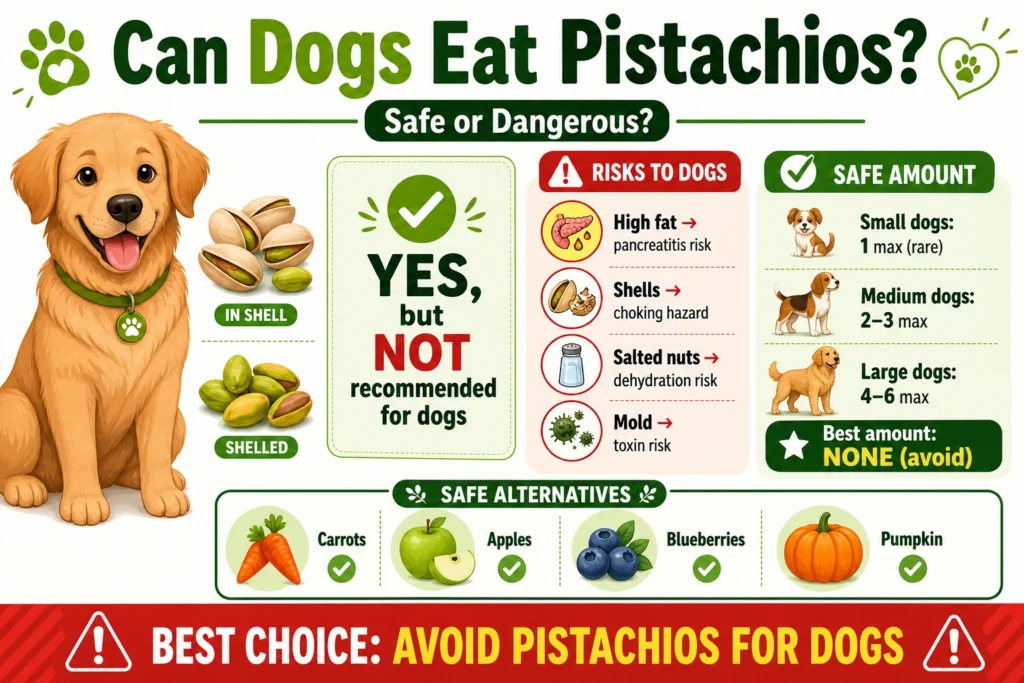
Pistachios can become a problem for dogs for several reasons. Their fat content is high, which can irritate the digestive tract and, in more vulnerable dogs, contribute to pancreatitis. Their shells can create a choking hazard or even a blockage in the intestines. Poorly stored nuts can develop mold, and some molds produce aflatoxins that may damage the liver. Many store-bought pistachios are also salted, roasted in oil, or flavored with seasonings that are not dog-friendly. Even a small amount can lead to digestive disturbance in sensitive dogs.
Can Dogs Eat Pistachios Safely or Should You Avoid Them?
So, while pistachios are not an automatic emergency in every case, they are still a snack that belongs in the “better avoided” category. For a dog owner, the safest approach is to think in terms of risk management rather than permission. Just because a food is not poisonous does not mean it belongs in your dog’s bowl.
In this guide, you will learn how pistachios affect dogs, whether there is any safe amount, what symptoms to monitor, what to do if your dog gets into them, and which treats are much better choices. The goal is simple: help you make a calm, informed decision that protects your dog’s health.
By the end, you will understand:
- whether pistachios are safe or dangerous
- How many pistachios, if any, can a dog eat
- Why shells are especially risky
- What symptoms may appear after ingestion
- When to contact a vet
- healthier alternatives that are far more dog-friendly
Are Pistachios Safe for Dogs?
Let’s answer this directly and without unnecessary confusion:
Pistachios are not toxic, but they are not a good regular treat for dogs.
That distinction matters. Toxic foods contain substances that can directly poison the body or trigger severe reactions even in small amounts. Pistachios are not usually in that category. But they still carry a collection of practical hazards that make them a poor choice for canine feeding.
Dogs have a digestive system that is not designed to process rich, salty, or heavily processed human snacks in the same way humans do. Their bodies are smaller, their tolerance can vary widely by breed and size, and their pancreas can react badly to sudden fat intake. Some Can Dogs Eat Pistachios have especially sensitive stomachs, and what seems like a tiny snack to a person may be a meaningful dose for a small dog.
Pistachios also come with an extra layer of unpredictability. Were they salted? Were they roasted in oil? Were they old? Were they stored properly? Were any shells mixed in? These details matter because the issue is not just the nut itself, but the full risk profile attached to how it was prepared and stored.
So the most responsible answer is:
Pistachios are not ideal for dogs, and they should not be treated like a safe or routine snack.
Why Pistachios Can Be Dangerous for Dogs
Although pistachios may look harmless, there are several reasons they can create digestive or physical complications. These risks are not theoretical; they are the kind of real-world problems veterinarians see after pets eat human snacks.
1. High Fat Content and the Risk of Pancreatitis
Pistachios are naturally high in fat. Fat is not inherently bad, but in dogs, sudden or excessive fat intake can place stress on the pancreas. The pancreas helps with digestion, and when it becomes inflamed, the result is pancreatitis.
Pancreatitis in dogs can range from mild to severe. Some dogs experience only a temporary stomach upset, while others may become painful, dehydrated, and lethargic. Serious cases can require veterinary treatment, fluid therapy, medication, and monitoring.
Common symptoms may include:
- vomiting
- diarrhea
- weakness
- loss of appetite
- abdominal discomfort
- hunched posture
- reluctance to move
Small Dogs may be affected by fewer nuts than larger dogs simply because their body size is smaller. Even a handful of pistachios that seems insignificant to a person can be a heavy fat load for a toy breed.
2. Mold Contamination and Aflatoxin Exposure
Another issue is hidden contamination. Nuts that are old, damp, or poorly stored may develop mold. Certain molds can produce aflatoxins, which are toxic compounds that may damage the liver and cause serious illness.
Aflatoxin exposure is not something every dog will experience after eating pistachios, but it is one reason pistachios should never be treated casually. Dogs cannot assess freshness, storage quality, or contamination risk. They just eat what is available. That is why humans must act as the filter.
Possible effects of aflatoxin exposure may include:
- weakness
- vomiting
- reduced appetite
- jaundice in severe cases
- tremors
- serious liver injury
This risk is more concerning when the nuts are old, stale, or purchased from questionable storage conditions.
3. Choking Hazard and Intestinal Blockage, Especially from Shells
Pistachio shells are especially problematic. They are hard, fibrous, and not digestible. If a dog swallows a shell, the shell can lodge in the throat, scratch the digestive tract, or contribute to an intestinal obstruction.
A blockage is dangerous because food and fluid cannot move normally through the intestines. Depending on the size of the fragment and the dog’s body size, this can become a medical emergency.
Signs of a possible blockage may include:
- repeated vomiting
- bloated abdomen
- constipation or inability to pass stool
- abdominal pain
- restlessness
- lethargy
- reduced interest in eating
Shells also create a choking risk. A dog may chew poorly, inhale a fragment, or swallow a sharp piece that gets stuck. That is why shells are far more dangerous than the nut itself.
4. Salt, Oil, and Seasonings
Most pistachios sold for human snacking are not plain. They are often salted, roasted in oil, coated with spices, or flavored in ways that can be problematic for dogs.
Salt in high amounts can contribute to excessive thirst, gastrointestinal upset, and in severe cases, sodium poisoning. Oil-heavy preparation makes the nuts richer and more difficult to digest. Seasonings may contain ingredients like garlic or onion powder, which are unsafe for dogs.
This means a pistachio is not just “a pistachio.” It may carry extra ingredients that make it much less suitable for canine consumption.
How Many Pistachios Can a Dog Eat?
The honest answer is that there is no ideal or recommended amount of pistachios for dogs. They are not a treat you should plan to feed.
That said, accidental ingestion happens. A dog may snatch a few nuts from a table, steal a snack from a child’s hand, or lick up pieces that fell on the floor. In those situations, the concern becomes a risk assessment: how much was eaten, what kind of pistachios were they, and did your dog swallow shells?
As a rough accidental-ingestion guide, many owners think in terms of body size:
| Dog Size | Approximate Accidental Amount | Risk Notes |
| Small (2–10 kg) | 1 pistachio | Even one can cause issues in sensitive dogs |
| Medium (10–25 kg) | 2–3 pistachios | Monitor closely for stomach upset |
| Large (25+ kg) | 4–6 pistachios | Risk still exists, especially if salted or shelled |
Important conditions still apply:
- The nuts should be plain
- They should not be salted or flavored
- They should not include shells
- They should be fresh and properly stored
- They should be treated as an exception, not a habit
Even with these conditions, the safest recommendation remains the same: avoid pistachios when possible. There are simply too many easier, safer treats available.
Can Dogs Eat Pistachio Shells?
No. Absolutely not.
Pistachio shells are one of the most dangerous parts of the snack. Unlike the nut, which is at least soft enough to chew, the shell is rigid and difficult to digest. Dogs may chew it into sharp pieces, swallow it whole, or partially break it and still create a hazard.
Why shells are risky:
- They do not digest
- They can splinter or scratch tissue
- They may cause choking
- They may lodge in the esophagus or intestines
- They can lead to vomiting or a blockage
An intestinal blockage is not something to “wait and see” lightly. If your dog swallowed shells and is now vomiting, refusing Food, or acting painful, veterinary assessment is important.
Even a single shell fragment can matter, especially in smaller dogs.
What Happens If a Dog Eats Pistachios?
What happens next depends on several variables: the number of pistachios, whether shells were included, whether they were salted, the dog’s size, and the dog’s individual sensitivity.
Small Amount
If a dog eats only one or two plain pistachios, some dogs may show no major problem at all. Others may develop mild digestive upset, such as soft stool, gas, or a slightly unsettled stomach. That does not mean the food was safe; it means the dog tolerated that exposure this time.
Medium Amount
If a dog eats several pistachios, especially if salted or oily, the likelihood of vomiting, diarrhea, abdominal discomfort, and reduced appetite goes up. Some dogs also appear tired or less interested in activity.
Large Amount or Shell Exposure
This is where concern rises more sharply. Larger amounts may increase the risk of pancreatitis, and shells increase the risk of choking or intestinal blockage. This is the category where a veterinary call becomes much more important.
A dog that has eaten pistachios and is later vomiting, straining, or behaving strangely should not be ignored. Digestive problems can escalate faster than many owners expect.
Emergency Symptoms to Watch
Contact a veterinarian promptly if your dog shows any of the following after eating pistachios:
- repeated vomiting
- severe diarrhea
- a swollen or tight abdomen
- weakness or collapse
- tremors or seizures
- refusal to eat or drink
- obvious pain when touched around the belly
- inability to pass stool
- signs of choking
- unusual drooling or gagging
These are not symptoms to monitor casually for several days. They may suggest irritation, obstruction, pancreatitis, or another significant problem.
If your dog is acting normal after a tiny accidental amount, observation may be enough. But if the symptoms are progressing or if shells were swallowed, it is safer to call a professional.
Can Puppies Eat Pistachios?
No, puppies should not eat pistachios.
Puppies are more vulnerable than adult dogs for several reasons. Their digestive systems are still developing, they are smaller in body size, and they are more likely to chew things poorly or swallow food without careful chewing. That makes choking and blockage risks more serious.
Puppies are also more sensitive to dietary changes. A snack that might merely upset an adult dog could create more significant gastrointestinal stress in a young puppy.
Reasons to avoid pistachios in puppies:
- immature digestion
- increased choking risk
- smaller body size
- higher sensitivity to fat
- A greater risk from shells or salt
For puppies, the safest feeding strategy is to stay with age-appropriate puppy food and vet-approved treats designed specifically for young dogs.
Real-Life Scenarios Dog Owners Face
It helps to look at practical situations because most accidental pet-food exposures happen in ordinary life, not in dramatic emergencies.
Scenario 1: Your dog steals table pistachios
This is one of the most common situations. First, remove the remaining nuts so your dog cannot keep eating. Then check whether shells were consumed and estimate the amount. If it were only a few plain pistachios, monitoring may be enough. If the nuts were salted or the amount was large, call your vet for advice.
Scenario 2: Your dog ate pistachio shells
This situation is more concerning. Shells can cause digestive irritation or blockage, and the risk rises if your dog swallowed several pieces. Watch for vomiting, lethargy, pain, or stool changes. Veterinary guidance is wise if there is any doubt.
Scenario 3: Holiday snacking or party food
Dogs are often opportunistic eaters during holidays and gatherings. Food is left on tables, guests are distracted, and nuts can easily fall to the floor. Prevention matters here. Keep snacks out of reach and tell visitors not to feed the dog human treats.
Scenario 4: A child shares pistachios with the dog
Children usually mean well, but they may not understand food safety for pets. Educate family members that nuts are not safe dog treats, even when they look healthy for humans.
Are Pistachios Good for Dogs?
Pistachios do contain some nutrients that are beneficial for humans, such as protein, fiber, and certain vitamins. But the key question is not whether pistachios contain nutrients. The real question is whether they are a Good nutritional trade-off for dogs.
The answer is no.
Dogs do not need pistachios to thrive. They can get all the nutrients they need from a balanced dog food formula and safe treats that are easier to digest. The potential downsides of pistachios outweigh the limited benefits.
In canine nutrition, usefulness is not about human health trends. It is about digestibility, safety, and whether the food meaningfully supports the dog’s body without introducing unnecessary risk. Pistachios fail that test
Healthier Alternatives to Pistachios
Fortunately, there are many safer snack choices for dogs. These options are easier to digest, lower in fat, and much less likely to create a medical issue.
Good alternatives include:
- carrots
- apple slices without seeds
- blueberries
- small pieces of boiled chicken
- plain pumpkin
- cucumber slices
- dog-specific treats from reputable brands
Why are they better:
- They are generally lower in fat
- They are easier on the digestive system
- They are less likely to cause obstruction
- They are typically safer for regular use
That does not mean every dog can eat every healthy food in unlimited amounts. Portion size still matters. But compared with pistachios, these options are far more sensible.
Pistachios vs Safe Dog Treats
A side-by-side comparison helps make the decision obvious.
| Feature | Pistachios | Safe Dog Treats |
| Toxicity | Not usually toxic, but risky | Designed to be safe |
| Fat level | High | Typically low to moderate |
| Digestive load | Harder to process | Easier to digest |
| Choking risk | Higher, especially with shells | Much lower |
| Recommended for dogs | No | Yes, in moderation |
The comparison is straightforward. Pistachios are a human snack with avoidable hazards. Safe dog treats are created with canine digestion and size in mind.
Common Mistakes Dog Owners Make
A lot of problems start with good intentions. Many owners do not mean to feed something unsafe; they just assume it is harmless.
Here are some of the most common mistakes:
- giving salted pistachios because “it was only a few.”
- forgetting that shells are dangerous
- assuming that “natural” automatically means safe
- feeding nuts too frequently
- ignoring mild symptoms at first
- not checking whether seasonings contain onion or garlic
- leaving snack bowls within reach
Small decisions matter. The more consistent you are about keeping human snacks separate from pet food, the lower the risk of accidental exposure.

Expert Vet Advice
Veterinarians generally advise caution with human nuts and snacks. The practical advice is simple:
- Avoid nuts as routine dog treats
- Never feed flavored or seasoned snacks
- Keep party foods and countertop snacks out of reach
- Use dog-safe alternatives instead
- Contact a vet if a dog swallows shells or begins vomiting
When in doubt, choose the safer option. A dog does not benefit nutritionally from pistachios in a way that justifies the possible complications.
FAQs
Yes, but it is not recommended because the same safety concerns apply everywhere: fat content, salt, shells, and digestive upset.
Yes. Salted pistachios are a poor choice for dogs because excess sodium can lead to dehydration and, in difficult situations, more serious health concerns.
Contact a vet if possible, especially if your dog swallowed several shells or is showing signs of discomfort, vomiting, or blockage.
No. Puppies should avoid pistachios and other nuts because they are more sensitive and more prone to choking or digestive upset.
Not really. Both are risky, and neither is a recommended snack for dogs.
Symptoms may appear within hours, often in the 6–24 hour range, depending on the amount eaten and the dog’s sensitivity.
They can, if they lead to a serious problem such as pancreatitis, blockage, or liver injury from contamination.
Do not induce vomiting unless a veterinarian specifically instructs you to do so.
Conclusion
So, can dogs eat pistachios?
The most accurate answer is: technically yes, but practically no.
Pistachios are not usually toxic in the way some other human Can Dogs Eat Pistachios are, but they still come with enough risk to make them a poor choice for dogs. Their high fat content can upset digestion and contribute to pancreatitis. Their shells can cause choking or blockage. Their salt, oil, or seasonings can create additional health concerns. Mold contamination is another reason to stay cautious.
For dog owners, the safest strategy is simple: do not make pistachios part of your dog’s diet. Avoid shells completely, keep flavored versions away, and choose safer snacks that are built for canine digestion.
A good rule of thumb is this: just because a food is popular with humans does not mean it belongs in a dog’s bowl. Better choices lead to fewer emergencies, fewer stomach upsets, and a healthier dog overall.