
Can Dogs Eat Bell Peppers? — Safe or Hidden Danger?
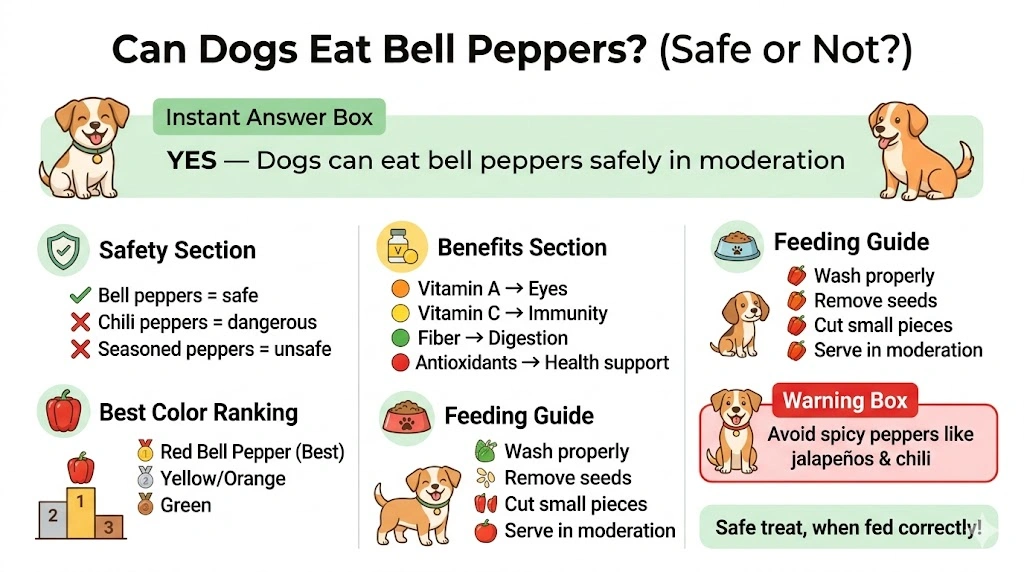
Yes, dogs can eat bell peppers safely when they are fresh, washed well, and served in small amounts. Bell peppers are not toxic to Dogs, and they can be a smart, low-calorie treat when used the right way.
That said, there is an important line every dog owner should understand right away: not every pepper is safe for dogs. Bell peppers are fine, but spicy peppers such as chili peppers, jalapeños, and other hot varieties can irritate the mouth, stomach, and digestive tract. Even safe vegetables can become a problem when they are given in large amounts or prepared with seasonings that Can Dogs Eat Bell Peppers should never eat.
Many dog owners ask the same practical questions. Are bell peppers safe for dogs? Can puppies eat them? Does the color matter? How much is too much? What should be removed before serving them? This guide answers all of those questions in clear, everyday language so you can make a safe choice without guessing.
If you want a simple takeaway before reading further, here it is: bell peppers can be a healthy occasional treat for dogs, but they should never replace a balanced diet, and spicy or seasoned peppers should be avoided completely
What Are Bell Peppers, and Why Do Dogs Notice Them?
Bell peppers come from the plant species Capsicum annuum. They are the sweet, non-spicy type of pepper that people often eat raw, cooked, stuffed, or chopped into meals. Unlike chili peppers, bell peppers do not contain capsaicin, the compound that creates a hot or burning sensation.
That difference matters because dogs are far more sensitive to strong spices than humans are. A bell pepper may seem mild to us, but a chili pepper can be intensely irritating for a dog. Bell peppers, on the other hand, are generally considered non-toxic and safe when they are prepared properly.
Dogs are often interested in bell peppers for reasons that have nothing to do with nutrition. They may like the crunch, the smell, or the novelty of a new food. Some dogs are drawn to the mild sweetness. Others simply enjoy exploring anything their owner is eating. In other words, a dog reaching for a bell pepper is usually acting out of curiosity rather than any instinctive need for vegetables.
That behavioral detail matters because many owners assume a dog “craves” a food for health reasons. In reality, dogs explore the world through smell, texture, and routine. A bell pepper may be exciting because it is crunchy and different, not because the dog understands vitamins or antioxidants.
Are Bell Peppers Safe for Dogs?
Yes, bell peppers are generally safe for dogs when they are plain, fresh, and fed in moderation.
Safety depends on a few simple factors. First, the pepper should be a true bell pepper, not a hot pepper. Second, it should be washed thoroughly to remove dirt, residue, or pesticide traces. Third, it should be served in manageable pieces so it does not create a choking hazard or upset the stomach. Fourth, it should never be coated in salt, butter, garlic, onion, chili flakes, oil, or other seasonings that may be harmful.
Raw bell peppers are usually safe. Lightly steamed bell peppers are also safe and can be easier for some dogs to digest. The seeds and stem should be removed before feeding, mainly to reduce the chance of gagging or choking. While the seeds are not considered toxic, they are best left out.
The biggest mistake dog owners make is confusing bell peppers with spicy peppers. This confusion can lead to unnecessary stomach upset or even more serious discomfort. It is also common for people to assume “vegetable equals healthy, so more is better.” That is not how dog nutrition works. Even healthy foods should be introduced carefully and served in amounts that fit the Dog’s size, age, and digestive tolerance.
If your dog has a sensitive stomach, a history of food intolerance, or a medical condition such as pancreatitis, diabetes, or chronic digestive issues, the safest move is to speak with a veterinarian before introducing new foods. Even though bell peppers are usually safe, every dog responds differently.
Do Bell Pepper Colors Matter for Dogs?
Yes, the color of the bell pepper changes its nutritional profile, but not its basic safety.
Green bell peppers are harvested earlier. They have a slightly more bitter taste and tend to be less sweet. They are still safe for dogs, but many dogs prefer the milder flavor of riper peppers.
Yellow and orange bell peppers are sweeter and usually contain more nutrients than green ones. They can be a good middle-ground option when you want something flavorful but not too intense.
Red bell peppers are fully ripened and are often the best choice from a nutrition perspective. They tend to contain more vitamins and antioxidants than green peppers, and many dogs find their taste more appealing. For that reason, red bell peppers are often the best option if you are using peppers as an occasional treat.
Still, color should not become an obsession. A dog does not need one exact color of pepper to be healthy. The main priority is to choose a safe, plain pepper and feed it in moderation. The difference between colors is useful information, but it is not the most important factor.
Nutritional Benefits of Bell Peppers for Dogs
Bell peppers can provide useful nutrients when they are fed as part of a balanced diet and not as a meal replacement. They are low in calories, which makes them useful for dogs that need lighter treats. They also contain water, fiber, and a range of vitamins and plant compounds that may support general wellness.
One of the best-known nutrients in bell peppers is vitamin C. Dogs naturally produce vitamin C in their bodies, so they do not depend on food sources the way humans do, but extra antioxidants from whole foods may still support overall health. Bell peppers also contain vitamin A, which plays a role in vision, skin health, and immune function. Fiber can help support digestion when served in appropriate amounts. Antioxidants are another appealing part of the picture because they help protect cells from oxidative stress.
A few practical benefits stand out for dog owners. Bell peppers can serve as a crunchy treat that is lower in calories than many commercial snacks. We can add variety to a dog’s treat routine. They may be helpful for weight-conscious dogs when used in tiny portions. They also give owners a simple way to offer a fresh food alternative instead of relying only on processed treats.
It is worth repeating that bell peppers are not a miracle food. They are not medicine, and they are not a substitute for a complete and balanced canine diet. Their value comes from being a healthy, occasional addition, not from being a main food source.
Safe vs Unsafe Pepper Choices
Not all peppers belong on a dog’s plate. The difference between a bell pepper and a spicy pepper is more important than many owners realize.
Bell peppers are the safe choice because they are sweet, mild, and non-spicy. Chili peppers, jalapeños, cayenne peppers, and similar varieties can cause irritation and discomfort because they contain capsaicin. That compound can lead to drooling, mouth burning, vomiting, diarrhea, restlessness, and pain.
Preparation matters just as much as pepper type. Plain, raw, or steamed bell peppers are usually fine. Fried peppers, heavily salted peppers, or peppers cooked with onion, garlic, butter, and sauces are not appropriate for dogs. Seasonings that seem ordinary in human food can be harmful for canines.
Portion size also belongs in this safety conversation. A few tiny pieces may be fine. A large serving can cause digestive upset even if the food itself is not toxic. Dogs are not built to eat large amounts of produce in the same way people do.
The cleanest rule is this: plain bell peppers in small amounts are acceptable; spicy or seasoned peppers are not.
How to Feed Bell Peppers to Dogs Safely
Feeding bell peppers safely is simple when you follow a few basic steps.
Start by washing the pepper thoroughly. This helps remove dirt, pesticides, and residue from the surface. Even if a pepper looks clean, it is still a Good Idea to rinse it properly before serving it to your dog.
Next, remove the stem and seeds. Again, the seeds are not considered toxic, but they can be annoying to chew and may increase the chance of choking or stomach irritation. The stem should also be cut away because it is not meant to be eaten.
Then cut the pepper into small pieces. Tiny cubes or strips are usually safer than big chunks. The smaller the dog, the smaller the pieces should be. A small dog should get very small bites. A medium dog can handle slightly larger pieces. A large dog may manage bigger chunks, but even then, the pieces should still be controlled and easy to chew.
After that, decide whether to serve it raw or lightly cooked. Raw bell peppers give a satisfying crunch and keep their crisp texture. Light steaming can make them easier to digest for some dogs. Both methods are fine as long as the pepper is plain and unseasoned.
Finally, begin with a very small amount. Introduce any new food gradually and observe your dog over the next 24 hours. Watch for signs of gas, loose stool, vomiting, itching, or unusual behavior. If everything looks normal, the dog likely tolerated the pepper well.
The main point is not to make bell peppers a major event. Treat them like a small snack, not a full food category.
How Much Bell Pepper Can Dogs Eat?
Moderation is the keyword here.
Dogs should only receive bell peppers in small quantities, and the exact amount depends on the dog’s size, age, and digestive sensitivity. A few pieces are usually enough. A large pile is not a good idea.
A small dog may do well with one or two small pieces. A medium dog may handle three to five pieces. A large dog may be able to eat up to half a pepper in total, but even that should be treated as an occasional amount, not a daily habit. The right serving is always the one that stays comfortably below the level that could displace balanced food or trigger stomach trouble.
A useful general rule is that treats, including vegetables, should stay within about 10% of a dog’s daily calorie intake. That guideline helps prevent overfeeding and keeps the dog’s main diet where it should be: complete, balanced dog food.
It is also smart to think about the rest of the day. If your dog has already had several treats, a chew, or rich food, adding more vegetables may be too much. Small decisions throughout the day add up quickly.
Bell peppers are a snack, not a staple. Keep the portions light, and your dog is far more likely to enjoy them safely.
Can Puppies Eat Bell Peppers?
Yes, puppies can eat bell peppers, but only with extra caution.
Young dogs have more delicate digestive systems than adult dogs. That means they may be more likely to experience gas, loose stool, or discomfort after trying a new food. For that reason, puppy portions should be very small.
If you choose to offer bell pepper to a puppy, use tiny pieces and introduce the food slowly. Some owners prefer steamed pieces because the softer texture may be easier for young dogs to handle. Always supervise the puppy while eating, especially during the first introduction. That supervision helps reduce the risk of choking or gulping.
Puppies also need a diet that supports growth. Their main food should always be a complete puppy formula or a veterinarian-approved diet designed for their age and breed. Treats should be occasional and minimal. A puppy does not need vegetables to grow properly, and a vegetable treat should never interfere with the nutrition provided by its main meals.
In short: yes, puppies can try bell peppers, but only in tiny, carefully controlled amounts
Possible Risks and Side Effects
Bell peppers are safe for most dogs, but any new food can create problems if the dog is sensitive or if the portion is too large.
The most common issues are mild gas, bloating, or temporary stomach upset. Some dogs may experience softer stool or mild diarrhea if they eat too much. Others may simply reject the flavor or texture, which is not a problem at all. Dogs are individuals, and not every safe food will suit every dog.
A bigger concern is choking. Large pieces, whole rings, or poorly cut slices can become a hazard, especially for small dogs or dogs that eat quickly. That is why proper cutting matters more than many owners realize.
The largest danger comes from confusing bell peppers with hot peppers or feeding peppers that have been cooked with unsafe ingredients. Garlic and onion are especially important to avoid because they can be harmful to dogs. High salt levels, spicy seasonings, and greasy preparations can all create unnecessary risk.
The safest approach is slow introduction, simple preparation, and close observation. When in doubt, less is better than more
Why Dogs Eat Bell Peppers: Behavior, Curiosity, and Texture
Dogs do not eat bell peppers because they understand nutrition. They eat them because dogs are curious, sensory animals.
The crunch of a bell pepper can feel fun and engaging. The smell may be interesting. The sweetness may be mildly appealing. Sometimes a dog just wants to try whatever is in your hand. That behavior is natural and does not automatically mean the dog needs the food.
This is one reason why some dogs appear to “love” vegetables while others ignore them completely. Taste preferences vary, just like they do in humans. One dog may happily accept a pepper cube as a treat. Another may sniff it and walk away. Neither reaction is strange.
From a behavior standpoint, offering a small food reward can also be useful in training or enrichment routines. A tiny piece of bell pepper can work as a low-calorie reward when teaching simple cues or reinforcing calm behavior. It can even be used in puzzle toys or scent games, though it should remain a treat rather than a core enrichment dependency.
The big takeaway is that dogs eat bell peppers for curiosity, texture, and novelty. That makes the food interesting, but it does not make it essential.
Bell Peppers in Real-Life Feeding Situations
In everyday life, bell peppers can fit into a dog’s routine in a few practical ways.
For apartment dogs or city dogs, small bell pepper pieces can work as low-calorie training rewards. This is especially helpful when owners want to avoid overusing rich treats. A tiny vegetable snack can keep training sessions active without piling on extra calories.
In colder climates, some dogs may prefer lightly steamed peppers because the texture is softer. That does not mean the weather changes the nutritional rules, but it may change how a dog accepts the food. A warm, soft bite can feel more appealing than a cold, crisp one.
In family homes, bell peppers can be combined with other safe vegetables like carrots or cucumbers in a mixed treat bowl. This can add variety, although variety should still stay within safe limits. Too much of any one treat category can upset the stomach, even if the ingredients are healthy.
Bell peppers also work well as an occasional topping or add-in for enrichment activities. A few tiny pieces can make a meal feel different without turning it into something unbalanced. The goal is not to create a dog salad. The goal is to use a safe, light, and purposeful addition.
Veterinary Safety Checklist
Before feeding bell peppers to your dog, it helps to run through a simple safety checklist.
Make sure the pepper is plain and does not contain seasonings, sauces, salt, onion, or garlic. Confirm that the pepper is not spicy and that it is truly a bell pepper, not a chili pepper or jalapeño. Remove the stem and seeds. Cut the food into small, manageable pieces. Start with a small portion and watch your dog for any sign of digestive discomfort.
This checklist is especially useful if your dog has a known history of food sensitivity. It is also useful if you are feeding a puppy or a small breed dog, since those dogs are more likely to struggle with large pieces or rough textures.
When the checklist is followed, bell peppers are usually a simple and low-risk treat. When the checklist is ignored, even a harmless vegetable can become a problem
Common Mistakes Dog Owners Make
One of the most common mistakes is confusing bell peppers with hot peppers. This happens more often than many people think, especially when mixed dishes are involved. A dog should never be given a spicy pepper by accident.
Another mistake is overfeeding. Because bell peppers are healthy, some owners assume more is automatically better. That is not true. Excessive amounts can lead to gas, loose stool, or appetite imbalance.
A third mistake is poor preparation. Large slices, unwashed peppers, or peppers covered in seasoning can all create avoidable risk. Even Good Food can become a bad choice when handled carelessly.
Some people also make the mistake of assuming that anything labeled “vegetable” is safe in all forms. That belief is false. A vegetable can be fine in one preparation and harmful in another. For dogs, details matter.
Finally, many owners forget that treats should remain treats. A few pieces are fine. A bowl full of bell peppers is not a meal replacement
Vet-Style Tips for Smart Feeding
The smartest way to introduce bell peppers is to keep the process simple and gradual.
Offer a very small amount first. Monitor your dog’s reaction. Keep the food plain. Use it as an occasional treat rather than a daily staple. Combine it with a balanced diet that already meets your dog’s nutritional needs. Pay attention to stool quality and overall comfort after introducing any new food.
It is also helpful to remember that every dog is different. Some dogs may digest a vegetable treat without issue. Others may become gassy or mildly unsettled even after a tiny serving. That is why the best feeding plan is one that starts small and stays cautious.
Another practical tip is to look at treats as part of a larger calorie picture. Dogs gain weight from small daily habits, not just from big meals. Extra snacks, even healthy ones, can add up over time. A low-calorie treat is still a treat, and moderation still matters.
When in doubt, consistency beats experimentation. A safe routine is better than a clever but unpredictable one.
Pros and Cons of Feeding Bell Peppers to Dogs
Bell peppers come with some real advantages. They are low in calories, easy to prepare, and rich in helpful plant nutrients. They can add variety to a dog’s treat routine and can work well for weight-aware feeding plans. We are also widely available, which makes them easy to use without special purchases.
There are also some drawbacks. Some dogs do not like the taste. Others may get gas or mild digestive upset. Large pieces can be a choking risk. Mistakenly feeding spicy peppers can cause serious discomfort. And because peppers are often used in human recipes with seasoning, the food can become unsafe very quickly if a dog is given leftovers without checking the ingredients.
The pros outweigh the cons when the food is plain, fresh, and served in small amounts. The cons become more important when the pepper is spicy, seasoned, or overfed
FAQs
No, Bell Peppers should not be a daily food. They are best used as an occasional treat rather than a regular part of the diet. Even safe foods should be given in moderation so they do not replace balanced meals or cause digestive issues.
Yes, raw bell peppers are safe for most dogs when they are washed well, cut into small pieces, and served plain. Raw peppers provide a crunchy texture that many dogs enjoy, but they should still be introduced slowly.
Yes, dogs can eat green bell peppers. They are safe, but they are less ripe than red peppers and often taste more bitter. Some dogs enjoy them anyway, but many prefer the sweeter flavor of red or yellow peppers.
Spicy peppers can cause mouth irritation, drooling, vomiting, diarrhea, discomfort, and restlessness. The capsaicin in hot peppers is the issue, and it is not something dogs should eat on purpose. If your dog eats a spicy pepper and shows symptoms, contact a veterinarian.
It is better to remove the seeds before serving. They are not typically considered toxic, but they may increase the risk of choking or stomach irritation, especially in small dogs or fast eaters.
Bell peppers can contribute some fiber, which may support digestion in small amounts. However, too much can do the opposite and cause gas or loose stool. The digestive benefit comes from careful portion control.
Conclusion
Bell Peppers can be a safe, healthy, and low-calorie treat for dogs when they are used correctly. They are non-toxic, easy to prepare, and rich in helpful nutrients. They can work well as an occasional snack, a training reward, or a small enrichment food.
The key points are simple. Choose bell peppers, not hot peppers. Wash them well. Remove the stem and seeds. Cut them into small pieces. Keep the portion modest. Introduce them slowly. And never use seasonings that are unsafe for dogs.
For dog owners who want a smart, practical treat option, bell peppers can be a useful choice. They are not essential, but they can be a healthy addition when handled responsibly. In the end, the safest feeding style is always the same: simple ingredients, careful portions, and attention to your dog’s individual tolerance.