Can Dogs Eat Potatoes? — Safe, Risky, or Toxic?
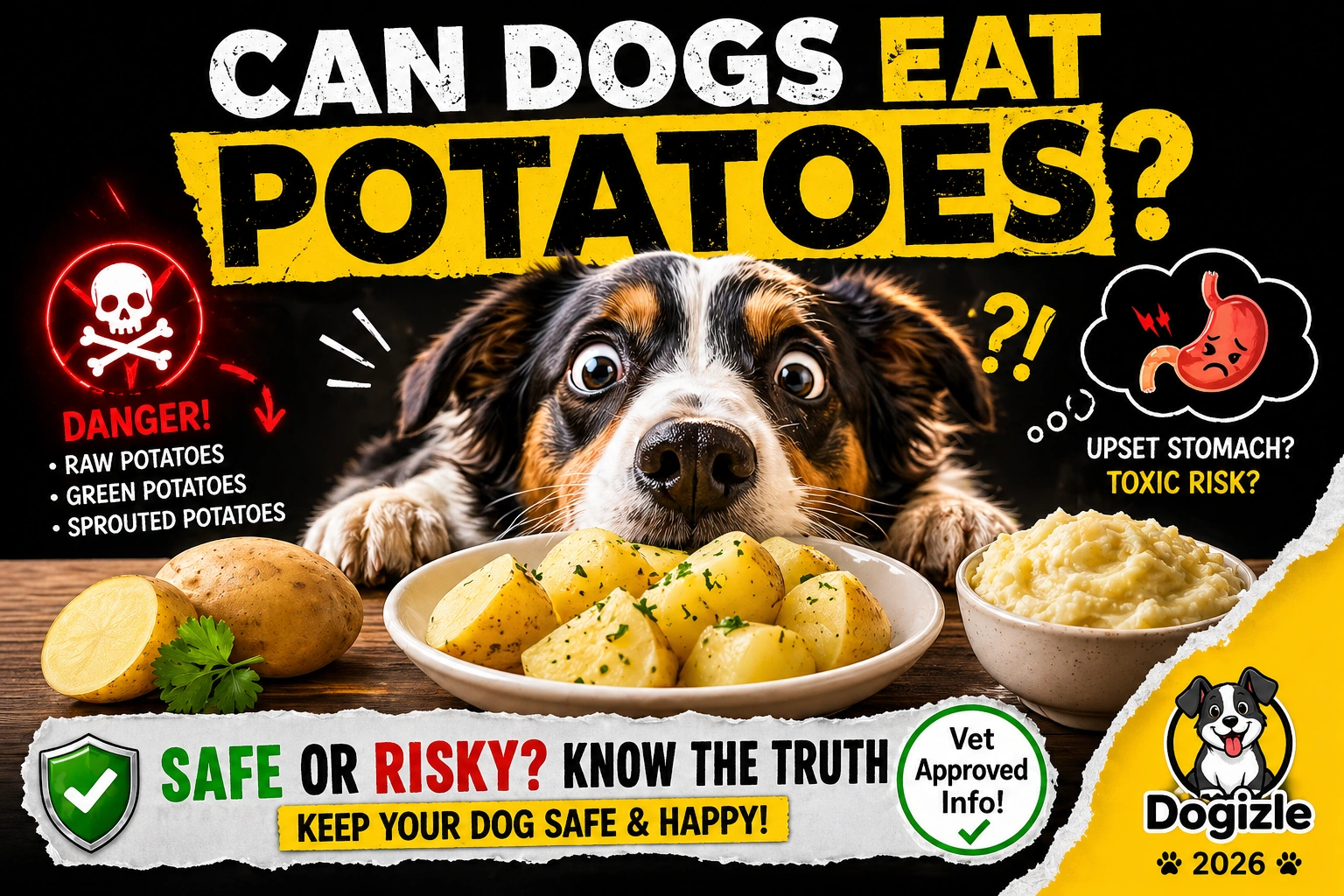
Yes — dogs can eat potatoes, but only when they are fully cooked, plain, and served in moderation.
Potatoes are one of the most common human foods found in kitchens, restaurants, and prepared meals. Because they appear in so many dishes, many dog owners naturally wonder whether a small bite is harmless or whether potatoes belong on the danger list. The truth is more nuanced than a simple yes or no. Some potato forms can be offered safely as an occasional treat, while others can cause serious digestive upset or even poisoning.
This guide explains the topic in clear, practical language. You will learn whether potatoes are safe or dangerous for dogs, how raw potatoes differ from cooked potatoes, why green or sprouted potatoes can be toxic, how much potato a dog can eat, and what to do if your dog accidentally eats something risky. You will also find a comparison chart, feeding tips, warning signs, and answers to the most common questions dog owners ask.
By the end, you will know exactly when potatoes are acceptable and when they should be avoided completely
Are Potatoes Safe for Dogs?
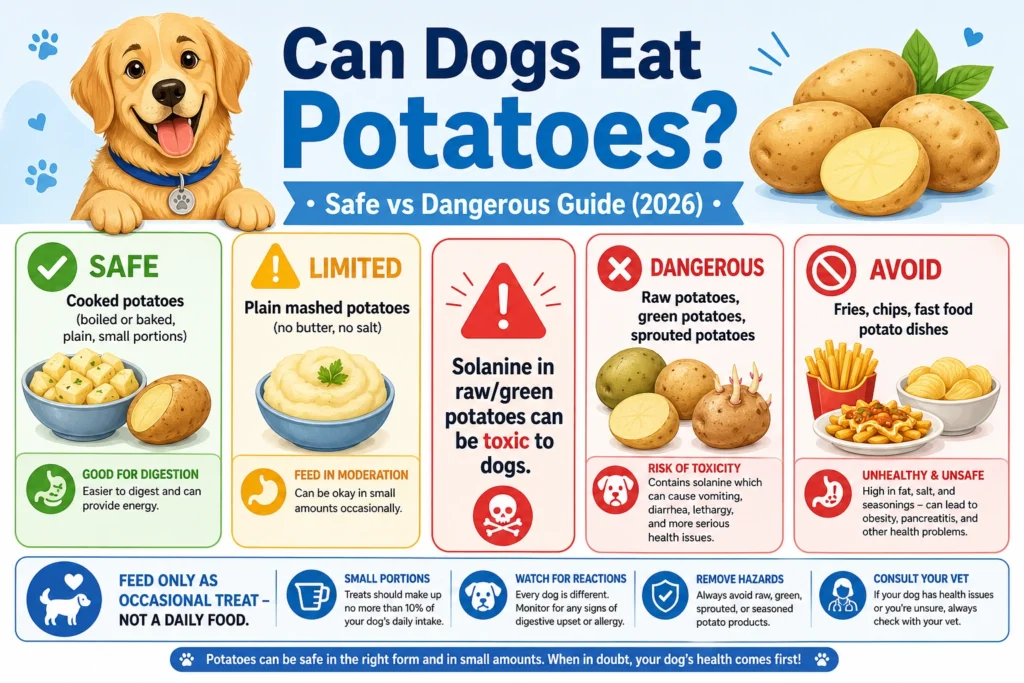
Dogs can eat potatoes only when they are:
- fully cooked
- plain and unseasoned
- served in small portions
Potatoes become unsafe when they are:
- raw
- green
- sprouted
- fried
- heavily processed
- loaded with butter, salt, oil, spices, onions, or garlic
The main concern is a natural compound called solanine, which can be present in raw, green, or sprouted potatoes. Cooking reduces the risk, but it does not make every potato product safe. A plain boiled or baked potato is very different from fries, chips, or mashed potatoes made with rich ingredients.
The easiest way to think about it is this: potatoes are not automatically dangerous, but they are not a food you should freely share. They are acceptable only in a controlled, prepared, and minimal form
Why Potatoes Can Be Risky for Dogs
Potatoes belong to the nightshade family. Plants in this family naturally contain compounds called glycoalkaloids. These chemicals help protect the plant in nature, but they can be harmful when dogs consume them in significant amounts.
The best-known glycoalkaloid in potatoes is solanine. Solanine is concentrated more heavily in certain parts of the potato, especially when the potato is:
- raw
- green under the skin
- old and sprouting
- damaged
- improperly stored
In dogs, too much solanine can irritate the digestive system and may lead to more serious neurologic symptoms in severe cases. This is why raw potatoes are a poor choice and why green or sprouted potatoes should never be fed.
Cooking helps reduce the danger, but it does not turn a poor-quality potato into a nutritious staple. The safest potato is plain, soft, fresh, and served in a very small amount.
Raw Potatoes vs Cooked Potatoes for Dogs
Raw potatoes are not a good snack for dogs.
They can be difficult to digest, and they may contain a higher level of naturally occurring toxic compounds than cooked potatoes. A dog that eats raw potatoes may experience stomach irritation, vomiting, diarrhea, or general discomfort. In more serious situations, particularly after a large amount of exposure to green potatoes, poisoning signs may appear.
Common signs linked with raw potato exposure can include:
- vomiting
- diarrhea
- weakness
- drooling
- lack of appetite
- confusion
- tremors in severe cases
Even if the dog does not develop dramatic symptoms, raw potatoes are still not recommended. Sensitive dogs may react after only a small amount.
Cooked Potatoes (Safer in Moderation)
Cooked potatoes can be safe when they are prepared properly. Heating the potato reduces the harmful compounds and makes it easier to digest.
The safest cooking methods are:
- boiling
- baking
Important preparation rules:
- Do not add salt
- Do not add butter
- Do not add oils
- Do not add spices
- Do not add onions or garlic
- cut into small, bite-sized pieces
- Allow the potato to cool before serving
A plain cooked potato is much safer than a raw one, but “safer” does not mean “necessary.” Dogs do not need potatoes to stay healthy. They only make sense as an occasional extra, not a dietary foundation.
Dangerous Potato Foods for Dogs
Many potato-based foods look harmless to people but are inappropriate for dogs. The issue is not only the potato itself; it is also the fat, salt, seasoning, and additives that often come with it.
1. French Fries
French fries are not suitable for dogs.
They are usually:
- high in fat
- high in salt
- cooked in oil
- sometimes seasoned
This combination can upset the stomach and may increase the risk of pancreatitis in sensitive dogs.
2. Potato Chips
Potato chips are also a bad option.
They often contain:
- excess salt
- processed oils
- artificial flavorings
- preservatives
These ingredients are not healthy for dogs and can contribute to digestive problems, dehydration, or long-term weight gain.
3. Mashed Potatoes
Plain mashed potatoes may seem harmless, but most mashed potatoes are prepared with ingredients that dogs should avoid, such as:
- butter
- milk
- cream
- salt
- pepper
Dairy can be difficult for many dogs to digest, and rich ingredients may cause diarrhea or vomiting.
4. Green or Sprouted Potatoes
These are among the most dangerous potato forms for dogs.
Green areas and sprouts can contain much higher levels of solanine. These potatoes should be treated as unsafe and kept away from pets.
5. Fast-Food Potato Dishes
Restaurant and fast-food potato items are usually loaded with:
- oil
- salt
- flavor packets
- seasonings
- sauces
These products are not designed for canine digestion. They are too rich, too salty, and too processed.
Do Potatoes Have Any Benefits for Dogs?
Yes, potatoes do have some nutritional value, but only when they are cooked simply and fed in small amounts.
Potential benefits include:
- carbohydrates for energy
- vitamin C support
- Vitamin B6 for body and brain functions
- Potassium for muscle support
- fiber for digestion
That said, these benefits are modest. Potatoes are not a superfood for dogs, and they are not essential in a canine diet. A complete commercial dog food already provides the nutrients a dog needs in a balanced form.
In other words, potatoes may be an occasional treat, but they should not be treated as a health supplement or a dietary necessity.
How Much Potato Can a Dog Eat?
Portion size matters a lot. Even safe foods become a problem when the amount is too large.
A simple feeding guide looks like this:
| Dog Size | Safe Amount | Frequency |
Small dogs | 1–2 teaspoons | Occasionally |
| Medium dogs | 1 tablespoon | Occasionally |
| Large dogs | 2 tablespoons | Occasionally |
A good general rule is that treats, including potatoes, should make up less than 10% of daily calories.
That means potatoes should be treated like a tiny snack, not a meal component. The smaller the dog, the more careful you need to be. Small breeds tend to be more vulnerable to calorie overload, tummy upset, and weight gain.
If a dog already eats a calorie-dense diet or has a history of obesity, the safe amount may need to be even lower.
How to Safely Prepare Potatoes for Dogs
If you decide to give your dog a little potato, preparation matters just as much as portion size.
Step 1: Wash thoroughly
Wash the potato well to remove dirt, residue, and surface chemicals.
Step 2: Peel the potato when possible
Peeling is recommended because the skin may contain more irritants, especially if the potato is older or has begun to green.
Step 3: Cook completely
Boil or bake the potato until it is tender throughout.
Step 4: Keep it plain
Do not add:
- salt
- butter
- oil
- onion
- garlic
- spices
- cheese
- sauces
Step 5: Let it cool
Serve the potato only after it has cooled enough to avoid mouth burns.
Step 6: Cut into small pieces
Small pieces reduce the risk of choking and make the treat easier to chew and swallow.
A carefully prepared potato can be safe in a limited amount. A heavily seasoned potato dish cannot. Signs of Potato Poisoning in Dogs
If a dog eats raw, green, or sprouted potatoes, close observation is important. Symptoms may appear quickly or after some delay.
Watch for:
- vomiting
- diarrhea
- drooling
- weakness
- tremors
- wobbling
- confusion
- reduced appetite
- unusual behavior
- lethargy
Some signs may be mild, while others can be more serious. The concern increases if the dog ate a large quantity of the potato, or the potato was especially green or old.
If you notice any symptoms, contact a veterinarian right away. Do not wait for the problem to “pass on its own” if the dog is acting unwell, especially if the potato was raw or sprouted.
Are Potatoes Good or Bad for Dogs?
The most accurate answer is that potatoes are neutral to mildly beneficial when served correctly, but potentially harmful when served incorrectly.
They are:
- safe in plain, cooked, small portions
- unsafe when raw, green, sprouted, fried, or heavily seasoned
- unnecessary as a regular diet item
Dogs can live healthy, energetic lives without ever eating potatoes. In fact, many dogs do better when their treats are simple, low-calorie, and nutritionally sensible.
So potatoes are not a required food. They are an optional snack with clear limits.
Potato Safety Comparison Table
| Potato Type | Safe? | Risk Level | Notes |
| Raw potato | No | High | Can contain toxic solanine |
| Green potato | No | Very high | Unsafe and potentially poisonous |
| Boiled potato | Yes | Low | Safe if plain and served in moderation |
| Baked potato | Yes | Low | Must be plain and fully cooked |
| Fries/chips | No | High | Fat, salt, and processing make them unsafe |
| Plain mashed potato | Limited | Medium | Depends on ingredients |
This table is the simplest way to remember the rules: plain cooked potato can be acceptable, but processed or raw forms should be avoided.
Expert Veterinary Insights (2026)
Veterinarians generally agree on a few core points:
- Cooked potatoes are not inherently toxic
- Raw and green potatoes are the true concern
- Dogs do not need potatoes in a balanced diet
- Overfeeding can contribute to weight gain
- Small dogs are more likely to be affected by poor portion control
The practical takeaway is straightforward. Safe feeding depends on preparation, size, and moderation. A dog that gets a tiny bite of plain cooked potato is in a very different situation from a dog that eats fried potato products or a pile of raw potato scraps.
Real-world note for European and urban dogs
Dogs living in cities often get less exercise than dogs with larger outdoor routines. That matters because fewer calories are burned each day. In busy urban settings such as London, Berlin, or Paris, many pets also have a higher risk of overweight conditions simply because daily movement is more limited.
For that reason, even “safe” foods like potatoes should be given with extra caution in city dogs. A small treat can be fine. Repeated feeding can become a problem.
Common Mistakes Dog Owners Make
Many potato-related issues happen because owners assume “human food” is harmless in small quantities. That is not always true.
Common mistakes include:
- feeding fries instead of plain potatoes
- giving mashed potatoes with butter or milk
- letting dogs eat seasoned leftovers
- allowing access to garden potatoes
- feeding raw potato scraps
- using potatoes as a regular meal replacement
- forgetting that extra calories add up quickly
The biggest misunderstanding is treating potatoes as a casual filler food. Dogs do not need fillers. They need balanced nutrition, and treats should stay small.
Expert Tips for Safe Feeding
Here are the most practical safety habits:
- Give potatoes only as an occasional treat
- Keep servings tiny
- Choose plain boiled or baked potato only
- avoid rich toppings and sauces
- Watch your dog’s weight
- Combine treats with a balanced main diet
- Store raw potatoes out of reach
- Check your garden or pantry for green or sprouted potatoes
- Avoid feeding potatoes right before intense activity or bedtime if your dog has a sensitive stomach
The safest approach is not complicated. Keep it plain, keep it rare, and keep it small.
Breed-Specific Considerations
Different dogs may tolerate treats differently based on size, metabolism, and body condition.
Small Breeds
Small breeds are often more sensitive to calorie-dense treats. Even a tiny amount of potato can become significant for a toy or miniature dog. They also have a higher risk of weight gain if treats are given too often.
Medium Breeds
Medium dogs can usually handle a slightly larger portion, but that does not mean frequent feeding is a good idea. Moderation still matters.
Large Breeds
Large dogs may tolerate a slightly bigger snack, but they still need limits. Bigger bodies do not make fried or seasoned potatoes healthy.
No matter the breed, the same principles apply: plain, cooked, and limited.
Real-Life Feeding Scenarios
Urban Dogs
Urban dogs often walk less than rural dogs and may spend more time indoors. That means their calorie needs can be lower than owners expect. Potato treats should therefore be smaller and less frequent.
Cold Regions
Dogs in colder climates may burn more energy, especially if they spend time outdoors. Even so, potatoes should still be controlled and offered only as occasional treats.
Rural Dogs
Rural dogs may move more and have more physical activity, but they may also have more exposure to garden plants, compost piles, or raw potato scraps. That creates a different kind of risk. Supervision matters, especially around farms, gardens, or storage areas.
FAQS
No, raw potatoes are toxic due to solanine. They are difficult to digest and may cause vomiting, diarrhea, and other poisoning symptoms.
Yes, if the potato is plain and fully cooked. Boiled potatoes are one of the safer options, provided no salt, butter, or seasoning is added.
Only in limited cases. Potato skin may be okay if it is fully cooked and the potato is not green, old, or sprouted. Even then, many owners choose to peel it to be safer.
Yes, but only very small amounts of plain cooked potato. Puppies have delicate digestive systems, so caution is especially important.
No. Fries are too greasy, too salty, and too processed. They are not a healthy or safe dog treat.
Green potatoes can cause poisoning because they may contain elevated solanine levels. Contact a veterinarian immediately if your dog eats a meaningful amount.
Small amounts of plain cooked potato may provide fiber, but potatoes are not necessary for digestion and are not a treatment for stomach issues.
Rice is usually easier to digest for many dogs, especially when they have sensitive stomachs. Potatoes are not automatically better or worse; they simply serve a different role and must be prepared carefully.
Conclusion
Dogs can eat potatoes, but only when they are properly cooked, plain, and given in very small amounts. In safe form, potatoes are not toxic and may offer minor nutritional value like energy, fiber, and vitamins. However, they are not an essential part of a dog’s diet and should never replace balanced dog food.
The real danger comes from the wrong forms of potato:
Raw potatoes (can contain solanine)
- Green or sprouted potatoes (high toxicity risk)
- Fries, chips, and fast food (fat + salt overload)
- Seasoned mashed potatoes (hidden harmful ingredients)
When prepared correctly, a small bite of boiled or baked potato is generally safe for most healthy dogs. Still, moderation is the key rule—treats like potatoes should remain an occasional snack, not a daily habit.