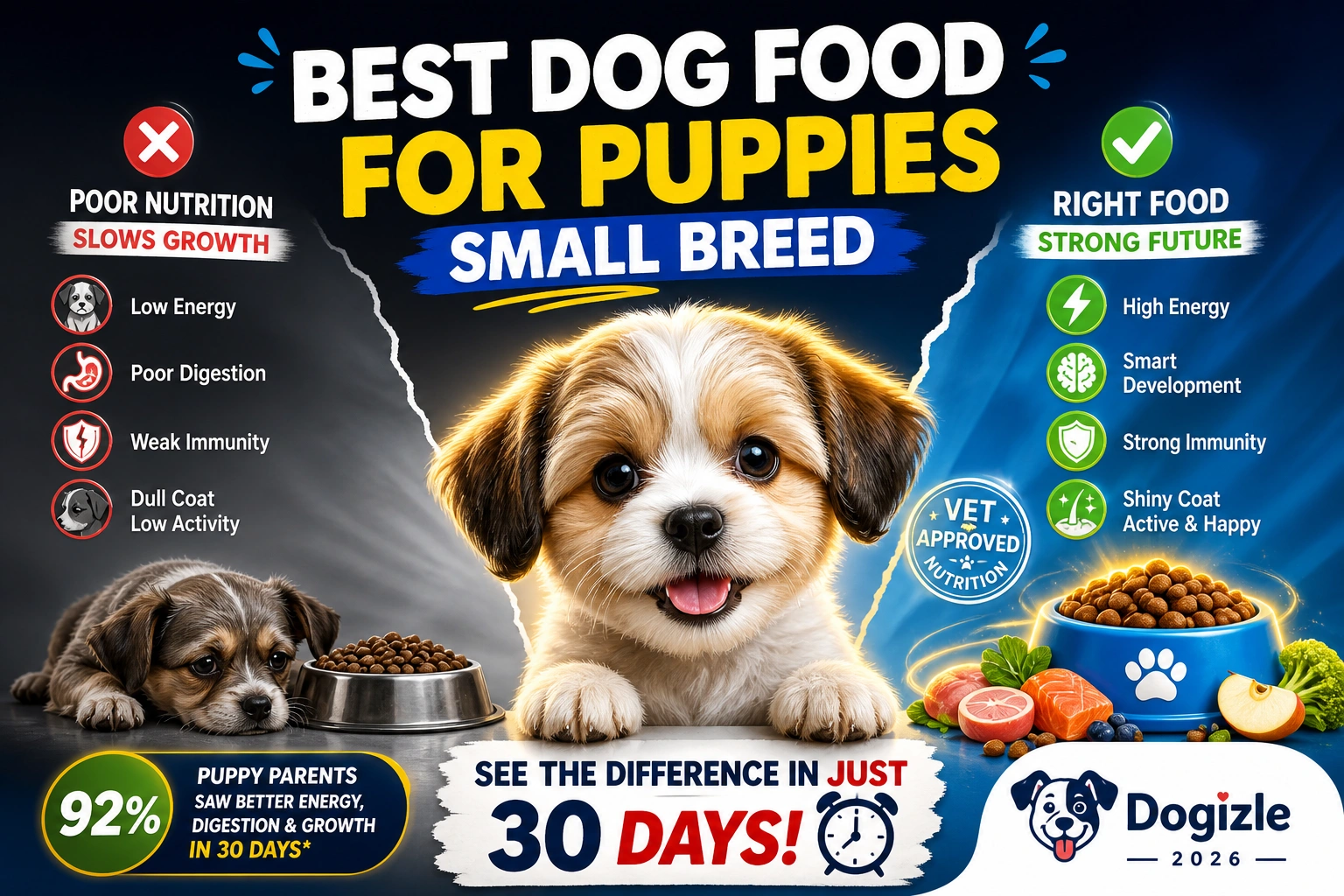
Best Dog Food for Puppies Small Breed
Yes — the best dog food for small-breed puppies is one made for fast growth, tiny mouths, and sensitive tummies. In this guide, you’ll learn which ingredients matter, which foods to avoid, and how to choose a vet-trusted option for healthy energy, digestion, and development. Choosing the best dog food for small-Breed Puppies is one of the most important nutrition decisions you will make during your puppy’s earliest stage of life. Small breed puppies do not simply need “smaller portions” of regular food. They need a carefully designed feeding strategy that supports fast growth, healthy digestion, stable energy, strong immune development, and lifelong well-being.
Across Europe, small breeds such as the Chihuahua, Yorkshire Terrier, Pomeranian, Shih Tzu, Miniature Schnauzer, and similar companion dogs are extremely common in family homes and apartment settings. Their popularity has grown because they are affectionate, adaptable, and easier to manage in smaller living spaces. But their nutritional needs are often misunderstood. Many owners accidentally feed them in ways that are convenient for humans but inappropriate for the puppy’s physiology.
That Mistake Matters.
A small breed puppy has a different body type, metabolism, and feeding tolerance than a medium or large dog. These puppies often burn energy quickly, have smaller stomach capacity, and are more vulnerable to blood sugar drops if meals are delayed or portion sizes are too small. They also need a precise nutrient balance during the rapid development phase, especially in the first year of life.
This complete 2026 veterinary-style guide explains how to choose the best dog food for small-breed puppies, what nutrients matter most, how feeding schedules should be structured, how European standards such as FEDIAF influence quality, and how to avoid the most common mistakes that lead to picky eating, digestive upset, or poor growth.
You will learn:
- How small-breed puppy nutrition works in practical terms,
- What makes one puppy food better than another?
- which food formats suit different puppies,
- How to interpret feeding charts,
- which mistakes to avoid,
- How European feeding standards influence the label,
- and how to build a strong, healthy nutritional foundation for your puppy.
If your goal is to raise a confident, active, healthy puppy with stable digestion and strong development, the first place to begin is not the brand name. It is the nutritional structure behind the product.
Understanding Small Breed Puppy Nutrition
To choose the best dog food for small-breed puppies, you need to understand why these puppies cannot be fed like adult dogs or even like larger puppies. Their requirements are shaped by growth speed, energy use, digestive sensitivity, and the size of their jaw and stomach.
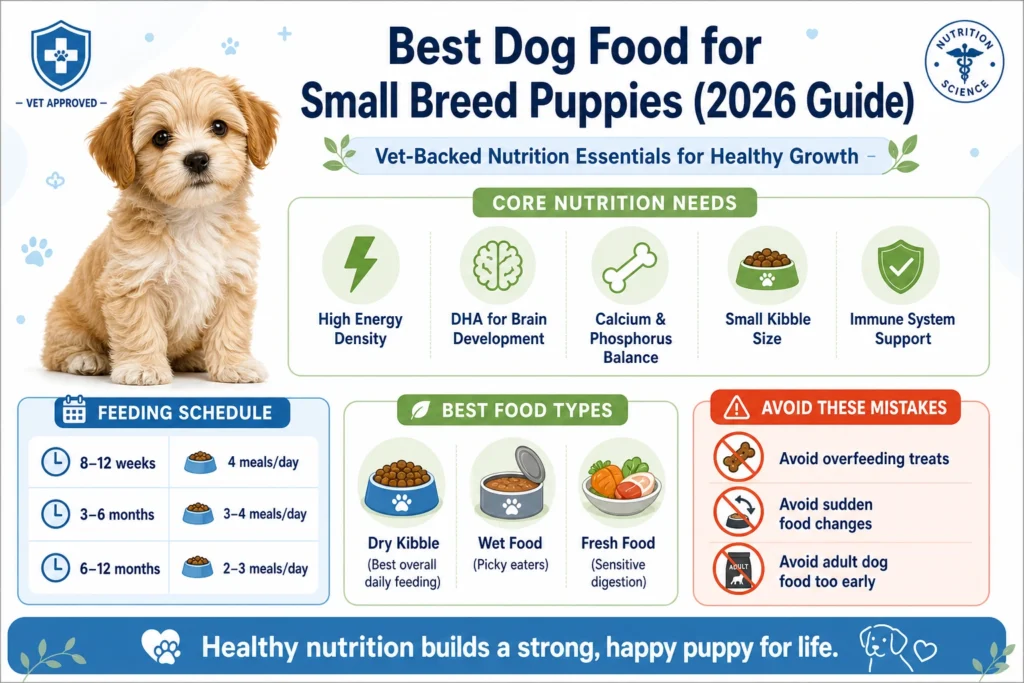
1. High Energy Turnover and Fast Metabolism
Small breed puppies are energetic little bodies with a rapid metabolic rhythm. They use fuel quickly, which means they need calorie-dense food in proportion to their weight. That does not mean “more food at once.” It means more usable nutrition in each bite.
Because their stomachs are compact, they cannot eat huge meals comfortably. They do better with:
- small, regular meals,
- nutrient-rich puppy formulas,
- and food that delivers adequate energy without excessive volume.
If a puppy is underfed, the results can be immediate: low stamina, weakness, wobbliness, irritability, reduced concentration, and, in some cases, blood sugar instability. In tiny breeds, that can happen faster than many owners expect.
This is one reason why a high-calorie puppy food for small breeds is not a luxury. For the right puppy, it is a practical nutritional necessity.
2. Brain Development Requires DHA
Puppyhood is not only about height and body weight. It is also the stage where the brain and nervous system are developing quickly. One of the most discussed nutrients in this process is DHA, a long-chain omega-3 fatty acid often associated with neurological and visual development.
DHA is commonly sourced from:
- fish oil,
- marine ingredients,
- egg-based nutrition,
- and specific fortified puppy formulas.
A food that includes DHA as part of a balanced growth recipe supports learning, memory formation, and visual maturation during the puppy stage. That does not mean DHA alone makes a “better” food, but it is a meaningful quality marker when combined with a correct overall formulation.
3. Calcium and Phosphorus Must Stay in Balance
Bone development in puppies depends on proper mineral structure. Calcium and phosphorus are both essential, but more is not automatically better. The balance between them matters far more than a single high number on the label.
For growing puppies, especially during rapid skeletal development, the mineral ratio should be carefully controlled. Too much calcium or the wrong calcium-to-phosphorus balance can interfere with normal bone formation, joint health, and growth regulation.
This is one reason European standards such as FEDIAF are so important. They are designed to support safer nutritional formulation for growth stages, not just marketing appeal.
4. Kibble Size Is Not a Cosmetic Detail
Small breed puppies have smaller mouths and narrower jaws. A bite-sized kibble is not just a convenience feature. It affects:
- chewing ease,
- swallowing comfort,
- appetite,
- and even the likelihood of food refusal.
A poorly sized kibble may be awkward to chew or may be swallowed too quickly. A properly sized kibble encourages more comfortable eating and often better acceptance.
In practical terms, the best dry food for a small breed puppy should be easy to pick up, easy to chew, and easy to digest.
Small Breed Puppy Categories
Understanding size classifications helps narrow your choice of food and feeding style.
Examples include:
Toy Breeds: Under 5 kg adult weight
- Chihuahua
- Yorkshire Terrier
- Maltese
- Papillon
These puppies usually need highly concentrated energy, very consistent meal timing, and careful attention to hypoglycemia prevention.
They often do best with:
- frequent meals,
- highly digestible formulas,
- and very small kibble sizes.
Small Breeds: 5–10 kg adult weight
Examples include:
- Shih Tzu
- Miniature Schnauzer
- Pug
- Cavalier-type small companions
These Puppies still need energy-dense nutrition, but their feeding tolerance may be a little broader than toy breeds. They typically do well on a balanced small-breed puppy formula with stable digestibility and moderate kibble size.
Mini Designer Breeds
Examples include:
- Cavapoo
- Mini Goldendoodle
- Cockapoo
- Other small mixed companion dogs
These dogs can vary more in appetite, coat needs, and digestive response, so flexibility matters. They often benefit from a food that balances palatability, digestibility, and growth support without unnecessary complexity.
Best Dog Food Types for Small Breed Puppies
Rather than focusing only on brand names, it is more useful to understand the food formats and what each one is best at doing. The right type depends on your puppy’s appetite, digestion, activity level, and owner’s routine.
1. Small Breed Puppy Kibble
This is often the most practical all-around choice for European households. A good puppy kibble is:
- complete and balanced,
- convenient for daily feeding,
- easier to portion precisely,
- helpful for dental mechanics,
- and usually more affordable than fresh food.
When designed specifically for small breed puppies, kibble can provide the structure and consistency needed for daily growth support. It also stores easily and works well for owners who want a simple routine.
For many puppies, this is the best starting point when looking for the best dog food for small breed puppies.
2. High-Calorie Puppy Food
Some small breed puppies are extremely active, naturally lean, recovering from stress, or simply difficult eaters. In those situations, a more energy-dense formula may be beneficial.
High-calorie puppy food is useful for:
- active puppies,
- puppies with small appetites,
- pups that tire quickly,
- and puppies needing support during growth spurts.
The benefit is efficiency: the puppy gets more nourishment from a smaller amount of food. That can be helpful for tiny dogs that cannot comfortably manage large meals.
3. Sensitive Stomach Puppy Food
Some puppies struggle with loose stools, gas, frequent stomach upset, or unusual appetite swings. A sensitive stomach formula can help by using:
- gentler protein sources,
- carefully chosen carbohydrates,
- digestibility-focused ingredients,
- and sometimes added microbiome-supportive nutrients.
Commonly used proteins may include turkey, lamb, or other well-tolerated options, depending on the formula. This type of food can be a strong choice if the puppy has digestive issues, but it should still be complete and balanced for growth.
4. Fresh or Human-Grade Puppy Food
Fresh food often appeals strongly to small-breed puppies because of its aroma and taste. This can make it especially useful for:
- picky eaters,
- puppies that are reluctant to chew dry food,
- and dogs with appetite variability.
Fresh diets may offer strong palatability and can be appealing to owners who prefer minimal-processing nutrition. However, they also tend to be more expensive, require refrigeration, and are not automatically superior simply because they are fresh.
A fresh diet is best used when it is properly formulated for growth and when the owner can maintain handling and storage requirements consistently.
Comparison of Puppy Food Types
Here is a practical way to compare the main formats:
| Food Type | Best For | Advantages | Disadvantages |
| Dry Kibble | Daily feeding | Affordable, structured, easy to measure, and useful for oral chewing | Less aromatic, sometimes less appealing to picky puppies |
| Wet Food | Picky puppies | Highly palatable, often more aromatic, and easy to chew | More expensive, less convenient to store after opening |
| Fresh Food | Sensitive digestion | Often highly digestible, attractive smell and taste | Costly, requires refrigeration, routine matters |
| Raw Diet | Experienced owners | Appealing to some owners who prefer minimal processing | Hygiene concerns, bacteria risk, formulation challenges |
For most families, the most dependable option is a properly formulated small breed puppy kibble or a combined feeding plan built around a growth-complete formula.
Small Breed Puppy Feeding Chart
Feeding frequency matters as much as food quality. Tiny puppies cannot go too long without eating.
| Age | Meals per Day | Notes |
| 8–12 weeks | 4 meals | Helps prevent low blood sugar and supports stable digestion |
| 3–6 months | 3–4 meals | Growth remains intense; appetite may vary |
| 6–12 months | 2–3 meals | Transition phase as growth slows gradually |
Climate, activity level, and body condition may affect the exact feeding pattern. Puppies in colder environments may use slightly more energy to maintain warmth, especially if they are very young or very active.
How to Choose the Best Dog Food for Puppies Small Breed
A strong puppy formula should pass a practical checklist rather than just look attractive on the shelf.
Vet-Approved Checklist
Look for:
- a growth or puppy formulation,
- a recognized nutritional standard such as FEDIAF for Europe,
- real animal protein listed near the top,
- DHA or omega-3 support,
- a balanced mineral profile,
- small kibble size,
- no excessive fillers or low-value bulk ingredients,
- and clear feeding instructions.
A formula that meets these criteria is much more likely to be a reliable vet-recommended puppy food Europe option than a product that simply uses trendy wording.
What “complete and balanced” really means
This label indicates that the food is designed to meet the nutritional requirements of the target life stage. For a growing puppy, that matters greatly because the dog cannot be left to “make up the difference” later. Growth nutrition must be correct in the present moment.
Why protein quality matters
Protein is not just a quantity issue. Small-breed puppies need protein that is digestible and biologically useful. Real animal Protein often performs well because it provides essential amino acids needed for muscle, tissue, and immune development.
That does not mean every recipe with “meat” in the label is superior. It means the ingredient list, nutrient balance, and feeding design need to work together.
Behavioral Feeding Problems in Small-Breed Puppies
Sometimes the issue is not the food’s nutritional profile. Sometimes the issue is learned behavior.
Why Puppies Refuse Food
Owners frequently assume a puppy is “just picky.” In reality, refusal often comes from:
- too many treats,
- inconsistent meal timing,
- stressful changes in the environment,
- sudden food switches,
- or feeding too many flavors too quickly.
Puppies are highly adaptable, but they also learn fast. If they discover that refusing food leads to a more exciting alternative, the behavior can become reinforced.
Food Imprinting Matters
Between roughly 6 and 16 weeks of age, puppies are especially impressionable. During this window, they form preferences for taste, texture, smell, and routine. That is why early feeding experiences can shape eating patterns for a long time.
If a puppy only ever receives novelty-based feeding, it may become difficult to maintain a stable diet later. That can lead to chronic inconsistency, meal rejection, or strong dependence on highly palatable foods.
Safe Food Transition Rule
Never change your puppy’s food abruptly. A gradual transition helps the digestive system adjust.
A sensible switch schedule is:
- Day 1–3: 25% new food, 75% old food
- Day 4–6: 50% new food, 50% old food
- Day 7–9: 75% new food, 25% old food
- Day 10: 100% new food
This method reduces the chance of stomach upset and helps puppies accept the new flavor and texture more smoothly.
European Lifestyle Considerations
European dog owners often have different routines, housing arrangements, and climate conditions than owners in other regions. Those factors matter when choosing the best puppy food.
Apartment Living
Many small-breed puppies in Europe live in apartments or compact homes. This can actually be a good fit for toy and small breeds, but it means feeding routines need structure.
Useful habits include:
- fixed meal times,
- measured portions,
- short and regular potty breaks,
- and energy-dense food that avoids excessive meal volume.
Because small breed puppies are not usually outdoor working dogs, their calorie needs may be moderate in absolute terms but still intense relative to body size.
Colder European Regions
In cooler climates, puppies may use more calories to maintain body warmth, especially if they are young, active, or outdoors for short walks. In such cases, slightly more dietary fat or a better-timed feeding schedule may help maintain energy stability.
That does not mean overfeeding. It means adjusting intake based on activity, climate, and body condition.
European Standards:
In Europe, the FEDIAF nutritional framework is an important reference point for pet food formulation. It helps guide nutrition standards, nutrient adequacy, and label expectations for companion animals.
For dog owners, the practical value is simple:
- better clarity about Growth-stage nutrition,
- safer formulation expectations,
- and a more reliable nutritional benchmark than vague marketing language.
A product that aligns with European nutritional guidance is often easier to trust than one that relies only on promotional claims. When choosing the best dog food for small breed puppies, this is one of the strongest quality indicators available.
Pros and Cons of Small Breed Puppy Diets
Every feeding style has strengths and trade-offs.
Advantages
- Supports rapid growth
- Helps maintain stable energy
- Supports cognitive and visual development
- Can reduce the risk of low blood sugar when fed correctly
- Encourages healthier feeding routines
- Often improves coat and immune support when the formula is complete
Disadvantages
- Usually more expensive than adult food
- Requires consistency and discipline
- Easy to overfeed because puppies are small and cute
- Wrong formulas can cause digestive or growth issues
- Frequent snack abuse can undermine the feeding plan
A good diet is not just about ingredients. It is also about implementation.
Common Mistakes Dog Owners Make
Small breed puppy feeding errors happen often, even among well-meaning owners.
1. Feeding Adult Dog Food Too Early
Adult formulas are not designed for growth. A puppy needs a different nutrient profile. Switching too early may leave the puppy short on key developmental support.
2. Ignoring Kibble Size
If the kibble is too large or awkward, the puppy may chew poorly or reject the food. Physical suitability matters.
3. Overfeeding Treats
Treats can quickly sabotage a balanced diet. A puppy’s stomach is tiny. Too many extras reduce the space available for nutritionally complete meals.
4. Switching Too Fast
Sudden changes often lead to diarrhea, gas, or reluctance to eat. Slow transitions are much safer.
5. Choosing Grain-Free Without a Real Reason
Many puppies do not need grain-free food. Unless there is a medical or veterinary reason, grain-free is not automatically better.
6. Not Measuring Portions
Guessing is a common cause of overfeeding. Measuring cups or kitchen scales help maintain consistency and support a healthy body condition.
Expert Veterinary-Style Tips
To build healthy habits from the beginning, keep these principles in mind.
Feed on a predictable schedule
Consistency supports digestion and reduces anxiety around feeding time.
Measure every portion
Do not rely on visual estimates. Small breed puppies need precision because even small excesses or deficits can matter.
Monitor stool quality
Stool is one of the easiest ways to see whether a food agrees with your puppy. Consistent stool is a positive sign. Chronic softness, mucus, or extreme frequency should be taken seriously.
Use puzzle feeders carefully
Mental stimulation can be helpful, but ensure the feeder is appropriate for tiny mouths and does not create frustration.
Adjust calories based on activity
A playful, growing puppy may need more than a calmer littermate. Body condition should guide the final decision, not just the package instructions.
Keep fresh water available
Hydration is essential at every stage of growth. Puppies should always have access to clean water.
Safety and Health Considerations
Small breed puppies can be fragile in ways that are easy to miss. Watch for signs that the feeding plan is not working well.
Warning signs to monitor
- weakness,
- trembling,
- poor appetite,
- Repeated vomiting,
- loose stools,
- sudden lethargy,
- or abnormal hunger followed by energy collapse.
These signs do not always mean something serious, but they do justify closer attention. In tiny dogs, weakness and trembling can be especially important because blood sugar can drop faster than owners realize.
Be cautious with supplements
More supplements are not automatically better. Extra calcium, for example, should not be added casually to a complete growth diet unless advised by a veterinarian. The puppy food should already be balanced.
Weight monitoring matters
A puppy should grow steadily without becoming too round. Too much weight too quickly can create long-term problems, while too little growth can signal underfeeding or poor nutrient absorption. Regular body checks are one of the best habits you can develop.
What Makes a Food the Best Dog Food for Puppies, Small Breed?
The “Best” Food is not always the most expensive food, the most heavily advertised food, or the most fashionable food. It is the food that best matches the puppy’s real needs.
A strong option should ideally provide:
- complete puppy-stage nutrition,
- good digestibility,
- suitable energy density,
- clear mineral balance,
- DHA support,
- a manageable kibble size,
- and a feeding plan the owner can maintain consistently.
That is why the best dog food for small breed puppies is usually the one that combines science, practicality, and palatability.
Feeding Strategy by Puppy Personality
Not all puppies behave the same way at mealtime. Their personality can influence the best feeding method.
The fast eater
This puppy may gulp food quickly and need slower-feeding tools to avoid discomfort.
The hesitant eater
This puppy may benefit from small, frequent meals, warm aromas, or a palatable wet-to-dry mix.
The highly active puppy
This puppy often needs stronger calorie support and more careful meal timing to avoid energy dips.
The sensitive puppy
This puppy may respond better to a gentle, highly digestible formula with fewer unnecessary changes.
Understanding behavior helps you choose the right food style, not just the right brand.
How to Read a Puppy Food Label
When evaluating a package, do not stop at the front label. Read the details.
Look for:
- life stage designation such as “puppy” or “growth,”
- breed-specific claims only if they are backed by a sensible formula,
- the first several ingredients,
- guaranteed analysis,
- feeding instructions,
- and any claim related to complete and balanced nutrition.
Be cautious with vague marketing language such as “premium,” “natural,” or “veterinary inspired” when there is no clear nutrient explanation behind it.
The strongest foods are transparent about formulation rather than merely persuasive in wording.
Frequently Asked Feeding Questions in Real Life
Many owners ask similar practical questions:
- How many times should the puppy eat?
- Is dry food better than wet food?
- Should I worry about grain-free food?
- Why is my puppy hungry so quickly?
- Why does my puppy eat one day and ignore food the next?
- Is the puppy growing normally?
These are important questions because feeding is not only a product choice. It is a daily management system.
A good dog food can still fail if the routine is chaotic. A good routine can also improve outcomes even when the puppy is naturally finicky
What to Expect as the Puppy Grows
Small breed puppies grow at a rapid pace in the first months, then gradually shift toward maintenance as they approach adulthood. The transition from puppy food to adult food should be based on breed size, maturity, and veterinary guidance.
As a general rule, many small breeds transition later than toy breeds and earlier than very large dogs, but individual timing varies. The important thing is not to rush the process. Growth nutrition should remain in place until the puppy truly reaches the next life stage.
A Practical European Feeding Mindset
For European households, the best strategy is often the simplest one:
- Choose a growth-complete food,
- make sure it suits the breed size,
- feed on a stable schedule,
- measure portions,
- transition slowly,
- and monitor body condition regularly.
That approach works better than constantly chasing trends or rotating foods too often.
The reality is that the best dog food for small-breed puppies is the one that your puppy tolerates well, digests well, and thrives on consistently.
FAQ
The best option is a FEDIAF-compliant small breed puppy kibble with DHA, balanced minerals, good digestibility, and a size that suits tiny mouths. A food that is complete for growth and easy for your puppy to eat is usually the strongest practical choice.
Usually 3–4 meals per day until about 6 months of age. Very young toy breeds may need even more structured timing to help keep energy stable throughout the day.
Yes, but only when there is a real reason to use it. Grain-free is not necessary for most puppies and should not be selected just because it sounds premium.
Common causes include too many treats, frequent food switching, stress, relocation, inconsistent feeding times, and strong smell or texture preference. In many cases, picky eating is a learned pattern rather than a fixed trait.
Dry food is often better for structure, dental mechanics, and convenience. Wet food can help very picky puppies or dogs with appetite challenges. Some owners combine both formats carefully
Conclusion:
Choosing the best dog food for small-Breed Puppies is not about following hype. It is about building a strong nutritional foundation during the most sensitive stage of your dog’s life.
The most important factors are:
- energy density,
- digestibility,
- DHA support,
- correct mineral balance,
- small kibble size,
- a consistent feeding schedule,
- and a formula that matches the puppy’s developmental stage.
When those elements come together, you are not just feeding a puppy. You are supporting brain development, steady growth, digestive comfort, immune resilience, and lifelong health.
A thoughtful feeding plan today can shape the dog your puppy becomes tomorrow: stronger, steadier, healthier, and more confident.