Introduction
Yes, dogs can eat sweet potatoes in moderation. If you are confused about whether they are truly safe, this guide clears it up fast and shows you the right portions, preparation tips, and hidden risks. You will learn how to feed them without upsetting your dog’s stomach and avoid the mistakes many pet owners make every single time, with confidence. Can dogs eat sweet Potatoes, or is this popular human food secretly harmful? If you have ever prepared a wholesome meal and noticed your dog watching you with those hopeful eyes, you already know how tempting it feels to share. Across Europe, more dog owners are choosing simple, whole-food treats instead of heavily processed snacks. Sweet potatoes often land near the top of that list because they look nourishing, taste naturally sweet, and are widely available.
Still, the advice online is inconsistent. Some sources describe sweet potatoes as a nutrient-rich superfood for dogs. Others warn about digestion problems, excess carbohydrates, or even diet-related heart concerns when potatoes appear too often in commercial formulas.
So, what is the real answer?
Here is the clearest takeaway: sweet potatoes can be safe and beneficial for dogs when they are cooked, plain, and fed in moderation. That means the food itself is not the problem. The preparation, serving size, and overall balance of the diet matter far more.
In this guide, you will learn:
- Whether sweet potatoes are safe for dogs
- How to prepare them correctly
- How much to feed based on dog size
- the most important benefits and risks
- common myths, mistakes, and vet-style feeding tips
Let’s begin with the question most dog owners want answered first.
Can Dogs Eat Sweet Potatoes? (Quick Answer)
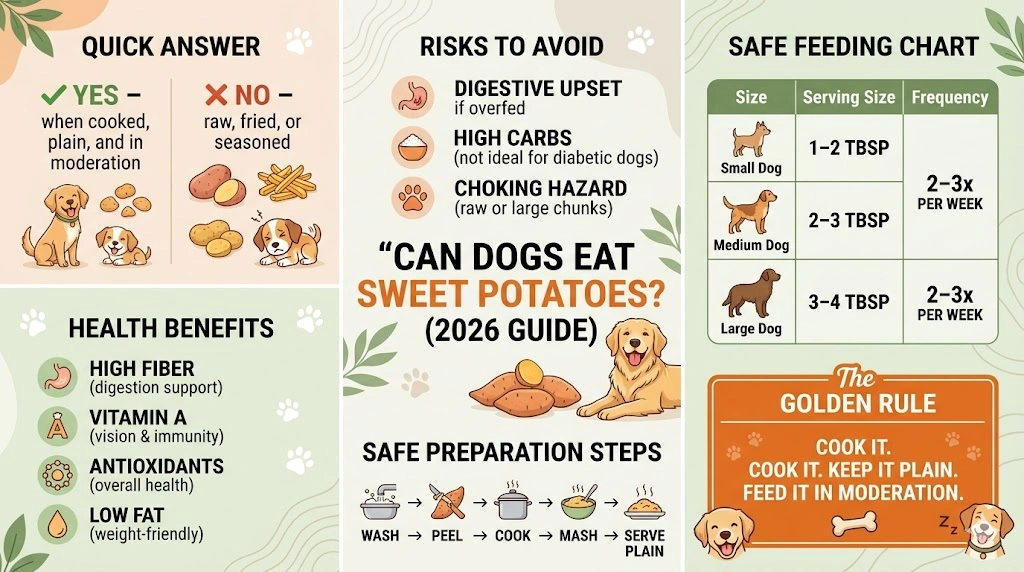
Yes, dogs can eat sweet potatoes, but only when they are fully cooked, plain, and served in moderation.
Sweet potatoes can be a useful treat because they contain fiber, beta-carotene, vitamins, and natural carbohydrates that provide steady energy. They are also easy to mash, bake, steam, or boil, which makes them convenient for home feeding.
However, the way you serve them matters a lot. Sweet potatoes should never be fed raw, fried, salted, buttered, or seasoned with anything that could upset your dog’s stomach or create a toxicity risk.
Avoid these forms completely:
- raw sweet potatoes
- sweet potato fries from restaurants
- heavily salted portions
- buttery, oily, or spiced recipes
- sweet potato dishes containing onion or garlic powder
The short version is simple: cooked sweet potatoes are usually safe; processed sweet potato snacks are not.
Are Sweet Potatoes Good for Dogs?
Yes, sweet potatoes can be a very good occasional food for dogs when used as a treat rather than a full meal.
They are commonly found in premium dog foods because they offer a combination of fiber, complex carbohydrates, and micronutrients. For dogs that tolerate them well, they can support digestive regularity, provide slow-release energy, and add variety to a treat rotation.
They are especially helpful when used in controlled amounts for dogs that need:
- a simple, whole-food snack
- a fiber boost
- an easily digestible cooked ingredient
- a low-fat treat option
- a change from biscuits, chews, or processed rewards
That said, “good” does not mean “unlimited.” Even healthy foods can cause trouble when they are overused. A dog’s overall diet should remain protein-forward and nutritionally balanced, with treats taking up only a small slice of daily calories.
Nutritional Benefits of Sweet Potatoes
Sweet potatoes earn their popularity because they bring real nutritional value to the bowl.
1. High Fiber Content
Sweet potatoes are naturally rich in dietary fiber. Fiber is useful because it can help support normal bowel movements and promote a healthy digestive rhythm.
For some dogs, that means:
- better stool consistency
- less constipation
- improved gut comfort
- a more predictable digestive pattern
Fiber can be helpful, but too much can create the opposite effect. Overfeeding may lead to loose stools, gas, or abdominal discomfort.
2. Rich in Vitamin A and Beta-Carotene
Sweet potatoes are well known for their beta-carotene content, which the body can convert into vitamin A.
Vitamin A supports several important functions, including:
- healthy vision
- immune system support
- skin and coat health
- normal growth and tissue maintenance
This is one reason sweet potatoes are often viewed as a nutrient-dense addition to a dog’s treat menu.
3. Low in Fat
Plain cooked sweet potato is naturally low in fat. That makes it appealing for dogs that need a gentler treat option, including dogs that are managing weight or following a low-fat feeding plan recommended by a veterinarian.
Low fat does not mean calorie-free, though. Portion size still matters.
4. Contains Antioxidants
Sweet potatoes contain antioxidant compounds that help protect cells from oxidative stress. In simple terms, antioxidants help the body handle wear and tear from normal metabolism and environmental exposure.
A diet that includes antioxidant-rich foods may support long-term wellness, especially when paired with quality protein and other nutrient-dense foods.
5. Provides Steady Energy
Because sweet potatoes contain complex carbohydrates, they release energy more gradually than sugary snacks.
That makes them useful for:
- active dogs
- working dogs
- long-walk days
- dogs who need a little extra fuel without high fat
This steady-energy profile is one reason sweet potato appears in many pet food formulas.
Bottom line: sweet potatoes can be a healthy, practical treat, but they should complement the diet, not dominate it.
Risks of Sweet Potatoes for Dogs
Even beneficial foods can become problematic when the amount, texture, or recipe is wrong.
Potential Health Risks
1. Digestive Upset
The most common issue is gastrointestinal discomfort. Too much sweet potato may cause:
- gas
- bloating
- diarrhea
- stomach cramping
- softer stools
This is more likely if the dog is not used to fiber-rich foods or if the portion is too large for their size.
2. High Carbohydrate Load
Sweet potatoes are more carbohydrate-dense than many other dog-safe treats. That matters for dogs that need tighter calorie control.
Dogs that may need extra caution include:
- diabetic dogs
- overweight dogs
- dogs on strict weight-management plans
- dogs with low-activity lifestyles
This does not automatically mean sweet potato is forbidden. It means the serving should be tiny and intentional.
3. Choking Risk
Any food can become a choking hazard if it is served in large chunks, especially for small dogs or dogs that gulp food quickly.
Risk increases when sweet potatoes are:
- raw
- cut into oversized pieces
- served as dense chunks without softening
- Given to dogs that do not chew carefully
Soft, small, cooked pieces are always safer.
4. Diet Balance Issues
Sweet potatoes should not displace the main structure of a dog’s diet. A dog’s primary nutrition should come from a complete and balanced food formula or a properly designed homemade plan approved by a veterinary nutrition professional.
Too much sweet potato can crowd out protein and other essential nutrients.
5. Heart-Diet Concerns and DCM Conversations
You may have heard about dilated cardiomyopathy, or DCM, in discussions about grain-free diets. This issue is complicated and has involved many factors, including legumes, potatoes, overall formulation, taurine status in some cases, and the broader nutrient profile of the food.
What matters most for this article is the practical point: sweet potatoes alone have not been proven to cause DCM. The concern is more about the overall dietary pattern and whether the food is balanced, complete, and appropriate for the individual dog.
Key takeaway: sweet potatoes can be safe, but they should never be treated as a main dietary pillar or a free-for-all snack.
Raw vs Cooked Sweet Potatoes
This is one of the most important differences to understand.
Raw Sweet Potatoes
Raw sweet potatoes are not a good choice for dogs.
They are difficult to digest and may irritate the stomach. They are also firm and dense, which creates a choking hazard, especially for small dogs or enthusiastic eaters.
Raw sweet potatoes may lead to:
- digestive irritation
- abdominal discomfort
- difficulty chewing
- increased choking risk
In short, raw sweet potatoes are a no.
Cooked Sweet Potatoes
Cooked sweet potatoes are the version most dog owners should use.
When properly cooked, they become softer, easier to chew, and simpler for the digestive system to handle. They are safer when they are:
- boiled
- baked
- steamed
- mashed plain
The best approach is straightforward: cook it thoroughly, keep it plain, and serve it in a small portion.
Can Dogs Eat Sweet Potato Fries?
Technically, a dog might be able to eat a small bite of plain baked sweet potato fries, but in everyday practice, the answer is no, not the restaurant or store-bought version.
Sweet potato fries are usually unsafe because they often contain:
- added oil
- salt
- seasoning blends
- garlic or onion powder
- heavy frying fats
Those extras can turn a simple food into a digestive problem.
Safer Alternative
You can make a dog-friendly version at home:
- Cut a sweet potato into thin pieces
- bake or steam until soft
- Skip the oil
- skip the salt
- skip all spices
- cool before serving
That gives your dog the benefit of sweet potato without the hidden extras.
How Much Sweet Potato Can Dogs Eat?
Portion control is essential. Even healthy treats should remain a small part of the total diet.
A simple feeding guide is below.
Feeding Chart Based on Dog Size
| Dog Size | Amount per Serving | Frequency |
| Small (≤10 kg) | 1–2 tablespoons | 2–3 times per week |
| Medium (10–25 kg) | 2–3 tablespoons | 2–3 times per week |
| Large (25+ kg) | 3–4 tablespoons | 2–3 times per week |
A useful rule of thumb is that treats should stay below 10% of daily calories. That includes sweet potato and any other snacks during the day.
Why Portion Size Matters
The problem is not the ingredient itself. The problem is the cumulative load. A dog that receives sweet potato too frequently or in large amounts may begin to experience:
- weight gain
- loose stool
- inconsistent appetite
- Reduced interest in regular food
- nutritional imbalance
For many dogs, a small amount is enough to deliver flavor and variety without creating side effects.
How to Safely Prepare Sweet Potatoes for Dogs
Preparation should be simple, clean, and predictable.
Step-by-Step Guide
- Wash the sweet potato thoroughly.
- Peel the skin if possible, especially for sensitive dogs.
- Cook it until fully soft.
- Cut, mash, or cube it into dog-safe pieces.
- Let it cool before serving.
- Offer it plain, without seasonings or toppings.
Safe Cooking Methods
The safest options are:
- boiling
- steaming
- baking
Avoid These Add-Ons
Do not add:
- salt
- butter
- Cinnamon blends with sugar
- oil
- garlic
- onion
- chili powder
- sauces or glazes
The cleanest recipe is usually the best recipe. Dogs do not need restaurant-style flavor to enjoy a soft-cooked vegetable.
Can Puppies Eat Sweet Potatoes?
Yes, puppies can eat sweet potatoes, but only in tiny amounts and only if they tolerate them well.
Puppies have developing digestive systems, so even safe foods should be introduced carefully. A small test portion is much better than a large serving.
Puppy Feeding Guidelines
- offer a very small amount first
- observe for changes in stool or behavior
- keep the texture soft
- serve plain and cooled
- Do not use sweet potato as a regular meal substitute
Puppies need a growth-focused diet with precise balance. Sweet potato should remain an occasional add-on, not a staple.
Can Dogs Eat Sweet Potato Skin?
It is better to avoid sweet potato skin for most dogs.
Although the skin itself is not automatically toxic, it can be tougher to digest and may be more difficult for some dogs to handle. Skin can also create an added choking or blockage risk, especially when served in thick strips or large pieces.
Why Skin Is Not Ideal
- harder to digest
- less comfortable for sensitive stomachs
- may increase chewing difficulty
- can become a swallowing hazard
For the safest feeding experience, peeling is usually the best choice.
Real-Life Feeding Scenarios in Europe
Dog lifestyles differ from one household to another, which means feeding decisions should be practical, not generic.
Urban Apartment Dogs
Dogs living in apartments often have lower daily activity levels. For them, sweet potatoes should usually stay on the smaller side.
Helpful approach:
- Use tiny portions
- keep it occasional
- Avoid using it as a frequent training reward if the dog gains weight easily
Active Working Dogs
Dogs that spend time herding, running, tracking, or otherwise working may use carbohydrates more efficiently.
For these dogs, sweet potato can be useful as:
- a modest energy source
- an occasional recovery snack
- a treat during high-activity periods
Even then, protein should remain the nutritional priority.
Cold Climate Dogs
Dogs in colder environments sometimes burn more energy through daily movement and thermoregulation.
In those cases, sweet potato can fit into the treat rotation as part of a broader energy-supporting diet, but it should still be kept within the 10% treat rule.
Sweet Potatoes vs Regular Potatoes
Many dog owners confuse the two. They are related, but not identical, in how they are usually discussed in dog feeding.
| Feature | Sweet Potatoes | Regular Potatoes |
| Nutritional value | Rich in fiber, beta-carotene, and vitamins | More basic nutrient profile |
| Digestibility | Better when cooked well | Can be fine when cooked, but raw forms are risky |
| Toxic risk | Low when plain and cooked | Raw or green potatoes can be problematic |
| Glycemic impact | Moderate | Often higher |
| Treat appeal | Naturally sweet and soft | More neutral in flavor |
Sweet potatoes are often the preferred option because they are more nutrient-dense and tend to be easier to use as a small treat. Still, neither should become a major dietary component without thought and balance.
Pros and Cons of Feeding Sweet Potatoes
Pros
- nutrient-rich
- naturally low in fat
- supports digestive regularity
- easy to prepare at home
- widely available
- suitable as an occasional whole-food treat
- can be useful for training in tiny amounts
Cons
- higher in carbohydrates than many treats
- may upset sensitive stomachs
- Not ideal for daily large portions
- requires cooking and preparation
- can contribute to excess calories
- may be overused in grain-free marketing claims
Sweet potatoes are useful, but usefulness depends on context.
Common Mistakes Dog Owners Make
Many problems stem from simple feeding errors rather than from the food itself.
Mistake 1: Feeding Raw Sweet Potatoes
Raw sweet potato is too hard for many dogs to handle and can cause digestive issues and choking.
Mistake 2: Adding Seasoning
Salt, onion powder, garlic powder, and rich fats make the food less dog-safe and more irritating.
Mistake 3: Overfeeding
Too much sweet potato can cause gas, loose stool, or excess calorie intake.
Mistake 4: Using It as a Meal Replacement
Sweet potato is a treat, not a complete food. It cannot replace balanced nutrition.
Mistake 5: Choosing Fried Versions
Fried sweet potato snacks are far less suitable than baked or steamed ones because of the oil, salt, and seasoning often involved.
Mistake 6: Ignoring Individual Sensitivity
Not every dog tolerates every food equally. Some dogs are more prone to stomach upset, and those dogs should start with much smaller amounts.
Expert Tips for Feeding Sweet Potatoes
Here are the most practical, vet-style guidelines to keep in mind.
1. Keep the Diet Protein-First
Dogs are omnivorous, but they still rely heavily on high-quality protein. Sweet potatoes are best viewed as an accessory, not a foundation.
2. Introduce Slowly
Whenever you add a new food, begin with a tiny portion and observe the response for 24 to 48 hours.
3. Rotate Treats
Do not rely on one snack every day. Variety helps avoid overuse and keeps treats interesting.
4. Watch Special Conditions
Extra caution is wise for dogs with:
- diabetes
- obesity
- chronic digestive sensitivity
- heart-related dietary concerns
- pancreatitis history
- food allergies or intolerances
5. Keep Preparation Simple
The less complicated the recipe, the better. Plain, soft, and cooked is the safest combination.
Breed-Specific Considerations
Different breeds may have different tendencies, so feeding should be adjusted accordingly.
Small Breeds
Examples: Chihuahua, Pomeranian, Yorkshire Terrier
Small dogs need very small portions because:
- Their stomachs are smaller
- Their calorie budgets are tighter
- The choking risk is higher if the pieces are too large
Large Breeds
Examples: Labrador Retriever, German Shepherd, Golden Retriever
Large breeds can sometimes tolerate more fiber and volume, but that does not mean they should receive oversized portions.
The main concern for large dogs is often overfeeding rather than choking.
Sensitive Breeds
Examples: French Bulldog, some toy breeds, some brachycephalic breeds
These dogs may have more delicate digestive systems and may benefit from extra caution when new foods are introduced.
FAQs
No. Daily use is usually not recommended. Sweet potatoes are best used a few times per week in small amounts.
Possibly, but only in very small portions and only with veterinary approval. Because sweet potatoes contain carbohydrates, they may not be suitable for every diabetic dog.
Not automatically. Sweet potatoes can be a useful ingredient, but they are not inherently superior in every case. A balanced diet matters more than ingredient trends.
Yes, as long as they are plain, fully cooked, and unseasoned. Mashed sweet potato is often one of the easiest forms for dogs to digest.
They can be a sensible choice, especially if you prefer to reduce pesticide exposure. Still, organic or not, the food must remain plain and properly cooked.
Only if the ingredient list is extremely simple and contains no sugar, spices, salt, onion, garlic, or other additives. Plain baby food can be an option, but homemade cooking is often clearer and safer.
Conclusion
So, can dogs eat sweet potatoes?
Yes — when they are cooked, plain, and given in moderation.
Sweet potatoes can offer several benefits, including:
- fiber support
- natural energy
- antioxidant content
- useful variety in the treat rotation
But they are not perfect in every situation. Overfeeding can lead to digestive upset, calorie overload, or imbalanced nutrition. Raw, fried, salted, or seasoned forms should stay off the menu.
The most important rule is easy to remember:
Cook it. Keep it plain. Serve it sparingly.
Used the right way, sweet potatoes can be a safe, wholesome, and practical treat for many dogs.