
Can Dogs Eat Bananas? Benefits, Risks & Feeding Guide
Yes, dogs can eat bananas in moderation. These naturally sweet fruits can be a healthy, low-fat treat, but too much sugar can cause problems. In this guide, you’ll learn safe portions, benefits, risks, and when bananas are best avoided. Let’s make every bite count for your dog’s size, age, and digestion with easy feeding tips and clear warnings today, too. If you are a dog owner. There is a good chance you have looked at a Banana. Looked at your dog and wondered whether sharing a bite is harmless or a bad idea. It is a common question because bananas look simple, wholesome, and naturally sweet. But dog nutrition is never as basic as “people food equals okay.” The good news is that bananas are generally safe for dogs in small amounts. But they should be treated as an occasional snack rather than a regular part of the diet.
That balance is the real story. Bananas can be a useful treat for many dogs. Yet they also have clear limits because they contain natural sugars and can cause problems when overfed. A safe feeding plan depends on your dog’s size. Overall health and daily calorie intake. Which is why a “little bit” mindset matters far more than a “more is better” approach.
This guide breaks the topic down in a practical, search-friendly way. Are bananas good for dogs? What benefits may they offer? What risks to watch for. Whether puppies can eat them. Why banana peel is a no-go. How much to feed, and which banana-based treats are dog-safe? The goal is simple. help you make a smart, safe choice without guesswork.
Are Bananas Safe for Dogs?
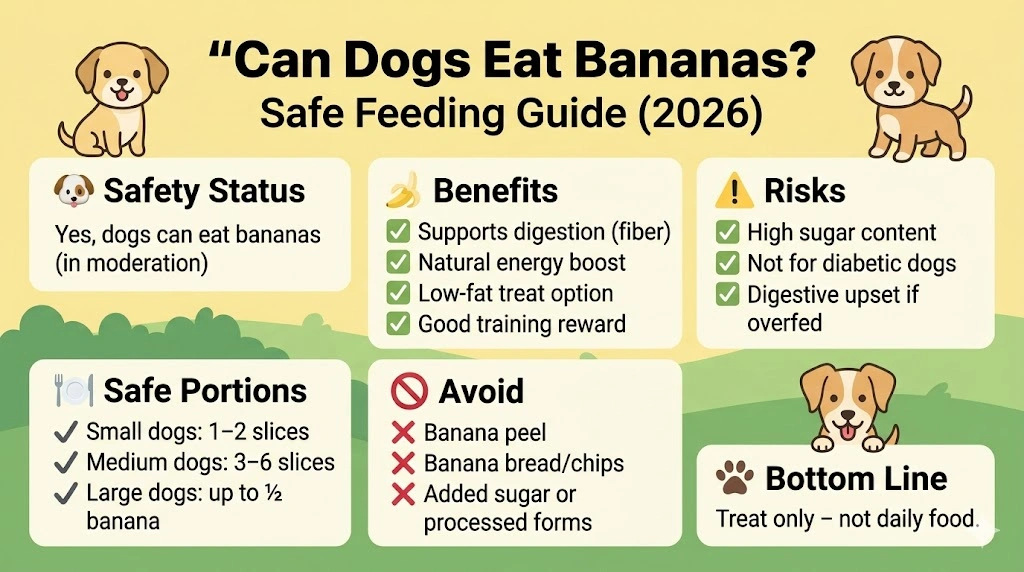
Yes, bananas are generally considered safe for dogs when fed in moderation. They are not known as a toxic fruit for dogs. Many veterinarians and pet nutrition sources describe them as an occasional treat that can be offered in small amounts. That said, safe does not mean unlimited. And it does not mean every dog should eat them in the same quantity.
The easiest way to think about bananas is this: they are a treat, not a meal. Dogs do not need fruit to stay healthy. And their main nutrition should come from a complete and balanced dog food, not from snack foods. Treats, including fruit snacks. Should stay under roughly 10% of total daily calories so the rest of the diet can do its job properly.
Bananas are often recommended as a better choice than fatty foods. Salty, or heavily processed snacks, are simple, soft, and naturally sweet. Still, the sugar content is exactly why portion control matters. A dog that gets too much banana may end up with digestive upset. Extra calories or problems related to weight management over time.
Nutritional Value of Bananas for Dogs
Bananas contain several nutrients that are often mentioned in canine nutrition discussions. Including potassium, vitamin B6, vitamin C, and fiber. And magnesium. These nutrients do not make bananas essential for dogs. But they help explain why bananas are seen as a reasonable occasional treat instead of a junk snack.
Potassium is one of the best-known minerals in bananas. And it plays a role in muscle function and normal body processes. Fiber may support digestive regularity in some dogs. especially when. A small amount is used as part of a broader diet. Vitamin B6 and vitamin C are also commonly listed in banana nutrition profiles. Although dogs get what they need primarily from balanced pet food rather than fruit.
The part that needs the most caution is sugar. Bananas are naturally sweet, and even natural sugar still counts as sugar. That means too much banana can push calories up quickly. This is one reason veterinarians advise moderation and why bananas should not replace a dog’s usual diet or main treats.
For that reason, bananas are best viewed as a supplemental snack: useful in tiny doses, but never critical. In plain language, they are a “sometimes food,” not a daily staple.
Banana for Dogs Benefits
1. A gentle, easy-to-serve treat
One of the main benefits of bananas for dogs is simplicity. A plain banana is easy to portion, easy to serve, and easy to recognize. Which makes it a convenient option for pet parents who want a quick, low-fuss treat. Because it is soft, it is also a practical choice for many dogs that prefer tender textures over crunchy snacks.
2. A possible digestion-friendly snack in small amounts
Bananas contain fiber, and fiber is one reason they are sometimes considered helpful for dogs with mild digestive sluggishness. Some veterinary sources note that the fruit’s fiber content may support gastrointestinal comfort in moderation. Although too much of any fruit can create the opposite effect and cause loose stools.
3. A better alternative to junky human snacks
Compared with many processed human snacks. Bananas are low in fat and free from the additives that appear in baked goods. Candy, or flavored treats. That is part of why they are sometimes suggested as a substitute for fatty or salty reward foods. For dogs that love food rewards. A few banana pieces can be a more sensible option than highly processed people food.
4. A handy training reward
Banana slices can work well during training because they are soft and quick to chew. And easy to break into tiny pieces. That makes them a useful “high value” reward for some dogs. Especially when you want to keep calories modest while still offering something flavorful. The key is to use very small portions so the treat supports training without overfeeding.
5. A source of quick energy
Because bananas contain natural carbohydrates, they can provide a short burst of energy. That can be useful for active dogs that need a small snack before or after a walk. Play session, or training drill. Even then, the serving should stay small, because the same carbohydrates that supply energy also raise the calorie count.
6. A low-fat treat option
Bananas are naturally low in fat, which makes them attractive as a replacement for richer treats. Many pet owners appreciate this because it gives them. A way to reward the dog without adding extra grease or heavy ingredients. That said, low fat does not mean unlimited, because the sugar content still matters.
Are Bananas Bad for Dogs? Risks Explained
Bananas are not “bad” in the toxic sense for most dogs. But they do carry meaningful downsides when they are overused. The main issue is not poison; it is balance. A dog can absolutely eat too many bananas. And the result can be more calories, more sugar, and more stomach trouble than the body can comfortably handle.
1. Sugar overload
The biggest risk is sugar. Bananas are naturally sweet, and that sweetness may seem harmless, but it still adds up. Too much sugar can contribute to weight gain. Extra weight can create a longer list of health issues for dogs over time. This is why bananas should stay in the “treat” category rather than becoming a frequent routine snack.
2. Not ideal for overweight dogs
If a dog is already carrying extra weight. Banana portions should be very limited or skipped unless a veterinarian says otherwise. Pet nutrition guidance commonly warns that fruit. Even when safe. It may not be the best choice for Can Dogs Eat Bananas dealing with obesity. Because it adds sugar and calories that are easy to underestimate.
3. Not a good fit for diabetic dogs
Dogs with diabetes are a special case. Diabetic dogs need careful blood sugar management and diets that do not cause sudden spikes. Sugary fruit snacks are usually not a casual choice. Veterinary guidance on diabetic feeding emphasizes low-starch. Glucose-stable meals, which is one reason banana treats should be discussed with a vet first.
4. Caution for dogs with kidney concerns
Bananas contain potassium, and while potassium is a normal nutrient, dogs with certain kidney-related issues may need dietary supervision. Kidney problems can change how the body handles minerals. So it is wise not to assume that a healthy-snack rule applies equally to every dog. If your dog has kidney disease, ask a veterinarian before adding fruit-based treats.
5. Possible digestive upset
Even when a food is safe, too much of it can irritate the stomach. Bananas may cause gas, bloating, and loose stool. Or vomiting if a dog eats a large portion or if the dog has a sensitive digestive system. This is especially true for dogs that are not used to fruit or forage. Dogs that are already dealing with gastrointestinal issues.
Can Puppies Eat Bananas?
Yes, puppies can eat bananas, but the portion should be very small, and the introduction should be slow. Puppies have developing digestive systems, and that makes them more sensitive to sudden dietary changes than adult dogs. A tiny taste is usually a better starting point than a full serving.
Because puppies are smaller and still growing, they can be more easily affected by extra sugar or large snack portions. That is why bananas should be offered only occasionally and in miniature amounts, not as a daily habit. A few bites are enough for most puppies to enjoy the flavor without overwhelming their stomach.
A sensible approach is to start with one or two very small slices. Then watch for any change in stool, appetite, energy, or comfort. If the puppy handles it well, the same small serving can be used now and then as an occasional reward. If there is any digestive reaction, skip bananas and speak with your vet.
Can Dogs Eat Banana Peel?
No, banana peel is not a safe everyday dog snack. While the fruit itself is generally considered fine in moderation. The peel is hard to digest and can create a choking hazard or even an intestinal blockage if swallowed. A significant amount. That is why pet nutrition sources clearly advise against feeding the peel.
The peel may also carry residue from pesticides or dirt from handling. Which adds another reason to keep it out of your dog’s bowl. The safest rule is simple: peel the banana first, then offer only the soft fruit inside.
If a dog sneaks a small bite of peel, it may pass without incident. But large amounts are much riskier, especially for small dogs. Watch for vomiting, abdominal discomfort, constipation, or loss of appetite, and contact a veterinarian if anything seems off.
How Much Banana Can Dogs Eat?
The safest portion is the smallest one that still feels like a reward. Bananas are best given as a bite-sized treat rather than a bowlful. And the exact amount should reflect your Dog’s size and overall calorie needs. The general treat rule used in veterinary nutrition is that. Snacks should make up no more than 10% of daily calories.
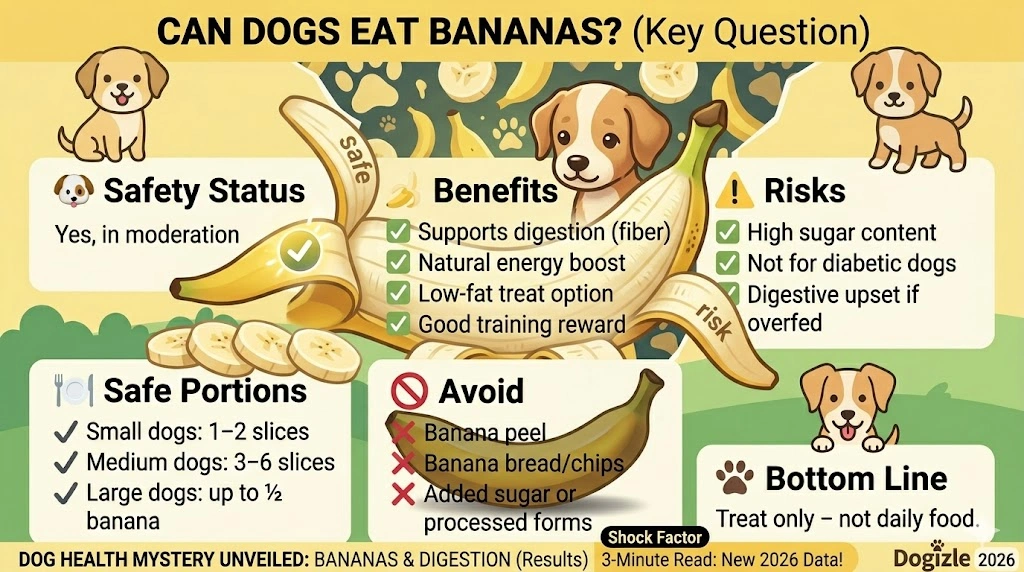
For many small dogs, just one or two thin slices is enough. As medium dogs, a few small pieces may be fine. For larger dogs, a little more can be appropriate, but even then, the banana should remain a minor snack rather than a frequent habit. Since every dog’s metabolism and health profile differ, these amounts are best treated as starting points, not absolute laws.
A practical feeding guide looks like this in plain English: small dogs get a tiny taste, medium dogs get a few slices, and large Can Dogs Eat Bananas may handle up to about half a banana on occasion. Even so, the 10% treat rule still matters, because a healthy snack can become an unhealthy pattern if the overall calorie budget is ignored.
The most useful question is not “How much can my dog physically eat?” but “How much banana still keeps the overall diet balanced?” That question is better for weight control, better for digestion, and better for long-term health.
Best Ways to Feed Bananas to Dogs
1. Fresh banana slices
Fresh banana slices are the easiest option. They are soft, simple, and easy to portion, which makes them one of the most straightforward ways to offer the fruit without extra ingredients. A peeled banana cut into tiny pieces is usually the cleanest and most controlled approach.
2. Frozen banana pieces
Frozen banana can be a fun warm-weather treat, and AKC specifically mentions banana-based frozen snacks as a dog-safe idea when prepared plainly. The key is to freeze only plain bananas with no added sweeteners, chocolate, nut coatings, or other risky ingredients.
3. Mashed banana in tiny amounts
Some owners like to mash a little banana and use it as a topper or mixed-in treat. That can work, but the serving should remain very small because mashed fruit is easy to overdo. Once the fruit loses its shape, portion control becomes even more important.
4. Banana on a lick mat
A thin smear of plain Banana on a lick mat can keep a dog busy and make treat time feel special. This works best when the layer is light and the total amount remains small, because lick mats make it easy to use more food than intended. Bananas can be a pleasant enrichment ingredient, but they should still stay within the treat budget.
5. Banana with xylitol-free peanut butter
Banana paired with peanut butter can be a popular combination, but the peanut butter must be free of xylitol, which is highly toxic to dogs. Xylitol can trigger a dangerous insulin release and lead to severe illness, so any peanut butter used with banana needs a careful ingredient check.
Can Dogs Eat Banana Chips or Banana Bread?
Banana chips are not the same as plain bananas. Many packaged chips are dried, fried, sweetened, or flavored, which means they often carry extra sugar, oil, or additives that are not ideal for dogs. Because the ingredient list varies by brand, the safest approach is to skip them unless you are certain the product is plain and dog-appropriate.
Banana bread is an even bigger concern. Human baked goods may contain ingredients that are unsafe for Can Dogs Eat Bananas, including raisins and xylitol, both of which are well-known hazards for pets. ASPCA lists raisins among the foods to avoid, and xylitol is widely recognized as extremely toxic to dogs. That means banana bread is not a safe “banana treat” just because it contains fruit.
So the rule is simple: plain bananas can be okay; processed banana snacks are a different category entirely. The more a banana product looks like a human dessert, the less suitable it is for a dog.
Signs Your Dog Ate Too Much Banana
The most common signs of banana overload are digestive. You may notice loose stool, gas, bloating, stomach discomfort, or vomiting. These symptoms do not always mean an emergency, but they do mean the dog’s system is telling you the snack was too much or too rich for that moment.
A dog that eats too much banana may also seem a little off in appetite or energy, especially if the fruit was served with other ingredients or in a processed form. If the Can Dogs Eat Bananas is repeatedly unwell after banana snacks, that is a sign the fruit may not agree with them and should be removed from the routine.
If symptoms are mild and short-lived, simple observation may be enough, but persistent vomiting, ongoing diarrhea, swelling, lethargy, or pain deserve veterinary attention. That is especially true for puppies, small dogs, and dogs with chronic health conditions.
Common Mistakes Dog Owners Make
One of the most common mistakes is assuming that “healthy” means “safe in large amounts.” Bananas are healthier than many junk Foods, but they still add sugar and calories. A generous mindset at snack time can quietly turn into a calorie problem over weeks and months.
Another common mistake is giving a banana peel along with the fruit or letting the dog chew on the peel as if it were harmless. It is not. The peel is harder to digest and can create a blockage risk, which makes it a poor choice for any dog, especially a small one.
A third mistake is mixing bananas with unsafe human foods. Banana bread, sweet dips, flavored yogurt, chocolate toppings, raisins, and peanut butter containing xylitol can turn a simple snack into a serious hazard. Even a food that starts safe can become unsafe because of the ingredients added to it.
The final mistake is forgetting that a dog’s health status matters. A dog with diabetes, obesity, bladder stones, gastrointestinal disease, or kidney concerns should not be treated as a “one-size-fits-all” banana candidate. Fruit may be acceptable for one pet and inappropriate for another, so the individual dog matters more than the trend.
Vet-Level Insights
Veterinary nutrition guidance consistently points in the same direction: dogs do not need fruit to be healthy, and treats should remain a small part of the diet. The foundation of canine nutrition is complete, balanced dog food, not snack foods or fruit add-ons. Bananas are optional, not essential.
That same guidance also explains why moderation matters so much. Treat calories are easy to overlook, and over time, they can interfere with weight control. Since obesity is a major health concern in dogs, keeping banana portions tiny is not just a cosmetic choice; it is part of responsible feeding.
Another useful vet-level point is that fruit safety is not only about toxicity. A food can be non-toxic and still be a poor fit for a particular dog because of diabetes, GI sensitivity, or another health condition. That is why veterinarians often recommend tailoring snack choices to the dog in front of you rather than following a generic internet rule.
So the practical expert advice is easy to remember: keep banana portions small, use them occasionally, and let your veterinarian guide you if your dog has medical conditions that make sugar or extra calories a concern.
Healthy Fruits for Dogs
Bananas are the only option in the Broader category of dog-safe fruits. AKC and PetMD both note that several fruits can be offered in moderation, which means a banana is not the only snack available when you want to vary treat time. Apples without seeds, blueberries, and seedless watermelon are commonly mentioned as safer fruit choices when handled properly.
Even among safe fruits, the same rule applies: moderation matters. A dog-friendly fruit does not automatically become a daily food, and the serving should still fit within the 10% treat rule. That keeps the snack enjoyable without turning fruit into a hidden calorie source.
Bananas can still hold a special place because they are easy to serve, inexpensive, and familiar. But they are best treated as one useful option in a wider treatment rotation rather than the only healthy fruit on the menu.
Pros and Cons of Bananas for Dogs
Pros
Bananas are convenient, soft, naturally sweet, and easy to portion. They can be used as an occasional reward, may suit some training sessions, and provide nutrients such as potassium, vitamin B6, vitamin C, and fiber. For many, can dogs eat bananas? They are an appealing alternative to salty or fatty snacks.
Cons
Bananas are also relatively high in sugar compared with some other dog-safe snacks, which means overuse can contribute to weight gain and stomach upset. They are not necessary in a dog’s diet, and they are a poor choice for some dogs with diabetes, obesity, or other health conditions. Banana peel is unsafe, and processed banana foods are often far more problematic than the plain fruit itself.
The overall verdict is straightforward: bananas are useful, but only in the right setting. They are best as a small, occasional, plain, peeled treat.
FAQs
No, Bananas should not become a daily habit for most dogs. Even though they are generally safe in moderation, they still add sugar and calories, and treat foods are meant to stay under about 10% of daily intake. A daily banana routine can quietly crowd out better nutrition and make weight control harder.
Yes, bananas can be good for dogs when used as a small occasional treat. They offer nutrients such as potassium, vitamin B6, vitamin C, and fiber, and they are often seen as a healthier alternative to fatty or salty snacks. The keyword is “occasional,” because the fruit is helpful only when portioned properly.
Yes, puppies can eat bananas, but only in tiny amounts. Puppies have more sensitive digestive systems and are easier to overfeed, so a small taste is safer than a large serving. Introduce the fruit slowly and watch for any digestive reaction.
No, dogs should not eat banana peel. The peel is difficult to digest and may pose a choking or blockage risk, especially in smaller dogs or when eaten in larger pieces. Always remove the peel and offer only the fruit inside.
Usually not without a veterinarian’s approval. Diabetic dogs need blood sugar stability, and bananas add natural sugar that may work against that goal. Because diabetic feeding often requires lower-starch, tightly managed meals, banana treats should be discussed with your vet before they are added.
Conclusion
So, can dogs eat Bananas? Yes, most dogs can enjoy plain bananas in moderation. It is a simple, soft, dog-friendly treat that may offer a few nutritional benefits, especially when used occasionally and in the right amount. But it is not a required food, and it should never replace a complete and balanced diet.