
Can Dogs Eat Celery? Vet-Approved Safety Guide
If you have ever stood in your kitchen chopping celery and felt a pair of eyes locked on your hands, you already know the scene. Many dog owners experience this exact moment and ask the same practical question: Can dogs eat celery safely?
The answer is yes, dogs can eat celery, but only when it is served properly, in sensible portions, and without any harmful extras. Celery is often thought of as a simple “health food” for humans because it is crisp, refreshing, and low in calories. That makes it sound like a perfect snack for dogs, too. In many cases, it can be a decent treat. Still, dog nutrition is not as simple as sharing whatever seems healthy on the human plate.
What is nutritious for people is not always ideal for dogs. Some foods are harmless in theory but risky in practice because of choking hazards, digestive sensitivity, pesticides, or even the way they are prepared. That is why celery deserves a more careful look.
In this guide, you will learn:
- Whether celery is actually safe for dogs
- What benefits celery may offer
- What risks should you not ignore
- How much celery can different dogs eat
- How to prepare celery the right way
- When celery should be avoided altogether
By the end, you will know whether celery deserves a place in your dog’s treat routine or whether it is better left out of the bowl.
Quick Answer: Is Celery Safe for Dogs?
Yes — celery is generally safe for dogs in moderation.
It is non-toxic and can be used as an occasional treat, but it must be offered correctly.
Safe conditions
- Cut into small, manageable pieces
- Served plain, with no salt, butter, oils, spices, or sauces
- Given only as an occasional snack, not as a meal replacement
- Washed well to reduce dirt and pesticide residue
- Introduced slowly, especially for sensitive dogs
Avoid celery if:
- Your dog has a history of digestive upset
- Your dog gulps food without chewing
- Your dog has dental pain or chewing difficulty
- Celery is coated with seasoning, dip, or dressing
- Your dog has had choking issues before
Bottom line
Celery itself is not poisonous to dogs, but the wrong size, wrong texture, or wrong preparation can create problems. The biggest concerns are choking, stomach irritation, and unnecessary exposure to chemicals.
Benefits of Celery for Dogs
Celery is not just a crunchy vegetable with almost no calories. When used properly, it may offer several small but meaningful advantages for some dogs.
1. Low-Calorie Treat for Weight Control
One of celery’s strongest advantages is its low energy density. That means it gives a dog something to chew without contributing many calories. For dogs that are carrying extra weight, this can be useful.
Celery may be a smart snack choice for:
- overweight dogs
- dogs on a calorie-controlled diet
- Indoor dogs with limited exercise
- dogs that enjoy frequent training rewards but do not need rich treats
A small piece of celery can satisfy a dog’s urge to snack without piling on extra calories the way biscuits, chews, or fatty foods might.
2. High Water Content Supports Hydration
Celery is made up of a very large amount of water, which makes it feel light, crisp, and refreshing. That high moisture content can help contribute to your dog’s daily fluid intake.
This can be especially helpful for:
- dogs in warm weather
- active dogs after exercise
- dogs that tend to drink less water than they should
- pets who enjoy crunchy snacks more than soft ones
Celery should never replace fresh drinking water, of course, but it can be a hydrating bite-sized treat.
🦷 3. Crunchy Texture May Support Oral Feel
Some owners like celery because of its crunchy structure. As a dog chews it, the texture may lightly scrape the teeth and stimulate the gums.
That said, it is important to keep expectations realistic. Celery is not a substitute for dental care. It does not clean teeth the way brushing, dental chews, or veterinary dental treatment can. Still, as a crunchy snack, it may provide a small mechanical benefit.
4. Contains Useful Vitamins and Minerals
Celery contains a mix of naturally occurring nutrients, including:
- Vitamin A
- Vitamin C
- Vitamin K
- Potassium
- Fiber
These nutrients can support normal body functions in dogs, such as:
- immune health
- vision and tissue maintenance
- blood clotting
- muscle and nerve function
- digestive regularity
Celery is not a nutritional powerhouse in the same way as a balanced dog food, but it can contribute a little extra variety.
5. May Help Freshen Breath Slightly
Anecdotally, some dog owners notice that celery seems to reduce mild dog breath odor a little. That may be related to its water content, texture, and natural plant compounds.
This should be seen as a minor bonus, not a major benefit. If your dog has strong or persistent bad breath, that can signal dental disease or another health problem that needs veterinary attention.
Risks & Dangers of Celery for Dogs
Even though celery is generally safe, it is not risk-free. The main issue is not the vegetable itself but how it is fed.
1. Choking Hazard
This is the biggest concern for many dogs.
Celery has a fibrous, stringy structure that can be difficult for some dogs to chew properly. If a dog tries to swallow a large piece too quickly, the vegetable can become lodged in the throat.
Higher-risk dogs include:
- small breeds
- puppies
- dogs that inhale food rather than chew
- senior dogs with weak teeth or reduced chewing ability
To reduce this risk, celery should always be:
- chopped into small pieces
- served under supervision
- given only if your dog chews well
Large celery stalks should never be handed over whole.
2. Digestive Upset
Celery contains fiber, and while fiber can be useful in moderate amounts, too much can lead to a messy stomach.
Possible symptoms of overeating celery include:
- loose stool
- diarrhea
- gas
- bloating
- mild abdominal discomfort
Dogs with sensitive stomachs may react more quickly than dogs with robust digestion. A tiny amount may be fine, but a large serving can turn a harmless snack into an unpleasant experience.
3. Pesticide Exposure
Like many vegetables, celery may carry pesticide residue if it is not washed properly. Because celery is eaten raw in many cases, thorough washing is important.
Possible concerns include:
- unwanted chemical residue
- digestive irritation
- long-term exposure if produce is regularly served unwashed
To reduce this risk:
- Rinse celery under clean running water
- scrub it gently if needed
- Consider organic celery when practical
4. Stringy Texture Problems
The long fibers in celery are one of the reasons it is crunchy, but they can also make celery harder to digest or chew. Some dogs may chew it fine, while others may swallow stringy strands that are awkward to process.
This can be particularly troublesome for:
- very small dogs
- dogs with poor chewing habits
- dogs with a history of intestinal sensitivity
If you notice your dog struggles with stringy vegetables, celery may not be the best treat option.
How Much Celery Can Dogs Eat?
A healthy treat rule is to keep snacks within about 10% of your dog’s daily calories. That rule matters here, too.
Celery should be considered an occasional treat, not a major dietary component. Even though it is low in calories, the amount still matters because of chewing safety and digestion.
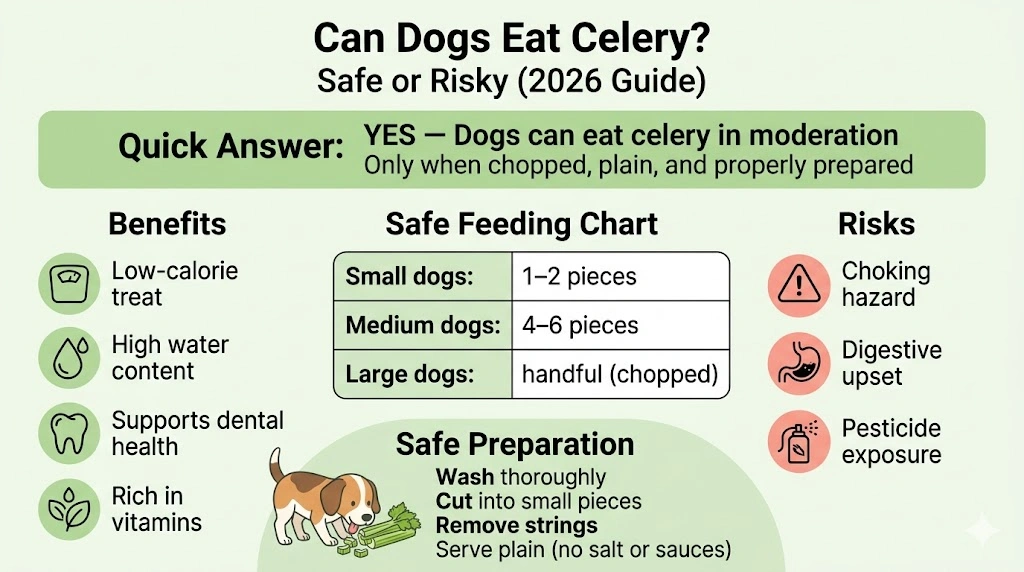
Discover the benefits, risks, feeding chart, and vet-approved tips in this quick visual guide before sharing celery with your dog.
Feeding Chart
| Dog Size | Weight Range | Safe Amount | Frequency |
| Small | Under 10 kg | 1–2 tiny pieces | 2–3 times per week |
| Medium | 10–25 kg | 4–6 small pieces | 3–4 times per week |
| Large | 25+ kg | A small handful, chopped | 4–5 times per week |
✔️Feeding tips
- Start with a very small portion
- Observe how your dog reacts
- Increase slowly only if your dog tolerates it well
- Do not use celery to replace a balanced meal
- Keep treats scattered across the day rather than given all at once
Even if a dog loves celery, moderation is still the safest approach.
Can Puppies Eat Celery?
Yes, puppies can eat celery, but they need extra caution.
Puppies are not small adult dogs. Their digestive systems are still developing, and their chewing habits are often unpredictable. They may bite too hard, swallow too quickly, or chew unevenly.
Puppy feeding rules
- Cut celery into very tiny pieces
- Offer only a small amount
- Introduce it gradually
- Watch closely after the first few servings
Why puppies need extra care
Puppies are more likely to experience:
- choking
- stomach irritation
- difficulty chewing fibrous textures
- loose stool from sudden dietary changes
For many puppies, lightly steamed celery is easier to manage than raw stalks. Softening the texture may reduce the chewing burden, although plain raw celery is still acceptable in tiny portions if the puppy handles it well.
How to Safely Prepare Celery for Dogs
Preparation matters just as much as the food itself. A safe vegetable can become unsafe if it is served in the wrong form.
Safe preparation checklist
- Wash thoroughly
- Remove visible dirt
- Cut into small bite-sized pieces
- Remove tough strings if needed
- Serve plain and unseasoned
- Supervise your dog while eating
Unsafe preparation methods
Do not give celery that is:
- salted
- buttered
- mixed with dips
- fried
- covered in seasoning
- cooked in rich sauces
- combined with onion, garlic, or other unsafe ingredients
Even if the celery itself is fine, the added ingredients can be dangerous. Dogs do not need flavoring on vegetables. Plain is best.
Raw vs Cooked Celery for Dogs
Both raw and cooked celery can be fed to dogs, but they are not equal in texture or practicality.
| Type | Benefits | Drawbacks | Best For |
| Raw | Crunchy, refreshing, easy to serve | More fibrous, harder to chew | Healthy adult dogs that chew well |
| Cooked | Softer and easier to digest | Less crisp, some nutrients may be reduced | Puppies, seniors, and dogs with chewing issues |
Raw celery
Raw celery is usually the most common form offered to dogs. It is crisp, hydrating, and easy to portion. The downside is that it may be too tough for some dogs to handle safely.
Cooked celery
Cooked celery is softer and easier to chew, which can help older dogs or dogs with mouth sensitivity. It should still be plain, with no salt or seasonings.
Which is better?
That depends on your dog:
- Choose raw celery for dogs that chew well and enjoy crunchy snacks
- Choose lightly cooked celery for dogs that struggle with fibrous textures
In either form, the key is moderation and proper size.
When Dogs Should NOT Eat Celery
Celery is not the right choice for every Dog. There are situations where it is smarter to skip it.
Avoid celery if your dog:
- has frequent digestive upset
- is currently dealing with diarrhea or vomiting
- has poor teeth or painful gums
- is on a special veterinary diet
- has a history of swallowing food whole
- has previously choked on treats or vegetable pieces
When a dog has a sensitive medical history, even a healthy food can become a poor choice.
If you are unsure whether celery fits your dog’s individual needs, it is best to ask a vet before adding it to the diet.
Signs of Celery Intolerance
Most dogs handle small amounts of celery without trouble. Still, every dog is different, and some may not tolerate it well.
Watch for these signs after feeding celery:
- vomiting
- loose stool
- diarrhea
- excess gas
- decreased appetite
- tiredness or unusual lethargy
- signs of discomfort or nausea
If a mild reaction happens once and passes quickly, the issue may simply be that the serving was too large. If the symptoms continue, stop giving celery and consult a veterinarian.
Common Mistakes Dog Owners Make
Many celery problems come from simple feeding errors rather than the vegetable itself.
Common mistakes to avoid:
- giving a full celery stalk
- skipping the washing step
- adding salt, butter, or seasoning
- offering too much too soon
- not supervising the dog while eating
- Assuming every dog digests celery the same way
A small oversight can cause an unnecessary scare. Safe feeding is mostly about small choices done correctly.
Expert Tips
Celery can work well as part of a thoughtful treat routine when used wisely.
Practical tips:
- Offer celery during the day so you can watch for any reaction
- Use tiny pieces during training sessions
- Pair it with a balanced diet rather than using it as a substitute
- Rotate with other safe vegetables so your dog does not get bored
- Keep portions small, even if your dog seems eager for more
Other dog-friendly vegetables to rotate with celery
- carrots
- cucumbers
- green beans
- zucchini
Variety is useful, but only when the foods are safe and properly served.
Real-Life Use Cases
Celery is not only a nutritional topic. It can also be practical in daily life, depending on your dog’s routine and environment.
Apartment Dogs
For dogs living in apartments or compact spaces, celery can be a helpful treat because it is:
- low smell
- easy to prepare
- inexpensive
- relatively low in calories
- simple to clean up
That makes it useful for indoor dogs or owners who want a tidy snack option.
Cold Climate Dogs
In colder climates, some dogs may drink less water than they do in warmer weather. While celery does not solve hydration problems on its own, its water content can contribute a small amount of extra moisture.
Active Dogs
For dogs that go on long walks, outdoor play sessions, or hikes, celery can be a light, refreshing snack after activity. It is especially appealing in warmer months because it feels crisp and cooling.
Pros & Cons of Celery for Dogs
Every treatment has strengths and limitations. Celery is no exception.
Pros
- Low in calories
- Contains water
- Offers some nutrients
- Affordable and easy to find
- Can be used as a simple snack
- May lightly support oral freshness
Cons
- Choking risk if not cut properly
- Can trigger digestive upset in sensitive dogs
- Needs washing and preparation
- Stringy texture can be inconvenient
- Not every dog enjoys it
When compared with many processed treats, celery can be a better choice in some homes. But it is only useful when given correctly.
FAQs
Yes, Dogs can eat celery every day in very small amounts, but daily feeding is not always necessary. Celery should remain a treat, not a core food. Even healthy snacks should be used in balance.
Yes, but only if the sticks are cut into small pieces. Whole celery sticks are too large and may create a choking risk, especially for small dogs and puppies.
It may help a little, but only modestly. Celery is not a breath cure. If your dog has ongoing bad breath, dental issues are a more likely cause.
Yes, dogs can eat celery leaves in moderation as long as they are washed well. Leaves should still be offered in small amounts and without seasoning.
Organic celery can reduce pesticide exposure, which is one of the reasons many dog owners prefer it. That said, organic celery should still be washed before serving.
Yes, senior dogs can eat celery, but softer forms may be more appropriate. Lightly cooked celery is often easier for older dogs to chew and digest than raw stalks.
Conclusion
Celery can be a safe and healthy occasional snack for Dogs when it is prepared and served correctly. It is non-toxic, low in calories, and contains useful nutrients that may support hydration, digestion, and overall well-being. However, it is not without risks. The main concerns come from choking hazards, digestive sensitivity, and improper preparation, especially when celery is given in large pieces, seasoned, or fed too often. Puppies, senior dogs, and dogs with dental or stomach issues require extra care or smaller, softer portions.