If you are a dog owner searching for “can dogs eat broccoli,” you are in the right place.
Broccoli is one of the most recognized vegetables in human diets, and many pet parents now want to know whether it can also be a smart snack for dogs. The answer is encouraging, but it comes with important limits. Dogs can eat broccoli in small amounts, and it can be a useful low-calorie treat when prepared correctly. At the same time, Broccoli is not a food you should feed freely or daily, because too much can upset your dog’s stomach and create unnecessary digestive stress. Veterinarian guidance from respected pet-health sources consistently emphasizes moderation, plain preparation, and careful portion control.
The short answer is simple:
Yes, dogs can eat broccoli, but only in moderation and with proper preparation.
Broccoli is nutrient-dense, but it can also trigger gas, bloating, or stomach discomfort if overfed. In this guide, you will learn exactly how to feed broccoli safely, how much is reasonable, whether raw or cooked broccoli is better, how puppies should be handled, and what warning signs mean your dog has had too much. The goal is not only to answer the question, but to give you a practical, vet-style decision guide you can actually use.
Introduction
Many dog owners are trying to move away from ultra-processed snacks and toward cleaner, simpler, whole-food treats. That is one reason searches like can dogs eat broccoli, is broccoli safe for dogs, raw broccoli for dogs, and cooked broccoli for dogs have become increasingly common. Pet owners want natural options that feel healthier than biscuits loaded with fillers, colors, and heavy fat. Broccoli fits that trend because it is low in calories, easy to find, and rich in familiar nutrients. Still, the fact that something is healthy for humans does not automatically mean it works the same way in dogs. Dogs digest plant foods differently, and certain vegetables can create more gas or irritation than their human owners expect.
In this complete guide, you will learn:
- whether broccoli is truly safe or potentially harmful
- The main nutritional benefits of broccoli for dogs
- the most common risks, including gas and digestive upset
- the correct serving size by dog size
- raw broccoli versus cooked broccoli
- Whether puppies can eat broccoli
- How to prepare broccoli safely
- Symptoms of overfeeding
- common questions dog owners ask before serving it
Let’s begin with the most important question of all.
Is Broccoli Safe for Dogs?
The most important keyword here is ” Is broccoli safe for dogs.
Simple answer
Yes, broccoli is non-toxic for dogs when served in small quantities and without seasoning, oils, butter, garlic, onion, or sauces. The American Kennel Club notes that broccoli can be offered raw or cooked as long as it is plain and given in very small amounts. PetMD likewise advises moderation and reminds owners that even healthy treats should only make up a limited portion of the overall diet.
Why safety still depends on the amount
Broccoli contains naturally occurring compounds called isothiocyanates. In ordinary small servings, this is not usually a problem. But in larger amounts, these compounds may irritate the stomach and lead to gas, abdominal discomfort, or vomiting in sensitive dogs. AKC specifically highlights gastric irritation risk from broccoli florets and recommends very small portions.
So the real rule is this:
Broccoli is safe in moderation, but not in unlimited amounts.
That is the key distinction every dog owner should understand.
What Makes Broccoli Safe or Risky?
Broccoli is a mixed bag in canine nutrition because it offers benefits while also carrying a few practical risks.
On the positive side, broccoli contains fiber, vitamin C, vitamin K, potassium, and antioxidants. Those nutrients can support general wellness when broccoli is used as an occasional treat rather than a meal replacement. It is also low in fat and relatively low in calories, which is why many owners use it as a treat for dogs that need weight control support.
On the risk side, broccoli can cause trouble when the serving becomes too large or the dog eats it too quickly. The fiber content may be healthy in small amounts, but too much can lead to flatulence and digestive imbalance. The florets can also contribute to gas production, and large or tough pieces can become a choking issue, especially for smaller dogs. AKC notes that the stalks can be a problem if they are too firm or poorly prepared.
A good way to think about broccoli is this:
Small amount = helpful treat
Large amount = stomach trouble
That simple framework matches the guidance from the main pet-nutrition sources.
Nutritional Benefits of Broccoli for Dogs
Broccoli is not an essential food for dogs, but it can still contribute a few useful nutrients when used correctly. It should never replace a balanced, complete dog food, but it can complement a healthy feeding plan in limited quantities. PetMD and AKC both emphasize that vegetables like broccoli are treats, not dietary foundations.
1. Vitamin C
Broccoli contains vitamin C, which supports normal immune function and acts as an antioxidant in the body. Dogs can make some vitamin C on their own, so they do not require large supplemental amounts the way humans sometimes do. Even so, the vitamin C content in broccoli can still make it a nutritious occasional snack.
2. Vitamin K
Vitamin K is involved in normal blood clotting and helps support bone metabolism. Broccoli offers a modest source of this vitamin, which adds to its nutritional appeal as a treat food.
3. Fiber
Fiber can support bowel regularity when used carefully. A little fiber may help some dogs feel fuller between meals, which is one reason broccoli sometimes appears in low-calorie feeding plans. But fiber is a double-edged sword: too much can quickly become a source of bloating, gas, or loose stool.
4. Potassium
Potassium supports normal muscle and nerve function. Broccoli includes some potassium, which is part of why it is often classified as a nutrient-rich vegetable rather than a “empty” snack.
5. Antioxidants
Broccoli contains plant compounds that contribute antioxidant activity. In practical terms, this is one more reason the vegetable is viewed as a smart occasional snack rather than a junk treat.
Real Benefits for Dogs
When broccoli is used properly, it can offer a few practical benefits for dog owners who want healthier snack choices.
It may help with weight management because it is low in calories compared with many commercial treats. It can also give dogs a crunchy, interesting texture without adding a lot of fat. Some owners use small portions to diversify treat rotation and reduce dependence on calorie-dense biscuits. Broccoli can also be a useful “bridge snack” for dogs that need something simple and plain between meals, especially when training or reward feeding is involved.
In other words, broccoli can function as:
- a low-calorie treat
- a light training reward in tiny pieces
- a snack alternative for dogs on weight-control plans
- a way to add variety without adding heavy fat
That said, broccoli is still optional. A dog does not need broccoli to be healthy.
Risks of Feeding Broccoli to Dogs
Even nutritious foods can cause problems when the serving gets too large or the dog is sensitive. This is especially true for broccoli.
1. Gas and bloating
This is the most common issue. Broccoli can increase intestinal gas, and dogs may become noticeably flatulent after eating it. PetMD specifically notes that broccoli may cause gas because of its fiber content and the compounds found in the florets.
2. Digestive upset
Too much broccoli can cause vomiting, diarrhea, or loss of appetite. Some dogs tolerate small servings easily, while others have a much lower threshold for fibrous vegetables. If your dog has a sensitive stomach, broccoli should be introduced more cautiously—or avoided altogether when the gut is already irritated.
3. Choking hazard
Large florets, thick stems, and poorly cut pieces may be difficult for some dogs to chew safely. AKC specifically warns that tough broccoli stalks can create an obstruction risk in the esophagus if they are not prepared appropriately. That matters especially for toy breeds, small dogs, and dogs that gulp their food.
4. Rare long-term concerns
Some discussions mention thyroid-related concerns with excessive cruciferous vegetables. In normal real-world feeding, this is not the main issue most dog owners need to worry about. The more immediate and common problems are gas, stomach irritation, and choking risk. That is why moderation is the practical priority.
How Much Broccoli Can Dogs Eat?
The most important rule is this:
Broccoli should not exceed 10% of daily food intake.
That general “treats in moderation” principle aligns with major pet-nutrition guidance. AKC and PetMD both emphasize very small quantities and keeping treats to a limited share of the diet.
Safe feeding chart
Here is a simple, practical guide:
- Small dogs under 10 kg: 1–2 small florets, 2–3 times per week
- Medium dogs 10–25 kg: 2–4 florets, 2–3 times per week
- Large dogs over 25 kg: a small handful, 2–4 times per week
This is a general starter guideline, not a universal rule. Some dogs tolerate less, and some dogs tolerate slightly more. The safest approach is always to start with a smaller amount than you think is necessary and then monitor digestion over the next 24 hours.
Practical portion logic
A good treat rule is to keep broccoli as an occasional supplement, not an everyday staple. If you are already giving other treats that day, reduce the broccoli portion. If your dog is small, elderly, or has a history of sensitive digestion, use the lower end of the range. If your dog is overweight, broccoli can be useful as part of a lower-calorie treat rotation, but still only in small quantities.
Raw Broccoli for Dogs vs Cooked Broccoli for Dogs
Two of the most searched phrases are raw broccoli for dogs and cooked broccoli for dogs.
Raw broccoli
Raw broccoli is acceptable for many dogs in very small pieces, but it is not always the easiest form to digest. It is crunchier, denser, and sometimes more likely to cause gas or chewing difficulty. For dogs that tend to swallow food whole, raw broccoli can also create a choking concern if pieces are not cut properly. AKC states that dogs can eat broccoli raw or cooked, but plain preparation and small amounts are essential.
Cooked broccoli
Lightly cooked broccoli, especially steamed broccoli, is usually the more comfortable choice because it is softer and easier to chew. It may also be gentler on the stomach. The ideal preparation is simple: steamed, plain, and served without seasoning or oils. AKC notes that cooking can help avoid certain issues, and PetMD likewise recommends plain servings and moderation.
Best choice
Lightly steamed, plain broccoli is generally the best option for most dogs.
That said, the most important factor is not raw versus cooked alone. It is the size of the piece, the total amount, and whether the dog tolerates it well.
Can Puppies Eat Broccoli?
The keyword here is can puppies eat broccoli.
Short answer
Yes, but only in very small amounts, and not too early in life. Puppies have more delicate digestive systems than adult dogs, and their diet should be centered on complete puppy food rather than vegetables. If a puppy is under about six months old, broccoli is usually better avoided. After that, tiny pieces may be offered occasionally if the puppy is otherwise healthy and tolerates new foods well.
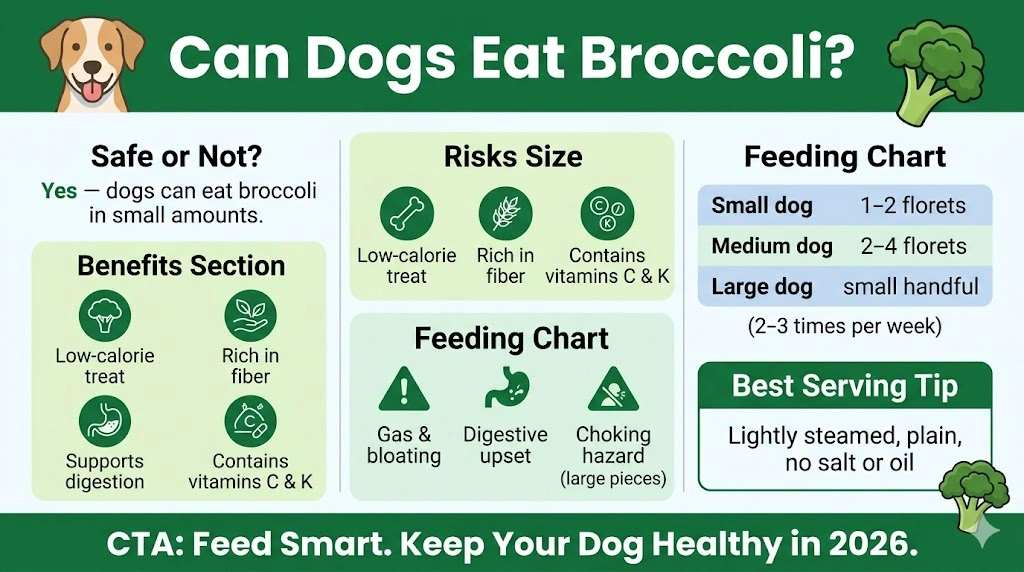
Yes — but only in small, safe portions!
This quick vet-style infographic breaks down the benefits, risks, and exact feeding chart so you can safely include broccoli in your dog’s diet in 2026.
Why are puppies more sensitive?
Puppies are still developing digestive tolerance. Too much fiber can trigger diarrhea, and an immature gut may react strongly to a new vegetable. Because puppies need reliable growth nutrition, broccoli should never take the place of a properly balanced puppy formula. It is a treat, not a developmental food.
Puppy rule of thumb
- Under 6 months: avoid or be extremely cautious
- After 6 months: tiny pieces only, infrequently
If a puppy has loose stool, vomiting, or reduced appetite after trying broccoli, remove it from the diet and return to simple, proven foods.
How to Prepare Broccoli for Dogs
If you plan to feed broccoli safely, preparation matters just as much as quantity.
Step 1: Wash thoroughly
Wash the broccoli well to remove dirt, residue, and potential pesticide traces.
Step 2: Cut it into tiny pieces
Smaller pieces reduce choking risk and make it easier for the dog to chew and swallow safely.
Step 3: Steam lightly
Steaming softens the broccoli, improves chewability, and often makes it easier for dogs to digest.
Step 4: Serve plain
No salt. No oil. No butter. No garlic. No onion. No seasoning blends. Dogs do not need human flavoring, and many common culinary add-ons are inappropriate for them.
Step 5: Start with a minimal amount
The first serving should be tiny. Watch how your dog reacts over the next day. If the digestive response is fine, you can slowly keep broccoli as an occasional treat.
That process reflects the same safety principles emphasized by major pet-health sources: plain, small, occasional, and carefully monitored.
Symptoms of Too Much Broccoli
If your dog eats too much broccoli, the signs are usually related to the gastrointestinal tract.
Common symptoms include:
- vomiting
- diarrhea
- excessive gas
- bloating
- restlessness
- reduced appetite
- discomfort around the belly
- sluggish behavior after eating
PetMD notes that food intolerance can show up as vomiting or diarrhea, while gas is a very common response to broccoli and other high-fiber vegetables.
When to Visit a Vet
Contact a veterinarian if:
- Symptoms last longer than 24 hours
- Your dog has severe bloating
- Your dog repeatedly vomits
- Your dog refuses food or water
- Your dog seems weak, painful, or unusually tired
- You suspect choking or obstruction
If a dog shows signs of choking, trouble breathing, or a hard, swollen abdomen, seek immediate veterinary help.
Broccoli vs Other Dog-Safe Vegetables
Broccoli is useful, but it is not the easiest or most universally tolerated vegetable.
Compared with other common dog-friendly vegetables, broccoli is best considered a moderate option. Carrots tend to be easier for many dogs. Green beans are often well tolerated and can be useful in weight-control feeding plans. Pumpkin is frequently used for digestive support. Broccoli sits somewhere in the middle: nutritious, but more likely to create gas than some alternatives.
A simple ranking might look like this:
- Carrots: very easy, crunchy, widely tolerated
- Green Beans: very low-calorie, often gentle
- Pumpkin: commonly used for digestion support
- Broccoli: healthy, but more likely to cause gas
So the conclusion is not “broccoli is bad.” It is simply not the best everyday vegetable for every dog.
Expert Vet-Style Feeding Tips
To keep broccoli safe and useful, follow these practical rules:
- serve it plain
- introduce it slowly
- chop it small
- Keep portions modest
- avoid daily feeding
- Monitor for gas or diarrhea
- Stop if your dog shows digestive sensitivity
That advice lines up with the repeated theme from pet-health sources: broccoli is fine as an occasional treat, not as a major dietary component.
Common Mistakes Dog Owners Make
A lot of broccoli-related problems come from simple feeding mistakes rather than the vegetable itself.
1. Feeding too much at once
Even healthy foods can become troublesome when the volume is too high.
2. Adding seasoning
Salt, butter, garlic, onion, and sauces are unnecessary and can make the food unsuitable for dogs.
3. Giving large chunks
This increases choking risk, especially for smaller dogs.
4. Feeding broccoli too often
A repeated daily habit can increase the chance of stomach upset.
5. Assuming “healthy” means “unlimited.”
That is one of the biggest misunderstandings in pet nutrition. Healthy is not the same as harmless in any amount.
Real-Life Feeding Scenarios
City dogs in apartments
For less active Dogs, broccoli can be used as a tiny low-calorie snack when owners want to reduce reliance on richer treats.
Dogs with weight-management goals
Broccoli can occasionally replace high-fat snacks, but the portion still needs to stay small.
Active or working dogs
These dogs may tolerate a bit more variety in their treat rotation, but broccoli still should not become a large part of the feeding routine.
Dogs with sensitive stomachs
These dogs may need broccoli reduced or removed altogether, because the gas and fiber load may be too much.
The practical lesson is simple: the ideal amount depends on the dog’s digestive tolerance, not just the dog’s size.
Pros and Cons Summary
Pros
Broccoli is low in calories, nutrient-rich, easy to find, and useful as an occasional treat. It can help owners vary snack choices without adding much fat.
Cons
Broccoli can cause gas, stomach upset, bloating, and a choking risk if pieces are too large or the total amount is too high. It is not necessary for dogs, and it should never be treated like a free-feed vegetable.
Frequently Asked Questions
No. Dogs should not eat Broccoli every day. It is best used occasionally, because regular overfeeding can lead to digestive trouble and excessive gas. The broader treat guidance from pet-nutrition sources also supports keeping snacks to a small part of the diet.
Yes, but only if the stems are cut into small, manageable pieces. Thick or tough stems can be harder to chew and may pose a choking or obstruction risk if served carelessly.
Usually no. If a dog already has diarrhea, extra fiber from broccoli may make the situation worse rather than better. In that case, simpler foods and veterinary guidance are more appropriate.
The most likely results are gas, vomiting, diarrhea, bloating, and discomfort. If symptoms are severe or persistent, contact a veterinarian.
Only in tiny amounts, and usually not until they are older and their digestion is more mature. For young puppies, the priority should be balanced puppy food rather than vegetable snacks.
Cooked, especially lightly steamed broccoli, is generally the safer and easier option for many dogs. Raw broccoli is still acceptable in small amounts, but it can be harder to chew and may cause more gas.
Conclusion
So, can dogs eat broccoli?
Yes—but only in moderation.
Broccoli can be a healthy, low-calorie, occasional treat for many dogs when it is washed, cut small, and served plain. It may offer nutrients like fiber, vitamin C, vitamin K, potassium, and antioxidants, but it is not essential and should never become a major part of the diet. The main risks are gas, digestive upset, and choking from large or tough pieces. That is why the safest approach is always small portions, infrequent feeding, and close observation after the first few servings. AKC and PetMD both reinforce this moderation-first approach, and the same guidance remains sensible for 2026.