
Can Dogs Have Watermelon? Safe Vet Guide — Hidden Risks You Must Know
Yes, dogs can have watermelon in moderation. Many dog owners worry about sugar, seeds, and digestive risks, but the truth is more nuanced than you think. In this guide, you’ll learn safe portion sizes, hidden dangers to avoid, and vet-approved feeding tips so your dog enjoys watermelon without health issues or unexpected emergencies before you share it with your dog.
It is one of those Warm Summer afternoons when everything feels slow, bright, and a little too hot. Maybe you are in Berlin, Paris, Madrid, Amsterdam, London, Rome, or somewhere else across Europe, and you have just brought home a ripe watermelon from the market. You place it on the counter, slice it open, and instantly, that familiar, fresh, sweet aroma fills the kitchen.
Can Dogs Have Watermelon Safely or Not?
Not barking wildly, not jumping on the table, but sitting in that special way dogs do when they know something interesting is happening. Head tilted. Eyes fixed. Tail moving just enough to show hope. And suddenly the thought appears in your mind:
Can dogs have watermelon safely, or is it a risk?
That is a very reasonable question. Watermelon looks natural, refreshing, and harmless. It is a fruit, after all. Many people assume that if something is healthy for humans, it must be fine for dogs too. But canine digestion works differently, and the wrong part of a seemingly safe food can create a problem.
The good news is simple:
Yes, dogs can have watermelon — but only when it is prepared properly and served in moderation.
That means the fruit itself can be a safe and enjoyable treat, but only if you remove the rind, avoid seeds, and keep the serving size small enough for your dog’s body size and health status.
In this complete guide, you will learn everything you need to know in one place:
- Whether watermelon is safe for dogs
- How much can dogs eat
- whether seeds are dangerous
- Whether the rind is safe
- What health benefits watermelon can offer
- How to serve it in dog-friendly ways
- Which dogs should avoid it
- What mistakes owners commonly make
- How to think about watermelon as a summer treat, especially in European households
By the end, you will have a clear, practical answer that helps you feed with confidence instead of guessing.
Can Dogs Have Watermelon?
Yes, dogs can have watermelon safely when it is:
- seedless
- rind-free
- served in moderation
The juicy red flesh of watermelon can be a refreshing occasional treat for many dogs. It is popular during summer because it is mostly water, low in calories, and easy to prepare. That makes it especially appealing for hot days when dogs need something cooling.
Still, “safe” does not mean “unlimited.”
Watermelon should never replace your dog’s regular food. It should be treated as an extra snack, not a meal. A few small pieces can be enjoyable, but too much can upset the stomach or add unnecessary sugar.
So the short answer is:
Yes — dogs can have watermelon, but only the red flesh, in small amounts, and only as an occasional treat.
Is Watermelon Safe for Dogs?
From a practical veterinary perspective, watermelon is generally considered a dog-safe fruit when served correctly. It is commonly listed among the fruits that can be offered to dogs as an occasional snack. However, there are three major safety concerns that every dog owner should understand before offering it.
1. Seeds Can Create Problems
Even though watermelon seeds are small, they are not ideal for dogs. Depending on the size of the dog and the number of seeds eaten, they may cause:
- choking risk in small breeds
- digestive irritation
- constipation or discomfort
- rare intestinal blockage if eaten in larger amounts
For a large dog, accidentally swallowing one or two seeds is usually less concerning than for a tiny dog or puppy. But that does not mean seeds should be left in on purpose. The safest approach is to remove them before serving.
2. Rind Is Hard to Digest
The green outer rind of a watermelon is not meant for dogs. It is thick, fibrous, and difficult to break down. Some dogs may chew it, but many will swallow pieces that are too large to digest properly.
Possible consequences include:
- vomiting
- constipation
- abdominal discomfort
- digestive blockage
The rind is one of the biggest avoidable risks. If your dog eats a piece by accident, watch closely for any signs of stomach upset.
3. Sugar Still Matters
Watermelon contains natural sugar. Although it is far healthier than candy or processed sweets, it is still sugar. That means too much watermelon can lead to:
- loose stool or diarrhea
- extra calorie intake
- blood sugar concerns in diabetic dogs
- digestive sensitivity in dogs with delicate stomachs
This is why moderation is essential. A little can be refreshing. A lot can become a problem.
How Much Watermelon Can Dogs Eat?
The correct amount depends on your dog’s size, daily diet, and overall health. A small terrier should not eat the same amount as a Labrador. The safest rule is to keep treats, including fruit, under 10% of daily calories.
Here is a simple feeding guide:
| Dog Size | Weight | Safe Amount | Frequency |
| Small dogs | 1–10 kg | 1–2 small cubes | 2–3 times per week |
| Medium dogs | 10–25 kg | 2–4 cubes | 2–3 times per week |
| Large dogs | 25+ kg | 4–6 cubes | 2–3 times per week |
A practical way to think about portions
Small dogs need tiny servings because even a small amount of fruit can be a noticeable portion of their digestive load. Medium dogs can usually handle a little more, while larger dogs may tolerate slightly bigger pieces, but they still should not be given large handfuls.
The easiest method is to start small. Offer one cube. See how your dog reacts. If digestion stays normal, you can keep watermelon as a once-in-a-while snack.
Best portioning principle
When in doubt, follow this simple rule:
Less is safer than more.
That single idea helps prevent overfeeding, loose stools, and unnecessary sugar intake.
Can Dogs Eat Watermelon Seeds?
No, dogs should not eat watermelon seeds on purpose.
The occasional accidental seed is not usually a dramatic emergency, but the goal should always be to remove them before serving. The concern is not that the seed itself is “toxic” in the way some foods are toxic to dogs. The concern is mechanical and digestive.
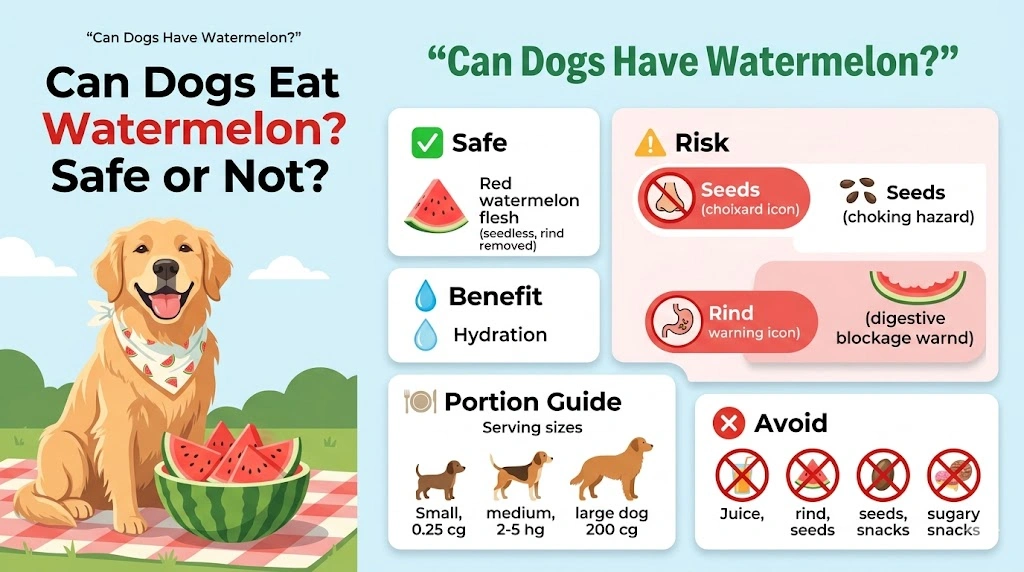
Yes — but only seedless, rind-free, and in small portions. This quick guide shows safe feeding rules, risks, and vet-approved tips every dog owner should know this summer.
Why seeds can be risky
Seeds can create:
- choking hazards
- stomach irritation
- possible blockage in small dogs
- discomfort if eaten repeatedly
For puppies and toy breeds, the risk is more meaningful because their bodies are smaller and their digestive tracts are narrower. A few seeds may pass through without issue, but there is no reason to take the chance.
Best practice
Before you serve watermelon:
- Choose seedless watermelon if possible
- remove visible seeds
- Cut the fruit into small, manageable pieces
- discard the rind and any hard interior parts
This keeps the treat enjoyable and reduces avoidable risk.
Can Dogs Eat Watermelon Rind?
No, watermelon rind is unsafe for dogs.
This is one of the most important rules. Many owners assume the rind is just another part of the fruit, but for dogs, it is not a good idea.
Why is rind a problem
The rind is:
- tough and chewy
- hard for dogs to digest
- capable of causing gastrointestinal upset
- able to create obstruction if swallowed in chunks
Unlike the red flesh, the rind is not soft and watery. It is dense and fibrous. That makes it a poor snack for canine digestion.
Possible symptoms after eating the rind
If a dog eats rind, possible signs include:
- vomiting
- reduced appetite
- constipation
- abdominal pain
- lethargy
- trouble passing stool
If the dog ate a large piece, or if symptoms appear, contacting a vet is the right move.
Simple rule
Only the red inner flesh is appropriate for dogs. Everything else should be removed.
Health Benefits of Watermelon for Dogs
When served correctly, watermelon can be a surprisingly useful summer treat. It is not a superfood miracle, but it does offer some real benefits.
1. Hydration support
Watermelon is mostly water, which is why people love it on hot days. That same quality can make it helpful for dogs, too.
It can be especially enjoyable for:
- dogs in hot climates
- active dogs after exercise
- pets that are not drinking enough water
- dogs that enjoy cold, juicy snacks
This does not mean watermelon replaces clean drinking water. It does not. But it can support hydration in a small, pleasant way.
2. Low-calorie treat option
Compared with many commercial dog snacks, watermelon is relatively low in calories. That makes it useful for dogs that need a lighter reward.
It may be a better occasional choice for:
- overweight dogs
- dogs on controlled feeding plans
- pets who need low-fat snack options
- training moments where you want something fresh and simple
Because it is low in calorie density, a few pieces can feel like a bigger treat without contributing too much energy.
3. Vitamins and nutrients
Watermelon contains nutrients such as:
- Vitamin A – supports vision and skin health
- Vitamin B6 – important for normal metabolism and brain function
- Vitamin C – contributes to antioxidant support
These nutrients are present in modest amounts, not enough to turn watermelon into a dietary cure, but enough to make it a more meaningful snack than empty-calorie treats.
4. Cooling effect in summer
This is one of the biggest reasons dogs enjoy watermelon. Chilled or frozen watermelon can be refreshing when temperatures rise. It can make a warm day feel more comfortable, especially for dogs that get excited by cold textures.
Frozen cubes can also be a good option for:
- teething puppies
- dogs who enjoy crunchy textures
- owners looking for a simple summer enrichment treat
How to Serve Watermelon to Dogs
Preparation matters more than the fruit label itself. The safest feeding method depends on keeping the treat clean, plain, and simple.
Safe options
Fresh seedless cubes
Cut the red flesh into small cubes that match your Dog’s size. Tiny pieces are best for small dogs.
Frozen watermelon chunks
Freeze small pieces for a cooler, longer-lasting treat. This is especially useful in summer.
Mashed watermelon topper
Mash a small amount and place it lightly over the dog’s regular food, but only as an occasional topper and only if your vet has not advised a restricted diet.
Mixed with plain unsweetened yogurt
A small amount of plain, unsweetened yogurt can be combined with watermelon for a chilled treat. This should be done carefully, especially if your dog is lactose-sensitive.
Unsafe or poor choices
Avoid these forms:
- watermelon juice
- canned watermelon
- sweetened fruit cups
- flavored desserts
- watermelon candy
- bakery items containing watermelon flavoring
These options often contain added sugar, preservatives, or ingredients that are not appropriate for dogs.
A simple serving routine
A smart method is:
- wash the outside of the watermelon
- Cut away the rind
- remove seeds if needed
- cube the flesh
- serve only a few pieces
- Monitor your dog afterward
That is all it takes to keep the treat simple and safer.
Can Puppies Eat Watermelon?
Yes, puppies can eat watermelon, but only in tiny amounts and only when it is prepared carefully.
Puppies have sensitive digestive systems. Their stomachs are still developing, so any new food should be introduced cautiously.
Puppy-specific rules
- Use only seedless flesh
- offer very small pieces
- introduce it slowly
- Watch for loose stool or digestive upset
- Do not overuse it as a training reward
Why extra care matters for puppies
Puppies are more likely than adult dogs to react strongly to rich, sugary, or unfamiliar foods. Even a fruit like watermelon can be too much if introduced in large portions.
Best puppy approach
Think of watermelon as a tiny novelty treat, not a regular snack. A couple of very small bites is enough. If your puppy enjoys it and tolerates it well, you can occasionally offer the same small amount later.
Dogs That Should Avoid Watermelon
Watermelon is not the ideal snack for every dog. Some dogs need extra caution or complete avoidance depending on their health situation.
Be careful if your dog has:
- diabetes
- obesity
- sensitive digestion
- chronic gastrointestinal issues
- a history of pancreatitis or dietary restrictions
- special veterinary feeding instructions
Diabetes and blood sugar concerns
Because watermelon contains natural sugar, diabetic dogs may need to avoid it or only consume very limited portions under a vet’s guidance.
Overweight dogs
For dogs trying to lose weight, even low-calorie treats still count. Watermelon can be preferable to greasy snacks, but it should still be measured carefully.
Sensitive stomachs
Some dogs simply do not handle fruit well. If your dog has had recurring stomach problems, a new fruit treat may not be the best idea without professional advice.
Warning Signs After Eating Watermelon
Even a generally safe Food can cause problems in the wrong amount or form. Watch your dog carefully after the first feeding.
Contact a vet if you notice:
- vomiting
- diarrhea
- bloating
- constipation
- weakness
- loss of appetite
- discomfort when standing or lying down
- Repeated attempts to vomit without producing anything
What these signs may indicate
- Vomiting or diarrhea may suggest your dog ate too much or had trouble digesting the fruit.
- Bloating can be a more serious issue and should never be ignored.
- Constipation may happen if the rind or seeds are involved.
- Loss of appetite or weakness can signal something more serious than simple food intolerance.
Trust your instincts. If your dog seems unwell, it is better to ask a vet than to wait too long.
Common Mistakes Dog Owners Make
Many owners mean well but accidentally create problems by serving watermelon the wrong way.
1. Forgetting to remove the rind
This is the most common preventable mistake. Rind is not safe for dogs.
2. Leaving too many seeds in place
A few stray seeds are not ideal. Small dogs can be especially sensitive.
3. Overfeeding fruit
Because watermelon seems light, owners sometimes give too much. But “light” does not mean unlimited.
4. Replacing a meal with fruit
Watermelon should never stand in for actual dog food. It is a treat, not nutrition replacement.
5. Serving processed watermelon products
Flavored snacks, sweetened cubes, desserts, and juice are not the same as plain watermelon.
6. Assuming all dogs react the same way
A dog that tolerates a few pieces may do fine, but another dog may get an upset stomach. Breed, size, age, and health status all matter.
Real-Life Feeding Scenarios
The way dog owners use watermelon can vary depending on lifestyle, climate, and household habits.
Urban homes in Germany, the Netherlands, and similar climates
In apartments and city homes, space may be limited, so frozen watermelon cubes can work well as an indoor treat. Small dogs especially benefit from portion control, since urban feeding tends to involve structured routines.
Southern Europe: Italy, Spain, Greece, Portugal
In hotter regions, watermelon is often more appealing because dogs need refreshing snacks during long, warm days. The cooling factor is useful, but the sugar content still has to be managed. Hot weather does not mean unlimited fruit.
Northern Europe: Sweden, Finland, Denmark
In cooler climates, watermelon may be less frequent and more seasonal. It still works as an occasional snack, but owners may use it primarily during summer or heat waves.
Practical takeaway
No matter where you live, the core rule remains the same:
The red flesh is safe in moderation; the rind and seeds are not ideal.
Watermelon vs Other Dog Fruits
Watermelon is not the only fruit dogs may eat. It helps to compare it with other common options.
| Fruit | Safety | Calories | Best Use |
| Watermelon | Very safe when prepared properly | Low | Hydration treat |
| Apple | Safe without seeds/core | Medium | Everyday snack in small portions |
| Banana | Safe but higher in sugar | Higher | Occasional energy treat |
| Grapes | Dangerous | Not suitable | Never feed |
What this comparison means
Watermelon stands out because it is hydrating and relatively light. Apple can also be a good treat, but the seeds and core must be removed. Banana is safe but more calorie-dense. Grapes should never be fed to dogs at all.
So if you want a summer fruit that is usually easy to serve, watermelon is one of the more practical choices.
Pros and Cons of Watermelon for Dogs
Every Treatment has strengths and limitations. Watermelon is no different.
Pros
- hydrating
- low in calories
- easy to prepare
- refreshing in hot weather
- contains vitamins
- can be frozen for enrichment
- generally well tolerated by many dogs
Cons
- Sugar content can be an issue
- Seeds can pose a risk
- Rind is unsafe
- Too much may cause diarrhea
- not suitable for every dog
- should not be fed daily as a major snack
Balanced view
Watermelon is best seen as a helpful, occasional summer snack rather than a staple food. It has value, but that value comes from moderation and correct preparation.
Feeding Tips for Different Dog Types
Small breeds
Small dogs need extra caution because even minor digestive irritation can affect them more strongly. Offer tiny cubes and avoid large chunks.
Medium breeds
Medium-sized dogs can usually tolerate slightly larger portions, but the same moderation rule still applies.
Large breeds
Large dogs may receive more pieces than small dogs, but that does not mean they should eat a lot. A bigger body size does not justify unlimited fruit.
Senior dogs
Older dogs may have sensitive teeth, slower digestion, or health conditions that affect what they should eat. Small, soft pieces are best, and only if the vet has not restricted their diet.
Active dogs
Dogs with lots of outdoor activity may enjoy chilled watermelon after play. Even so, it should remain a treat, not a hydration replacement.
FAQs
No. Watermelon should not be given daily. A few times per week is a more reasonable and safer approach for most dogs.
Yes. Too much watermelon can irritate the digestive system and lead to loose stool or diarrhea.
Yes. Frozen watermelon is often a great summer treat, as long as it is seedless and cut into safe pieces.
Only in very limited amounts and only with veterinary approval. Because watermelon contains sugar, diabetic dogs need special caution.
Only the red flesh is safe. The seeds and rind should be removed.
Small accidents are usually not toxic, but they should still be avoided because they may create choking or digestive issues.
Yes, but only in tiny portions and only if it is seedless and introduced slowly.
No. Watermelon is only a treat and should never replace balanced dog food.
Conclusion:
Watermelon can be a pleasant, refreshing, low-calorie snack for many dogs, especially during hot weather. It offers hydration support, a cooling texture, and a naturally sweet taste that most dogs seem to enjoy. But the same fruit can become a problem if it is served with rind, seeds, or in overly large amounts.
The smartest approach is to treat watermelon as an occasional reward, not a routine food. When you keep portions small and preparation careful, it can become one of the easiest and most enjoyable summer treats you give your dog.