
Can Dogs Eat Mango? Vet-Approved Safety Guide, Benefits, Risks & Feeding Chart
Yes, dogs can eat mango in moderation when it’s peeled, pitted, and served in small pieces. Can Dogs Eat Mango? If you’re unsure about safety, portions, or hidden risks, this guide explains benefits, feeding tips, and mistakes to avoid—so your dog enjoys mango safely without digestive issues or choking hazards. You are enjoying a ripe, juicy mango on a hot afternoon, and your dog is staring at you like you are holding the most exciting snack in the world. That moment often prompts many pet owners to ask the same question.
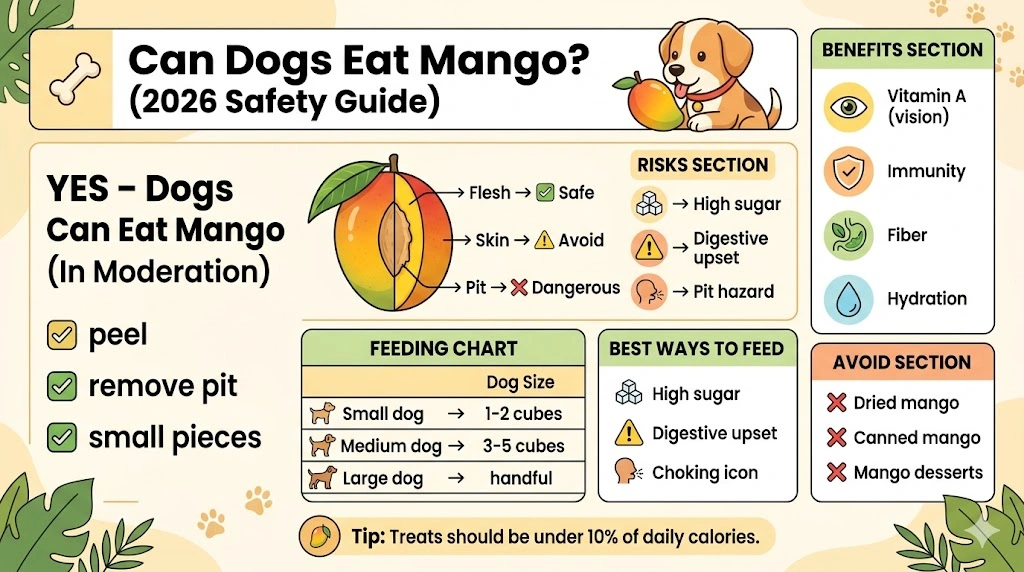
Can Dogs Eat Mangoes Safely? The answer is yes, dogs can eat mango in moderation, as long as it is prepared correctly and served in small amounts. Veterinary and pet-health sources consistently note that mango flesh is safe for dogs when the peel is removed, the pit is removed, and the fruit is offered as an occasional treat rather than as regular food.
Mango can be a refreshing, nutrient-rich snack, especially in warm weather. At the same time, it is still fruit, which means it naturally contains sugar and fiber, so portion control matters. The biggest hazards are not the flesh itself but the pit and peel, which can create choking risks, digestive upset, or obstruction. Treats should also stay below about 10% of a dog’s daily calorie intake, which is the standard guidance used in canine nutrition education.
Quick Answer
Yes, dogs can eat mango in moderation.
It is safest when you:
- peel it first,
- remove the pit completely,
- Cut it into small bite-sized pieces,
- and feed it only as an occasional treat.
Avoid mango or keep it to a minimum if your dog has diabetes, struggles with weight gain, has pancreatitis, or has a sensitive stomach. Because mango is naturally sweet, it may not be the best treat for dogs that need tighter sugar or calorie control.
Is Mango Good for Dogs?
Yes, mango can be a useful occasional treat for healthy dogs. Mango flesh contains vitamins, fiber, and plant compounds that make it more than just a sugary snack. AKC and other veterinary pet-health sources describe mango as a safe fruit when prepared properly, and note that it can be a pleasant occasional addition to a dog’s treat rotation.
From a nutritional standpoint, mango offers several supportive nutrients. Vitamin A contributes to vision, skin, and immune function. Vitamin C supports antioxidant activity, while fiber can help keep digestion moving normally. Mango also provides additional plant nutrients such as beta-carotene and other antioxidants that help support cellular health. These nutrients do not make mango a necessity, but they do make it a more nutrient-dense treat than many processed snacks.
That said, mango should never replace a balanced dog food diet. Dogs require a complete and balanced meal plan built around protein, fat, and essential nutrients in the right proportions. Fruit can complement the diet, but it should remain a side treat, not a core food group. WSAVA guidance also emphasizes that treats should stay within a small share of the total daily calories.
Nutritional Benefits of Mango for Dogs
Mango is popular because it is tasty, hydrating, and relatively nutrient-rich. In practical terms, that means a small portion can add variety without turning into a nutritional problem. Mango contains water, which can make it feel cool and refreshing, especially in summer. It also contains fiber, which may support normal stool formation when the amount is kept modest.
Its vitamin profile is one of the main reasons dog owners like to share it. Vitamin A helps maintain healthy eyes and skin. So Vitamin C contributes to immune support and antioxidant defenses. Vitamin B6 plays a role in normal metabolism and nervous system function. Antioxidants help neutralize oxidative stress, which is one reason many fruits are considered useful as occasional treats.
The keyword here is occasional. Mango may offer nutritional value, but a dog can get those same core needs from a complete dog food diet. The fruit is best thought of as a safe reward, a training bonus, or a summer cooling snack rather than something your dog needs every day. That framing helps keep the treat healthy instead of excessive.
Risks of Mango for Dogs
Even a safe fruit can become a problem when it is fed the wrong way or in the wrong amount. The most important risk with mango is not the flesh itself, but the way people often serve it. The pit, skin, and large portions create the real danger.
1. High sugar content
Mango is naturally sweet, which is part of why dogs love it. But sweetness also means sugar, and sugar is something to monitor carefully in canine diets. Too much sugar can contribute to unwanted weight gain, blood sugar spikes, and poor dental health. This is especially important for dogs that are less active or already overweight. AKC specifically notes that mango should be used as an occasional treat because of its sugar content.
2. Mango pit danger
The pit is the biggest safety hazard. It is large, hard, and difficult to digest. Dogs may try to chew it, which creates a choking hazard, or swallow part of it, which can lead to a blockage in the digestive tract. VCA specifically warns that fruit pits, such as mango pits, are hazards, and AKC says the pit should be removed before feeding.
3. Digestive upset
Too much mango can overwhelm a dog’s stomach. The most common problems are diarrhea, vomiting, gas, and abdominal discomfort. This is more likely when a dog eats a large quantity at once or when the dog is not used to fruit. Smaller dogs may be affected more quickly because even a modest amount can represent a larger share of their daily intake. PetMD and The Spruce Pets both note that overfeeding mango can lead to stomach upset.
4. Mango skin problems
Mango skin is not the safest part of the fruit for dogs. It is tougher to digest than the flesh, and in some dogs it can contribute to gastrointestinal irritation. The skin can also be a choking concern if it comes off in large strips or is swallowed in a piece that is too big. For that reason, the safest approach is to peel the mango before serving it.
Which Parts of Mango Are Safe?
| Mango Part | Safe for Dogs? | Notes |
| Flesh | Yes | The best part to feed in small pieces |
| Skin | Avoid | Harder to digest and may irritate the stomach |
| Pit/seed | Dangerous | Choking and obstruction risk |
The safest rule is simple: only the flesh, and only in small pieces. That is the part of the fruit that sources consistently identify as dog-safe when prepared properly. The peel and pit should be removed completely before your dog gets anywhere near the fruit.
How Much Mango Can Dogs Eat?
Portion control is the difference between a healthy treat and an unnecessary digestive issue. Nutrition guidance for dogs generally recommends that treats stay below about 10% of daily calories. That rule applies to mango, too. The exact amount depends on your dog’s size, activity level, body condition, and whether your dog has any medical concerns.
Here is a practical feeding guide you can use as a starting point:
| Dog Size | Safe Amount | Frequency |
| Small dogs (up to 10 kg) | 1–2 tiny cubes | 1–2 times per week |
| Medium dogs (10–25 kg) | 3–5 small cubes | 2–3 times per week |
| Large dogs (25–40 kg) | Small handful | 2–3 times per week |
| Extra-large dogs (40 kg+) | Modest handful | Up to 3 times per week |
This chart is a practical estimate, not a medical prescription. The best portion is the smallest amount your dog enjoys without creating digestive stress or calorie overload. For dogs that are prone to weight gain or have medical conditions, even these amounts may need to be reduced. WSAVA guidance on treats staying under 10% of calories is the best anchor point to keep in mind.
Can Puppies Eat Mango?
Yes, puppies can eat mango, but they need extra caution because their digestive systems are still developing. Puppies are more likely than adult dogs to react to new foods with loose stool or stomach upset, so mango should be introduced slowly and in very small amounts. AKC and PetMD both state that dogs and puppies can eat mango when it is served properly and in small portions.
The best approach is to offer only a tiny piece of peeled mango flesh, then wait and observe. If your puppy shows no signs of upset over the next 24 hours, you can consider a slightly larger portion in the future. The goal is not to make mango a regular puppy food item, but simply to see whether it agrees with your puppy’s stomach.
Best Ways to Feed Mango to Dogs
There are safe and unsafe ways to serve mango. The safest versions are simple, fresh, and free of added sugar or artificial ingredients. Fresh mango cubes are the easiest option, and frozen cubes can be a nice summer treat as long as they are not so large that they create a choking problem. AKC and other pet-health sources advise serving fruit in bite-sized pieces and avoiding the pit and peel.
Safe serving ideas include fresh cubes, mashed mango mixed with a small amount of regular food, or frozen mango pieces given one at a time. Some owners also mix a tiny amount with plain yogurt, but only if the yogurt is unsweetened and your dog tolerates dairy. The key is to keep the serving plain, simple, and tiny.
Unsafe options include canned Mango, dried mango, mango desserts, mango-flavored sweets, and mango juice with added sugar or other additives. These products often contain much more sugar than fresh fruit, and some also contain preservatives or ingredients that are not ideal for dogs. When in doubt, fresh mango flesh is the cleanest option.
Real-Life Feeding Scenarios
Apartment Dogs
Dogs that live indoors often burn fewer calories than highly active dogs. Because of that lower energy output, sweet treats can add up quickly. For apartment dogs, mango should be even more occasional, and the portion should remain small. The main goal is to prevent unplanned weight gain.
Cold-climate Dogs
Dogs in colder regions may be more active during the day, especially if they spend time outdoors. They may tolerate a little more flexibility in their treat routine, but that does not change the need for moderation. Mango is still a treat, and the pit, skin, and sugar concerns remain the same.
Highly active Dogs
Working dogs, sporting dogs, and dogs that get a lot of daily exercise generally burn more energy than sedentary pets. For them, a small mango reward after activity can fit into a healthy routine more easily. Even then, the fruit should be treated as a bonus snack, not a meal replacement.
Signs Your Dog Ate Too Much Mango
Most dogs that eat too much mango will show gastrointestinal symptoms first. The most common signs include vomiting, diarrhea, gas, belly discomfort, or reduced appetite. In some cases, a dog may seem tired or less interested in food for a short period of time. These signs often improve when the fruit is stopped, but persistent symptoms deserve attention.
If the symptoms last more than a day, worsen, or are accompanied by signs of distress, call your veterinarian. If your dog swallowed a pit or if you suspect a blockage, do not wait for symptoms to “pass.” Pit ingestion is a more serious issue because it can create choking or intestinal obstruction.
Can Dogs Eat Dried Mango?
Dried mango is not the best option. Drying the fruit concentrates the sugar, which makes it easier for your dog to consume too much sugar in a small serving. Many packaged dried fruits also include preservatives or added sweeteners, which makes the snack less desirable from a canine nutrition standpoint. Fresh mango is much better than dried mango for routine treat use.
When Mango Is Not Safe for Dogs
Mango is not the right treat for every dog. Dogs with diabetes, recurrent pancreatitis, obesity, or a sensitive digestive tract may need to avoid mango or receive only a vet-approved micro-portion. The issue is not that mango is toxic in the way some other foods are toxic; the issue is that the sugar load and digestive response may not fit the dog’s health profile.
As a general rule, if your dog already needs a controlled diet, fruit treats should be discussed with your veterinarian first. A treat that seems tiny to a person can still matter a lot in a dog’s calorie total, especially when daily feeding and snacks are already tightly managed. WSAVA’s nutrition guidance is clear that treats should remain a minor part of the total diet.
Common Mistakes Dog Owners Make
One of the most common mistakes is giving a Mango with the pit still attached or leaving the dog alone with the fruit. That creates a choking hazard and raises the risk of a swallowed pit. Another common error is serving too much at once because the fruit seems healthy. Healthy does not automatically mean unlimited.
Another mistake is failing to peel the mango. The peel is often ignored by people because humans can chew around it, but dogs do not process it the same way. Feeding mango every day is another problem, because even safe foods can become excessive when they are too frequent. Finally, processed mango products, canned fruit, and sweetened snack versions should not be treated the same as fresh mango flesh.
Expert Tips for Feeding Mango Safely
Introduce mango gradually. Start with one small piece and watch your dog’s reaction over the next 24 hours. Use mango as a reward, not as a routine diet item. Rotate treats so your dog does not rely on one fruit all the time. A varied treat pattern is often easier on digestion and keeps snack time from becoming monotonous.
It is also smart to freeze small mango cubes during warm weather. That can make the treat more interesting and more refreshing, while still keeping the serving controlled. Just make sure the cubes are not so large that they become a choking risk, especially for small dogs. Bite-sized preparation always wins.
Pros and Cons of Feeding Mango to Dogs
Pros
Mango offers vitamins, antioxidants, hydration, and a naturally sweet flavor that many dogs enjoy. It can also make training or enrichment feel more special when it is used sparingly. In the right setting, it is a pleasant alternative to highly processed treats.
Cons
Mango is not low in sugar. It can upset the stomach if overfed. The pit is dangerous, the peel is not ideal, and the fruit is not a good match for every dog. That means mango is a “sometimes” snack, not a daily staple.
Better Fruit Alternatives for Rotation
If you like sharing fruit with your dog, rotation is a smart strategy. Blueberries, apples without seeds, seedless watermelon, and strawberries are all popular dog-friendly options that can add variety without depending too heavily on mango. Different fruits bring different textures and nutrient profiles, which can make snack time more interesting while still keeping portions small.
The benefit of rotation is not just variety. It also lowers the chance that your dog will overconsume one specific fruit and keeps treat time more balanced. Variety is especially useful for dogs that get bored with the same snack or for owners trying to avoid excess sugar from one source.
How to Introduce Mango Step by Step
First, offer a tiny piece of peeled mango flesh. Second, wait and observe your dog for digestive or behavioral changes. Third, if there is no reaction, you can slowly increase the amount next time. Fourth, keep mango as an occasional snack rather than a repeat habit. That simple sequence is usually enough to help prevent stomach upset.
The logic behind this stepwise introduction is basic canine nutrition: small changes are easier for the digestive system to handle than sudden changes. When new foods are introduced slowly, it becomes much easier to identify whether a food agrees with your dog. That makes the feeding process safer and more predictable.
Why Moderation Matters So Much
Dogs do not need fruit to survive. Their main diet should be complete, balanced dog food designed to meet their nutritional requirements. Fruit can be enjoyable, but it should never crowd out the nutrients that matter most. Treats are a nice extra, not the foundation of the diet.
Moderation also protects against hidden calorie creep. A few extra sugary snacks here and there can slowly add up, especially in dogs that are already less active. Over time, that can contribute to unwanted weight gain, which is why nutrition guidelines consistently emphasize calorie awareness when feeding treats.
FAQs
No. Mango should not be a daily food for dogs. It is best used as an occasional treat because of its sugar content and the need to keep treats under a small share of total calories.
No, mango skin is not recommended. It is harder to digest and may irritate the stomach, so peeling the fruit is the safer choice.
Absolutely not. The pit is dangerous because it can create a choking hazard or intestinal blockage. It should always be removed before serving mango to a dog.
Usually, no, or at least not without veterinary guidance. Mango contains natural sugar, so it can be a poor choice for dogs that need tight glucose management.
Yes, in small amounts. Frozen mango can be a good warm-weather treat as long as the pieces are bite-sized and the pit and skin are removed.
Yes, but only in very small portions. Smaller dogs have less room in their diet for extra calories, so even a little fruit can matter more than people expect.
Conclusion
So, can dogs eat Mango? Yes, they can — but only with smart preparation and strong portion control. Remove the pit, peel the skin, cut the fruit into small pieces, and keep it as an occasional snack. Follow those steps, and mango can be a safe, enjoyable treat rather than a risky one. Used correctly, it is a simple way to add variety to your dog’s treat routine without upsetting the balance of the diet.