Can Dogs Eat Avocado? Vet-Backed Safety Guide, Risks & Feeding Chart
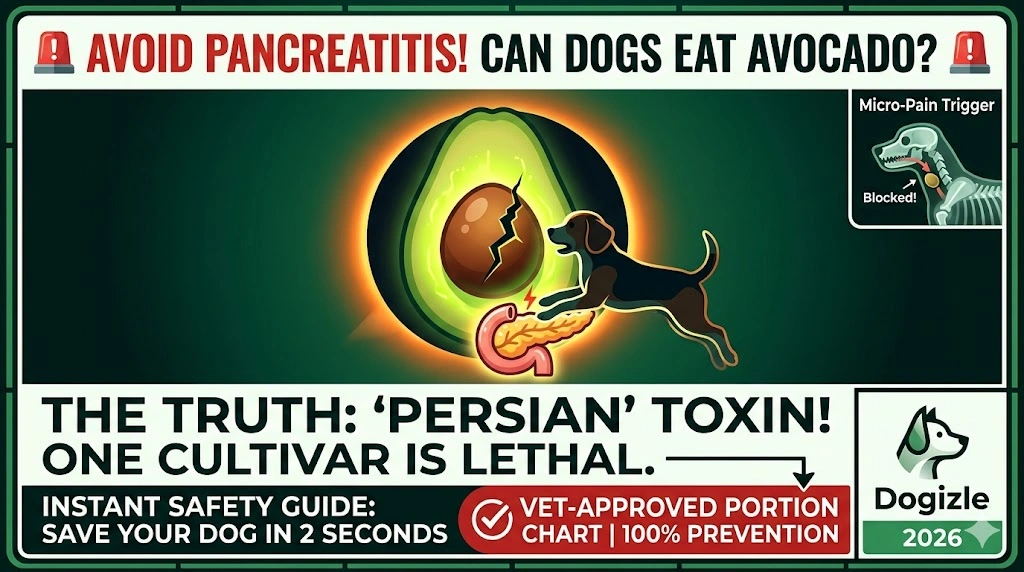
Yes—dogs can eat avocado in very small amounts, but it’s not always safe. Can Dogs Eat Avocado? — worried about toxicity, choking hazards, or hidden risks? This guide reveals vet-backed safety rules, exact portions, and what most owners miss, so you can avoid dangerous mistakes and feed with confidence. If you are a dog owner, you have probably asked this question at least once: Can dogs eat avocado?
Avocado is everywhere in modern diets. People put it on toast, blend it into smoothies, mash it into guacamole, and add it to salads. Because it is widely marketed as a “healthy” food for humans, many pet parents assume it must be safe for dogs, too. But can dogs eat avocado? Nutrition does not work that way. What is wholesome for people can still be irritating, risky, or even dangerous for pets. Veterinary guidance on avocado is also more nuanced than a simple yes-or-no answer, which is why this topic causes so much confusion.
The safest short answer is this: dogs may tolerate very tiny amounts of plain avocado flesh in some cases, but avocado is not a food most veterinarians recommend as a regular treat. The fruit’s flesh is not considered highly toxic in small amounts, but other parts of the plant are riskier, and even the flesh can create problems because avocado is high in fat and can upset a dog’s stomach. Many veterinary sources also advise avoiding the pit, skin, leaves, and any seasoned avocado products altogether.
Understanding the Big Question: Can Dogs Eat Avocado?
Let’s answer the core question clearly first.
Yes, dogs can sometimes eat a very small amount of avocado flesh. But that does not mean avocado is an ideal snack, a daily treat, or a food you should intentionally add to your dog’s routine. Veterinary sources do not treat avocado like a clearly safe fruit, such as blueberries or seedless watermelon. Instead, avocado sits in a gray area: the flesh may be tolerated in small amounts, while the skin, pit, leaves, and any heavily processed avocado dish can create real risk.
That is why the real decision is not just, “Can a Dog eat Avocado?” The more useful question is, “Should a dog eat avocado often?” In most homes, the answer to that second question is no. Dogs already receive balanced nutrition from complete and balanced commercial dog food, so avocado adds little practical benefit compared with the possible digestive and choking problems.
Why Avocado Is Confusing for Dog Owners
The confusion comes from the fact that different sources describe the avocado in different ways. Some call it harmful, some call it “safe in moderation,” and some say to avoid it entirely. Those statements sound contradictory, but they are usually talking about different parts of the avocado and different levels of risk. The fruit’s flesh is one issue; the pit, peel, leaves, and guacamole are a different issue altogether.
Another reason for the mixed messaging is a natural compound called persin. Persin is found in avocado leaves, skin, pit, and in smaller amounts in the fruit. ASPCA and Merck Veterinary Manual both note that persin is a real toxin in animals, but species vary widely in sensitivity. Birds, horses, and some other species are especially vulnerable, while dogs are generally less sensitive. That is why avocado is not automatically treated as a severe poison for dogs in the same category as chocolate or xylitol. Still, “less sensitive” does not mean “risk-free.”
What Is Persin?
Persin is a naturally occurring avocado compound that has been studied because of its toxic effects in certain animals. The important thing for dog owners is not just whether persin exists, but how much of it is present in the edible part and how a dog’s body responds. The highest concentrations are associated with the leaves, skin, seeds, and other plant parts rather than the small amount that may be present in the flesh.
For dogs, persin is usually not the only or even the main concern. In practical, everyday cases, veterinarians worry more about three things: digestive upset, the avocado’s fat content, and the physical hazard created by the pit. That is why a dog may seem “fine” after a tiny bite of flesh but still develop vomiting, diarrhea, abdominal discomfort, or a more serious issue after eating a large quantity or swallowing the wrong part.
Quick Safety Summary
The safest way to think about avocado is by part:
Avocado flesh: sometimes tolerated in very small amounts, but not a preferred treat.
Avocado skin: should be avoided.
So, the avocado pit: high choking and blockage risk.
Avocado leaves and stems should never be fed to dogs.
Guacamole and seasoned avocado dishes: unsafe because of added ingredients and seasoning.
What Part of an Avocado Is Dangerous for Dogs?
1. Avocado Pit: The Most Dangerous Part
The pit is the single biggest hazard because it creates a mechanical risk, not just a chemical one. A dog can choke on it, especially if the dog is small or gulps food quickly. If it passes into the digestive tract, it may lodge in the stomach or intestines and cause an obstruction. Veterinary references on gastrointestinal obstruction note that vomiting, anorexia, lethargy, diarrhea, pain, and shock-like signs can occur, and obstructions require urgent veterinary attention.
That means the pit is dangerous even if the dog never shows signs of poisoning. In real life, many avocado emergencies are not “toxin” emergencies at all; they are foreign body emergencies. A swallowed pit can lead to imaging, hospitalization, endoscopic removal, or surgery, depending on where it is lodged. That is why a pit should never be used as a toy, chew item, or “natural” enrichment object.
2. Avocado Skin and Leaves
The skin and leaves contain more persin than the flesh, and both are hard for dogs to digest. ASPCA and Merck Veterinary Manual identify avocado plant parts as toxic or poisonous to animals, with leaves described as especially toxic in Merck’s food hazard reference. Even when the problem does not become life-threatening, dogs that chew these parts can develop vomiting, diarrhea, and general gastrointestinal irritation.
This is one reason home kitchens should be careful. If you peel an avocado and leave the skin in a trash bin, some dogs will still dig it out. If a dog has access to a compost pile or kitchen counter scraps, the risk increases further. Dogs are opportunistic eaters, so prevention matters more than treatment here.
3. Avocado Flesh
The flesh is the part people often assume is harmless because it is soft, green, and edible for humans. For dogs, though, the concern is not only persin. The flesh is also relatively fatty, and that matters because fat-rich foods can contribute to gastrointestinal upset and, in susceptible dogs, pancreatitis. PetMD says avocado flesh is not toxic and a little is not likely to cause problems, while AKC advises that it should not be given to dogs routinely and notes that even the fleshy inside can still be too much for some dogs. Those two positions are not fully identical, but they point in the same direction: small amounts may not cause a crisis, yet avocado is still not a smart everyday treat.
Is Avocado Toxic to Dogs?
This is where precision matters. Avocado is not usually described as a classic, highly toxic dog poison in the same way that grapes, raisins, xylitol, or certain medicines are. But it is also not a casual snack that every dog should be handed without thought. Veterinary sources consistently describe it as something to keep limited or avoided because the combination of persin, fat content, and physical hazards can produce real harm.
So the most accurate answer is: avocado is potentially harmful to dogs, but the risk depends on what part was eaten, how much was eaten, and the size and sensitivity of the dog. That is why one dog might swallow a tiny bite of plain flesh and be okay, while another dog may vomit, refuse food, or need emergency care after eating a pit.
Why Fat Content Matters So Much
A lot of pet owners focus only on toxins and forget the fat issue. That is a mistake. Even when the persin concern is lower for dogs than for other species, fat can still create trouble. Dogs that eat rich, greasy, or unusually fatty food can develop stomach upset, and some dogs are vulnerable to pancreatitis. The pancreas helps digest food, and when it becomes inflamed, the condition can be painful and potentially serious. VCA Hospitals notes that a fatty meal can trigger pancreatitis in some dogs, and Merck Veterinary Manual identifies inappropriate food and high blood fat levels as risk factors.
That is why avocado should not be framed as a “healthy treat” for dogs simply because it contains nutrients. A food can contain beneficial compounds and still be a poor choice for pets if the fat load is too high or if the food carries a choking risk. This is also why many vets prefer safer, lower-risk fruits for dogs, such as apples without seeds, blueberries, seedless watermelon, and strawberries.
Possible Benefits of Avocado for Dogs
Let’s be balanced here. Avocado does contain nutrients. The flesh contains fats, some fiber, and micronutrients such as vitamin E and potassium, and people often associate avocado with skin and coat health. That is where the “superfood” reputation comes from. But the problem is not whether avocado has any nutrients. The problem is whether dogs actually need those nutrients from this source. In most cases, the answer is no. A complete dog food already supplies the essential nutritional building blocks a healthy dog needs.
So the practical benefit is limited. Yes, a dog might enjoy the taste. Yes, a tiny amount of plain flesh is not automatically catastrophic. But avocado is still not a necessary food, and it is not the best way to improve coat quality, digestion, or vitality. For most dogs, the smarter move is to focus on a balanced diet and use lower-risk treats instead of trying to make avocado part of a nutrition plan.
Risks of Feeding Avocado to Dogs
Digestive Upset
The most common short-term issue is a simple stomach reaction. A dog may vomit, have loose stools, show gas, or seem uncomfortable after eating avocado. This does not always mean emergency poisoning, but it does mean the food did not agree with the Dog. Since dogs vary in sensitivity, even a small portion can be too rich for some stomachs.
Pancreatitis Risk
This is the more serious concern. Pancreatitis is inflammation of the pancreas, and dogs can develop it after eating a fatty meal. VCA and Merck both describe fat-rich diets or inappropriate food as meaningful risk factors. Clinical signs can include vomiting, abdominal pain, loss of appetite, weakness, and reluctance to move. The condition can become severe, so fatty foods are not something to shrug off.
That is one reason avocado belongs on the “limit or avoid” list, especially for dogs that are overweight, have a history of pancreatitis, have sensitive digestion, or are prone to gastrointestinal flare-ups. What seems like a harmless tablespoon to a person may be a poor fit for a dog’s digestive system.
Choking or Intestinal Blockage
The pit is the major culprit here, but large chunks of flesh can also be problematic for very small dogs or fast eaters. Gastrointestinal obstruction is a veterinary emergency, and clinical signs can include vomiting, anorexia, lethargy, diarrhea, abdominal pain, and reduced stool output. If a dog swallowed a pit or a large piece and then starts acting off, do not wait for the problem to “pass on its own.”
Oral Irritation and Messy Feeding
This may sound minor, but it matters in practice. An avocado that is overripe, mixed with seasonings, or paired with salty or spicy foods can irritate a dog’s mouth or gut. Many owners accidentally create risk by serving avocado in the wrong context: on toast, in dips, or in left-behind scraps from a human meal. That is not the same as a tiny piece of plain avocado flesh from the center of the fruit.
High-Risk Dogs
Some dogs are more likely to react badly than others. Small breeds can be more vulnerable to choking and blockage because the pits and large chunks are proportionally more dangerous for them. Puppies are also at a higher risk because their digestive systems are still developing, and they are more likely to chew or swallow things they should not. Dogs with a previous history of pancreatitis, chronic digestive sensitivity, or obesity should be treated cautiously around fatty human foods.
In these dogs, the best policy is simple: do not make avocado a habit. Even if a pet has tolerated a small bite in the past, that does not prove the food is a good choice going forward. Sensitivity can vary from day to day, and repeated exposure to rich foods can add up over time.
Can Puppies Eat Avocado?
For practical purposes, puppies should not be fed Avocado. Puppies are still growing, their digestion can be more delicate, and they do not need avocado for any nutritional reason. They are also more likely to swallow something they should not, which makes pits and large chunks especially unsafe. Veterinary-style puppy feeding should stay focused on a complete puppy diet, not human foods with uncertain risk.
If a puppy accidentally licks a tiny amount of plain flesh, that is not the same as deliberately feeding avocado, but it still warrants observation. Watch for vomiting, diarrhea, abdominal discomfort, drooling, or a sudden behavior change. If the puppy swallowed skin, pit, or a seasoned avocado product, contact a veterinarian promptly.
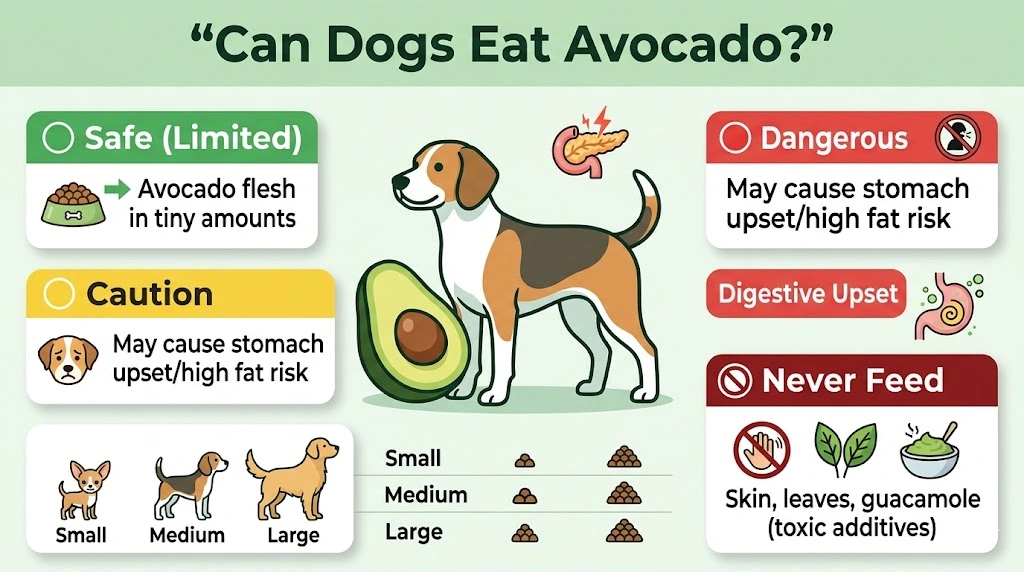
How Much Avocado Can Dogs Eat? Feeding Chart
There is no universal veterinary “safe dose” for avocado because risk depends on the dog, the amount, the fruit part, and whether the avocado is plain or mixed with other ingredients. That said, if a dog accidentally gets a tiny taste of plain flesh only, many veterinarians would be far more concerned about the pit, skin, and seasonings than about one small bite of the center fruit. PetMD and AKC both support the idea that small amounts of flesh are less concerning than the other parts.
For a conservative publisher-facing guide, you can present the following as a strict, cautious, editorial rule-of-thumb rather than a formal veterinary dosage:
- Small dog: a pea-sized taste at most, only if plain flesh, and not as a planned treat.
- Medium dog: a very small bite of plain flesh, not repeated frequently.
- Large dog: still only a tiny amount of plain flesh, and only occasionally.
The central message should remain the same: there is no reason to use avocado as a regular snack. Dogs already get complete nutrition from their food, and the risk-to-benefit ratio of avocado is not especially favorable.
If you want the article to include a chart, this phrasing works well:
| Dog Size | Conservative Guidance | Frequency |
| Small | Tiny taste only | Rarely |
| Medium | Small bite only | Rarely |
| Large | Small bite only | Rarely |
Add this note under the chart: This is a cautious editorial guide, not a veterinary dosage recommendation. If your dog has a sensitive stomach or a pancreatitis history, avoid avocado altogether. That keeps the content responsible and aligned with veterinary caution.
What If a Dog Eats Avocado Pit or Skin?
This is where the situation changes from “monitor at home” to “take it seriously.” If a dog swallows a pit, you are not just dealing with a food issue. You are dealing with a potential obstruction or choking event. If the dog chews skin or leaves, the risk is more about irritation and toxic exposure than blockage, but it still should not be ignored.
Watch for vomiting, repeated retching, loss of appetite, abdominal bloating, lethargy, abdominal pain, constipation, or failure to pass stool. Obstruction signs can vary, but vomiting and anorexia are common and urgent red flags. If the pit was swallowed, or if your dog is already showing symptoms, contact your vet right away instead of waiting overnight.
Can Dogs Eat Guacamole or Avocado Oil?
Guacamole
No. Guacamole is not safe for dogs because it often contains onion, garlic, salt, spices, and sometimes chili or other seasonings. ASPCA’s list of foods to avoid includes ingredients that are well-known hazards to pets, and vet nutrition resources routinely caution against human mixed dishes because the added ingredients create the actual danger. Even if the avocado itself were plain, the guacamole bowl is usually a bad idea for a dog.
Avocado Oil
Avocado oil is not the same as the fruit, but “not Toxic” does not mean “ideal for dogs.” It is still a fatty source, and fats are exactly what you want to keep controlled in dogs that are prone to digestive upset or pancreatitis. In a healthy dog, a tiny accidental lick is unlikely to be a disaster, but regular use is unnecessary. Veterinary sources emphasize low-fat nutrition for dogs with pancreatitis and caution around fatty meals.
Avocado Poisoning Symptoms in Dogs
The phrase “avocado poisoning” gets used loosely online, but the practical warning signs are similar whether the problem is toxin exposure, stomach upset, or blockage. Look for vomiting, diarrhea, weakness, loss of appetite, drooling, abdominal pain, a bloated belly, or unusual lethargy. If a pit was swallowed, symptoms of obstruction can develop and may worsen over time.
If a dog shows only mild stomach upset after a tiny taste of flesh, observation may be enough in some cases. But if symptoms are strong, repeated, or accompanied by pain or behavior changes, veterinary evaluation is the safer path. For a dog that has swallowed a pit or is vomiting repeatedly, do not rely on internet reassurance. Seek professional advice promptly.
What to Do If Your Dog Ate Avocado
First, stay calm and identify exactly what was eaten. A tiny bite of plain flesh is not the same as a swallowed pit or a bowl of guacamole. That distinction matters a lot.
Second, check whether the pit, skin, or leaves are missing. If any of those were eaten, the risk level rises immediately. A swallowed pit is the most urgent concern because of choking and obstruction.
Third, monitor for vomiting, diarrhea, drooling, abdominal pain, weakness, loss of appetite, or bloating over the next several hours. Dogs that develop these signs may need veterinary care depending on severity and duration. If the dog is a puppy, a small breed, or a dog with a pancreatitis history, your threshold for calling the vet should be even lower.
Finally, contact a veterinarian or pet poison resource immediately if the dog swallowed the pit, ate guacamole with onion or garlic, or shows signs of distress. That is the point where guessing becomes the wrong strategy.
Safer Alternatives to Avocado
A good dog treat should be simple, low-risk, and easy to digest. Avocado does not rank especially high on that list, so it makes more sense to choose safer fruit options. PetMD’s fruit guidance emphasizes removing seeds, stems, pits, and skins when appropriate, and common dog-friendly picks include apples without seeds, blueberries, watermelon without seeds, bananas, and strawberries. These foods are generally less fatty, easier to portion, and less likely to create a choking hazard than avocado.
These alternatives also fit the everyday reality of dog treatment much better. They are easy to prep, easy to portion, and easier to use as occasional rewards without introducing the kind of fat load that may bother sensitive dogs. In other words, they deliver the “special treat” experience with less veterinary baggage.
Pros and Cons of Feeding Avocado to Dogs
Pros
Avocado contains nutrients, and a tiny piece of flesh is not automatically dangerous for every dog. That is the most charitable version of the case. The fruit has a positive health reputation in human nutrition, and some dog owners like the idea of sharing a naturally occurring food rather than a processed snack.
Cons
The downsides are more persuasive. Avocado carries a fat load that may upset digestion or contribute to pancreatitis risk in susceptible dogs. It also creates a choking and obstruction risk if the pit is involved, and the skin, leaves, and other plant parts are going in the wrong direction entirely. When a food has this many avoidable risks and no essential role in canine nutrition, it usually does not belong in the regular treat rotation.
Common Mistakes Dog Owners Make
One common mistake is believing that natural Automatically means safe. Avocado proves why that idea is incomplete. Natural foods can still be unsuitable, too rich, or physically hazardous for dogs.
Another mistake is treating guacamole as if it were just mashed avocado. It is not. Guacamole usually contains toxic or irritating additives for dogs, especially onion and garlic. The same goes for avocado toast, burrito fillings, salad leftovers, and restaurant scraps. The issue is often the full dish, not merely the fruit.
A third mistake is thinking that a dog “did fine last time,” so the food must be safe. Tolerance does not equal safety. A dog can get away with a small bite once and still react badly the next time, especially if the portion is bigger, the fruit is riper, or the dog’s digestive system is already irritated.
A final mistake is leaving pits, skins, or scraps where a dog can reach them. For many households, prevention is easier than reaction. Keep the trash closed, clean the counter, and do not leave avocado leftovers within paw’s reach.
Vet Advice in Simple Terms
Veterinary advice on avocado is remarkably consistent once you strip away the noise. Dogs do not need avocado to be healthy. Balanced commercial dog food already provides the nutrients they require. Fatty human foods can trigger digestive problems and pancreatitis in some dogs. The pit creates a choking and obstruction risk. The skin and leaves add toxin exposure risk. Put all of that together, and the safest practical message is easy to understand: Avocados are better avoided as a habit.
That does not mean every microscopic taste of avocado flesh will cause an emergency. It means that when you look at the total picture—benefit, risk, and necessity—the argument for regular avocado feeding is weak. The argument for safer treats is much stronger.
FAQS
No. Daily Avocado is a poor idea because avocado is relatively fatty, unnecessary, and more likely than many other fruits to create stomach or pancreas problems in sensitive dogs.
Not usually in the same way as the most dangerous classic toxins, but it is still risky. The pit, skin, leaves, and large amounts of flesh can cause harm, and the fruit is not a recommended everyday treat.
A tiny bite of plain flesh may not cause any problem in many dogs, but you should still observe for vomiting, diarrhea, discomfort, or reduced appetite. If the dog ate skin, pit, or seasoned avocado, the concern is much greater.
No. Toast itself may not be the biggest issue, but the seasonings, salt, spreads, and toppings often make it an unsuitable snack. If avocado is combined with onion, garlic, or spice, the risk becomes much more serious.
Fatal outcomes are rare, but serious complications can happen, especially if a dog develops obstruction, aspiration, or severe pancreatitis-like illness after eating fatty or unsafe avocado-related food. The most important point is that the pit, not the flesh alone, is often what turns the event into an emergency.
Conclusion
Here is the simplest, honest answer:
Dogs may tolerate a tiny amount of plain Avocado flesh in some situations, but avocado is not a food most veterinarians recommend as a regular treat. The pit, skin, and leaves are the danger zones; guacamole is unsafe because of added ingredients, and the fruit’s fat content can be a problem for sensitive dogs. Veterinary sources consistently support the idea that dogs do not need avocado and that safer alternatives are usually the better choice.
So the best practice is straightforward: avoid avocado when you can, keep the pit far away, never feed guacamole, and choose safer dog treats instead. That approach protects your dog while still keeping treat time simple and enjoyable