Can Dogs Eat Green Beans? — The Surprising Truth Most Owners Miss
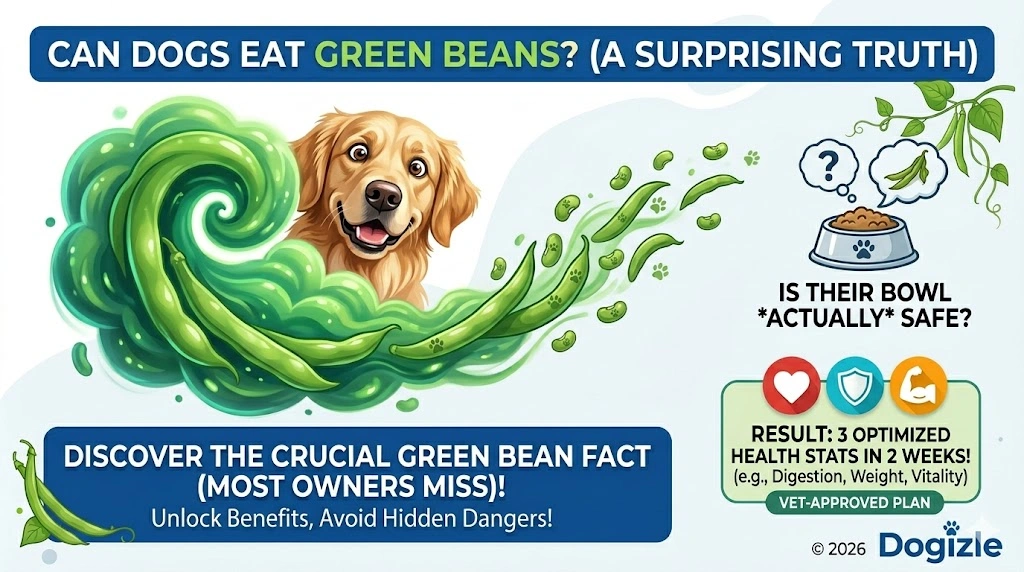
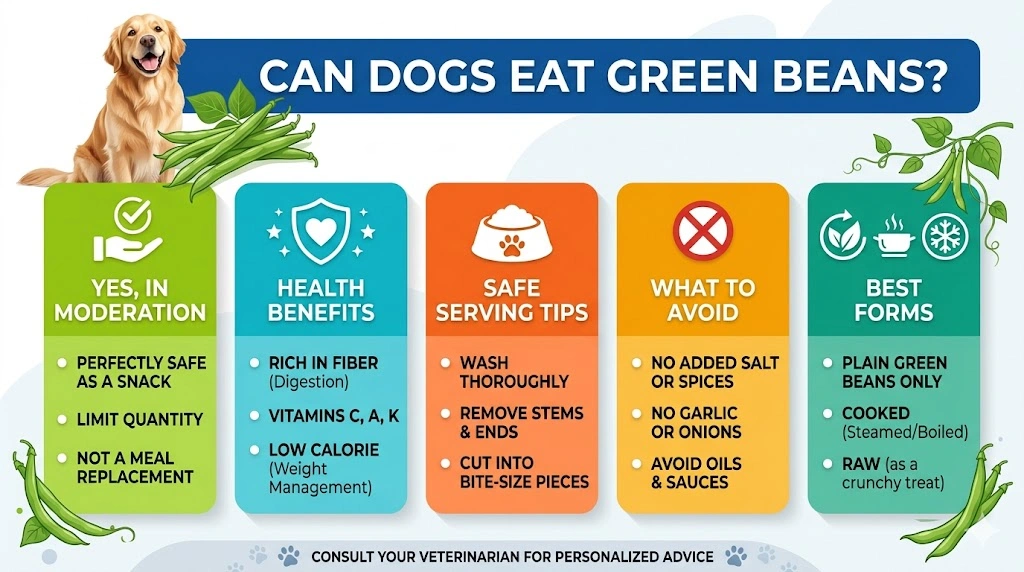
Yes, dogs can eat Green Beans safely when they are plain, served in moderation, and prepared without salt, butter, oil, garlic, onion, or other seasonings. Veterinary guidance from major pet-health sources consistently treats plain green beans as a safe, low-calorie treat for most dogs. They are commonly recommended as a smart snack option, especially for dogs that need fewer calories.
Green beans are popular because they are light, crunchy, and easy to portion. They can work as a treat, a training reward, or a meal topper in small amounts, but they should never replace a complete and balanced dog food diet.
Are Green Beans Safe for Dogs or a Hidden Risk?
Yes, dogs can eat green beans—but only when prepared correctly. Learn which types are safe (raw, steamed, plain) and which can harm your dog (canned with salt, seasoned, oily). Green beans are the long, edible pods from the bean family, and in dog nutrition they are best understood as a safe vegetable snack rather than a staple food. In practical terms, they are a simple, plant-based treat that can add texture and variety without adding many calories. Veterinary and animal-welfare resources list green beans among the vegetables that can be safely shared with dogs when they are plain and cut appropriately.
For dogs, green beans are often used in three ways: as a low-calorie treat, as a helpful option for weight-management plans, and as a fiber-rich nibble for dogs that enjoy vegetables. The key idea is that they are a treat with a purpose, not a meal replacement.
Nutritional Value of Green Beans for Dogs
Green beans are valued in dog-friendly feeding because they are low in calories and contain useful nutrients, including fiber and several vitamins and minerals. Public veterinary sources specifically highlight green beans as a source of fiber and note minerals such as manganese, along with vitamins C and K. They are also routinely grouped with other “safe vegetables” because they can provide variety without a heavy calorie load.
That combination matters for dogs who need healthier snack choices. A small serving can satisfy chewing instincts, support satiety, and reduce dependence on richer treats. This is one reason green beans show up so often in dog weight-management discussions.
Are Green Beans Healthy or Just Low-Calorie?
The answer is both. Green Beans are low-calorie, which makes them useful for treat control, but they are also more than “empty crunch.” They offer fiber and some micronutrients, so they can function as a genuinely useful snack when fed sensibly.
At the same time, they are not nutritionally complete. Dogs still need a balanced diet built around quality protein, fat, and the full nutrient profile supplied by a complete dog food. Green beans can complement that diet, but they cannot replace it.
Types of Green Beans Dogs Can Eat
Dogs can eat green beans in several forms, as long as the beans are plain and prepared safely. The most commonly approved options are raw, steamed, boiled, frozen, and canned green beans that do not contain salt or other harmful ingredients. Multiple veterinary sources explicitly state that plain green beans are safe in chopped, steamed, raw, and even canned form, provided the preparation is simple.
Raw Green Beans
Yes, dogs can eat raw green beans. Raw beans can be a crisp, refreshing snack, and many dogs enjoy the crunch. They are also convenient because no cooking is required. The main caution is that raw vegetables should be cut into bite-sized pieces, especially for small dogs, puppies, and dogs that tend to gulp their food.
Raw green beans are best when your dog tolerates crunchy vegetables well. If your dog has a sensitive stomach or tends to swallow food quickly, a softer preparation may be a better choice.
Cooked Green Beans
Yes, cooked green beans are often the easiest and safest choice. Steamed or boiled green beans are softer, easier to chew, and generally easier to digest than raw beans. Veterinary sources often mention cooked vegetables without seasoning as a good option for dogs, and cooked green beans fit that advice neatly.
The best cooking method is plain steaming or boiling in water only. Do not add butter, oil, salt, garlic, onion, cheese, or sauces. The goal is to keep the vegetable simple and dog-safe.
Frozen Green Beans
Yes, frozen green beans can also be a useful treat. Some dogs enjoy the cold crunch, and frozen vegetables are sometimes recommended as enrichment snacks. Still, frozen pieces should be size-appropriate and given under supervision so they do not become a choking hazard.
For teething puppies or dogs that love crunchy treats, frozen green beans can be a simple, low-calorie option. Keep the pieces small and watch how your dog chews them.
Canned Green Beans
Yes, canned green beans can be safe, but only if the label is clean. Plain, no-salt-added canned green beans are generally considered acceptable by veterinary sources. The issue is sodium: many canned vegetables contain added salt, and dogs do not need that extra seasoning.
If you use canned green beans, rinse them first if needed and check the ingredient list carefully. Skip any canned food that includes salt, seasoning blends, onion powder, garlic powder, or preservatives that are not clearly appropriate for pets.
Can Dogs Eat Green Bean Casserole?
No, green bean casserole is not safe for dogs. Even though the base vegetable is fine, the dish usually includes ingredients that dogs should not eat, such as butter, cream, salt, onions, garlic, and rich sauces. Holiday casseroles and similar mixed dishes are repeatedly flagged by veterinary and poison-control resources because the added ingredients can be harmful.
This is an important distinction: plain green beans are safe, but the recipe built around them may not be. A “dog-safe vegetable” can become unsafe the moment it is mixed with rich or toxic ingredients.
How Many Green Beans Can Dogs Eat?
Green beans should stay in the treat category, not become a major part of the diet. A sensible rule is to keep treats to about 10% or less of daily food intake, which is consistent with common veterinary feeding guidance. Because dogs vary in size, age, activity level, and digestive sensitivity, the exact amount should stay small.
A practical way to think about portions is this: small dogs may do well with just a few bite-sized pieces, medium dogs can usually handle a small handful, and larger dogs may tolerate a slightly bigger portion. The real goal is not volume; it is moderation. Start small and watch your dog’s stool, appetite, and comfort.
Can Green Beans Help Dogs Lose Weight?
Yes, Green Beans are commonly used as part of weight-control feeding strategies because they are low in calories and can help dogs feel fuller. Veterinary sources often recommend them as a healthier substitute for more calorie-dense treats, and some guidance specifically mentions adding green beans to meals while reducing the main portion.
That said, the famous “green bean diet” is not the same as a balanced weight-loss plan. Replacing too much of a dog’s regular diet with green beans can create a nutritional imbalance, hunger, and loss of muscle mass rather than healthy fat loss. The safe approach is to use green beans as an accessory to a proper diet, ideally under veterinary guidance if weight is a concern.
Benefits of Green Beans for Dogs
1. Supports Weight Management
Green beans are a smart option for dogs that need fewer calories because they provide crunch and volume without the calorie burden of many commercial treats. They can help reduce begging and support better treatment control.
2. Adds Fiber to the Diet
Fiber is one of the most commonly cited advantages of green beans. It can help dogs feel satisfied and may support healthy bowel movements when introduced gradually.
3. Provides a Simple, Natural Treat Option
For many owners, green beans are attractive because they are simple. There is no complicated ingredient list, no heavy processing, and no hidden extras when you serve them plain. That makes them a clean alternative to richer store-bought treats.
4. Works Well as a Training Snack
Veterinary guidance on training treats often includes green beans among the safe, low-calorie foods that dogs enjoy. They are especially useful when you want many repetitions during training without piling on extra calories.
5. Can Be Helpful for Senior Dogs
Older Dogs often benefit from softer, easier-to-chew snacks. Steamed or boiled green beans can be a practical option for senior dogs that still enjoy vegetables but may not do well with very hard treats.
Risks and Side Effects of Green Beans
Even safe foods can cause problems when they are overfed or introduced too quickly. The main side effects associated with green beans are mild digestive upset, especially gas, loose stool, vomiting, or bloating in sensitive dogs. This is not usually because green beans are dangerous; it is more often because the dog is not used to the fiber load.
Choking is another concern, especially for small dogs, enthusiastic eaters, and puppies. Cutting the beans into manageable pieces and supervising snack time helps reduce that risk.
The third risk is hidden ingredients. Salt, butter, garlic, onion, heavy oils, and sauces can turn an otherwise safe vegetable into a problem food. Mixed dishes are the most common place where dog owners accidentally introduce danger.
How to Safely Feed Green Beans to Dogs
The safest approach is simple and repeatable. Wash the beans, remove tough ends or strings, cut them into small pieces if needed, and serve them plain. If you are cooking them, steam or boil them in water only. If you are using canned green beans, choose no-salt-added versions.
It also helps to introduce green beans slowly. Start with a small amount, then wait and observe how your dog reacts. If the stool remains normal and your dog seems comfortable, you can continue using them as an occasional treat.
A good habit is to treat green beans like any other snack: count them as part of your dog’s daily treat allowance, not as a free extra. That mindset keeps calories, digestion, and behavior in better balance.
Can Puppies Eat Green Beans?
Yes, puppies can eat green beans, but only in small amounts and only if they tolerate them well. Puppies have more sensitive digestive systems than many adult dogs, so new foods should be introduced carefully. Plain green beans can be used as a training reward or an occasional snack, but they should never crowd out puppy food that is designed to meet growth needs.
For puppies, softness and small size matter more than for Adult Dogs. Steamed pieces are often easier on the stomach than large raw chunks, and supervision is essential because puppies can gulp food quickly.
Vet-Approved Feeding Tips
The simplest feeding rules are often the best. Keep treats under control, choose plain preparation, introduce new foods gradually, and watch your dog’s stool and appetite after the first serving. These are standard, practical habits that align well with veterinary advice on safe pet feeding.
It is also wise to use green beans strategically. They work well for training, for reducing calorie-heavy treats, and for adding variety. They do not work well as a substitute for balanced meals or as a fix for a weight problem that needs a full nutrition plan.
Green Beans vs Other Dog Treats
Compared with many commercial treats, green beans are usually much lower in calories. Compared with meat-based treats, they provide less protein but far fewer calories, which makes them useful in weight-control situations. Veterinary advice often points owners toward vegetables like green beans when they need a low-calorie snack alternative.
That does not mean green beans are always the best treat for every dog. Some dogs need higher-value rewards during training, and some need more protein-based treats for motivation. Green beans are best viewed as one tool in a larger feeding strategy.
When Green Beans Are the Right Choice
Green beans are especially useful when you want a snack that feels substantial without adding much energy. They can be helpful for dogs that beg for table scraps, dogs on weight-management plans, and dogs that enjoy crunchy vegetables. We are also a practical choice for owners who want something easy, affordable, and low-risk.
They are less useful when a dog has a history of sensitive digestion, when the dog tends to choke on fast-eaten foods, or when the bean preparation includes extra ingredients. In those cases, the safest version is a tiny portion of plain, cooked green beans—or no green beans at all if your veterinarian advises against them.
Can Dogs Eat Green Beans Every Day?
Yes, many dogs can eat a small amount of plain green beans every day, but they should still be treated as a supplement, not a dietary foundation. Daily use is most sensible when the portion is tiny, and the dog’s overall diet remains balanced and complete.
A healthy daily routine might include a few bite-sized pieces as a reward, with the rest of the day’s nutrition coming from a complete dog food. The key is consistency, not excess.
Common Mistakes to Avoid
One common mistake is assuming that “vegetable” automatically means safe in every form. That is not true. A plain green bean is safe, but a green bean casserole, buttery side dish, or salted canned product may not be.
Another mistake is giving too much too soon. Because green beans contain fiber, an abrupt increase can trigger gas or loose stool. A gradual introduction is much safer than a big serving on the first day.
A third mistake is forgetting that treats count. Even healthy snacks should fit within your dog’s daily calorie budget. That is especially important for dogs that are overweight or prone to weight gain.
FAQs
Yes, dogs can eat small amounts of plain green Beans every day as long as the total treat amount stays modest and the beans do not upset digestion. They are best used as a supplement to a complete diet.
Plain green beans are generally considered safe for most dogs, regardless of breed, but individual tolerance still matters. Dogs with digestive sensitivity, swallowing issues, or special medical diets may need customized advice from a veterinarian.
Yes, frozen green beans can be a safe treat when they are plain and appropriately sized. Supervision is still important so the dog does not gulp them or struggle with a too-large piece.
Often, yes, if the goal is to reduce calories and provide a simple snack. Many commercial treats are more calorie-dense, while green beans offer crunch and fiber with fewer calories. Still, high-value training rewards may sometimes be more motivating for certain dogs.
No. Green beans cannot replace a complete and balanced dog food because they do not provide the full nutrient profile dogs require. They are a treat or topper, not a meal replacement
Should You Give Green Beans to Your Dog? (Final Verdict)
Yes — dogs can safely eat Green Beans when they are plain, properly prepared, and served in moderation. They are one of the best low-calorie vegetable treats available for dogs and are widely recognized by veterinary sources as a safe snack option.
Green beans offer real benefits such as supporting weight management, adding fiber to the diet, and providing a healthy alternative to processed treats. Whether served raw, steamed, boiled, or frozen, they can be a simple and nutritious addition to your dog’s treat routine. However, the key principle is balance. Green beans should never replace a complete and balanced dog food diet, and they must always be served without harmful ingredients like salt, butter, garlic, or onion. Overfeeding can also lead to mild digestive issues such as gas or diarrhea, especially in sensitive dogs.