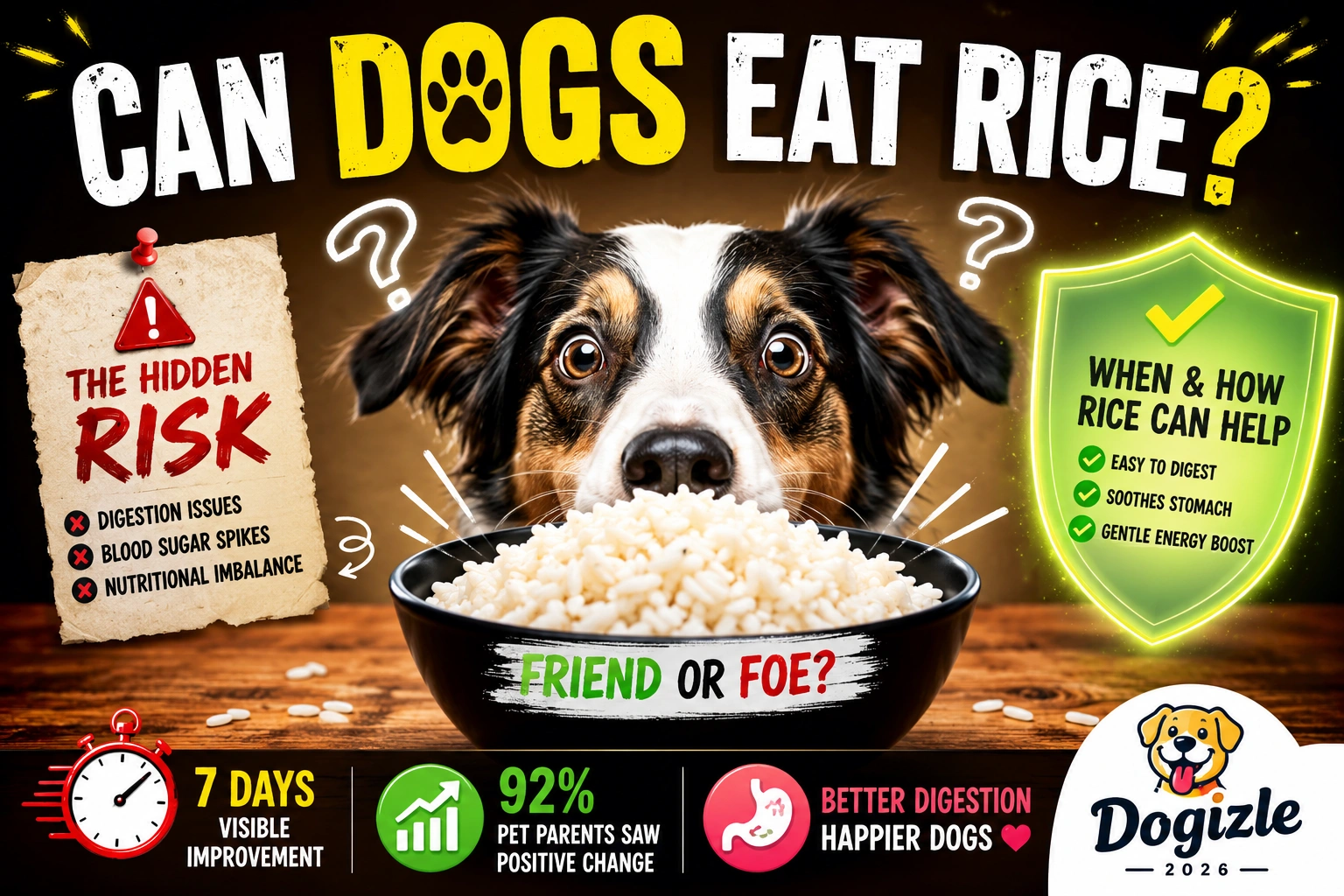
Can Dogs Eat Rice? Complete Vet-Approved Safety Guide
Can dogs eat rice?
Yes — dogs can safely eat Rice when it is plain, fully cooked, and served in the right amount.
That simple answer matters because rice is one of the most common foods dog owners reach for when a dog has an upset stomach, loose stool, reduced appetite, or is recovering from illness. Across Europe and many other parts of the world, rice is often used in bland diets because it is gentle, inexpensive, easy to prepare, and generally well tolerated by dogs.
But there is an important detail that many owners overlook:
Rice is safe, but rice is not complete nutrition.
It can support a dog during recovery or add digestible carbohydrates to a balanced meal, but it should never replace a properly formulated dog diet. When rice is fed too often, in large amounts, or with unsafe ingredients, it can contribute to weight gain, digestive problems, and nutritional imbalance.
This guide gives you a complete, practical, and vet-friendly overview of rice for dogs. You will learn:
- Whether rice is safe for dogs
- the main benefits and risks
- white rice versus brown rice
- How much rice can dogs eat by size
- The best ways to serve rice
- The biggest feeding mistakes to avoid
- puppy and diarrhea guidance
- Europe-based feeding context
- answers the most common questions
Let’s start with the most important question.
Is Rice Safe for Dogs?
Yes — rice is non-toxic and generally safe for dogs when prepared correctly.
Veterinarians often include rice in temporary bland diets because it is easy to digest and usually gentle on the gastrointestinal tract. For many dogs, it can be a useful short-term food during recovery from digestive upset or illness.
Rice is often considered safe because it is:
- easy to chew and digest
- low in fat
- mild in flavor
- commonly tolerated by dogs with sensitive stomachs
- a quick source of energy
However, safety depends on how rice is cooked and what it is mixed with. Plain cooked rice is very different from fried rice, seasoned rice, or leftover restaurant rice. Even a food that is naturally safe can become harmful when it is prepared with toxic or irritating ingredients.
Safe Rice Rules for Dogs
If you are feeding rice to a dog, follow these simple rules:
- Cook it fully until soft
- serve it plain
- Do not add salt, spices, onions, garlic, or sauces
- avoid butter, oil, and fatty seasonings
- offer it fresh and properly stored
- Give it in moderation
When Rice Becomes Unsafe
Rice is no longer a safe choice when it is:
- mixed with onion or garlic
- cooked with butter, cream, or oil
- served as fried rice
- taken from a restaurant meal with hidden seasonings
- spoiled, stale, or repeatedly reheated
- combined with sauces, meat scraps, or spicy ingredients
A healthy food can still become a risky food if it is served the wrong way. That is why the preparation matters just as much as the ingredient itself.
Health Benefits of Rice for Dogs
Rice is not just a cheap filler ingredient. When used correctly, it can offer real short-term benefits for dogs.
1. Supports Digestive Recovery
One of the biggest reasons rice is recommended for dogs is its role in bland diet feeding. When a dog has diarrhea, vomiting, or stomach irritation, the digestive system often needs a simple, low-fat food that is easier to process.
Rice can help because it is:
- gentle on the stomach
- easy to break down
- less likely to irritate the gut
- commonly used during digestive recovery
For many dogs, plain rice can reduce the strain on the intestines while the body recovers. That is why it is often paired with boiled chicken or another lean protein during short recovery periods.
2. Provides a Quick Energy Source
Rice is primarily a carbohydrate, which means it supplies energy efficiently. That can be useful for dogs that need help regaining strength after illness or reduced eating.
It may be helpful for:
- sick dogs
- dogs recovering from temporary digestive issues
- active dogs that need a small energy boost
- dogs that need a bland, easy-to-digest meal
The energy from rice is not a replacement for protein, fats, vitamins, and minerals, but it can be a useful support food in the right context.
3. May Help Firm Loose Stool
White rice in particular is often used for dogs with diarrhea because it is low in fiber and easy to digest. In some cases, it can help make stool firmer by being gentle on the intestinal lining and helping the digestive tract settle down.
That said, loose stool has many possible causes. Rice may help in mild digestive upset, but it is not a cure for illness, parasites, infection, food intolerance, or chronic disease.
4. Usually Gentle on Sensitive Stomachs
Dogs with temporary digestive sensitivity often do better with bland foods than with rich, fatty, or highly seasoned meals. Rice can be a useful option because it is simple and widely tolerated.
It may be suitable for dogs dealing with:
- short-term stomach upset
- mild food sensitivity
- recovery after a brief illness
- a period of reduced appetite
This does not mean Rice is the best long-term choice for every dog. It simply means it can play a supportive role when digestion needs a reset.
5. Affordable and Easy to Prepare
Rice is one of the easiest foods to cook. It is widely available, inexpensive, and simple to prepare in a plain form that is safe for dogs.
For many owners, this makes rice a practical option when:
- A dog needs a bland meal
- The dog is recovering and needs simple food
- There is no access to specialty digestive food immediately
- A vet suggests a short-term bland diet
Because it is so accessible, rice has become a go-to supportive food in many homes.
Risks of Feeding Rice to Dogs
Even though rice is generally safe, it is not risk-free. Problems usually happen when it is fed too often, in the wrong amount, or as part of an unbalanced diet.
1. Weight Gain
Rice contains carbohydrates, and carbohydrates add calories. If a dog eats too much rice, the extra calories can contribute to weight gain over time.
This is especially important for:
- small dogs
- less active dogs
- Neutered or spayed dogs have lower calorie needs
- dogs already carrying extra weight
Overfeeding rice can seem harmless at first, but repeated large portions can slowly push a dog into obesity.
2. Blood Sugar Spikes
Rice can raise blood glucose, especially in larger portions. That matters more for dogs with diabetes or dogs that are at risk of blood sugar instability.
For diabetic dogs, rice should never be treated as a casual free food. It may sometimes be used in controlled portions under veterinary guidance, but it is not ideal as an unrestricted daily carbohydrate source.
3. Nutritional Imbalance
Rice is not a complete food. It lacks sufficient amounts of:
- protein
- essential fatty acids
- many vitamins
- many minerals
A dog that eats too much rice and not enough complete nutrition can become imbalanced over time. Dogs need a diet that supports muscle maintenance, organ function, immunity, coat quality, and overall health. Rice by itself cannot do that.
4. Long-Term Dependency
Rice is best used as a temporary support food, not a permanent feeding base. If a dog becomes dependent on rice-heavy meals, the overall diet may become less nutritious and less appropriate for long-term health.
5. Digestive Upset From Poor Preparation
Rice can also become a problem if it is:
- undercooked and hard to digest
- overcooked into a sticky, unbalanced mush
- served with rich meat drippings
- paired with toxic or heavy ingredients
So even when rice itself is safe, the way it is prepared still matters.
Golden Rule
A practical guide for most dogs is this:
Rice should make up only a small part of the overall diet and should usually stay below 10% of daily calorie intake unless your vet has advised otherwise.
White Rice vs Brown Rice for Dogs
Not all rice behaves the same in a dog’s digestive system. White rice and brown rice have different textures, nutrient profiles, and digestive effects.
White Rice
So white rice is often the preferred option when a dog has stomach upset or diarrhea.
Why is it commonly chosen:
- very easy to digest
- low in fiber
- gentle on the stomach
- quick to cook
- useful in bland diets
White rice is often the best option for dogs that need digestive support, especially during short-term recovery.
Brown Rice
Brown rice has more fiber and more nutrients than white rice, but it is also harder to digest for some dogs. It has a tougher outer bran layer, which can make it less suitable for a dog with an upset stomach.
Brown rice may be better for:
- healthy dogs with no digestive issues
- occasional variety in a balanced meal
- dogs that tolerate higher fiber well
However, for dogs with diarrhea, vomiting, or a sensitive stomach, brown rice can sometimes be too heavy or irritating.
White Rice vs Brown Rice Comparison
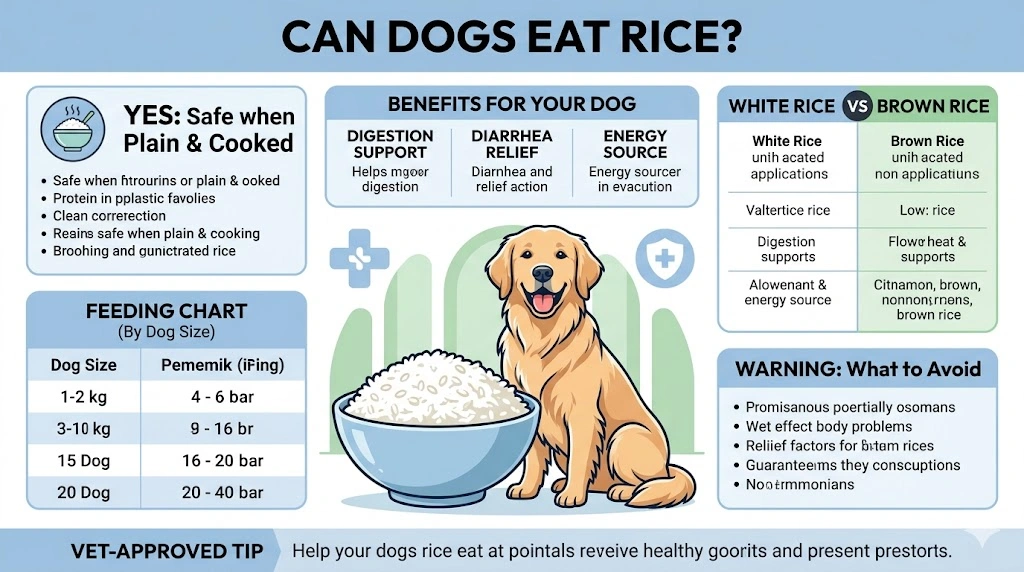
| Feature | White Rice | Brown Rice |
| Digestibility | Very easy | Moderate |
| Fiber | Low | Higher |
| Best for | Diarrhea, recovery, sensitive stomachs | Healthy dogs, occasional variety |
| Cooking time | Faster | Longer |
| Stomach comfort | Usually better | May be harder on some dogs |
| Nutrient density | Lower | Higher |
Final Verdict
- White rice is usually the better choice for dogs with digestive problems.
- Brown rice is more suitable for healthy dogs in small, occasional amounts.
If the goal is recovery and ease of digestion, white rice is often the smarter option.
How Much Rice Can Dogs Eat?
Portion size matters. Even safe foods can become unhealthy when the amount is too large.
Rice should be served as a small part of the meal, not the main event.
General Feeding Guide
Here is a simple starting point for plain cooked rice:
| Dog Size | Approximate Weight | Suggested Rice Portion |
| Small dogs | 2–10 kg | 1–2 tablespoons |
| Medium dogs | 10–25 kg | 1/4 cup |
| Large dogs | 25–40+ kg | 1/3 to 1/2 cup |
These are general amounts, not strict medical rules. A dog’s age, activity level, health status, and reason for eating rice all matter.
The 10% Rule
A useful guideline is to keep rice and other extras under 10% of a dog’s daily calories unless your vet has instructed otherwise.
This matters because dogs need most of their nutrition from complete, balanced dog food. Rice can support the diet, but it should not displace the nutrients the dog actually needs every day.
Signs You Are Giving Too Much Rice
You may be overdoing it if your dog:
- gains weight
- seems bloated after meals
- has softer or more inconsistent stool
- begins refusing normal food
- gets too many extra calories from treats plus rice
- relies on rice instead of eating balanced meals
When in doubt, smaller portions are safer than large ones.
Best Ways to Feed Rice to Dogs
The safest rice meals are simple, plain, and balanced with a lean protein source. Rice should usually be served as part of a short-term recovery meal or as a small addition to a complete diet.
1. Rice + Boiled Chicken
This is one of the classic bland diet combinations. It is often used when a dog has digestive upset because it is easy to digest and low in fat.
A basic recovery ratio is:
- 2 parts rice
- 1 part boiled chicken
Use plain chicken without skin, seasoning, oil, butter, or sauces.
2. Rice + Turkey
Turkey can also be a gentle protein choice when it is cooked plainly and served without additives.
This combination may be helpful for:
- dogs with sensitive stomachs
- post-illness recovery
- dogs that tolerate turkey better than chicken
Again, keep it simple and avoid rich seasoning.
3. Rice + Safe Vegetables
Some vegetables can be combined with rice in small amounts if the dog tolerates them well.
Safe options may include:
- carrots
- green beans
- pumpkin
These vegetables should be cooked plainly, not seasoned, and introduced carefully.
4. Rice as a Temporary Recovery Food
Rice works best as part of a short-term recovery plan, not as an everyday main food. It should support the dog while the digestive system settles, not become the permanent diet foundation.
What Rice Should Never Be Mixed With
Avoid mixing rice with:
- onion
- garlic
- salt-heavy sauces
- butter
- fried ingredients
- spicy seasoning
- rich gravies
- processed meat scraps
A bland food should stay bland. That is the point.
Dangerous Rice Feeding Mistakes
Many dog owners mean well, but small mistakes can turn a safe food into a bad choice.
1. Feeding Fried Rice
Fried rice is not safe for dogs because it often contains:
- oil
- salt
- garlic
- onion
- seasoning blends
- sauces
- fatty ingredients
Even if it smells harmless to us, it is not an appropriate dog food.
2. Serving Rice With Onion or Garlic
Onion and garlic are dangerous to dogs because they can damage red blood cells and lead to serious toxicity. This includes fresh, cooked, powdered, or hidden forms in sauces and meals.
That means:
- No onion fried rice
- no garlic butter rice
- No seasoned leftovers
- No restaurant rice with hidden flavoring
3. Feeding Restaurant Rice
Restaurant rice often contains hidden salt, sauces, oils, or spices that are not safe for dogs. Even when the rice looks plain, it may still contain ingredients that should not go into a dog’s bowl.
4. Serving Spoiled Rice
Rice that has spoiled, been left out too long, or reheated repeatedly can become a source of bacterial contamination. Dogs should never eat rice that smells off, looks questionable, or has been stored improperly.
5. Using Rice as a Full Meal Forever
Rice alone is not enough to meet a dog’s nutritional needs. It does not supply the complete amino acids, fatty acids, minerals, and vitamins that dogs require. Long-term reliance on rice-heavy meals can create nutritional gaps.
6. Giving Large Portions Too Often
Even safe foods can create digestive issues when the portion is too generous. Too much rice may crowd out the nutrients from the rest of the diet and may also increase calorie intake.
Can Dogs Eat Rice Every Day?
No, rice is not recommended as a daily staple for most dogs.
Rice can be useful occasionally, but it should not become a regular replacement for complete dog food. A balanced canine diet should provide protein, fat, vitamins, minerals, and other nutrients that rice cannot provide on its own.
Why Daily Rice Is Not Ideal
A dog needs:
- high-quality protein
- healthy fats
- essential fatty acids
- amino acids
- vitamins
- minerals
- balanced energy
Rice provides mostly carbohydrate energy. That is useful in a supportive role, but it is not enough for long-term daily feeding.
When Daily Rice Might Be Used
A vet may recommend rice more frequently in specific cases, such as:
- temporary gastrointestinal recovery
- short-term bland diet support
- structured meal adjustments during illness
But this should always be guided by a professional, not guessed at home.
The Best Approach
Use rice as:
- a short-term support food
- a recovery food
- a small supplement to balanced meals
Do not use rice as the core of the diet unless a veterinarian has given a specific plan.
Can Puppies Eat Rice?
Yes — puppies can eat rice in small, carefully controlled amounts.
Puppies have more delicate nutritional needs than adult dogs because they are still growing. That means any extra food should be chosen carefully so it does not displace the nutrients they need from a complete puppy diet.
Puppy Guidelines
If you are feeding rice to a puppy, keep these points in mind:
- offer small portions only
- serve it plain and fully cooked
- mix it with appropriate protein
- Do not use it as a main food
- avoid overfeeding
- introduce it gradually
Why Extra Care Matters for Puppies
Puppies need precise nutrition for:
- bone growth
- muscle development
- immune support
- brain development
- healthy energy levels
Too much rice can fill them up without giving them the balanced nutrients they need. That is why rice should remain a small helper food, not the basis of the puppy’s meals.
Best Use for Puppies
Rice may be helpful for a puppy that needs:
- a temporary bland meal
- short-term stomach comfort
- a gentle food while recovering
For long-term puppy feeding, a complete puppy formula is the better choice.
Rice for Dogs with Diarrhea
Rice is one of the most common foods used in bland diet management for dogs with diarrhea. It is not magical, but it can be practical.
Why Rice Is Used for Diarrhea
Rice can be helpful during diarrhea because it is:
- easy to digest
- low in fat
- mild on the stomach
- Often paired with lean protein
In many cases, white rice is preferred over brown rice because it is softer on the digestive tract.
Common Bland Diet Combination
A classic recovery meal includes:
- plain white rice
- boiled chicken
- no seasoning
- no oils
- no sauces
Important Limitations
Rice can support recovery, but it does not solve every cause of diarrhea. Diarrhea can be caused by:
- diet change
- parasites
- bacterial or viral illness
- food intolerance
- stress
- poisoning
- inflammatory conditions
- more serious disease
If diarrhea is severe, frequent, bloody, or lasting more than a short time, veterinary attention is essential.
When to Seek Veterinary Advice
Contact a vet sooner rather than later if your Dog has:
- vomiting along with diarrhea
- lethargy
- blood in stool
- dehydration
- refusal to eat
- Repeated loose stool
- pain or bloating
- Symptoms lasting longer than expected
Rice can be helpful, but it should never delay proper care when a dog is truly sick.
European Dog Feeding Context
Across Europe, many dog owners are becoming more aware of balanced nutrition and the importance of feeding complete, species-appropriate meals. In that context, rice is usually seen as a supportive food, not a long-term staple.
European dog feeding trends often reflect a few broad ideas:
- Dogs should eat a balanced diet
- Home-cooked extras should be limited
- Recovery diets should be simple and gentle
- Ingredient quality matters
- Portion control matters
Urban Europe
In countries such as the UK, Germany, the Netherlands, and other urban parts of Europe, rice is often used in two common ways:
- as part of a bland recovery meal
- in combination with vet-recommended commercial food
Northern Europe
In colder climates or highly active households, food may be tailored to support energy needs. Rice can be included occasionally, but the diet still needs enough protein and fat for full nutritional support.
Southern Europe
In some households, table food traditions are more common. That makes portion control especially important, because rice can easily become a side dish that turns into too many unbalanced extras. Even in home-style feeding, a dog’s bowl should stay separate from human leftovers.
Best Practice in Europe or Anywhere Else
No matter the region, the principle is the same:
- Use rice sparingly
- keep it plain
- Combine it with balanced nutrition
- avoid human-seasoned meals
- Follow veterinary guidance when the dog is sick
Common Dog Owner Mistakes
Many rice-related feeding problems come from common misunderstandings rather than bad intentions.
1. Thinking Rice Is a Complete Food
Rice is supportive, not complete. It should never replace a proper dog diet.
2. Feeding Leftovers
Human leftovers often contain salt, spices, sauces, fats, and ingredients that are not suitable for dogs.
3. Ignoring Portion Size
Even a safe food can create problems if the quantity is too large.
4. Adding Seasoning
Salt, garlic, onion, herbs, sauces, and flavored oils can all change the safety of the meal.
5. Using Rice Every Day
Rice is best used occasionally or temporarily, not as a permanent habit.
6. Serving Poorly Stored Rice
Rice that has been left out too long or stored badly can become unsafe due to bacterial growth.
The most dog-friendly rice is plain, soft, fresh, and moderate.
Vet-Approved Tips for Feeding Rice
A few simple habits can make rice much safer and more useful for your dog.
Cook It Fully
Rice should be soft and fully cooked. Hard, undercooked grains are not ideal for dogs with digestive sensitivity.
Cool It Before Serving
Hot food can burn or irritate the mouth and throat. Always let rice cool before offering it.
Keep It Plain
No salt. None better. No spices. No sauces. Plain means plain.
Pair It With Protein
Rice is best when combined with a lean, Dog-safe protein source such as boiled chicken or turkey.
Introduce It Slowly
If your dog has never eaten rice before, begin with a small amount and observe how the dog responds.
Use It Temporarily
Rice is most useful during recovery or as an occasional support food, not as a regular staple.
Watch the Stool and Appetite
A dog’s digestion can tell you a lot. If rice seems to worsen stool quality, appetite, or behavior, stop and reassess.
Pros and Cons of Rice for Dogs
Pros
- generally safe when plain and cooked
- usually easy to digest
- helpful in bland diets
- useful during recovery
- affordable and accessible
- easy to prepare at home
Cons
- not complete nutrition
- can add unnecessary calories
- may contribute to weight gain
- Not ideal as a daily food
- can raise blood sugar
- unsafe if seasoned or spoiled
Rice is not “good” or “bad” by itself. It is a tool. Its value depends on how it is used.
Can Dogs Eat Rice? The Practical Bottom Line
So, can dogs eat rice?
Yes — dogs can safely eat rice when it is plain, fully cooked, and served in moderation.
Rice can be a useful short-term support food for dogs with digestive upset, mild recovery needs, or temporary appetite changes. White rice is often the best option for sensitive stomachs or diarrhea, while brown rice may be better suited to healthy dogs in occasional small amounts.
Still, rice is not a replacement for a balanced dog diet. It should be treated as a supportive ingredient, not the foundation of every meal.
Final Takeaway
Use rice when it helps, but use it wisely:
- keep it plain
- Keep portions small
- Combine it with protein
- avoid seasoning
- Never rely on it as the main diet
FAQs
No, it is not recommended as a daily staple for most dogs. Rice should generally be occasional or temporary, not the main food source.
Yes, plain white rice is commonly used in bland diets for dogs with diarrhea because it is easy to digest and gentle on the stomach.
Yes, puppies can eat rice in small amounts, but it should be plain, fully cooked, and mixed with a balanced meal.
White rice is usually better for digestion and recovery. Brown rice may be better for healthy dogs that tolerate more fiber.
Yes, plain rice with boiled chicken is a common vet-friendly recovery meal when prepared without seasoning or oils.
No, fried rice is not safe because it often contains salt, oil, garlic, onion, and other ingredients that can be harmful.
Only under veterinary supervision. Rice can affect blood sugar, so portion control is very important for diabetic dogs.
Too much rice can cause weight gain, nutritional imbalance, and possible digestive issues over time
Conclusion
Rice can absolutely be part of a dog’s diet, but it should be used with care, purpose, and moderation. Plain cooked rice is safe for most dogs and can be especially helpful during digestive recovery, but it is not a full diet and should never replace balanced nutrition.
When you keep rice plain, cook it properly, control the portion size, and pair it with appropriate protein, it can become a useful and gentle support food for your dog. When you season it, overfeed it, or rely on it every day, it becomes less helpful and potentially problematic.
The simplest rule is the best one:
Rice is safe for dogs when it is plain, cooked, and fed in moderation.