Introduction
Many dog owners across Europe ask. The same practical question at the dinner table. Can dogs eat pork safely? Or is pork something they should avoid entirely? The answer is not a simple yes or no, because pork can be either safe or risky depending on how it is prepared, what cut it is, and how much is served. Veterinary guidance generally agrees that plain, fully cooked pork can be safe for dogs in small amounts, while raw pork, processed pork, fatty trimmings, and bones create avoidable health hazards.
Pork is common in European households, from Sunday roasts to sausages, ham, and leftover cuts. That is exactly why this topic matters: dogs are often exposed to human food when families are cooking, sharing plates, or cleaning up leftovers. The problem is that what is normal for humans is not always suitable for canine digestion. Dogs do not need pork in their diet, and safer protein choices such as chicken or turkey are usually better for routine feeding.
Here is the clear answer in one line: yes, dogs can eat pork, but only when it is plain, fully cooked, lean, and served in very small, occasional portions. Everything else—raw pork, bacon, ham, sausage, greasy cuts, seasoning-heavy leftovers, and all pork bones—should be treated as unsafe or high risk.
In this guide, you will learn how pork fits into canine nutrition, why raw pork is risky, why pork bones can be dangerous, how processed pork affects digestion, which dogs are more vulnerable to pancreatitis, and how to keep portion sizes sensible. The language is kept simple and practical so pet owners can make quick, confident decisions.
Quick Answer: Can Dogs Eat Pork?
Can dogs eat pork? Yes, but only under strict conditions. The safest version is plain, thoroughly cooked, lean pork with no added salt, onions, garlic, spices, sauces, oil, or heavy fat. It should be offered only as an occasional treat rather than a routine meal ingredient. Dogs can digest animal protein, but that does not mean every form of pork is suitable. The safety depends on the cooking method, cut selection, and serving size.
Unsafe forms should be avoided completely. Raw pork can carry pathogens and parasites. Processed pork, such as bacon, ham, and sausage, often contains salt, preservatives, and seasoning compounds that are poor choices for dogs, and pork bones can splinter, block the digestive tract, or damage teeth and gums. These warnings are consistent across veterinary sources.
Why Plain Cooked Pork Can Be Safe in Moderation
Veterinary nutrition sources do not label pork as inherently toxic to dogs. Instead, they emphasize that plain cooked pork is acceptable in moderation when it is kept simple. That means no seasoning blends, no onion or garlic, no greasy cooking fat, and no bones. The main benefit is protein, but dogs already receive complete nutrition from balanced dog food, so pork should be viewed as a supplemental treat rather than a foundation food.
Lean pork can provide useful nutrients such as protein, vitamin B1, vitamin B6, iron, and zinc. Protein supports muscle maintenance and repair, while micronutrients help with normal metabolic and immune functions. Even so, these nutrients are not unique to pork. Dogs can get the same broad nutritional support from safer proteins and from a properly formulated complete diet. That is why pork is optional, not essential.
The best mindset is this: pork is not a dietary problem when it is prepared like a clean, lean, unseasoned protein bite; it becomes a problem when it starts resembling human comfort food. As soon as the food becomes salty, fatty, smoked, cured, fried, or bone-in, the risks increase sharply.
Nutritional Value of Pork for Dogs
When pork is trimmed well and cooked properly, it can contribute high-quality animal protein to a dog’s diet. Protein supports lean tissue, recovery after exercise, and general body maintenance. Pork also contains B vitamins and minerals that play a role in energy metabolism and red blood cell function. Those are real nutritional advantages, which is why some dog owners consider sharing a tiny portion from a home-cooked meal.
However, nutritional value must be weighed against practical value. A balanced commercial diet is designed to provide the right proportions of protein, fat, vitamins, and minerals across the day. Adding pork on top of that does not improve the diet automatically; it simply adds calories. For most dogs, that extra energy is unnecessary unless a veterinarian has recommended a specific feeding strategy.
Another important point is digestibility. Dogs are not strict carnivores in the way cats are, and they can handle more than just meat in their diet. But that flexibility does not mean all meats are equal. Lean, cooked pork can fit into a dog’s menu in small amounts, while heavily processed or fatty pork can disrupt digestion and trigger discomfort.
When Pork Becomes Dangerous for Dogs
The main danger with pork is not the word “pork” itself. The danger comes from how the pork is handled, cooked, preserved, or served. Raw meat can carry pathogens, fatty cuts can overload the digestive system, processed pork often contains harmful extras, and bones can physically injure a dog’s mouth or intestines. These are the real-world failure points owners need to watch for.
Dogs with sensitive stomachs, a history of gastrointestinal upset, obesity, or pancreatitis are especially vulnerable. For these dogs, even a small amount of rich pork can cause vomiting, loose stools, abdominal pain, or a flare-up of existing disease. Veterinary sources consistently recommend low-fat feeding plans for dogs with pancreatitis risk.
Raw Pork and Parasite Risk
Raw pork is not a safe shortcut. It may expose dogs to foodborne pathogens and parasitic contamination, and veterinary guidance advises against feeding raw meat because of the health risks involved. In Europe, Trichinella remains an important concern in pork and wild game, and public health authorities note that trichinellosis is linked to raw or undercooked meat, especially pork and wild boar. Thorough cooking is the recommended preventive step.
The reason this matters for dogs is simple: a raw pork exposure can lead to gastrointestinal illness or, depending on the source and region, a much more serious infection risk. Dogs do not have special immunity that makes raw pork “safe.” If anything, home feeding errors and cross-contamination can increase household risk because raw meat can spread bacteria in kitchens and on feeding surfaces.
Aujeszky’s Disease / Pseudorabies Risk
For European dog owners, one of the most serious pork-related concerns is Aujeszky’s disease, also called pseudorabies. Official animal-health sources state that dogs and cats are susceptible, and UK and Northern Ireland guidance warns against feeding raw or uncooked meat from domestic pigs or wild boar. Recent UK government material also notes recent European reports, including a domestic pig farm report in northern France in 2024.
This is why raw pork is more than just a stomach upset issue. In the wrong setting, it can expose dogs to a severe viral disease with no practical home treatment. The safest response is prevention: do not feed raw pork, do not feed wild boar meat raw, and do not assume that freezing or brief cooking makes the product safe. Veterinary and government guidance consistently points toward full cooking and strict avoidance of uncooked pig meat.
Fatty Pork and Pancreatitis Risk
Fatty pork is a poor choice for dogs because excess fat can trigger digestive distress and, in more serious cases, pancreatitis. Veterinary sources repeatedly warn that rich, fatty foods are hard to digest and can be especially troublesome for dogs that are overweight or already prone to pancreatic inflammation. Pancreatitis is painful, can become severe, and often requires urgent veterinary care.
The clinical signs owners should know include vomiting, abdominal pain, lethargy, reduced appetite, and sometimes a tense or bloated belly. Dogs that have had pancreatitis before are often advised to stay on lower-fat diets long term. That is another reason pork should be trimmed carefully or skipped entirely in dogs with digestive sensitivity.
Processed Pork: Bacon, Ham, and Sausage
Processed pork is the least dog-friendly version of pork. Bacon, ham, and sausage are usually high in salt and fat, and they may also contain preservatives, smoke flavoring, garlic, onion, or other seasonings that are unsafe or undesirable for dogs. Veterinary sources specifically flag ham and sausage as poor choices because of their sodium load, ingredient list, and rich fat content.
These foods can cause immediate problems such as thirst, stomach upset, and loose stool, and they may also worsen longer-term dietary issues if used repeatedly as treats. Dogs should not be trained with bacon strips, holiday ham scraps, or sausage crumbs. From a nutrition perspective, they add more risk than benefit.
Pork Bones: Why They Are Not Safe
Can dogs eat pork bones? No. This is one of the clearest no-go items in canine feeding guidance. Pork bones, especially cooked ones, can splinter into sharp fragments, create choking hazards, and damage the mouth, throat, stomach, or intestines. Raw bones are not automatically safe either, because they can still break teeth and may carry bacterial contamination.
Pork rib bones are particularly concerning because they are often brittle and fatty. That combination can create two risks at once: physical splintering and pancreatic irritation from the fat content. Veterinary sources increasingly advise against giving pork bones of any kind, and the safest course is to avoid them altogether.
Safe Way to Feed Pork to Dogs
If a dog owner chooses to offer pork, the safest approach is very strict. Use lean cuts only, cook the meat fully, serve it plain, and trim away visible fat. The pork should be cut into small, manageable pieces so the dog does not gulp it. It should never be served with sauce, gravy, stuffing, garlic, onion, paprika mixes, barbecue glaze, or spicy rubs.
A safe preparation method usually looks like this: boil, bake, or grill the pork without seasoning, then cool it completely before serving. Remove skin, rind, bones, and fatty sections. Keep the serving size modest and treat it as an occasional reward rather than a meal replacement. This is the kind of plain preparation veterinary sources describe when they say pork can be safe “as long as you keep it simple.”
What should never be done is just as important. Do not pan-fry pork in oil, do not feed leftover roast with drippings, do not offer ribs from the barbecue, do not hand over bacon ends, and do not mix pork scraps into everyday meals. Once pork is treated like human comfort food, it stops being a sensible canine treat.
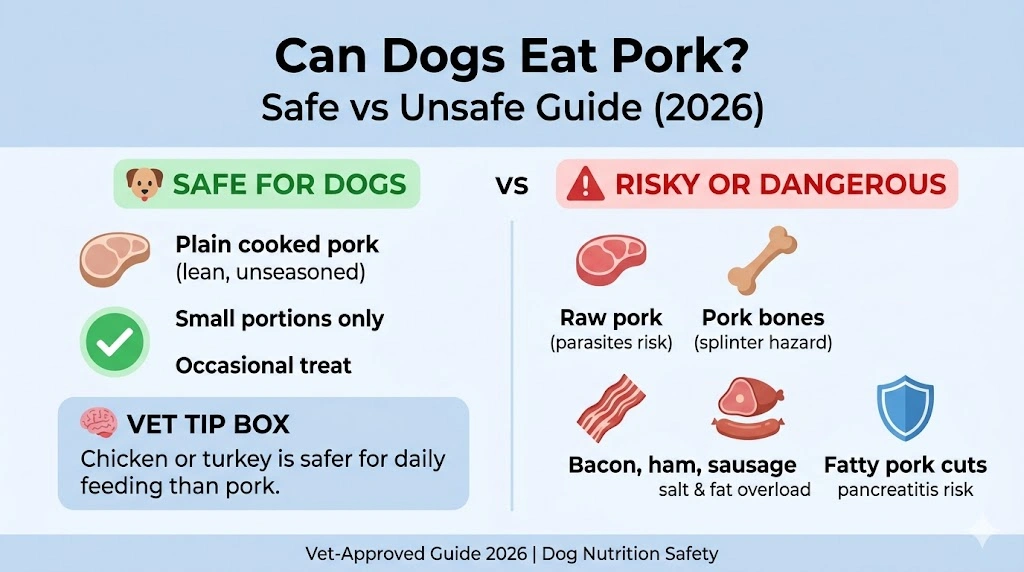
Discover the vet-approved truth in this simple guide showing what’s safe, what’s dangerous, and what every dog owner must avoid in 2026.
How Much Pork Can a Dog Eat?
There is no universal serving size that fits every dog, because body weight, activity level, age, and medical history all matter. A tiny toy breed and a large working dog cannot safely eat the same amount. The better rule is to keep treats, including pork, below 10% of total daily calories, which matches common veterinary guidance on treats and snacks.
For small dogs, that may mean just one or two bite-sized pieces. For medium and large dogs, it may be a few small bites, not a full portion. Even then, pork should be occasional, not routine. If a dog already receives chews, biscuits, training treats, or table scraps, pork calories should be reduced further so the daily diet does not become imbalanced.
A practical rule is simple: the dog should still be eating a balanced main diet, and the pork should function as a tiny bonus, not a second meal. That keeps calories under control and lowers the chance of stomach upset or weight gain.
Pork Versus Safer Protein Choices
When comparing pork to other common proteins, chicken and turkey usually come out ahead for everyday feeding because they are easier to keep lean and simpler to serve without rich seasoning. Pet nutrition sources routinely treat plain cooked poultry as a safer and more predictable option than fatty, cured, or heavily processed pork products.
Lean beef can also be a reasonable alternative in moderation, provided it is cooked plainly and trimmed of visible fat. White fish is another useful option when prepared without oil, butter, or spices. The key difference is not that pork is forbidden and all other meats are perfect; rather, it is that pork is more likely to appear in forms that are cured, fatty, or bone-in, which makes mistakes more common.
For dogs with delicate digestion, the safest proteins are the ones with the least complexity. Plain chicken, turkey, or veterinary-formulated diets are usually easier to manage than pork-based table leftovers. That does not make pork “toxic” in its plain cooked form, but it does make it a less efficient choice for regular feeding.
Symptoms of Pork-Related Illness in Dogs
If a dog eats unsafe pork, owners should watch for digestive and systemic warning signs. Common red flags include vomiting, diarrhea, abdominal discomfort, drooling, weakness, reduced appetite, fever, and a bloated or painful stomach. These signs can appear after fatty foods, raw meat exposure, or bone ingestion.
Some symptoms need faster action than others. Persistent vomiting, severe lethargy, repeated retching, trouble breathing, or obvious pain suggest the dog may need urgent veterinary assessment. Bone-related injuries can also cause constipation, straining, blood in stool, or an inability to pass stool at all. Those signs should never be ignored.
If the food was raw pork or wild boar, the concern becomes even broader because of parasite and viral risk. In that situation, do not wait for symptoms to “settle on their own.” Contact a veterinarian for advice as soon as possible, especially if the dog is young, elderly, small, or medically fragile.
Expert Veterinary Advice for European Dog Owners
Across Europe, the safest practical advice is consistent: cook pork thoroughly, avoid raw pork, avoid pork bones, and do not use processed pork as a regular treat. Public and veterinary authorities in Europe also emphasize the danger linked to raw or uncooked pig meat in relation to Aujeszky’s disease, particularly where wild boar and domestic pigs are part of the local risk landscape.
European food safety messaging also supports thorough cooking of pork and wild boar to reduce trichinellosis risk. That matters for households that may buy local farm pork, home-reared pork, or game meat from hunting contexts. In other words, “local” does not automatically mean “safe raw.” Proper heat treatment is what changes the risk profile.
For everyday pet feeding, veterinarians generally prefer safe, complete dog food plus carefully chosen treats. Pork can fit into that model only occasionally and only in a very plain form. The safest dogs to share pork with are healthy adults without pancreatitis, obesity, or digestive disease, and even then, the amount should be small.
Common Mistakes Dog Owners Make
A very common mistake is assuming that because a dog “liked” a pork scrap once, the food must be safe. Dogs will often eat rich food eagerly, but enthusiasm is not the same as tolerance. Another common error is feeding cooked ham or sausage as a convenient snack, even though those foods are high in sodium and often full of added ingredients.
A second mistake is giving pork bones after a roast or barbecue. Many owners think bones are a natural chew, yet veterinary guidance warns that pork bones can splinter, choke a dog, or cause serious internal injury. The bone may look harmless right before it becomes an emergency.
A third mistake is using fatty pork trimmings or leftover drippings as “extra flavor.” That is exactly the kind of food that can upset digestion and push vulnerable dogs toward pancreatitis. When in doubt, less fat and less seasoning is the safer route.
Breed-Specific and Health-Related Risk Factors
Not every Dog reacts to rich food in the same way. Dogs with a history of pancreatitis, obesity, or recurring digestive sensitivity are more likely to struggle with fatty pork. Some smaller breeds and some breeds known for pancreatic sensitivity can be especially vulnerable to rich scraps and table leftovers. Veterinary advice generally focuses less on breed labels alone and more on the dog’s body condition, age, and medical history.
That said, it is smart to be extra cautious with dogs that already have a delicate stomach or a history of bad reactions to fatty meals. Even if the pork is cooked, lean, and unseasoned, the portion should remain tiny. Dogs with chronic gastrointestinal disease are often better served by lower-fat diets that are easier to digest.
Puppies deserve special caution as well. Their digestive systems are still developing, and a rich or unusual food can upset them more easily than it would an adult dog. For young dogs, sticking to normal puppy food and vet-approved treats is the simplest and safest policy.
Real-Life Situations in Europe
In busy urban homes across the UK, France, Germany, Italy, and Spain, the most common issue is not a special pork recipe; it is ordinary table scraps. A dog that nicks a slice of ham from a plate, a crust of sausage from the floor, or a rib bone from the bin can face very different levels of risk. Processed leftovers should be treated as unsafe, especially when they are salty or seasoned.
In rural areas and hunting regions, wild boar exposure increases concern even more. European public-health sources identify pig and wild boar meat as major sources of trichinellosis risk, and official animal-health guidance highlights Aujeszky’s disease concerns tied to uncooked pig meat and wild boar. That makes raw or undercooked game meat a poor choice for dogs under nearly all circumstances.
For families who cook pork regularly, the practical takeaway is straightforward: keep the dog away from preparation scraps, do not let the pet lick plates or pans, and do not use leftovers as a shortcut reward. A little planning prevents a lot of preventable trouble.
Healthier Alternatives to Pork
If the goal is simply to share a safe protein treat, chicken and turkey are usually the easiest options to manage because they are naturally leaner and widely used in dog-friendly preparations. Plain cooked lean beef and some plain white fish can also be suitable in moderation. The common theme is simplicity: no seasoning, no bones, no heavy oils, no rich sauces.
These alternatives are better for day-to-day feeding because they are easier to portion and less likely to come packaged as processed, salty, or fatty products. They also align more closely with the idea of a balanced canine diet, where treats remain a small fraction of total calories, and the main food stays complete and nutritionally reliable.
If a dog already has weight issues or a sensitive stomach, it is often wiser to skip meat scraps altogether and use a veterinarian-approved treat or a measured portion of the dog’s own food during training. That keeps the diet stable and avoids accidental overfeeding.
FAQs
Yes. Dogs can eat cooked pork if it is plain, lean, fully cooked, and served in small amounts. The key is to avoid seasonings, sauces, garlic, onion, and added fat. Cooked pork should still be treated as an occasional treat, not a regular diet staple.
No. Raw pork is not recommended for dogs because it can carry parasites and harmful microbes, and in Europe, it also raises concern about Aujeszky’s disease in certain pork and wild boar contexts. Thorough cooking is the safer choice.
No. Pork bones can splinter, break teeth, choke a dog, or damage the gastrointestinal tract. Both cooked and raw bones are risky, and veterinary guidance consistently recommends avoiding pork bones altogether.
Not always. Plain cooked lean pork can be safe in moderation, but fatty, salty, processed, or bone-in pork is a poor choice and can cause illness. The form of the pork matters more than the label.
It is not a good idea to make pork a routine food for puppies. Their digestion is more sensitive, and they are better served by age-appropriate puppy food and carefully chosen treats.
Usually no. Chicken is generally easier to keep lean and simple, which makes it a more practical everyday protein choice. Pork can still be used occasionally, but chicken is the cleaner option for most homes.
No. Pork fat is too rich for many dogs and can trigger digestive upset or contribute to pancreatitis risk, especially in dogs that are overweight or medically sensitive.
Conclusion
So, can dogs eat pork? Yes—but only when it is handled properly. Plain, fully cooked, lean pork can be shared in tiny amounts as an occasional treat. That is the safe version. The unsafe versions are raw pork, processed pork, fatty cuts, and all pork bones. Those are the forms that create the real danger.
For dog owners in Europe, the message is especially clear. Public-health and veterinary guidance highlights the importance of avoiding raw or uncooked pig meat, particularly where wild boar or regional pig disease risks are relevant. Thorough cooking is the simplest protective step, and keeping pork portions small reduces dietary strain. The most useful rule is easy to remember: pork can be an occasional treat, not a daily food; plain is better than processed; lean is better than fatty; and boneless is the only safe option. When there is any doubt, a safer protein such as chicken or turkey is the better choice for long-term canine health.