Best Dog Food for Sensitive Stomach and Diarrhea
Best Dog Food for Sensitive Stomach. When a dog starts having loose stool, Diarrhea, gas, vomiting, or frequent stomach upset, the entire household feels it. One day, your dog is playful and normal, and the next day, you are dealing with accidents, dehydration concerns, poor appetite, and confusion about what to feed next. Many owners immediately start switching foods, trying random treats, or searching for the most expensive “digestive” formula on the shelf. That approach often makes things worse.
The most important thing to understand is this: diarrhea is not a disease by itself. It is a warning sign. It tells you that something is irritating your dog’s digestive system. Sometimes the cause is simple, such as a sudden food change. Sometimes it is more serious, such as infection, parasites, inflammation, or a food intolerance. A “sensitive stomach” is usually a longer-term pattern of digestive instability, while diarrhea is often a short-term reaction that needs calmer, more strategic nutrition.
That is why the best dog food for a sensitive stomach and diarrhea is not simply the most popular brand, the most expensive formula, or the product with the loudest claims on the bag. The best choice is the one that matches your dog’s specific digestive needs, supports stool consistency, reduces gut irritation, and makes digestion easier.
In this guide, you will learn how to distinguish a sensitive stomach from diarrhea, what usually causes digestive upset, how the gut microbiome affects stool quality, which ingredients are often helpful, which ingredients are more likely to trigger problems, how to transition food safely, and how to choose a diet that supports recovery without overwhelming the digestive tract. The goal is simple: give you a practical, easy-to-follow roadmap that helps you make better feeding decisions for your dog.
Understanding Sensitive Stomach vs. Diarrhea in Dogs
Many people use the terms “sensitive stomach” and “diarrhea” as if they mean the same thing. They do not. Understanding the difference helps you choose better food and respond more appropriately.
A sensitive stomach usually describes an ongoing tendency toward digestive trouble. A dog with this pattern may not always have diarrhea, but may show recurring gas, bloating, soft stool, occasional vomiting, burping, food refusal, or digestive discomfort after eating certain foods. In many cases, the problem is chronic or recurring. It can be related to ingredient sensitivity, poor diet quality, stress, microbiome imbalance, or the dog’s natural digestive makeup.
Diarrhea, on the other hand, is more of an acute digestive event. Stool becomes loose, watery, or urgent. The dog may need to go outside more often, may strain, may lose appetite, and may also become weak or dehydrated if the problem lasts too long. Diarrhea can happen after a sudden food switch, eating garbage or table scraps, infection, parasites, stress, or a more serious gastrointestinal issue.
This distinction matters because the nutrition strategy changes depending on which problem you are dealing with. A dog with a mild but chronic sensitive stomach may do well on a limited-ingredient formula, a moderate-fiber recipe, or a consistent high-quality maintenance diet. A dog with active diarrhea may need a bland recovery plan, higher moisture, simpler ingredients, and closer monitoring. Treating both the same way can slow recovery.
The simplest way to remember it is this:
A sensitive stomach is usually a long-term digestive weakness.
Diarrhea is usually an immediate digestive reaction.
That means the best dog food for a sensitive stomach and diarrhea must do two jobs at once: support a fragile digestive system today, while also helping reduce future flare-ups.
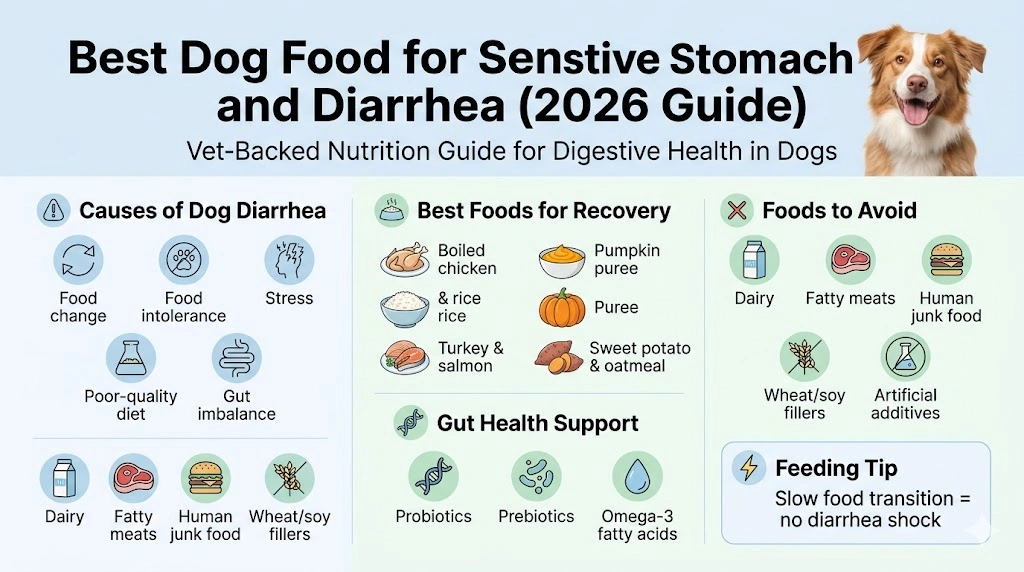
Why Dogs Get Diarrhea: Common Causes You Should Know
Dogs develop diarrhea for many reasons, and the root cause matters a lot. If the cause is mild and diet-related, a feeding adjustment may help quickly. If the cause is infection, parasites, or a medical condition, food alone will not solve it.
One of the most common causes is a sudden food change. Dogs often react strongly when their meals are switched too quickly. Even if the new food is “better,” the digestive system may not adapt fast enough. This is especially true when the protein source, fat level, fiber content, or texture changes abruptly.
Low-quality ingredients can also contribute to digestive upset. Foods with excessive fillers, poor-quality fats, heavy artificial additives, or low digestibility may be harder for the gut to process. The result may be soft stool, gas, or intermittent diarrhea.
Food intolerance is another major issue. Some dogs do poorly with certain proteins or carbohydrate sources. Common triggers include chicken, beef, dairy, wheat, soy, and sometimes very rich or greasy foods. An intolerance is not always the same as a classic allergy, but the digestive result can look similar: loose stool, vomiting, or repeated stomach discomfort.
Best Dog Food for Diarrhea [Shocking Results]
Stress can also disturb digestion. Dogs are highly responsive to changes in their environment and routine. Travel, boarding, moving house, loud events, new pets, separation, or schedule changes can all affect the gut. This is because the digestive tract and the nervous system are closely connected. When a dog is anxious, the intestines can become more reactive.
Gut bacteria balance matters too. The digestive tract contains trillions of microorganisms that help process food, protect the lining of the gut, and support immune function. If this balance is disrupted, the result can be diarrhea, bloating, and unstable stool quality.
Parasites and infections are another possibility, especially in puppies and younger dogs. Viral, bacterial, and parasitic causes can all lead to diarrhea, and some require treatment from a veterinarian rather than a food change.
Finally, human food can cause trouble very quickly. Fatty table scraps, rich sauces, leftovers, spicy ingredients, and random treats can overwhelm the digestive system. Dogs are not built to process the same foods humans eat every day.
When choosing the best dog food for a sensitive stomach and diarrhea, you are really trying to reduce digestive load, remove unnecessary triggers, and make digestion as predictable as possible.
The Science of Dog Digestion: How the Gut Microbiome Affects Stool
The gut microbiome is one of the most important parts of digestive health. It refers to the community of bacteria and other microorganisms living in the intestines. Some of these microbes help break down food. Others help regulate immune activity. Many of them support healthy stool formation and nutrient absorption.
When the microbiome is balanced, dogs often have firmer stool, better appetite, more stable energy, and fewer digestive surprises. When the balance is disrupted, digestion can become noisy and unstable. That can show up as diarrhea, gas, abdominal discomfort, vomiting, or reduced interest in food.
The microbiome can be influenced by food quality, stress, illness, antibiotics, parasites, sudden diet changes, and even the environment. That is why many digestive-support diets focus on probiotics, prebiotics, and highly digestible ingredients. Probiotics are beneficial microorganisms that help support healthy bacterial balance. Prebiotics are fibers that feed those beneficial microbes. Together, they can help the gut recover more smoothly.
The idea is not to overload the digestive system with complicated ingredients. It is to create a calmer internal environment where the intestines can function more efficiently. That means simpler formulas, consistent meals, and ingredients that are easier to absorb.
This is also why some dogs improve when you remove extra complexity from the diet. A short ingredient list, moderate fat, easy carbohydrates, and carefully selected protein can reduce the “noise” in the digestive tract. Less noise often means less irritation.
What to Feed a Dog With Diarrhea:
When a dog has diarrhea, the goal is not variety. The goal is simplicity.
The digestive system needs a chance to settle down. That means the food should be easy to digest, low in unnecessary fat, and gentle on the intestines. It should also help support hydration, because diarrhea can quickly drain the body’s fluid balance.
A good short-term recovery plan usually follows a few basic principles. First, choose a single protein source instead of multiple proteins. Second, keep fat on the lower side, because rich meals can worsen loose stool. Third, use carbohydrates that are easy to process, such as white rice or sweet potato. Fourth, include some moisture so the body can stay hydrated. Fifth, avoid anything heavily seasoned, greasy, or highly processed.
In many mild cases, a bland home diet is used for a short time. Boiled chicken and white rice is the most familiar options, but boiled turkey may also be appropriate for some dogs. Plain pumpkin puree can help add fiber that supports stool firmness. Small amounts of oatmeal may also help in some cases.
These foods are not meant to be a permanent solution. They are a temporary reset. The point is to calm the digestive tract while the stool starts to normalize. Once the dog improves, the diet should return to a complete and balanced food that supports long-term nutrition.
For dogs with frequent or severe diarrhea, a veterinary GI formula may be a better option than a simple bland diet. These diets are often created to be highly digestible and easier on the gut. They may also contain fibers, electrolytes, or other support ingredients designed to help digestion recover more quickly.
Best Ingredients for Sensitive Stomachs
Some ingredients are often better tolerated by dogs with delicate digestion. While every dog is different, certain foods are commonly used in gentle diets because they are easier to process and less likely to overwhelm the gut.
Proteins that are often well tolerated include turkey, salmon, duck, and lamb. These ingredients are not automatically “better” for every dog, but they are often used in sensitive stomach formulas because they can be easier to manage than very rich or heavily processed protein combinations. Some dogs do especially well when they stay on one protein source consistently.
For carbohydrates, white rice is one of the most common choices during digestive upset because it is bland and easy to digest. Sweet potato is another common ingredient in digestion-friendly diets. Pumpkin is often used because it can help support stool quality through its fiber content. Oatmeal is another gentle option for some dogs, especially when the stomach needs something soft and soothing.
Supportive ingredients can also matter. Probiotics may help restore microbial balance. Prebiotics such as chicory root or inulin may help nourish beneficial bacteria. Omega-3 fatty acids are sometimes included to support overall inflammatory balance and health.
The best dog food for a sensitive stomach and diarrhea is usually not built around exotic ingredients or marketing hype. It is built around digestibility, consistency, and gut support.
Ingredients to Avoid When Your Dog Has Digestive Trouble
Some ingredients are more likely to worsen stool problems, especially during active diarrhea or in dogs with recurring digestive sensitivity.
Artificial preservatives such as BHA and BHT are often avoided by owners seeking a cleaner diet. Fatty meat cuts and overly rich formulas may be too heavy for dogs with weak digestion. Dairy products can be a problem because many dogs do not tolerate them well, especially during digestive upset.
Wheat, corn, and soy can be troublesome for some dogs, particularly if they already have a history of sensitivity. That does not mean every dog must avoid them, but in dogs with ongoing digestive issues, simpler carbohydrate choices are often easier to test and control.
Spicy human food should be avoided completely. Human leftovers are also a common trigger, especially when they contain oils, sauces, butter, or seasoning.
Some grain-free formulas are not automatically better. In fact, certain grain-free recipes rely heavily on legumes, which may not be ideal for every dog’s digestion. Excessive use of peas, lentils, or chickpeas can be too much for some sensitive stomachs, especially when combined with high-fat or multiple proteins.
When diarrhea is active, the safest approach is to remove as many possible irritants as practical. The less complex the diet, the easier it is to identify what is helping and what is not.
Best Dog Food Types for Sensitive Stomach and Diarrhea
Instead of looking only at brand names, it is smarter to understand which type of food usually fits the digestive problem.
1. Limited Ingredient Diet
A limited-ingredient diet is designed with fewer components. That usually means fewer proteins, fewer fillers, and a simpler formula overall. For dogs that react to a long ingredient list or that struggle with food sensitivities, this can be very helpful.
The main advantage is clarity. When the formula is simpler, it is easier to identify what your dog tolerates well and what causes trouble. This can be especially useful when you are trying to work out whether a specific protein or carbohydrate is causing repeated issues.
2. Gastrointestinal Prescription Diet
A veterinary gastrointestinal diet is often the most targeted option for dogs with ongoing diarrhea, chronic digestive instability, or more severe gut trouble. These diets are usually made to be highly digestible and may be designed specifically for gastrointestinal support.
They are especially helpful when the dog needs a more structured nutrition plan. Many veterinarians recommend them for Dogs with recurrent digestive problems because they are built around predictable nutrient delivery and easier absorption.
3. Sensitive Stomach Dry Food
Sensitive stomach dry food is usually a maintenance option for dogs that do not need a strict veterinary GI formula but still need digestive support. These foods often include moderate fiber, manageable fat levels, and ingredients chosen to reduce digestive stress.
For dogs with mild sensitivity, this can be a practical everyday choice.
4. Wet Food
Wet food is often easier to chew and may be easier to digest for some dogs, particularly when they are feeling unwell. It also helps with hydration, which is very important during diarrhea.
However, not all wet foods are the same. Some are still rich or too heavy. The best wet food for a sensitive stomach is one that is gentle, simple, and not overloaded with fat or additives.
In practice, the best option depends on severity. Mild sensitivity may respond well to a limited-ingredient dry formula. Active diarrhea may need a wet recovery diet or a veterinary GI formula. Chronic issues may need a more controlled long-term plan.
A Simple Comparison of Dog Food Types
Limited ingredient diets usually offer high digestibility and are best for food-sensitive dogs. They are simple, practical, and often easier to troubleshoot.
Gastrointestinal prescription diets are typically the most digestible and are often best for chronic diarrhea or more serious digestive upset. They are usually the most structured option, but they can also be more expensive.
Sensitive stomach, dry foods sit in the middle. They work well for mild to moderate issues and are often easy to feed every day.
Wet foods offer hydration and softness, which can be especially useful during recovery, but they may cost more and can vary widely in quality.
The main takeaway is this: there is no one perfect food for every dog. The right food is the one that reduces symptoms, supports recovery, and keeps your dog nutritionally balanced.
How to Transition Food Safely Without Triggering More Diarrhea
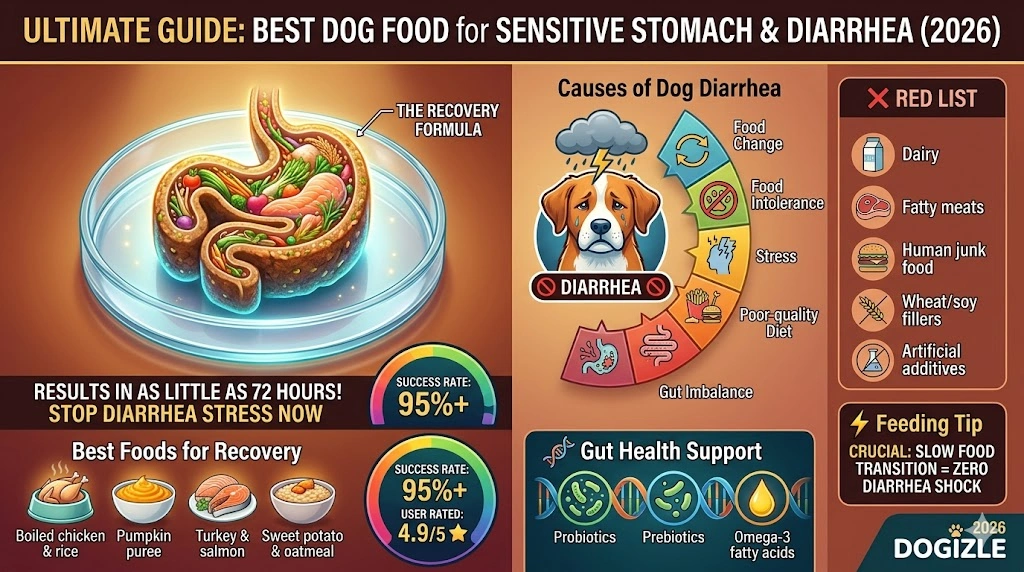
A fast food switch is one of the easiest ways to make a sensitive stomach worse. Dogs often need time to adapt to a new formula, new protein source, new fiber level, and new texture. A slow transition gives the digestive system a chance to adjust.
A classic transition takes about seven days. So, during the first two days, mix 75% old food with 25% new food. During the next two days, move to a 50/50 mix. During days five and six, shift to 25% old food and 75% new food. On day seven, move to 100% new food.
Some dogs need even more time, especially if they have a very delicate digestive system or a history of stomach upset. In those cases, the transition can be stretched out longer.
The key point is that sudden changes increase the risk of diarrhea. Slow changes protect the gut and reduce digestive shock.
Bland Diet Recovery Plan for Short-Term Relief
When your dog has Diarrhea today, a bland diet can help during the short recovery window. This is not a long-term feeding plan. It is a temporary reset that should generally be used for only a couple of days unless a vet advises otherwise.
A bland recovery diet often includes boiled chicken, white rice, and a small amount of pumpkin puree. These ingredients are chosen because they are gentle, simple, and less likely to irritate the digestive tract.
The goal is to lower the burden on the gut, allow the stool to firm up, and reduce inflammation in the digestive system. A bland diet can also help you observe whether the problem is improving with reduced complexity.
This kind of short-term diet is useful, but it is incomplete as a permanent nutrition strategy. It lacks the balance of vitamins, minerals, and other nutrients that dogs need over time. Once the dog is stable, transition back to a complete food that supports long-term health.
Dry Food vs. Wet Food: Which Is Better for a Sensitive Stomach?
Dry food is convenient, easy to store, and often more economical. It can work well for stable dogs with mild digestive sensitivity. However, dry food may be harder to tolerate during active diarrhea, especially if the formula is too rich or the dog is dehydrated.
Wet food provides more moisture, which can be valuable during digestive upset. It can also be softer and easier to eat when a dog feels unwell. For some dogs, wet food is more appealing and easier to manage during recovery.
The better choice depends on the situation. During an active diarrhea episode, wet food often has the edge because hydration matters so much. For long-term maintenance, a carefully chosen dry food may still work very well, especially if it is digestible and consistent.
A smart approach is to choose the form that your dog tolerates best while also paying attention to ingredient quality, fat level, and digestibility.
Common Mistakes Dog Owners Make During Digestive Upsets
Many dogs stay uncomfortable longer than necessary because their owners accidentally make the problem worse.
One common mistake is switching food too quickly. Another is overfeeding. Even good food can be too much if the dog’s gut is already irritated. Large meals can overwhelm the digestive tract and worsen stool quality.
Human leftovers are another frequent problem. Many people think a small bite of food is harmless, but fatty or seasoned foods can create a strong digestive reaction.
Ignoring hydration is also risky. Diarrhea can deplete fluid quickly, especially in smaller dogs, puppies, and seniors. Dehydration makes everything harder.
Another mistake is failing to identify the root cause. If a dog keeps having diarrhea, the issue may not be the food alone. It may be stress, parasites, infection, an ingredient sensitivity, or an underlying condition that needs veterinary attention.
The simplest response is usually the best one: remove triggers, simplify meals, watch stool consistency, and make changes slowly.
Expert Feeding Tips That Support Recovery
Small adjustments often make a big difference when a dog’s digestion is unstable.
Feeding smaller meals can reduce stress on the gut. Instead of one or two large meals, several smaller portions may be easier to manage. This helps the intestines work with less pressure.
Probiotics may help support a healthy bacterial balance, especially after digestive upset or antibiotic use. Pumpkin can help some dogs by adding fiber that supports stool formation. However, more is not always better. Too much pumpkin can also upset the stomach, so moderation matters.
It is usually better to avoid mixing too many proteins at once. A simple single-protein approach can help reduce digestive confusion and make it easier to identify what works.
Monitoring stool daily is one of the most useful habits. Stool quality gives you direct feedback on whether the current food is helping. If the stool becomes firmer and the dog becomes more energetic, that is a good sign. If symptoms continue or worsen, the feeding plan may need to change.
Breed-Specific Sensitivity:
While any dog can develop digestive trouble, some breeds seem to be more prone to sensitivity, loose stool, or food-related problems.
Breeds commonly considered at higher risk include German Shepherds, French Bulldogs, Yorkshire Terriers, Labradors, and Boxers. These breeds may be more likely to experience digestive sensitivity, food intolerance, or gastrointestinal instability.
This does not mean every dog in these breeds will have problems. It does mean owners should be more alert to diet quality, food transitions, and repeated stool issues.
For dogs with a known history of digestive trouble, consistency is often the best strategy. Stable protein choices, controlled fat levels, and predictable feeding routines can reduce the chances of another flare-up.
When to See a Vet Immediately
Not all diarrhea is a home-care problem. Some cases need veterinary attention quickly.
You should seek veterinary help if diarrhea lasts more than 48 hours, if blood appears in the stool, if vomiting becomes severe, if your dog seems weak or dehydrated, or if a puppy or senior dog is affected. These situations can become serious quickly.
Other warning signs include lethargy, repeated retching, refusal to drink, abdominal pain, fever, or diarrhea combined with a sudden decline in energy. If you see these signs, food changes alone are not enough.
A veterinarian can check for parasites, infection, inflammation, dehydration, or other medical issues. In some cases, the right treatment may include medication, fluid support, or a prescription diet.
How to Choose the Best Dog Food for a Sensitive Stomach and Diarrhea
The best dog food for a sensitive stomach and diarrhea is usually the food that is easiest for your dog to process consistently. The ideal formula is simple, digestible, and tailored to the dog’s level of digestive trouble.
For mild sensitivity, a limited ingredient formula or a sensitive stomach dry food may be enough. That recurrent loose stool, a more structured GI diet may be a better fit. For short-term recovery, a bland diet or wet recovery food can help settle the digestive tract.
Look for foods with a clear protein source, moderate or low fat, digestible carbohydrates, and supportive ingredients such as probiotics or fiber where appropriate. Avoid formulas that are overloaded with additives, rich fats, or too many novel ingredients all at once.
Also, remember that consistency matters as much as ingredient quality. Even a good formula can cause trouble if it is changed too quickly. Stable feeding patterns help the gut adapt and recover.
Practical Feeding Strategy for Ongoing Digestive Sensitivity
If your dog has recurring digestive trouble, the best long-term strategy is to keep things predictable.
Feed a consistent diet rather than rotating products often. Use one primary formula and avoid frequent changes unless medically necessary. Introduce new foods slowly. Keep treats simple and limited. Watch for patterns in stool quality after certain meals or snacks.
It can also help to keep a feeding journal. Note the brand, protein source, meal time, stool consistency, vomiting episodes, and any unusual behavior. Over time, patterns often become visible. That information can be very useful when you discuss the problem with a veterinarian.
Remember that digestive health is about more than one meal. It is about the entire feeding system: ingredients, schedule, portion size, hydration, and stress level.
FAQ:
The best dog food is usually a limited-ingredient, low-fat, highly digestible formula that matches your dog’s needs and is introduced slowly.
Yes, plain white rice can help firm stool in many dogs because it is gentle and easy to digest.
Yes, probiotics may help restore healthy gut bacteria balance and support better stool quality.
No. In most cases, dogs still need food, but smaller, bland meals are usually better than large, rich meals.
Many mild diet-related cases improve within 1 to 3 days, but persistent diarrhea should be checked by a veterinarian.
Yes, boiled chicken is commonly used in bland recovery diets because it is simple and gentle.
Yes, especially if the food is low quality, too rich, or changed too quickly.
You should worry if diarrhea lasts more than 48 hours, includes blood, or comes with weakness, vomiting, or signs of dehydration.
Conclusion:
Choosing the best dog food for a sensitive stomach and diarrhea is not really about chasing the most expensive brand or the trendiest packaging. It is about choosing food that the digestive system can handle more easily.
The winning formula is usually simple: a digestible protein, gentle carbohydrates, controlled fat, supportive gut ingredients, and a slow transition. Pair that with good portion control, hydration, and observation, and many dogs improve more quickly than owners expect.
When the gut is calm, everything gets better. Stool quality improves. Energy returns. Appetite becomes more stable. The dog feels better, and the owner feels less stressed.
A healthy gut supports a healthier, happier dog.