Can Dogs Eat Turkey? Safe Feeding Guide, Risks & Vet Advice
Many dog owners eventually ask the same practical question: Can dogs eat turkey?
The answer is yes, dogs can eat Turkey, but only when it is prepared the right way. Turkey is not automatically dangerous for dogs, and it is not automatically safe either. The real issue is preparation, portion size, and the exact part of the turkey being offered.
That matters because turkey is one of the most common holiday foods dogs get exposed to. Around Thanksgiving, Christmas, family dinners, and leftover feasts, dogs are often given scraps from the table, dropped bones from the kitchen, or seasoned meat pulled from the serving dish. What seems like a harmless treat can become a veterinary emergency within hours.
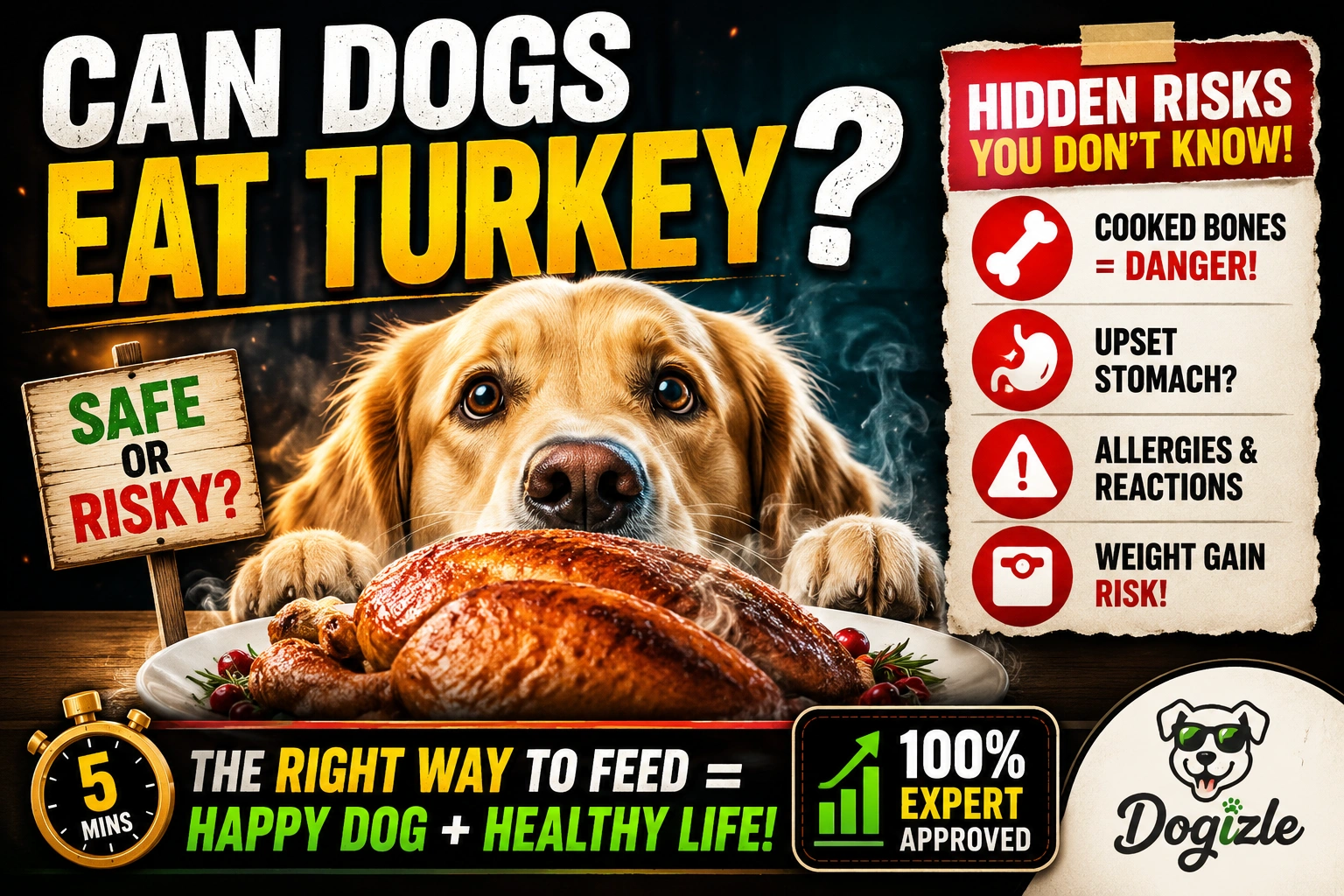
Cooked bones can splinter and injure the mouth, throat, stomach, or intestines. Fatty skin can trigger digestive upset or pancreatitis. Seasoned turkey may contain garlic, onion, salt, butter, or other ingredients that are unsafe for dogs. Raw turkey can carry bacteria such as Salmonella or Campylobacter. Even deli turkey and processed turkey slices can create problems because of excess sodium, preservatives, and flavoring additives.
So the real question is not just whether dogs can eat turkey. The better question is: what kind of turkey is safe, how much is appropriate, and what should dog owners avoid completely?
This guide gives you a vet-style, easy-to-understand breakdown of turkey safety for dogs. You will learn the benefits of plain turkey, the risks of bones and skin, how to feed turkey safely, whether puppies can eat turkey, what to do if your dog eats unsafe turkey, and the warning signs that need immediate veterinary attention.
Is Turkey Safe for Dogs?
The answer depends on how the turkey is prepared.
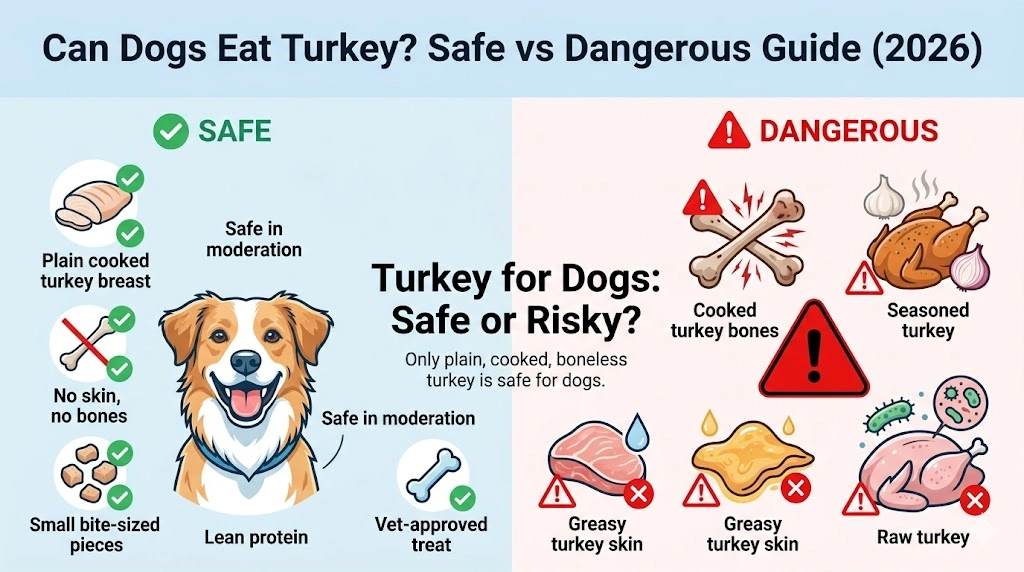
Turkey can be safe for dogs when it is:
- plain and fully cooked
- boneless
- skinless
- unseasoned
- served in small amounts
- fresh and minimally processed
Plain turkey is often used in dog food and veterinary diets because it is a lean animal protein and is usually easy for many dogs to digest. It can be especially useful when a dog needs a mild protein source or a simpler diet.
Turkey becomes risky when it is:
- cooked with spices, salt, onion, garlic, butter, or oil
- served with bones
- left raw or undercooked
- fried or heavily greasy
- processed into deli meat, sausage, ham-style slices, or smoked products
A helpful rule is simple:
Plain turkey is usually safe. Human-style turkey is often not.
That single distinction explains most of the safety issues dog owners run into.
Nutritional Benefits of Turkey for Dogs
When offered correctly, turkey can provide real nutritional value. It is more than just a “safe snack.” It can also support a dog’s daily nutrition when served as an occasional treat or as part of a vet-approved meal plan.
High-Quality Protein
Turkey is a rich source of animal protein. Protein plays a major role in a dog’s body because it supports:
- muscle maintenance
- tissue repair
- growth in younger dogs
- immune system function
- energy metabolism
A lean protein like turkey can be useful for active dogs, working dogs, and dogs who need more controlled fat intake.
Vitamins and Amino Acids
Turkey contains nutrients such as:
- vitamin B6
- niacin
- selenium
- essential amino acids
These nutrients help support the body’s energy systems, nerve function, enzyme activity, and overall cellular health. Dogs do not need turkey specifically, but they can benefit from the nutrients it provides when it is served as part of a balanced diet.
Often Easier to Digest Than Fatty Meats
Many dogs tolerate plain turkey well, especially when compared with richer meats. Because it is typically leaner than some red meats or heavily processed proteins, turkey is commonly chosen for dogs with sensitive digestion.
Useful in Limited-Ingredient Diets
Turkey is often used in limited-ingredient formulas and elimination-style feeding plans. In those cases, it may help reduce exposure to common dietary triggers while still providing quality protein.
Important note: benefits only apply to plain, safe, properly cooked turkey. Once seasonings, skin, gravy, and bones are involved, the benefits can disappear quickly.
Dangerous Parts of Turkey Every Dog Owner Must Avoid
Some parts of turkey are simply not safe for dogs at all. These are the most important dangers to understand.
Turkey Bones: A Major Hazard
Turkey bones are one of the biggest risks. This is true whether the bones come from the breast, leg, wing, or carcass.
Cooked bones are especially dangerous because they can:
- splinter into sharp fragments
- choke a dog
- injure the gums, tongue, or throat
- puncture the esophagus, stomach, or intestines
- cause intestinal obstruction
- require emergency surgery
Even if the bone appears small or soft, it can still break into dangerous pieces after cooking. Dogs often swallow bones quickly without chewing them well, which increases the danger.
If a dog gets hold of a cooked turkey bone, the risk should never be underestimated.
Turkey Skin: High Fat, High Risk
Turkey skin is usually very rich in fat. It may seem like a tasty reward, but it can create digestive trouble and, in some cases, a serious inflammatory reaction in the pancreas.
Possible effects of too much fatty turkey skin include:
- vomiting
- diarrhea
- abdominal pain
- nausea
- loss of appetite
- pancreatitis
Pancreatitis can be painful and potentially serious. Dogs with a history of digestive sensitivity, obesity, or previous pancreatitis may be especially vulnerable.
Seasoned Turkey: Hidden Toxic Ingredients
Many people season turkey with ingredients that are perfectly normal for humans but not safe for dogs. These may include:
- garlic
- onion
- salt
- butter
- oil
- pepper
- herbs in large amounts
- stuffing or gravy mixtures
Some of these ingredients can cause digestive upset. Others may be toxic or harmful in larger amounts. Onion and garlic are especially concerning because they can damage red blood cells. High salt can also create problems, particularly if a dog eats a large amount.
Raw Turkey: Bacteria Risk
Raw turkey can contain harmful bacteria such as:
- Salmonella
- Campylobacter
- E. coli
These organisms can affect both dogs and people in the household. Dogs may develop vomiting, diarrhea, fever, or abdominal discomfort. Human family members can also be exposed through cross-contamination on hands, counters, bowls, and cutting boards.
Raw feeding is a controversial area, and it should never be treated casually. Without proper hygiene and veterinary guidance, raw turkey can be a serious health risk.
Processed Turkey Products
Processed turkey products should also be avoided unless your veterinarian specifically approves them.
Examples include:
- deli turkey
- smoked turkey
- turkey sausage
- turkey bacon
- turkey lunch meat
- turkey ham-style slices
These products often contain:
- excess salt
- preservatives
- flavor enhancers
- smoke flavoring
- seasoning blends
- fat and additives
A dog does not benefit from the processing. What looks like turkey may actually be a sodium-heavy, highly altered product with very little nutritional value for a pet.
Can Dogs Eat Cooked Turkey?
Yes, dogs can eat cooked turkey, but only when it is prepared safely.
The safest cooked turkey is:
- fully cooked
- plain
- unseasoned
- skinless
- boneless
- not fried
- not butter-basted
- not covered in sauce or gravy
The best option is usually plain boiled or baked turkey breast with no seasoning and no visible fat. White meat is often a better choice than heavily marbled or dark, rich, or skin-on portions.
Avoid any cooked turkey that came from a holiday table unless you know exactly how it was prepared. In many real-life situations, holiday turkey is made with butter, oils, stuffing, herbs, garlic, onion powder, and salt. For a dog, that combination can quickly become unsafe.
The simplest formula is this:
Plain cooked turkey = usually safe
Holiday turkey = often risky
Can Dogs Eat Raw Turkey?
In general, raw turkey is not recommended for most dogs.
The primary concern is bacterial contamination. Raw poultry can carry microorganisms that may make a dog sick. It also increases the risk of spreading germs in the home.
Potential issues with raw turkey include:
- foodborne illness
- vomiting
- diarrhea
- gastrointestinal discomfort
- infection risk for humans in the household
- contamination of food surfaces and bowls
Some raw-feeding communities argue that raw turkey can fit into a carefully managed diet plan. However, that is a specialized choice that should only be made with veterinary oversight, strict sanitation, and a well-designed nutritional plan.
For the average dog owner, raw turkey is not the safest route.
How Much Turkey Can Dogs Eat?
Turkey should be treated as an occasional snack, not a daily staple or main meal.
The correct amount depends on:
- the dog’s size
- age
- activity level
- weight
- overall diet
- digestive sensitivity
- whether the dog has medical issues such as pancreatitis, obesity, or diabetes
A practical guide is to keep treats to about 10% of daily calories or less. That means turkey should stay in the “treat” category rather than becoming a major source of calories.
Simple Portion Guide
For general reference:
- Small dogs (under 10 kg): 1–2 small bites
- Medium dogs (10–25 kg): 2–4 small bites
- Large dogs (25 kg+): a small handful of plain turkey pieces
These are rough guidelines, not strict medical dosing. The safest serving is always small, plain, and infrequent.
Feeding Frequency
Turkey is best offered:
- 1–2 times per week
- in small amounts
- as a reward or topper
- not as a replacement for balanced dog food
If your dog has a sensitive stomach, a food allergy history, or any chronic health condition, it is better to be extra conservative.
Can Puppies Eat Turkey?
Yes, puppies can eat turkey, but only with more caution than adult dogs.
Puppies have:
- developing digestive systems
- smaller throats
- more delicate stomachs
- immature immune defenses
That means the rules matter even more.
Safe for Puppies
Puppies may eat:
- fully cooked plain turkey
- tiny soft pieces
- skinless meat
- boneless meat
- small amounts only
Avoid for Puppies
Do not give puppies:
- bones
- raw turkey
- seasoned turkey
- fatty skin
- processed turkey products
- large chunks that could be swallowed whole
Because puppies can gulp food quickly, bite size is important. Small, soft, and easy-to-chew pieces are safer. Even then, the portion should stay tiny.
If a puppy has a history of vomiting, diarrhea, bloating, or food intolerance, turkey should be introduced only with veterinary guidance.
Holiday Risk Alert: Thanksgiving and Christmas
Holiday seasons are the biggest danger zone for turkey-related dog emergencies.
This is when dogs are most likely to:
- snatch food from counters
- eat scraps from guests
- lick plates with residue
- chew on bones from the trash
- swallow stuffing or gravy
- steal fatty skin or rich drippings
The problem is not only the turkey itself. It is the entire holiday food environment. Dogs are surrounded by new smells, dropped food, unattended plates, and excited guests who may not understand the risks.
Common Holiday Accidents
- A guest gives the dog a bone
- A dog steals a turkey from the table
- A dog gets into the garbage
- A dog eats stuffing mixed with onion or garlic
- A dog consumes too much greasy skin
- A dog chews a cooked carcass left on the counter
Possible Outcomes
These situations can lead to:
- choking
- vomiting
- diarrhea
- abdominal pain
- pancreatitis
- intestinal blockage
- poisoning from toxic seasonings
- emergency surgery in severe cases
Holiday rule:
Do not assume turkey leftovers are safe just because they are “just a little bit.”
Turkey Safety Comparison Table
| Turkey Type | Safe for Dogs? | Risk Level | Notes |
| Plain cooked turkey | Yes | Low | Best option |
| Plain boiled turkey breast | Yes | Low | Very safe choice |
| Turkey skin | No | High | Fat risk |
| Cooked turkey bones | No | Very High | Choking and splinter risk |
| Raw turkey | No | High | Bacterial risk |
| Deli turkey | No | Medium | Sodium and additives |
| Smoked turkey | No | Medium | Processed and salty |
| Seasoned turkey | No | High | May contain toxic ingredients |
| Turkey with gravy | No | High | Often contains onion, garlic, and salt |
This table makes the pattern easy to see: the more human-style processing a turkey dish has, the less dog-safe it becomes.
Warning Signs After Eating Unsafe Turkey
If your dog has eaten unsafe turkey, do not wait passively. Watch closely for warning signs.
Common Symptoms
- vomiting
- diarrhea
- reduced appetite
- drooling
- lethargy
- restlessness
- abdominal discomfort
- bloated stomach
- constipation
- repeated swallowing
- gagging
- coughing
- signs of pain when picked up
Possible Medical Concerns
These symptoms may point to:
- pancreatitis
- choking
- intestinal blockage
- gastrointestinal irritation
- food poisoning
- toxic ingredient exposure
When to Contact a Vet
Call a vet right away if your dog:
- ate cooked bones
- ate a large amount of turkey skin
- ate turkey with onions or garlic
- swallowed raw turkey and now has symptoms
- is vomiting repeatedly
- appears bloated or painful
- becomes weak, shaky, or unusually quiet
A dog may seem fine at first and still develop problems later, especially after swallowing bones or greasy food. Early action can make a major difference.
Vet-Approved Feeding Rules
These simple rules help reduce risk.
Safe Turkey Rules for Dogs
- always remove bones
- always remove skin
- always cook thoroughly
- always avoid seasoning
- always keep the portion small
- always serve plain pieces only
- Always supervise the dog while eating
- always keep leftovers out of reach
Good Examples
- plain boiled turkey breast cut into small cubes
- a few pieces of turkey mixed into regular dog food
- tiny turkey training treats
- Cooked turkey is used sparingly as a topper
Bad Examples
- turkey carved from a holiday platter with spices
- turkey bones from the carving board
- turkey skin from the roasting pan
- turkey with onion gravy
- turkey from deli containers or sandwich meat packs
The safest approach is simple and consistent. When in doubt, leave it out.
Common Mistakes Dog Owners Make
Many turkey-related emergencies happen because of common assumptions.
Mistake 1: Thinking Small Bones Are Safe
Small bones are not automatically safe. Small bones can still splinter, lodge in the throat, or cause an intestinal problem.
Mistake 2: Feeding Turkey with Seasoning
Even a tiny amount of seasonings can be a problem if the turkey contains ingredients that are harmful or irritating. Many recipes contain onion powder, garlic powder, butter, or excess salt.
Mistake 3: Giving Skin as a Reward
Turkey skin may look like a tasty treat, but it is often too rich for dogs. A few bites may be enough to trigger stomach upset in sensitive dogs.
Mistake 4: Assuming Leftovers Are Fine
Holiday leftovers are usually the most dangerous because they are mixed with sauces, stuffing, oils, and bones.
Mistake 5: Letting Guests Feed the Dog
Guests often mean well, but they may not know the safety rules. One quick table scrap can undo careful feeding habits.
Mistake 6: Ignoring Processed Turkey
A slice of deli turkey might look harmless, but processed turkey can contain a lot of sodium and preservatives that do not belong in a dog’s diet.
Breed-Specific and Dog-Type Considerations
Not every dog reacts to turkey in the same way. Some dogs are more vulnerable than others.
Higher-Risk Dogs
Dogs that may need extra caution include:
- Small toy breeds
- such as French Bulldogs, are brachycephalic breeds
- Dachshunds
- overweight dogs
- dogs with a history of pancreatitis
- dogs with sensitive digestion
- seniors with slower digestion
- dogs who eat very quickly
Why These Dogs Need More Care
Small dogs can choke more easily on large or hard pieces. Dogs with weight issues may be more sensitive to fatty skin. So dogs with digestive disorders may react poorly to rich or seasoned foods. Dogs that swallow quickly may not chew well, increasing the danger of bones or larger pieces.
That does not mean these dogs can never eat turkey. It means the serving must be even smaller, plainer, and more carefully controlled.
Turkey for Dogs with Sensitive Stomachs or Allergies
Turkey is often viewed as a gentle protein, but every dog is different.
Some dogs with sensitive digestion may do very well on plain turkey. Others may still experience stomach upset if they are introduced to a new protein too quickly or in too large a quantity.
For dogs with food allergies, turkey can sometimes be helpful in elimination diets because it is less common than beef or chicken in some cases. However, a dog can still be allergic to turkey. No protein is universally safe for every dog.
Signs of a food reaction may include:
- itching
- ear irritation
- soft stool
- vomiting
- recurring gas
- licking paws
- skin redness
If a dog has ongoing skin or stomach issues, turkey should be introduced carefully and under veterinary guidance.
How to Serve Turkey Safely to Dogs
If you want to give your dog turkey, keep it plain and simple.
Best Preparation Methods
- boil it
- bake it
- steam it
The Best Cuts
- turkey breast
- lean white meat
- small boneless pieces
Best Serving Style
- cut into tiny pieces
- serve at room temperature
- Mix with regular food if appropriate
- Use as a small training reward
Avoid Adding
- butter
- oil
- salt
- onion
- garlic
- sauces
- seasoning mixes
- gravy
- stuffing
The closer the turkey is to plain, the safer it usually is.
Emergency Checklist: What To Do If Your Dog Ate Unsafe Turkey
If your dog ate turkey, that may be dangerous. Stay calm and act quickly.
First Steps
- Remove any remaining turkey.
- Check whether bones, skin, or seasoning were involved.
- Estimate how much was eaten.
- Watch for vomiting, choking, or pain.
- Call your veterinarian for guidance.
- Seek urgent care if the dog is struggling to breathe, repeatedly vomiting, bloated, or very painful.
Do Not Do This
- Do not induce vomiting unless instructed by a vet
- Do not give human medications
- Do not wait if bones were swallowed and symptoms appear
- Do not assume “small” means “safe.”
The exact response depends on what was eaten and how your dog is acting. When bones or toxic ingredients are involved, professional advice is the safest path.
Why Turkey Is Sometimes Used in Dog Food
Turkey is common in commercial dog food for several reasons:
- It is a lean protein source
- It can be highly digestible
- It suits some limited-ingredient formulas
- It provides useful amino acids
- It can be well tolerated by many dogs
This is important because many owners hear that turkey is used in dog food and assume all turkey is automatically safe. That is not the case. Commercial dog food uses controlled ingredients, proper processing, and balanced nutrition. A holiday turkey platter is a very different thing.
FAQs
No. Turkey should be an occasional treat, not a daily food, unless your veterinarian has specifically designed a diet that includes it.
Both can be safe when plain and cooked. Turkey is often lean, but neither meat is automatically better for every dog.
No. Raw turkey bones still create risk because of choking, contamination, and the chance of digestive injury. They are not a safe option.
Sometimes, yes. Turkey is often used in limited-ingredient and elimination diets, but some dogs can still react to it.
No. Turkey gravy often contains onion, garlic, salt, flour, butter, or drippings that are too rich or unsafe for dogs.
It may cause digestive upset, and depending on the seasoning ingredients, it may also create toxic exposure or other health problems.
Yes, but only in small amounts and only if it is plain, soft, boneless, and easy to chew. Seniors may also have more delicate digestion.
It can be, but only in controlled portions and only with veterinary advice. Diabetic dogs need careful meal planning.
Conclusion
So, can dogs eat turkey?
Yes, dogs can eat Turkey, but only when it is plain, cooked, skinless, boneless, and unseasoned.
The danger is rarely the turkey itself. The danger usually comes from how humans prepare it. Bones, skin, seasoning, raw meat, and processed leftovers can turn a simple protein into a serious risk.
The safest takeaway is easy to remember:
Simple turkey is usually safe.
Rich, seasoned, bony, or processed turkey is not.
If you feed turkey carefully and in small amounts, it can be an occasional treat. If you feed it like a human holiday meal, it can become a problem fast.