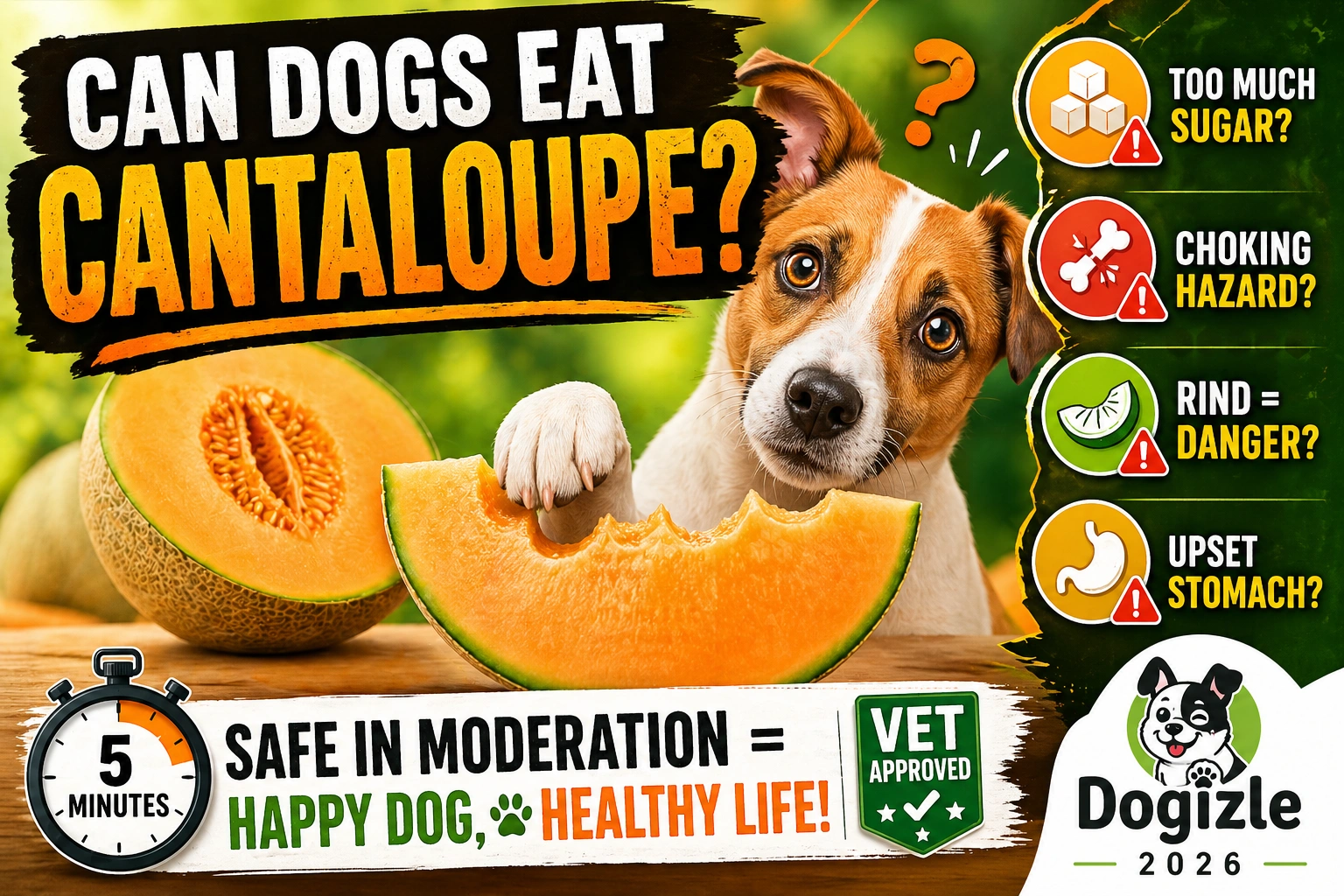
Can Dogs Eat Cantaloupe Safely?
If you are slicing into a chilled cantaloupe on a warm afternoon and your dog appears at your side with those hopeful eyes, the question is almost unavoidable: Can dogs eat cantaloupe?
The answer is yes — dogs can eat cantaloupe — but only when it is prepared correctly, offered in small amounts, and treated as an occasional snack rather than a dietary staple. This fruit can be a refreshing, moisture-rich, nutrient-containing treat for many dogs. At the same time, it carries real concerns if it is fed carelessly, overused, or given with the rind and seeds still attached.
Cantaloupe has a naturally sweet taste, a high water content, and a pleasant soft texture once peeled and cut. Those qualities make it appealing to many dogs, especially in hot weather. Still, the same sweetness that makes it enjoyable also means it should be handled with moderation. Too much fruit can contribute to digestive upset, unnecessary sugar intake, and poor nutrient balance in the overall diet.
This guide is designed to answer the question in full, practical detail. You will learn whether cantaloupe is safe, what benefits it may offer, how much is appropriate, how to serve it, which dogs should avoid it, and what mistakes to prevent. You will also find a clear portion guide, puppy advice, and FAQ answers written to help readers make safe, informed decisions.
What is a cantaloupe?
Cantaloupe is a type of melon in the Cucurbitaceae family, the same broader plant family that includes cucumbers, pumpkins, squash, and other melons. It is typically recognized by its rough outer rind, orange flesh, and aromatic, juicy interior. In many parts of Europe, it is especially popular during summer months because it is cooling, easy to eat, and naturally sweet without needing any added sugar.
From a nutritional perspective, cantaloupe is known for being hydrating and relatively low in calories. Most of its weight comes from water, which is one reason it feels so light and refreshing. It also contains vitamins and plant compounds that make it appealing in human nutrition, and some of those nutrients can be beneficial for dogs as well when the fruit is fed carefully.
Nutritional Profile (Per 100g)
- Water: approximately 90%
- Calories: about 34 kcal
- Vitamin A: high
- Vitamin C: high
- Fiber: moderate
- Sugar: natural fruit sugar
Because cantaloupe contains so much water, many people assume it is automatically safe in unlimited amounts. That is not the case. Even healthy foods must be given in controlled servings, especially for dogs, whose digestive systems and calorie needs differ from ours. In a dog’s diet, cantaloupe should be viewed as a supplemental treat, not a source of nutrition that replaces balanced food.
The best way to think about cantaloupe is this: it may be a smart, refreshing reward, but only when portion size, preparation, and feeding frequency are all managed responsibly.
Can Dogs Eat Cantaloupe Safely?
Yes — dogs can eat cantaloupe safely, but only under specific conditions. Safety depends on how the fruit is served, how much is given, and whether the individual dog has health issues that make fruit less suitable.
Cantaloupe is safe when:
- It is fresh and ripe
- The seeds are fully removed
- The rind is completely removed
- Only small amounts are offered
- It is not fed every day
The fruit should always be washed before cutting, even if the outer skin will not be eaten. This helps reduce the risk of dirt, bacteria, or residue from the knife and cutting surface being transferred to the flesh.
The key principle here is moderation. Cantaloupe is best used like a treat token, not a meal component. It should support variety and enjoyment without pushing the dog beyond its nutritional limits or causing stomach trouble. For many dogs, a few small pieces are enough to provide the taste and hydration benefit without creating a dietary imbalance.
A good rule of thumb is simple: if the serving looks more like a snack than a bowlful, you are probably closer to the safe zone.
Health Benefits of Cantaloupe for Dogs
When it is given properly, a cantaloupe may offer several helpful qualities for dogs. These benefits do not make it a superfood, and they certainly do not mean every dog needs it. Still, as an occasional treat, it can bring some advantages.
1. Hydration Support
Cantaloupe contains a very high percentage of water, which can make it a useful summer snack. Active dogs, who spend time outdoors or live in hotter climates, may appreciate a juicy treat that adds a little extra fluid to the diet.
This is especially useful for:
- Active dogs after play
- Dogs living in warm environments
- Outdoor pets that need a cool snack
- Dogs that enjoy soft, refreshing treats
Hydration from food is never a substitute for clean drinking water, but it can complement water intake nicely. In hot weather, a few cold cantaloupe cubes can feel especially satisfying.
2. Immune System Support
Cantaloupe contains vitamin C, a nutrient often associated with immune support in people. While dogs make some vitamin C on their own, additional antioxidants from fruit may still contribute to overall wellness in small ways.
Potential support areas include:
- General immune function
- Recovery support during normal physical stress
- Maintenance of vitality
- Antioxidant intake from natural food sources
It is important to stay realistic. Cantaloupe is not a treatment for illness, and it does not replace veterinary care. It is simply one more fruit that may provide helpful nutritional variety.
3. Healthy Eyes and Skin
Vitamin A is one of the nutrients that makes cantaloupe stand out. This vitamin is important for eye health, skin function, and tissue maintenance. In practical terms, that means cantaloupe may contribute modestly to maintaining healthy vision, supporting skin repair, and helping the coat look good.
This does not mean a dog will develop better eyesight from eating melon. Rather, it means the fruit contains compounds that fit into a balanced nutritional picture.
4. Low-Calorie Treat Option
Compared with many processed snacks, cantaloupe can be a lighter alternative. It is naturally sweet, low in fat, and generally lower in calories than biscuit-style treats or fatty table scraps.
That makes it useful for:
- Dogs on weight-control plans
- Dogs that need lighter training rewards
- Pet owners who prefer whole-food treats
- Summer feeding when heavy snacks feel excessive
The word “low-calorie” should still be handled carefully. Low-calorie does not mean zero impact. Extra fruit still adds energy, and repeated overfeeding can still create problems.
5. Digestive Support in Small Amounts
Cantaloupe contains some fiber, and small amounts of fiber can support regular digestion. When used carefully, the fruit may help certain dogs have smoother bowel movement patterns.
This benefit only works in moderation. Too much cantaloupe can have the opposite effect and lead to loose stool, gas, or stomach discomfort. The digestive system of each dog is different, so tolerance may vary.
In summary, cantaloupe may be useful as a hydrating, pleasant, nutrient-containing snack. Its strengths are real, but they work only when the fruit is controlled, clean, and served in sensible portions.
Risks of Feeding Cantaloupe to Dogs
Even wholesome foods can become harmful when given in the wrong way. The risks associated with cantaloupe are not because the fruit is inherently toxic like grapes or raisins, but because of sugar, texture, size, and preparation mistakes.
1. High Natural Sugar
Cantaloupe contains naturally occurring sugars. That is normal for fruit, but it still matters. Too much sugar may contribute to:
- Weight gain
- Blood sugar spikes
- Unnecessary calorie intake
- Poor diet balance over time
Dogs with diabetes should not receive cantaloupe without a veterinarian’s approval. Even small portions can influence glucose management depending on the dog’s condition and overall meal plan.
2. Digestive Upset
A small serving may be fine. A large serving may not be. Dogs that eat too much cantaloupe can develop:
- Diarrhea
- Gas
- Stomach cramps
- Soft stool
- General digestive irritation
This is one of the most common consequences of giving fruit too freely. Many dogs enjoy sweet foods and will gladly eat more than is wise, so the owner must be the one who controls the portion.
3. Choking Hazard
The seeds and rind are the biggest physical dangers.
- Seeds can lodge in the throat or cause discomfort
- The rind is tough, fibrous, and hard to chew safely
- Large chunks can be swallowed too quickly
Dogs do not always chew fruit carefully. Some gulp it down, especially if excited. That is why preparation matters so much.
4. Overfeeding Risk
Fruit is still food. Too many treats, even healthy ones, can create problems such as:
- Nutritional imbalance
- Reduced interest in regular meals
- Weight creep over time
- An unhealthy treat habit
If a dog fills up on melon, it may leave less room for the balanced food that actually meets its long-term dietary needs. Cantaloupe should enhance the diet, not compete with it.
The takeaway is simple: the fruit itself is not the issue. Misuse is the issue. Safe serving habits turn cantaloupe into a better snack choice, while sloppy feeding turns it into a digestive and caloric liability.
Can Dogs Eat Cantaloupe Seeds or Rind?
Cantaloupe Rind
No, dogs should not eat cantaloupe rind.
The rind is not designed for canine digestion. It is thick, fibrous, difficult to break down, and can become a choking hazard or a source of intestinal blockage if swallowed in larger pieces. Even if a dog manages to chew part of it, that does not make it safe.
Reasons to avoid the rind:
- Hard to digest
- Possible choking risk
- Can irritate the digestive tract
- May cause intestinal obstruction if swallowed in chunks
Cantaloupe Seeds
Seeds are also not recommended.
They are not generally considered toxic, but that does not make them safe. They may create:
- Choking risk
- Digestive irritation
- Vomiting in sensitive dogs
- Discomfort if eaten in quantity
The best practice is straightforward: remove both seeds and rind before feeding. The soft flesh alone is the only part that belongs in the dog’s bowl.
If a dog accidentally eats a small amount of seed or rind, it may not always lead to harm, but repeated exposure is unwise. Prevention is always easier than dealing with a medical issue later.
How Much Cantaloupe Can Dogs Eat?
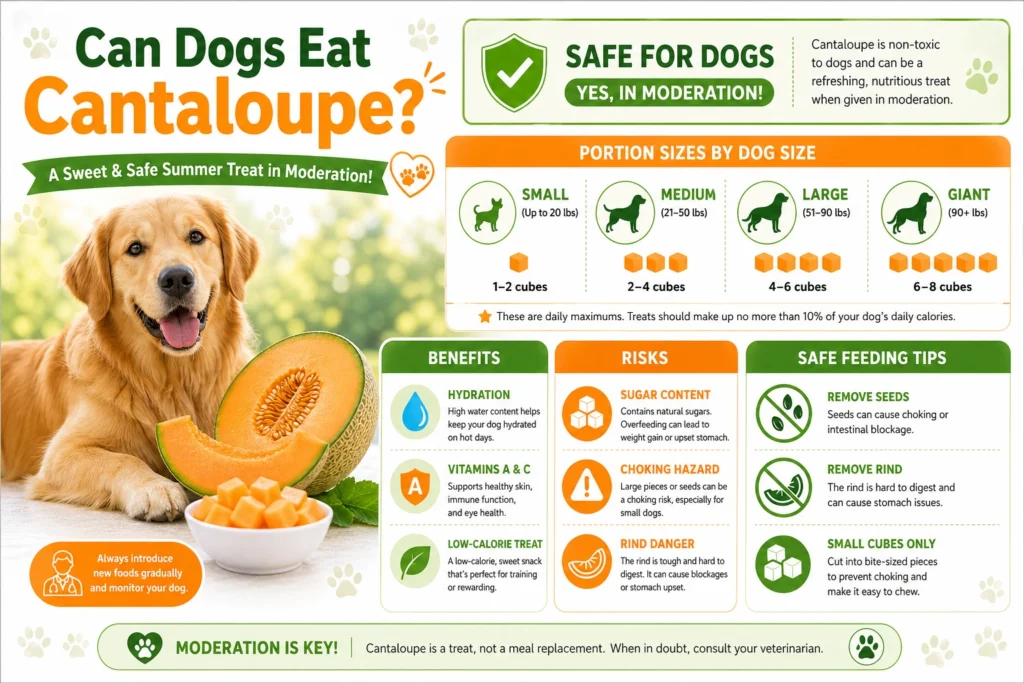
The proper amount depends on the size of the dog, its health status, and how much of the daily diet is already being spent on treats. A useful target is to keep treats under 10% of daily calories. That rule helps preserve nutritional balance and reduces the risk of overeating.
Safe Feeding Chart (Vet-Recommended)
| Dog Size | Safe Amount |
| Small dogs | 1–2 small cubes |
| Medium dogs | 3–5 cubes |
| Large dogs | 5–6 cubes |
| Giant breeds | Small handful |
This chart is intentionally conservative. Many dogs can handle slightly different amounts depending on their tolerance, but starting small is always the better approach. You can always give more later if the dog handles it well. You cannot easily undo a stomach upset after overfeeding.
A few practical examples:
- A toy breed may only need a single bite-sized piece.
- A medium dog may enjoy several small cubes as a reward.
- A large dog might handle a short handful, but even then the serving should remain modest.
- Dogs with sensitive stomachs may need less than the chart suggests.
Treats are only meant to supplement the main diet. They are not supposed to compete with it. If cantaloupe is given, it should fit into the day’s broader calorie budget rather than being added carelessly on top of everything else.
Best Ways to Feed Cantaloupe to Dogs
Serving style matters just as much as portion size. The safest versions are simple, plain, and easy to chew.
1. Frozen Cubes
Frozen cantaloupe cubes can be especially enjoyable during hot weather. They offer a cool, refreshing texture and may keep some dogs occupied for a short time.
Benefits:
- Cooling on warm days
- Fun texture
- Easy to portion
- Naturally appealing to many dogs
Only use small pieces that are still safe to chew. Very hard frozen chunks may not suit every dog, especially older dogs or dogs with dental concerns.
2. Fresh Cubes
Fresh cantaloupe cubes are the simplest and often the safest option. They are soft, easy to chew, and easy to measure.
This is usually the best choice when:
- Introducing cantaloupe for the first time
- Serving a small dog
- Feeding a dog with normal chewing ability
- Offering a quick treat at home
3. Food Topper
A tiny amount of mashed cantaloupe can be used as a topper on regular dog food. This works best when the dog enjoys new flavors but only in restrained quantities.
A topper should never become a sugary coating that dominates the meal. A light spoonful is enough.
4. Dog Fruit Popsicles
You can blend cantaloupe with other dog-safe ingredients to make a homemade frozen treat. Simple combinations may include:
- Blueberries
- Watermelon
- Unsweetened yogurt
Make sure the yogurt is plain and dog-safe, without artificial sweeteners or added sugar. Also, keep the portion small and the ingredient list short. The goal is a treat, not a complicated recipe.
In every case, the safest feeding methods are plain, prepared, and minimal. The more processed or decorated the serving becomes, the more room there is for mistakes.
Can Puppies Eat Cantaloupe?
Yes — puppies can eat cantaloupe, but only in very small amounts and with careful supervision.
Puppies have developing digestive systems, so they are often more sensitive to new foods than adult dogs. A tiny piece may be fine, while too much may cause loose stool or mild stomach upset.
Potential Benefits for Puppies
- Extra hydration
- Soft texture that is easy to nibble
- Mild natural sweetness
- A novel taste experience during training or socialization
Important Rules for Puppies
- Start with very tiny pieces
- Introduce it slowly
- Do not feed it daily
- Watch for any digestive change
- Stop immediately if the puppy shows discomfort
Because puppies grow rapidly, their diet should stay especially stable. A little fruit can be fine, but a puppy’s primary nutrition should come from a complete diet designed for growth. Fruit should never displace the calories and nutrients needed for proper development.
It is also wise to be extra careful with choking hazards. Small mouths and enthusiastic chewing make careful cutting important. Soft, tiny cubes are much safer than larger chunks.
Dogs That Should Avoid Cantaloupe
Cantaloupe is not suitable for every dog. Some dogs should either avoid it entirely or only have it after a veterinarian gives approval.
Dogs that should avoid cantaloupe:
- Dogs with diabetes
- Overweight dogs on strict calorie plans
- Dogs with digestive disorders
- Dogs prone to pancreatitis
So, dogs with diabetes may struggle with the fruit’s sugar content. Dogs with frequent digestive issues may react badly to the fiber or fructose. Dogs with pancreatitis or a history of pancreatic sensitivity may need carefully limited treats in general, depending on the veterinarian’s recommendations.
If a dog belongs to one of these categories, it does not automatically mean cantaloupe is impossible forever. It means the fruit should not be offered casually or without professional guidance.
For healthy dogs, the fruit may be acceptable in small amounts. For medically sensitive dogs, caution should come first.
Common Mistakes Dog Owners Make
Many feeding mistakes are easy to avoid once you know what to watch for. The most common problems are not dramatic; they are ordinary habits that quietly create risk.
Frequent mistakes include:
- Feeding the rind without realizing it
- Giving too much fruit at one time
- Treating fruit like a meal replacement
- Ignoring the sugar content
- Introducing several new foods together
Another mistake is assuming that because a food is “natural,” unlimited amounts must be harmless. That is not true. Natural foods can still be too rich, too sugary, or too hard to digest in large quantities.
Some owners also underestimate the way dogs eat. A dog may swallow quickly, especially when excited. That makes chunk size and preparation style very important. Small, controlled, and simple is usually safest.
The best habit is to start with one tiny serving, observe the dog, and only continue if the tolerance is clearly good.
Best Fruits for Dogs
Cantaloupe is one of several fruits that may be safe for dogs in moderation. Other commonly accepted options include:
- Apples, without seeds
- Blueberries
- Strawberries
- Watermelon, seedless
- Bananas
- Cantaloupe
Each fruit has its own calorie profile and texture. Some are better for hydration, some for training, and some for occasional variety. Even among safe fruits, portion size matters. The ideal fruit for a dog is not just the one that tastes good; it is the one that fits the dog’s body, activity level, and digestive tolerance.
A good rule is to rotate fruits sparingly, not constantly. Variety is useful, but too much novelty can upset the stomach. Keeping fruit treats infrequent and measured gives you the benefit of enrichment without unnecessary dietary strain.
Fruits to Avoid for Dogs
Not all fruits are safe. Some are clearly dangerous and should never be offered.
- Toxic grapes
- Toxic raisins
- Cherries, because the seeds and other parts can be harmful
- Avocado, which can pose a risk in large amounts
These foods are in a different category from cantaloupe. Cantaloupe is not known as a toxic fruit for dogs, but it still requires caution. Grapes and raisins, by contrast, can be dangerous even in small amounts, so there is no safe casual comparison between them.
This is one reason it is useful to educate dog owners broadly about fruit safety. A dog that can eat one fruit safely may still need to avoid another completely.
Pros and Cons of Cantaloupe for Dogs
Pros
- Hydrating
- Low calorie
- Vitamin-rich
- Easy to serve
- Refreshing summer treat
Cons
- High sugar content
- Risk of diarrhea
- Choking hazard
- Not suitable for diabetic dogs
The pros are strongest when the fruit is used as a light reward in small amounts. The cons become more serious when the serving is too large, too frequent, or poorly prepared.
This is a balanced food question, not an all-good or all-bad question. Cantaloupe can be useful, but only in a controlled way. That is the nuance most readers need to understand.
Expert Veterinary Safety Tips
Here are the most important safety habits to follow when feeding cantaloupe to dogs:
- Wash the fruit thoroughly before cutting
- Remove the seeds
- Remove the rind completely
- Slice into small, bite-sized pieces
- Introduce it slowly the first time
- Offer only a little at once
- Watch for changes in stool, gas, or appetite
- Avoid daily feeding
These steps are simple, but they make a major difference in safety. Most fruit-related problems happen when owners move too fast or assume that a little more “cannot hurt.” In reality, prevention is the smartest and easiest strategy.
It is also wise to remember that every dog is an individual. Two dogs in the same home may respond differently to the same treat. One may digest it easily; another may develop soft stool. That is why observation matters after every new food.
FAQs
No, it should only be an occasional treat.
Daily feeding increases the chance of excess sugar intake, unnecessary calories, and digestive imbalance. Cantaloupe is best kept as a sometimes snack, not a routine menu item.
No, due to natural sugar content.
Puppies may enjoy the flavor and texture, but they need very small servings and careful monitoring because their digestion is more delicate.
Yes, but only in small supervised amounts.Not recommended due to choking risk.
They are not part of the fruit you want a dog to eat. Remove seeds before serving to reduce risk.
They may experience diarrhea or stomach upset.
Some dogs may also develop gas, cramps, or reduced appetite for their regular food. The reaction depends on the dog and the amount eaten.
Conclusion
Yes, dogs can eat cantaloupe safely when it is properly prepared and served in moderation. It can be a hydrating, flavorful, and relatively low-calorie snack that many dogs enjoy, especially during warm weather. When handled correctly, it may fit nicely into a balanced treat routine.
At the same time, cantaloupe should never become a substitute for complete dog food. It is not a full nutritional solution, and it is not meant to be given freely. Its safety depends on preparation, portion control, and the health profile of the individual dog.
The smartest approach is to treat cantaloupe as an occasional reward. Remove the rind, remove the seeds, cut the flesh into small pieces, and keep the serving modest. That way, your dog gets the pleasure without the preventable risks. Final advice: think of cantaloupe as a summer treat, not a daily habit. Used responsibly, it can be a pleasant addition to your dog’s snack rotation.