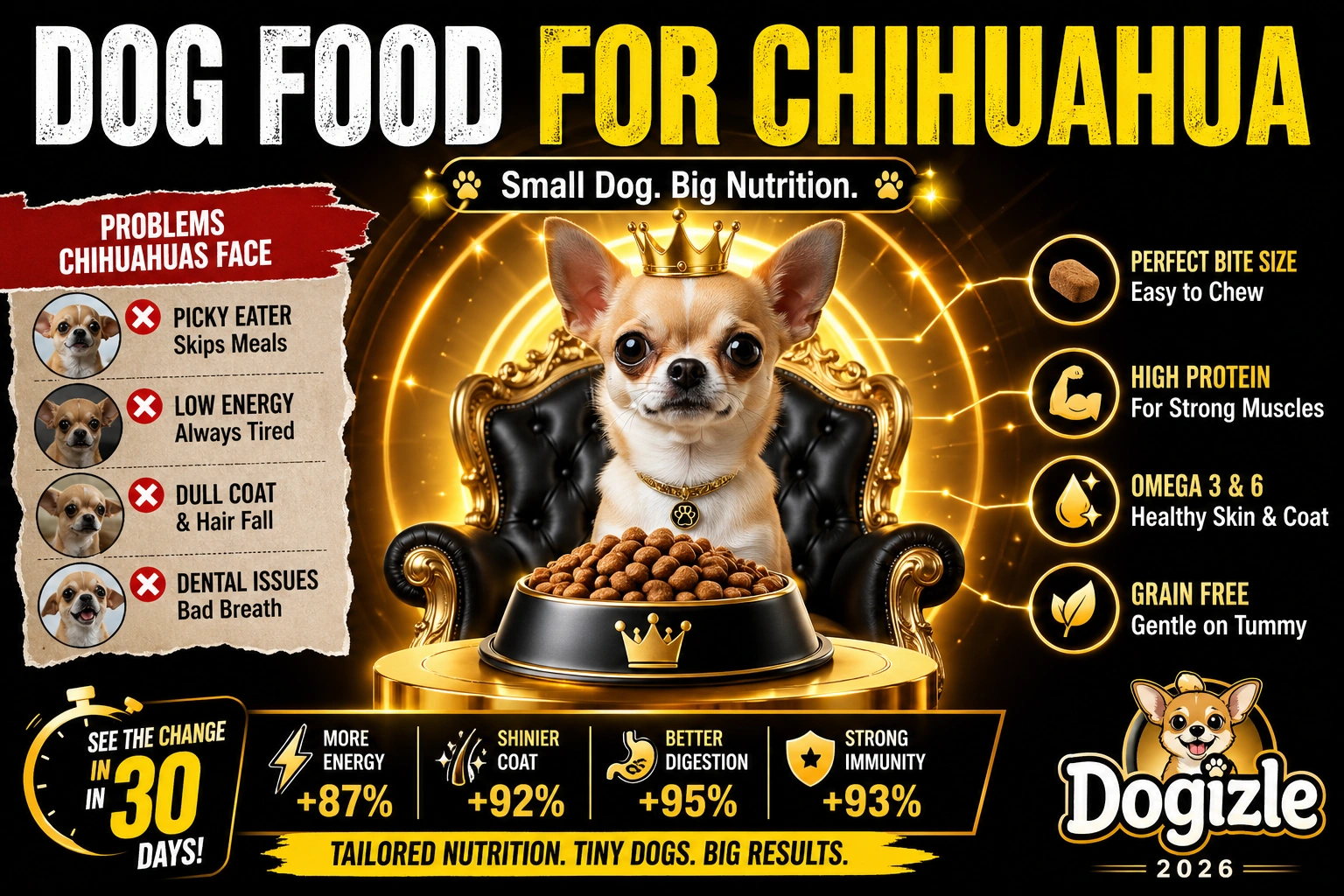
Dog Food for Chihuahua — Tiny Diet, Big Health Impact
Dog food for Chihuahua should be small, nutrient-dense, and easy to digest. If your Chi is picky, gains weight fast, or gets an upset stomach, this guide shows how to choose the right food, portion it correctly, and avoid common feeding mistakes that surprise even experienced owners every single day. Choosing the Best Dog Food for a Chihuahua is not a simple shopping decision—it is a long-term health investment that directly impacts lifespan, immunity, energy, and quality of life.
Chihuahuas, despite being the world’s smallest dog breed, have extremely demanding nutritional needs. Their tiny body size does not mean small needs; in fact, their metabolism operates at a rapid and highly sensitive rate, requiring carefully balanced feeding strategies. Across veterinary communities in Europe and worldwide, there is a consistent agreement: Toy breeds like Chihuahuas require precision-based nutrition rather than generic small-breed formulas.”
What Is the Best Dog Food for a Chihuahua? (Picky Eater Problem)
Even minor dietary mistakes can lead to severe complications such as:
- Dangerous drops in blood sugar (hypoglycemia)
- Chronic dental disease
- Digestive instability
- Weak immune response
- Fatigue and energy crashes
Unlike larger breeds, Chihuahuas cannot tolerate long fasting gaps or low-calorie diets. Their physiology demands energy-dense, nutrient-rich, and highly digestible Food formulations.
This guide provides a complete breakdown of Chihuahua nutrition, including:
✔ Scientific dietary requirements
✔ Vet-approved ingredient standards
✔ Feeding schedules by age
✔ Food type comparison (dry, wet, fresh)
✔ Common mistakes owners make
✔ Expert feeding frameworks
Chihuahua Biology: Why Their Diet Must Be Specialized
Understanding Chihuahua nutrition begins with understanding their unique biological structure and metabolic behavior.
1. Extremely Fast Metabolic Rate
Chihuahuas burn energy significantly faster than medium or large breeds.
What this means in real life:
- They require calorie-rich meals
- They cannot fast for long periods
- They need frequent feeding cycles
- Energy drops quickly if nutrition is insufficient
Even a short delay in feeding can cause lethargy or weakness.
2. Hypoglycemia Risk
One of the most serious risks in Chihuahuas is low blood glucose (hypoglycemia).
Symptoms include:
- Trembling or shaking
- Weakness or collapse
- Confusion or disorientation
- Loss of coordination
- Severe cases may become life-threatening
This is why feeding timing is just as important as food quality.
3. Small Jaw Structure and Dental Vulnerability
Chihuahuas have extremely compact jaws, leading to:
- Overcrowded teeth
- Rapid plaque buildup
- Gum inflammation
- Higher risk of periodontal disease
Improper kibble size can worsen dental stress and chewing difficulty.
4. Sensitive Digestive System
Chihuahuas are known for Delicate Stomachs and food sensitivities.
They often react poorly to:
- Artificial additives
- Cheap fillers
- Low-grade protein sources
- Excess carbohydrates
Their digestive system thrives on clean, minimal, and highly digestible formulations.
5. Why Generic “Small Breed Food” Is Not Enough
Many owners assume all small dogs share the same dietary needs. This is incorrect.
Chihuahuas specifically require:
- Higher fat-to-protein ratio
- More frequent meals per day
- Smaller kibble or soft-texture food
- Stable blood sugar maintenance
- High digestibility ingredient
What Is the Best Dog Food for a Chihuahua?
Selecting the best dog food for a Chihuahua depends on nutritional science rather than brand popularity.
1. Premium Animal Protein
Protein is the foundation of Chihuahua health.
It supports:
- Muscle development
- Cellular repair
- Immune defense
- Energy production
Best protein sources:
- Chicken
- Turkey
- Lamb
- Salmon
Real meat should always appear as the first ingredient.
2. Healthy Fat Sources for Energy Stability
Chihuahuas rely heavily on fat metabolism for energy.
Recommended fats:
- Fish oil (Omega-3)
- Flaxseed oil
- Chicken fat (high quality)
- Omega-balanced formulations
These support brain function, skin health, and endurance.
3. Digestible Carbohydrates
Carbohydrates should be slow-releasing and clean.
Safe options:
- Sweet potatoes
- Brown rice
- Oats
Avoid:
- Corn
- Wheat
- Soy fillers
4. Proper Kibble Size or Soft Food Texture
Food must match their mouth structure:
- Mini kibble
- Soft wet food
- Fresh or lightly cooked diets
Poorly sized kibble may lead to chewing difficulty or rejection.
5. Harmful Ingredients to Avoid
Avoid foods containing:
- Artificial coloring agents
- Meat by-products
- Excess salt or sugar
- Chemical preservatives
- Low-quality fillers
Types of Dog Food for Chihuahua
Dry vs Wet vs Fresh Food
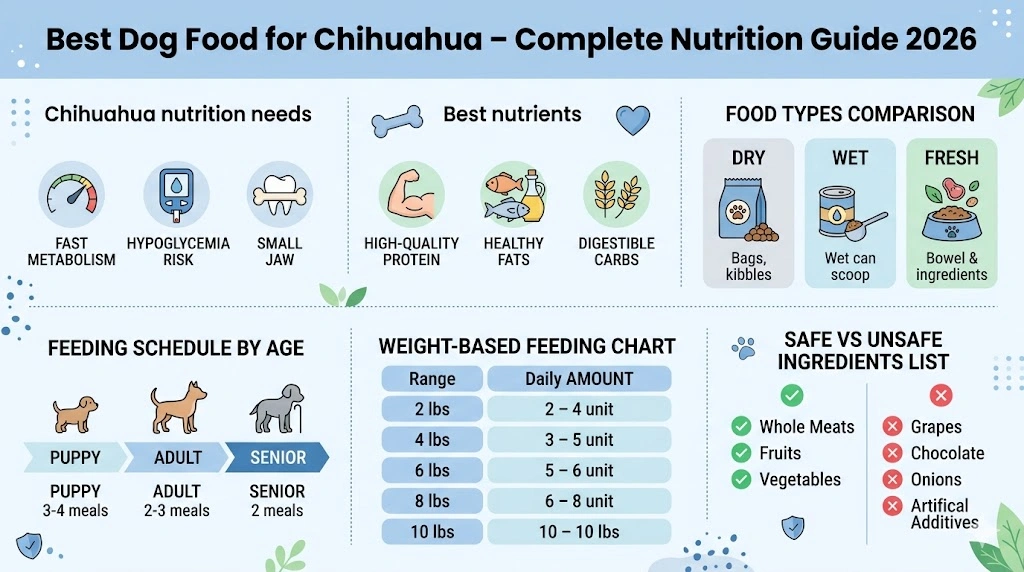
| Type | Advantages | Disadvantages | Ideal For |
| Dry Kibble | Dental support, easy storage | Hard texture for some Chihuahuas | Healthy adults |
| Wet Food | Highly palatable, hydration support | Expensive, shorter shelf life | Seniors or picky eaters |
| Fresh Food | Maximum nutrition, digestibility | Costly, preparation required | Sensitive digestion |
Dry Food Benefits
- Affordable and accessible
- Helps reduce plaque buildup
- Easy portion control
However, it may be too hard for very small jaws
Wet Food Benefits
- High moisture content
- Excellent taste appeal
- Easier chewing
But it can contribute to dental plaque if not balanced
Fresh / Home-Cooked Diet Benefits
- Highly natural nutrient profile
- Best digestibility
- Customizable ingredients
Requires veterinary balancing for completeness
Chihuahua Nutrition by Life Stage
Puppy Stage
Puppies require:
- 3–4 meals daily
- High-calorie intake
- DHA for brain development
- Frequent nutrient supply
Adult Stage
Adults require:
- 2–3 meals daily
- Balanced protein-fat ratio
- Weight management
- Energy stability
Senior Stage
Seniors require:
- Lower calorie intake
- Joint support nutrients
- Softer food textures
- Easy digestion formulas
Feeding Chart
| Weight | Daily Intake | Meals |
| 2–4 lbs | ¼ – ½ cup | 3–4 meals |
| 4–6 lbs | ½ – ¾ cup | 2–3 meals |
| 6–10 lbs | ¾ – 1 cup | 2 meals |
✔ Split meals to prevent hypoglycemia
Best Ingredients for Chihuahua Health
Recommended Ingredients
- Chicken, turkey, salmon
- Sweet potatoes, oats, rice
- Fish oil
- Probiotics
Ingredients to Avoid
- Corn and soy fillers
- Artificial preservatives
- Low-quality meat meals
- Excess carbohydrate-heavy diets
Common Feeding Problems & Solutions
1. Picky Eating Behavior
✔ Solutions:
- Mix wet + dry food
- Use flavor toppers
- Rotate proteins regularly
2. Low Blood Sugar Episodes
✔ Solutions:
- Feed every 4–6 hours
- Never skip meals
- Maintain a consistent schedule
3. Tear Staining
✔ Solutions:
- Limited ingredient diets
- Avoid artificial coloring
- Ensure clean water intake
4. Dental Disease
✔ Solutions:
- Small kibble diet
- Dental chews
- Regular brushing
🇪🇺 European Chihuahua Nutrition Standards
In Europe, pet food regulations are guided by FEDIAF standards, ensuring balanced and safe nutrition profiles.
✔ European Chihuahua owners should prioritize:
- FEDIAF-compliant formulations
- Transparent ingredient sourcing
- High-quality protein-first recipes
Cold climate considerations:
- Higher calorie intake needed
- Increased fat consumption for warmth
- Energy-dense diets recommended
Real-Life Feeding Scenarios
Urban Chihuahua
Controlled calorie intake
- Weight management formula
- Strict feeding routine
Cold Climate Chihuahua
- Higher-fat diet
- Increased energy density
Active Chihuahua
- High protein diet
- More frequent feeding cycles
FAQs
High-quality FEDIAF-approved small breed food with real animal protein is ideal.
Between 2–4 meals daily, depending on age and health condition.
Only necessary for allergies; otherwise, grains are safe and beneficial.
Yes, but only if it is properly balanced by a veterinarian.
Skipping meals or consuming low-quality nutrition is the primary cause.
Wet food is better for hydration; dry food supports dental health.
Fresh, clean water should always be available.
Treating Chihuahuas like generic small dogs instead of a special metabolic breed.
Conclusion:
The Best Dog Food for a Chihuahua is defined not by branding but by biological precision.
A correct diet ensures:
- Stable energy levels
- Strong immune system
- Healthy teeth and gums
- Better digestion
- Longer lifespan
In simple terms, proper nutrition equals survival and longevity for Chihuahuas.