
Introduction
Best Dog Trimmer 2026 is a quiet, safe, sharp clipper that cuts smoothly without stressing your dog. If noisy tools, weak motors, or painful pulling frustrate you, this guide reveals top picks, buying tips, safety advice, and expert grooming secrets most owners completely overlook before buying. Finding the best dog Trimmers is not simply about keeping your dog looking neat. It is about comfort, hygiene, confidence, and long-term health. A well-chosen trimmer can turn grooming from a stressful chore into a calm, manageable routine. The wrong Best Dog Trimmer, on the other hand, can lead to pulling, skin irritation, uneven results, fear, and a bad grooming experience that your dog remembers.
Across Europe, from apartments in Paris and Berlin to colder regions like Sweden and Norway, dog owners are searching for practical grooming solutions that save time and reduce salon visits. Professional grooming is valuable, but it is also expensive. When a single session can cost €50–€90 or more, regular appointments become difficult for many households. That is one reason at-home grooming has become so popular.
But at-home grooming only works well when the tool matches the dog. A low-quality clipper may struggle with thick coats. A loud motor may frighten a nervous puppy. A heavy machine may make it hard to trim smaller areas like the face, paws, or ears. A good trimmer should feel easy to control, comfortable to hold, and gentle enough for repeated use.
This guide is designed to help you choose wisely. You will find the top trimmer options for different needs, a clear buying framework, coat-specific recommendations, safety advice, and practical grooming tips that make home grooming safer and more effective. The goal is simple: help you choose the right dog trimmer with confidence and avoid expensive mistakes.
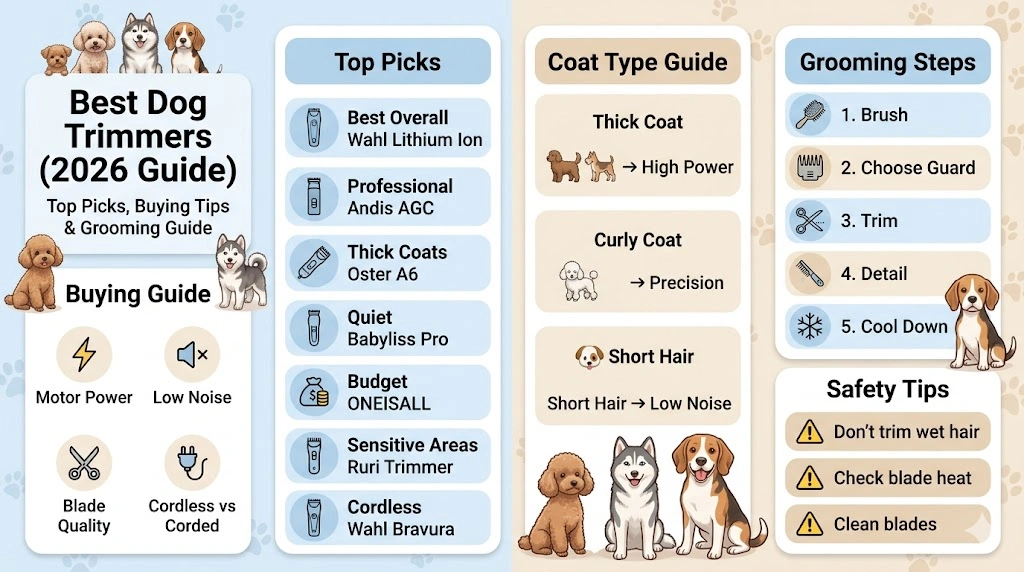
Top 7 Best Dog Trimmers (2026)
Before choosing a trimmer, it helps to compare the main strengths of each product. Some are better for beginners. Some are better for thick coats. Others are best for quiet, low-stress grooming. Here is a quick comparison of the most useful models for 2026.
| Product | Best For | Motor Power | Noise Level | Cordless | Price Range |
| Wahl Lithium Ion Deluxe Pro | Overall use | High | Medium | Yes | €€€ |
| Andis AGC Professional Clipper | Professionals | Very High | Medium | No | €€€€ |
| Oster A6 Slim | Thick hair | High | Medium | No | €€€ |
| Babyliss Pro Pet Trimmer | Quiet use | Medium | Low | Yes | €€€ |
| ONEISALL Dog Clippers | Budget | Medium | Low | Yes | €€ |
| Ruri’s Cordless Trimmer | Sensitive areas | Low | Very Low | Yes | €€ |
| Wahl Bravura Lithium | Cordless grooming | High | Low | Yes | €€€€ |
1. Best Overall: Wahl Lithium Ion Deluxe Pro
The Wahl Lithium Ion Deluxe Pro is one of the most balanced choices for home grooming. It offers strong performance, reliable battery life, and a design that suits a wide range of coat types. For many pet owners, that combination matters more than a single “best” feature. A trimmer may be powerful, but if it is too loud or awkward to handle, it will not be pleasant to use.
This model is popular because it works well for beginners while still offering enough strength for regular grooming. The cordless design makes it easier to move around the dog without worrying about a cable. That flexibility matters when you are trimming around the legs, chest, back, and tail. The self-sharpening blades also help maintain cutting performance over time, which reduces tugging and improves consistency.
This trimmer is especially good for general home grooming. It is suitable for owners who want one device that can handle routine maintenance without requiring professional-level skill. Its main drawback is that it may feel a little noisy for extra-sensitive dogs, so it may not be the ideal first choice for extremely anxious pets.
Best for: everyday grooming, mixed coat types, first-time home users
2. Best Professional: Andis AGC Professional Clipper
If you want salon-level power, the Andis AGC Professional Clipper stands out. This is a heavy-duty grooming tool built for frequent use and demanding coats. It is a strong option for groomers and experienced owners who need consistent performance for thick, dense, or matted fur.
Its rotary motor is designed for serious cutting power. That matters when dealing with coats that resist weaker machines. A powerful motor reduces the chance of pulling and makes the cutting action more efficient. The detachable blade system also adds versatility, which is a major advantage for professionals or skilled home groomers who like precise control.
This clipper is not the lightest or cheapest option, and it may feel more advanced than a casual user needs. However, for tough grooming sessions, it is highly dependable. If your dog has a heavy coat and you groom often, this type of machine can save time and frustration.
Best for: professionals, dense coats, advanced users, frequent grooming
3. Best for Thick Hair: Oster A6 Slim
The Oster A6 Slim is a strong choice for thick, heavy, or double-coated breeds. Dogs like Huskies, Golden Retrievers, and other high-density coat breeds often need a machine with enough torque to keep cutting smoothly through the fur without stalling.
This clipper is valued for its power, durability, and multi-speed performance. The three-speed design gives users more control depending on the grooming task. Lower settings can help with delicate areas, while higher settings support full-body grooming when the coat is more demanding. For owners who regularly deal with thick hair, that adaptability is extremely useful.
The build quality is solid, and that matters because grooming tools are used repeatedly and often under pressure. A clipper that feels stable and durable tends to inspire more confidence. The Oster A6 Slim is not the quietest device in the category, but it performs well where power matters most.
Best for: thick fur, double coats, high-resistance coats
4. Best Quiet Dog Trimmer: Babyliss Pro Pet Trimmer
For anxious dogs, sound matters a lot. A quiet trimmer can make the difference between a calm grooming session and a difficult one. The Babyliss Pro Pet Trimmer is a smart option when your dog is nervous, easily startled, or sensitive to vibration and noise.
This trimmer is designed with low vibration and a gentle operating profile. That makes it well-suited for small grooming jobs, detail work, and use around sensitive dogs that need a softer experience. Many dogs become uneasy when they hear a loud motor near their face or ears. A quieter machine can reduce that reaction and help build trust over time.
This model is especially useful for apartment living or for households with puppies who are still learning to accept grooming tools. It may not be the most powerful device for heavy coats, but it is excellent when calm handling is the priority.
Best for: anxious dogs, puppies, noise-sensitive pets, light grooming
5. Best Budget Option: ONEISALL Dog Clippers
For pet owners who want a practical and affordable entry point, the ONEISALL Dog Clippers offer good value. Budget tools can sometimes feel limited, but this model is known for being approachable, easy to use, and friendly for new groomers.
The cordless design makes it easier to move around the dog without dealing with a power cord. The low-noise profile is also helpful for puppies or dogs that dislike loud machines. For first-time owners, a trimmer that is simple and forgiving is often more useful than a complicated, high-powered unit.
This is a sensible choice for routine maintenance, light trims, and general touch-ups. It may not have the raw power of premium professional tools, but it delivers solid convenience for the price.
Best for: beginners, budget-conscious buyers, basic home grooming
6. Best for Sensitive Areas: Ruri’s Cordless Trimmer
Some grooming tasks require more precision than power. Areas like paws, face, ears, and sanitary zones need careful handling and a small, controlled tool. Ruri’s Cordless Trimmer is designed with that kind of detail work in mind.
Its low power can actually be an advantage in close-up grooming because it offers more finesse and less aggressive cutting. That makes it useful for smaller, more delicate jobs where a large clipper would feel clumsy. A very quiet trimmer also helps dogs stay relaxed when the tool is near their face or paws.
This type of clipper is not usually the main body-grooming tool for thick coats, but it is an excellent companion device. Many owners keep a small detail trimmer for finishing touches and sensitive zones.
Best for: paws, face, ears, sanitary trims, delicate areas
7. Best Cordless: Wahl Bravura Lithium
The Wahl Bravura Lithium is a premium cordless grooming option for owners who want flexibility, lighter handling, and quiet operation. Cordless trimmers are easier to maneuver, especially if your dog tends to move around during grooming. They are also helpful when grooming in different rooms or away from a convenient outlet.
This model is appreciated for its smooth handling and strong battery life. It suits owners who groom often and want a dependable cordless device that feels comfortable during longer sessions. It is also useful for detailed work because the design tends to feel precise and manageable.
For people who value mobility and a quieter grooming experience, it is a strong choice. It is not the cheapest option, but the convenience can justify the cost.
Best for: flexible grooming, cordless convenience, quiet trimming
How to Choose the Best Dog Trimmer
Choosing the right trimmer becomes much easier when you focus on a few essential features. Many buyers look only at price or brand, but the best decision comes from matching the tool to the dog’s coat, temperament, and grooming needs.
1. Motor Power
Motor strength is one of the most important factors. A weak motor can slow down, snag fur, and create an unpleasant pulling sensation. That is exactly the kind of experience that makes dogs resist future grooming sessions. A stronger motor usually cuts more smoothly and handles thicker fur more efficiently.
For dogs with dense coats, curly coats, or heavy shedding, high power matters even more. A strong motor helps the blade move steadily through the hair, which reduces strain on both the dog and the person grooming. If your pet has fine hair or only needs occasional light trimming, moderate power may be enough. But for thick coats, never underestimate the value of a serious motor.
2. Noise Level
Noise can influence a dog’s behavior more than many owners realize. Some pets tolerate loud appliances. Others panic at the sound of a clipper starting up. A quiet trimmer can be especially useful for puppies, rescue dogs, nervous dogs, and apartment households where a calm grooming atmosphere matters.
A lower-decibel clipper is often easier to introduce gradually. Even if the motor is not whisper-quiet, the overall sound should be soft enough that your dog does not react with fear. A quieter machine can help create positive associations, which makes future grooming easier.
3. Blade Quality
The blade determines how smoothly the trimmer cuts and how comfortable the experience feels. Stainless steel blades are durable, reliable, and widely used. Ceramic blades stay cooler for longer and may be gentler during extended sessions. That can be useful when Grooming for a long period or when you are trimming a coat that requires several passes.
The blade should remain sharp, consistent, and easy to maintain. Dull blades can create drag and cause discomfort. Good blade quality is not just about performance; it also affects safety and grooming confidence.
4. Corded vs Cordless
Corded trimmers are often better for long, uninterrupted sessions because they do not depend on battery life. Cordless trimmers, however, give more freedom of movement and are generally easier for beginners to handle.
If you groom multiple dogs or take longer to finish the job, a corded model may be practical. If your dog moves around a lot or you prefer fast, flexible grooming, cordless is often the better choice. The best option depends on your routine, not just on the product itself.
5. Attachments and Guards
Guards help control cutting length and improve consistency. More attachment options mean more flexibility, especially if you want to style the coat, blend different lengths, or maintain safety around delicate areas. A good guard set reduces the chance of accidental over-trimming.
For beginners, guards are particularly helpful because they create a safer starting point. It is usually better to begin with a longer guard and work down gradually than to cut too short too quickly.
6. Weight and Grip
A trimmer should feel comfortable in your hand. If it is too heavy, grooming becomes tiring. If the grip is awkward, precision suffers. Small details like balance, handle shape, and vibration level can have a major effect on the grooming experience.
For dogs that need frequent touch-ups, a lightweight and ergonomic trimmer can make life much easier. Comfort is not a luxury; it is part of good grooming.
Dog Coat Type Guide
One of the biggest mistakes dog owners make is choosing a trimmer that does not match the dog’s coat. A tool that works beautifully on one breed may perform poorly on another. Coat type should guide the buying decision.
Thick / Double Coat Dogs
Examples include Huskies and Golden Retrievers. These dogs usually need high motor power, durable blades, and a machine that can maintain speed without slowing down. Thick coats trap more hair and can place greater strain on weak clippers. If your dog falls into this category, a professional-grade or heavy-duty model is often the smarter choice.
For double-coated dogs, grooming should never be rushed. A powerful trimmer helps, but brushing first is equally important. Removing loose fur beforehand makes trimming smoother and safer.
Curly Coat Dogs
Examples include Poodles and Labradoodles. Curly hair can’t tangle easily, and it often needs careful, precise trimming rather than brute force. A clipper with good control, clean cutting action, and anti-tangle performance is ideal.
These coats are beautiful but demanding. A trimmer that glides cleanly through curls helps prevent snags and supports a neat finish. Precision matters more than raw power in many of these cases.
Short Hair Dogs
Examples include Beagles and Boxers. Short coats generally do not require heavy-duty clipping, but they still benefit from a lightweight, low-noise device for tidy maintenance and small touch-ups. Many short-haired dogs only need occasional trimming around the paws, face, or hygiene areas.
For these breeds, comfort and simplicity often matter more than high power. A quiet trimmer can help keep the experience pleasant.
Sensitive or Nervous Dogs
Some dogs are not defined by coat type alone. Their personality matters too. If your dog gets scared easily, choose a quiet, low-vibration model with a gentle start-up. A calmer trimmer can reduce stress and make grooming more successful over time.
Behavior matters just as much as breed. A good trimmer is one that your dog can tolerate calmly.
Step-by-Step: How to Trim Your Dog at Home
Home grooming works best when it is calm, patient, and systematic. Rushing usually creates mistakes. The following approach keeps the process safer and more manageable.
Step 1: Brush the Coat First
Before Trimming, brush the coat thoroughly to remove knots, tangles, and loose hair. This step is essential. Clippers should not have to fight through mats, because that increases pulling and discomfort. A clean, brushed coat also gives you a more even result.
Step 2: Choose the Right Guard
Start with a longer guard than you think you need. It is easier to go shorter later than to repair hair that has been cut too close. A longer setting offers more control and gives you room to adjust if needed.
Step 3: Trim Slowly and Gently
Move the clipper in the direction of hair growth and use light pressure. Slow grooming produces cleaner results and reduces the chance of irritation. Work in small sections rather than trying to do the entire body quickly.
Step 4: Focus on the Body Before the Details
Large areas like the back, sides, and chest are easier to trim before moving to sensitive spots. Once the main coat is tidy, switch to a smaller trimmer or detail tool for the paws, face, ears, and sanitary areas.
Step 5: Take Breaks
Dogs can become tired or restless, especially during longer sessions. Breaks every 10–15 minutes help the dog relax and help prevent heat buildup in the blade. A grooming session should feel manageable, not endless.
Step 6: Reward Calm Behavior
Praise, treats, and gentle encouragement help the dog associate grooming with positive outcomes. That makes future sessions easier and reduces resistance. A good grooming routine is built through trust.
Safety and Health Considerations
Grooming safety should always come first. A Best Dog Trimmer is a useful tool, but it must be used carefully. Safe grooming protects skin, coat, and overall comfort.
One of the most important rules is never to trim wet hair unless the product and technique specifically support it. Wet fur can clump, cling, and behave unpredictably under the blade. Dry grooming is generally safer and more effective.
Blade heat is another critical concern. Even a high-quality trimmer can become warm during use. Check the blade frequently to make sure it does not become uncomfortable. If it feels hot against your skin, it may also feel unpleasant on your dog’s.
Cleanliness also matters. Blades should be disinfected after use, especially if you groom regularly. This helps reduce the risk of skin irritation and maintains tool performance. Dirty blades can drag through the coat and carry debris.
Avoid trimming too close to the skin. It is better to leave a little length than to risk nicking, scraping, or irritating the coat. Sensitive areas require extra caution and a gentler approach.
Common Mistakes Dog Owners Make
Many grooming problems come from simple mistakes, not from the trimmer itself. Here are the most common errors to avoid.
Using human clippers is a frequent mistake. Human hair and dog fur are not the same. Dog coats may be denser, coarser, curlier, or more layered, which means they need different cutting performance. A human clipper can struggle, pull, or overheat too quickly.
Skipping brushing is another major issue. Mats and tangles can make trimming painful. A good grooming session always begins with coat preparation.
Ignoring blade heat can cause discomfort and even skin irritation. Clipper temperature should be checked regularly, especially during longer grooming sessions.
Buying a low-power trimmer for a thick coat is also a poor match. The result is usually frustration, uneven cutting, and a stressful experience for both owner and dog.
Rushing the process is another common problem. Grooming should be steady and patient. The more calmly you work, the safer and cleaner the result tends to be.
Expert Grooming Tips
Good grooming is not just about cutting hair. It is about managing the entire experience. These expert-style habits can improve both the result and the dog’s comfort.
Oil the blades before each session if the manufacturer recommends it. Proper maintenance helps the clipper work more smoothly and stay sharper for longer.
Use a quiet trimmer for puppies or noise-sensitive dogs. The first grooming experiences shape future behavior, so gentleness matters.
Keep sessions short and predictable. Dogs often do better when grooming becomes a short, familiar routine rather than a long, tiring event.
Reward the dog after grooming. Treats, play, and praise build trust and help reduce fear.
Groom in a calm environment. Loud voices, fast movements, or chaotic surroundings can make the dog tense.
Real-Life European Scenarios
Different Living environments call for different grooming habits. In Europe, climate and housing style can affect the ideal approach.
Apartment Living in Paris or Berlin
Quiet trimmers are especially useful in apartments. A low-noise clipper reduces stress for the dog and makes grooming more practical in compact spaces. Daytime grooming is usually a better choice because it is calmer and less disruptive.
Cold Regions Like Sweden or Norway
In colder climates, owners often prefer not to over-trim. The coat helps with warmth and insulation, so grooming should be balanced rather than excessive. The goal is maintenance, not complete removal of protective fur.
Warmer Regions Like Spain or Italy
In warmer weather, coats may need more frequent maintenance to improve airflow and comfort. Regular trimming can help dogs feel cleaner and lighter, especially during hotter months.
Pros and Cons of Dog Trimmers
Every grooming tool has strengths and limitations.
Pros
At-home grooming saves money over time. It also gives you more flexibility because you can groom when needed instead of waiting for an appointment. For many owners, grooming at home also strengthens the bond with the dog because it becomes part of the care routine.
Cons
There is a learning curve. The first few grooming sessions may feel awkward. Good tools also require an initial investment. And if the trimmer is used incorrectly, the dog may experience discomfort. For that reason, patience and careful technique matter as much as the machine itself.
FAQs
For most Beginners, the best choice is usually ONEISALL or a cordless Wahl model. These options are generally easier to handle, less intimidating to use, and suitable for everyday home grooming. Beginners should look for low noise, simple controls, and good guard options.
Yes, especially for anxious dogs, puppies, rescue dogs, and pets that startle easily. A quieter trimmer can reduce fear and help create a more relaxed grooming routine. For many households, the reduced stress is worth the investment.
No, that is not recommended. Best Dog Trimmer fur is typically different from human hair in texture, density, and layering. Dog trimmers are designed for coat types that require different motor strength and blade behavior. Human clippers may pull, snag, or overheat more easily.
That depends on the breed, coat type, climate, and lifestyle. For many dogs, trimming every 4–8 weeks is a practical range. Some breeds need more frequent maintenance, while others only need occasional touch-ups. Grooming needs should match the coat and the dog’s daily environment.
Yes, many modern cordless trimmers are very capable. Battery-powered models have improved a great deal and can handle routine grooming very well. For extremely thick coats or very long sessions, some owners still prefer corded tools, but cordless models are often more than enough for home use.
Yes, product safety matters, and CE-marked products are a useful indicator of compliance with European safety expectations. When buying any grooming tool in Europe, it is wise to check labeling, safety claims, and manufacturer information carefully.
Conclusion:
Choosing the best Dog Trimmer is not simply about buying a device. It is about choosing comfort, safety, efficiency, and a better grooming routine for both you and your dog. The right trimmer can make home grooming calmer, cleaner, and more affordable. The wrong one can turn even a small trim into a stressful struggle.
The smartest approach is to match the trimmer to your Best Dog Trimmer coat, personality, and grooming needs. If your dog has thick fur, prioritize power and blade quality. If your dog is nervous, prioritize low noise and low vibration. If you are a beginner, choose a tool that is simple, lightweight, and easy to control. If you want the most flexibility, cordless models are often the most convenient.
At-home grooming can be a positive routine when handled with patience and the right equipment. Brush first, trim slowly, keep the blades cool, and reward your dog often. With the right setup, grooming becomes less of a chore and more of a bonding experience.