Introductions
If you have ever dropped a slice of green pepper on the kitchen floor and watched your dog stare at it like treasure, you are not alone. Many dog owners want a quick answer, but they also want the real story: Can Dogs Eat Green Peppers, and if so, how much is safe, how should they be prepared, and when should you avoid them entirely?
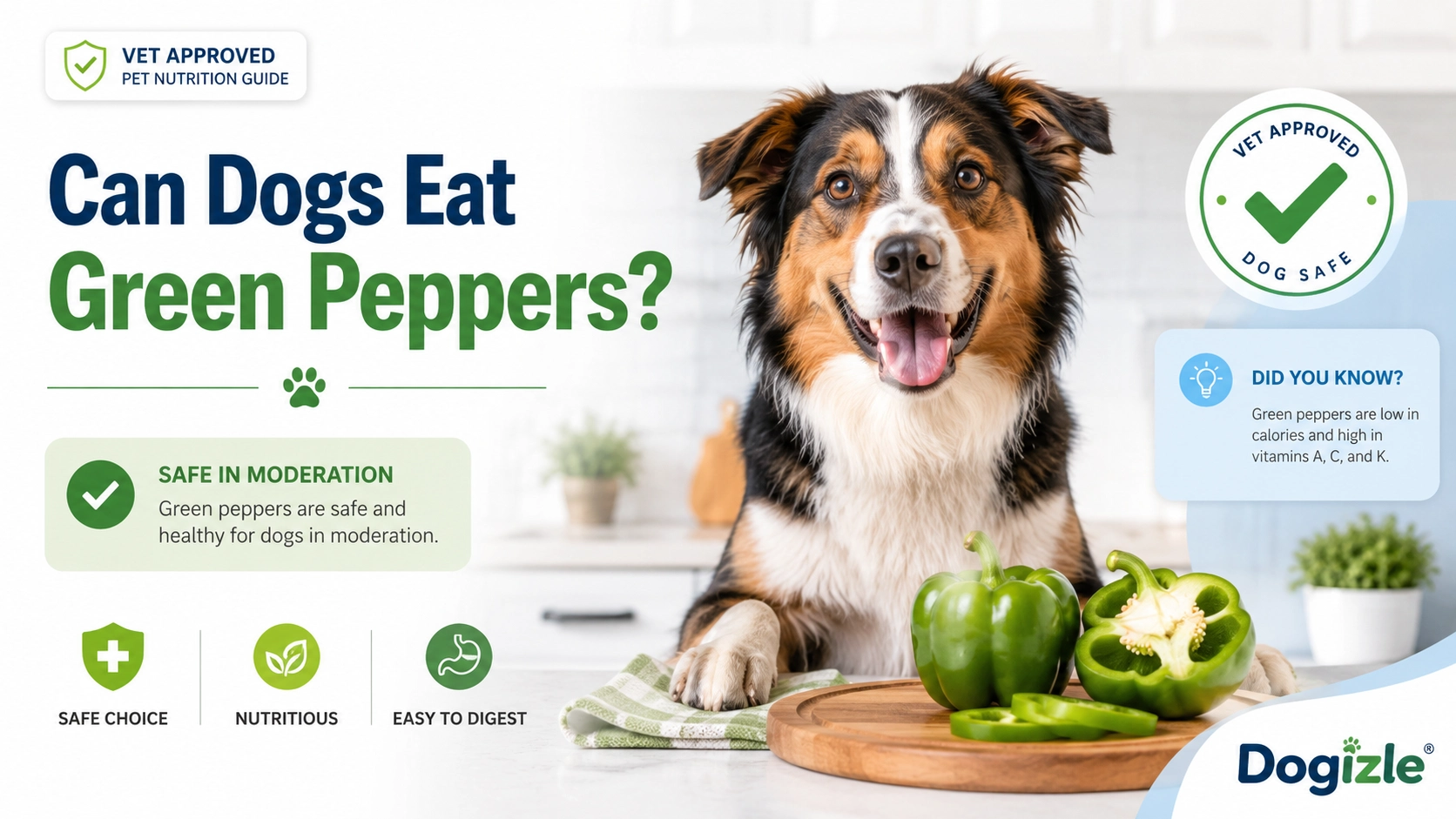
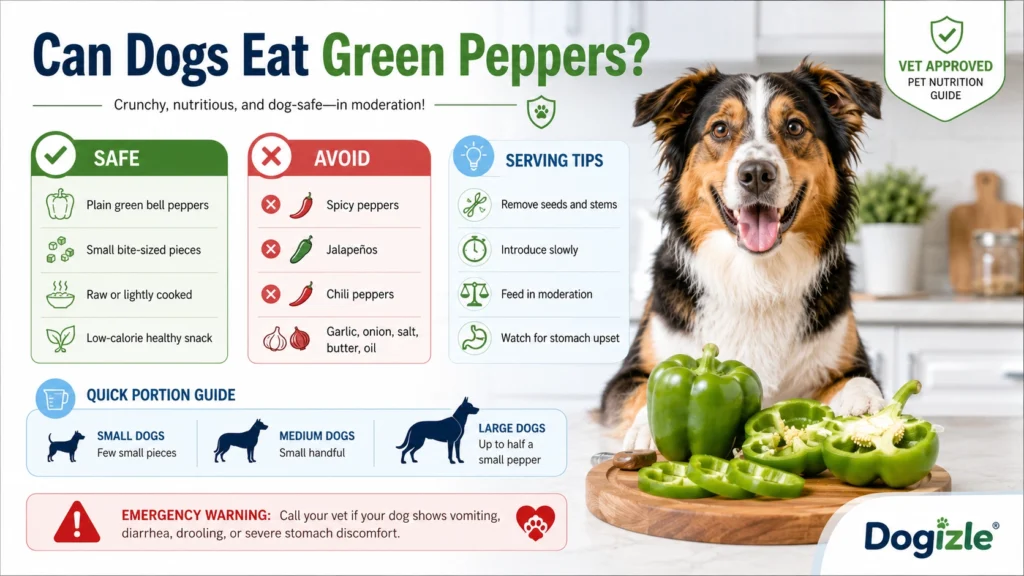
The good news is simple. Plain green bell peppers are generally safe for dogs in moderation. The important part is the word plain. Green peppers should be served without seeds, stems, spices, salt, garlic, onion, butter, or oil. They are best treated as an occasional snack, not a meal replacement, and dogs with sensitive stomachs should get only a tiny amount at first. Hot peppers are a different story because capsaicin can irritate a dog’s mouth and digestive tract.
This guide gives you the practical answer, the safe feeding method, portion guidance, warning signs, and the small details that matter for real dog owners in the USA, the UK, Europe, Canada, and Australia. It is written to help you make a calm, confident decision at home.
Quick Answer: Can Dogs Eat Green Peppers?
Yes. Dogs can eat green bell peppers in small amounts when they are fresh, washed, seed-free, stem-free, and served plain. Bell peppers are considered a low-calorie snack and can provide vitamins, fiber, and antioxidants. But they should still be offered only as an occasional treat, because a dog’s main nutrition should come from complete and balanced dog food.
What Counts as a Green Pepper?
This matters more than many owners realize. A green bell pepper is a mild, sweet pepper. A green chili pepper is something else entirely, and spicy green peppers such as jalapeños, serranos, poblano peppers, pepperoncini, shishitos, and Anaheim chilis should not be treated the same way. Petco and PetMD both make this distinction clearly: bell peppers are fine in moderation, while spicy peppers can cause vomiting, diarrhea, and digestive irritation. Merck Veterinary Manual also lists Capsicum peppers as stomach and intestinal irritants because of capsaicinoids.
Are Green Peppers Good for Dogs?
Green peppers are not a necessity, but they can be a useful treat. Bell peppers are low in calories and high in water, and PetMD and Chewy note that they provide vitamins, minerals, fiber, and antioxidants. Petco also highlights vitamin C, beta carotene, and antioxidant value, while Blue Cross reminds dog owners that fruits and vegetables should still only make up a small part of the daily diet.
That makes green peppers a better choice than many processed treats for owners who want a crunchy, low-fat reward. They are especially useful for dogs who need lower-calorie snack options, as long as the portion stays small.
Green Peppers Benefits at a Glance
| Benefit | Why it matters |
| Low calorie | Helpful for weight-conscious dogs |
| Crunchy texture | Can work as a satisfying occasional snack |
| Fiber | May support digestion in small amounts |
| Vitamins and antioxidants | Adds small nutritional value without being heavy |
| High water content | Can feel refreshing, especially in warm weather |
The keyword here is still small amounts. Even safe foods can cause trouble when portions get too large.
What Are the Risks of Green Peppers for Dogs?
The biggest risk is giving the wrong kind of pepper. Hot peppers, chili peppers, cayenne, jalapeños, and similar varieties contain capsaicin, which can irritate a dog’s digestive system and cause vomiting or diarrhea. Merck Veterinary Manual specifically identifies Capsicum peppers as GI irritants, and PetMD says hot peppers should not be fed to dogs or used in capsaicin-containing seasonings like chili powder.
The second risk is overfeeding. Even a safe vegetable can cause stomach upset if your dog eats too much too quickly. PetMD, Petco, Chewy, and AKC all stress moderation and suggest that new foods should be introduced gradually.
The third risk is seasoning. Garlic, onions, salt, butter, and oil are all poor choices for dogs. PetMD and Petco both warn against these extras. Blue Cross also reminds dog owners that human-style add-ons can turn an otherwise harmless food into a problem.
Safe vs Unsafe Pepper Guide
| Pepper type | Safe for dogs? | Notes |
| Green bell pepper | Yes | Best when plain, washed, seedless, and cut small |
| Red bell pepper | Yes | Also safe in moderation |
| Yellow bell pepper | Yes | Mild and generally safe |
| Orange bell pepper | Yes | Safe in moderation |
| Jalapeño | No | Too spicy; capsaicin can irritate the stomach |
| Chili pepper | No | Can cause vomiting and diarrhea |
| Cayenne pepper | No | Not suitable for dogs |
| Serrano pepper | No | Too spicy for dogs |
| Pepperoncini | No | Not a good dog snack |
| Poblano pepper | No | Often mild for people, but still not a dog treat |
Petco is especially useful here because it directly separates green bell peppers from other green peppers that are not suitable for dogs.
How to Prepare Green Peppers for Dogs
Step 1: Choose a plain green bell pepper
Buy a fresh, firm pepper with no mold, rot, or seasoning.
Step 2: Wash it well
Rinse away dirt, wax, or residue.
Step 3: Remove the stem and seeds
This is one of the most repeated safety tips across the strongest pages. It lowers the chance of digestive upset and choking.
Step 4: Cut it into bite-sized pieces
Large chunks can be hard to chew, especially for small dogs and fast eaters.
Step 5: Serve it plain
salt. garlic. No onion. spices. butter. No oil.
Step 6: Start small
Give one or two pieces first and watch for any stomach reaction.
Step 7: Treat it like a treat
It should not replace the normal meal. Bell peppers are a snack, not a nutritional foundation.
Raw or Cooked Green Peppers: Which Is Better?
Both can work. Raw green peppers are crunchy and fresh, while lightly cooked peppers are softer and easier for some dogs to chew and digest. Chewy says dogs can eat raw vegetables, but they can also be cooked, steamed, baked, roasted, grilled, or pureed, as long as salt is avoided. PetMD also notes that cooking or steaming can soften the skin for dogs that have trouble chewing raw pepper.
A simple rule works well in real life:
If your dog crunches raw vegetables easily, raw is fine. If your dog gulps food, has dental issues, is elderly, or has a sensitive stomach, lightly cooked is often the safer choice. That second sentence is practical guidance, not a hard medical rule, so it should be matched to your individual dog and vet advice.
How Much Green Pepper Can Dogs Eat?
The safest answer is: much less than you probably think. Treats should make up no more than about 10% of your dog’s daily calories, and some veterinary sources suggest aiming even lower when possible. AKC, VCA, and Petco all support the 10% rule.
Practical Portion Guide
| Dog size | Suggested starting amount | Practical note |
| Extra-small / toy | 1–2 tiny pieces | Start very slowly |
| Small | A few small pieces | Watch digestion closely |
| Medium | About 1/4 pepper or less | Only if the dog tolerates it well |
| Large | Up to 1/2 pepper or less | Still an occasional treat |
| Extra-large | Small amount, not a full pepper | Bigger does not mean unlimited |
These amounts align with AKC’s and Chewy’s general bell-pepper guidance, which both stress small servings and gradual introduction.
The best rule for a first serving
Give one or two small pieces, then wait. If the dog stays normal, you can try a little more next time. If the dog gets soft stool, gas, drooling, vomiting, or refuses food, stop and do not offer more.
Are Green Peppers Safe for Puppies?
Usually, yes, but puppies are more sensitive than adult dogs, so the portion should be tiny. Puppies also have developing digestive systems, so any new food should be introduced slowly and only after checking that it fits the puppy’s overall diet. VCA and AKC both emphasize careful treatment control, especially during growth.
For puppies, the safest approach is often to skip the pepper unless your vet agrees it is a useful occasional treat.
Can Dogs Eat Raw Green Peppers?
Yes, if they are plain and cut small. Raw is one of the common serving options mentioned by PetMD and Chewy. Just remember that raw pepper skin may be tougher to chew and digest for some dogs.
Can Dogs Eat Cooked Green Peppers?
Yes. Lightly cooked or steamed green pepper is usually fine, as long as you do not add seasoning. PetMD and Petco both say cooking can help soften the skin, which may make the pepper easier for some dogs to eat.
Which Pepper Color Is Best for Dogs?
Green, red, yellow, and orange bell peppers are all considered safe in moderation. PetMD says all bell pepper colors are fine for dogs because they contain zero capsaicin, and Petco also treats the colors as generally appropriate when served correctly. If you are choosing among bell peppers, the main difference is taste and your dog’s tolerance, not safety.
Simple color comparison
| Color | Safe for dogs? | Best use |
| Green | Yes | Mild, crunchy treat |
| Red | Yes | Slightly sweeter option |
| Yellow | Yes | Mild and bright |
| Orange | Yes | Similar to other bell peppers |
Common Mistakes Dog Owners Make
1) Feeding spicy green peppers
This is the biggest mistake. A green pepper is not always a bell pepper. Jalapeños, serranos, and similar peppers can upset the stomach.
2) Leaving seeds and stems on
Seeds and stems are not the safest way to serve vegetables to dogs, and the top sources recommend removing them.
3) Seasoning the pepper
Garlic, onion, salt, oil, and butter are not dog-friendly add-ons.
4) Giving too much at once
Even good foods can lead to vomiting or diarrhea if your dog overeats.
5) Using green peppers as a meal replacement
Dogs need complete and balanced dog food as their main diet. Vegetables are extras, not the base.
Expert Tips for Feeding Green Peppers Safely
- Start with a tiny portion.
- Use bell peppers only, not chili peppers.
- Wash well and remove seeds and stem.
- Keep it plain and unseasoned.
- Watch for gas, loose stool, vomiting, or refusal to eat.
- Use green pepper as a training reward only if it does not upset your dog’s stomach.
When Green Peppers May Not Be a Good Idea
Green peppers are usually safe, but some dogs should be more carefully managed:
- dogs with a very sensitive stomach
- dogs that already have vomiting or diarrhea
- dogs on prescription diets
- dogs with a history of food intolerances
- dogs that swallow food too quickly
- dogs with dental pain or missing teeth
PetMD specifically notes that new foods should be discussed with a veterinarian first, especially for dogs with health conditions or special diets.
What If My Dog Ate Too Much Green Pepper?
If your dog ate too much bell pepper, the most common result is digestive upset. Watch for vomiting, Diarrhea, drooling, abdominal discomfort, or reluctance to eat. If the pepper is spicy, symptoms can be more intense because of capsaicin. Petco advises contacting a veterinarian if symptoms appear after spicy pepper exposure. Merck also notes that Capsicum exposure is irritating to the stomach and intestinal tract.
When to Call the Vet Immediately
Contact a vet promptly if your dog has:
- repeated vomiting
- persistent diarrhea
- severe drooling
- signs of pain
- swelling of the mouth
- trouble breathing
- lethargy
- a suspected reaction after eating spicy peppers or seasoned food
Europe-Specific Practical Advice
For dog owners in the UK and Europe, the biggest real-world issue is often not the pepper itself, but how it is sold and served. Supermarket salad mixes, grilled vegetable packs, and takeaway leftovers often contain seasoning, oil, onion, garlic, or spice blends that are not suitable for dogs. Blue Cross reminds owners that safe fruit and vegetables should still be treated as occasional extras alongside a balanced diet.
If you live in an apartment, small pepper pieces can be useful as low-calorie rewards for recall practice, calm behavior, or grooming sessions. That said, dogs in smaller homes often get more treat rewards during the day, so the 10% calorie rule matters even more.
In colder months, many owners use indoor enrichment food rewards more often. Green pepper can work as part of that rotation, but it should never be the main treat every day. Variety is healthier and prevents boredom.
A Simple Decision Guide
If you are still unsure, use this quick check:
- Is it a bell pepper and not a hot pepper?
- Is it plain, not seasoned?
- Is it washed?
- Have the seeds and stem been removed?
- Is the portion small?
- Does your dog tolerate new foods well?
If the answer to all six is yes, green pepper is usually a reasonable occasional treat for a healthy dog.
Pros and Cons of Green Peppers for Dogs
| Pros | Cons |
| Low in calories | Too much can upset the stomach |
| Crunchy and fun | Spicy peppers are not safe |
| Can be a healthy occasional treat | Seasonings make them unsafe |
| Easy to cut into small pieces | Raw skin can be tough for some dogs |
| Works as a training reward | Not necessary for canine nutrition |
People Also Ask
It is better to remove them. The leading guidance recommends serving peppers without seeds and stems to reduce digestive upset and improve safety.
No. Spicy green peppers are not the same as green bell peppers. Capsaicin can irritate the mouth and stomach and may cause vomiting or diarrhea.
They can be a lower-calorie treat option compared with many processed snacks, but they still count toward daily calories and should stay within the 10% treat rule.
A small amount may be fine for some puppies, but only after slow introduction and ideally with vet approval. Puppies have more sensitive digestion and need their main nutrition from puppy food.
Neither is automatically better. Raw is fine for many dogs, while lightly cooked food can be easier for dogs that struggle with chewing or digestion. Keep them plain.
Yes. All bell pepper colors are generally safe in moderation, so red peppers are fine too. They are often a sweeter-tasting option, but they should still be served plain and in small amounts.
Wash them, remove the stems and seeds, cut them into small pieces, and serve them plain as a rare treat. That is the safest, simplest method supported by the leading pages.
Final Verdict: Can Dogs Eat Green Peppers?
Yes — plain green bell peppers are generally safe for dogs in Moderation. The best version is fresh, washed, seed-free, stem-free, and cut into small pieces. Keep the serving modest, avoid spicy peppers completely, and never add salt, garlic, onion, butter, or oil. Treat green peppers as an occasional snack, not a daily staple, and check with your veterinarian if your dog has a sensitive stomach or a medical condition.