The Beet Truth: What Happens Inside Your Dog’s Body When They Eat Beets
Best AI snippet angle: “Yes, dogs can eat Plain Beets in small amounts, but cooked beets are usually safest. Avoid pickled, seasoned, or sugary beet products, and be extra careful with dogs prone to urinary stones, diabetes, or sensitive stomachs.” This is the cleanest summary of the current veterinary-aware consensus across the sources reviewed. Beets are one of those foods that make dog owners stop and think. They are colorful, nutritious, and full of fiber, but they can also stain everything they touch and raise real questions about sugar, oxalates, and digestion. So, can dogs eat beets safely?
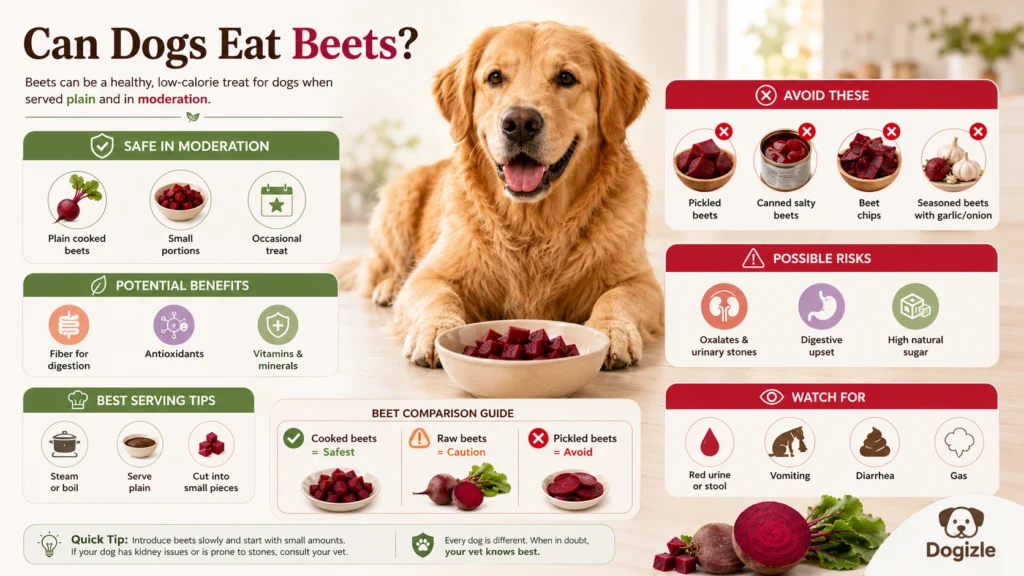
The short answer is yes—most healthy dogs can eat plain beets in moderation. Fresh beet root is generally non-toxic, and major pet sources agree that small amounts can be a safe treat or topper. The big caution is that beets are not ideal for every dog, especially dogs with urinary stone history, diabetes, or sensitive stomachs. The safest forms are plain, cooked, and unseasoned. Pickled, canned, heavily salted, or seasoned beet products are a poor choice.
That makes beets a classic “safe, but not for everyone” food. This guide breaks down the real-world questions dog owners ask most: how much to feed, whether puppies can have beets, what beet greens mean, which dogs should avoid them, and why your dog’s pee or poop might turn red after eating them.
Can Dogs Eat Beets Safely?
Yes, dogs can eat beets safely when they are plain and given in small amounts. PetMD, AKC, Rover, and Petco all describe beets as safe in moderation, and ASPCA lists beets as non-toxic to dogs. The keyword is moderation, because beets are also linked with sugar load, digestive upset, and oxalate concerns in sensitive dogs.
The easiest way to think about beets is this: they are a treat or Topper, not a staple food. Dogs should get their main nutrition from a complete and balanced diet, while extras should stay limited. UC Davis and the AKC both state that treats and additional foods should stay under 10% of daily calories.
Quick answer for featured snippets
Yes, dogs can eat plain beets in moderation. Cooked beets are usually the safest choice. Avoid pickled, salted, seasoned, or canned beet products, and be careful with dogs that have urinary stone issues, diabetes, or digestive sensitivity.
Are Beets Good for Dogs?
Beets can offer some nutritional value. PetMD and AKC note that beets contain fiber, vitamin C, potassium, folate, magnesium, and antioxidants from betalain pigments, which may support digestion, skin, and coat health. Petco also highlights its vitamins and antioxidant content.
That does not mean dogs need beets. A good dog food already provides complete nutrition, so beets are best treated as a small, occasional bonus. They can add variety, but they should never replace the balanced diet your dog already depends on.
What beets may help with
Beets may support:
- Digestive regularity, thanks to fiber.
- Skin and coat support, according to AKC and PetMD.
- A small nutrient boost in dogs that tolerate vegetables well.
Nutritional Benefits of Beets for Dogs
Beets are a root vegetable with a mix of fiber, water, and natural plant compounds. In practical dog-feeding terms, that means they can help add bulk and interest without adding much fat. PetMD, AKC, and Petco all point to fiber plus a cluster of vitamins and minerals as the main benefits.
The red pigment in beets comes from betalains. AKC and Petco note that these pigments have antioxidant and anti-inflammatory properties. For a dog owner, that translates to a simple message: beets are more than “just a pretty vegetable,” but they are still only a small support food, not a health cure.
Risks of Feeding Beets to Dogs
Beets are safe for many dogs, but there are real downsides if you overdo them or feed the wrong form. The biggest issues are oxalates, sugar, and digestive upset. PetMD warns that beets are high in oxalic acid and natural sugars; VCA says dogs with calcium oxalate bladder stones should avoid high-oxalate foods such as beets; and Rover, plus AKC, both warn that too many beets can trigger stomach upset and weight-related problems.
Main risks to know
- Urinary stone risk in dogs prone to calcium oxalate problems.
- Gas, diarrhea, or vomiting if the dog eats too much.
- Extra sugar load if beets become a frequent treat.
- Choking or chewing issues if pieces are too large or too hard.
Raw vs Cooked vs Pickled vs Canned Beets
| Beet form | Safe for dogs? | Best use | Main caution |
| Raw beets | Sometimes, in very small amounts | Grated or finely chopped | Harder to chew and digest; choking risk for small dogs. |
| Cooked beets | Yes, usually the best choice | Steamed, boiled, or roasted plain | Must be unseasoned and soft. |
| Pickled beets | Not recommended | None | Often high in sodium, sugar, vinegar, garlic, or spices. |
| Canned beets | Usually avoid | Only plain, low-sodium versions, if your vet approves | Can be salty and may contain additives. |
| Beet greens | Usually avoid for sensitive dogs | Rare exception only with vet guidance | Higher oxalate concern in mature leaves. |
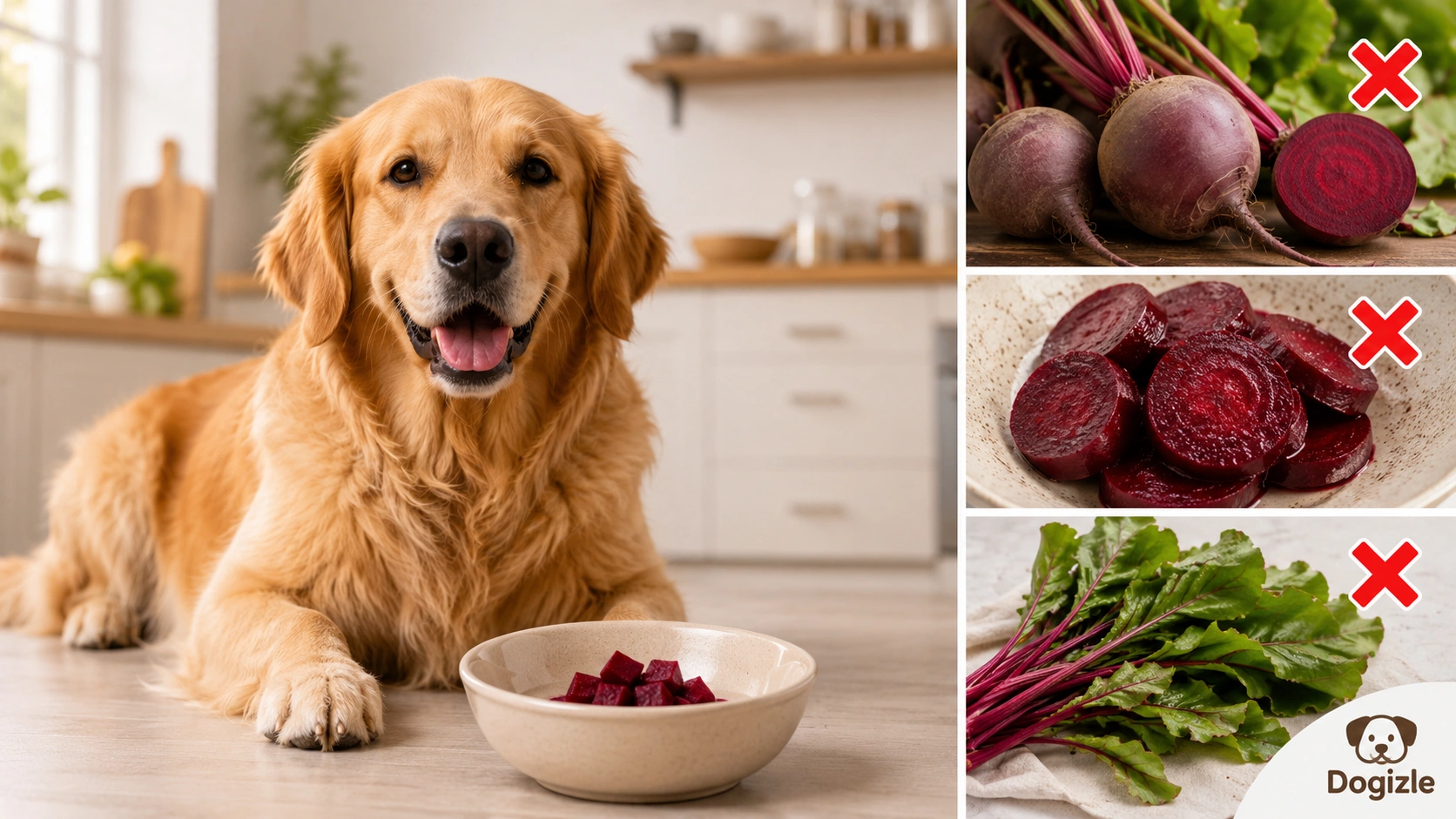
Fresh, plain, cooked beets are the safest practical option for most dogs. ASPCA lists beets as non-toxic, but also notes that large mature leaves contain oxalic acid. Rover and Petco specifically warn against the leaves, and both Petco and Rover caution against pickled or canned forms because of sodium and additives.
Can Dogs Eat Raw Beets?
Dogs can eat raw beets, but raw is not the best option for most homes. Rover says dogs can eat beets raw, boiled, or steamed, while Hepper notes raw beets are harder to chew and can cause digestive issues, especially for small dogs or dogs with sensitive teeth. If you do feed raw beet, keep it peeled, washed, finely grated, and very small.
For most dogs, cooking is simply easier. Cooked beets are softer, more digestible, and easier to portion. That makes them the better “starter version” if your dog is trying beets for the first time.
Can Dogs Eat Cooked Beets?
Yes. Cooked beets are usually the best way to serve beets to dogs. Rover, Petco, and Hepper all support cooked beet as the more practical choice, as long as it is plain and free of oils, seasonings, or salt. Steaming, boiling, and roasting are all acceptable as long as you do not add ingredients that are unsafe for dogs.
Safe cooking rules
- Cook until soft.
- Serve plain.
- Cool fully before serving.
- Cut into small bite-sized pieces or mash it.
- Start with a tiny portion the first time.
Can Dogs Eat Pickled Beets?
No, pickled beets are not a good idea for dogs. Rover says to avoid pickled beets because they are generally unsuitable due to sodium and additives. Petco also advises against seasoned beet products, and Hepper says pickled beets are a no-go because of salt.
That matters even more in the UK and Europe, where pickled beet products are common in supermarkets and deli cases. For dogs, the problem is not the vegetable itself. It is the brine, salt, vinegar, sugar, and spices around it.
Can Dogs Eat Canned Beets?
Canned beets are not ideal. Petco warns that canned beets can be high in sodium and recommends fresh or home-cooked beets instead. Hepper also advises against canned beets because many canned produce items contain salt, preservatives, and additives. PetMD adds that canned vegetables can be okay when unsalted and properly prepared, but beet-specific guidance from Petco and Hepper still makes fresh or plain cooked beets the safer answer.
Can Dogs Eat Beet Greens?
Usually, beet greens are the part I would be most careful with. ASPCA notes that mature beet leaves contain oxalic acid, and both Rover and Petco say not to feed the tops or leaves. VCA’s guidance for calcium oxalate stone patients also lists beets among high-oxalate foods to avoid.
For a healthy dog, a tiny taste of beet greens is not the same as a toxic poisoning emergency, but that does not make them a smart regular treat. The root is the safer, simpler choice.
Can Puppies Eat Beets?
Puppies can eat tiny amounts of plain, cooked beet, but that does not mean they need it. Puppies have more sensitive stomachs, smaller bodies, and less room for error. Rover and Hepper both warn that raw or large pieces are harder for small dogs and pups to handle, and the general treat rule still applies because puppies should be getting most of their nutrition from a complete growth diet.
For puppies, I would keep the first taste very small: one tiny spoonful of mashed cooked beet mixed into normal food, then watch for stool changes, gas, or vomiting. If the puppy has a sensitive stomach, skip it.
Dogs That Should Avoid Beets
Some dogs should not get beets, or should only get them after a veterinarian says yes. VCA specifically says dogs with calcium oxalate stones should avoid high-oxalate foods such as beets. Petco and PetMD also flag urinary crystals/stones, and Rover warns that dogs on veterinary-prescribed diets may need to avoid beets entirely.
Be extra careful if your dog has:
- Calcium oxalate stones or urinary crystals
- Diabetes or blood sugar management needs
- Sensitive stomachs
- A history of obesity or food-motivated overeating
- A prescription veterinary diet
How Much Beet Can a Dog Eat?
The safest rule is still the treat rule: keep extras under 10% of daily calories. UC Davis, AKC, VCA, PetMD, and Purina all reinforce that idea for dog treats and snacks. Rover adds a practical beet-specific starting point of about 1 to 2 teaspoons per 15 pounds of body weight a couple of times a week. That is a useful benchmark, but it should be treated as a starting point, not a universal law.
Practical portion guide
| Dog size | Conservative starting amount | Frequency |
| Toy dogs | 1 teaspoon | 1–2 times weekly |
| Small dogs | 1–2 teaspoons | 1–2 times weekly |
| Medium dogs | 1 tablespoon | 1–2 times weekly |
| Large dogs | 2 tablespoons | 1–2 times weekly |
| Giant breeds | 3 tablespoons max | 1–2 times weekly |
This table is a practical starting guide built around the 10% treat rule and Rover’s beet-specific teaspoon advice. It is not a replacement for a veterinarian’s feeding plan, especially for dogs with diabetes, urinary stone history, or digestive disease.
Easy rule for dog owners
- Start smaller than you think.
- Give beet as a treat, not a meal.
- Do not feed it daily.
- Stop if the dog gets loose stool or gas.
Best Ways to Prepare Beets for Dogs
The best preparation is plain, soft, and boring. That is exactly what you want for dog food safety.
Best prep methods
- Steam or boil until tender.
- Let cool completely.
- Peel if needed to reduce chewing difficulty.
- Chop, grate, or mash into tiny pieces.
- Serve plain without butter, salt, garlic, onion, or seasoning.
Good serving ideas
- Mashed into kibble
- Mixed into a small homemade topper
- Frozen in tiny cubes for warm days
- Blended into a small dog-safe treat recipe
Avoid these
- Pickled beet salads
- Salted roasted beets
- Beet chips
- Beet juice
- Seasoned restaurant leftovers
Signs Your Dog Ate Too Many Beets
Too much beet can lead to stomach upset, loose stool, gas, or vomiting. Rover and PetMD both warn about digestive trouble and the sugar/carbohydrate load from overfeeding. Petco also notes that beets can stain stool and may cause alarm if owners are not expecting it.
| Sign to watch for | What it may mean | What to do |
| Loose stool or diarrhea | The portion was too large or the dog did not tolerate it well | Stop feeding beet and watch hydration. |
| Vomiting | Digestive irritation or sensitivity | Stop the treat and contact your vet if it continues. |
| Gas or bloating | Beet fiber/sugar did not agree with the dog | Reduce or skip future portions. |
| Red or pink stool/urine tint | Beet pigments may be passing through | Usually harmless after beet exposure, but monitor carefully. |
| Straining to urinate, pain, or frequent attempts | Possible urinary issue, not just beet color | Contact a veterinarian promptly. |
If your dog seems uncomfortable, lethargic, or keeps having vomiting or diarrhea, do not assume beets are the only problem. Get veterinary help.
Why Beets Turn Dog Pee or Poop Red
Beet pigments can pass through the body and tint urine or stool pink or red. PetMD specifically notes that beets can stain stool, urine, and even skin with an alarming pink tinge, while Petco says the color can be normal and is caused by beet pigments. That visual change is usually harmless after a beet snack, but if red urine or stool appears without beet exposure, or if the dog seems sick, it needs a vet check.
This is exactly why beet content needs to be practical, not just theoretical. Owners should know the difference between harmless beet staining and a genuine medical symptom.
Beet Pulp in Dog Food Explained
Beet pulp is not the same thing as whole beetroot. In dog food, beet pulp is a fiber ingredient used by pet-food makers. Research and industry sources describe beet pulp as a common fiber source in dog food, and it is used in formulations aimed at digestion and stool quality.
IAMS states that beet pulp contains no toxins and is a safe fiber source, while academic studies show it is commonly used in dog food formulations as a fiber ingredient. In other words, the ingredient label “beet pulp” should not automatically scare dog owners; context matters.
Pros and Cons of Beets for Dogs
| Pros | Cons |
| Can provide fiber and a small nutrient boost. | Can upset digestion if overfed. |
| Plain beets are generally non-toxic. | High-oxalate concern for stone-prone dogs. |
| Easy to mix into food in tiny amounts. | Pickled/canned/seasoned forms are poor choices. |
| Can be a low-fat treat option. | Can stain the dog, bedding, and flooring. |
Common Mistakes Dog Owners Make
- Feeding beet greens because they think “all vegetables are equal.” ASPCA and Rover make clear that the leaves are the riskier part.
- Using pickled or canned beet products from the kitchen table. Those often bring salt and additives.
- Giving large chunks to small dogs. Raw beet is harder to chew and may cause choking.
- Forgetting that treats count calories. UC Davis and the AKC both stress the 10% rule.
- Assuming red urine always means blood, or assuming it is always harmless. Context matters.
Expert Tips for Safer Beet Feeding
- Use beets as a topper, not a meal.
- Keep portions small and infrequent.
- Choose plain cooked beet over seasoned, canned, or pickled versions.
- If your dog has a urinary stone history, skip beets unless your vet says otherwise.
- If your dog is diabetic, ask your vet before adding sugary vegetables to the routine. Cornell notes that treats can affect insulin regulation, and PetMD says diabetic dogs need carefully managed diets and treat choices.
Europe-Specific Practical Advice
For European dog owners, the biggest beet issue is usually availability and format. Beetroot is common in grocery stores, deli counters, and meal-prep products, but the dog-safe choice is still the same: plain, cooked, and unsalted. In urban homes and apartments, beet can actually be a convenient topper because it is easy to portion and usually low in fat, but it should be handled carefully because it stains fabric, light-colored rugs, and crate bedding. That makes it more of a “kitchen bowl” treat than a “carry it in your pocket” treat.
In colder months, many owners lean on richer comfort foods and table leftovers. That is exactly when beet products become tricky, because holiday versions are often salted, pickled, or mixed with spices. Keep your dog’s beet exposure boring and plain, and do not assume a human winter side dish is automatically dog-safe.
For city dogs, beet can be a tiny enrichment food if your dog tolerates vegetables well, but it should never be used to “fill the gap” in a bad diet. Balanced nutrition still matters more than trendy toppers.
Healthier Vegetable Alternatives to Beets
If your dog does not tolerate beets well, easier everyday vegetable options include:
- Green beans
- Carrots
- Cucumber
- Zucchini
- Pumpkin
- Celery
These choices are often easier to portion, less messy, and less likely to trigger oxalate concerns than beet greens or beet-heavy snacks.
People Also Ask
Yes. Beetroot is just another name for the beet root, and plain beet root is generally safe in moderation for healthy dogs.
No. ASPCA lists beets as non-toxic to dogs. The caution is about form, portion size, and sensitive dogs, not a true poisoning risk from the root itself.
Yes, as long as they are plain and unseasoned. Roasting is fine if you do not add salt, butter, oil, garlic, or onion.
It is better to avoid beet juice. Hepper notes the sugar becomes more concentrated, which makes it less suitable for dogs than whole beets in tiny portions.
Only with veterinary guidance and usually only in very small amounts, because beets contain natural sugars and consuming calories can affect blood sugar management. Cornell advises caution with treats for diabetic dogs, and PetMD recommends careful diet planning.
They can be. VCA says dogs with calcium oxalate bladder stones should avoid high-oxalate foods such as beets.
Beet pigments can color urine or stool pink or red, and PetMD and Petco both note this can happen after beet exposure. If the color change happens without beet exposure, or if your dog seems unwell, contact a vet.
Golden beets are still beets, so the same moderation rules apply. The main difference is color, not the feeding logic. This is an inference based on the best guidance above and the fact that the safety discussion centers on the root form, oxalates, and preparation rather than the red pigment alone.
Final Verdict: Can Dogs Eat Beets?
Yes, ” Can dogs eat beets is a fair question with a simple answer: most healthy dogs can eat plain beets in Moderation. The safest choice is plain, cooked beetroot in a small portion, fed occasionally rather than daily. The biggest red flags are beet greens, pickled or canned versions, and any dog with urinary stone history, diabetes, or a sensitive stomach.
For most owners, the smartest move is simple: start tiny, keep it plain, and watch how your dog reacts. If the stool stays normal, the dog is comfortable, and your vet has no concerns, beet can be an occasional treat. If not, there are plenty of safer vegetables to choose from.