
Can Dogs Eat Blueberries?
Can dogs eat blueberries? Yes—dogs can safely eat blueberries in small amounts, and they can be a healthy, low-calorie treat. Many owners overfeed fruit without realizing sugar and stomach upset risks. Learn the safe daily limit, puppy rules, hidden dangers, and the surprising mistake that could turn a healthy snack into trouble fast. Your dog is sitting beside you, following every hand movement with intense focus. You lift a handful of Blueberries, and those eyes instantly lock onto the snack. The question is simple, but the stakes feel serious: is this a harmless treat, or could it upset your dog’s stomach, trigger a choking hazard, or cause a bigger problem?
That concern is valid. Dog owners are more careful than ever about nutrition, food safety, allergies, and what counts as a truly dog-friendly snack. The good news is that blueberries are generally considered safe for dogs when they are plain, served in moderation, and offered in the right way. Fresh or frozen blueberries are usually the best choices, and treats should stay within a small share of your dog’s daily calories.
This guide gives you a clear decision framework. You will see the safe serving range, the real benefits, the overlooked risks, the best serving methods, and extra caution for puppies, senior dogs, and diabetic dogs. For readers in Europe, this also fits neatly within the wider FEDIAF nutrition framework, which is the regional reference point for complete and complementary pet food guidance.
Quick Answer:
Yes, dogs can eat blueberries in moderation. They are a low-calorie fruit, they contain useful nutrients such as antioxidants and fiber, and they can work well as an occasional reward or training treat. The key is portion control: blueberries should stay as a small extra, not a major part of the diet.
Are Blueberries Good for Dogs?
Yes, blueberries are one of the more dog-friendly fruits you can offer. They are simple, easy to portion, and usually well tolerated when introduced gradually. AKC and PetMD both describe blueberries as safe for most dogs, especially when they are plain and served fresh or frozen.
What makes blueberries stand out is not that they are magical, but that they are practical. They can replace higher-calorie treats, they are easy to carry, and they often fit naturally into training routines. They also bring a modest nutritional boost from antioxidants and fiber, which is why many veterinary and pet-nutrition resources list them among the better human foods for dogs.
What Blueberries May Contribute
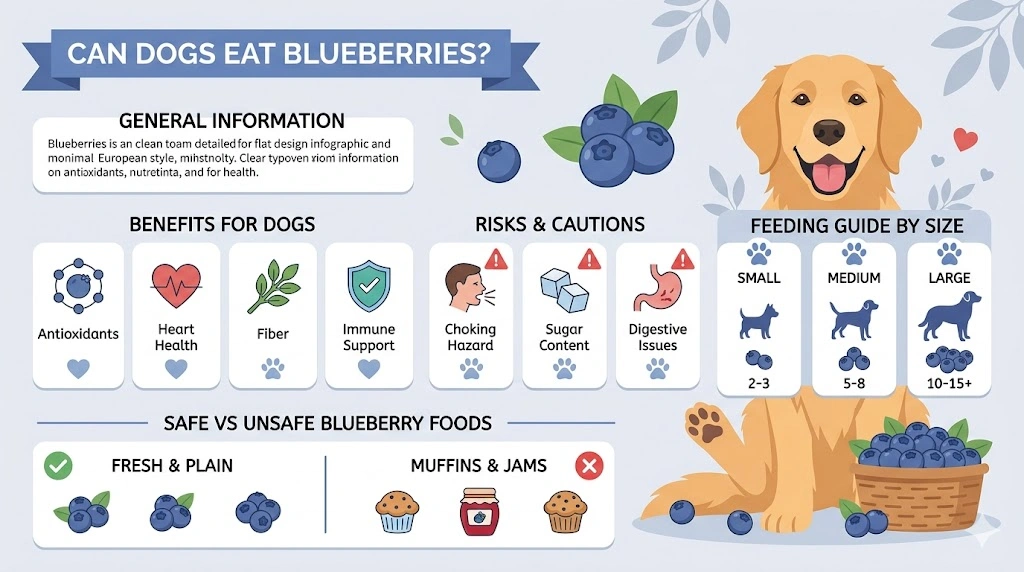
Blueberries are known for antioxidants, which are associated with protecting cells from oxidative stress. They also provide fiber and a small amount of vitamins and minerals, making them a smarter choice than many processed dog treats that are loaded with salt, fat, or unnecessary additives. That said, dogs do not need fruit to meet their core nutritional needs, so blueberries should be viewed as a supplemental snack rather than a dietary necessity.
Why They Work Well in Real Life
Blueberries are small, clean, portable, and easy to portion. That matters because a good treat is not only “healthy” in theory; it also has to fit real-life dog ownership. If a snack is simple to wash, quick to serve, and unlikely to create a mess, it is much more likely to become a consistent, sensible part of your dog’s routine.
Are Blueberries Bad for Dogs?
Blueberries are not inherently bad for dogs, but they can become a problem when they are overfed or served in the wrong form. The main issues are digestive upset from too many berries, a choking risk for tiny dogs or puppies, and the added sugar found in processed blueberry products. Human food is not ideal as a major diet component, and both the RSPCA and veterinary resources emphasize that dogs need the right amount of food to stay healthy and avoid excess weight gain.
Main Risks to Keep in Mind
If a dog eats too many blueberries, the result may be loose stool, gas, vomiting, or general stomach discomfort. Some dogs can also struggle with the texture of whole berries, especially smaller breeds or dogs that gulp treats quickly. In practical terms, the fruit itself is fine; the quantity and presentation are what usually create trouble.
Processed Blueberry Products Are the Real Problem
The bigger concern is not the fresh fruit. It is blueberry muffins, blueberry jams, sweetened yogurts, syrups, and other processed items that often contain sugar, fat, or ingredients that do not belong in a dog’s diet. Sugar-free products deserve special attention because xylitol is highly toxic to dogs, and the FDA warns that even small amounts can cause dangerous low blood sugar, seizures, liver injury, or worse.
A Simple Safety Rule
If the blueberry food looks like a human dessert, treat it as unsafe until proven otherwise. Fresh fruit is one category. Sweetened snacks are another category entirely. The safest approach is to keep blueberries plain, simple, and unprocessed.
How Many Blueberries Can a Dog Eat?
The best serving size depends on your dog’s body size, daily calories, and digestive sensitivity. A treat rule commonly used by veterinary groups is that snacks should make up no more than about 10% of daily calories. That guideline appears in AAHA and WSAVA materials, and it is a strong guardrail for dogs of all sizes.
Here is a practical blueberry feeding guide:
For small dogs, start with 1 to 2 blueberries.
For medium dogs, 3 to 5 blueberries are usually enough.
For large dogs, 5 to 10 blueberries can be reasonable, depending on the rest of the day’s calories.
A better way to think about it is this: blueberries should be a tiny bonus, not a bowlful. Dogs do not need fruit by the handful to benefit from it. In fact, smaller, controlled portions are usually the healthiest choice because they reduce the chance of stomach upset and keep the overall diet balanced.
A Smarter Portion Mindset
Instead of asking, “How many berries can I give?” ask, “How many calories are left in my dog’s treat budget today?” That is the kind of nutrition thinking veterinary groups encourage because it keeps treats from quietly pushing the total diet out of balance.
How to Safely Feed Blueberries to Dogs
The safest approach is also the simplest. Wash the blueberries, serve them plain, introduce them slowly, and watch your dog for any reaction the first time. PetMD and AKC both point toward fresh or frozen blueberries as the best options, as long as they are unsweetened and unprocessed.
Step-by-Step Feeding Method
First, rinse the berries thoroughly. Even store-bought fruit can carry dirt, residue, or pesticide traces. Then offer a very small amount and observe your dog’s reaction over the next several hours. If everything stays normal, blueberries can become an occasional part of your treat rotation.
If you have a toy breed, a puppy, or a dog that eats quickly, consider mashing the berries or cutting them into smaller pieces. This lowers the choking risk and makes the fruit easier to digest. Small dogs are especially vulnerable to gulping food too fast, so texture matters more than many owners realize.
Best Serving Ideas
Fresh blueberries are the cleanest option. Frozen Blueberries can be a refreshing warm-weather treat, especially in summer. You can also mash a few berries into regular dog food or mix them into a small amount of plain yogurt, as long as the yogurt itself is unsweetened and your dog tolerates dairy well.
What to Avoid
Do not serve blueberry muffins, blueberry pie, canned blueberries in syrup, jam, sweetened yogurt, or fruit products with artificial sweeteners. These are not equivalent to the fruit itself. They often contain sugar, fat, flavorings, or dangerous additives that change the safety profile completely. Xylitol is the most serious example because the FDA identifies it as a dangerous sweetener for dogs.
Can Puppies Eat Blueberries?
Yes, puppies can eat blueberries, but the bar for caution is higher. Puppies have smaller airways, more sensitive stomachs, and less experience handling textured foods. That means a treat that seems harmless to an adult dog may be more likely to cause trouble in a young pup.
The best starting point is one mashed blueberry, offered slowly and under supervision. If your puppy tolerates it well, blueberries can remain an occasional training reward or enrichment snack. The goal is not to fill the puppy up with fruit; the goal is to test tolerance gently and keep the diet stable.
Puppy Safety Tips
Watch for vomiting, diarrhea, itching, or unusual restlessness after the first small serving. If your puppy has a history of a sensitive stomach, talk to your vet before adding fruit treats at all. Puppies grow quickly, so their core diet matters more than any single snack.
Can Dogs Eat Frozen Blueberries?
Yes, frozen blueberries are Generally safe, and many dogs enjoy them. They can be especially useful in warm weather because they are cool, crunchy, and more stimulating than soft treats. AKC and PetMD both support fresh or frozen blueberries as the preferred forms, as long as they are plain and unsweetened.
Frozen berries also last longer in the mouth, making them feel like a special treat without adding extra calories or mess. Some dogs like the texture, and many owners like the convenience. That said, frozen whole blueberries may still be too small and slippery for tiny dogs, so mash them first if your dog is very small or tends to swallow food quickly.
Best Uses for Frozen Blueberries
Frozen blueberries work well as a summer reward, a simple enrichment snack, or a low-calorie training treat. They can also be used in puzzle toys or scattered lightly on a food mat to make eating more engaging. Just remember that “fun” should not become “too much.” Portion control still applies.
Can Diabetic Dogs Eat Blueberries?
Possibly, but only with caution and veterinary guidance. Blueberries contain natural sugars, so they are not automatically off-limits, but they should be treated as a controlled snack rather than a free treat. Dogs with diabetes need consistent calorie intake and a close eye on anything that may affect blood glucose.
The safest approach is to keep portions very small and to monitor how your dog responds. For some diabetic dogs, blueberries may fit into a managed diet. For others, they may be better avoided. Because every diabetic dog is different, your veterinarian is the right person to confirm whether a fruit snack belongs in the plan.
Practical Rule for Diabetic Dogs
Do not improvise with fruit treats if your dog’s blood sugar control is delicate. A tiny amount may be fine in one case and unwise in another. Stability matters more than novelty when diabetes is part of the picture.
Blueberries vs Other Fruits
Blueberries are not the only Dog-safe fruit, but they are one of the easiest to manage. PetMD lists blueberries among the fruits commonly considered safe for dogs, and AKC also includes them in its dog-friendly fruit discussions. Other familiar options, such as strawberries, apples without seeds, and bananas, can also be used, but each comes with its own texture, calorie load, and serving considerations. Grapes remain unsafe for dogs.
How Blueberries Compare
Blueberries are attractive because they are compact, naturally portionable, and typically lower in calories than many treat alternatives. Strawberries are also a smart option, while apples must be served carefully because the seeds should be removed. Bananas can be fine in very small amounts, but they are more sugar-dense than blueberries. Grapes, by contrast, are a no-go because they are toxic to dogs.
A Good Rule of Thumb
If you are choosing between fruits, the best one is usually the one you can serve plain, wash easily, portion accurately, and keep within the treat budget. Blueberries score well on all four points.
Pros & Cons of Feeding Blueberries to Dogs
Pros
Blueberries are easy to serve, low in calories, and widely viewed as safe when fed in moderation. They can support a healthier treat routine by replacing richer snacks, and they fit well into training or enrichment settings. Their antioxidant content is one reason they are often described as a “superfood” in dog nutrition articles, though that label should still be kept in perspective.
Cons
The downsides are mostly related to quantity, texture, and product type. Too many berries may cause digestive upset. Whole berries may be awkward for small dogs. Processed blueberry foods can contain sugar, fat, or xylitol and should not be treated like fresh fruit.
The Balanced View
Blueberries are not a miracle food, but they are a smart snack when used wisely. The biggest mistake is treating a safe food as if “safe” means “unlimited.” That is where even good ingredients start to work against you.
Common Mistakes Dog Owners Make
One of the most common mistakes is overfeeding. Another is assuming that because blueberries are natural, they can be given freely with no limit. Natural foods still count toward calories, and calories still matter. Veterinary guidance on treats is clear that extras should remain a small share of total intake.
A second mistake is skipping preparation. Even simple fruit should be washed. A third mistake is serving the wrong form, such as muffins, syrups, jams, or flavored snacks that are not appropriate for dogs. A fourth is forgetting that small dogs and puppies may need mashed or cut-up berries for safer swallowing.
Another Mistake: Ignoring the Dog in Front of You
Not every dog tolerates the same snack in the same way. One dog may enjoy berries with no issue, while another may get loose stool from a tiny serving. The smartest approach is not copying another pet owner’s routine; it is observing your own dog and adjusting based on response.
Expert Tips Most Articles Miss
Use Blueberries as a training reward instead of a random handout. That gives the fruit a purpose and prevents mindless overfeeding. Small rewards delivered during training often feel more valuable to the dog than a large pile of treats dropped into a bowl.
Try freezing a few berries in summer to create a longer-lasting treat. For some dogs, mashing blueberries into a small amount of regular food can increase interest without changing the meal too much. You can also rotate between a few safe fruits so your dog does not get bored, as long as each fruit stays within the calorie budget.
For European readers, this practical, minimalist approach also fits the broader FEDIAF philosophy: complete and complementary pet foods should be built on sound nutritional principles, with treats used as part of a controlled feeding plan rather than as the foundation of the diet.
Real-Life Scenarios:
Urban Dogs
For apartment dogs, blueberries are convenient because they are small, low-odor, and easy to carry in a pocket or treat pouch. That makes them useful for indoor training, calm behavior reinforcement, and quick reward sessions without leaving crumbs everywhere.
Active Dogs
For active dogs that go on long walks or spend time in the park, blueberries can be a light reward after exercise. They are not a recovery meal, but they can be a neat way to mark a good training session or reward focus during outings.
Senior Dogs
Senior dogs may enjoy blueberries because the fruit is soft, easy to portion, and simple to mix into food. Since older dogs often need careful weight management and regular nutrition oversight, small treats can fit well when they are counted properly and kept modestly.
Cold-Weather Homes
In colder climates, frozen blueberries may feel less appealing as a standalone snack, but they can still be used in small amounts. The main point is not temperature; it is consistency and moderation. Whether the berries are chilled or fresh, the same treat rules apply.
FAQs
Yes, dogs can eat blueberries every day if the portions are small and they stay within the treat limit. The daily total still needs to fit into the overall calorie budget, because treats should remain a modest part of the diet.
Only if it is plain, unsweetened yogurt and your dog tolerates dairy. Many flavored yogurts contain sugar or other additives, so the label matters more than the fruit name on the front.
No. Blueberry muffins are processed human food and often contain sugar, fat, and sometimes other ingredients that make them unsuitable for dogs. If a product is closer to dessert than fruit, it is not the same thing as a fresh blueberry.
Organic blueberries may reduce pesticide exposure, but the most important factors are still freshness, cleanliness, and portion size. Organic does not change the need for moderation.
Yes, many senior dogs can enjoy blueberries in small amounts. Soft, easy-to-serve fruit can fit well into a senior dog’s routine, provided the treats remain controlled and the overall diet stays balanced.
It is possible, though not common. As with any new food, introduce a tiny amount first and watch for vomiting, itching, diarrhea, or unusual behavior.
Yes, but small breeds should usually get fewer berries, and many do better with mashed or cut pieces. The smaller the dog, the more important it is to control size, texture, and pace of eating.
Conclusion:
Yes, dogs can safely eat Blueberries when they are fresh, plain, and given in moderation. They are a low-calorie, nutrient-rich fruit that can support your dog’s overall health, especially through antioxidants, fiber, and vitamins.
However, the key takeaway is simple: safe does not mean unlimited. Overfeeding blueberries can lead to digestive upset, unnecessary sugar intake, or choking risks—especially for small breeds and puppies.
The best approach is to treat blueberries as an occasional reward, not a daily diet staple. Stick to small portions based on your dog’s size, avoid processed blueberry products like muffins or jams, and always introduce new foods gradually.