
Best Bully Sticks for Dogs — Stop Buying Unsafe Chews
Best bully sticks for dogs are safe, natural, long-lasting chews that support dental health when sourced and prepared correctly. Struggling to pick odor-free, non-toxic options? This guide reveals expert picks, safety tips, and smart buying secrets—so you avoid hidden risks and choose chews your dog will truly love. Choosing the best bully sticks for dogs is not simply a matter of picking a chew from a shelf or clicking the cheapest option online. It is a health decision, a behavior decision, and, in many cases, a safety decision. The right chew can support calm behavior, keep a dog mentally occupied, and satisfy a powerful instinct. The wrong chew can become a choking hazard, a digestive burden, or an empty calorie source that does more harm than good.
Why Choosing the Right Bully Stick Feels So Confusing
That is why this guide goes beyond ordinary product-style advice. Instead of giving you a shallow list of “top picks,” it gives you a practical, vet-style selection framework that helps you match the chew to the dog. A Chihuahua, a Labrador, a teething puppy, and a power chewer do not need the same bully stick. Their jaw strength, chewing style, calorie tolerance, and safety needs are all different.
Bully sticks are popular for a reason. Dogs enjoy them, they are widely available, and they are usually more digestible than rawhide. But popularity does not automatically mean safety. Quality matters. Size matters. Supervision matters. Even though how long a dog chews matters. When you understand these variables, bully sticks become a useful enrichment tool instead of a risky impulse purchase.
This article is written for dog owners who want a smarter, more reliable way to choose. Whether you live in London, Berlin, Paris, or a quieter rural area, the principles are the same: match the chew to the dog, supervise the session, and use bully sticks as part of a balanced chewing routine rather than a free-for-all snack.
What Are Bully Sticks?
Bully sticks are natural dog chews made from dried beef muscle, usually the bull pizzle. They are one-ingredient chews, which is one of the main reasons many owners prefer them over highly processed alternatives. Because they are made from animal protein and not from synthetic fillers or heavily layered ingredients, they appeal to owners looking for a more natural chew option.
In simple terms, bully sticks are designed to give dogs something safe and satisfying to gnaw on. They are chewy, dense, and highly palatable. Most dogs find them irresistible because they are flavorful and long-lasting compared with many soft treats.
What makes bully sticks different from rawhide is digestibility. Rawhide can be difficult for some dogs to break down properly, while bully sticks are typically easier to digest when used in appropriate amounts. That said, “more digestible” does not mean “risk-free.” Any chew that is too small, too hard, too calorie-dense, or unsupervised can create problems.
There are also different forms of bully sticks on the market. Some are thin and suited for smaller dogs or puppies. Others are thick and built for determined chewers. Some are braided, some are odor-reduced, and some are cut into shorter segments for training or portion control. The form matters because the type affects chewing speed, chew duration, and safety.
Why Dogs Love Bully Sticks
Dogs do not chew only because they are bored. Chewing is a deeply rooted canine behavior. It is part of how dogs explore, relax, and self-soothe. For many dogs, chewing is as natural as sniffing or scratching. A quality chew can help fulfill that need in a controlled way.
Bully sticks are especially appealing because they combine taste, texture, and mental engagement. The dog has to work for the reward, and that work can be calming. Repetitive chewing often helps reduce restlessness and can redirect energy away from destructive habits like furniture chewing, shoe chewing, or excessive licking.
Many owners notice that chewing has a settling effect. A dog that is anxious, under-stimulated, or frustrated may calm down after a chew session. That is not magic. It is behavior science. Chewing gives the dog a job to do, and that job can create a sense of purpose, relief, and satisfaction.
In that sense, bully sticks are more than treats. They are enrichment tools. They are especially useful for dogs that spend time indoors, dogs that live in apartments, dogs that get overexcited easily, or dogs that need a structured outlet for excess energy.
The Bully Stick Selection System
Most competitors make a common mistake: they only list products. That approach may look helpful, but it does not teach the reader how to choose. The smarter approach is to build a selection system based on the dog’s size, chewing intensity, and purpose.
A selection system gives you a repeatable method. Instead of asking, “Which product is best?” you ask, “Which chew is appropriate for this dog, this behavior pattern, and this goal?” That is a much better question.
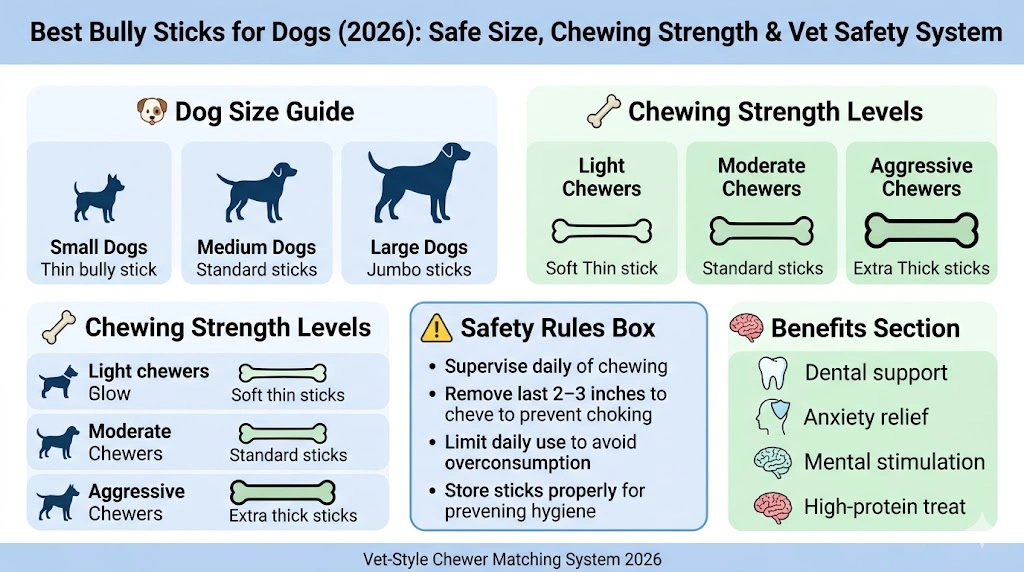
1. Dog Size Matching System
Dog size is one of the most important filters. A chew that works well for a 30-kilo dog may be inappropriate for a 5-kilo toy breed.
A simple size-based framework looks like this:
- Small dogs (up to 10 kg): thin or pencil-style bully sticks
- Medium dogs (10–25 kg): standard bully sticks
- Large dogs (25+ kg): thick, jumbo, or extra-durable bully sticks
This matters because dogs of different sizes chew differently. Small dogs often do better with lighter, thinner options that are easier to manage. Large dogs usually need thicker chews so they do not finish the stick too quickly or break off large pieces.
Wrong sizing can create several issues. A chew that is too small may be swallowed too quickly. A chew that is too large can overwhelm a small dog or become difficult to manage. A chew that is too thin for a strong dog may disappear in minutes, giving little enrichment value and increasing the chance of swallowing the end too early.
2. Chewing Strength System
Size is important, but chewing style is just as important. Some dogs nibble. Some dogs methodically work through a chew. Others attack a chew with impressive speed and force.
Light Chewers
These are dogs that chew gently or lose interest quickly. Puppies, seniors, and dogs with weaker jaws often fit here.
Best choice: softer, thinner bully sticks that are easier to work through and less intimidating.
Moderate Chewers
This is the most common category. These dogs chew regularly and with average intensity.
Best choice: standard bully sticks with balanced thickness and moderate longevity.
Aggressive Chewers
These are the dogs that turn every chew into a challenge. Breeds often associated with strong chewing habits include German Shepherds, Rottweilers, and Belgian Malinois, although individual behavior always matters more than breed alone.
Best choice: thick, jumbo bully sticks or longer-lasting forms that can withstand heavy chewing pressure.
A dog’s chew strength should guide your choice more than marketing claims. A product labeled “long-lasting” does not automatically mean it will last long for every dog. What lasts an hour for one dog may last five minutes for another.
3. Purpose-Based Selection
Different chewing goals call for different types of bully sticks.
Dental support
For dogs that need a chewing outlet aimed at oral activity, a medium stick may be the best fit. It offers enough resistance to encourage chewing without becoming too cumbersome.
Anxiety relief
For dogs that benefit from longer chewing sessions, thicker or more durable sticks can help keep them occupied and calm for longer periods.
Training rewards
For bite-sized reinforcement or controlled reward use, short stick pieces can be useful. They allow you to reward without giving too much at once.
Indoor enrichment
Odor-controlled or low-odor sticks are often better for apartment living or indoor use. They reduce the chance that a chew session fills the whole room with an unpleasant smell.
When you choose by purpose, bully sticks become more strategic. They stop being random treats and start functioning as tools.
Are Bully Sticks Safe for Dogs?
Bully sticks can be safe for many dogs when used appropriately. The keyword is appropriately. Safe use depends on supervision, sizing, quality, calorie control, and how the chew is managed once it gets small.
A well-chosen bully stick can be a useful part of a dog’s routine. A poorly chosen one can become a hazard. That is why safety guidance is essential.
Main Safety Risks
1. Choking hazard
One of the most common risks comes when the bully stick becomes short enough for the dog to swallow in one go. The final few inches are often the most dangerous because the dog may try to gulp them down rather than chew them properly.
A useful habit is to remove the last 2–3 inches before the chew becomes too small. That small precaution can significantly reduce risk.
2. Calorie overload
Bully sticks may look small, but they can be calorie-dense. If a dog gets bully sticks too often or in portions that are too large, the calories can add up quickly. That is especially important for small breeds, overweight dogs, and dogs already on a controlled diet.
Treats should complement a dog’s food plan, not quietly derail it.
3. Bacterial quality concerns
Low-quality chews, poor storage, or weak processing standards can increase the risk of contamination. That does not mean every bully stick is unsafe. It means quality control matters. Trusted sourcing, proper drying, and proper storage are not minor details. They are part of safety.
Vet-Style Safety Rules for Bully Sticks
A few simple habits can dramatically improve safety.
Always supervise chewing, especially the first time your dog tries a new stick. Watching your dog helps you understand chewing speed, swallowing behavior, and how the dog interacts with the treat.
Remove the final small piece before it becomes a swallowable stub. That is one of the easiest and most important safety practices.
Limit how often you offer them. For many dogs, one chew session at a time is enough. That does not mean every dog should have one every day. The right frequency depends on the dog’s size, diet, and overall calorie intake.
Store bully sticks in a dry place, away from moisture and contamination. Chews that are exposed to dampness can become less hygienic and less appealing.
Choose odor-controlled versions if your dog chews indoors. This can make the experience far more pleasant for everyone in the home.
Most importantly, Remember that no chew should be treated as completely risk-free. Bully sticks are tools, not toys. They require common sense and supervision.
Puppy Safety Rule
Puppies can sometimes enjoy bully sticks, but they need extra care. Young dogs are not just smaller versions of adult dogs. They are still learning how to chew, how to pace themselves, and how to manage textures.
For puppies, softer thin sticks are usually the better choice. The chew session should be short, supervised, and controlled. Ten to fifteen minutes is often enough for a young pup, though the exact amount depends on age, breed, and chewing behavior.
Very young puppies may not be ready for bully sticks at all. A puppy’s teeth, gums, digestive system, and chewing habits are still developing. That is why owners should be cautious and should not assume that every natural chew is automatically puppy-safe.
Benefits of Bully Sticks
When chosen properly, bully sticks can provide several meaningful benefits.
1. Dental support
Chewing may help reduce surface plaque and encourage mechanical cleaning through repeated contact with the teeth. It can also support jaw activity and promote saliva flow, which may help refresh the mouth.
It is important not to overstate this benefit. Bully sticks are not a replacement for brushing or veterinary dental care. They are a supplemental tool, not a cure-all. Still, they may help support oral hygiene as part of a broader routine.
2. Mental stimulation
Chewing is mentally engaging. A dog must focus, work, and stay with the task. That kind of concentration can be very useful for dogs that get bored quickly or that need something constructive to do during quiet periods.
3. Anxiety relief
For many dogs, chewing acts as a calming behavior. It can help redirect nervous energy, reduce agitation, and give the dog a reassuring, repetitive activity.
This is particularly useful in cases like separation stress, overexcitement, or the restlessness that sometimes appears in apartment life.
4. High-protein treat option
Because bully sticks are made from animal protein, they can be appealing to owners who prefer single-ingredient treats. They may also be useful as occasional enrichment for dogs that benefit from protein-rich reward formats.
Again, moderation matters. A high-protein chew is not automatically a free snack. It must fit the dog’s overall diet and calorie needs.
Best Bully Sticks for Dogs by Category
Instead of forcing every dog into the same category, it helps to sort bully sticks by use case. The “best” option depends on the dog’s size, habits, and environment.
Best Overall Bully Sticks
The best all-around choice is usually one with balanced thickness, reasonable chew time, and moderate odor. It should be versatile enough for most adult dogs without being too weak for moderate chewing or too heavy for smaller dogs.
This type is ideal for households that want a dependable option without overcomplicating the decision. It works well for routine enrichment, supervised downtime, and general chew satisfaction.
Best Bully Sticks for Puppies
Puppies need a softer texture, a thinner diameter, and easy handling. A puppy-friendly stick should not overwhelm the mouth or encourage overly aggressive chewing too early.
The goal is not maximum duration. The goal is a gentle, supervised introduction to chewing. A smaller, softer stick is often better for teething support and initial training.
Best for Aggressive Chewers
Strong dogs need thickness and durability. An aggressive chewer can reduce a thin chew to pieces quickly, so a larger format is often the better option.
Thicker bully sticks are better suited to dogs that chew hard and fast. These dogs often need a chew that lasts long enough to provide real enrichment instead of disappearing in a few minutes.
Best Odor-Free Bully Sticks
For indoor use, odor-reduced options can make a big difference. Some bully sticks have a stronger natural smell, and while that may not bother the dog, it can be unpleasant in enclosed spaces.
Odor-free or low-odor sticks are especially helpful in apartments, city homes, or homes where a family prefers a cleaner indoor experience.
Best Budget Bulk Option
For multi-dog homes or owners who use bully sticks regularly, bulk packs can be a smart choice. The emphasis should still be on quality, thickness, and sourcing, not just on low price.
A budget option is only a good deal if it still meets safety and digestibility expectations.
Bully Stick Comparison Guide
Here is a simple way to think about bully stick formats:
| Type | Best For | Chew Duration | Odor Level | Safety Consideration |
| Thin sticks | Puppies, small dogs | Lower | Low to moderate | Good for gentle chewing |
| Standard sticks | Medium dogs | Moderate | Moderate | Balanced option |
| Jumbo sticks | Large or aggressive chewers | High | Moderate | Better for strong jaws |
| Odor-free sticks | Indoor dogs | Moderate | Very low | Best for apartments |
This kind of comparison helps turn a vague shopping decision into a practical one. Instead of asking, “Which chew looks best?” you can ask, “Which chew is most appropriate for this dog and this setting?”
Common Mistakes Dog Owners Make
Many safety issues happen not because bully sticks are inherently bad, but because owners use them carelessly.
Giving large sticks to small dogs
This can make chewing awkward and may increase the risk of gulping or poor handling.
Leaving dogs unsupervised
Even a high-quality chew can become a problem if no one is watching. Supervision is a core part of safe chew use.
Overfeeding daily
Treats are easy to underestimate. A bully stick given too often can quietly add unnecessary calories.
Ignoring the last small piece
The end of the chew is often the most dangerous part. Once it gets too short, it is no longer useful as a chew.
Assuming “natural” means “safe in every amount.”
Natural does not mean unlimited. A natural chew still needs rules, portion control, and observation.
Avoiding these mistakes is often more important than chasing brand hype.
Why Dogs Love Bully Sticks:
A dog’s attraction to chewing is not random. Chewing serves both biological and psychological functions. It helps dogs process energy, relieve tension, and engage with the environment in a meaningful way.
Chewing may also mimic some of the satisfaction that dogs get from working on a tough object. The resistance, taste, and repetitive motion create a rewarding loop. That loop can be soothing.
Behaviorally, chewing can help dogs:
- reduce stress
- stay busy
- avoid boredom
- settle after excitement
- redirect oral fixation away from destructive items
This is why bully sticks often outperform simple toys for certain dogs. A toy may entertain for a minute. A properly chosen chew may hold a dog’s attention long enough to actually change the emotional state of the moment.
That does not mean bully sticks should replace all other enrichment. Rotation matters. Dogs benefit from a mix of walking, sniffing, training, puzzle toys, social interaction, and chewing. Bully sticks are one strong tool in a larger toolbox.
Real-Life European Scenarios
Although the principles apply anywhere, different living environments influence chew choice.
Apartment Dogs in London, Berlin, and Paris
Indoor living can make odor management more important. In compact spaces, a strong-smelling chew may be unpleasant. Low-odor bully sticks are often the better match here, especially if the chew is being given in a living room or kitchen.
Short supervised sessions are also useful in apartments because they fit neatly into daily routines without creating mess or smell issues.
Cold Regions Like Sweden or Finland
In colder climates, dogs often spend more time indoors, which can increase the need for mental enrichment. A chew can help break up indoor monotony and reduce restlessness during long stretches inside.
Busy Urban Homes
For families in fast-paced environments, bully sticks can be a helpful way to redirect energy during quiet periods. A long-lasting chew can occupy the dog while the household handles work, school, or other responsibilities.
The key idea is simple: the environment changes the best chew strategy. A dog in a roomy house with a yard may need a different setup than a dog in a small flat with limited outdoor time.
Expert Tips for Maximum Safety and Value
A few small adjustments can improve the entire experience.
Freeze Bully sticks to slow down chewing for some dogs. This may extend the session and make the chew more engaging, though not every dog will enjoy a frozen chew.
Rotate chew types weekly. Variety prevents boredom and reduces dependence on a single item.
Use a chew holder if needed. This can improve grip and reduce the chance that the dog tries to swallow the chew too aggressively.
Watch the dog closely the first few times. First-time use is the best time to notice whether a dog chews calmly, breaks pieces off, or tries to swallow too fast.
Prefer grass-fed or responsibly sourced beef when possible. Sourcing is not just a marketing detail; it is part of product quality and consumer trust.
Do not treat every chew session as automatic. Some days, the dog may need exercise, training, or rest more than a chew.
Use bully sticks as a scheduled enrichment item, not a constant handout.
How to Choose the Right Bully Stick in One Minute
If you need a fast decision method, use this:
First, identify the dog’s size. Small dogs generally do best with thin sticks. Medium dogs usually need standard options. Large dogs often need thicker choices.
Second, identify the dog’s chewing intensity. Gentle dogs do not need the same durability that a strong chewer does.
Third, identify the purpose. Is the chew for calm time, dental support, training reward, or indoor entertainment?
Fourth, check the odor level. If the dog will chew indoors, low-odor may be the smarter choice.
Fifth, plan for supervision. If you cannot watch the dog, do not assume the chew is automatically safe.
This quick method will help you avoid the most common mistakes and choose a bully stick that actually matches the dog.
FAQs
They can be safe for some Dogs, but daily use should depend on the dog’s size, diet, and calorie needs. The amount should be controlled, and the chew should always be supervised.
Yes, some puppies can, but only with extra caution. Soft, thin sticks are better, and the chewing session should be short and closely watched.
Some do. Lower-quality versions or certain processing styles may have a stronger odor. Odor-controlled options are generally better for indoor use.
For many owners, yes, because bully sticks are generally more digestible than rawhide. Still, every chew should be selected and used carefully.
That depends on the dog. Some dogs may chew for 10 minutes, while others may stay engaged much longer. The goal is controlled, supervised chewing rather than endless access.
Yes, but only with calorie awareness. Because bully sticks are energy-dense, they should fit into the dog’s total daily intake.
Some dogs may be ready from roughly 8–12 weeks onward, but age alone is not enough. Readiness depends on chewing ability, supervision, and the exact chew type.
Many vets consider bully sticks acceptable when used safely and in moderation. The emphasis is always on supervision, portion control, and proper product selection.
Conclusion:
The best bully sticks for dogs are not defined by packaging claims alone. They are defined by fit. The right chew matches the dog’s size, chewing strength, living environment, and dietary needs. That is what makes the difference between a smart enrichment choice and a risky snack.
When used properly, bully sticks can be a valuable part of a dog’s routine. They may support chewing satisfaction, offer mental stimulation, help reduce boredom, and provide a useful outlet for natural canine behavior. But the benefits only appear when owners make thoughtful choices.
Remember the core principles: choose the right size, match the chew to the dog’s chewing style, supervise every session, and remove the chew before it becomes too small. Once you do that, bully sticks become much more than a treat. They become a structured, practical, and enjoyable part of daily dog care.