
Can Dogs Eat Pineapple?
If you are standing in the kitchen slicing a fresh pineapple, there is a strong chance your dog is already nearby, staring at you with those hopeful eyes. That familiar “please share with me” expression can make any pet parent pause and ask the same important question: Can dogs eat Pineapple safely, or is it something they should never have?
The clear answer is this:
Yes, dogs can eat pineapple.
But only in small amounts, in the right form, and on occasion.
Pineapple is not toxic to dogs, which is the first thing many owners want to know. However, that does not automatically make it a perfect snack. Like many fruits, pineapple belongs in the “occasional treat” category, not the “daily food” category. It can offer some nutritional value, but it can also create problems when it is overfed, badly prepared, or given to a dog with a sensitive stomach.
In this complete guide, you will learn:
- Whether pineapple is safe for dogs
- What nutrients does pineapple contain
- the biggest benefits and risks
- How many pineapple dogs can a dog eat
- whether puppies can have it
- The difference between fresh, frozen, and canned pineapple
- Whether dogs can eat pineapple skin or core
- Whether pineapple really stops dogs from eating poop
- practical veterinary-style feeding advice for dog owners in Europe
If you want a simple, trustworthy answer first, fresh pineapple flesh can be a safe occasional treat for most healthy dogs when served in tiny, properly prepared portions.
Why Dog Owners Are Confused About Pineapple
Dog owners often get mixed messages online, and pineapple is one of those foods that creates constant debate. One article may call it a healthy fruit, while another warns that it is too sugary or too acidic. That is why many people feel uncertain before offering even one tiny bite to their dog.
The confusion usually comes from the fact that pineapple can be all of these at once:
- nutritious in moderation
- irritating in large amounts
- unsafe if the wrong parts are fed
- unsuitable for some dogs with health conditions
This is where many general pet articles oversimplify the issue. The real question is not just “Is pineapple good or bad?” The better question is:
How much pineapple is safe, what form should be used, and which dogs should avoid it?
That is the key to feeding it responsibly.
Quick Answer – Is Pineapple Safe for Dogs?
Yes, fresh pineapple is generally safe for dogs when it is served properly and in limited amounts.
Veterinary nutrition guidance commonly treats pineapple as a non-toxic fruit for dogs, meaning it is not among the inherently poisonous foods. It contains useful nutrients such as:
- vitamin C
- fiber
- manganese
- water content
- bromelain, a natural enzyme
But the word “safe” still needs context. Safe does not mean unlimited. Dogs do not need fruit in large quantities because complete and balanced dog food already provides the nutrition they require. Fruit should support the diet, not replace it.
For most dogs, pineapple is best viewed as a special treat, not a staple ingredient.
Nutritional Value of Pineapple for Dogs
Pineapple looks simple, but nutritionally, it is more interesting than many people realize. It contains natural sugars, hydration, some dietary fiber, and small amounts of beneficial micronutrients.
Pineapple Nutrition (Per 100g)
Here is a helpful overview of what pineapple can offer:
| Nutrient | Possible Benefit for Dogs |
| Vitamin C | Supports general immune function |
| Fiber | May help digestion in small amounts |
| Manganese | Supports metabolism and bone health |
| Water | Helps hydration |
| Bromelain | May aid protein digestion |
| Natural sugars | Provide quick energy, but must be limited |
Even though pineapple has positive qualities, it is important to remember one crucial point: dogs do not require pineapple to live a healthy life. Their main nutritional needs should always come from a complete dog food formulated for their age, size, and health status.
So yes, pineapple has value, but it is still a treat food.
Health Benefits of Pineapple for Dogs
Why do some dog owners like giving pineapple at all? Because in the right amount, it can have a few practical benefits. It is tasty, fresh, and often more appealing than many processed snacks.
1. It May Support the Immune System
Pineapple contains vitamin C and naturally occurring antioxidants. These nutrients are often associated with general cellular protection and immune support. While your dog’s main immune strength comes from a balanced diet, exercise, and good veterinary care, a small fruit treat can still be a pleasant nutritional bonus.
For older dogs or dogs that need variety in their treat routine, a small pineapple cube may be a refreshing addition.
2. It Can Be Easy on the Palate and Pleasant as a Treat
Many dogs enjoy the sweet, juicy flavor of pineapple. That makes it useful as a training reward or a summer snack when served correctly. Because it is naturally sweet, it can seem more exciting than plain kibble or commercial treats with fewer natural ingredients.
3. It Provides Hydration
Pineapple contains a high percentage of water, which makes it a juicy and refreshing snack, especially in warmer weather. For dogs that live in hot regions or tend to lose interest in treats during the summer, chilled pineapple cubes can be appealing.
That said, hydration from fruit is only a small bonus. Fresh water should always remain the main source of hydration.
4. It Is Low in Fat
Compared with many processed treats, pineapple is low in fat. That can make it attractive for owners who want a lighter snack option. When used carefully, it can fit into a health-conscious feeding plan.
But low fat does not mean unlimited. Pineapple still contains sugar, so moderation matters.
5. It Contains Bromelain
Pineapple contains bromelain, a naturally occurring enzyme that helps break down protein. This is one reason people sometimes describe pineapple as “digestive-friendly.” In small amounts, it may be a gentle extra rather than a major dietary tool.
However, bromelain is not a treatment for digestive disease, and it should not be presented as a cure-all. It is a natural component of the fruit, not a medical solution.
Risks of Feeding Pineapple to Dogs
Like many human foods, pineapple has a safe side and a risky side. The risks usually appear when the fruit is given in excess, served incorrectly, or offered to the wrong dog.
1. Pineapple Skin and Core Are High Risk
The skin and core are the biggest problems. They are tough, fibrous, and hard to chew. Dogs may struggle to break them down, which can create several hazards.
Possible risks include:
- choking
- digestive irritation
- difficulty swallowing
- intestinal blockage
- abdominal discomfort
The safest rule is simple: only the soft yellow flesh should be fed.
2. Pineapple Has Natural Sugar
Even though pineapple is a fruit, it still contains sugar. That is why too much pineapple can become problematic. Over time, excess sugar can contribute to:
- weight gain
- poor calorie control
- blood sugar spikes
- digestive upset
- increased strain in dogs with diabetes
This matters even more for dogs that are overweight, inactive, or already on a controlled feeding plan.
3. Some Dogs Have Sensitive Stomachs
Not every dog processes fruit the same way. Some dogs handle pineapple well, while others may experience soft stool, gas, or mild vomiting after eating even a small amount.
Dogs with more delicate digestion may be more likely to react if they are introduced to pineapple too quickly or if the portion is too large.
4. Overfeeding Can Cause Trouble
A lot of dog food-related problems happen not because the food is toxic, but because the portion was too generous. That applies here too. Pineapple should be kept to a small amount, especially if your dog already eats treats, chews, or table snacks throughout the day.
How Much Pineapple Can Dogs Eat?
The best general rule for treats is this: Treats should not exceed 10% of a dog’s daily calories. That guideline helps prevent nutritional imbalance and keeps snack foods from crowding out the main diet.
Because dogs vary in size, the right amount of pineapple will differ from one dog to another.
Safe Pineapple Feeding Chart
| Dog Size | Weight Range | Safe Amount |
| Small dogs | 1–10 kg | 1–2 tiny cubes |
| Medium dogs | 10–25 kg | 2–5 cubes |
| Large dogs | 25–40 kg | Small handful |
| Giant breeds | 40+ kg | 6–8 cubes maximum |
A few helpful rules apply to every size category:
- start with a very small amount
- introduce it slowly
- Watch your dog for 24 hours
- Stop if the stool becomes loose or your dog seems uncomfortable
- Avoid giving pineapple every day
When in doubt, smaller is always safer than larger.
Can Puppies Eat Pineapple?
Yes, puppies can eat pineapple, but they need extra caution.
Puppies have smaller bodies, developing digestive systems, and lower tolerance for dietary surprises. A fruit that seems harmless to an adult dog may still upset a puppy’s stomach if given too early or too much.
Puppy Feeding Rule
A cautious approach is best:
- Give only one tiny piece at first
- Observe your puppy for at least 24 hours
- Do not increase the amount unless there is no digestive reaction
- Keep portions very small and infrequent
Puppies under 8 weeks old should not be given pineapple. At that age, their digestion is still too immature for unnecessary extras.
If your puppy already has a sensitive stomach, it is even better to avoid new foods unless your veterinarian has approved them.
Frozen, Canned, or Fresh Pineapple – What Is Safe?
Not all pineapple products are equal. The way pineapple is prepared changes how safe it is for dogs.
Fresh Pineapple
Fresh pineapple is the best choice for most dogs because it is:
- natural
- easy to portion
- free from syrup
- free from unnecessary additives
- simple to prepare at home
So, fresh fruit should still be served in small, bite-sized cubes with the skin, crown, and core removed.
Frozen Pineapple
Frozen pineapple can be a fun summer treat, especially in warm weather. It can also be useful for dogs that enjoy crunchy textures.
However, frozen pieces should be small. Large frozen chunks may be too hard, especially for small dogs or dogs with dental issues. If the fruit is frozen solid in large shapes, it can become a choking or tooth injury risk.
Canned Pineapple (Avoid)
Canned pineapple is generally not a good choice for dogs. It may contain:
- syrup
- added sugar
- preservatives
- flavoring agents
- extra moisture but poor nutritional value
The liquid in canned fruit is usually the biggest problem because it adds unnecessary sugar. For that reason, canned pineapple is not recommended as a routine dog snack.
If you want to feed pineapple safely, choose fresh fruit instead.
Can Dogs Eat Pineapple Skin or Core?
No. Dogs should not eat pineapple skin or core.
These parts are too hard, too fibrous, and too difficult to digest. Even if a dog tries to chew them, the texture can create problems in the mouth, throat, stomach, or intestines.
Why They Are Unsafe
Pineapple skin and core can lead to:
- choking
- tooth discomfort
- stomach irritation
- blockage
- difficult digestion
Only the soft yellow flesh is suitable for dogs. The outer shell and central core should be discarded before serving.
This is one of the most important preparation rules for dog owners.
Does Pineapple Stop Dogs From Eating Poop?
This is one of the most common pineapple myths on the internet.
Many owners have heard that feeding pineapple to a dog can change the taste of the stool and discourage coprophagia, which is the behavior of eating poop. The theory is that bromelain may alter the stool enough to make it less appealing.
However, there is no strong scientific proof that pineapple is a reliable solution.
That means:
- It may work for some dogs in some situations
- It may do nothing at all
- It should not be treated as a guaranteed fix
If a dog continues to eat poop, the next useful steps are:
- behavior training
- improving cleanup routines
- checking the diet
- ruling out medical issues
- Speaking with a veterinarian if the behavior persists
Pineapple should never be treated as a magic remedy.
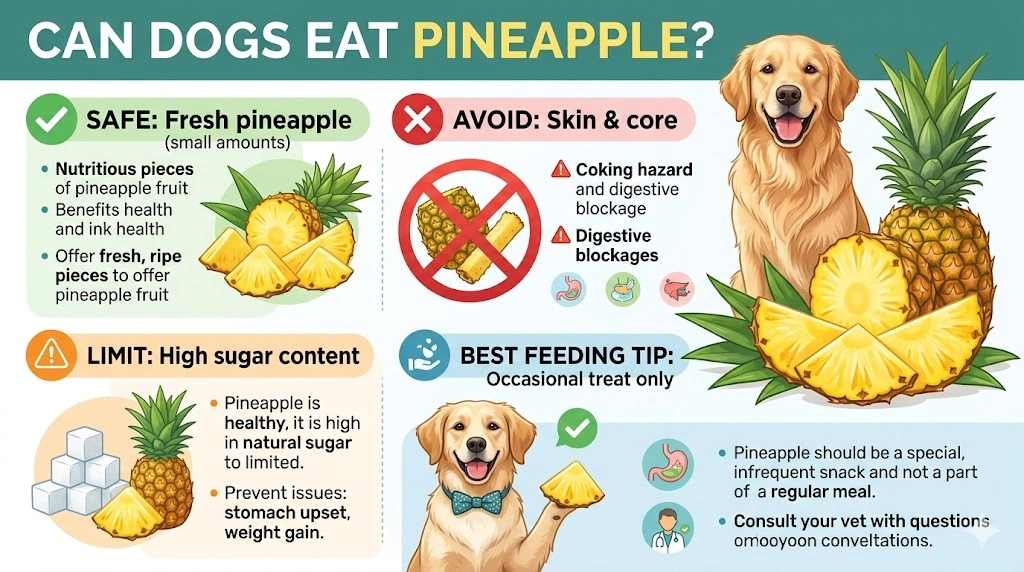
Safe vs Unsafe Pineapple Feeding System
One of the easiest ways to think about pineapple is to divide it into three practical categories.
SAFE
These are the best options for most dogs:
- fresh pineapple flesh
- small, soft cubes
- occasional servings
- plain fruit with no additives
LIMIT
These options are not automatically unsafe, but they should be used sparingly:
- frozen pineapple
- slightly larger portions than ideal
- The fruit is given too often
- pineapple used as a frequent snack rather than an occasional reward
AVOID
These forms are best left out of your dog’s diet:
- pineapple skin
- pineapple core
- canned pineapple in syrup
- pineapple juice
- daily pineapple feeding
- large or hard frozen chunks
This simple system helps reduce mistakes and keeps treating and feeding easier to manage.
Breed-Specific Considerations
Different breeds have different digestive tendencies, body sizes, and sensitivities. Pineapple is not automatically better or worse for any breed, but the portion size and caution level should change according to the dog.
Small Breeds
Dogs such as Chihuahuas and Pomeranians need very small amounts. Their bodies are tiny, which means a little sugar goes a long way. A single cube that would be small for a Labrador can be too much for a toy breed.
Medium Breeds
Dogs like Beagles and Cocker Spaniels may tolerate pineapple more comfortably in moderate amounts. Even so, moderation still matters.
Large Breeds
Labradors, German Shepherds, and similar breeds may be able to handle slightly more than smaller dogs, but they still should not receive pineapple in large amounts. Size does not cancel out sugar, digestive limits, or the need for portion control.
Sensitive Breeds
Some dogs are simply more prone to gastrointestinal upset. Bulldogs, Dachshunds, and similar breeds may react badly to rich treats or sudden diet changes. These dogs should be introduced to pineapple very slowly, if at all.
The safest route is to start small and observe your individual dog rather than assuming breed size alone tells the whole story.
Common Mistakes Dog Owners Make
Even well-meaning dog owners can accidentally turn a safe treat into a problem. The most common mistakes are simple but important to avoid.
1. Feeding the Core or Skin
This is one of the biggest errors because the tough parts of the fruit are difficult to chew and digest.
2. Giving Canned Pineapple Juice
Juice removes fiber and concentrates sugar. That makes it a poor option for dogs.
3. Overfeeding in Hot Weather
Pineapple may feel refreshing, so some owners give too much in summer. But a cool treat can still be too sugary in large quantities.
4. Ignoring Stool Changes
A dog may appear fine at first, but loose stool can show up later. Monitoring after the first serving is a smart habit.
5. Using Pineapple as a Meal Replacement
Fruit is not a substitute for complete dog nutrition. It should never replace balanced food, even if the dog likes it.
Keeping these mistakes in mind can make your feeding routine safer and more consistent.
Expert Veterinary Tips
Although pet care advice can vary by country and individual veterinarian, there are a few broadly sensible feeding principles that fit well with European pet nutrition guidance.
Follow the Treat Rule
Treats should remain a small part of the diet, not the main source of calories. Keeping snacks limited helps preserve nutritional balance.
Introduce New Foods Slowly
When a dog is trying a new fruit for the first time, a slow introduction is the best practice. That gives you time to notice any sensitivity before more is fed.
Wash and Prepare Fruit Properly
The fruit should be washed, peeled, trimmed, and cut into safe sizes. Clean handling matters, especially when you are feeding raw fruit.
Be Extra Careful with Diabetic or Overweight Dogs
Dogs with diabetes, weight problems, or special dietary needs should be given fruit only under veterinary guidance. Sugar control matters more in these cases.
Choose Simple, Natural Treats
The fewer ingredients, the better. Fresh pineapple flesh is preferable to processed fruit snacks because it avoids syrup, sweeteners, and unnecessary extras.
These principles are especially helpful for dog owners who want practical, vet-style caution without overcomplicating the issue.
Pros and Cons of Feeding Pineapple to Dogs
A balanced decision is easier when you compare the positives and negatives side by side.
Pros
- contains vitamins and minerals
- can be a hydrating snack
- low in fat
- naturally sweet and appealing
- may offer some digestive support
- easy to prepare in small portions
Cons
- contains natural sugar
- can upset sensitive stomachs
- Skin and core are dangerous
- not nutritionally necessary
- Overfeeding may contribute to weight gain
- Canned and syrup-packed forms are poor choices
This is why pineapple is best seen as an occasional treat with benefits, not a mandatory health food.
How to Serve Pineapple to Dogs Safely
If you decide to share pineapple with your dog, simple preparation matters.
Start by selecting a ripe, fresh pineapple. Then:
- remove the crown and outer skin
- Cut away the central core
- Slice the soft flesh into small cubes
- remove any hard or stringy pieces
- offer only a few pieces at first
- Watch for digestive changes over the next day
You can also chill the pieces slightly for a refreshing effect, especially during hot weather.
What you should not do is serve pineapple with the skin, the core, syrup, seasoning, chocolate, yogurt toppings, or any human dessert ingredients.
Plain is best.
Signs Your Dog May Have Eaten Too Much Pineapple
Sometimes a dog gets into more fruit than intended. If that happens, watch for signs such as:
- loose stool
- gas
- stomach discomfort
- vomiting
- reduced appetite
- unusual restlessness
- licking lips or swallowing excessively
Most mild upset will pass with rest and a return to the normal diet, but persistent or severe symptoms should be discussed with a veterinarian.
If your dog has eaten pineapple skin, core, or a large amount of fruit, it is even more important to monitor closely.
Can Dogs Eat Pineapple Every Day?
No, pineapple should not be a daily food for dogs.
Even though it is safe in the right form, daily feeding increases the chance of sugar overload and digestive irritation. A dog’s main diet should remain complete and balanced, with fruit used only as an occasional bonus.
Think of pineapple as a special treat, not a routine menu item.
Can Dogs Eat Pineapple Juice?
No, pineapple juice is not a good choice for dogs.
Juice usually contains:
- concentrated sugar
- less fiber
- a faster Blood sugar impact
- no chewing benefit
- Little reason to feed it instead of the fresh fruit
The whole fruit is always better than the juice, and even the whole fruit should still be limited.
Is Pineapple Good for Diabetic Dogs?
Usually no. Dogs with diabetes should not be given pineapple casually.
Because pineapple contains natural sugars, it can raise blood glucose levels. That may be inappropriate for a dog whose diet is already carefully managed for blood sugar control.
A diabetic dog may be able to have certain treats under veterinary supervision, but fruit should never be assumed to be safe just because it is natural.
When medical conditions are involved, personal veterinary guidance matters more than general treatment advice.
Can Dogs Eat Frozen Pineapple?
Yes, dogs can eat frozen pineapple in small pieces, provided the pieces are not too hard or too large.
Frozen pineapple can be a refreshing summer snack, but it should still be cut into very manageable sizes. The colder and harder the piece, the more careful you need to be, especially with small dogs or dogs with sensitive teeth.
Soft, small, frozen cubes are safer than large, rock-hard chunks.
Can Puppies Eat Pineapple?
Yes, puppies can eat pineapple once they are old enough for solid food, but the amount must stay tiny.
Puppies are still learning how to digest different foods. That means the first introduction should be cautious and closely observed. A tiny piece is enough to test tolerance.
If the puppy shows no signs of discomfort, a very small occasional treat may be acceptable. If there is any vomiting, diarrhea, or unusual behavior, stop offering it and speak with your vet if needed.
Can Dogs Eat Pineapple Skin?
No, dogs should not eat pineapple skin.
The outer skin is rough, fibrous, and hard to digest. It is not an appropriate chew item and may pose a choking or blockage risk. Even if it seems harmless because it is “just fruit,” the skin is one of the parts you should always remove.
Only the soft edible flesh belongs in your dog’s bowl.
FAQs
No. Pineapple should only be an occasional treat.
No. Pineapple juice is too sugary and lacks the fiber found in the whole fruit.
Usually no. It may raise blood sugar and should only be fed under veterinary advice.
Yes, in small soft pieces, but avoid large hard chunks.
Yes, but only tiny amounts after they have started eating solid food.
No. It is unsafe and hard to digest.
No. The core is tough and can create digestive problems.
It is best to avoid it because of the syrup, sugar, and preservatives.
Conclusion
So, can dogs eat pineapple?
The answer is yes, but only in moderation and in the correct form.
Fresh pineapple flesh can be a pleasant, hydrating, and occasionally nutritious treat for many dogs. It may fit well into a healthy snack routine when it is offered in tiny portions and prepared properly. But it is not a daily necessity, not a dietary solution, and not safe in every form.
The final rule is easy to remember:
Fresh, small, occasional, and properly prepared = safe pineapple for dogs.
Avoid the skin, avoid the core, avoid canned syrup, and keep the portions sensible. That is the simplest way to turn pineapple from a possible risk into a safe occasional reward.
A healthy dog diet is built on balanced meals, thoughtful treat choices, and careful portion control. Pineapple can be part of that plan, but only when it is used wisely.