Best Peanut Butter for Dogs — The Hidden Danger Most Owners Miss
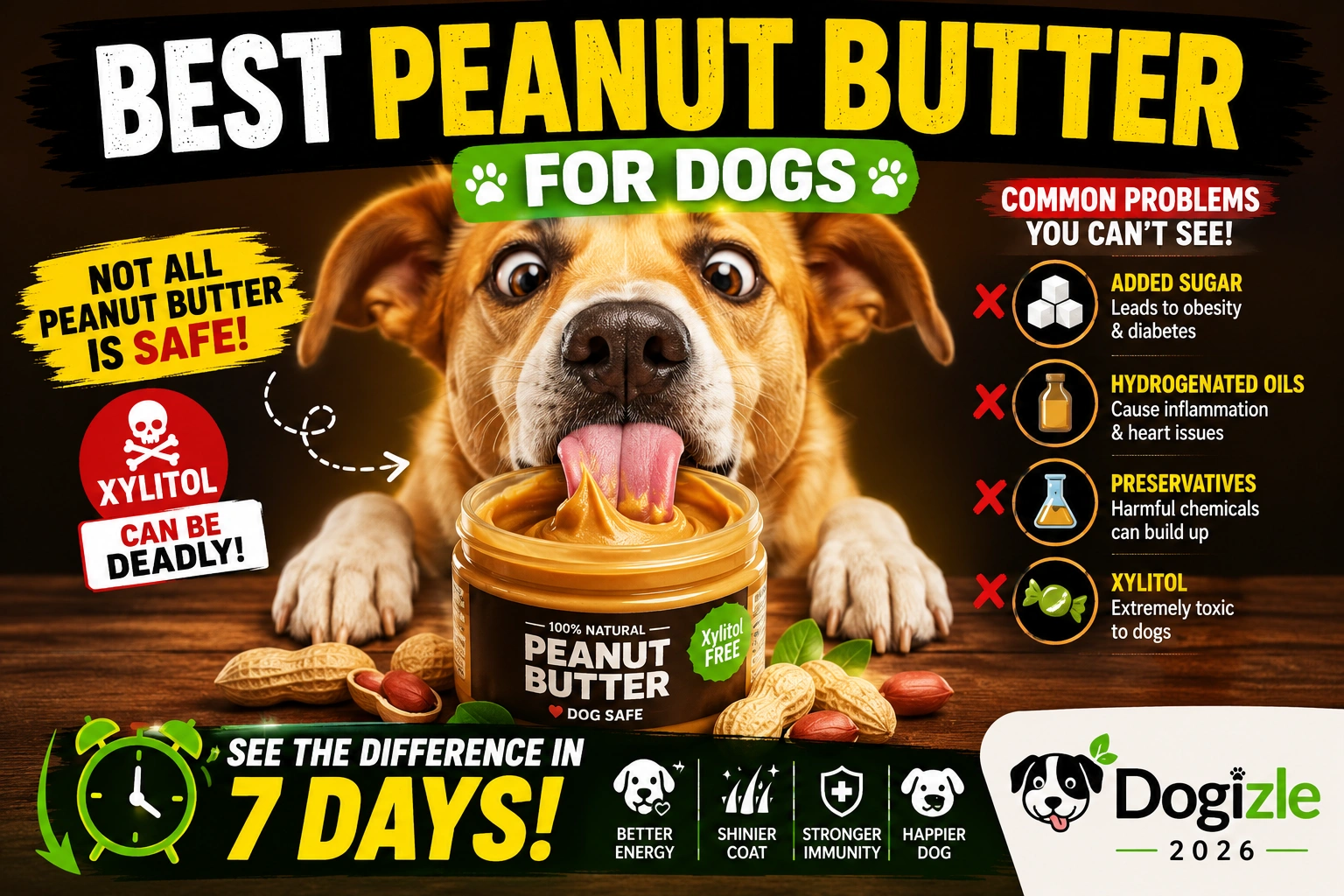
Best Peanut Butter for Dogs isn’t always safe—some popular brands hide dangerous ingredients that can seriously harm your pup. In this guide, you’ll discover the safest peanut butter options, toxic ingredients to avoid, and vet-smart tips to protect your dog’s health. One tiny mistake could shock most dog owners, but the right choice can boost treats, training, and tail wags safely. Peanut Butter is one of the most effective high-value rewards in dog training because it is aromatic and sticky. Easy to portion in tiny amounts, and useful in real-life situations like grooming. Crate training, vet visits, puzzle toys, and medication hiding. The catch is that peanut butter is only safe when the ingredient list is clean and xylitol-free. Because xylitol is highly toxic to dogs and can cause rapid hypoglycemia, seizures, liver injury, and even death.
This guide is designed as a decision system, not a simple product roundup. The goal is to help you choose the right peanut butter for your Best Peanut Butter for Dogs on safety. Size, lifestyle, and the way you plan to use it. That matters because the safest peanut butter for one dog may still be too rich. Too calorie-dense, or too tempting for another. Treats should stay below 10% of a dog’s daily calories. And that rule matters even more for peanut butter because peanut butter is energy-dense and easy to overfeed.
Why Peanut Butter Can Be Dangerous for Dogs
The main danger is not peanut butter itself. The real danger is what may be inside it. Xylitol, also called birch sugar or wood sugar, is a sugar substitute used in many sugar-free foods and products. In dogs, xylitol can trigger a sudden insulin release, causing blood sugar to drop dangerously low. In larger exposures, it can also lead to liver damage and liver failure. FDA, ASPCA, Cornell, and AKC all warn that even small amounts can be dangerous and that symptoms can begin quickly.
This is why label reading matters more than brand loyalty. A familiar jar can be unsafe if the formula changes. And a product marketed as “healthy,” “low sugar,” or “sugar-free” can still contain xylitol or other sweeteners that deserve a second look. AKC specifically warns dog owners to be suspicious of sugar-related claims such as “no sugar added,” and the FDA notes that xylitol may appear in peanut butter as well as gum, toothpaste, mints, baked goods, and supplements.
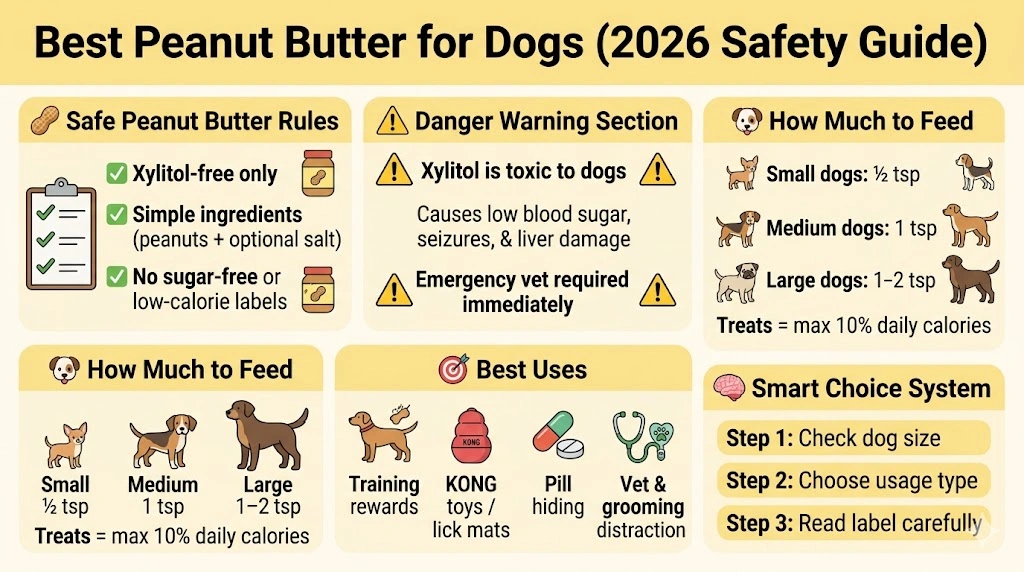
The 3-Step System for Choosing the Best Peanut Butter for Dogs
The smartest way to choose peanut butter is to think in three layers: your dog’s body, your purpose, and the label in front of you. This approach is better than chasing a single “best brand” because dogs differ in size, calorie needs, digestive sensitivity, and health history. AKC notes that calorie needs vary by age, activity, and body condition, and treats should stay within that 10% limit so the rest of the diet stays balanced.
Match the Treat to Your Dog’s Body
A small dog can gain weight from a very small amount of peanut butter, while a larger dog may tolerate a slightly bigger smear simply because the calorie budget is larger. That does not make peanut butter “free food.” It remains a treat, and for dogs that are overweight or have a history of pancreatitis, the margin for error is even smaller. Cornell explains that dogs who have had pancreatitis often need strict low-fat diets to reduce recurrence, while AKC warns that high-fat foods can contribute to digestive upset and pancreatitis risk.
Puppies, seniors, and sedentary dogs also need more caution than a healthy, active adult. AKC notes that puppies need different calorie support than older dogs, and older dogs typically require fewer calories overall. That means the same spoonful that seems harmless to one dog can push another dog beyond its treat budget very quickly.
Choose Based on the Job Peanut Butter Has to Do
The “best” peanut butter changes depending on how you plan to use it. In training, the ideal version is smooth and easy to lick in a tiny amount, because the reward should arrive fast and disappear quickly so your dog can stay focused. It’s a KONG, lick mat, or frozen enrichment toy; the best choice is a thicker peanut butter or a texture that stays in place long enough to extend the session. The Goal of pills is coverage, not volume, so a very small amount is usually enough. ASPCA and AKC both mention peanut butter as a common way to hide medication or create enrichment treats, but they also stress the need to confirm that the product is xylitol-free.
That means the “right” peanut butter is not just the tastiest jar on the shelf. It is the one that gives you the easiest control over portion size, consistency, and ingredient safety for the actual use case you have in mind.
Read the Label Like a Safety Check, Not a Marketing Page
If the label is simple, that is usually a good sign. A short ingredient list built around peanuts is easier to trust than a long panel full of sweeteners, flavorings, and vague health claims. AKC recommends raw or unsalted peanut butter as a healthier option and specifically says to verify that xylitol is not listed. FDA and ASPCA also emphasize that xylitol may appear in human foods that are marketed as sugar-free or reduced sugar, so the front of the jar is not enough.
Best Types of Peanut Butter for Dogs
There are three broad categories worth considering: plain human-grade peanut butter, dog-specific peanut butter, and homemade peanut butter. The best choice depends on how much convenience you want and how much ingredient control you need. AKC says that plain, unsalted peanut butter, dog-specific peanut butter, or homemade peanut butter are the healthiest options, provided the formula is safe and xylitol-free.
Plain human-grade peanut butter is often the most affordable and easiest to find. It works well when you are careful with the ingredient list and choose a product that does not contain xylitol, excess salt, or unnecessary additives. ASPCA specifically notes that peanut butter can be used for recipes or hiding medication, but recommends keeping quantities small because it is high in fat.
Dog-specific peanut butter can be convenient for owners who want a product designed with pet use in mind. These products may be easier to use in toys or enrichment routines, and AKC notes that there are pet-specific peanut butters made with dog-safe ingredients. The tradeoff is cost and the fact that a pet-branded label still should not replace a real ingredient check.
Homemade peanut butter gives the highest level of ingredient control. AKC emphasizes that home-prepared treats let you control what goes into the recipe, and freshly ground or plain peanut butter is often the safest route when you want to eliminate guesswork. This approach is especially useful if you are building a DIY training treat system or need a formula with no hidden sweeteners.
How to Read Peanut Butter Labels the Right Way
The label is where most mistakes happen. The biggest danger signs are “sugar-free,” “no sugar added,” “low calorie,” “reduced sugar,” and anything else that suggests a sweetener may have been added. AKC explicitly warns that xylitol may hide behind sugar-related claims, and the FDA notes that the ingredient may also be listed as birch sugar or wood sugar.
A safer label is usually short and plain. Peanuts are the cleanest base ingredient, and a small amount of salt may be acceptable for some dogs in moderation, though plain is still the simplest route. AKC describes unsalted peanut butter as the healthiest choice and also points dog owners toward dog-specific or homemade options when they want to reduce uncertainty.
It is also smart to understand that “natural” does not automatically mean “safe.” Natural peanut butter can still contain xylitol or other ingredients you would rather avoid. The only reliable method is to inspect the ingredient list every time you buy a jar, even if it is the same brand you purchased before. The FDA and ASPCA both stress that a quick label review is the key behavior that prevents accidental poisoning.
What to Avoid Completely
Never give your dog any peanut butter that contains xylitol. That includes products that look healthy, products sold for people, and products that use sugar-replacement marketing language. FDA, ASPCA, Cornell, and AKC all agree that xylitol can be dangerously toxic to dogs, even in small amounts.
You should also avoid turning peanut butter into a habit food. It is a treat, not a staple. Peanut butter is high in fat and calorie-dense, and frequent feeding can contribute to weight gain. AKC warns that fat-rich foods can contribute to obesity and pancreatic issues, and Cornell notes that high-fat foods can worsen pancreatitis or trigger digestive distress in susceptible dogs.
Finally, do not leave the jar where your dog can reach it. Dogs can and do open or chew into containers when the smell is strong enough, and that can turn a safe treat into a much larger intake than you intended. In a household safety sense, peanut butter should be treated like any other high-risk food item: stored securely and used intentionally.
Signs of Xylitol Poisoning in Dogs
Xylitol poisoning can move quickly. FDA says signs can begin within about 20 minutes, while ASPCA and Cornell both warn that symptoms may appear fast and that liver injury may follow later. The earliest signs often include vomiting, weakness, incoordination, wobbling, and collapse. Seizures can occur in more serious cases.
The pattern matters because the first wave of symptoms is not always the last one. ASPCA notes that liver damage may develop within 12 to 24 hours, and Cornell warns that even small amounts can lead to severe hypoglycemia, seizures, or liver injury. That is why waiting to “see what happens” is a bad strategy if you suspect exposure.
In practical terms, if your dog has eaten any product that might contain xylitol, treat it as urgent even before symptoms appear. FDA says to contact your vet, an emergency clinic, or animal poison control immediately. Cornell’s first-aid guidance for poisonous substances also points owners toward emergency help rather than home delay.
What to Do If Your Dog Eats Xylitol Peanut Butter
Act immediately. Check the label, identify the ingredient, and contact a veterinarian or emergency clinic right away. Do not wait for signs to “confirm” the problem, because xylitol can begin affecting blood sugar before a dog looks obviously ill. The FDA and the ASPCA both emphasize that fast action matters.
Bring the package or take a photo of the ingredient list if you are leaving home for the clinic. That helps the veterinary team identify the exact product and make quicker treatment decisions. Cornell’s guidance on poisonous substances and the FDA’s xylitol alerts both support immediate veterinary intervention rather than at-home trial and error.
If your Dog is vomiting, weak, shaky, unsteady, or having seizures, that is an emergency. Do not give more food to “balance it out,” and do not assume the problem will pass on its own. Xylitol is not a normal cause of stomach upset; it is a toxin exposure.
How Much Peanut Butter Can Dogs Eat?
The most useful rule is the 10% treat rule: treats should make up no more than 10% of your dog’s daily calories. AKC repeats this guidance across multiple nutrition articles, and Cornell also reinforces it in holiday and diet-related advice. Because peanut butter is rich and easy to over-serve, it is better to think in tiny rewards than in big spoonfuls.
For a training session, that often means using the smallest smear that still motivates your dog. For a lick mat or KONG, it means filling just enough to create the behavior you want without turning the snack into a meal. That is an inference from the calorie rule and the enrichment use cases described by AKC and ASPCA, not a fixed veterinary dosage.
The best practical habit is to count peanut butter as part of the day’s treat budget, not as an extra. If the day already includes training treats, chews, or snacks, peanut butter should be reduced accordingly so your dog does not drift above the safe calorie ceiling. AKC warns that treat calories are often underestimated and can quietly push dogs toward weight gain.
Best Ways to Use Peanut Butter
Peanut butter is most valuable when used with a purpose. In training, it can function as a fast, high-value reward that keeps attention focused during short learning moments. AKC and Cornell resources show that small food rewards are useful in behavior work because they reinforce calm cooperation and predictable routines.
In Enrichment toys, peanut butter becomes a boredom buster. A KONG, lick mat, or frozen treat can turn a five-second reward into a longer mental challenge. AKC specifically recommends peanut butter in frozen treats and says the best version is xylitol-free, unsalted, and carefully chosen from the label. ASPCA also points to peanut butter as a useful ingredient in pet-friendly recipes when it is used responsibly.
For medication, peanut butter can help improve compliance. A small coating can hide a pill and make a stressful moment easier, but the amount should stay tiny. The purpose is to mask taste, not to add a large calorie load. That distinction matters, especially for dogs on restricted diets or dogs that already need weight management.
For grooming, vet visits, and crate training, peanut butter can be a valuable emotional anchor. A small lick can redirect attention, reduce resistance, and help create a more positive association with handling. That is one reason peanut butter remains a staple in positive-reinforcement routines.
Budget, Premium, and DIY Choices
A budget choice usually means a plain, human-grade peanut butter with a short ingredient list. That can be perfectly workable as long as you read the label carefully and keep the portion small. The main advantage is affordability and easy access. The main risk is that you must stay alert to formula changes and sweetener claims.
A premium choice usually means a dog-specific peanut butter or a high-quality product that is designed for enrichment and makes ingredient checking easier. These products can be more convenient for busy owners, but convenience should never replace caution. A pet-friendly label is useful only when the ingredients are actually safe.
A DIY choice gives the most control. If you make your own peanut butter from plain peanuts, you decide exactly what goes in it. AKC’s homemade treat guidance emphasizes ingredient control as one of the biggest benefits of making food at home. This option is especially appealing to dog owners who want maximum transparency and minimum surprises.
Pros and Cons of Peanut Butter for Dogs
The biggest advantage of peanut butter is that it is highly motivating. Many dogs respond strongly to the smell and texture, which makes it useful for training and enrichment. ASPCA and AKC both recognize peanut butter as a common pet treat and recipe ingredient when it is used carefully.
The biggest drawback is that peanut butter is calorie-dense and fat-rich. That means even a “safe” spoonful can become a problem if it is used too often or in too large a quantity. AKC warns that high-fat foods can contribute to obesity and pancreatic issues, while Cornell notes that fatty foods can make pancreatitis worse in vulnerable dogs.
The second drawback is the xylitol risk. A jar can look ordinary and still be unsafe. That is why this topic is not really about peanut butter as a food; it is about product screening, portion discipline, and knowing when not to use it at all.
Europe-Focused Safety Notes
In Europe, Food and feed labeling rules are designed to help consumers make informed choices and to ensure that products are clearly described. The European Commission states that food law gives citizens accurate, honest information, and its feed legislation requires additives to be labeled in a conspicuous, legible, and indelible way. That matters for dog owners because a clear label is one of the best defenses against unsafe ingredients.
European feed rules also focus on safety, good quality, and the absence of harmful effects when products are used correctly. The Commission explains that feed additives may not be sold unless scientific evaluation shows they do not harm human or animal health or the environment, and its animal-feed pages stress that feed should not present danger when properly used.
For dog owners in Germany, France, the UK, Italy, Spain, the Netherlands, Sweden, Switzerland, and elsewhere in Europe, the practical takeaway is the same: inspect the ingredient list, avoid xylitol and other sugar-alcohol confusion, and choose products with straightforward labeling. Even if a product is marketed as “natural,” the label still has to be checked line by line.
A Simple Decision Framework for Dog Owners
Start with the dog, not the jar. Ask whether your dog is a puppy, adult, or senior, whether weight management is already a concern, and whether there is any history of digestive trouble or pancreatitis. Then decide whether peanut butter is being used for training, enrichment, or medication. After that, read the label with one question in mind: Does this product contain xylitol or another ingredient that makes it unsafe? AKC, FDA, Cornell, and ASPCA all support that order of thinking.
That framework is better than relying on the word “safe” printed on a package. A safe peanut butter for dogs is not the one with the flashiest branding. It is the one with the shortest ingredient list, no xylitol, a portion that fits the treat budget, and a use case that makes sense for your dog’s body and health.
People Also Search For
Choose natural peanut butter with no xylitol, added sugar, or artificial sweeteners. Xylitol is highly toxic to dogs.
Yes, if it is plain and xylitol-free, but the safest choice is still the one that matches your dog’s needs and can be portioned cleanly. A chunky texture is not the issue; the ingredient list is. AKC’s advice focuses on xylitol avoidance and simple formulations rather than crunchy versus smooth as the deciding factor.
Most Skippy products are xylitol-free, but they contain added sugar and oils, so give only small amounts.
Jif is generally safe if xylitol-free, but natural peanut butter is usually the healthier choice.
Peanut butter provides protein, healthy fats, and vitamins. It’s also great for training, treats, and hiding medicine.
Conclusion
The best Peanut butter for dogs is not a brand name. It is a formula that is plain, xylitol-free, easy to portion, and appropriate for your dog’s size and health status. FDA, ASPCA, Cornell, AKC, and the European Commission all point in the same direction: read labels carefully, keep treats modest, and act quickly if xylitol exposure is suspected.
If you use peanut butter as a deliberate tool instead of a casual snack, it becomes one of the most effective rewards in your dog-care routine. If you use it without label checks and portion control, it becomes a risk. The difference is not complicated. It is simply a matter of choosing wisely every single time.