Hidden 5 Triggers Behind Dogs Eating Their Own Poop
Dogs may eat their own Poop because of puppy curiosity, maternal cleaning, boredom, stress, habit, underfeeding, or a medical issue. In puppies and nursing mothers, it can be normal, but sudden stool eating in an adult dog should be checked by a vet. The best first steps are to clean up fast, supervise potty breaks, stop punishment, and add training and enrichment. If you have ever caught your dog eating its own poop, you are not alone, and you are definitely not a bad owner. The behavior has a name: coprophagia. When a dog eats its own stool, some researchers also describe it as autocoprophagia. It can be a normal, short-lived phase in puppies and nursing mothers, but in adult dogs, it can also point to boredom, stress, habit, underfeeding, poor digestion, or a medical issue that deserves attention.
For most dog owners, the real question is not just “Why is this happening?” It is “Is this dangerous, and how do I stop it without making things worse?” That is exactly what this guide is built to answer. You will get the causes, the warning signs, the mistakes to avoid, and a practical prevention plan you can use at home right away.
What Is Coprophagia in Dogs?
Coprophagia means the consumption of feces. In dogs, that may involve their own stool, another dog’s stool, or even feces from another species. Veterinary references describe it as part of a broader group of eating-related behavior problems, and they note that medical causes should be considered first when the habit appears suddenly or becomes persistent.
Is It Normal for Dogs to Eat Their Own Poop?
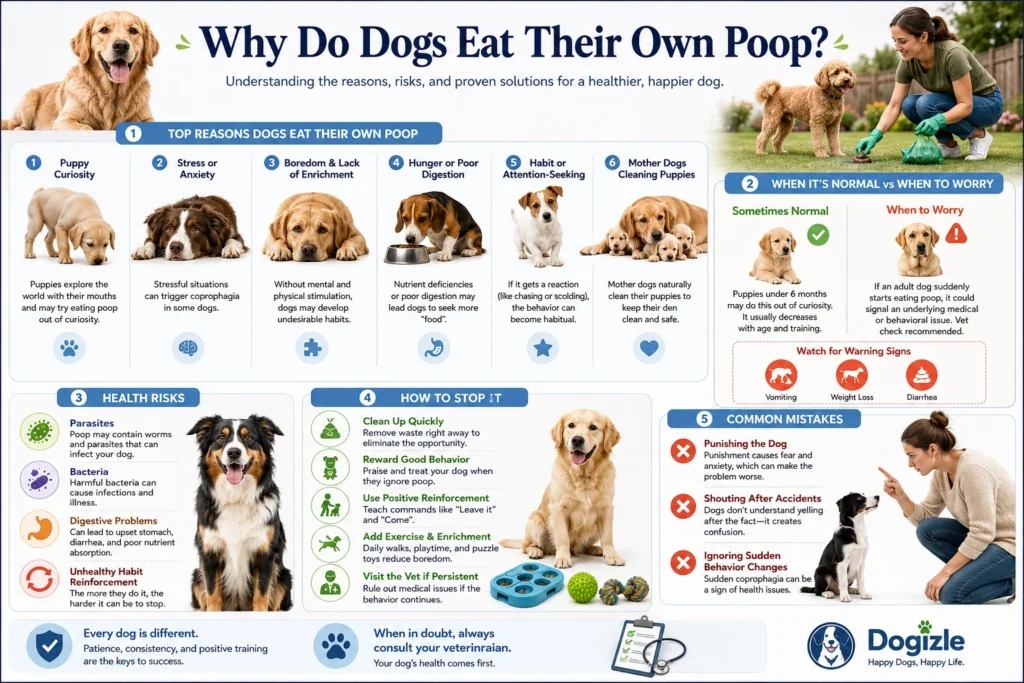
Sometimes, yes. It is considered normal in nursing mothers, who clean the den and keep the puppies healthy and safe. It is also common in young puppies, who explore with their mouths, mimic adult behavior, or simply treat the behavior as another part of learning the world. Many puppies outgrow it with age, supervision, and good routines.
In adult dogs, especially when the habit starts suddenly, it is less normal and deserves a closer look. PetMD and PDSA both flag sudden onset as a reason to involve a vet, while Merck Veterinary Manual advises excluding medical problems first when behavior changes appear.
Why Dogs Eat Their Own Poop
1) Mother dogs and nursing puppies
Mother dogs often eat their puppies’ feces as part of normal den hygiene. That does not mean every poop-eating dog has a problem. It means the behavior can be biologically normal in the right context. Puppies may also copy what they see from their mother or littermates.
2) Puppies are curious
Puppies investigate with their mouths. In some puppies, poop-eating starts as curiosity or scavenging and later becomes a habit. VCA notes that unsupervised puppies may play with, investigate, and even eat stools, and that attention from the owner can accidentally reinforce the behavior.
3) Hunger, underfeeding, or poor digestion
If a dog is underfed, on a poorly balanced diet, or not absorbing nutrients well, stool eating can become more likely. VCA specifically links stool eating with malabsorption, digestive enzyme deficiencies, parasites, extreme calorie restriction, and poorly balanced diets. Merck also notes that GI abnormalities and metabolic disease should be considered when eating behaviors change.
4) Stress, confinement, and boredom
Dogs with too little stimulation, too much confinement, or a stressful routine may develop stool eating as part of a broader coping pattern. PDSA lists boredom, stress, and anxiety as common reasons, while Merck notes that excessive confinement and insufficient stimulation can contribute to feces eating. Dogs Trust also explains that daily enrichment helps prevent boredom and supports calmer behavior.
5) Attention seeking and habit
Some dogs learn that poop-eating gets a strong reaction. Even negative attention can reinforce the habit. PDSA explains that some dogs do it because they learned it gets attention, and VCA notes that the behavior may be reinforced when owners react strongly. Once a pattern is established, it can become self-rewarding and harder to change.
6) Punishment for accidents
If a dog has been punished for toileting indoors, some dogs respond by trying to “hide the evidence.” PetMD warns that repeated punishment can teach the dog to eat the stool after an accident, and PDSA specifically says shouting or punishment can be confusing and unsuccessful. VCA also warns that the old “rub the dog’s nose in it” approach can encourage the problem.
7) A medical issue in the dog or a nearby dog
Sometimes, the dog eating poop is not the only dog you need to think about. If your dog repeatedly targets one specific dog’s stool, VCA recommends checking that other dog as well because poor digestion in the stool-producing dog can leave more undigested material behind. PetMD and PDSA both mention that illness, malabsorption, or dietary imbalance can sometimes play a role, especially when the behavior starts suddenly.
Quick Cause Guide: What Your Dog’s Behavior May Be Telling You
| Situation | What it often suggests | Best first move | Evidence |
| Puppy mouths stool once or twice | Curiosity, scavenging, imitation | Supervise, redirect, reward, and clean up fast | |
| Nursing mother eats puppy stool | Normal den-cleaning behavior | Do not punish; manage the whelping area | |
| An adult dog starts suddenly | Possible medical or behavioral issue | Book a vet check | |
| The dog eats stool after being told off | Fear, anxiety, or evidence-hiding | Stop punishment, use positive reinforcement | |
| A dog eats poop when bored alone | Under-stimulation or confinement stress | Add enrichment and a structured routine | |
| The dog seems hungrier than usual | Underfeeding, malabsorption, or disease | Review the diet and ask the vet about testing |
Is It Dangerous?
It can be. Coprophagia can expose dogs to bacteria, parasites, and other pathogens, especially when the stool belongs to another animal. Merck also highlights hygiene and parasite-prevention concerns around feces exposure, and it specifically includes coprophagia in zoonosis-prevention discussions. Even when a dog is eating its own stool, the habit can still hide a behavioral or medical issue that should not be ignored.
The risk is usually higher if the dog is eating stool from unknown animals, livestock, cats, or communal outdoor areas. That is why clean-up and access control matter so much.
When to Call the Vet
Call your veterinarian if the behavior is new, sudden, intense, or paired with other changes. PDSA recommends contacting a vet if the habit is very out of character. Its red flags include weight loss, diarrhea, vomiting, and coat changes. Merck recommends ruling out medical causes first when behavior changes occur, and VCA lists several medical contributors, such as parasites, malabsorption, diabetes, Cushing’s disease, thyroid disease, and poor diet balance.
| Red flag | Why it Matters | Action |
| Sudden new poop-eating in an adult dog | More likely to be medical or stress-related | Vet visit soon |
| Weight loss | May suggest poor absorption or illness | Ask for a full checkup |
| Diarrhea or vomiting | Can point to GI disease or parasites | Bring a stool sample if advised |
| Coat changes or poor condition | Can reflect diet or health issues | Review nutrition and health history |
| Constant hunger or unusual appetite | May be linked to disease or medication | Vet assessment |
How to Stop Your Dog From Eating Poop
The best approach is not one magic product. It is a system: manage the environment, train the replacement behavior, improve the routine, and check for medical causes. That approach is consistent across PDSA, PetMD, VCA, Merck, and Dogs Trust.
1) Clean up fast and remove the target
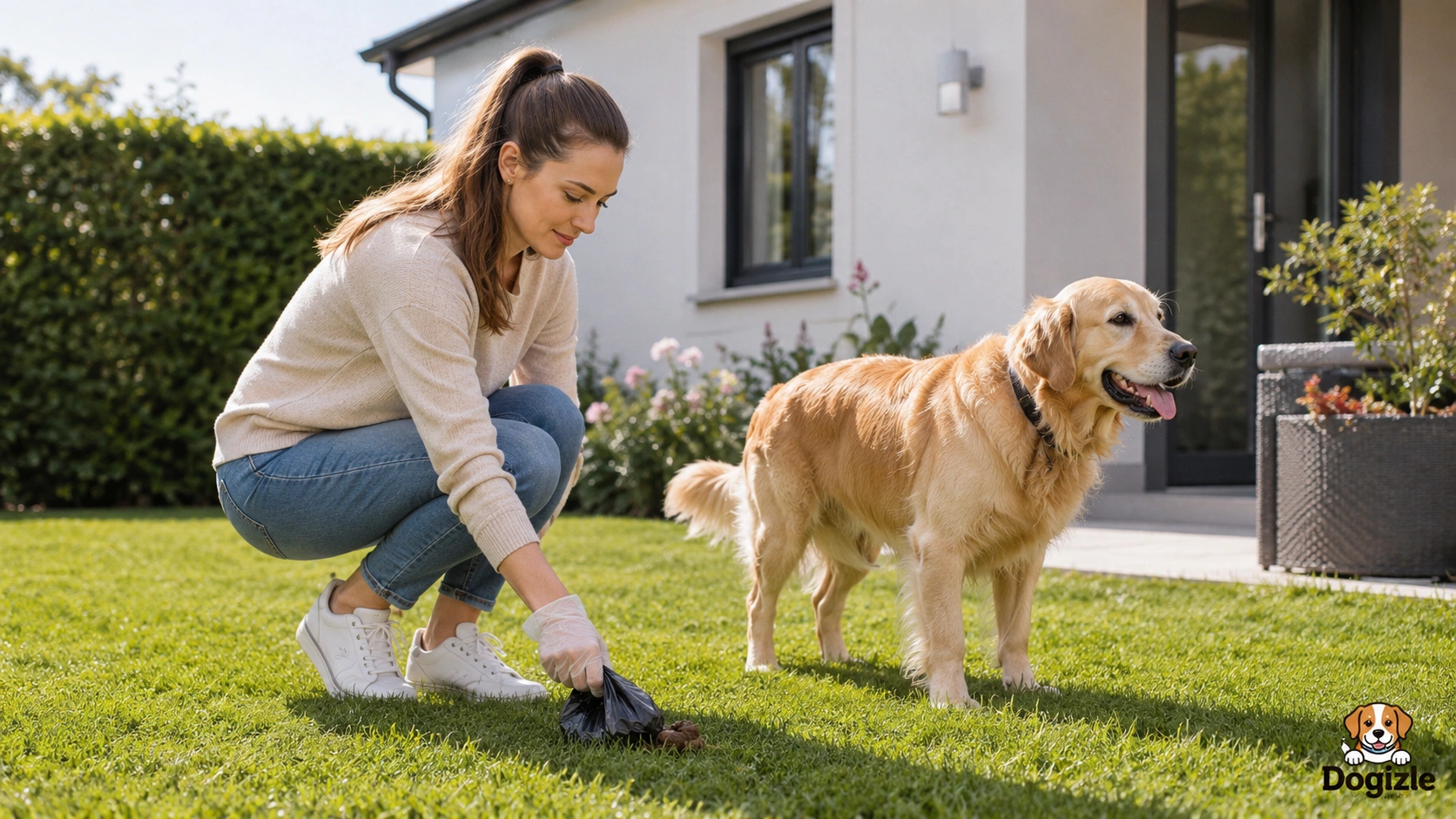
Pick up the stool immediately, keep the yard clean, and do not leave the dog alone with easy access to fresh feces. PetMD explicitly recommends removing stool from the yard to remove temptation, and PDSA advises removing temptation and supervising outdoor time.
2) Supervise potty time
Do not assume a quick garden trip is “safe enough.” PDSA recommends supervising even brief outdoor toilet breaks, and PetMD recommends going out with the dog whenever it needs to defecate. Supervision lets you interrupt the behavior before it becomes a habit.
3) Use positive reinforcement, not punishment
Reward the behavior you want: coming back to you, leaving the stool, and following a cue like “leave it.” Do not shout, do not rub the dog’s nose in the mess, and do not punish after the fact. PDSA, PetMD, and VCA all warn that punishment can worsen the problem or create fear.
4) Teach a simple replacement cue
Train “leave it,” “come,” and “drop it.” Then reward instantly with a high-value treat. PetMD suggests calling the dog over as soon as it finishes eliminating, rewarding it, and then redirecting it while you remove the stool. That sequence keeps your dog from rehearsing the habit.
5) Add more enrichment and a predictable routine
Dogs Trust explains that enrichment helps prevent boredom, build confidence, and provide safe outlets for sniffing, searching, and problem-solving. That matters because boredom and confinement are common coprophagia triggers. Use food puzzles, sniffing games, short training sessions, and daily structured activity.
6) Review diet quality and feeding schedule
If your dog seems hungry all the time, loses weight, or has soft stools, review the food first. VCA notes that underfeeding, poorly digestible diets, and malabsorption can contribute to stool eating. For Europe-based owners, FEDIAF’s guidelines are the main reference framework for complete and complementary pet food standards, so choosing a diet that is complete and balanced is a sensible starting point.
7) Ask the vet to rule out medical causes
If the habit is persistent or new, do not guess. Merck says medical causes should be excluded first in eating-disorder cases, and VCA points to parasites, digestive enzyme deficiencies, diabetes, Cushing’s disease, thyroid disease, and medication effects as possible contributors. Your vet can decide whether a stool test, diet review, or broader exam is needed.
Apartment Living Advice
Poop-eating can be especially frustrating in apartments because there is less room for “natural” separation between potty areas and living spaces. The solution is not more scolding; it is better management. Use a leash for potty breaks, keep the dog close, reward immediately, and build indoor enrichment so your dog is less likely to become fixated on the behavior. Dogs Trust and Merck both support the idea that routine, mental stimulation, and management reduce problem behavior.
A practical apartment routine looks like this: take your dog out on a schedule, wait quietly, reward the moment toileting is done, move away quickly, and pick up waste immediately. That is simple, repeatable, and far more effective than trying to “catch” the dog after the fact.
Cold Weather and Seasonal Care
In winter, rain, or short daylight hours, dogs often get fewer long walks and less mental stimulation. That can make boredom-based habits worse. Plan for more indoor enrichment on days when outdoor time is limited: sniff mats, treat searches, short training bursts, and food puzzles. Dogs Trust specifically recommends enrichment to manage energy and encourage calmer behavior.
What Not to Do
- Do not punish after the fact. It rarely teaches the right lesson and can make the behavior faster or sneakier.
- Do not rub your dog’s nose in stool. VCA says this outdated technique can encourage coprophagia.
- Do not rely on one quick fix. Access control, training, and routine matter more than hoping a single supplement will solve everything.
- Do not ignore sudden changes in adults. A new habit can be a medical clue.
- Do not use a muzzle as the main solution. PDSA says it does not stop the desire and can become messy and frustrating.
Common Mistakes Dog Owners Make
- Reacting loudly and accidentally rewarding the behavior with attention.
- Waiting too long to clean up gives the dog more chances to practice.
- Assuming it is “just a phase” even when it starts in adulthood.
- Skipping the vet when there are extra symptoms like weight loss or vomiting.
- Not enriching the day, especially in busy homes or apartments.
Expert Tips
- Reward the dog before it has time to turn back toward the stool.
- Keep a leash on for potty breaks until the habit is fully under control.
- Use a high-value treat only for this training, so the reward is more interesting than the stool.
- If one dog in a multi-dog home is the target, check whether the stool-producing dog also needs a vet review.
- In rescue dogs or dogs from highly confined backgrounds, expect the habit to take longer to change, and focus on calm repetition rather than force.
People Also Ask
Puppies often do it out of curiosity, imitation, or scavenging behavior. Many outgrow it, especially when they are supervised, rewarded for good potty habits, and given enough enrichment.
Some dogs try to hide the evidence after they have been punished for accidents. PetMD and PDSA both warn that punishment can make the problem worse rather than better.
No. Parasites can be one possible cause, but boredom, habit, anxiety, underfeeding, and poor digestion are also common explanations. A vet check is the right way to sort out the cause.
Yes, especially if the behavior is new or comes with weight loss, diarrhea, vomiting, or coat changes. PDSA recommends contacting your vet when the habit is out of character.
Sometimes, but not always. If the cause is poor digestibility, underfeeding, or nutrient imbalance, a better diet may help. If the cause is anxiety or habit, you will still need training and management.
Yes, stress and anxiety are recognized triggers in several veterinary and pet authority sources. In many dogs, the behavior improves when the routine is calmer, more predictable, and better enriched.
The fastest practical fix is to remove access, supervise potty breaks, reward alternative behavior, and clean up immediately. That combination is more reliable than punishment or guessing.
Final Takeaway
If you are asking why dogs eat their own poop, the answer is usually a mix of instinct, curiosity, habit, stress, boredom, or an underlying nutrition or health issue. In puppies and nursing mothers, the behavior can be normal. In adult dogs, especially when the change is sudden, it should be treated as a clue, not just a gross habit.
The best results come from simple, consistent action: clean up fast, supervise potty time, stop Punishment, add enrichment, and call your vet if the behavior is new or persistent. That is the kind of practical, responsible dog care that protects both your dog and your home. If this guide helped, bookmark it and explore more dog health and training resources on Dogizle.com.