Can Dogs Eat Garlic? (Vet-Backed Truth Every Dog Owner Must Know in 2026)
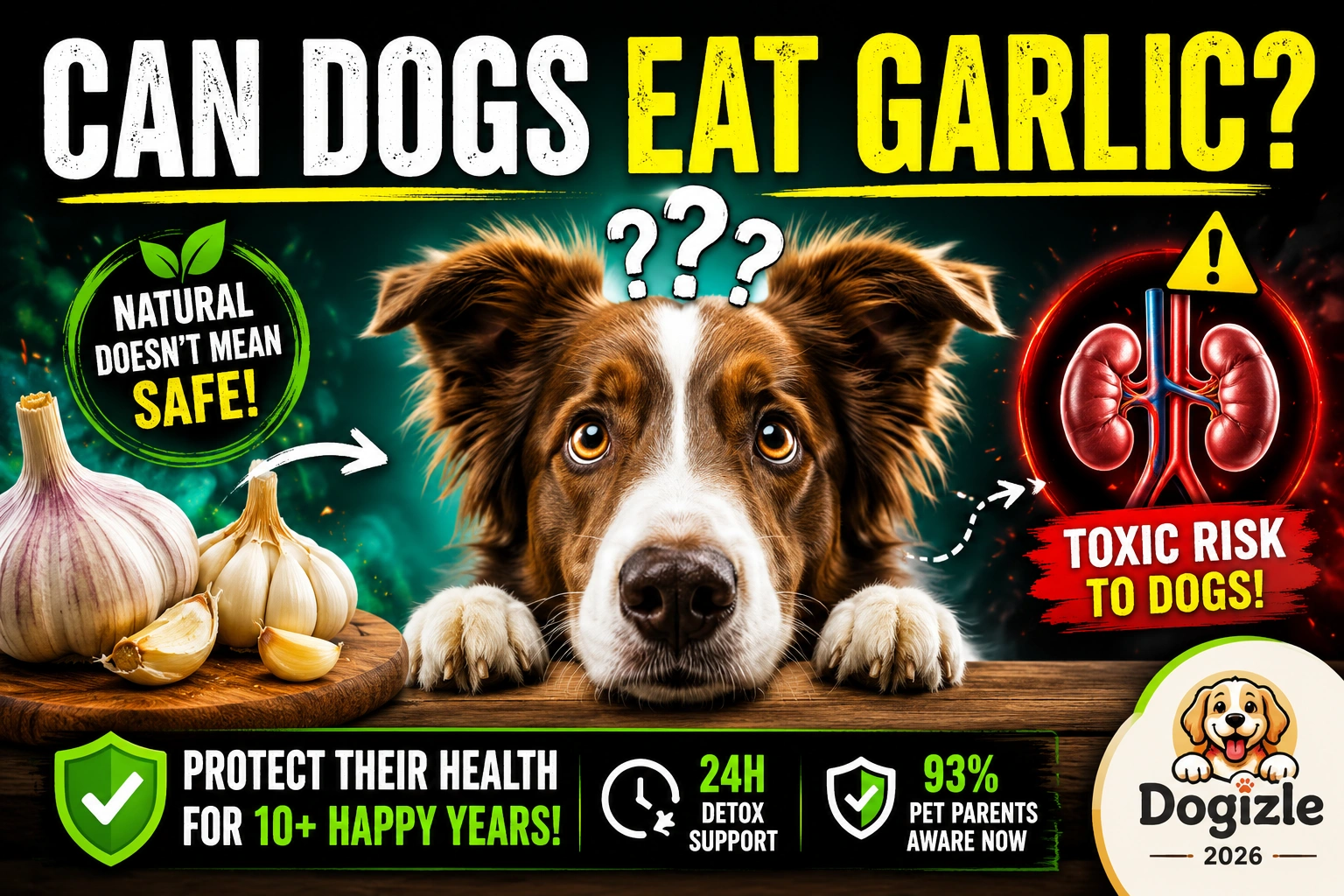
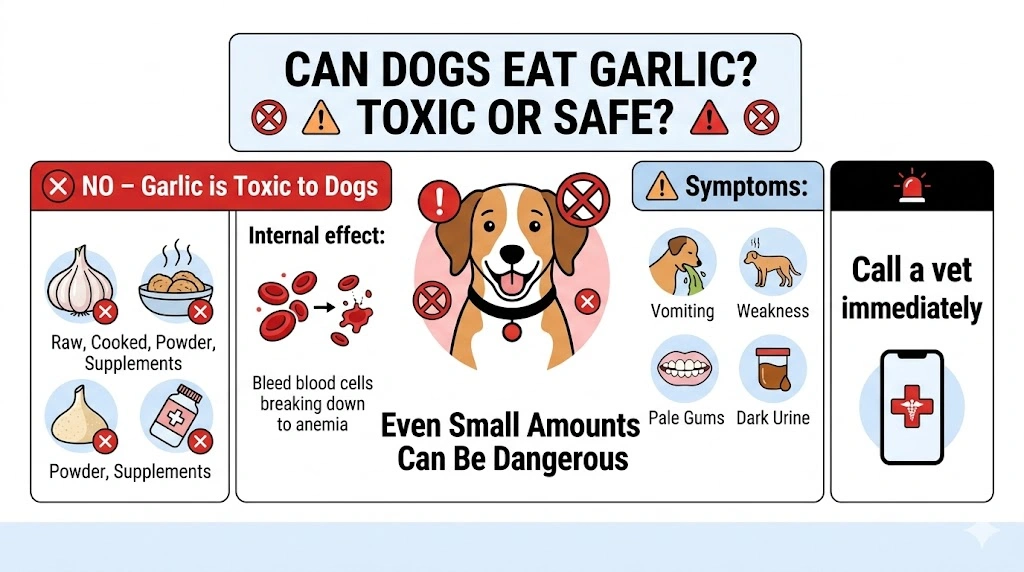
No — dogs should not Eat Garlic. Veterinary and poison-control guidance consistently treats garlic as toxic to dogs because it can damage red blood cells, trigger gastrointestinal upset, and, in serious cases, lead to hemolytic anemia, weakness, collapse, and even death. Garlic is part of the Allium family, along with onions, leeks, and chives, and authoritative sources advise avoiding it in every form rather than trying to calculate a “safe” amount.
That matters in real life because garlic is easy to miss. It can hide in pasta sauces, breads, seasoning blends, leftovers, soups, ready meals, and garlic powders or dried mixes, which are often more concentrated than fresh garlic. Symptoms may begin soon after ingestion, but some people do not show the full picture until several days later, so acting early is important.
This guide explains the danger in simple language, with the same practical questions that Can Dog Eat Garlic owners ask most often: why Can Dog Eat Garlic is risky, how poisoning happens, what symptoms look like, what to do in an emergency, and how to keep your Can Dog Eat Garlic safe.
Why “Can Dogs Eat Garlic?” Is a Dangerous Question
Garlic is not a normal dog-safe food. It belongs to the Allium genus, the same family as onions, leeks, chives, and shallots, and this family is known for compounds that can injure canine red blood cells. That injury can interfere with oxygen delivery throughout the body, which is why the problem can become serious quickly.
A dog’s body does not handle garlic the way a human body does. In dogs, oxidant compounds in garlic can cause damage to red blood cell membranes, making the cells fragile and more likely to break down. Once enough cells are affected, anemia can develop. That is the reason veterinary sources do not recommend “a little garlic” as a casual treat, flavoring, or home remedy.
This is also why garlic belongs on every toxic-food checklist for pet owners. The issue is not just the bulb in the kitchen. Garlic can show up as raw cloves, cooked seasoning, powders, granulated mixes, dehydrated flakes, liquid flavorings, and supplements. From a dog-safety perspective, the form changes the concentration, but it does not make garlic harmless.
Garlic Belongs to the Allium Family
Garlic is one of the most recognized members of the Allium family, which also includes onions, leeks, chives, and related plants. Poison-control and veterinary references treat the entire group as risky for dogs because they share toxic compounds that can damage blood cells. In practical terms, this means garlic should be viewed not as a “special herb,” but as part of a known toxic plant family for pets.
The toxic principles named by veterinary sources include sulfur-containing oxidants and compounds such as N-propyl disulfide and thiosulfates. These substances are the reason dogs may develop vomiting, diarrhea, lethargy, pale gums, rapid breathing, red or brown urine, and other warning signs after exposure.
Garlic is also widely used in human cooking, which makes accidental exposure common. A dog does not need to steal a whole bulb to be at risk. A few bites from a garlic-containing dish, a lick of sauce, or access to concentrated garlic powder can be enough to trigger concern, especially in smaller dogs or in repeated exposures.
What Garlic Does Inside a Dog’s Body
Once garlic is eaten, its oxidant compounds can begin affecting red blood cells. Veterinary manuals explain that these compounds cause oxidative damage to the red blood cell membrane, which makes the cells fragile and easier to destroy. That process can lead to Heinz body formation, hemolysis, and eventually hemolytic anemia.
Red blood cells are responsible for carrying oxygen through the bloodstream. When too many of them are damaged, oxygen delivery drops, and the body begins to struggle. That is why dogs with garlic toxicity can look weak, breathe faster, pant more, or collapse in severe cases. The illness is not just a stomach problem; it can become a whole-body oxygen problem.
The timing can be deceptive. Some dogs show stomach upset early, but the more dangerous blood-related signs may appear later. Veterinary references note that clinical signs may take several days to become obvious, and hemolysis may peak after a delay rather than immediately after the meal. That delay is exactly why owners should not “wait and see” after a known garlic exposure.
How Toxic Is Garlic for Dogs?
There is no useful “guessing game” dose for garlic in dogs. Authoritative sources advise avoidance because risk depends on the amount eaten, the dog’s size, the form of garlic, and whether the exposure is one-time or repeated. Concentrated forms such as powders, dried flakes, granules, and soup mixes are especially concerning because they pack more garlic into a smaller volume.
Garlic powder is a major hazard because it is much more concentrated than fresh garlic. VCA notes that one teaspoon of garlic powder is roughly equivalent to eight cloves of fresh garlic, which explains why seasoning blends and dry mixes can become dangerous very quickly.
Veterinary references also note that garlic is considered more toxic than onions on a weight basis. That does not mean onions are safe; it means garlic deserves extra caution because smaller amounts may create a bigger toxic burden than many owners expect.
Different Garlic Forms: Which Ones Are Safe?
None of them is safe enough to recommend as dog food. Veterinary sources consistently state that raw, cooked, dried, powdered, liquid, and granulated garlic can all cause poisoning. Cooking does not remove the toxic risk, and dried or powdered forms may actually increase it by concentrating the harmful compounds.
Raw garlic is risky because it contains toxic compounds in a natural form. Cooked garlic remains unsafe because heat does not eliminate the issue. Garlic powder and garlic salt are often more dangerous per spoonful because the water is removed, and the garlic becomes concentrated. Garlic supplements and “natural” flea products with garlic are also not reliable safety options and are not supported as a proven pet-health strategy.
That is why the safest rule is simple: do not feed garlic in any form, do not use it as a seasoning on dog food, and do not assume a recipe ingredient is harmless just because the garlic is baked, simmered, or blended into a dish.
Symptoms of Garlic Poisoning in Dogs
Signs can be mild at first or delayed for days. Early symptoms often look like stomach upset: vomiting, diarrhea, drooling, decreased appetite, nausea, and abdominal discomfort. These are important because they may be the first clue that a dog has eaten an Allium ingredient.
As the condition progresses, the symptoms can become more serious. Dogs may become weak, lethargic, uncoordinated, pale-gummed, or tachycardic. Breathing may become faster or more effortful, and urine may turn red or brown because of blood-cell destruction and pigment changes.
In severe cases, anemia can produce collapse, kidney damage, and oxygen deprivation. Veterinary manuals note that advanced hemolysis may lead to discolored urine, weakness, exercise intolerance, jaundice, collapse, and death if the case is not treated promptly.
How Quickly Do Symptoms Appear?
The timeline is one of the most misleading parts of garlic toxicity. Some dogs may vomit soon after eating garlic, but the more dangerous red-blood-cell effects can take several days to show up. Veterinary sources commonly describe a window from within a day to several days, with hemolysis often becoming clear around the 3–5 day mark after exposure.
That delay means a dog can appear fine after dinner and still develop a problem later. Owners sometimes relax once the stomach settles, but veterinary guidance warns that the absence of immediate symptoms does not prove safety. This is why a known garlic ingestion should always be discussed with a vet or poison helpline.
Hidden Sources of Garlic in Daily Life
Garlic often enters a dog’s diet without anyone realizing it. It is common in sauces, pasta, pizza toppings, roasted meats, bread, soups, seasoning blends, dry rubs, and leftovers. It can also appear in processed foods and human supplements, which makes “just a little taste” more dangerous than it seems.
A special risk comes from household habits. Dogs that beg at the table, lick plates, raid the trash, or steal dropped food are more likely to encounter garlic accidentally. Because the ingredient is mixed into many dishes, the owner may notice the final meal only after the dog has already eaten part of it.
Garlic powder and spice blends deserve extra caution. They are easy to spill, easy to overlook on labels, and much more concentrated than fresh garlic. In kitchen safety terms, they are often the stealthiest source of Allium exposure.
What To Do If Your Dog Eats Garlic
The right response is calm, fast, and practical. First, estimate how much was eaten and what form it was in: fresh garlic, cooked garlic, powder, seasoning, sauce, or a processed dish. Next, note when it happened. Then call your vet, an emergency clinic, or a poison-control service for pets as soon as possible.
Do not wait for symptoms to begin. Several sources stress that delayed signs are common, which means a dog can worsen after an apparently normal start. Early consultation allows the veterinarian to decide whether home monitoring is enough or whether medical treatment is needed right away.
Do not induce vomiting on your own unless a veterinarian instructs you to do so. Veterinary references recommend decontamination only under professional guidance, because timing, product type, and the dog’s condition all matter. Improper home treatment can complicate the situation.
How Veterinarians Treat Garlic Poisoning
Treatment depends on timing and severity. If the ingestion was recent, the veterinarian may induce vomiting to remove material from the stomach. Activated charcoal may then be used to reduce the absorption of toxins that remain in the digestive tract. Blood tests and urine tests are often performed to check red blood cell counts, organ function, and overall stability.
If the dog is already showing advanced signs, treatment can become more intensive. Hospitalization, oxygen support, intravenous fluids, and sometimes blood transfusions may be needed. Veterinary manuals note that oxygen and blood transfusions are prioritized when life-threatening hemolysis is present, because the body needs help restoring oxygen delivery.
The good news is that early action improves the outlook. Mild cases often recover well if they are addressed quickly, while severe cases are more complicated and carry a more guarded prognosis. The key point is simple: early veterinary care gives the dog the best chance.
Is Any Amount of Garlic Safe for Dogs?
The safest answer from a pet-health standpoint is to treat garlic as a no-feed ingredient. Major veterinary and poison-control sources recommend avoidance rather than setting a “safe” household dose, because the risk depends on the dog, the form, the amount, and whether the exposure repeats over time.
That caution is especially important because repeated small exposures can add up. Even when one tiny serving does not trigger obvious illness, cumulative exposure may still create toxicity over time, which is why “just a little now and then” is not a sound feeding strategy.
There is also no benefit to taking the risk for flavor. Dogs do not need garlic nutritionally, and official pet guidance does not recommend it as a routine food ingredient or supplement. Avoidance is the cleanest and safest choice.
Breed and Size Sensitivity
Smaller dogs are generally more vulnerable because the same amount of garlic creates a larger dose relative to body weight. Puppies, senior dogs, and dogs with underlying illnesses may also be less able to cope with the effects of toxin exposure.
Some veterinary references note that certain breeds, especially dogs of Japanese descent such as Akita and Shiba Inu, may have a higher risk for Allium poisoning. That does not make other breeds safe; it simply means some dogs may be more susceptible than average.
The practical takeaway is not to rank breeds and assume safety. It is to keep garlic away from every dog, regardless of size or breed, because the toxic mechanism is the same, even when the clinical outcome varies.
Real-Life Kitchen Scenarios Dog Owners Recognize
A dog steals a bite of pasta with garlic-heavy sauce. A family drops a piece of garlic bread. A roast chicken is seasoned with garlic powder, and the leftovers go into the trash. These are ordinary household moments, yet each one can become a poisoning risk if the dog gets there first.
The most common danger is not dramatic theft from a giant bulb of garlic. It is the small, routine exposure that people dismiss because the food looks ordinary. Garlic is often hidden in the background of recipes, which is exactly why pet owners need to treat human food carefully.
This is especially true for leftovers and table scraps. A dog that is otherwise healthy can still end up with vomiting, lethargy, or anemia after getting into a dish that seems harmless to people. The ingredient list matters more than the appearance of the food.
Common Mistakes Dog Owners Make
One mistake is assuming cooked garlic is safe because it smells softer or tastes sweeter. Veterinary sources do not support that idea; cooked garlic remains toxic. Another mistake is trusting garlic powder because it looks like a tiny amount. In reality, powders and dried forms can be more concentrated.
A second mistake is using garlic as a flea-control hack. There is no solid scientific proof that garlic reliably repels fleas, and official pet guidance discourages using it for pest control. Safer, veterinary-approved flea and tick prevention exists, so there is no reason to gamble with Allium exposure.
A third mistake is waiting for an obvious collapse before calling the vet. By the time a dog is collapsing or passing dark urine, the problem may already be severe. Earlier consultation is always better than a late emergency response.
Expert Veterinary Insights
Veterinary sources agree on the core message: garlic can damage red blood cells, symptoms may be delayed, concentrated forms are more dangerous, and prompt treatment improves the outcome. That is the consistent scientific thread running through poison-control guidance, clinical references, and pet-health resources.
The mechanism is especially important. Garlic exposure can create oxidative damage in red blood cells, leading to Heinz body changes and hemolysis. Once that process is underway, the dog may require bloodwork, supportive care, and, in severe cases, hospitalization.
There is also broad agreement that garlic should not be used as an unproven “natural” fix. Even sources that discuss possible uses in human nutrition do not translate that into a recommendation for dogs. For dogs, the risk profile matters more than any human wellness trend.
How To Keep Your Dog Safe
The safest strategy is prevention. Keep garlic, onion, leeks, and chives out of reach; store seasonings securely; dispose of leftovers promptly; and keep trash bins closed. These basic steps reduce the chance of accidental exposure at home.
Train household habits that protect your dog: teach “leave it,” avoid feeding from the table, and do not offer scraps from recipes that contain seasoning mixes. The more consistent the household routine, the lower the risk of accidental Allium poisoning.
Read labels with a veterinarian’s mindset. Garlic may appear as powder, granules, dehydrated flakes, a seasoning blend, or a flavoring. If the ingredient list includes garlic or another Allium, it should not be treated as dog food.
Garlic Pros & Cons for Dogs
For dogs, the “pros” column is essentially empty because garlic is not a recommended canine food ingredient and does not offer a proven health benefit that outweighs the toxic risk. The “cons” column, however, is well documented: gastrointestinal upset, red blood cell damage, anemia, oxygen deprivation, kidney injury, collapse, and in severe cases, death.
This is why responsible pet guidance is so consistent. Garlic is not a cute seasoning for dogs, not a wellness shortcut, and not a home flea treatment. The safest decision is to leave it out of the dog bowl entirely.
FAQs
No. Garlic Bread is unsafe because it contains garlic, which is toxic to dogs, and it may also include fats or other ingredients that can upset the stomach. Veterinary guidance specifically warns against garlic bread and similar garlic-containing foods.
A dog may develop vomiting, diarrhea, drooling, abdominal discomfort, weakness, pale gums, rapid breathing, dark urine, or signs of anemia. In more serious cases, the dog can collapse or require emergency treatment.
Yes. Garlic powder is more concentrated than fresh garlic, so smaller amounts can deliver a larger toxic burden. VCA notes that even one teaspoon of garlic powder can equal several cloves of fresh garlic.
Some signs can appear soon after ingestion, especially stomach upset, but the more serious blood-related symptoms may take several days to become obvious. Veterinary sources describe delayed onset as a major reason not to wait at home.
Yes. Severe, untreated Allium poisoning can be life-threatening because it can destroy red blood cells and reduce oxygen delivery to vital organs. Prompt veterinary treatment is the difference between a mild case and a medical emergency.
Conclusion
Can dogs Eat Garlic? The veterinary answer is no. Can a dog eat? Garlic is an Allium ingredient that can damage red blood cells, cause anemia, and lead to serious illness in dogs, especially when the exposure is concentrated, repeated, or left untreated.
The safest dog-owner habit is simple: keep Can Dog Eat Garlic out of the bowl, out of the pantry reach, and out of leftovers shared from the table. If your dog eats garlic by accident, call a vet quickly rather than waiting for symptoms to become obvious.