
Introduction
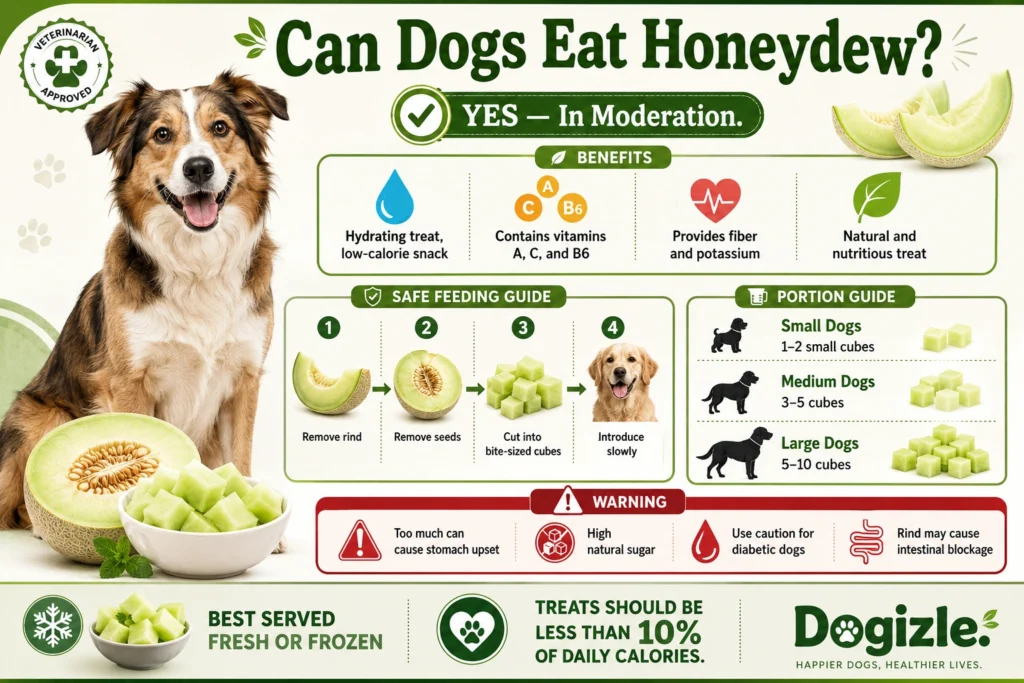
Yes, Dogs can Eat Honeydew in moderation. That is the short answer, but the details matter. Honeydew is considered non-toxic for dogs, and it can be a refreshing, low-calorie treat with a high water content. At the same time, it is still a sugary fruit, and the rind and seeds bring avoidable risks if you do not prepare it correctly.
For most dog owners, the real question is not “is it toxic?” but “is it actually a good idea for my dog?” That depends on your dog’s size, weight, digestion, and health history. A tiny cube can be fine for many dogs, while a big bowl of honeydew can quickly turn into stomach upset, extra calories, or a choking/blockage risk if rind or seeds are included. VCA specifically advises keeping treats to 10% of daily calories and introducing new foods slowly, especially for dogs prone to tummy trouble.
This guide gives you the complete answer: safety, nutrition, portion sizes, prep tips, diabetic-dog guidance, puppy notes, and a comparison with other summer fruits. It is written to help dog owners make a calm, confident decision without guesswork.
Quick Answer: Can Dogs Eat Honeydew?
Yes. Dogs can eat honeydew in small, plain, seed-free, rind-free amounts. ASPCA lists honeydew melon as non-toxic to dogs, and PetMD notes that it is low in calories, high in water, and generally safe when fed sparingly.
The important part is moderation. Honeydew contains natural sugar, so it should be treated like an occasional snack rather than a daily food. VCA recommends keeping treats and snacks to 10% of a dog’s daily calories, and PetMD cautions that honeydew may not be a good choice for dogs with diabetes or excess weight.
Honeydew Safety at a Glance
| Part of Honeydew | Safe for Dogs? | Why It Matters |
| Soft inner flesh | Yes, in moderation | Non-toxic and hydrating, but still sugary. |
| Rind/skin | No | Can cause digestive upset and intestinal blockage. |
| Seeds | Better to avoid | Not toxic, but they can be a choking hazard and are not meant to be fed intentionally. |
| Frozen pieces | Yes, if cut small | AKC uses pureed honeydew in frozen summer treats. |
| Large servings | Not recommended | Too much sugar can upset the stomach. |
Is Honeydew Good for Dogs?
Honeydew can be a nice occasional treat. PetMD describes it as low in calories, high in water, and a source of fiber, niacin, folate, potassium, and vitamins A, C, and B6. USDA’s nutrition data for 1 cup diced honeydew shows 61 calories, 16 g carbohydrates, 14 g sugar, 1 g fiber, and 34 mg vitamin C.
That sounds impressive, but it is important to keep the right perspective. Dogs do not need fruit in their diet to be healthy. So, honeydew is not a “superfood” for dogs, and it does not replace balanced dog food. Its real value is that it is a refreshing, low-fat treat that can fit into a sensible snack routine. VCA’s guidance on treats makes this easy to understand: the main diet should still provide the vast majority of the calories and nutrition.
Mini summary
Honeydew is useful as a treat, not as a nutritional requirement. The best use case is a small, plain snack on a warm day or a tiny training reward for a food-motivated dog.
Honeydew Nutrition for Dogs
Here is the simplest way to think about honeydew: it is mostly water, fairly low in calories, and naturally sweet. That makes it appealing for dogs, but the sugar content means portion control still matters. USDA’s honeydew nutrition data is especially useful because it gives you a real-world benchmark for how much sugar and energy you are adding.
| Nutrient in 1 cup diced honeydew (170 g) | Amount | Why Dog Owners Should Care |
| Calories | 61 | Easy to overfeed if you offer too much. |
| Carbohydrates | 16 g | Mostly from natural fruit sugars. |
| Total sugars | 14 g | Important for diabetic or overweight dogs. |
| Fiber | 1 g | Can support digestion in small amounts, but too much fruit may still upset the stomach. |
| Vitamin C | 34 mg | Helpful nutrition for humans; dogs still do not need fruit as a staple. |
| Water content | High | Makes honeydew feel refreshing in summer. |
What this means in practice
A few bite-sized pieces are fine for many dogs. A large serving can quickly become a sugar-heavy snack that does not leave much room in the daily treat budget. VCA’s 10% rule is the safest lens for deciding whether honeydew fits that day’s calories.
Can Honeydew Be Bad for Dogs?
Yes, honeydew can be a problem when it is fed the wrong way or to the wrong dog. The two biggest issues are sugar load and preparation mistakes. PetMD specifically warns that honeydew may not be a good choice for dogs with diabetes or excess weight, and it explains that the rind can lead to intestinal blockage while the seeds can create a choking hazard.
The fruit itself is not the enemy. The risk comes from turning a safe snack into an unsafe one. A bowl full of honeydew can be too much sugar. A chunk with rind attached can be hard to digest. Seeds can be annoying at best and dangerous at worst if they get caught or are swallowed in quantity.
Signs the fruit may not have agreed with your dog
Watch for vomiting, diarrhea, reduced appetite, lethargy, abdominal pain, or a bloated-looking belly. Those signs are common in dogs with gastrointestinal upset or a possible foreign-body issue, and they deserve prompt attention if they are persistent or severe.
Can Dogs Eat Honeydew Rind or Seeds?
No to the rind. Avoid the seeds. PetMD is very clear on this point: the rind can cause digestive upset and even intestinal blockage, while the seeds can be a choking hazard and are not meant to be fed intentionally.
The safest part of the fruit is the soft inner flesh only. If you are preparing honeydew for a dog, treat the rind and seeds as non-negotiable cleanup items, not optional ones. That simple habit removes most of the avoidable risk.
Best practice
Cut the melon open, remove the rind completely, scoop out all seeds, and only then cut the flesh into tiny bite-sized cubes. USDA also advises rinsing honeydew under running water before cutting to remove surface dirt.
How Much Honeydew Can Dogs Eat?
This is where most articles are too vague, and where a strong pillar page can beat them. VCA recommends keeping treats to 10% of daily calories, and PetMD provides a practical size-based feeding guide. That combination is very useful for dog owners because it turns “moderation” into something they can actually use.
| Dog size | PetMD honeydew guide | Practical reading |
| Extra-small dogs (2–20 lb) | 1 one-inch cube, sliced smaller | A tiny taste is enough. |
| Small dogs (21–30 lb) | 2 one-inch cubes, cut smaller | Still a very small treat. |
| Medium dogs (31–50 lb) | 3–5 one-inch cubes, cut smaller | Good as an occasional snack. |
| Large dogs (51–90 lb) | Up to 10 one-inch cubes, cut smaller | Bigger dogs still need moderation. |
| Extra-large dogs (91+ lb) | Up to 15 one-inch cubes | Size does not cancel out sugar. |
A smarter rule than “more for big dogs.”
Even a large dog can overdo honeydew if it is offered too often, especially if the dog is overweight or not very active. VCA reminds owners that treats can unbalance the diet and add calories quickly, especially when the dog has a low calorie requirement.
Simple portion formula
Use this rule:
- Tiny dog: A taste or one small cube
- Small dog: A couple of tiny cubes
- Medium dog: A few bite-sized cubes
- Large dog: Asmall handful, not a bowl
- Any dog with health issues: Ask your vet first
How to Safely Serve Honeydew to Dogs
Serving honeydew safely is easy if you follow a clean, repeatable routine.
- Wash the melon under running water. USDA recommends rinsing honeydew before cutting.
- Cut away the rind completely. PetMD says the rind should be removed before feeding.
- Remove all seeds. The seeds are not meant to be intentionally fed.
- Cut the flesh into small cubes. Small pieces are safer and easier to chew.
- Serve only a little at first. VCA advises introducing new treats slowly and one at a time.
- Watch your dog after the first serving. If loose stool, vomiting, or itching appear, stop and speak with your vet if the symptoms do not settle.
Frozen honeydew for dogs
Frozen honeydew can be a smart summer treat if the pieces are small enough to chew safely. AKC even suggests pureeing watermelon, cantaloupe, or honeydew and freezing the mixture in silicone molds or ice cube trays. That is a useful option for hot-weather enrichment, especially for dogs that enjoy licking and chewing.
Best use cases
Frozen honeydew works well as:
- a cooling snack after a walk
- a small enrichment reward in a lick mat or mold
- a seasonal treat for dogs that like fruit
Just keep the portions small and plain. No sugar, no syrup, no salt, and no dairy-heavy toppings.
Can Puppies Eat Honeydew?
Puppies can usually have a tiny amount of honeydew if they tolerate it well, but the portion should be especially small. Puppies have sensitive digestive systems, and VCA recommends introducing new foods slowly and one at a time. That makes honeydew a “maybe, in a taste-sized amount” food rather than a regular puppy snack.
For puppies, the best approach is simple:
- Start with a tiny cube
- remove every seed and every bit of rind
- Give it only after the puppy is already eating well
- Stop if the stool becomes soft or the puppy seems unsettled
The goal is not to “feed fruit.” The goal is to avoid stomach trouble while still allowing a safe variety of treats when appropriate.
Can Diabetic or Overweight Dogs Eat Honeydew?
This is one of the most important special cases. PetMD says honeydew may not be safe for dogs with diabetes and is not a good choice for dogs that are overweight because it is high in sugar. VCA also says dogs with medical conditions or special diets should be checked with the veterinary care team before receiving treats.
Practical rule
If your dog has diabetes, insulin sensitivity, pancreatitis, a weight-loss plan, or a veterinary-prescribed diet, do not assume fruit is harmless just because it is natural. Natural sugar is still sugar. That is why a vet-approved snack plan matters more than the “dog-safe fruit” label.
Honeydew vs. Other Summer Fruits for Dogs
Honeydew is not the only melon people share with dogs. AKC includes watermelon, cantaloupe, and honeydew as fruits that can be used in frozen summer treats. PetMD also lists watermelon among fruits dogs can eat, which supports the idea that these melons can all fit into a treat routine when served properly.
| Fruit | General dog-friendliness | Best use | Watch out for |
| Honeydew | Safe in moderation | Cool summer treat, tiny cubes, frozen molds | Sugar, rind, seeds, diabetic dogs. |
| Cantaloupe | Used by AKC in frozen treats | Pureed or cubed in small amounts | Overfeeding, sugar, and rind. |
| Watermelon | Listed by PetMD as a safe fruit option | Small seedless pieces or frozen cubes | Rind, seeds, and excess volume. |
Which melon is best?
For many dogs, the “best” melon is the one you can serve most safely in the smallest amount. Honeydew is attractive because it is hydrating and easy to cut into small pieces, but it is still best treated as an occasional snack.
Common Mistakes Dog Owners Make
The biggest honeydew mistakes are surprisingly simple, which is why they are so common.
- Feeding the rind because “it is just fruit skin.” PetMD warns it can cause digestive upset and blockage.
- Leaving seeds in the fruit. PetMD says they are not toxic, but they are not meant to be intentionally fed and can be a choking hazard.
- Giving too much because the fruit is “healthy.” VCA’s treatment guidance still applies.
- Serving honeydew to a dog with diabetes or weight issues without checking first.
- Turning a snack into a habit. Fruit should stay occasional, not daily.
Mini summary
Honeydew becomes risky when dog owners skip the small details. Remove the rind, remove the seeds, keep the portion tiny, and do not feed it as a routine food.
When to Call a Vet
If your dog only had a tiny, plain piece of honeydew and seems normal, there is usually no emergency. But if your dog ate rind, a lot of seeds, or a large portion, or starts acting unwell, call your vet. Foreign-body and GI-upset sources list warning signs such as vomiting, diarrhea, abdominal pain or tenderness, decreased appetite, lethargy, and changes in behavior.
| Symptom | Why it Matters |
| Repeated vomiting | Can signal GI upset or blockage. |
| Diarrhea | Common after stomach irritation or too much fruit. |
| Abdominal pain/tenderness | Can happen with blockage or serious GI irritation. |
| Lethargy | A common warning sign when a dog feels unwell. |
| Loss of appetite | May indicate a problem rather than a simple snack issue. |
Emergency rule
If your dog has repeated vomiting, obvious pain, a swollen abdomen, blood in vomit or stool, or seems weak and listless, treat it as urgent veterinary territory rather than a “wait and see” moment.
Expert Tips for Feeding Honeydew the Smart Way
Use these practical habits to keep honeydew safe and useful:
- Keep pieces smaller than you think you need.
- Use it as a rare topper, not a meal addition.
- Save it for hot days or training rewards.
- Pair it with your dog’s calorie budget, not your own appetite.
- Store leftover cut melon in the fridge and use it quickly.
VCA’s treat guidance and PetMD’s small-portion approach support this kind of low-risk feeding style.
Best accessories for safer serving
For dog owners who like practical tools, the most useful items are simple: a sharp knife, a stable cutting board, a small freezer tray, and a lick mat or Kong-style toy for frozen purees. PetMD and AKC both support frozen treat formats, and VCA supports using food wisely in training and enrichment.
Honeydew in Real-Life Dog Ownership Scenarios
Apartment dogs
For apartment dogs, honeydew can be a neat low-mess treat when served as a few tiny cubes. It is easy to manage, easy to refrigerate, and less crumbly than many dry snacks. That said, indoor dogs still need strict portion control because treats can add up quickly.
Family homes with children
Honeydew is a good example of a snack that should be prepared by an adult, not improvised by kids. Children may not understand the difference between flesh, rind, and seeds, so the prep job should be handled properly before any dog gets a piece. The key is preventing accidental rind or seed feeding.
Senior dogs
Older dogs often need tighter calorie control. A small amount of honeydew can be fine, but older dogs with dental issues, diabetes, or low activity levels may need even more caution. VCA’s medical-condition guidance makes it clear that special diets deserve special care.
Hot-weather and travel use
Because USDA places honeydew in summer and AKC recommends frozen melon treats, honeydew works nicely as a seasonal warm-weather snack. It is a sensible option for a walk-day reward, a picnic treat, or a frozen lick-mat filling when you want something light and hydrating.
Pros and Cons of Honeydew for Dogs
| Pros | Cons |
| Non-toxic to dogs. | Natural sugar means moderation matters. |
| Low in calories compared with many treats. | Not a fit for every diabetic or overweight dog. |
| High water content makes it refreshing. | Rind can cause blockage. |
| Easy to freeze into summer treats. | Seeds can be a choking hazard if intentionally fed. |
People Also Ask
It is better as an occasional treat than a daily habit. VCA recommends keeping treats within 10% of daily calories, and honeydew still brings sugar into the diet.
Yes, if the pieces are small and plain. AKC specifically uses honeydew in frozen summer treat ideas.
No. PetMD warns the rind can cause digestive upset and intestinal blockage.
It is better not to intentionally feed them. PetMD says the seeds are non-toxic but can be a choking hazard and are not likely to be digested well in large quantities.
Usually, only in tiny amounts, and only if your puppy tolerates it well. VCA advises introducing new treats slowly and one at a time.
Only with veterinary approval, and often it is better avoided. PetMD specifically warns that the sugar content may make honeydew unsuitable for dogs with diabetes.
If the portion begins to eat into the treat budget, causes loose stool, or becomes a regular snack, it is too much. Treats should stay within the 10% calorie rule.
Wash it, remove the rind, remove the seeds, cut into small cubes, and start with a tiny amount. USDA and PetMD both support that prep routine.
Conclusion
So, can dogs eat honeydew? Yes, they can — but only when it is served the smart way. Honeydew is non-toxic, hydrating, and easy to turn into a small summer treat, yet it still needs careful portion control because of its sugar content. The rind and seeds should be removed, and dogs with diabetes, weight issues, or sensitive stomachs deserve extra caution.
The best takeaway is simple: treat honeydew as a tiny, Occasional Snack, not a staple food. Use small cubes, keep the treat budget in mind, and watch your dog after the first serving. When in doubt, ask your veterinarian before offering fruit to a dog with a medical condition. That is the responsible way to feed and the safest way to build trust with your dog over time.
Bookmark this guide, share it with another dog owner, and explore more Dogizle articles for practical, veterinary-aware dog care advice.