Introduction
Yes, ” Can dogs eat scrambled eggs is a real safety question, and the answer matters because eggs can be either a helpful treat or a hidden problem depending on how they are prepared. Plain, fully cooked scrambled Eggs can be a good occasional addition for many dogs. Still, breakfast eggs made for humans often include butter, oil, salt, pepper, onion, garlic, or cheese, which changes the picture fast.
For many dog owners, the confusion is not about whether eggs are “good” in theory. It is about the practical stuff: How much is safe? Can puppies have them? Are scrambled eggs okay for an upset stomach? What if my dog ate eggs with butter or seasoning? This guide answers those real-world questions in a clear, vet-aware way so you can make a smart decision without guessing.
Eggs are not a complete meal, and they should not replace a balanced dog food. But used carefully, they can be a simple, protein-rich treat that fits into a responsible feeding routine. The key is moderation, plain cooking, and knowing when a dog’s health history means eggs are not the best choice.
Quick answer: Can dogs eat scrambled eggs?
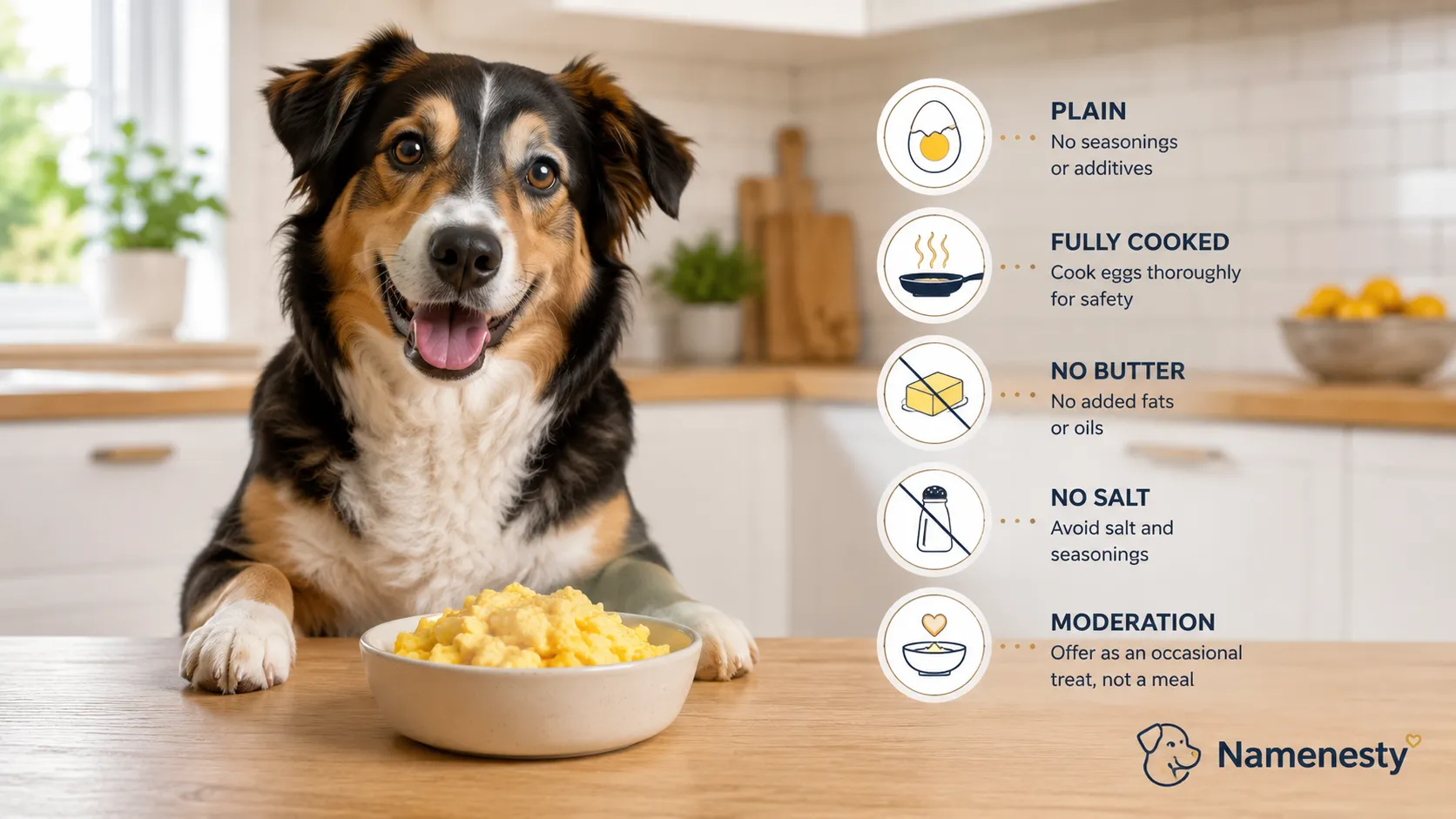
Yes — dogs can eat plain, fully cooked scrambled eggs in moderation. The safest version is cooked through with no butter, oil, salt, pepper, seasoning, onion, garlic, or other add-ins. Raw or undercooked eggs should be avoided because of Salmonella risk and the chance of nutrient issues from repeated raw egg white feeding.
Are scrambled eggs good for dogs?
Scrambled eggs can be a useful treat because they provide protein and other nutrients, and several major pet nutrition sources describe cooked eggs as a safe occasional food for dogs when prepared simply. AKC notes they are a source of protein, fatty acids, and vitamins.PetMD says eggs provide high-quality protein, healthy fats, vitamins, and minerals, and Purina calls eggs a strong protein source for dogs.
That said, “good” does not mean “feed freely.” Eggs are still a treat, not a complete diet. General veterinary nutrition guidance says treats should stay at or below about 10% of daily calories so the main diet remains nutritionally balanced.
Why eggs can be helpful
- They are easy to portion.
- They are soft and easy to chew.
- They can work well as an occasional topper or training reward.
- Some dogs with a reduced appetite may find them more appealing than kibble.
Why eggs still need limits
- Too much can cause weight gain or digestive upset.
- Egg yolks add fat, which is not ideal for every dog.
- Some dogs can develop food allergies to egg proteins.
How to make scrambled eggs for dogs safely
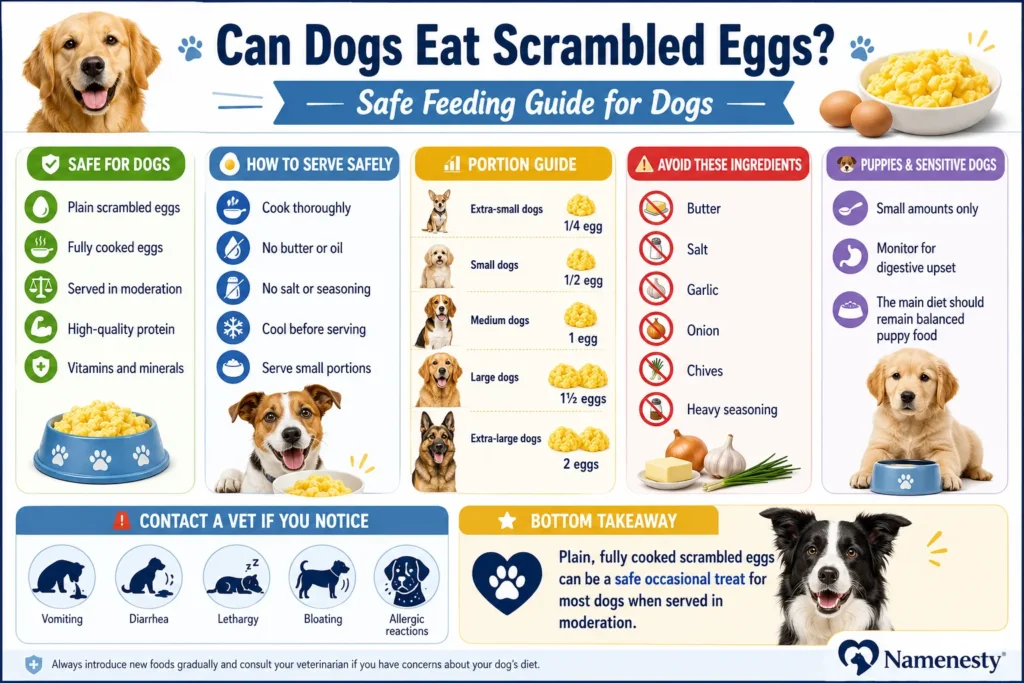
The safest method is simple: cook the egg fully, use no added fats or seasonings, cool it slightly, and serve it in small pieces. AKC and PetMD both say eggs should be fully cooked and plain, while Purina UK specifically says scrambled eggs are okay as an occasional treat if they are plain and free of salt, pepper, and butter.
Safe scrambled-egg method
- Crack one egg into a clean bowl.
- Whisk lightly.
- Cook it thoroughly in a Nonstick pan or a dry pan, with no butter, oil, or seasoning.
- Let it cool.
- Cut or break it into small, bite-sized pieces.
- Serve as a treat, topper, or training reward.
What not to add
- Butter
- Oil
- Salt
- Pepper
- Garlic
- Onion
- Chives
- Leeks
- Cheese
- Milk in rich amounts
Best practice for storage
If you cook eggs in advance, refrigerate them promptly and use them within a few days. PetMD says prepared eggs can be refrigerated at 40°F for up to four days.
How many scrambled eggs can dogs eat?
The best answer is to treat scrambled eggs like any other treat and keep the amount modest. PetMD’s egg guidance gives a useful starting point by body size and recommends feeding eggs only 1–2 times per week, while keeping all treats under 10% of daily calories.
Practical feeding chart
| Dog size | Starting amount | Frequency |
| Extra-small dogs (2–10 lb / 1–4.5 kg) | 1/4 egg | 1–2 times per week |
| Small dogs (11–20 lb / 5–9 kg) | 1/2 egg | 1–2 times per week |
| Medium dogs (21–50 lb / 10–23 kg) | 1 egg | 1–2 times per week |
| Large dogs (51–90 lb / 23–41 kg) | 1 1/2 eggs | 1–2 times per week |
| Extra-large dogs (91+ lb / 41+ kg) | 2 eggs | 1–2 times per week |
PetMD frames these as weekly portions for cooked eggs, and the same conservative approach works well for plain scrambled eggs, too. Start shorter the first time, then watch how your dog responds before increasing.
A simple rule of thumb
For most healthy dogs, one small plain scrambled egg serving is enough. Bigger dogs can tolerate more, but “more” is not automatically better. Treats still need to fit inside the dog’s daily calorie budget.
Can puppies eat scrambled eggs?
Yes, puppies can eat eggs in small amounts, but portions should stay limited, and their main food should still be a complete puppy diet. PetMD says puppies can eat eggs with portion control, and Purina notes that puppies can have eggs, but age-appropriate nutrition should remain the foundation.
Puppy-friendly approach
- Offer only a tiny amount the first time.
- Keep it plain and fully cooked.
- Use it as an occasional topper, not a daily habit.
- Stop if you see vomiting, loose stool, itching, or a sudden change in appetite.
Puppies are still growing, so the safest feeding decisions are the simplest ones. A little scrambled egg is fine for many puppies, but a puppy’s core nutrition should come from a balanced diet designed for growth. WSAVA’s nutrition guidance emphasizes individualized nutrition planning rather than one-size-fits-all feeding advice.
Can dogs eat scrambled eggs every day?
For most dogs, daily scrambled eggs are not the best idea. Purina UK describes scrambled eggs as an occasional treat, and PetMD’s broader egg guidance keeps eggs in the treat category rather than the daily-diet category.
Why avoid making them a daily habit?
- Treat calories add up quickly.
- Too much egg can crowd out balanced dog food.
- Richer feeding patterns can lead to digestive upset or weight gain.
- Dogs with a pancreatitis history or low-fat dietary needs may need extra caution.
A healthier pattern is occasional use: a small scramble once or twice a week, or even less if your dog is small, sedentary, overweight, or prone to stomach upset.
What if my dog ate buttered or seasoned scrambled eggs?
A small accidental bite is not always an emergency, but buttered or seasoned scrambled eggs are not ideal for dogs. The main concern is not just the egg itself; it is the extras. AKC and Purina both say eggs should be plain, and AKC specifically warns against salt, seasoning, spices, and common human add-ins. Garlic and onions are especially important to avoid because they are toxic to dogs.
Ingredients that raise concern
- Butter and oil: too much fat for some dogs
- Salt: unnecessary and potentially harmful in excess
- Onion, garlic, chives, leeks: toxic allium ingredients
- Heavy cream or cheese: can be too rich and may upset the stomach
Watch for these signs after a bad egg meal
| Symptom | Why it matters |
| Vomiting | Can signal stomach irritation or intolerance |
| Diarrhea | Common after rich or seasoned food |
| Lethargy | May suggest a stronger reaction or illness |
| Bloating | Can indicate digestive distress |
| Loss of appetite | Often appears after stomach upset |
| Itchy skin or ear issues | Possible food allergy sign |
| Pale gums, weakness, collapse | Needs urgent veterinary attention if garlic/onion exposure occurred |
What to do next
If your dog only stole a tiny bite and seems normal, monitor them closely. If they ate a large amount, or if the eggs contained onion, garlic, or a lot of butter, contact your veterinarian for advice. So vomiting, diarrhea, bloating, weakness, or unusual lethargy appear, do not wait.
Are scrambled eggs safe for dogs with upset stomachs?
They can be, in the right situation. AKC says cooked eggs can help an upset stomach, and PetMD lists Scrambled Eggs among common bland-diet options for dogs with vomiting. But that does not mean every sick dog should be fed eggs at home without caution. Persistent vomiting, diarrhea, or abdominal pain needs veterinary input.
Here is the practical approach: if your dog has mild stomach trouble and your vet agrees, plain cooked eggs may be useful as part of a gentle diet. If symptoms are severe, repeated, or accompanied by lethargy, bloating, fever, or dehydration, the dog needs professional care rather than a kitchen remedy.
Dogs who should be extra cautious with scrambled eggs
Some dogs handle eggs well. Others need a more careful approach.
Be careful or avoid eggs if your dog:
- Has a history of pancreatitis
- Is overweight and already on a calorie-controlled plan
- Has known food allergies or skin problems
- Is on a low-fat diet
- Reacts to rich foods with gas, vomiting, or diarrhea
PetMD notes that egg yolks are high in fat and may not suit dogs with pancreatitis, obesity, or low-fat dietary needs. The same page also says dogs can develop egg allergies, with signs such as vomiting, diarrhea, itching, and ear or paw irritation.
Common mistakes dog owners make
1) Feeding eggs made for humans
Breakfast eggs often contain salt, butter, oil, onion, garlic, or cheese. That is the fastest way to turn a safe food into a less safe one.
2) Assuming “natural” means unlimited
Eggs are natural, but they still add calories and fat. A natural food can still be too rich if fed too often.
3) Giving too much at once
Even safe foods can cause gas, bloating, vomiting, or diarrhea if the portion is too large, especially the first time.
4) Replacing balanced dog food with eggs
Eggs are a treat, not a complete meal. Core nutrition should come from complete and balanced dog food.
5) Ignoring allergy signs
Itchy ears, paw licking, vomiting, and diarrhea after eggs can point to a food reaction. Stop feeding eggs and contact your vet if those signs appear.
Expert tips for feeding scrambled eggs the smart way
- Keep the recipe plain.
- Use them as a topper, not a main dish.
- Cut them into tiny pieces for small dogs.
- Start with a small amount and observe.
- Keep calories inside the 10% rule.
- Save richer breakfast leftovers for humans, not the dog.
Best use cases
Scrambled eggs work especially well as:
- a short training reward,
- a food topper for a picky eater,
- a soft treat for senior dogs with chewing trouble,
- a light, occasional snack for a healthy adult dog.
Europe-specific practical advice
For dog owners in the UK and across Europe, the safest feeding mindset is the same: keep the food simple, keep treats limited, and keep the overall diet nutritionally balanced. WSAVA’s global nutrition guidance stresses individualized nutrition, and FEDIAF provides nutritional guidelines for dog and cat foods used widely in Europe. That matters because a treat like scrambled egg should fit around the dog’s complete diet, not compete with it.
In real life, that means:
- use eggs as an occasional add-on, not a habit,
- Check the main food label for a complete and balanced statement.
- Be extra careful with rich leftovers at holidays and family breakfasts,
- Ask a veterinarian if your dog has breed-related digestive sensitivity or a medical diet.
Apartment living, urban dog ownership, and seasonal care
Apartment dogs
For apartment dogs, scrambled eggs can be handy because they are small, soft, and easy to portion. That said, rich foods can sometimes lead to gas or digestive noise, which every apartment owner learns to respect quickly. Use tiny portions and avoid feeding late at night if your dog gets gassy.
Urban dog owners
Busy city routines often mean dogs get more treats during training and less movement during the day. That makes the 10% treat rule even more important. Small, low-ingredient treats are better than turning breakfast leftovers into a second meal.
Cold weather and seasonal routines
In winter, many dogs exercise less, which means extra calories from treats matter more. If you use scrambled egg as a winter topper, keep the portion small and consistent. Holiday meals also raise the risk of accidental butter, salt, onion, and garlic exposure, so kitchen boundaries matter more during the festive season.
Pros and cons of scrambled eggs for dogs
| Pros | Cons |
| Good source of protein and useful nutrients | Can add extra fat and calories |
| Soft and easy to eat | Rich preparation can upset the stomach |
| Simple to portion | Human-style Eggs often include unsafe add-ins |
| Can help picky dogs accept food | Not suitable for all dogs with medical issues |
Safe vs unsafe egg feeding at a glance
| Egg style | Safe for dogs? | Notes |
| Plain, fully cooked scrambled eggs | Yes | Best option in moderation |
| Plain boiled eggs | Yes | Also, a very safe choice |
| Raw eggs | No | Salmonella risk and nutrient concerns |
| Scrambled eggs with butter | Not ideal | Too rich for some dogs |
| Scrambled eggs with salt | Not recommended | Unnecessary and potentially harmful |
| Scrambled eggs with onion or garlic | No | Onion/garlic is dangerous to dogs |
People also ask
It is better not to. Plain cooked eggs are the safest version, and salt is an unnecessary extra that competes with the dog’s clean, low-risk version of the food.
It is better to avoid buttered eggs. Butter adds fat, and the safest egg advice from major pet sources is always “plain and fully cooked.”
Sometimes they can fit into a vet-approved bland diet, but diarrhea can also signal something more serious. If symptoms are ongoing, severe, or paired with vomiting or lethargy, call your veterinarian.
Yes. Egg allergies are not the most common dog allergy, but they do happen. Watch for vomiting, diarrhea, itching, ear problems, and paw irritation.
Not always. Egg whites are lower in fat, which may matter for some dogs, but the yolk also carries useful nutrients. The right choice depends on the dog’s health status, not on a universal rule.
Yes, especially if your dog is a puppy, overweight, elderly, allergic, has pancreatitis, or is already on a prescription diet. WSAVA’s nutrition guidance emphasizes individualized feeding plans, not one-size-fits-all shortcuts.
Conclusion
So, can dogs eat scrambled eggs? Yes — but only when they are plain, fully cooked, and served in moderation. That is the version that fits current veterinary-aware guidance best. Use small portions, keep the egg free from salt, butter, oil, onion, garlic, and other seasonings, and make sure the main diet still comes from a complete and balanced dog Food.
The smartest dog owners do not just ask whether a food is safe. They ask whether it is safe for this dog, in this amount, on this day. That is the standard this topic deserves. Save the big breakfast for yourself, give your dog the plain version only when it truly fits, and use this guide as the practical rulebook for safer feeding. Bookmark it, share it with another dog owner, and explore more Dogizle guides for a stronger daily routine and better long-term dog care.