Best Dog Food for Picky Eaters — The Truth Vets Don’t Tell You
The best dog food for picky eaters isn’t found in fancy packaging. European vets tested dozens of brands — most failed. This guide exposes what actually works in 2026, saving you money and frustration. Shocking truth: the top-rated pick costs less than average. Your dog was never picky — you had the wrong food. If your Dog Approaches the bowl, takes one quick sniff, and then walks away as though the meal is beneath them, you are not dealing with a rare problem. In homes across Europe, this is one of the most frequent feeding frustrations dog owners face. It appears in city apartments in Berlin, family kitchens in Spain, small flats in Paris, countryside homes in Italy, and everywhere in between.
Yet the label “picky eater” often hides a much more complicated reality. Best Dog Food: Picky Eaters do not become selective for no reason. Refusing food is usually a behavioral pattern, a sensory preference, a digestive clue, or a signal that the current feeding routine is not working. In other words, picky eating is rarely a personality trait. It is a message.
That message can be shaped by learned habits, food aversion, texture sensitivity, overfeeding treats, digestive discomfort, or simple boredom from eating the same thing every day. Some dogs develop a preference for highly aromatic food. Others become suspicious of dry kibble. Some need a calmer, more structured routine to rediscover appetite. And in a smaller number of cases, the issue is medical, which is why appetite changes should never be ignored.
Why Is Your Dog Suddenly Refusing to Eat?
This guide is designed to help you move beyond guesswork. You will learn how picky eating develops, how to recognize the type of picky eater your dog may be, which food formats tend to work best, and how to use a 7-day reset plan to rebuild healthy feeding habits. The goal is not merely to get your dog to eat today. The goal is to create a sustainable, balanced, and stress-free feeding system that supports long-term health.
By the end, you will understand the best dog food for picky eaters in Europe and, more importantly, the best strategy for turning mealtime from a struggle into a reliable daily routine.
Why Dogs Become Picky Eaters:
To solve picky eating, you must first understand the cause. Dogs rarely refuse food randomly. Their behavior usually follows a pattern that can be traced to one or more of the following triggers.
1. Learned Behavior: The Most Common Cause
A dog learns from outcomes. When refusing food leads to a better reward later, the dog quickly remembers that pattern. This is classic reinforcement. For example, if a dog skips dinner and then receives chicken, table scraps, a tastier topper, or a different meal altogether, the dog learns that refusing food may produce something more appealing.
Over time, the message becomes clear: “If I wait, something better appears.” That is how picky eating often becomes a learned habit rather than an inborn trait.
Common owner behaviors that accidentally reinforce refusal include changing food too quickly, adding extra toppings at every hesitation, hand-feeding during mealtime protests, and offering treats immediately after the bowl is declined. These actions come from care and concern, but they can unintentionally build a reward loop around skipping meals.
2. Smell, Texture, and Sensory Sensitivity
Dogs rely heavily on smell to evaluate food. For many dogs, aroma is far more influential than flavor. If a meal does not smell rich enough, fresh enough, or meaty enough, the dog may reject it before even taking a bite.
Texture also matters. Some dogs love crunchy kibble. Others prefer soft, moist food. Some dislike hard, dry pieces that require more chewing. Others become suspicious of food that feels too slimy or too dense. This is why a food that looks acceptable to a human may still be unappealing to a dog.
Aroma strength, fat content, moisture level, and texture all influence how palatable the food feels. In practical terms, a high-smell wet food often wins over standard dry kibble when feeding a highly selective dog.
3. Treat Overload and Appetite Disruption
Treats are useful for training, bonding, and reward-based learning. But too many treats can ruin regular meal appetite. When a dog receives frequent snacks, they may simply stop feeling hungry enough for complete meals. They may also learn to expect food that is more exciting than their normal diet.
This problem is especially common when treats become the emotional answer to mealtime stress. Owners may offer a snack “just to get something into them,” then another snack later, then a topper, then another alternative if the dog refuses again. The result is a dog who waits for the upgraded version and no longer trusts the main meal to be worth eating.
4. Medical or Digestive Issues
Not every picky eater is behaviorally selective. Sometimes food refusal points to physical discomfort. Dental pain, gingival inflammation, gastrointestinal upset, parasites, stomach irritation, food intolerances, or a general sense of unwellness can all reduce appetite.
A sudden change in eating patterns is especially important. If a dog that normally eats well suddenly stops eating, eats very little, or seems uncomfortable around food, the safest step is to consult a veterinarian. In those situations, the issue may not be preference at all.
5. Boredom, Routine Fatigue, and Sensory Repetition
Even dogs can get tired of repetition. Eating the same protein, same texture, same bowl location, and same routine every day can create mild sensory fatigue. This is more noticeable in dogs that are energetic, intelligent, or especially environment-aware.
Some breeds seem more likely to display this pattern, though any dog can become bored with monotony. A rotating protein schedule, a better feeding setup, or a more engaging mealtime experience can restore interest in food.
Types of Picky Eaters:
Different picky eaters need different solutions. Before choosing the best dog food for picky eaters, it helps to identify the behavior pattern.
1. The Snubber
The Snubber sniffs the bowl and walks away almost immediately. This type often reacts to weak aroma, unfamiliar texture, or low food excitement. These dogs usually respond well to highly fragrant wet food, fresh food, or kibble with a strong palatability boost.
2. The Bored Eater
The Bored Eater consumes food normally for a while, then suddenly loses interest. The issue here is often monotony rather than a true dislike of food. A controlled rotation system, with different but suitable proteins and textures, may help restore enthusiasm.
3. The Treat Addict
The Treat Addict refuses regular meals but remains highly interested in snacks, toppers, and higher-value food. This is usually a sign of learned expectation. The solution is not more flavoring. The solution is structure, consistency, and reset discipline.
4. The Sensitive Stomach Dog
The Sensitive Stomach Dog may eat slowly, hesitantly, or inconsistently because the current food causes discomfort. These dogs often benefit from limited ingredient diets, simpler formulas, and vet-approved transitions.
Knowing the type of picky eater you are dealing with prevents wasted effort. You do not fix a Snubber the same way you fix a Treat Addict. You do not solve digestive sensitivity with the same method used for boredom.
Best Dog Food for Picky Eaters in Europe:
The best food depends on the dog’s preference profile, digestive tolerance, age, breed size, and current feeding history. Still, some formats consistently perform better than others.
1. Wet and Fresh Dog Food: Highest Success Rate for Selective Dogs
For many picky dogs, wet food is the easiest win. It has a stronger aroma, softer texture, and more immediate sensory appeal than most dry kibble. The moisture content also makes the food feel richer and often easier to accept.
Wet food tends to work particularly well for Snubbers, senior dogs, small breeds, and dogs that have become tired of dry meals. It can also help when a dog has mild chewing sensitivity or simply needs a more enticing feeding experience.
The primary advantage of wet food is palatability. The aroma reaches the dog quickly, which matters because smell strongly influences acceptance. Many dogs that reject dry kibble will eat a wet formula almost immediately.
2. High-Protein Enhanced Kibble
Not all kibble is created equal. Modern European kibble can be far more attractive than older, flat-tasting formulas. Some premium dry foods include freeze-dried coatings, animal fat enhancers, richer meat meals, and more appealing protein profiles such as fish, lamb, turkey, or chicken.
This can be a strong option for moderate picky eaters who do not need a full switch to wet food. It also works for owners who want the convenience of dry storage but still need better food acceptance.
3. Freeze-Dried and Air-Dried Food
Freeze-dried and air-dried products are increasingly popular across Europe because they offer strong aroma, high meat content, and minimal processing. These foods often feel more “real” to dogs because the smell and texture are more intense than standard kibble.
They may suit Bored Eaters, highly food-motivated dogs who need variety, and owners looking for a more premium feeding experience. They can also be useful as toppers or transition foods.
4. Limited Ingredient Diets
For dogs with suspected food sensitivity, a limited ingredient diet can make a big difference. These formulas usually contain fewer components, a single protein source, and less nutritional clutter. The goal is to simplify digestion and reduce the chance of triggering discomfort.
LID formulas are often useful for Sensitive Stomach Dogs, allergy-prone dogs, and dogs that seem uncomfortable after eating richer meals. While they may not be the most exciting option for every picky eater, they are often the most practical for dogs with underlying intolerance issues.
How to Choose the Right Food Format for Your Dog
Selecting food is not only about ingredients. It is also about feeding behavior. A smart choice considers the dog’s sensory preferences, stomach sensitivity, and history of refusal.
Ask these questions:
Does the dog avoid food immediately, or only after repeated exposure? Does the dog prefer moisture, softness, or a strong odor? So does the dog show signs of digestive upset after meals? Does the dog still eat treats enthusiastically but reject complete meals?
The dog rejects kibble but eats wet food; the problem is likely palatability. If the dog avoids food across several formats and also shows discomfort, the issue may be medical or digestive. If the dog eats better after a hunger reset, the problem may be behavioral reinforcement.
The best dog food for picky eaters is not a single universal product. It is the food that solves the actual cause behind the refusal
The 7-Day Picky Eating Reset Plan:
One of the most effective ways to rebuild appetite is to remove confusion. Dogs thrive on clarity, rhythm, and consistent outcomes. The following reset plan helps restore normal feeding behavior by reducing emotional pressure and strengthening mealtime predictability.
Step 1: Remove All Extras
Break treats before meals. Stop table scraps. Stop random toppings. The Stop free feeding all day. When extras remain available, hunger never fully resets, and the dog never learns that the regular bowl matters.
The objective is not punishment. The objective is to restore a normal appetite cycle.
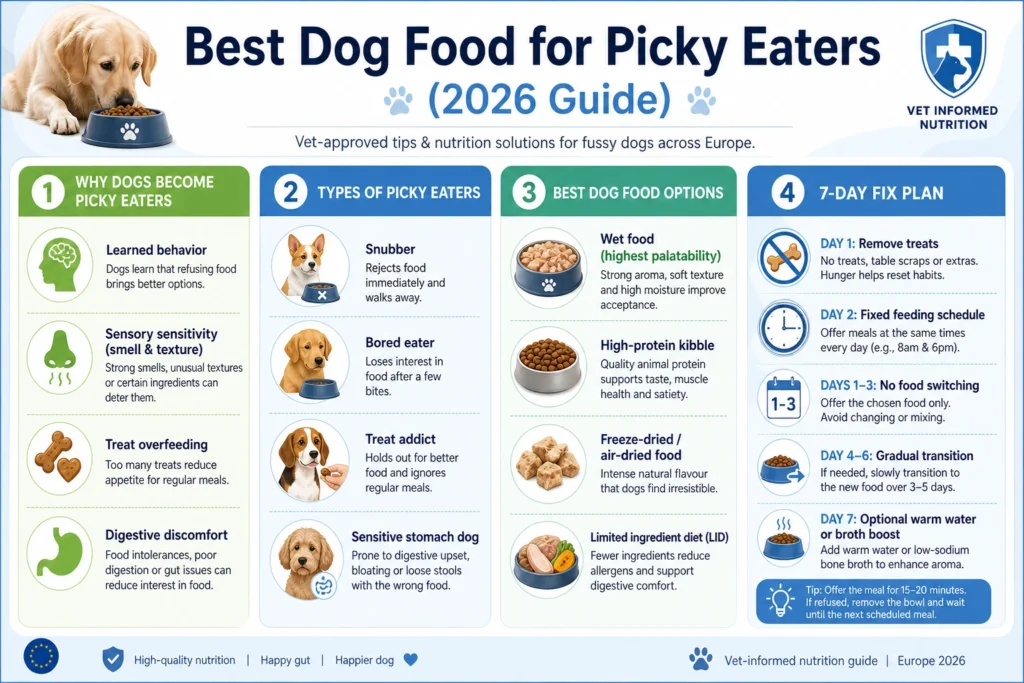
Step 2: Create Fixed Feeding Windows
Offer the meal for 15 to 20 minutes, then remove the bowl if the dog does not eat. Do not replace it with a different meal. Does not negotiate. Do not chase the dog around the house with food.
Consistency is powerful. A dog learns faster when the routine remains stable.
Step 3: Hold the Reset for Days 1 to 3
During the first three days, keep the food the same. Do not switch flavors, do not add toppers, and do not keep improvising. This gives the dog a chance to relearn hunger timing and understand that the meal is not endlessly negotiable.
Step 4: Use a Gradual Transition When Changing Food
If you decide to change from one formula to another, transition slowly.
| Day | Old Food | New Food |
| 1–2 | 75% | 25% |
| 3–4 | 50% | 50% |
| 5–6 | 25% | 75% |
| 7 | 0% | 100% |
A gradual change reduces digestive stress and makes acceptance more likely.
Step 5: Improve Appeal Without Creating Dependency
You can improve mealtime appeal without turning every meal into a luxury event. Safe, useful options include warm water over kibble, a small amount of vet-approved broth, or food puzzles that make the meal feel more engaging.
The key is to support interest, not create a new habit where refusal always leads to upgrades.
Common Mistakes That Make Picky Eating Worse
Many feeding problems are unintentionally created by loving owners trying to help.
The most common mistakes include switching food too often, leaving food out all day, offering too many toppings, ignoring dental discomfort, and turning mealtime into an emotional plea. When the dog senses tension, attention, or negotiation, the meal can become a social performance rather than a simple routine.
Another mistake is assuming that the dog should always be coaxed into eating. In many healthy dogs, appetite returns more reliably when the schedule becomes calm and predictable.
Ingredient Guide:
Not all ingredients affect palatability the same way. Some create immediate excitement, while others keep meals functional but less enticing.
High-Palatability Ingredients
Chicken fat often boosts aroma and taste. Salmon oil can make food more appealing while supporting skin and coat health. Beef liver adds a strong, meaty profile. Lamb meal is often attractive to dogs that enjoy richer proteins. Freeze-dried meat coating can dramatically improve acceptance.
Lower-Appeal Ingredients
Very dry, low-fat kibble can be less exciting for selective eaters. Heavy plant fillers may reduce sensory interest. Artificial formulas with weak aroma often struggle with picky Dogs.
The goal is not simply to choose the “tastiest” food. The goal is to select a nutritious formula that the dog actually wants to eat consistently.
Real-Life European Feeding Scenarios
Europe is diverse, and feeding patterns differ by lifestyle, climate, and routine.
Apartment Living in Berlin, Paris, or London
Urban dogs may have lower daily activity, fewer scent-rich outdoor experiences, and more routine confinement. This can sometimes reduce appetite or create boredom. In these cases, structured feeding and enrichment toys can help.
Cold Regions, such as the Nordics or Switzerland
Dogs living in colder climates may need higher energy intake, especially if they are active outdoors. Richer wet food or higher-fat diets may be more appropriate in some cases, depending on the dog’s health and body condition.
Rural Homes in Spain or Italy
Many rural dogs have better routines for movement and may show stronger appetites overall. A balanced kibble with a controlled rotation system can work well when the dog is active and healthy.
These examples are not strict rules. They simply show that feeding success is influenced by lifestyle, not just by the bag of food.
Pros and Cons of the Main Feeding Strategies
Wet Food Diet
Pros: Highly palatable, strongly aromatic, hydrating, and easy to chew.
Cons: More expensive, shorter storage life, can be inconvenient for travel.
Dry Kibble Diet
Pros: Budget-friendly, easy to store, helpful for routine feeding and portion control.
Cons: Often less aromatic, less exciting for picky dogs, may require enhancements.
Mixed Feeding
Pros: Balanced texture variety, better taste appeal, flexible for different routines.
Cons: Requires structure, portion management matters, and can encourage overfeeding if handled carelessly.
Each format has value. The best choice depends on the dog’s needs and the owner’s ability to maintain consistency.
Safety and Health Considerations in Europe
European pet food standards are structured around quality control, ingredient safety, and nutritional adequacy. Still, safe food does not automatically mean the right food for every individual dog.
Owners should still avoid sudden food changes, prevent unnecessary overfeeding, and seek veterinary support if appetite drops sharply or digestive symptoms appear. A healthy feeding plan should support not only palatability but also gut comfort, body condition, and long-term well-being.
If a dog stops eating for more than a short period, becomes lethargic, vomits, has diarrhea, or appears painful, it is time for a veterinary checkup rather than another food experiment.
Expert Tips: Vet-Informed Feeding Advice
Feed at the same time every day so the dog understands when mealtime happens. Avoid emotional feeding pressure because stress can reduce appetite. Track eating behavior for 7 to 10 days so you can identify real patterns. Rotate proteins carefully if your dog benefits from variety, but do not switch randomly. Use smell enhancers before relying on flavor overload.
These strategies work best when combined with a calm, predictable routine. Dogs often improve not because the food becomes magical, but because the system becomes clear.
What the Best Dog Food for Picky Eaters Really Means
Many owners search for the best dog food for picky eaters, expecting a single perfect product. In reality, the best solution is usually a combination of food choice, feeding routine, and behavior management.
The most effective approach is:
Right food type, right feeding schedule, right level of consistency
When those three elements work together, appetite usually improves. Some dogs begin eating within a day or two. Others need a longer reset. The important thing is to stop treating food refusal as a mystery and begin treating it as a pattern that can be understood and changed.
FAQs
Often due to Overfeeding, stress, environmental change, boredom, or mild digestive discomfort. A sudden change in appetite should always be taken seriously, especially if other symptoms are present.
Yes, in many cases. Wet food is often more attractive because it has a stronger smell, softer texture, and richer mouthfeel.
Not immediately. First, review the feeding routine, treat intake, stress level, and possible health issues. A quick switch is not always the answer.
For many dogs, a structured reset takes about 3 to 7 days. More complex cases may take longer depending on habit strength and underlying sensitivity.
Not always. Some dogs are simply selective. However, sudden refusal to eat, weight loss, vomiting, diarrhea, or persistent poor appetite should be evaluated by a vet.
Yes, when done correctly. Mixed feeding can improve interest and balance, but portion control and routine matter a lot.
Smaller breeds and highly intelligent breeds are often more prone to selective eating, though any breed can become picky under the right conditions.
Conclusion
The Truth is simple but often overlooked: the best dog food for picky eaters is not a single product on a shelf. It is a complete feeding system.
You need the right food format, the right routine, and the right behavioral structure. When those three pieces align, the dog’s appetite often improves naturally. The bowl becomes familiar again. Mealtime becomes calmer. And the frustration that once dominated the kitchen begins to fade.