Introduction: Can Dogs Eat Shrimp Safely?
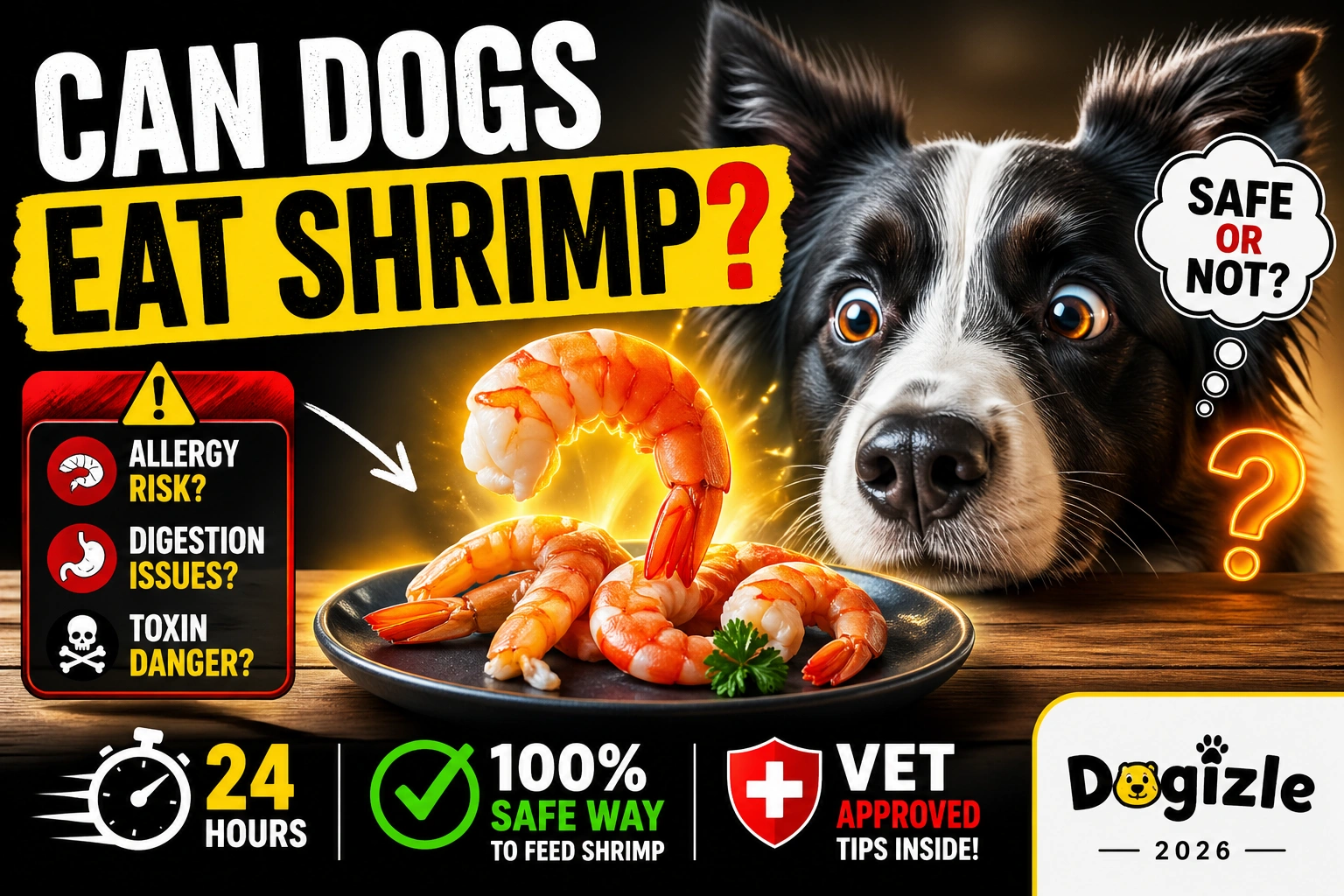
Yes, dogs can eat shrimp in small, properly cooked portions. But one wrong bite can trigger allergies, stomach upset, or choking if it is seasoned, raw, or shelled. In this guide, you will learn the safest way to serve shrimp, how much is enough, and the warning signs every dog owner should never ignore before it becomes a vet visit. If you have ever been preparing seafood at home and noticed your Dog Sitting nearby, staring at you with intense curiosity and a hopeful expression, you have probably wondered the same thing many pet owners ask:
Can dogs eat shrimp safely?
The answer is yes, but only with the right preparation, proper serving size, and a good understanding of the risks. Shrimp is a familiar food in many regions across Europe and around the world, especially in places like the UK, Spain, Italy, France, Germany, and coastal communities where seafood is part of everyday cooking. Because shrimp is naturally high in protein and relatively low in fat, it often seems like a nutritious and harmless treat.
However, dogs are not miniature humans. Their digestive systems, nutrient needs, and food sensitivities are different from ours. A food that looks light and healthy on a human plate may still be unsafe for a dog if it is raw, seasoned, fried, or served with a shell attached. In other words, shrimp can be either a smart occasional treat or a problem waiting to happen, depending entirely on how it is handled.
This guide explains everything you need to know in a clear, practical way. You will learn whether shrimp is safe for dogs, what benefits it may offer, which risks matter most, how much to feed, how to protect puppies, what allergy symptoms look like, and how to make the safest possible choice at home. You will also find real-life feeding examples and a helpful set of expert-style safety rules you can follow immediately.
Let’s begin with the core question.
Is Shrimp Safe for Dogs?
Short Answer: Yes, but only if it is cooked, plain, and served in moderation.
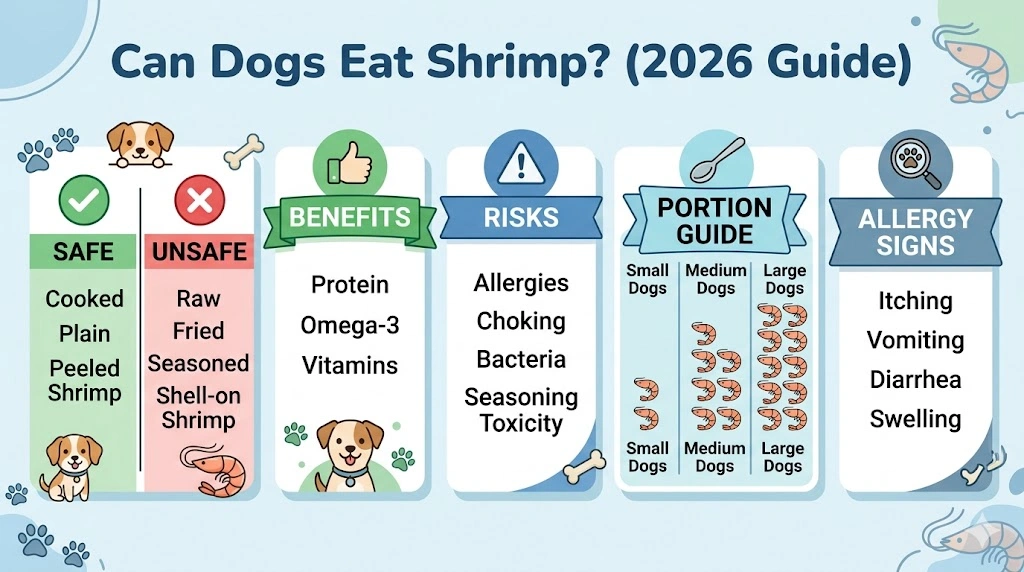
Shrimp can be safe for dogs when it is:
- fully cooked by boiling or steaming
- completely plain, with no salt, butter, garlic, onion, spices, or sauces
- peeled and cleaned so there is no shell, tail, or head
- cut into small pieces
- offered only as an occasional treat, not a regular meal
The most important thing to remember is that the shrimp itself is not usually the main issue. The danger often comes from the way humans prepare it. A plain, cooked shrimp is very different from fried shrimp, shrimp cooked in oil and seasoning, or shrimp scraps left over from dinner.
So the real rule is simple:
Shrimp is safe for dogs only when the preparation is dog-safe.
Raw shrimp, shell-on shrimp, breaded shrimp, or heavily seasoned shrimp can quickly turn into a digestive or choking hazard. That is why careful handling matters more than the ingredient alone.
Nutritional Value of Shrimp for Dogs
Shrimp is often described as a nutrient-dense seafood, and in the right context, that description is accurate. It contains several nutrients that can be useful for dogs, but only as part of a balanced diet and only in small amounts.
Important nutrients found in shrimp
| Nutrient | Possible benefit for dogs |
| Protein | Helps support muscle maintenance and energy |
| Vitamin B12 | Supports nerve function and healthy metabolism |
| Selenium | Contributes to immune support and antioxidant activity |
| Phosphorus | Helps maintain bones and teeth |
| Omega-3 fatty acids | May support skin comfort and coat condition |
From a nutritional standpoint, shrimp can be thought of as a compact protein source with extra micronutrients. That sounds impressive, but there is an important distinction: shrimp is a treat, not a complete food. It does not provide all the nutrients a dog needs in the correct ratios, which means it should never replace a balanced dog diet.
Think of shrimp as a small bonus snack rather than a foundation food. It may be useful in moderation, but it is not designed to be the centerpiece of your dog’s nutrition.
Why Shrimp Can Be Dangerous for Dogs
Even though shrimp can be safe when prepared properly, they can become risky very quickly when handled carelessly. The most common problems come from bacteria, excessive fat, choking hazards, digestive irritation, and toxic seasonings.
1. Raw shrimp is unsafe
Raw shrimp may contain harmful microorganisms such as:
- Salmonella
- Vibrio bacteria
- parasites
These organisms can cause illness in dogs and lead to symptoms such as vomiting, diarrhea, fever, reduced appetite, or general weakness. Raw seafood is never a good idea for dogs, and shrimp is no exception.
If a shrimp has not been fully cooked, it should not be shared with your dog.
2. Fried shrimp is not a safe treat
Fried shrimp usually comes with a heavy coating of oil, batter, breadcrumbs, salt, and spices. For humans, that may be a tasty meal. For dogs, it is a poor choice.
Fried food can contribute to:
- stomach upset
- vomiting
- diarrhea
- obesity
- pancreatitis in sensitive dogs
Even a small amount can be too rich for dogs with delicate digestion. The oil and breading are the biggest concerns, not just the shrimp itself.
3. Shells and tails create choking and blockage risks
Shrimp shells, tails, and heads are not dog-friendly. These parts are hard, sharp, and difficult to digest. They can cause:
- choking
- irritation in the mouth or throat
- digestive tract blockage
- discomfort during digestion
It is always safest to remove every outer part before giving shrimp to a dog. A fully peeled shrimp is much safer than one with shell pieces left behind.
4. Seasonings can be toxic or irritating
Many shrimp dishes are prepared with ingredients that are not safe for dogs. Common examples include:
- garlic
- onion
- butter
- salt
- chili
- pepper
- rich sauces
Garlic and onion are especially concerning because they are toxic to dogs. Too much salt can also create problems, while butter and heavy sauces may upset the stomach or cause unnecessary fat intake.
A shrimp dish that is perfectly fine for humans may be inappropriate or even harmful for dogs. This is why “plain” is the keyword.
Signs of Shrimp Allergy in Dogs
Some dogs tolerate shrimp without any issue, while others may show allergic or sensitive reactions. Seafood allergies are not the most common canine allergy, but they do happen.
Common signs of a shrimp allergy may include:
- itchy skin
- constant scratching
- red skin or hives
- paw licking
- vomiting
- diarrhea
- swollen face or ears
- unusual tiredness or weakness
These symptoms may appear within several hours after eating shrimp, although the timing can vary. In some dogs, the reaction may be mild. In others, it can be more serious and require veterinary attention.
If your dog shows signs of an allergic reaction after eating shrimp, stop giving it immediately and contact a veterinarian.
A good practice is to introduce shrimp very slowly the first time, using only a tiny amount and watching carefully for any unusual response.
Can Puppies Eat Shrimp?
Yes, but with extra caution.
Puppies can sometimes eat shrimp in small amounts, but their digestive systems are more sensitive than those of adult dogs. Because they are still growing, their stomachs may react more strongly to foods that are rich, unfamiliar, or difficult to digest.
Safe puppy rules for shrimp
- only fully cooked shrimp
- plain, with no seasoning
- cut into tiny pieces
- introduced slowly and in a very small amount
- given only when the puppy is healthy and stable
Shrimp should be avoided if:
- The puppy is very young
- The puppy has a weak stomach
- The puppy is already dealing with diarrhea or vomiting
- The puppy has never eaten seafood before and is highly sensitive
For puppies, less is always better. A tiny taste is enough to test tolerance. Shrimp should never become a major part of a growing puppy’s diet.
How Much Shrimp Can Dogs Eat?
Shrimp should be treated like an occasional snack rather than a regular food. Even safe foods can become a problem when the portion is too large.
Safe feeding chart
| Dog size | Suggested amount |
| Small dogs, such as a Chihuahua or Pomeranian | 1/2 to 1 shrimp |
| Medium dogs, such as a Beagle or Cocker Spaniel | 1 to 2 shrimp |
| Large dogs, such as a Labrador or German Shepherd | 2 to 3 shrimp |
Feeding frequency
A sensible limit is 1 to 2 times per week at most.
This is not a daily treat. It should not replace meat-based meals, complete dog food, or a balanced diet. Even if your dog loves shrimp, moderation matters. Overfeeding human food often creates digestive trouble, weight gain, or bad habits at mealtime.
A useful mindset is this:
If a food is exciting, it should usually be limited.
How to Prepare Shrimp Safely for Dogs
The safest way to offer shrimp to a dog is to keep the preparation extremely simple.
Best preparation method
- Choose fresh shrimp from a reliable source.
- Cook it thoroughly by boiling or steaming.
- Do not add salt, oil, butter, sauces, garlic, or spices.
- Remove the shell, tail, and head completely.
- Make sure the shrimp is cooled before serving.
- Cut it into tiny bite-sized pieces.
- Feed only a small amount and watch your dog afterward.
Preparation methods to avoid
- frying
- breading
- sautéing in butter or oil
- seasoning with spice mixes
- serving with dips or sauces
- leaving shell fragments attached
The simplest version is always the safest version. If the shrimp would not be plain enough for a child with a sensitive stomach, it is probably not plain enough for a dog either.
Shrimp vs Other Dog Proteins
Shrimp may be safe, but it is not the best everyday protein source for dogs. Here is a simple comparison.
| Food | General safety for dogs | Notes |
| Chicken | Very high | Common, lean, and easy to digest |
| Turkey | Very high | Lean and widely used in dog food |
| Salmon | High | Rich in omega-3 fatty acids |
| Shrimp | Moderate | Safe only occasionally and only when plain |
Chicken and turkey are generally more practical as regular protein sources. Salmon can also be useful when prepared safely. Shrimp is nutritious, but it should be viewed as an occasional seafood treat rather than a daily staple.
Real-Life Feeding Scenarios in Europe
Because shrimp is eaten in many parts of Europe, it is helpful to think about how dogs encounter seafood in ordinary homes.
Urban homes in the UK, Germany, and France
In apartments or city kitchens, dogs may notice seafood cooking smells and try to beg for scraps. The biggest risk here is accidental sharing. A small piece of seasoned shrimp left on a plate can seem harmless, but even a tiny amount may include salt, garlic, or oil.
The best approach is to keep seafood away from the floor, from reachable counters, and from open plates.
Coastal homes in Spain and Italy
In coastal regions where seafood is common, the risk is often higher simply because shrimp and shellfish are more often present in households. Dogs may be exposed to leftovers, shells, or dropped food more frequently. Extra care is needed when cleaning plates, discarding shells, and watching for scavenging behavior.
Cold regions like the Nordics and Switzerland
In colder climates, dogs may need higher-calorie diets depending on activity level and environment. That does not mean shrimp should replace richer, balanced foods. Shrimp is not calorie-dense enough to serve as a meaningful energy source, and it is not a substitute for a complete diet.
The lesson in every setting is the same: human seafood and dog food should remain separate unless the shrimp is prepared specifically for the dog.
Vet-Style Safety Rule for Shrimp
Veterinarians typically think in terms of practical safety categories. You can use this simple rule to decide whether shrimp belongs in your dog’s bowl.
Green light: okay in limited amounts
Shrimp is generally okay when it is:
- cooked
- plain
- peeled
- unseasoned
- offered in a small portion
- given occasionally
Yellow light: use caution
Be more careful if:
- Your dog has never had shrimp before
- Your dog has a sensitive stomach
- Your dog is very small
- Your dog is a puppy
- Your dog has a history of allergies
Red light: avoid
Do not give shrimp if it is:
- raw
- fried
- breaded
- heavily seasoned
- served with shell, tail, or head attached
- mixed into rich sauces or spicy dishes
This safety system keeps things simple. If the shrimp looks like a full human meal, it is probably not the right version for a Ddog.
Pros and Cons of Shrimp for Dogs
Benefits
- good source of protein
- relatively low in fat
- contains useful vitamins and minerals
- may support skin and coat health
- can be a tasty occasional treat
Risks
- possible allergy reactions
- choking hazard if the shell or tail is left on
- stomach upset if overfed
- toxic if prepared with garlic or onion
- not nutritionally complete
The pros are real, but the cons are significant enough that shrimp should be handled with care. This is one of those foods that can be fine in one form and unsafe in another.
Common Mistakes Dog Owners Make
Many shrimp-related problems happen because owners assume a small human portion is harmless. In reality, the details matter.
Typical mistakes include:
- giving shrimp with the shell on
- sharing fried leftovers
- offering shrimp that contains garlic or onion
- feeding too much because the dog “loves it.”
- ignoring early allergy signs
- Giving shrimp as a meal replacement
- forgetting that sauces often contain hidden seasonings
The most avoidable mistake is overconfidence. When in doubt, keep it plain, cooked, peeled, and tiny
Expert Tips for Safe Feeding
Here are the simplest rules to remember when feeding shrimp to dogs:
- Boil or steam the shrimp instead of frying it
- remove all shell, tail, and head pieces
- serve only plain shrimp with no spices
- Cut it into small bite-sized pieces
- introduce it gradually the first time
- Use it as a treat, not a meal
- Watch for digestive issues or allergic reactions
A practical rule of thumb is this:
If you would not eat it without seasoning, your dog probably should not either.
The more natural and minimal the preparation, the safer the treat.
Can Dogs Eat Shrimp Every Day?
No, shrimp should not become an everyday food for dogs.
Even though it is safe in certain cases, daily shrimp would be a poor choice because it does not provide a fully balanced nutrient profile for dogs. Treats should remain a small part of the total diet. Every day nutrition should come from high-quality dog food designed to meet canine dietary needs.
Frequent shrimp feeding can also create a habit of begging, reduce interest in normal meals, or increase the chance of digestive trouble. Shrimp is best used as a special reward rather than a routine menu item.
What If My Dog Eats Shrimp by Accident?
If your dog accidentally eats a small amount of plain, cooked shrimp, there is usually no reason to panic. Many dogs can handle that without issue.
However, the situation changes if your dog eats:
- raw shrimp
- shrimp with shell
- fried shrimp
- shrimp that contains garlic, onion, or heavy seasoning
- a large quantity
What to do next
Observe your dog for signs such as:
- vomiting
- diarrhea
- drooling
- discomfort
- coughing or choking
- lack of appetite
- unusual lethargy
If the shrimp contained unsafe ingredients or your dog seems unwell, call your veterinarian promptly. Quick action is especially important if the shrimp was raw or heavily seasoned.
How Shrimp Fits into a Balanced Dog Diet
A dog’s regular diet should be complete, stable, and carefully formulated. That means the primary nutrition should come from balanced dog food, not table scraps or occasional treats.
Shrimp may fit into the diet as:
- a rare training reward
- a small special snack
- an occasional protein variety
- a tiny topper in very limited amounts
It should not be used as:
- a meal replacement
- a daily protein source
- a solution for picky eating
- a shortcut to healthier feeding habits
Healthy feeding is not about offering every “good” human food. It is about knowing which foods fit safely and which do not.
FAQs
Yes, plain cooked shrimp is generally safe for dogs in small amounts. It should be fully cooked, peeled, and free from seasonings, butter, and sauces.
No, shrimp tails should not be given to dogs. They can cause choking and are hard to digest.
Yes, puppies can eat shrimp in very small amounts if it is fully cooked and plain. Introduce it slowly and monitor closely for any digestive or allergic reaction.
No, shrimp should not be given every day. It is better suited to occasional feeding rather than daily use.
No, raw shrimp is unsafe for dogs because it may contain harmful bacteria or parasites.
Yes, some dogs are allergic to shellfish, including shrimp. Watch for itching, hives, vomiting, diarrhea, or swelling after eating it.
No, chicken is usually a safer and more practical protein source for dogs. Shrimp can be fine occasionally, but it is not a better everyday option.
Monitor your dog for stomach upset or other symptoms. If the shrimp contained garlic, onion, lots of salt, or heavy oil, contact your vet for guidance.
Conclusion:
So, can dogs eat shrimp safely?
Yes — dogs can eat shrimp, but only when it is properly prepared and carefully portioned. The safest form is plain, fully cooked, peeled shrimp served in small amounts as an occasional treat.
Shrimp can offer useful nutrients like protein, vitamin B12, selenium, and omega-3 fatty acids, which may support your dog’s overall health. However, these benefits only apply when shrimp is served correctly. The risks are equally important to understand.
Raw shrimp, fried shrimp, or shrimp cooked with garlic, onion, salt, butter, or spices can be harmful or even toxic to dogs. Shells and tails also create choking and digestive blockage hazards. On top of that, some dogs may develop allergic reactions to shellfish, which makes careful introduction essential.