
Best Dog Food for Yorkies — Complete Feeding System That Actually Works (2026)
Choosing the Best Dog Food for Yorkies is not about chasing the most famous label, copying a random top-10 list, or buying whatever looks premium on the shelf. A Yorkshire Terrier is a very small dog with very specific nutritional needs, a fast metabolism, a tiny stomach, and a reputation for selective eating. That combination makes feeding decisions more important than many owners realize.
A Yorkie does not just need “small dog food.” Best Dog Food for Yorkies needs a diet that is carefully matched to life stage, body size, chewing ability, digestive tolerance, coat health, energy level, and appetite behavior. That is why some foods work beautifully for one Yorkie and fail for another. A food that keeps a playful puppy growing well may be too rich for an older dog. A highly palatable wet food may solve appetite problems, while a dry kibble may support dental health. A limited-ingredient recipe may calm a sensitive stomach, while a fish-based formula may reduce skin irritation.
Most articles online only dump products into a list and call that a guide. That does not help a Yorkie owner make a smart decision. It does not explain why a food fits a dog’s age, activity level, or digestive profile. It does not show how to compare protein quality, fat content, kibble size, moisture level, or ingredient simplicity. It does not tell you what to do if your Yorkie is picky, has a soft stool problem, scratches constantly, or refuses dry food altogether.
This Guide is Different.
It gives you a complete feeding system, not a random list. It shows you how to choose food based on age, problem, and format. It explains the ingredients that matter and the ingredients that do not deserve your attention. It also shows you how to solve the most common Yorkie feeding challenges with practical, easy-to-use logic.
By the end, you will not just be able to pick a food. You will understand why that food is a fit for your Yorkie and when it is the wrong choice.
Why Most Yorkie Owners Choose the Wrong Food
A surprising number of Best Dog Food for Yorkies feeding problems start with simple decision errors. Owners are usually trying to do the right thing, but they often rely on marketing language instead of nutritional fit. That leads to meals that are technically edible but not truly appropriate for the dog.
Mistake #1: Treating Yorkies Like “Just Small Dogs”
Yorkies are not simply miniature versions of medium or large breeds. Their size, metabolism, and eating habits create special feeding challenges. They need energy-dense nutrition in a compact portion. They often need smaller kibble that is easier to pick up and chew. They are also more likely to struggle when the food is too bulky, too dry, or too hard.
A generic small-breed formula may still be too broad. Yorkies often do better when the recipe is not only small-breed friendly but also rich in digestible protein, appropriately balanced in fat, and designed for tiny mouths and delicate appetites.
Mistake #2: Choosing Based on Brand Hype
Many people assume that a well-known or expensive brand automatically means better nutrition. That is not how canine feeding works. Marketing can be polished, packaging can look premium, and the front of the bag can sound impressive without telling you much about the actual suitability of the food.
The right choice depends on your Yorkie, not the logo. Two foods can have similar claims on the bag and perform very differently in the bowl. One may support digestion, coat quality, and energy levels. Another may trigger loose stool, boredom, or refusal to eat.
Mistake #3: Ignoring Life Stage
A Yorkie puppy has different needs than an adult Yorkie. An adult Yorkie has different needs than a senior. Growth, maintenance, and aging each require different nutrition patterns.
Puppies generally need more energy per bite and higher nutrient support for growth. Adults need balance and stable daily nutrition. Seniors often need easier digestion, moderate calories, and support for aging joints or teeth. A single formula cannot always do all of that equally well.
Mistake #4: Ignoring Digestibility and Taste
Yorkies have a strong reputation for being selective eaters. Some are enthusiastic at breakfast and stubborn by dinner. Others will sniff a bowl and walk away if the texture is wrong, the smell is too weak, or the recipe feels boring.
Digestibility matters because a food can be “good on paper” and still upset the stomach. Taste matters because nutrition that is never eaten is useless. If the food does not pass the real-world acceptance test, the label does not matter.
What Yorkies Really Need From Their Food
Before choosing any product, it helps to understand the core nutritional priorities for this breed. The best Yorkie diets usually share the same foundation, even if the exact formulas differ.
1. High-Quality Protein
Protein should come from clearly named animal sources such as chicken, salmon, turkey, lamb, or beef. This matters because animal protein supports muscle maintenance, tissue repair, energy, and overall body condition. Yorkies may be small, but they still need meaningful protein intake.
A good Yorkie food should not rely on vague meat wording or unclear sources. The protein should be identifiable and sufficiently prominent in the formula.
2. Healthy Fats, Especially Omega-3 and Omega-6
Fat is not the enemy. For Yorkies, healthy fat supports energy, skin, coat shine, and nutrient absorption. Omega fatty acids are especially helpful for dogs with dry skin, dull coats, or seasonal itchiness.
When the fat profile is well designed, the Yorkie often looks better, feels more comfortable, and has more consistent energy throughout the day.
3. Digestible Carbohydrates
The best carbohydrate sources for many Yorkies are the ones that are easy on the stomach and easy to process. Common examples include rice, oats, pumpkin, and sweet potato. These ingredients are often gentler than heavy, highly processed, or overly complicated carbohydrate blends.
Digestible carbs help provide steady energy without overwhelming a sensitive digestive system.
4. Gut Support Through Fiber and Prebiotics
A Yorkie’s gut health affects stool quality, appetite, comfort, and general wellness. Fiber and prebiotics can help support digestive regularity and a better intestinal environment. For dogs that experience soft stool, gas, or inconsistent digestion, this support can make a noticeable difference.
5. Complete and Balanced Nutrition
A Yorkie food should not just sound healthy. It should actually be formulated as a complete and balanced diet for the correct life stage. That means it should meet the proper nutritional profile for puppy, adult, or senior feeding, depending on the dog’s age.
This matters more than the hype words on the front of the packaging. A formula that is complete, balanced, and age-appropriate is much more valuable than a recipe that simply looks natural or trendy.
Ingredient Checklist That Works
A smart buyer looks at the ingredient panel and the nutritional purpose behind it. The goal is not to memorize every single component. The goal is to identify whether the formula is suitable for a Yorkie.
Look For
Named animal protein such as chicken, salmon, lamb, turkey, or beef.
Omega fatty acids for coat and skin support.
A small-breed formula designed for tiny mouths and smaller chewing patterns.
Natural, recognizable ingredients that contribute to real nutrition.
Prebiotics, fiber, or digestive support ingredients.
Avoid
Artificial additives that serve no nutritional purpose.
Unclear meat sources or vague animal by-products without meaningful clarification.
Overloaded filler formulas that add bulk without value.
A life-stage mismatch, such as feeding a senior formula to a growing puppy or a puppy food to a low-activity senior.
The simplest test is this: does the ingredient profile look like it was made to nourish a tiny, active, sometimes picky dog? If the answer feels uncertain, keep looking.
The 3-Step System to Choose the Perfect Dog Food for Your Yorkie
This is the core method of the guide. Instead of starting with brand names, start with the dog’s actual needs. That is the most dependable way to narrow the options.
Step 1: Match the Life Stage
Age changes nutritional priorities.
A puppy needs food that supports growth, tissue development, energy, and a small kibble size. The formula should be rich enough to support development without being so extreme that it overwhelms digestion.
An adult Yorkie needs a stable, balanced diet that supports body condition, energy, coat health, and everyday digestion. The goal is consistency.
A senior Yorkie often benefits from food that is easier to digest, easier to chew, and lower in unnecessary calorie load. Older dogs can also benefit from more targeted support depending on their mobility and tooth condition.
Step 2: Match the Food to the Problem
Every feeding challenge points to a different solution.
A picky eater often needs a stronger aroma, softer texture, or better palatability.
A sensitive stomach usually responds better to simpler recipes and easier-to-digest ingredients.
Skin concerns may improve with omega-rich formulas, often fish-based.
Food allergies may require a limited-ingredient diet with fewer potential triggers.
This is where many owners make the mistake of assuming all “good dog food” is interchangeable. It is not. The best food for a picky Yorkie is not automatically the best food for an itchy Yorkie or a sensitive Yorkie.
Step 3: Check the Food Format
Format matters more than many people think.
Dry kibble is convenient, shelf-stable, and easier for some owners to manage. Wet food is more aromatic and often more appealing to finicky eaters. Fresh food can be highly palatable and may work well for dogs that refuse standard dry formulas, although it usually costs more.
A Yorkie with tiny teeth may prefer smaller kibble or softer food. A Yorkie with appetite issues may do better with wet food or a fresh recipe. The format can make a major difference in whether the dog actually eats with enthusiasm.
Simple Decision Table: Quick Buying Guide
| Yorkie Type | Best Food Style | Why It Works |
| Puppy | Small-breed puppy food | Supports growth and easier chewing |
| Adult | Balanced small-breed food | Provides steady daily energy |
| Senior | Senior formula | Supports easy digestion and aging needs |
| Picky eater | Wet or fresh food | More aroma and better acceptance |
| Sensitive stomach | Limited ingredient diet | Gentler on digestion |
| Allergies | Fish-based or simple diet | Fewer likely triggers |
This table is not a substitute for reading the label, but it is a practical starting point. It helps you quickly connect the dog’s condition with the food format most likely to work.
Best Dog Food for Yorkies by Category
Instead of pretending one formula fits every dog, it is smarter to break the decision into categories.
Best Overall Fit
The best overall Yorkie food should be complete, balanced, easy to digest, and made with real protein. It should also have a small kibble size that works for tiny mouths. This kind of formula is often the safest default for healthy adult Yorkies that do not have special medical or appetite issues.
The point of an overall best option is not perfection for every dog. The point is broad usefulness. It should work well for the majority of healthy Yorkies without creating unnecessary digestive strain.
Best for Yorkie Puppies
Puppies need more than just cute packaging. They need nutrition that supports growth, bone development, muscle development, and high energy demand. Small kibble is particularly useful because tiny puppies have tiny mouths and developing teeth.
Yorkie puppies can also be vulnerable to low blood sugar, so meal timing matters just as much as food quality. They do better with smaller, more frequent meals rather than one or two large servings. This helps maintain energy and reduces the risk of sudden dips.
A good puppy formula should feel nurturing without being too heavy. It should support development and still be manageable for a small, energetic pup.
Best for Seniors
Senior Yorkies often benefit from food that is lighter, easier to chew, and easier to digest. As dogs age, their energy needs can shift downward while their need for quality nutrition remains important. Some older Yorkies also need softer food because their teeth are not as strong as they once were.
A senior formula should not feel like a downgrade. It should feel like a smarter fit for a changing body. The right senior food can improve comfort, reduce mealtime resistance, and help keep the dog lean and steady.
Best for Picky Yorkies
If your Yorkie refuses to eat, the problem may not be hunger. It may be taste, smell, texture, or habit. Picky eaters often respond better to stronger aroma and more appealing texture. That is why wet food and fresh food can be such effective solutions.
You can also improve acceptance by slightly warming the food, mixing in a small topper, or choosing a more aromatic recipe. The goal is not to create endless variety. The goal is to make the meal inviting enough that the dog actually wants it.
Best for Allergies or Sensitivity
For Yorkies with skin problems, itching, digestive upset, or food sensitivity, simpler is often better. Limited-ingredient diets reduce complexity and may lower the chance of a reaction. Fish-based formulas can also be helpful because they often provide good omega fatty acid support.
A sensitive Yorkie does not need a crowded ingredient list. It needs a clear, controlled formula that is easier to tolerate and easier to evaluate.
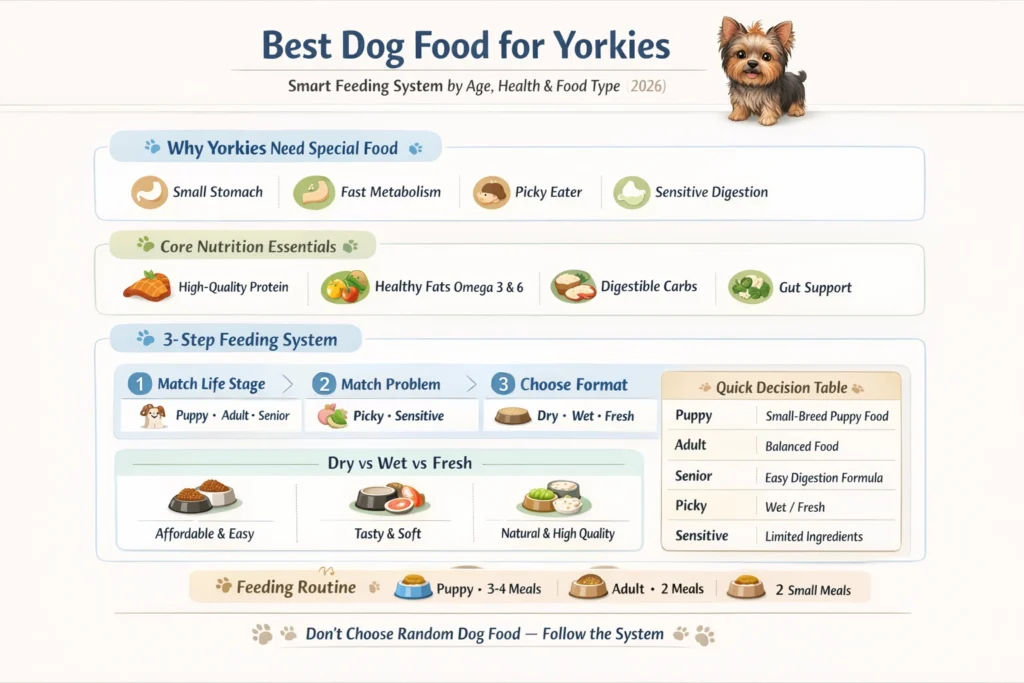
Dry vs Wet vs Fresh Food: What Actually Wins?
There is no universal winner. The right answer depends on the dog’s age, preferences, health status, and feeding habits.
Dry Food
Dry food is convenient, easy to store, and generally more budget-friendly. It is often the easiest option for everyday feeding. For owners who want simplicity, dry food can be the most practical choice.
The downside is that some Yorkies dislike the texture or do not find it exciting enough. If the dog walks away from kibble or chews reluctantly, the convenience advantage becomes less valuable.
Wet Food
Wet food is usually more Aromatic, softer, and easier to eat. That makes it very helpful for picky Yorkies, small dogs with dental sensitivity, or dogs that need extra encouragement at mealtime.
The tradeoff is cost and storage. Wet food can be more expensive and less convenient than dry food, especially for daily use.
Fresh Food
Fresh food often looks and smells more appealing to dogs and can be a strong choice for sensitive eaters. It may contain highly digestible ingredients and a more natural presentation, which many owners prefer.
The downside is price and logistics. Fresh food is usually the most expensive option and may require delivery, storage planning, and more careful management.
What This Means in Practice
A healthy, easygoing adult Yorkie may do perfectly well on a high-quality dry small-breed formula. A fussy eater may need wet or fresh food to consistently finish meals. A dog with a delicate stomach may benefit from simpler ingredients and a format that reduces mealtime stress.
The format is not a side note. It is part of the solution.
Feeding Guide for Yorkies by Age and Body Needs
The amount and frequency of feeding should be shaped by age, activity, and body condition. Yorkies are small enough that even small changes in intake can matter.
Puppies
Puppies usually need frequent meals throughout the day. Smaller portions help maintain steady energy and reduce the risk of low blood sugar. The food should be designed for growth and should be easy to chew and digest.
A puppy that eats too little, too infrequently, or on an inappropriate schedule can become weak or unstable very quickly. Regular feeding routines are important.
Adults
Adult Yorkies typically do well with two meals per day. This supports routine, consistency, and stable energy. The food should help maintain a healthy body condition rather than encourage unnecessary weight gain.
Because Yorkies are so small, even a slight excess in calories can gradually lead to extra weight. That is why portion control is essential.
Seniors
Senior Yorkies often benefit from two smaller meals rather than one large one. This can be easier on digestion and more comfortable for aging dogs. A senior dog may also need a more carefully selected formula with a focus on digestibility and body condition management.
Older dogs are not just “less active adults.” Their food should reflect the realities of aging.
Practical Feeding Rules
A few basic habits can improve results dramatically.
Keep your Yorkie lean. Small dogs can gain weight quickly, and extra weight can affect mobility, comfort, and long-term health.
Use food that is made for small breeds whenever possible.
Change food gradually rather than abruptly, especially if the dog has a sensitive stomach.
Observe stool quality, energy, coat condition, and appetite response after a new food is introduced.
Always provide fresh water.
These simple habits often matter as much as the product itself. A great formula can still fail if it is introduced carelessly or fed in the wrong amount.
Common Yorkie Feeding Problems and How to Solve Them
Many feeding struggles look complicated on the surface, but they often have practical fixes.
“My Yorkie Won’t Eat”
A Yorkie that refuses food may be responding to taste, smell, texture, stress, boredom, or a mismatch in formula. Try stronger-smelling food, smaller kibble, a small amount of warm water to release aroma, or a wet or fresh option.
Sometimes the solution is not a more expensive food. Sometimes it is simply a more appealing one.
“My Yorkie Has a Sensitive Stomach”
Sensitive stomachs usually do better with simplified ingredient lists and gentle formulations. Look for easier-to-digest recipes and avoid making abrupt diet changes. Consistency often helps more than novelty.
“Skin and Coat Problems”
A dull coat, dryness, or itchiness may improve when the food includes better fat support, especially omega-3 and omega-6 fatty acids. Fish-based formulas are often a useful place to start.
The coat is often a visible signal of what is going on inside the diet.
“Food Allergies”
If allergies are suspected, a limited ingredient diet can help narrow down potential triggers. It is also wise to avoid frequent random switching because that makes it harder to identify the true cause of the problem.
A simpler diet is not always the final answer, but it is often the cleanest way to start.
The Real Meaning of “Best Dog Food for Yorkies”
The best dog food for Yorkies is not the most expensive option, the most advertised option, or the one with the fanciest packaging. The best dog food for Yorkies is the one that fits the dog in front of you.
That means the right formula depends on several layers at once:
Age
Health status
Digestive tolerance
Chewing ability
Appetite behavior
Coat condition
Activity level
Ingredient sensitivity
Food format preference
When you evaluate food through that lens, you stop guessing and start making decisions that are much more likely to work in real life.
Europe Relevance: Why This Matters
If you are in Europe, it is especially important to check that the food is complete and balanced according to the relevant regional nutrition framework. The formula should not only sound appealing; it should also meet the proper standards for the dog’s life stage.
For many owners, that means looking beyond brand reputation and reading the actual nutritional statement. A complete and balanced formula is far more useful than a cleverly marketed one.
FAQs
The best dog Food for Yorkies is a small-breed, complete, and balanced formula that matches the dog’s age, health needs, and eating preferences.
It depends on age, weight, and activity level. Follow the feeding guide on the package and adjust according to body condition, energy, and appetite.
No. Grain-free is not automatically better. Only use it when there is a clear reason to do so.
Yes, but it must be properly balanced. Homemade feeding without nutritional planning can create gaps over time.
Avoid chocolate, onions, and other toxic foods that are unsafe for dogs.
Conclusion
The best dog food for Yorkies is not about brand obsession. It is about fit.
When you choose based on life stage, health need, Digestibility, and food format, you give your Yorkie a much better chance at steady energy, good digestion, healthy skin and coat, and more reliable mealtime behavior. That is the real advantage of using a feeding system rather than shopping for products at random.
The most common feeding issues in Yorkies are often not “mysteries.” They are mismatches. A picky eater may simply need a more appealing format. A sensitive stomach may need fewer ingredients. A puppy may need more frequent feeding. A senior may need easier digestion. A skin problem may need better fat support. Once you understand the pattern, the right answer becomes much clearer.
Use this system to evaluate your current food. Check the life stage, the ingredient quality, the kibble size, the palatability, and the digestive fit. If the food does not match the dog, change it with purpose instead of guessing.