The Truth About Zucchini in Your Dog’s Bowl
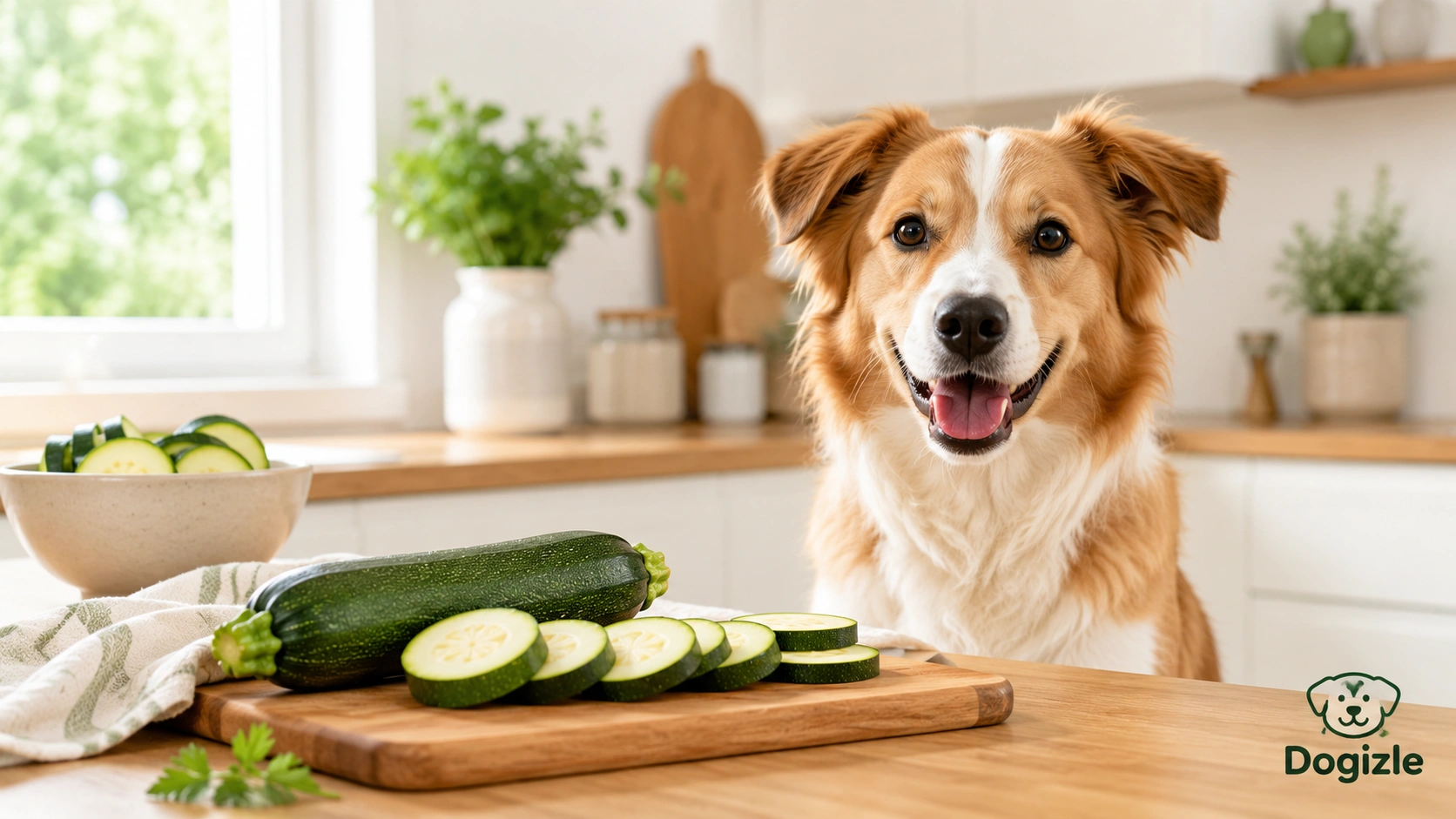
Can dogs eat zucchini? Yes — and for many dogs, it can be a smart little treat when you serve it the right way. Veterinary and pet-care sources widely describe Zucchini as non-toxic, low in calories, and suitable for dogs in Moderation, whether it is raw or cooked. The catch is that “safe” does not mean “unlimited,” and it certainly does not mean every zucchini dish on your plate is dog-friendly. Plain matters. Portion size matters. Preparation matters.
That is why this topic deserves more than a one-line answer. Dog owners do not just want a yes or no. They want to know how much zucchini is reasonable, whether raw is okay, whether cooked is easier to digest, whether the skin is safe, and what happens when zucchini is mixed with salt, butter, garlic, onion, oil, or sugar. They also want practical advice for puppies, sensitive stomachs, apartment living, and everyday treat routines. This guide covers all of that in one place, so you can make a calm, informed decision instead of guessing at the bowl.
Quick Answer
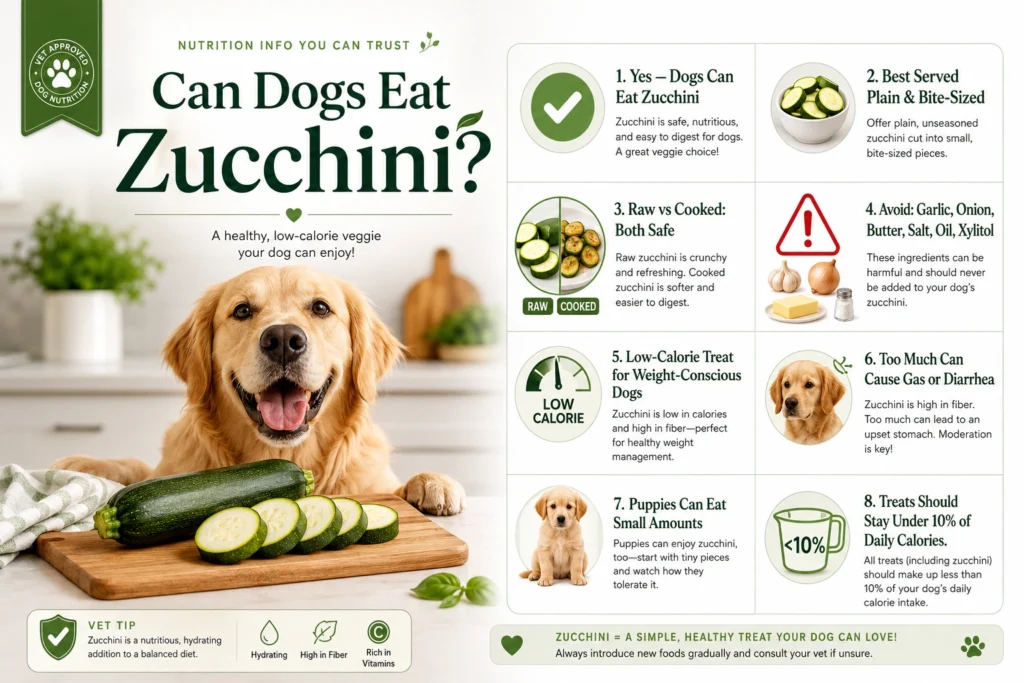
Yes, dogs can eat Plain zucchini in moderation. The safest version is washed, cut into bite-sized pieces, and served without salt, butter, onion, garlic, oil, or other seasonings. Raw zucchini is generally okay, cooked zucchini is often easier to digest, and zucchini bread or seasoned zucchini is a bad idea because the recipe around the vegetable may be unsafe.
Is Zucchini Safe for Dogs?
Zucchini is considered non-toxic by the ASPCA, and major pet-health sources consistently say it is safe for dogs when it is plain and fed in moderation. AKC says zucchini is perfectly safe for dogs, PetMD says plain zucchini — raw or cooked — is safe and healthy in moderation, and The Spruce Pets calls it a safe, non-toxic snack when it is handled responsibly.
That said, the real question is not just “is it safe?” but “is it safe in the way I am about to serve it?” The biggest risks are not the zucchini itself. They are overfeeding, large chunks, and seasoned or baked forms. Pet nutrition guidance from WSAVA says treats should make up less than 10% of a dog’s daily calorie intake, and the same rule is echoed by AKC and The Spruce Pets. That is why zucchini should stay in the treat category, not become a meal replacement.
Is Zucchini Good for Dogs?
Zucchini can be a useful treat because it is low in calories, high in water, and contains fiber, vitamins, and minerals. PetMD highlights vitamins C and A plus minerals like manganese, magnesium, and potassium, while The Spruce Pets also points to its fiber and hydration support. AKC notes that a cup of raw zucchini is only about 20 calories, which makes it attractive for owners who want a lighter snack than many commercial treats.
For weight-conscious dogs, zucchini can be a handy reward when you do not want to pile on calories. That is especially useful for dogs who are prone to weight gain, dogs in training, and households that use food rewards often. Still, the same pet authorities all make one important point: dogs do not need vegetables to be healthy if their main diet is already complete and balanced. Zucchini is a bonus treat, not a nutritional requirement.
How Much Zucchini Can Dogs Eat?
The safest practical answer is: less than you think. Treats should stay under 10% of daily calories, and even a low-calorie vegetable can cause gas or loose stools if you give too much at once. AKC says a small dog may only have a very small portion of daily food compared with a large dog, and PetMD notes that too much zucchini or even an improperly prepared version can cause digestive upset. The Spruce Pets gives a useful reminder that one cup of chopped raw zucchini is already about the treat allowance for a 10-pound dog.
Practical starter portions
The table below is a conservative starting guide, not a veterinary prescription. It is based on the 10% treat rule, the low-calorie count of zucchini, and the fact that some dogs tolerate vegetables far better than others. Start smaller if your dog is tiny, young, overweight, on a diet, or has a sensitive stomach.
| Dog size | Conservative starter amount | Best form |
| Toy / small dog | 1–2 teaspoons to 1 tablespoon | Tiny chopped pieces |
| Medium dog | 1–2 tablespoons | Small cubes or shreds |
| Large dog | 2–4 tablespoons | Bite-sized chunks |
| Very large dog | Up to a small handful | Plain, chopped zucchini |
A sensible rule is to start with just a few small pieces and watch the stool, appetite, and energy level for the rest of the day. If your dog handles it well, you can keep zucchini as an occasional treat, not a daily “extra meal.” If your dog gets gassy, loose stools, or starts refusing their normal food, back off and simplify the diet again.
Raw Zucchini vs Cooked Zucchini vs Seasoned Zucchini
| Form | Safe for dogs? | Best use | Main caution |
| Raw plain zucchini | Yes | Crunchy treat or topper | Harder to digest for some dogs; cut small |
| Cooked plain zucchini | Yes | Best choice for sensitive stomachs | Must stay plain, with no seasoning |
| Steamed or boiled zucchini | Yes | Gentle option | No butter, salt, oil, or sauces |
| Seasoned zucchini | No | Not recommended | Garlic, onion, salt, oil, butter, and spices can be harmful or upsetting |
| Zucchini bread / baked goods | No | Avoid | Extra fat, sugar, calories, and possible xylitol risk |
Raw zucchini is generally okay, but cooked zucchini often wins for real-life feeding because it is easier to digest. The Spruce Pets says cooking can make zucchini more digestible and can reduce bacteria concerns, while PetMD also says plain cooked zucchini is a safe choice. That makes steaming or boiling a smart move when you are feeding a dog with a delicate digestive system.
Seasoning is where many pet owners accidentally turn a healthy snack into a problem food. AKC warns against oils, salts, garlic, and onions. PetMD says to avoid garlic, salt, onion, butter, and oil. Blue Cross and The Kennel Club both warn that common human foods and additives such as onion, garlic, and xylitol can be dangerous to dogs.
Can Dogs Eat Zucchini Skin, Seeds, Flowers, or Leaves?
The most practical answer is yes, zucchini is generally treated as non-toxic, and the skin is usually fine if it is washed well. Chewy specifically says zucchini can be served raw or cooked, with or without the skin, and The Spruce Pets says all parts of a zucchini are safe for dogs to eat. In real life, though, the best choice is still plain, bite-sized pieces because that is easier to portion, easier to digest, and less messy.
For most dog owners, the safest feeding style is simple: use the flesh of the zucchini, wash it well, cut it into small pieces, and keep it plain. Even when a plant is non-toxic, the biggest day-to-day risks are still choking, stomach upset, and contamination from what the vegetable was cooked with or stored near. If your dog has a habit of swallowing food whole, smaller cuts are especially important.
When Zucchini Can Cause Problems
Zucchini can still cause trouble when dogs eat too much, eat it too fast, or eat it in the wrong form. AKC and PetMD both warn that large pieces can create a choking risk, and PetMD and The Spruce Pets note that too much zucchini can lead to digestive upset, such as gas or diarrhea. This is why “safe” should always be paired with “portion-controlled.”
Dogs with digestive disease, food sensitivities, or elimination diets need extra care. PetMD and The Spruce Pets both say zucchini may not be the right choice for dogs on elimination diets or those with pre-existing digestive conditions. That is a good reminder that even gentle foods can interfere with a vet-supervised diet trial.
| Warning sign | What it may mean | What to do |
| Repeated vomiting | Stomach irritation or a more serious issue | Stop feeding and call your vet if it continues |
| Loose stool/diarrhea | Too much fiber or food sensitivity | Pause treats and watch hydration |
| Choking, gagging, pawing at the mouth | Piece too large or stuck | Seek urgent help if breathing is affected |
| Swollen belly, pain, or restlessness | Digestive upset | Contact your vet |
| Refusing food after eating zucchini | Food intolerance or ongoing upset | Do not keep offering it |
If the zucchini was mixed with onion, garlic, xylitol, butter, heavy salt, or oil, do not wait and hope for the best. Blue Cross, the Kennel Club, and AKC all warn that those ingredients can be harmful, and xylitol in particular can be life-threatening.
How to Prepare Zucchini for Dogs Safely
- Wash it well. Remove dirt, residue, and anything from the skin before cutting.
- Cut it small. Bite-sized pieces are safer, especially for small dogs or dogs that gulp food.
- Keep it plain. No salt, butter, oil, garlic, onion, seasoning blends, or sauces.
- Choose cooked zucchini for sensitive stomachs. Steaming or boiling makes it easier to digest.
- Start with a tiny amount. Watch for gas, loose stool, or refusal of regular food.
This simple routine fits almost any feeding style, from training rewards to meal toppers. It is also practical for busy households because it uses the same zucchini you might already be cooking for yourself, just set aside before seasoning. That keeps the dog’s version safe while still making use of leftovers.
Can Puppies Eat Zucchini?
Puppies can usually have a tiny Amount of plain zucchini, but moderation matters even more because puppies need a complete and balanced diet for growth. WSAVA says treats should stay under 10% of daily calories, and the same logic is even more important for puppies because their main food is doing the heavy lifting nutritionally. Keep the first taste very small and only use it as an occasional novelty, not a habit.
For puppies, the safest approach is to keep new foods simple, plain, and easy to chew. If your puppy has a sensitive stomach, loose stools, or a history of food reactions, ask your vet before turning zucchini into a regular training reward. That advice is especially important if the puppy is on a prescription diet or a diet trial.
Zucchini in Real Life: Apartment Dogs, Urban Dogs, and Busy Households
For apartment dogs and city dogs, zucchini can be handy because it is easy to store, easy to prepare, and low in calories. That matters in homes where treats can add up quickly, especially when the dog gets rewards during training, walks, lift rides, or indoor enrichment sessions. A few small cubes can be enough to reinforce behavior without stuffing too many calories into the day.
If you live in a colder European climate or a weather-sensitive region, zucchini is also a nice seasonal option when summer garden harvests pile up. In those months, many owners are tempted to share a lot more produce, but the rules stay the same: plain, small, and occasional. The best treat is the one that supports the full diet instead of crowding it out.
For travel, hotels, or holiday homes, zucchini is only useful if you can keep it plain and fresh. Once you start relying on prepared vegetables, marinades, or leftovers, the risk of accidental seasoning goes up fast. That is one reason pet authorities keep repeating the same message: human food is not ideal as a main feeding strategy, and treats should stay small.
Europe-Specific Practical Advice
Across the UK and Europe, the biggest zucchini mistake is not the vegetable itself. It is the way it appears in ready-made foods, mixed vegetable packs, and family leftovers. RSPCA, PDSA, Blue Cross, and the Kennel Club all stress that human food can be risky for dogs, and ingredients like onion, garlic, leeks, chives, xylitol, butter, salt, and rich sauces should be avoided. That is especially relevant for packaged or restaurant-style dishes.
A useful habit is to read the label first and feed the dog only the plain portion before seasoning is added. That works well in European kitchens where zucchini may be sold as part of mixed vegetables, roasted sides, or meal kits. In other words, the safest “zucchini for dogs” is usually the raw ingredient sitting on your chopping board, not the polished dish on your plate.
Common Mistakes Dog Owners Make
The most common mistake is assuming that because zucchini is healthy for humans, more must be better for dogs. That is not true. Dogs do not need vegetables in large quantities, and even a safe food can upset the stomach if the serving is too big. PDSA and Blue Cross both remind owners that vegetables should be small, occasional treats, not diet replacements.
Another common mistake is serving zucchini in mixed recipes without checking the ingredients. AKC warns specifically about zucchini bread and other baked goods because they can bring extra fat, sugar, and possible xylitol risk. Blue Cross and the Kennel Club also warn that xylitol and several human foods can be dangerous, so “just a little bite” can still be the wrong bite if the recipe is not dog-safe.
A third mistake is using big chunks because the dog “likes crunch.” AKC, PetMD, and The Spruce Pets all flag choking risk from large pieces, especially for smaller dogs. Bite-sized pieces are the safer standard.
Expert Tips
If you want zucchini to work as a treat instead of a tummy upset, keep it boring on purpose. Plain is better than clever. Small is better than generous. And the first serving should always be a test, not a feast. That advice matches the broader feeding guidance from WSAVA, RSPCA, PDSA, and the major pet-care sources reviewing zucchini specifically.
A second useful habit is to treat zucchini like part of the day’s treat budget. That keeps training rewards, enrichment snacks, and table scraps from slowly creeping upward. Blue Cross and the Kennel Club both emphasize moderation, while WSAVA’s 10% rule gives you the ceiling that helps keep the rest of the diet stable.
Pros and Cons of Feeding Zucchini to Dogs
Pros
- Low in calories and helpful for light snack routines.
- Plain raw or cooked zucchini is generally safe in moderation.
- It can be a useful reward for dogs watching their weight.
- Easy to cut into training-size pieces.
Cons
- Can Dogs Eat Zucchini? Safe Guide & Portion Tips
- Large pieces can be a choking risk.
- Seasoned or baked zucchini can be unsafe because of added ingredients.
- Not ideal during elimination diets or for dogs with digestive issues unless your vet says yes.
People Also Ask
Yes, but only in small amounts, and it should stay within the treat budget rather than becoming a daily “extra meal.” WSAVA’s treat guidance and the pet-care sources on zucchini all point toward moderation rather than frequent large servings.
Both can be safe, but cooked zucchini is often easier to digest. PetMD and The Spruce Pets both note that plain cooked zucchini is a very dog-friendly option.
Yes. Chewy says zucchini can be served with or without the skin, as long as it is plain and prepared safely.
It is better not to. AKC warns that zucchini bread can contain extra fat, sugar, unnecessary calories, and possibly xylitol, which is toxic to dogs.
Yes, in tiny amounts if they tolerate it well, but it should stay a minor treat because puppies need a complete and balanced diet for growth.
Watch for gas, loose stool, vomiting, or choking. If the zucchini was seasoned, baked, or mixed with unsafe ingredients, contact your vet sooner rather than later.
The strongest practical evidence is that zucchini squash is non-toxic, and the vegetable is safe in plain, bite-sized form. For everyday feeding, the safest choice is still the plain fruit itself rather than garden grazing.
Only carefully, and only after considering your dog’s history. PetMD and The Spruce Pets both say dogs with digestive issues or elimination diets may not be good candidates without vet guidance.
Conclusion
So, can dogs eat zucchini? Yes — plain Zucchini in moderation is a safe, low-calorie treat for most dogs. The most responsible version is simple: wash it, cut it small, serve it plain, and keep it inside the 10% treat rule. Cooked zucchini is often the gentlest choice; raw zucchini is usually fine for dogs that tolerate it, and zucchini bread or seasoned zucchini should stay off the menu.
If your dog has a sensitive stomach, a prescription diet, or a history of food reactions, do not treat zucchini like a guaranteed yes. Ask your vet first. That is the difference between a smart snack and an avoidable setback. Bookmark this guide, share it with another dog owner, and keep building your dog’s treat routine around safety, balance, and real-life practicality.
This content is for educational and informational purposes only and does not replace professional veterinary advice. Always consult a licensed veterinarian for medical concerns regarding your dog.