3 Shocking Truths Every Owner Must Know
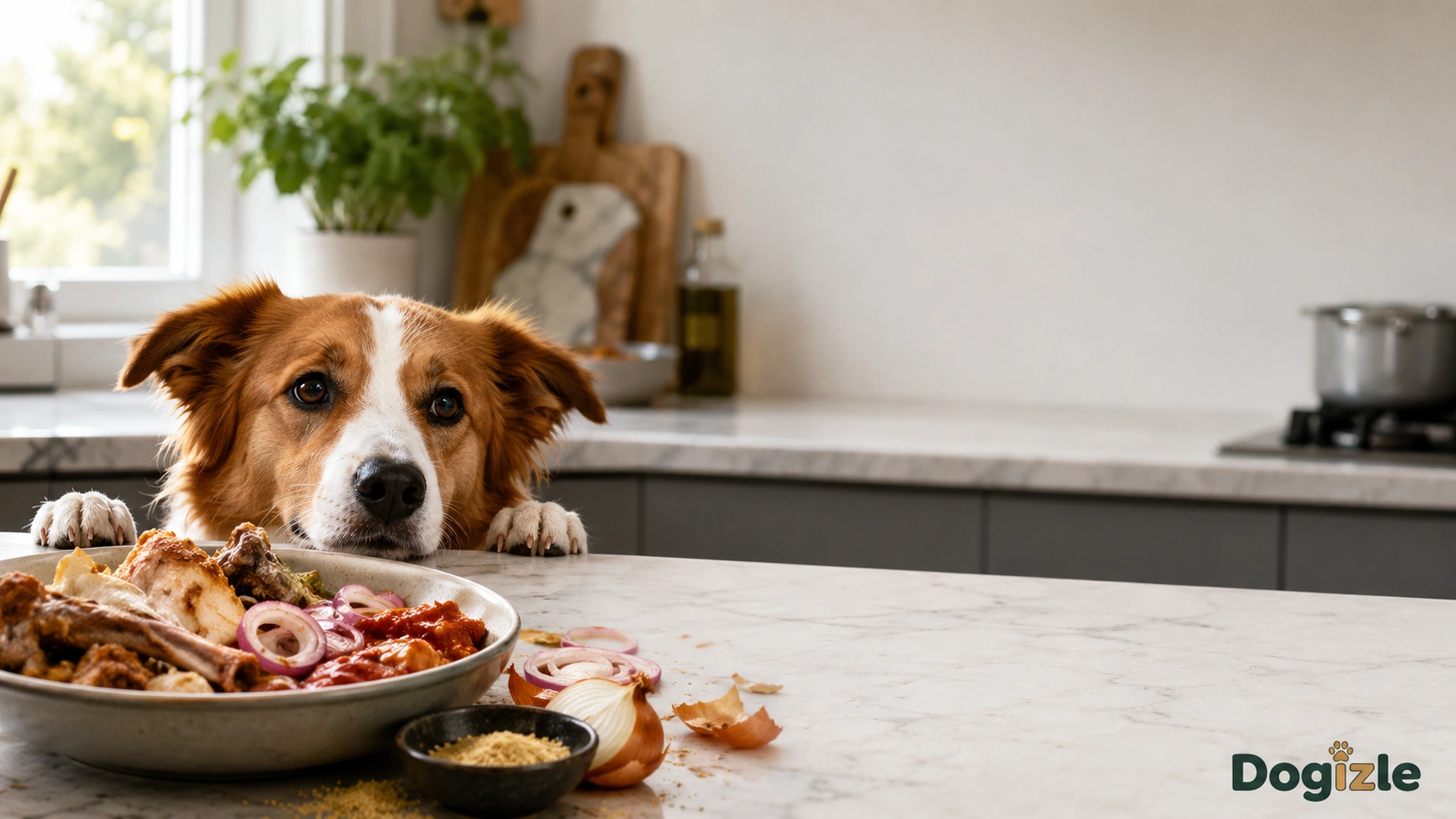
If your dog just stole a bite of soup, pasta, sauce, stew, or leftovers, the first question is simple: Can Dogs Eat Food with onions? The safest answer is no. Onions are toxic to dogs in raw, cooked, powdered, dried, and mixed-into-food form, and the danger is not limited to visible onion slices. Onion powder, seasonings, and hidden onion ingredients in human food can also cause harm.
That matters because many accidental exposures happen through normal family meals, not from someone intentionally feeding an onion. A spoonful of soup, a bite of casserole, a piece of pizza, or a leftover sauce can contain onion even when the onion is not obvious. In dogs, Allium compounds can damage red blood cells and lead to hemolytic anemia, which may appear hours or days later.
This guide gives you the practical answer first, then shows you which foods hide onions, how risky different forms are, what symptoms to watch for, what to do right now, and how veterinarians treat onion exposure. It is written for real dog owners who need clear decisions, not vague reassurance.
Quick answer: Can dogs eat food with onions?
No. Dogs should not eat food with onions. Foods cooked with onions or onion powder are unsafe, even if the onion pieces are removed. Veterinary sources consistently warn that raw, cooked, dehydrated, powdered, and concentrated onion forms can damage red blood cells and cause anemia in dogs.
Mini summary
If a food contains onion, onion powder, or another Allium ingredient, do not treat it as safe for your dog.
Why are onions toxic to dogs?
Onions belong to the Allium family, which also includes garlic, leeks, chives, shallots, and spring onions. These plants contain compounds such as N-propyl disulfide, disulfides, and thiosulfinates/thiosulfates that can damage red blood cells and trigger hemolytic anemia.
The main issue is oxidative injury to the blood. Once enough red blood cells are damaged, the body cannot move oxygen efficiently. That is why dogs may develop weakness, pale gums, rapid heart rate, panting, and darker urine after onion exposure.
Veterinary references also note that symptoms can be delayed. MSD says clinical signs may take several days to appear, even though blood changes can start within 24 hours. That delayed pattern is one reason onion poisoning is easy to miss at first.
Mini summary
Onions are dangerous because their compounds damage red blood cells, and the sickest signs may not show up right away.
What foods often hide onions?
Onions are a hidden ingredient in many everyday foods. UK and veterinary sources specifically mention soups, sauces, ready-made meals, seasonings, baby foods, and leftovers as common places where onion or onion powder may appear.
Foods that often contain onion or onion powder
- soups and broths
- sauces and gravies
- casseroles and stews
- pasta sauce and pizza toppings
- seasoning mixes and spice blends
- leftovers from restaurant meals or home cooking
- baby food and processed foods
For dog owners, this is the real risk: a dish may not look like “onion food,” but onion can still be baked into the recipe or hidden in a powder blend. That is why a strong answer page needs to go beyond the ingredient itself and address the whole meal.
Mini summary
The danger is often not the onion slice you can see; it is the onion powder, seasoning blend, or hidden ingredient inside the dish.
Are cooked onions safer than raw onions?
No. Cooking does not make onions safe for dogs. Purina, AKC, PDSA, MSD, Chewy, and VCA all state that raw, cooked, dried, dehydrated, or powdered onion forms can still be toxic.
This matters because many people assume sautéed or baked onions are less dangerous. Veterinary guidance does not support that assumption. If an onion is part of the recipe, the food should be treated as unsafe for dogs.
Mini summary
Cooked onions are still onions. Heat does not remove the risk.
Is onion powder more dangerous?
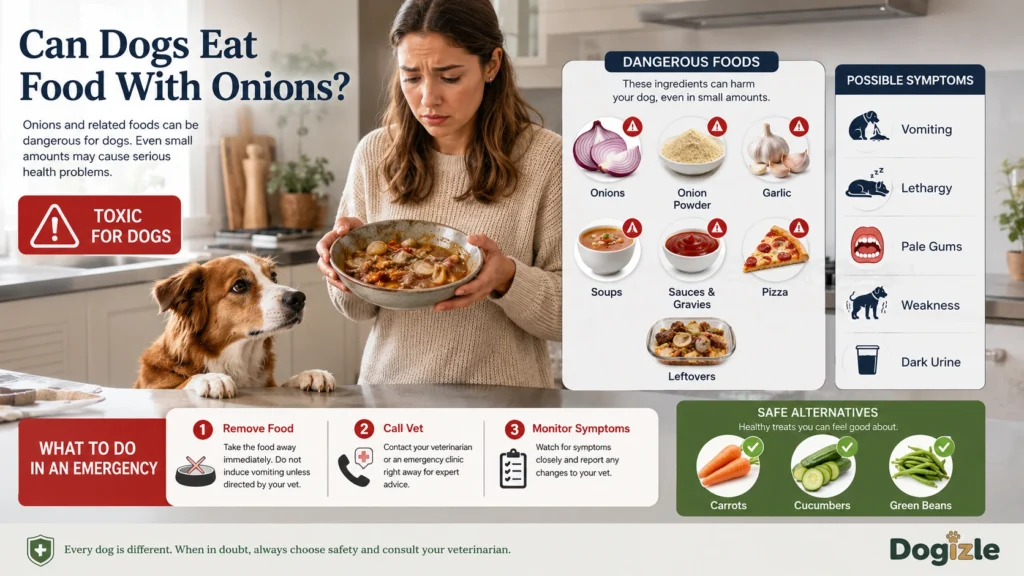
Yes, onion powder is especially risky because it is concentrated and easy to hide in human food. AKC, MSD, and Joii all note that powdered and dried forms are more concentrated, and AKC specifically warns that onion powder appears in foods like soups and baby food.
That means a small sprinkle in a recipe may matter more than a few visible onion pieces. For a dog, the biggest problem is often not the size of the onion chunk but the amount of onion flavoring built into the whole food.
Mini summary
Onion powder can be more dangerous than fresh onion because it is concentrated and shows up in many packaged or seasoned foods.
How much onion is toxic to dogs?
There is no truly safe amount to recommend at home. AKC says about 100 grams of onion per 20 kilograms of body weight can cause toxic effects, while MSD reports clinical signs in dogs after 15–30 g/kg of raw onion. Joii also notes that smaller amounts can still cause severe problems in some dogs.
The key point for dog owners is that the same food can be much riskier for a small dog than a large one. But because individual sensitivity varies, veterinary advice is still to treat any meaningful onion exposure seriously rather than guessing at home.
Mini summary
Dose matters, but there is no practical “safe amount” for owners to test at home.
Signs of onion poisoning in dogs
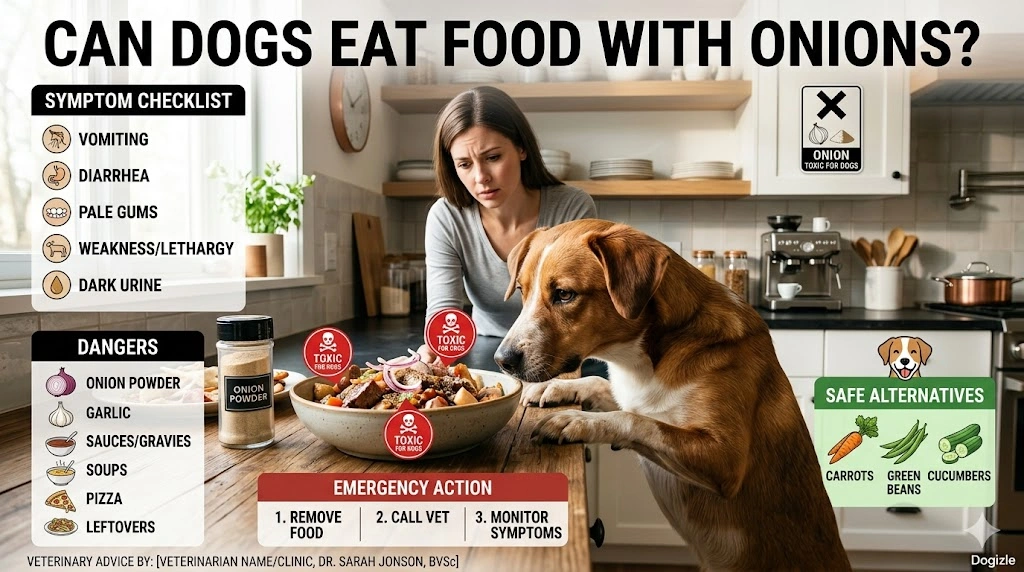
Symptoms can begin with stomach upset and later progress to anemia. Common signs reported by veterinary and animal-welfare sources include vomiting, diarrhea, reduced appetite, drooling, lethargy, weakness, pale gums, elevated heart rate, panting, red or brownish urine, collapse, and in severe cases, seizures or death.
Because the damaging blood-cell effects may be delayed, a dog can seem okay at first and then worsen later. That is why waiting for symptoms is a bad strategy.
Symptom table
| Early signs | More serious warning signs |
| vomiting | pale gums |
| diarrhea | weakness or collapse |
| drooling | fast or labored breathing |
| reduced appetite | dark/reddish urine |
| tummy pain | severe anemia, seizures, death |
These signs are consistent with veterinary and poison-control guidance on onion and Allium toxicity.
Mini summary
A dog may start with mild stomach upset, then later develop dangerous anemia signs such as pale gums, weakness, and dark urine.
What to do right now if your dog ate food with onions
Step-by-step emergency plan
- Stop access to the food immediately. Remove the dish, leftovers, or trash so your dog cannot eat more.
- Estimate what was eaten. Try to note the food type, onion form, and approximate amount. Veterinary guidance says this information helps decide the next steps.
- Call your veterinarian right away. PDSA, AKC, and ASPCA all advise prompt veterinary contact after onion ingestion.
- Do not induce vomiting unless a vet tells you to. AKC explicitly warns against doing this without veterinary direction.
- Watch for delayed symptoms. Symptoms may take time to appear, so do not assume the dog is safe just because they look normal now.
- Seek urgent help if your dog is weak, pale, collapsing, or breathing oddly. Those are emergency signs, not wait-and-see signs.
ASPCA Poison Control says to call (888) 426-4435 if you suspect your pet ingested a toxic substance, and AKC points owners to the Pet Poison Helpline as well.
Mini summary
Act first, guess later: stop access, call a vet, give the details, and do not induce vomiting unless instructed.
How veterinarians treat onion toxicity
Treatment depends on how soon the dog is seen and how much onion was eaten. Veterinary sources describe early decontamination, possible induced vomiting if the ingestion is recent, activated charcoal in some cases, IV fluids, monitoring, and treatment for anemia. Severe cases may need hospitalization, oxygen support, or a blood transfusion.
MSD notes that clinical signs can lag behind the blood-cell changes, which is why follow-up blood testing may be needed even if the dog seems stable early on.
Mini summary
Vet treatment is time-sensitive and may include decontamination, fluids, monitoring, and anemia support.
How to prevent accidental exposure
The simplest prevention strategy is to treat onions like a household toxin, not a casual seasoning. VCA recommends never giving food seasoned with onions or garlic, and also warns owners to secure leftovers, counters, cabinets, and trash. PDSA adds that all Allium parts are toxic even when cooked or dried.
Prevention checklist
- Keep onions and onion powder in closed Cupboards
- secure trash bins and compost
- Do not feed table scraps without checking ingredients
- Check soups, sauces, gravy, seasoning packets, and ready meals carefully
- Keep dogs out of gardens with onions, garlic, leeks, or chives
Mini summary
Prevention is mostly storage, label reading, and zero tolerance for onion-seasoned leftovers.
Europe-specific practical advice
For dog owners in the UK and across Europe, the biggest real-life risks are often family meals, restaurant leftovers, soups, stews, gravies, and mixed dishes rather than plain onions on a cutting board. That is exactly the kind of hidden-ingredient scenario highlighted by Purina, AKC, and Joii.
Apartment living can increase the risk because dogs are closer to kitchen counters, dropped food, and bin access. Smaller urban dogs are also more vulnerable to dose-related toxicity because the same bite represents a larger proportion of body weight. Veterinary sources note that smaller dogs may be at higher risk, and that curious puppies and scavenging dogs are particularly likely to steal toxic food.
In colder months and holiday seasons, onion exposure often rises because people cook richer foods, keep leftovers longer, and eat more shared meals. UK guidance from Purina and PDSA is especially useful here: if the food is seasoned, mixed, or leftover, check it carefully before assuming it is safe for your dog.
Mini summary
In Europe and urban homes, the real danger is often not raw onion on the counter but seasoned leftovers, sauces, stews, and shared meals.
Apartment living scenarios
If you live in an apartment, the main risk points are the kitchen floor, low trash bins, dining tables, and food delivery leftovers. VCA specifically warns that some dogs can open lower cabinets or reach counters, which makes indoor prevention just as important as food choice.
A practical apartment routine is simple: clean spills immediately, keep leftovers sealed, and never leave onion-heavy food within nose level of a curious dog. That kind of setup is much safer than trying to judge after the fact whether a meal contained “only a little” onion.
Cold weather and seasonal considerations
Holiday cooking often includes onion-heavy dishes such as stuffing, soups, casseroles, sauces, and roasted meats with seasoning. Purina’s “harmful foods” and holiday-oriented guidance both reinforce that onions commonly show up in human meals that dogs may try to steal.
Seasonal prevention is about habits, not fear. Keep a “dog-safe plate” rule for gatherings, watch trash more carefully, and assume any savory human food may contain onion unless you have checked it yourself.
Safe dog-friendly alternatives
If you want to share a treat, choose dog-safe foods that are plain and simple. AKC recommends carrots, cucumbers, and green beans as safer vegetable options in moderation. Purina also points to dog-appropriate vegetable treats when vegetables are offered safely and with veterinary approval.
Examples of safer options
- plain carrots
- cucumber pieces
- green beans
These are not meant to replace a balanced dog diet. They are simply better-tasting choices than anything seasoned with onion, garlic, or a mixed seasoning blend.
Pros & cons of this topic page angle
Pros
- Matches the exact hidden-ingredient intent behind the keyword.
- Gives a fast yes/no answer near the top.
- Explains onion powder, cooked food, leftovers, and sauces clearly.
- Supports urgent owner behavior with a simple action plan.
- Builds stronger trust by combining veterinary and practical guidance.
Cons
- Requires careful wording to avoid sounding alarmist.
- Needs a strong structure to stay readable despite the medical topic.
- Must balance emergency guidance with calm, non-panicky advice.
Common mistakes dog owners make
- Thinking cooked onions are safe. They are not.
- Assuming a tiny amount is harmless. Risk depends on dose, dog size, and sensitivity.
- Remove onion pieces and keep the sauce. Onion powder and dissolved onion compounds can still be present.
- Waiting for symptoms before calling the vet. Signs may be delayed for days.
- Inducing vomiting at home without advice. Do not do this unless a vet tells you to.
Expert tips
- Treat onion powder as a hidden threat, not a minor seasoning.
- Keep a note of your vet’s phone number and a poison helpline number in your phone. ASPCA and Pet Poison Helpline are common reference points in the US; local veterinary contact is the priority everywhere else.
- If your dog tends to scavenge, add kitchen and trash management to your daily routine. Joii and VCA both flag curious dogs and poor access control as real risks.
- In multi-pet homes, keep onion foods away from both dogs and cats. AKC and PDSA note that onion risk applies to other pets too, with cats often being even more sensitive.
People Also Ask
No. Foods cooked with onions or onion powder are still unsafe, even if you cannot see the onion pieces.
No. Onion powder is concentrated and is specifically flagged as dangerous in veterinary guidance.
A dog may first show vomiting, diarrhea, drooling, or lethargy, then later develop anemia signs such as pale gums, weakness, and reddish urine.
No. Symptoms can be delayed, so it is better to call a veterinarian right away.
Yes. Toxicity is dose-related, so the same amount of onion food can be more dangerous for a smaller dog.
Yes. Onions, garlic, leeks, chives, and related Allium plants are all considered toxic to dogs.
Call your veterinarian and give the exact food, estimated amount, and timing. That is the most responsible next step.
Conclusion
So, can dogs eat food with Onions? The answer is still no. Onions, onion powder, and onion-seasoned dishes are risky because they can damage red blood cells and lead to hemolytic anemia, sometimes with delayed symptoms that appear after the dog has already seemed fine.
The most useful pages on this topic do not just say “no.” They explain hidden onion foods, show the danger in cooked and powdered forms, and tell owners exactly what to do next. That is the angle Dogizle should own: practical, veterinary-aware, and focused on real meals like soups, sauces, stews, leftovers, and seasonings.
Bookmark this guide, share it with other dog owners, and keep building your dog’s safety knowledge one topic at a time. For more trusted dog nutrition and health guides, Dogizle should continue covering the foods and habits that most often trip up otherwise careful owners.
This content is for educational and informational purposes only and does not replace professional veterinary advice. Always consult a licensed veterinarian for medical concerns regarding your dog.