These Everyday Nuts Could Put Your Dog at Risk
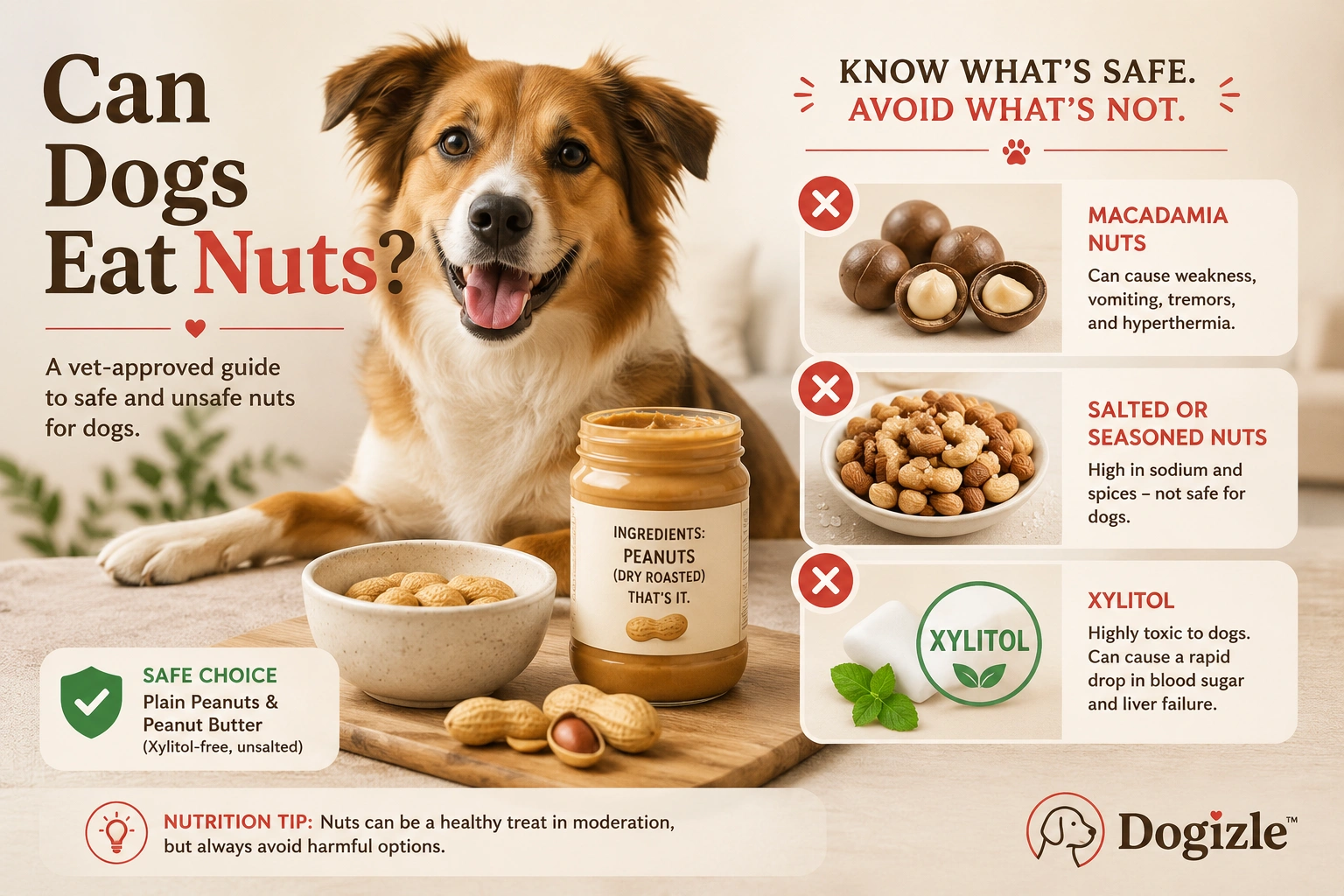
Can dogs eat nuts? Some are safe, but many are dangerously toxic. You’ll discover exactly which nuts poison dogs, why they’re harmful, and what safe alternatives keep your pup healthy and safe. This guide could literally save your dog’s life—because one wrong snack can trigger a serious medical emergency. Can Dogs Eat Nuts? The safest answer is that nuts are not a good everyday snack for dogs. Some nuts are not toxic in tiny amounts, but many are too high in fat, too salty, too hard to digest, or too risky because of choking, blockage, mold, or toxic coatings. Veterinary and pet-health sources consistently warn that nuts should be treated as an exception, not a regular treat.
That matters because many owners search this topic after their dog has already stolen a snack from the counter, the floor, a hiking bag, or a holiday bowl. In that moment, they do not need a vague article. They need a fast answer, a risk check, and a next step. This guide is built for exactly that: quick decisions, practical feeding advice, and clear safety guidance for dog owners in the USA, UK, and Europe.
Snippet-ready answer: Some nuts are not toxic, but most are still poor choices for dogs because they are high in fat and can cause stomach upset, choking, blockage, pancreatitis, or toxic reactions. Macadamia nuts are the big “do not feed” nut, and any nut with xylitol, mold, or heavy seasoning is a serious problem.
The fast answer: Can dogs eat nuts?
Yes, some nuts can be eaten by dogs in tiny amounts, but that does not mean nuts are a good snack. Dogs can also get sick from nuts because of fat overload, salt, choking hazards, shells, blockage, mold, or toxic ingredients in coatings and nut butters. For most Can Dogs Eat Nuts, the smartest recommendation is to avoid nuts as a routine treat.
A useful way to think about this is:
- Some nuts are lower risk
- Some nuts are risky
- Some nuts are toxic
- Some “nut” products are actually more dangerous than the nut itself, especially when they contain xylitol, salt, sugar, chocolate, garlic, or other harmful additives.
Quick comparison table: nuts and dog safety
| Nut/product | Practical safety level | Main risk | Best-use note |
| Plain unsalted peanuts | Lower risk in tiny amounts | High fat, shells, calories | Peanut is technically a legume, not a true nut. |
| Peanut butter | Lower risk only if the label is clean | Xylitol, fat, calories | Check every ingredient label carefully. |
| Cashews | Not toxic, but not ideal | High fat | Minimal amounts only, if at all. |
| Almonds | Poor choice | Choking, blockage | Commonly advised to avoid. |
| Pistachios | Poor choice | Shells, choking, blockage, fat | Even plain pistachios are not a great treat. |
| Walnuts | High caution / avoid | Black walnuts are toxic, and there is a risk of mold | Not a smart snack for dogs. |
| Pecans | Avoid | Fat, mold, blockage risk | Better left out of dog diets. |
| Macadamia nuts | Avoid completely | Toxicity | Can cause vomiting, weakness, tremors, fever, and more. |
Which nuts are the lower-risk choices?
Peanuts
Plain, shelled, unsalted peanuts are usually the safest nut-like option for dogs. Purina notes that peanuts are technically legumes, not true nuts, and Vets Now also says unsalted peanuts can be safe when the indigestible shells are removed. Even then, peanuts should only be given in tiny amounts because they are still high in fat and calories.
The biggest practical rule is simple: plain and small. Skip salted peanuts, spiced peanuts, honey-roasted peanuts, and anything in a shell. Shells are not useful for dogs and can become a choking or digestion problem.
Peanut butter
Dogs can have peanut butter only if the label is safe. The major danger is xylitol, which can be found in some sugar-free nut butters and can trigger rapid poisoning. The FDA warns that xylitol poisoning can start within 20 minutes and may cause weakness, collapse, seizures, liver failure, and bleeding problems.
A clean peanut butter should still be treated as a treat, not a food group. It is calorie-dense and fatty, so portion size matters. Purina and Vets Now both emphasize moderation and ingredient checking.
Cashews
Cashews are generally described as non-toxic, but they are still not a great everyday snack because of their fat content. Purina says cashews should only be given in minimal quantities, if at all. That makes them a “not toxic, but not useful” food for most dogs.
For a good SEO answer, this is the key distinction: non-toxic does not mean recommended. Many dog owners use “safe” and “good” as if they mean the same thing, but they do not.
Which nuts should dogs avoid?
Macadamia nuts
Macadamia nuts are the clearest no. Blue Cross says even a small amount can be toxic, with symptoms such as vomiting, fever, and lethargy appearing within hours. PetMD also identifies macadamias as toxic and notes symptoms like vomiting, muscle weakness, tremors, high temperature, and seizures.
This is the nut most likely to deserve an immediate vet call if your dog has eaten it.
Walnuts
Walnuts are risky because of species differences, mold concerns, and blockage potential. PetMD says black walnuts are toxic, while English walnuts are more of a gray zone, but any moldy nut is dangerous, and some nuts can cause choking or intestinal blockage. For practical dog-owner guidance, walnuts are not worth the uncertainty.
Almonds
Almonds are not usually described as classically toxic, but they are still a poor choice because they are hard to digest and can become a choking or blockage risk. AKC says almonds are a potential choking hazard, and PetMD notes that they can be hazardous because of size and shape.
Pistachios
Pistachios are not generally toxic, but they are still a bad snack choice for dogs. PetMD says they can be choking hazards because of their size and shape, and other veterinary advice warns that shells, coatings, and excess fat create more risk than reward.
Pecans and Brazil nuts
Pecans are high in fat and can be problematic, especially when stale or moldy. Some veterinary and pet-care sources group pecans with other nuts that can create digestive upset and pancreatitis risk, while moldy tree nuts can also create toxic exposure. Large nuts, such as Brazil nuts, add an extra blockage concern because of their size.
Why nuts can make dogs sick
Nuts can cause problems for several reasons at the same time. They are often high in fat, and high-fat foods are a well-known concern for pancreatitis in dogs. Merck Veterinary Manual notes that dogs with pancreatitis should be on lower-fat diets, reinforcing why fatty treats are a poor choice.
Nuts also bring practical hazards:
- Choking risk, especially for small dogs or greedy eaters.
- Intestinal blockage, especially with shells or large pieces.
- Mold exposure, because moldy nuts are unsafe.
- Salt and seasoning, which can upset the stomach or cause further issues.
- Xylitol exposure, especially in peanut butters and nut spreads.
That is why the best answer is not simply “which nut is safe?” The better question is: Is this worth the risk at all? For most households, the answer is no.
Safety and health table: what to watch for
| Possible problem | Common warning signs | Why it matters |
| Pancreatitis | Vomiting, diarrhea, belly pain, lethargy | High-fat foods can trigger it. |
| Xylitol poisoning | Weakness, wobbling, collapse, seizures | Can begin very fast and become life-threatening. |
| Macadamia toxicity | Vomiting, tremors, fever, weakness | This is a true nut emergency. |
| Choking/blockage | Gagging, retching, constipation, abdominal discomfort | Shells and large pieces are dangerous. |
| Mold exposure | Vomiting, neurologic signs, lethargy | Moldy nuts should never be fed. |
What to do if your dog ate nuts
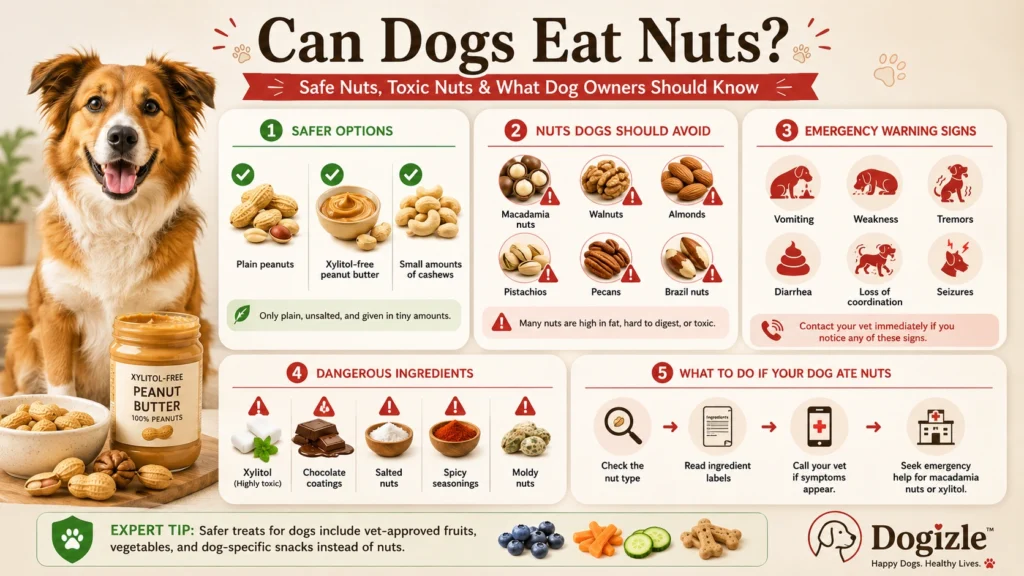
If your dog ate a macadamia nut, a large amount of nuts, moldy nuts, or anything containing xylitol, contact your veterinarian or an emergency clinic immediately. The FDA says xylitol poisoning can begin quickly and can be deadly, so do not wait to “see what happens.”
Step-by-step response plan
- Stop access to the nuts right away.
- Check the label if this was peanut butter, a trail mix, or a flavored snack. Look for xylitol, chocolate, garlic, onion, and heavy salt.
- Identify the nut type if possible. Macadamia nuts are the biggest concern.
- Call your vet or poison line if the amount was large, the product was processed, or your dog is small, old, or already unwell.
- Watch for symptoms such as vomiting, diarrhea, tremors, weakness, wobbliness, collapse, abdominal pain, or seizures.
Go to urgent care now if you see:
- trembling or shaking
- inability to walk normally
- collapse
- repeated vomiting
- signs of pain
- seizures
- trouble breathing
- a swollen belly or retching with no vomit
How to feed nuts more safely, if your vet approves
If your veterinarian says a certain nut is acceptable, keep it plain, unsalted, unseasoned, shelled, and very small. Vets Now specifically notes that peanuts should be unshelled and unsalted, and that peanut butter should not contain sugar, palm oil, or artificial sweeteners.
Use these rules:
- Do not use nuts as a daily treat.
- Do not give shells.
- Do not give flavored or salted nuts.
- Do not use nut products with xylitol.
- Keep total treats to a small part of daily calories; Purina notes dog treats and other snacks can make up to 10% of daily caloric intake.
Mini summary
A nut is only “safer” when it is plain, tiny, and rare. The more processing, salt, shell, or sweetener involved, the worse the risk gets.
Europe-specific practical advice
For European and UK dog owners, label reading matters even more because pet-food communication follows structured labeling rules. FEDIAF says its code is a practical guide for pet-food labeling and marketing across the EU, while PDSA advises owners to choose complete, commercially made food that is appropriate for the dog’s life stage and approved by UK Pet Food.
That matters for nut products because the front label may look harmless while the ingredient list tells the real story. In Europe, owners should be extra careful with:
- imported peanut butters and spreads
- holiday sweets and nut mixes
- “sugar-free” products,
- travel snacks shared at cafés, markets, and family gatherings
A simple rule for UK and EU households is: if the Product is not clearly made for dogs, read the label like a detective. That is especially important with xylitol-containing products.
Apartment living, city life, and seasonal risks
Urban dogs often have faster access to dropped food, party snacks, street litter, and bench-top leftovers. That makes nuts a bigger real-world risk in apartments and city homes because dogs can snatch food before the owner reacts. Blue Cross and RSPCA-style pet guidance both stress avoiding toxic human foods and being cautious with nuts, especially macadamias.
In cold-weather months and during holiday gatherings, nut risks rise because people share festive foods more often, and those foods may include sugar-free items, nut mixes, or heavily salted snacks. FDA guidance on xylitol is especially relevant here because sugar-free foods and nut butters are common around holidays.
For apartment dogs, the practical takeaway is simple: Keep counters clear
- Store snack bowls out of reach
- Never leave trail mix on coffee tables
- Do not let children “share” nuts with the dog
- Use dog treats instead of human snacks during training
Pros and cons of feeding nuts to dogs
| Pros | Cons |
| Some nuts are non-toxic in small amounts. | Most are high in fat and calories. |
| Plain peanuts can be a usable, rare treat. | Salt, shells, coatings, and mold add risk. |
| Peanut butter can help hide medication if it is xylitol-free. | Xylitol in nut butters can be life-threatening. |
| Tiny amounts may fit occasional treat use. | Macadamias are toxic, and walnuts/moldy nuts are dangerous. |
Bottom-line verdict
The pros are weak, and the cons are strong. For most dogs, the risk-reward balance does not favor nuts.
Common mistakes dog owners make
- Thinking “human-safe” means dog-safe. It does not. Macadamia nuts and xylitol are prime examples.
- Giving salted or flavored nuts. Salt and seasoning make the risk worse.
- Forgetting about shells. Shells are a choking and blockage hazard.
- Ignoring the label on the peanut butter. Xylitol is the hidden danger.
- Assuming a small amount cannot hurt. Small dogs and sensitive dogs can still react badly to rich foods.
Expert tips
- Use dog-specific treats for training instead of nuts whenever possible. Purina notes that safer treats and snacks exist that fit the daily calorie budget more cleanly.
- Keep a vet emergency number saved in your phone before you need it. FDA and Cornell both emphasize fast action for xylitol exposure.
- For dogs with a history of pancreatitis, stay even more conservative with fatty foods. Merck’s guidance on lower-fat nutrition supports this caution.
- In multi-pet homes or homes with children, store nuts like you would medicine: sealed, high, and out of reach. That is practical prevention, not paranoia.
Better treat alternatives to nuts
For most dogs, the best substitutes are dog-specific treats or vet-approved simple foods that are easier to portion and less likely to cause a fat-related problem. AKC explicitly suggests safe fruits, vegetables, and vet-approved treats instead of nuts. PDSA also encourages choosing complete, life-stage-appropriate diets and healthy treat options.
Better options often include:
- small pieces of dog treats
- a tiny amount of xylitol-free peanut butter in a toy
- vet-approved fruits and vegetables
- training treats with controlled calorie
People Also Ask
Some nuts are less dangerous than others, but nuts are generally not the best snack for dogs. Many nuts are high in fat, difficult to digest, or dangerous because of choking hazards, seasoning, mold, or toxic Ingredients like xylitol.
Macadamia nuts are considered toxic to dogs and can cause weakness, tremors, vomiting, fever, and coordination problems. Moldy walnuts can also be dangerous because of the toxins produced by mold.
Dogs can eat peanut butter only if it is xylitol-free and given in small amounts. Always check the ingredient label carefully before feeding peanut butter to your Can Dogs Eat Nuts.
Plain, unsalted, shelled peanuts are usually considered the safest option in tiny amounts. However, they are still high in fat and calories, so they should only be an occasional treat.
Nuts can cause stomach upset, pancreatitis, choking, intestinal blockage, and obesity because they are high in fat and difficult for many dogs to digest.
Contact your veterinarian or an emergency animal clinic immediately. Macadamia nuts can cause serious symptoms within hours and should always be treated as a potential emergency.
It is best not to feed nuts to puppies. Puppies are smaller, more sensitive to rich foods, and more likely to choke on hard foods or shells.
Safer treats include dog-specific training treats, carrots, blueberries, cucumber slices, apple pieces without seeds, and other vet-approved fruits and vegetables.
Conclusion
So, can dogs eat nuts? In some cases, yes — but only certain nuts, only in very small amounts, and only when they are plain, unsalted, and free from harmful ingredients. Even then, nuts are rarely the best treat choice for dogs because they can cause stomach upset, pancreatitis, choking, intestinal blockage, or toxic reactions.
Macadamia nuts should always be avoided, and peanut butter must always be checked for xylitol before feeding. The safest approach for most dog owners is to treat nuts as an occasional exception rather than a regular snack.