Introduction
Keeping a dog clean is not only a cosmetic routine. It is a core part of skin care, odor control, comfort, and home hygiene. A good bath can transform a scruffy, damp, hard-to-manage coat into a soft, fresh, pleasant-smelling one. But the real challenge is not just getting rid of dirt for a few hours. The real goal is finding a shampoo that leaves a clean scent behind without irritating the skin, stripping natural oils, or causing dryness that makes odor return even faster. Veterinary guidance consistently emphasizes that dogs should be bathed with products formulated for dogs, because human shampoos can disrupt the skin’s protective barrier and are often too harsh for Canine Skin.
Every dog owner knows the frustration: you bathe your dog, they smell wonderful for a short time, and then the familiar “wet dog” odor comes back within a day or two. That is why the phrase “best smelling dog shampoo” should never mean “strongest perfume.” In practice, the best shampoo is the one that combines a pleasant fragrance with skin safety, coat compatibility, and real cleansing power. Veterinary sources also note that mildly scented or fragrance-free hypoallergenic shampoos are often preferred for routine bathing, especially when skin is sensitive or irritation-prone.
This guide focuses on a smarter way to choose. You will learn how scent should be evaluated, which ingredient types deserve more trust, which formulas fit different coat and skin needs, and how to help freshness last longer after bath day. The aim is simple: a dog that smells clean, feels comfortable, and stays healthier between baths.
Why Dog Shampoo Scent Matters More Than Ever
A fresh-smelling coat is about more than vanity. It often reflects how well a shampoo cleans oil, dirt, and debris without leaving residue behind. When a dog still smells soon after bathing, the reason is not always “bad shampoo.” Sometimes the issue is skin oil buildup, incomplete rinsing, improper drying, skin irritation, or an underlying dermatologic problem. Veterinary references on skin disease repeatedly note that bathing can help reduce odor, oiliness, crusts, and debris when the right shampoo is used correctly.
The need for better odor control is especially noticeable in homes where dogs live closely with people, sleep indoors, or spend time on sofas, rugs, and bedding. In those settings, a shampoo that simply perfumes the coat for an hour is not enough. Owners need formulas that clean well, support the skin barrier, and leave behind a clean scent that does not overwhelm the dog’s nose or irritate the skin. The ASPCA notes that pet-formulated shampoos are the safest starting point, and that some human-type fragrances and ingredients can be problematic even when they seem mild to us.
Another reason scent matters is that dryness and overbathing can make odor worse, not better. When natural oils are stripped away too aggressively, the coat may become flaky, dull, or reactive, and some dogs respond by producing more oil or developing skin discomfort. The ASPCA specifically warns that bathing too often can remove essential oils and contribute to dry, flaky skin, which is one reason a balanced grooming routine matters as much as the Shampoo itself.
Dog Shampoo Scent Ranking System
If you are trying to choose the best-smelling dog shampoo, it helps to judge more than just the first impression. A shampoo can smell amazing in the bottle and still fail in real life if it irritates the skin or fades too fast. A better framework is to judge it across five dimensions: fragrance strength, longevity, safety, coat compatibility, and ingredient quality. This is not a rigid lab standard; it is a practical consumer framework built around what veterinary guidance tells us matters most: pet-safe formulation, skin tolerance, and appropriate cleansing.
1. Fragrance Strength
This is the immediate scent profile you notice during and right after bathing. A strong fragrance may feel luxurious, but it is not automatically better.
2. Longevity
This is how long the fresh smell remains noticeable after the bath. Longevity depends on the coat, drying method, environment, and how well the shampoo cleans without residue.
3. Safety Level
A scent is useless if it causes itching, redness, dryness, or discomfort. Veterinary sources consistently recommend dog-specific shampoos and caution against harsh or unnecessary fragrance overload.
4. Coat Compatibility
Short coats, double coats, curly coats, and sensitive skin all respond differently. A shampoo that works beautifully on one dog may be too heavy or too mild for another.
5. Ingredient Quality
Better formulas usually rely on gentle cleansing agents, moisturizers, and skin-supportive ingredients rather than heavy perfume masking. For routine care, hypoallergenic, moisturizing, and oatmeal-based products are commonly recommended in veterinary guidance.
What Makes Dog Shampoo Smell Good?
A shampoo smells good for one of two reasons: it contains fragrance compounds that create a pleasant scent, or it contains ingredients that help the coat stay clean, soft, and lightly fresh for longer. These are not the same thing. A formula can smell “strong” but still fail at odor control if it simply masks the stink instead of removing the source. Effective Grooming focuses on cleaning first, scent second. Veterinary references on topical care and skin disease support this logic: shampoos are used not just for fragrance, but to reduce oiliness, debris, itching, and odor.
Natural fragrance-style ingredients and why people like them
Some ingredients are favored because they create a softer, cleaner scent and are often paired with moisturizing benefits.
Aloe vera is popular in dog shampoos because it is associated with a clean, gentle feel and is often paired with soothing formulas. In practice, it is often chosen for dogs that need a mild bathing experience rather than an aggressive deodorizing wash.
Oatmeal is one of the most common ingredients in calming, sensitive-skin shampoos. Veterinary product guidance describes oatmeal shampoo as suitable for routine bathing and for dry, itchy, sensitive skin. Its scent is subtle rather than loud, which makes it a good option for dogs that react poorly to heavy perfume.
Moisturizing, hypoallergenic blends are often a smart choice for dogs whose skin is easily irritated. Merck Veterinary Manual guidance notes that mild, cleansing, hypoallergenic, and moisturizing shampoos are appropriate for animals with mild scaling, irritation, or over-bathing-related dryness.
Synthetic fragrance ingredients and why caution matters
Synthetic fragrance can create a more dramatic first impression and may linger longer, but a stronger scent does not mean a safer or better shampoo. The ASPCA advises that pet owners choose products formulated for pets, since human-style fragrance additives can irritate sensitive skin or be unsuitable for other species. It also warns that essential oils should not be casually used around pets unless supervised by a veterinarian, because toxicity varies by oil and exposure route.
That is why a “fresh scent” should be treated as part of the formula, not the entire selling point. A good shampoo should smell pleasant while also respecting the skin barrier, coat type, and bathing frequency.
Best Smelling Dog Shampoo
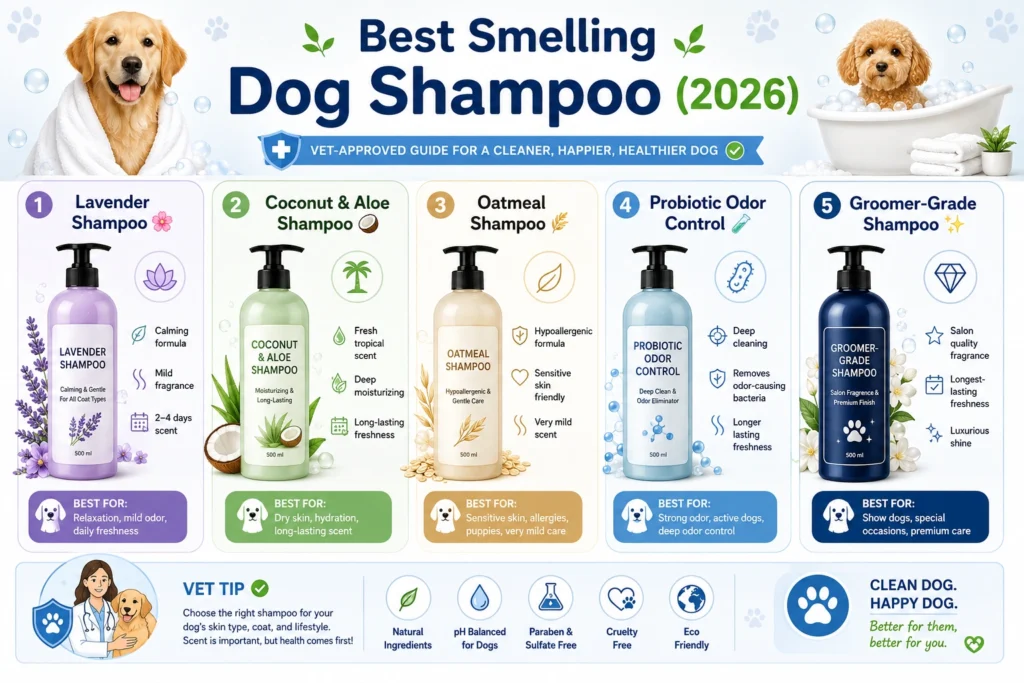
Below are the five most useful scent-focused shampoo categories for 2026. These are not brand endorsements. They are practical formula types, organized by what dogs and owners usually need most: comfort, odor control, freshness, and skin compatibility.
1) Lavender-Based Dog Shampoo
Best for: calm, indoor dogs; owners who prefer a soft floral profile
Lavender-style shampoos are often chosen because they create a gentle, spa-like aroma rather than a sharp perfume blast. For many homes, this is the sweet spot: noticeable freshness without overwhelming the dog or the room. A mild floral scent can feel soothing and clean, especially for dogs that are bathed regularly and do not have heavy odor issues. Because routine bathing should still respect skin sensitivity, the most appealing lavender shampoos are those that pair fragrance with a dog-safe, non-irritating base. Veterinary guidance still favors pet-formulated products and recommends avoiding unnecessary harsh ingredients.
Why it works well:
It usually leaves a pleasant smell, offers a calming bath experience, and fits homes that want freshness without a heavy cosmetic fragrance.
Limitations:
It may not be the strongest option for dogs with persistent odor, oily coats, or dirty outdoor lifestyles.
2) Coconut & Aloe Vera Shampoo
Best for: long-lasting freshness and a clean, tropical-style scent
Coconut and aloe combinations are popular because they often smell clean, slightly sweet, and “just washed” without feeling medicinal. They are often chosen for dogs that need both scent and moisture support. A well-designed moisturizing formula matters because dry skin and stripping of natural oils can make a dog look dull and feel uncomfortable. Veterinary and ASPCA guidance support moisturizing or hypoallergenic bathing products, especially when the skin is sensitive or prone to dryness.
Why it works well:
It usually provides a balanced, fresh scent, a soft coat feel, and better day-to-day cosmetic appeal than basic cleanser-only products.
Limitations:
Very rich formulas can sometimes feel too heavy for tiny, short-coated, or oily-coated dogs if not rinsed thoroughly.
3) Oatmeal Hypoallergenic Shampoo
Best for: sensitive, itchy, puppy-prone, and easily irritated skin
If your priority is safety, oatmeal shampoos are among the most dependable options. VCA guidance specifically notes that oatmeal shampoo is used for routine bathing and to help with dry, itchy, sensitive skin. The scent is usually mild and comforting rather than bold. That makes it an excellent choice for dogs that react badly to intense fragrances or for owners who prefer “clean” over “perfumed.” Veterinary sources also recommend mild, cleansing, hypoallergenic, and moisturizing products for animals with irritated skin or mild scaling.
Why it works well:
It is gentle, broadly suitable, and often the safest long-term choice for routine grooming.
Limitations:
The fragrance is subtle, so it is not the best pick if your goal is a strong perfume-like finish.
4) Probiotic or Odor-Control Shampoo
Best for: active dogs, muddy routines, and owners who want a cleaner smell for longer
Odor-control shampoos are designed to do more than perfume the coat. They aim to clean away the grime, oil, and residue that often cause the smell in the first place. Veterinary dermatology sources emphasize that shampooing can reduce bacteria, crusts, scales, oiliness, itching, and odor when the right product is selected for the problem. In skin disease cases, medicated or antiseptic shampoos may be recommended by a veterinarian to address bacterial or fungal issues.
Why it works well:
It is useful for dogs that spend time outdoors, get dirty frequently, or develop a noticeable smell soon after bathing.
Limitations:
Some odor-control formulas have a more clinical feel and may smell less like “luxury” and more like “deep clean.”
5) Groomer-Grade Premium Shampoo
Best for: show dogs, special occasions, and maximum freshness
Professional grooming shampoos often feel richer, more polished, and more refined than basic household formulas. They are designed for finish, shine, and a more luxurious scent experience. The tradeoff is that a premium does not always mean universally suitable. A stronger fragrance may be Wonderful for some dogs but too much for others, especially if the skin is sensitive. Because the safest grooming approach still depends on the dog’s condition, pet-formulated and veterinarian-compatible products should remain the standard.
Why it works well:
It can create the most noticeable “fresh from the salon” effect.
Limitations:
These shampoos can be more expensive and may not be ideal for dogs that do poorly with heavy fragrance.
Best Smelling Dog Shampoo by Breed and Coat Type
Different dogs need different grooming logic. Coat thickness, oil production, curl pattern, and skin sensitivity all influence how a shampoo behaves after rinsing. Veterinary references consistently stress that the right shampoo depends on the skin and coat condition rather than scent alone.
Labrador Retrievers and other active, outdoor dogs
These dogs often collect more dirt, moisture, and odor because they are energetic and frequently exposed to the environment. A cleanser with strong odor-control properties is usually more helpful than a basic fragrance shampoo. A moisturizing yet effective formula is often the best compromise.
Poodles and curly-coated breeds
Curly coats can trap moisture and product residue if the shampoo is too heavy or rinsed poorly. A balanced moisturizing shampoo with a clean, gentle scent is typically better than a dense, oily formula. Hypoallergenic formulas are especially useful when the skin is sensitive.
Bulldogs and other skin-fold breeds
Dogs with folds and creases need special attention because trapped moisture can contribute to odor and irritation. In these cases, scent is secondary to cleanliness and skin health. Mild, vet-compatible, and thoroughly rinsed formulas are usually the safer direction. When infection or inflammation is suspected, a veterinarian may recommend a medicated shampoo designed for the issue.
Puppies and highly sensitive dogs
Puppies and sensitive dogs should generally stay with mild, dog-formulated, hypoallergenic shampoos. Overly fragrant products are not the best starting point when the skin barrier is still developing or reactive.
How Long Does Dog Shampoo Smell Last?
There is no universal scent timer for dog shampoo. Longevity depends on many variables: coat type, humidity, how well the shampoo was rinsed, whether the dog was fully dried, how much oil the skin produces, and how quickly the dog gets dirty again. That is why a shampoo that smells amazing in one household may fade quickly in another. Veterinary sources emphasize the importance of proper bathing technique and using the right shampoo for the skin condition, not just the strongest fragrance.
In general, a mild herbal or oatmeal-style shampoo may leave a subtle freshness for a shorter period, while richer grooming formulas may seem to last longer. But long-lasting scent should never come at the expense of irritation or dryness. Overbathing can also strip natural oils and worsen dryness, which can make the coat less pleasant over time.
| Shampoo Type | Typical Freshness Feel | Safety Profile | Best For |
| Herbal or light botanical | 1–3 days | High when dog-formulated | Mild freshness |
| Coconut or aloe blend | 2–5 days | High when pet-safe | Balanced scent and moisture |
| Groomer-grade premium | 5–7 days | Varies by formula | Special occasions |
| Strong synthetic fragrance | 1–3 days or more | More variable | Use with caution |
This table should be treated as a practical guide rather than a medical rule. The actual result depends on the dog, the home environment, and the quality of the shampoo and rinse process.
Safety & Health Considerations: What Vet-Level Grooming Means
Safety is the part of the conversation that many fragrance-first articles ignore. That is a mistake. The scent matters, but the dog’s skin comes first. VCA and ASPCA guidance make it clear that dogs should use products formulated for their species, because human shampoos and fragrance-heavy products can be too harsh or irritating. Human shampoo can disrupt the skin’s acid mantle, and pet owners are advised to choose dog-specific formulations for routine use.
Ingredients and situations to be cautious about
Artificial fragrance / “parfum” / “fragrance.”
These can make a product smell stronger, but they may also increase the risk of sensitivity in some dogs. The concern is not that every fragrance is automatically dangerous; the concern is that fragrance-heavy products are often less transparent and less skin-friendly than simpler formulas.
Alcohol-heavy formulas
Alcohol can be drying, and dry skin can become itchy or flaky. Since bathing too often already risks removing protective oils, adding a drying formula is not ideal.
Essential oils
This is one of the biggest caution areas. The ASPCA warns that essential oils can be risky and that toxicity varies by oil and exposure. They are not something to casually add to a dog’s grooming routine without veterinary guidance.
Unknown blends
If the ingredient list is vague or the formulation seems overly complex, the safest move is usually to choose a simpler, clearly labeled dog shampoo. Veterinary sources favor transparent pet-formulated products and recommend consulting a veterinarian when skin disease is present.
Ingredients that are generally more reassuring
Oatmeal
Often used for soothing and routine bathing in sensitive or dry skin cases.
Aloe vera
Common in gentle shampoos and often included in moisturizing blends.
Moisturizing and hypoallergenic bases
These are frequently recommended for routine bathing and for dogs with mild scaling or irritation.
Veterinary antiseptics or medicated ingredients, when prescribed
When a dog has bacterial or fungal skin trouble, a veterinarian may recommend shampoos with specific active ingredients. These are treatment products, not just cosmetic grooming products. VCA notes that medicated shampoos are prescribed for particular skin conditions and should be used under veterinary direction.
Expert Grooming Tips for Longer-Lasting Scent
A good-smelling shampoo works best when the bath routine is done properly. Many scent problems are really technique problems.
Rinse thoroughly.
Any leftover shampoo can leave residue that dulls the coat and irritates the skin. VCA specifically advises complete rinsing to help prevent irritation and excessive drying.
Dry completely.
A damp coat is one of the most common reasons odor returns quickly. Moisture trapped in the fur or skin folds can undo the effect of a good wash.
Brush after bathing.
Brushing helps distribute the coat more evenly and removes loose debris that might contribute to odor.
Use a conditioner when appropriate.
For many dogs, a conditioner helps restore moisture and can reduce the dry, scratchy look that sometimes follows bathing. VCA notes that a conditioning product can help restore lost moisture and minimize dandruff after the bath.
Do not over-bathe.
The ASPCA warns that too much bathing can remove natural oils and increase the risk of dry, flaky skin. For many dogs, less is more.
Use veterinarian-guided medicated shampoo only when needed.
If your dog has a skin issue, the goal is treatment, not fragrance. The correct medicated shampoo can help reduce odor and inflammation when prescribed appropriately.
Common Dog Owner Mistakes
A lot of people unintentionally reduce shampoo performance without realizing it. Here are the biggest mistakes:
Using human shampoo
It may seem harmless, but dog skin is different, and human shampoo can be too harsh.
Not drying the coat properly.y
If moisture stays trapped in the fur, the dog may smell less fresh much sooner.
Over-bathing
More baths do not always mean better scent. In many dogs, excessive bathing causes dryness and makes the skin less comfortable.
Choosing fragrance over function
A perfume-heavy shampoo may smell nice at first, but it can miss the real source of odor or irritate the skin.
Ignoring skin problems
Persistent odor can sometimes signal infection, seborrhea, or another dermatologic issue. When odor does not improve with proper bathing, veterinary evaluation is the safer move.
Real-Life Use Cases
For apartment living and indoor homes
In close living spaces, freshness tends to matter more because odors linger in fabrics and furniture. A balanced coconut, aloe, or mild odor-control shampoo is often more useful than a very strong perfume. The best choice is one that cleans effectively while remaining skin-friendly.
For cold seasons
When the weather is dry or bathing becomes less frequent, skin can become more prone to dryness. In those situations, moisturizing and hypoallergenic shampoos are often a smarter choice than aggressive cleansing formulas. The ASPCA notes that too much bathing can remove oils and increase the risk of dry, flaky skin.
For rainy or muddy routines
Dogs that regularly come home dirty need more than fragrance. They need a shampoo that removes grit, oil, and odor efficiently, then rinses clean. A vet-compatible odor-control shampoo or a cleansing formula recommended for the skin type is often the best fit.
For dogs with sensitive skin
A gentle oatmeal or hypoallergenic shampoo is usually the safer route. These formulas are often recommended for routine bathing when the skin is easily irritated.
Pros and Cons Summary
Pros
A good-smelling dog shampoo can improve the home environment, support a cleaner coat, reduce the wet-dog smell, and make grooming more pleasant for both dog and owner. When the formula is gentle and correctly chosen, bathing can also support better skin cleanliness and help reduce oiliness and odor.
Cons
Not every scented shampoo is skin-friendly. Some fragrances are too strong, some formulas are drying, and some products mask odor instead of dealing with the cause. Overuse can also strip oils and make the skin less comfortable.
People Also Ask
The best-smelling dog shampoo in 2026 is not just the one with the strongest fragrance. The best choice is the shampoo that balances a pleasant scent with skin safety, good rinsability, and enough cleansing power to keep odor away for longer. In practical terms, coconut, aloe, oatmeal, and gentle groomer-grade formulas tend to perform well depending on the dog’s skin and coat needs. Veterinary guidance supports choosing pet-formulated, moisturizing, hypoallergenic, or medically appropriate shampoos rather than relying on perfume alone.
Yes, scented dog shampoo can be safe if it is formulated for dogs and does not overload the skin with harsh or irritating ingredients. The safest approach is to choose a pet-specific shampoo and avoid products with unclear fragrance loads or risky essential oils. The ASPCA advises pet owners to use products made for pets and notes that essential oil exposure can be problematic.
It can last anywhere from a short, subtle freshness to several days, depending on the shampoo, coat type, drying quality, environment, and how often the dog gets dirty again. There is no single universal duration. What matters most is whether the shampoo truly cleans the coat and supports the skin rather than just covering up odor.
Yes, but only if the shampoo is specifically made for puppies or is gentle enough for sensitive skin. Puppies generally do better with mild, hypoallergenic, dog-formulated shampoos rather than strong, perfume-heavy products. Veterinary grooming guidance supports choosing products made for the species and avoiding harsh human-style formulas.
Conclusion
The Best-Smelling dog shampoo is not simply the strongest fragrance on the shelf. It is the formula that leaves the coat clean, the skin comfortable, and the scent pleasant enough to last without creating irritation. The smartest grooming choices are usually the ones that respect the dog’s skin barrier, the coat type, and the reason for bathing in the first place. Veterinary guidance consistently supports dog-specific, hypoallergenic, moisturizing, or vet-directed medicated shampoos over harsh human products or overpowered fragrances.
So your dog has sensitive skin, oatmeal and hypoallergenic shampoos are strong starting points. If you want a richer, fresher scent, coconut and aloe-style formulas are often a good balance. If odor is the main issue, a properly formulated odor-control shampoo can do more than a perfume-heavy wash ever will. And when skin disease is suspected, the right answer is not a stronger smell, but a veterinarian-guided treatment plan.