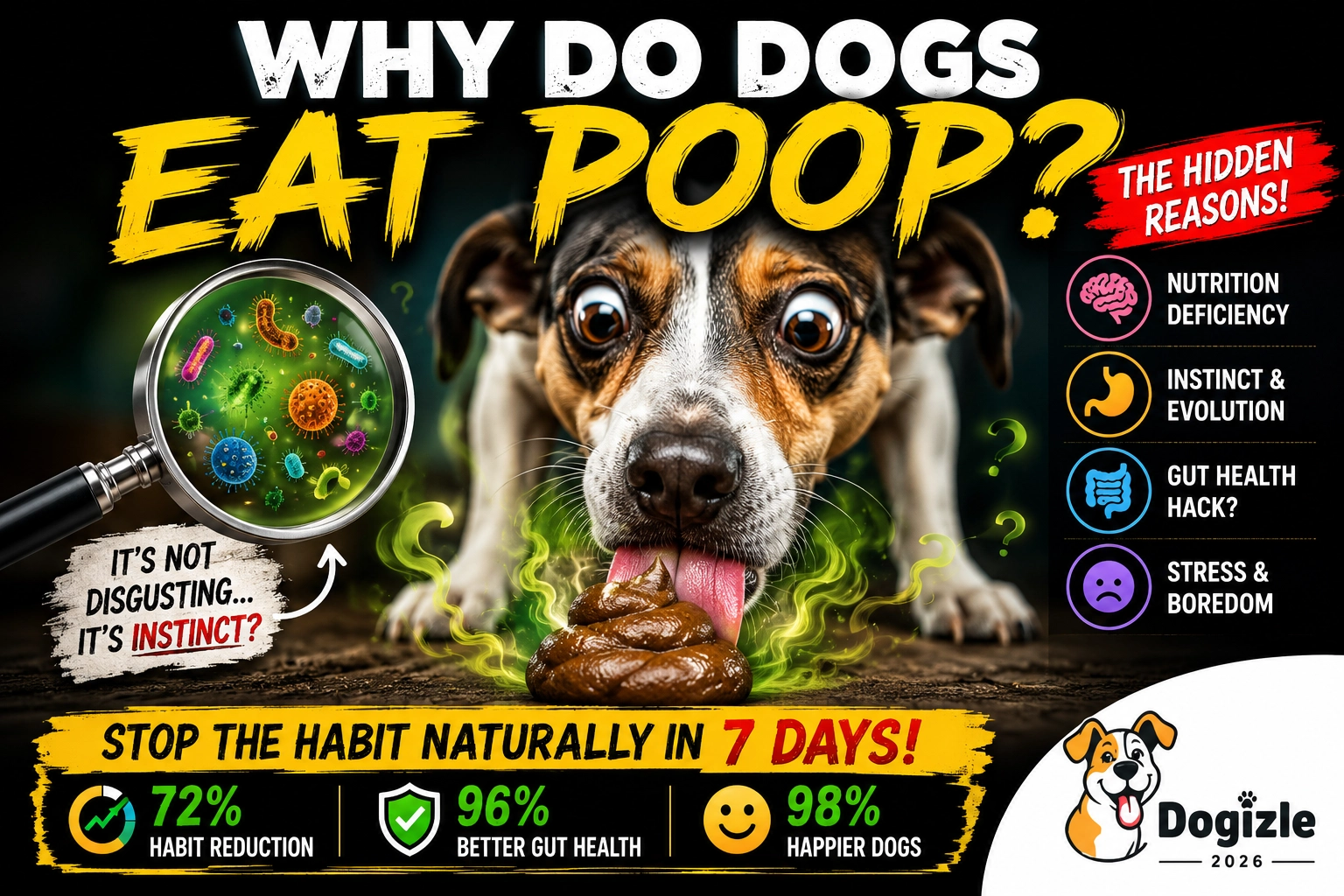
Why Do Dogs Eat Poop? — The Shocking Truth Most Owners Ignore
Dogs eat poop due to instinct, nutritional gaps, stress, or learned behavior. Why Do Dogs Eat Poop? — disgusted and worried about your dog’s habit? Learn the real causes, what it signals about health or behavior, and fast, vet-backed ways to stop it before it becomes a serious, hard-to-break problem. Dogs eat poop because of instinct, stress, curiosity, diet issues, learned behavior, or sometimes a medical condition. This behavior is called coprophagia, and although it is unpleasant to humans, it is more common than many dog owners realize. Puppies, rescue dogs, anxious dogs, and even well-trained adult dogs can all develop it.
The good news is that coprophagia is often manageable and, in many cases, fully correctable. With the right mix of prevention, training, nutrition, and routine adjustments, most dogs can stop this habit.
In this complete guide, you will learn why dogs eat poop, what is happening in the dog’s mind, which medical and nutritional causes matter most, and how to stop the behavior fast using practical, humane methods.
Why Is My Dog Eating Poop? (Main Causes Explained)
Coprophagia means the act of eating feces. A dog may eat:
- its own poop
- another dog’s poop
- cat poop
- farm-animal waste
- wildlife droppings
For humans, the behavior seems shocking and disgusting. For dogs, it may be linked to smell, curiosity, habit, anxiety relief, or scavenging instincts.
Coprophagia is not considered ideal or normal behavior in a healthy adult dog, but it is not rare either. Veterinarians and behavior specialists often see it in puppies, under-stimulated dogs, dogs with separation anxiety, and dogs living in stressful or unpredictable environments.
The key point is simple: Coprophagia is a behavior, not a personality flaw. That matters because behavior can be changed.
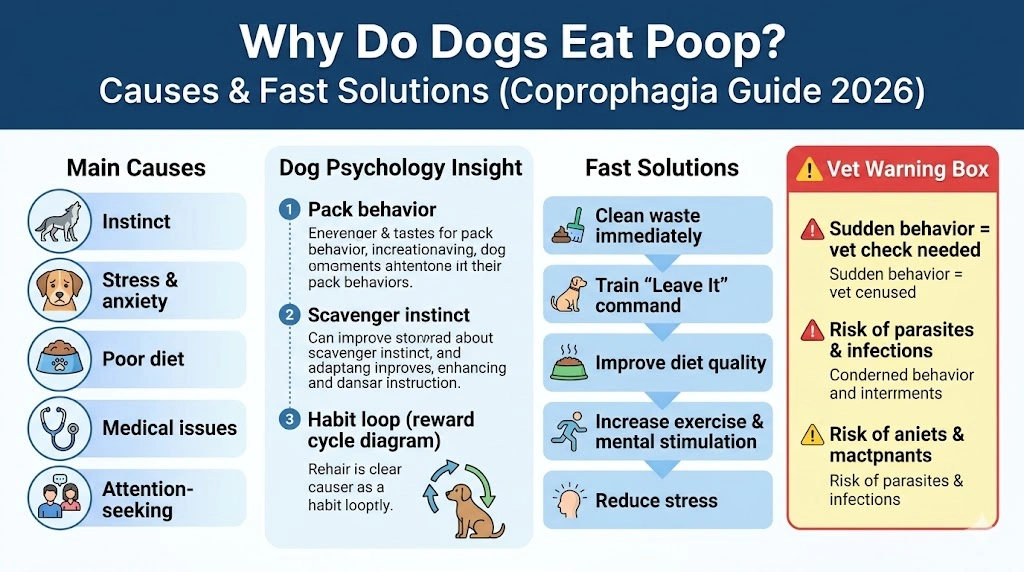
Why Do Dogs Eat Poop? The Main Causes
There is usually no single explanation. In most cases, coprophagia is caused by a combination of biology, environment, emotion, and learned reinforcement. Understanding the root cause makes treatment far more effective.
1. Evolutionary Instinct and Scavenger Behavior
Dogs are descendants of ancestors that survived by scavenging. In the wild, food was not always available, so consuming leftovers was part of survival. That ancestral wiring has not disappeared.
From an evolutionary perspective, a dog’s brain is built to notice organic material, sniff out food remnants, and evaluate anything edible. Poop may be disgusting to us, but to some dogs, it is just another strong-smelling organic substance that triggers interest.
This is one reason coprophagia can feel confusing. The dog is not being “bad” in a moral sense. It may simply be following old survival programming that no longer fits modern life.
2. Puppy Exploration and Oral Learning
Puppies learn about the world with their mouths. They chew furniture, lick floors, bite toys, and sometimes sample stool. During early development, puppies do not have the same hygiene boundaries humans do. They are exploring texture, scent, taste, and reaction.
A puppy may eat poop because:
- It is curious
- It is copying another animal
- It is investigating a new smell
- It does not yet know that the behavior is unwanted
- It has not learned impulse control
Many puppies outgrow coprophagia naturally, especially if the habit is addressed early. That is one reason early training matters so much. The younger the dog, the easier it is to break the pattern before it becomes automatic.
3. Stress, Anxiety, and Emotional Pressure
Stress is one of the strongest modern explanations for poop eating. Dogs under emotional strain often develop repetitive or self-soothing behaviors. Coprophagia may function as a coping mechanism when a dog feels overwhelmed.
Common stress triggers include:
- long periods alone
- separation anxiety
- household conflict
- loud noises
- crowded or chaotic homes
- inconsistent routines
- lack of safe resting spaces
- insufficient exercise
When stress rises, the dog’s nervous system may stay activated longer than normal. In that state, the dog may engage in compulsive or comfort-seeking habits. For some dogs, eating poop becomes one of those habits.
This is why a behavioral fix must address emotional pressure, not just the poop itself. If the dog’s stress remains high, the habit often returns.
4. Nutritional Deficiencies and Poor Diet Quality
Diet plays a major role in canine behavior. When a dog is not receiving adequate nutrition, properly digesting food, or absorbing nutrients well, it may seek out unusual sources of odor and residue.
Possible diet-related contributors include:
- low-quality protein
- poor digestibility
- insufficient fiber
- enzyme-related digestive issues
- vitamin or mineral imbalance
- inadequate calorie intake
- a diet that does not match the dog’s age, size, or activity level
Some dogs appear to eat poop because they are still driven by hunger signals or because their food is not being fully processed. In simple terms, the body may be telling the dog that something is missing. The dog then searches for more material to consume.
This does not mean every poop-eating dog has a nutritional problem, but it does mean diet quality should always be evaluated before assuming the behavior is “just bad manners.”
5. Attention-Seeking and Reaction-Based Learning
Dogs are excellent at learning what gets a response. If eating poop causes the owner to yell, chase, shout, panic, or react dramatically, the dog may interpret that reaction as attention. In the dog’s world, attention can be rewarding even when it is negative.
A common cycle looks like this:
- dog eats poop
- The owner reacts strongly
- The dog receives intense attention
- Behavior is repeated because it gets a response
This is a classic reinforcement trap. The owner thinks they are punishing the dog, but the dog may be learning that poop eating triggers exciting human involvement.
That is why calm, consistent, low-drama correction works better than emotional outbursts.
6. Medical Causes That Must Not Be Ignored
Sometimes coprophagia has a medical origin. If a dog suddenly starts eating poop, the cause may be physical rather than behavioral.
Possible medical contributors include:
- intestinal parasites
- malabsorption syndromes
- diabetes
- thyroid imbalance
- gastrointestinal disorders
- chronic hunger signals
- pancreatic issues
- medication side effects
If the behavior appears suddenly, worsens quickly, or comes with other symptoms such as vomiting, weight loss, diarrhea, lethargy, or appetite changes, veterinary evaluation is important.
In these cases, the poop eating is not the main problem. It is a symptom. Treating the symptom without identifying the underlying issue can delay proper care.
Dog Psychology Behind Coprophagia
To stop the behavior, it helps to understand how a dog experiences the world. Dog psychology is not identical to human psychology, but it follows clear patterns.
Pack Learning and Social Copying
Dogs learn by watching other dogs. If another dog eats feces, a younger dog may copy the action simply because it appears normal in that context. Pack behavior can shape habits quickly, especially in multi-dog homes.
This kind of social learning is important because the behavior may be reinforced without the owner realizing it. One dog starts the pattern, another follows, and the habit becomes part of the environment.
Scent-Driven Decision Making
A dog’s nose is the center of much of its decision-making. Humans may judge a substance visually. Dogs judge it by scent. Feces carries a highly concentrated scent profile, and for some dogs, scent alone is enough to create attraction.
That is why poop is not simply “disgusting” to a dog in the way it is to a person. The smell can communicate information, and the dog may treat it as something to investigate or consume.
Reward Loop Formation
Any repeated behavior can become a habit if it is reinforced. In coprophagia, the reinforcement may be:
- taste
- smell
- attention
- relief from stress
- access to something interesting
- relief from boredom
Once the dog discovers that poop eating produces some kind of result, the brain begins to remember the pattern. Over time, the habit can become more automatic.
That is why early interruption matters. The longer the loop continues, the stronger it becomes.
How to Stop Dogs Eating Poop Fast
The best results come from combining prevention, training, nutrition, and stress reduction. No single trick solves every case. The goal is to stop the dog from practicing the behavior while building better alternatives.
Step 1: Remove Access Immediately
This is the fastest and most important fix. If the dog cannot reach poop, the habit cannot be rehearsed.
Do the following:
- clean the yard quickly
- Pick up the stool immediately after defecation
- Supervise outdoor time
- Keep cats’ litter boxes out of reach
- block access to animal waste
- Use a leash during high-risk moments if needed
The fewer chances the dog has to eat poop, the faster the behavior weakens. Prevention is not a backup plan. It is the foundation.
Step 2: Teach a Reliable “Leave It” Command
A strong leave-it cue gives you a practical way to interrupt the action before it happens.
Training process:
- Hold a treat in your hand.
- Present it to the dog.
- Say “leave it.”
- Reward the dog when it ignores or disengages.
- Repeat regularly in controlled settings.
- Practice with increasing distractions.
The purpose is not just obedience. It is impulse control. A dog that can stop and redirect on cue is less likely to grab poop during outdoor walks or yard time.
Step 3: Upgrade the Diet
A more digestible, balanced diet can reduce the triggers behind coprophagia. You are looking for a food plan that supports better nutrient absorption and steadier satiety.
Helpful changes may include:
- higher-quality protein
- better digestibility
- appropriate calorie intake
- digestive support if recommended by a vet
- meal consistency
- fewer sudden diet switches
Some dogs do better with a veterinarian-guided nutrition plan, especially if there is a history of digestive trouble, loose stool, or chronic hunger.
Step 4: Increase Exercise and Mental Stimulation
A bored dog is far more likely to develop strange habits. Dogs need physical activity and brain work to stay emotionally balanced.
Helpful additions include:
- daily walks
- fetch or tug games
- scent work
- puzzle feeders
- obedience practice
- training games
- controlled social interaction
Mental fatigue can be just as important as physical fatigue. A Dog that has meaningful tasks is less likely to search for self-created entertainment like poop eating.
Step 5: Lower Stress and Stabilize Routine
Dogs do best when life is predictable. A chaotic environment can drive compulsive habits.
Try to:
- Feed on a regular schedule
- walk at consistent times
- Reduce isolation when possible
- provide a calm resting area
- avoid frequent sudden disruptions
- minimize anxiety triggers
If the dog is anxious, the behavior problem may not improve until the emotional issue is addressed. In some cases, professional behavior support is worth considering.
Step 6: Reward the Behaviors You Want
Do not wait for a breakthrough. Reward small wins.
Praise and reward the dog:
- ignores poop
- turns away from waste
- responds to leave-it
- comes when called
- chooses a toy instead
- exits the yard calmly
Positive reinforcement helps the dog understand what to do instead of only what not to do. That shift is crucial for lasting change.
A Simple 7-Day Coprophagia Reset Plan
This plan is not magic, but it creates momentum.
Day 1–2: Control Access
Clean all waste immediately. Remove temptation. Supervise outdoor time.
Day 3: Start Leave-It Training
Practice in low-distraction settings. Keep sessions short and upbeat.
Day 4: Review Nutrition
Check meal quality, feeding schedule, digestion, and appetite patterns.
Day 5: Add Exercise
Increase walks, play, and mental work to reduce boredom and stress.
Day 6: Focus on Calm Routine
Use predictable feeding, potty, and rest times.
Day 7: Reinforce Success
Reward every good choice. Track what triggers the behavior so you can refine the plan.
This kind of reset works best when the owner stays consistent. The habit may not disappear in one day, but early structure often produces noticeable improvement.
Natural and Vet-Friendly Support Options
Some supportive products or foods may help, but they should be used as part of a broader plan, not as the only solution.
Possible supports include:
- pumpkin puree for digestion support
- probiotic supplements
- digestive enzymes if recommended
- vet-approved deterrent products
- balanced treats used during training
- enrichment toys that redirect mouth-focused behavior
These tools can assist the process, but they do not replace supervision, cleanup, and behavior training.
A supplement will not solve a learned habit by itself. It only supports the larger system.
Common Mistakes Dog Owners Make
Many dogs continue eating poop because the correction strategy is flawed. These mistakes are especially common.
Shouting or Scaring the Dog
This often increases stress and can make the problem worse.
Delayed Cleanup
Leaving waste available gives the dog repeated opportunities to practice the habit.
Inconsistent Rules
If the dog is corrected sometimes and ignored other times, the learning becomes weak.
Forgetting Diet
Owners may focus only on behavior and miss a digestive or nutritional contributor.
Rewarding the Behavior Accidentally
Strong reactions can become attention. Attention can become reinforcement.
Expecting Instant Results
Most habits improve through repetition, not through one dramatic intervention.
Avoiding these errors can speed progress significantly.
Veterinary Perspective: What Experts Usually Recommend
Behavior specialists and veterinarians often emphasize a few core principles.
Start Early
The earlier the habit is addressed, the easier it is to stop.
Use Positive Reinforcement
Reward the desired action instead of relying on punishment.
Combine Multiple Solutions
Behavior, diet, environment, and stress all matter.
Rule Out Medical Issues
A sudden behavior change should never be ignored.
Monitor Stool Quality
Loose stool, abnormal digestion, or frequent hunger can offer clues.
A broad approach tends to outperform a one-step solution. Dogs are complex, and the habit usually has more than one layer.
Breed and Lifestyle Factors That May Increase Risk
Some dogs are simply more active, more curious, or more driven by scavenging behavior. High-energy breeds may need more stimulation, more structure, and more outlets for their drive.
Dogs that often need extra management include:
- Labrador Retrievers
- Beagles
- German Shepherds
- Terriers
- highly energetic mixed breeds
That does not mean the breed causes coprophagia. It means the dog may require more exercise, stronger impulse control, and more environmental management to stay on track.
Lifestyle also matters. Dogs in quiet homes with little enrichment may be at higher risk than dogs with varied routines and clear structure.
When to See a Vet
A veterinarian should evaluate the dog if:
- The behavior starts suddenly
- vomiting or diarrhea appears
- Weight loss occurs
- appetite changes significantly
- The dog seems weak or lethargic
- There is a history of parasites or digestive disease
- The dog is eating non-food items too
These signs may point to a medical cause. It is better to investigate early than assume the behavior is only behavioral.
FAQs
Yes, in puppies, but not normal in adult healthy dogs.
Puppies may sample feces while exploring the environment, but persistent poop eating in an adult dog usually deserves attention.
Yes, it can spread parasites and bacteria.
Because feces may contain harmful organisms or chemical residue, the behavior can create health risks.
It may indicate poor digestion or nutrient deficiency.
In some cases, the dog is not getting enough from the meal or is not digesting food efficiently.
Usually, 1–3 weeks with consistent training.
Some dogs improve faster, while others need longer. The timeline depends on how often the habit is practiced and whether the root cause is addressed.
No, punishment often makes it worse.
Punishment can raise stress, damage trust, and accidentally increase the behavior through attention or fear.
Yes, especially if the behavior is sudden.
A vet can help rule out parasites, digestive issues, or other physical causes.
Conclusion
Why do Dogs Eat Poop? The answer is usually a blend of instinct, psychology, diet, environment, and sometimes medical issues. What looks like a gross mystery is often a learnable and fixable behavior pattern.
The most effective solution is not punishment. It is prevention, training, nutrition, routine, and stress management working together. When you remove access, build better habits, and identify the root trigger, most dogs can stop coprophagia and move on to healthier behavior.
The faster you act, the easier it is to break the habit. Start with cleanup, reinforce “leave it,” improve diet and enrichment, and talk to a vet if the behavior changes suddenly or comes with other symptoms.
With patience and consistency, this problem is very often manageable.