This “Healthy” Treat Could Secretly Upset Your Dog
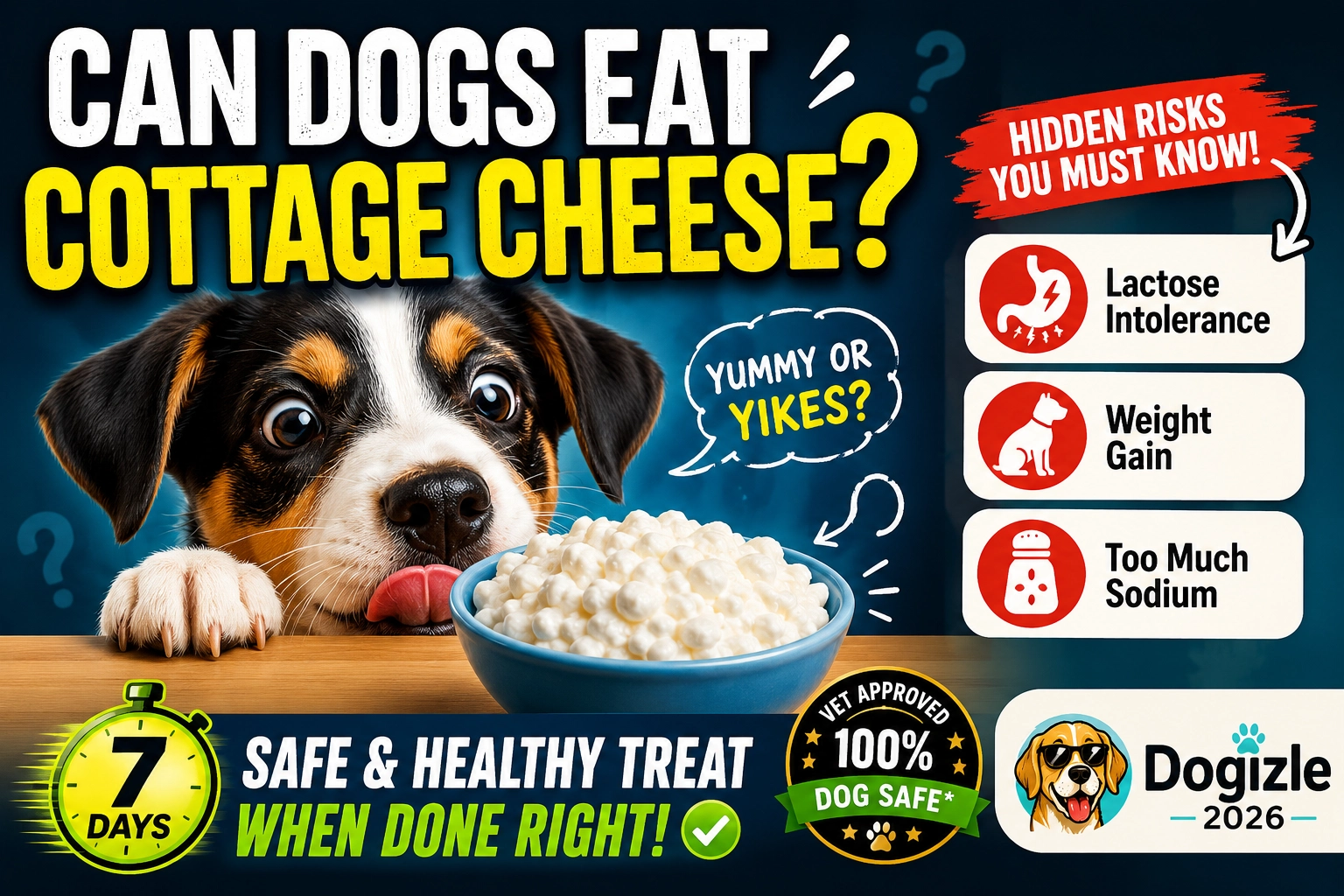
Can Dogs Eat Cottage Cheese? Yes—dogs can safely eat cottage cheese in small amounts, but too much may trigger stomach issues, hidden lactose problems, or dangerous ingredients. This guide reveals safe serving sizes, shocking feeding mistakes, and vet-backed tips to help you protect your dog while choosing the healthiest way to serve cottage cheese in 2026. Dog owners are more label-conscious than ever.
They read ingredient panels, compare fat percentages, and think twice before sharing even a small bite from the kitchen table. In that context, cottage cheese often looks like a harmless, protein-rich snack. It is soft, convenient, and widely available, which makes it feel almost automatically “Dog-Friendly.” But in canine nutrition, convenience is never the same thing as suitability. The real question is not just whether dogs can eat cottage cheese, but whether they should, how much is appropriate, and which dogs need to avoid it altogether.
The answer is yes, dogs can eat cottage cheese in small amounts, provided it is plain, low-fat, and unsalted, and provided your dog tolerates dairy well. Major veterinary and canine nutrition sources consistently place cheese in the “occasional treat” category rather than the “daily staple” category. They also warn that too much cheese can contribute to weight gain, pancreatitis risk, and digestive upset, especially in dogs sensitive to lactose or rich foods.
The reason cottage cheese gets so much attention is simple: compared with many other cheeses, it is usually lower in fat, lower in lactose, and easier to portion. That does not make it magical, but it does make it one of the more practical dairy choices when a dog is going to receive a dairy-based treat at all. Still, the safest feeding strategy is moderation, careful observation, and a clear understanding of your dog’s individual tolerance.
Why This Topic Matters in Modern Dog Nutrition
Modern pet nutrition has shifted from casual feeding to intentional feeding. Owners are no longer asking only, “Will my dog eat this?” They are asking, “What does this do to my dog’s digestion, calorie balance, and long-term health?” That mindset is healthy because the small extras we offer often add up faster than we realize. Even “tiny treats” can quietly push a dog beyond the recommended treat threshold if they are given too often or in too-large portions. Veterinary guidance commonly points to the 10% treat rule, meaning treats should remain a small fraction of daily calories rather than an untracked bonus.
This matters even more for indoor dogs, low-activity dogs, senior dogs, and breeds prone to weight gain. The Kennel Club warns that table scraps and fatty treats can encourage overeating and contribute to excessive weight, while AKC notes that excess treats can work against the balance of a complete diet. So when people ask about cottage cheese, they are really asking a bigger question about how to feed with care rather than impulse.
Can Dogs Eat Cottage Cheese? The Simple Answer
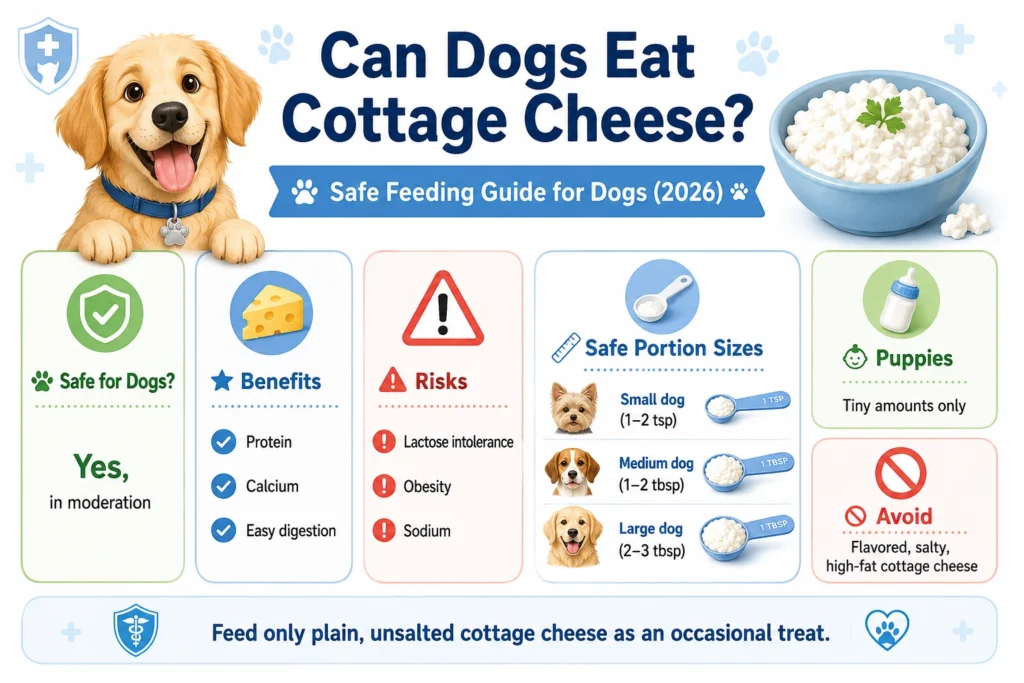
Yes, dogs can eat cottage cheese, but only in moderation and only when the product is plain, unsalted, and not loaded with add-ins such as onion, garlic, herbs, sugar, or artificial sweeteners. AKC specifically lists cottage cheese among the lower-fat cheeses that can be better options for dogs, and it also explains that cottage cheese is lower in lactose than many other cheeses, which can reduce the odds of intestinal upset in some dogs.
That said, “can eat” does not mean “should eat regularly.” Cheese remains a treat, not a nutritional foundation. It should not replace a complete and balanced dog food, and it should not become a daily habit simply because your dog appears enthusiastic about it. The goal is to use cottage cheese as a controlled, occasional extra rather than a default snack.
Why Cottage Cheese Is Often Considered Safer Than Other Dairy Foods
Not all dairy products behave the same way in a dog’s digestive tract. Milk, for example, contains more lactose and is more likely to trigger loose stools or digestive discomfort in lactose-sensitive dogs. Cheese, by contrast, is often tolerated better because it generally contains less lactose than milk, and cottage cheese is frequently selected because it is softer and usually lower in fat and sodium than many other cheeses. AKC explicitly identifies cottage cheese as a lower-fat, lower-lactose cheese option, which is why it often appears on “safer treat” lists.
This does not mean every dog will digest it smoothly. VCA notes that lactose intolerance in dogs can cause diarrhea, bloating, and abdominal discomfort after ingesting milk from cows or goats, and Merck Veterinary Manual lists dairy products among common food allergens in dogs. So the real advantage of cottage cheese is not that it is perfect; it is that it may be less challenging than richer, saltier, or more lactose-heavy dairy products.
Nutritional Benefits of Cottage Cheese for Dogs
1) A compact protein boost
Cottage cheese contains protein, and protein matters because dogs rely on it for muscle maintenance, tissue repair, recovery, and normal body function. In practical feeding terms, this can make cottage cheese appealing as a small topper or training reward, especially for active dogs that burn through energy quickly. That said, protein from cottage cheese should be seen as a supplemental bonus, not a reason to treat it like a core meal.
2) A source of calcium
Calcium helps support bones, teeth, muscle contraction, and nerve function. Cottage cheese can contribute a modest amount of calcium, which is one reason some owners view it as a “healthier” treat. Still, a treat is not the same as a supplement. If a dog has a medical need for calcium management, that decision belongs with a veterinarian rather than the treat bowl.
3) Softer texture and easier handling
Because cottage cheese is soft, it is easy to measure into tiny portions and simple to mix into kibble or a food puzzle. That makes it useful for training, for grooming rewards, or for selective eaters that need a little encouragement. VCA also notes that many pets tolerate foods such as cottage cheese in enrichment contexts, which supports the idea that it can be a practical, palatable addition when used responsibly.
4) A better fit than many high-fat treats
Compared with rich, greasy snacks, cottage cheese can be a more restrained option. AKC and the Kennel Club both emphasize the importance of avoiding excess fatty treats because they can promote obesity and pancreatitis. In that context, low-fat cottage cheese may be a more controlled choice than many bakery-style dog treats or table scraps.
Risks of Feeding Cottage Cheese to Dogs
1) Lactose intolerance and digestive upset
This is the biggest caution. VCA explains that lactose intolerance is a recognized carbohydrate intolerance in dogs and can lead to diarrhea, bloating, and abdominal discomfort after dairy ingestion. AKC also notes that some dogs can be sensitive to cheese even when the cheese is lower in lactose than milk. In plain language, a dog may adore cottage cheese and still not digest it well.
The tricky part is that tolerance can vary. Some dogs handle a teaspoon without trouble, and others develop loose stool after a far smaller amount. That variability is why any first-time feeding should be small, slow, and carefully watched rather than generous or experimental.
2) Excess calories and weight gain
Even “healthy” treats can become a problem when they are used too often. AKC warns that treats should not make up more than 10% of a dog’s daily diet, because extra calories can quietly contribute to obesity. The Kennel Club makes the same point in its treat guidance, stressing moderation and calorie awareness.
This risk becomes more important in small dogs, senior dogs, and dogs with limited exercise. A spoonful of cottage cheese may seem trivial to a person, but in a toy breed, that spoonful can represent a meaningful portion of the day’s treat allowance.
3) High-fat versions can be troublesome
Not every cottage cheese product is equal. Full-fat versions are more calorie-dense, and richer dairy can be harder on dogs with sensitive digestion or a history of pancreatitis. AKC explicitly warns that excess cheese can lead to obesity and pancreatitis, and the Kennel Club similarly flags fatty treats as a concern. In other words, the fat content matters as much as the ingredient name.
4) Added sodium and seasonings
Plain cottage cheese is one thing; flavored or seasoned cottage cheese is another. Salted varieties may not be ideal for dogs, especially those with kidney concerns or those on sodium-controlled diets. Any product with onion, garlic, chives, or other flavorings should be treated as inappropriate for canine feeding. AKC specifically warns that some cheeses contain ingredients toxic to dogs, such as garlic and onions.
5) Food allergies and sensitivities
Dairy is a recognized food allergen in dogs. Merck Veterinary Manual lists dairy products among common food allergens, and VCA notes that food allergy symptoms in dogs often include itching, digestive signs, or ear issues, depending on the case. Cottage cheese is therefore not a universal “safe” food, even if it is harmless for many dogs.
How Much Cottage Cheese Can Dogs Eat?
The safest rule is simple: keep it small. AKC’s 10% treat rule is the best practical boundary for the general dog population, and The Kennel Club also emphasizes that treats must be part of the day’s calorie budget rather than an unlimited extra.
A useful starting point looks like this:
For small dogs, begin with 1 to 2 teaspoons. So, for medium dogs, 1 to 2 tablespoons is a more cautious starting range. For large dogs, 2 to 3 tablespoons may be reasonable as an occasional treat. These are not targets to hit every day; they are starting estimates that still need to fit inside the overall treat budget and your dog’s digestive tolerance.
The “less is more” approach is especially important when cottage cheese is used as a food topper. A small spoonful mixed into kibble can be enough to improve palatability without turning a balanced meal into a dairy-heavy event. That is the sweet spot: enough to be useful, not enough to become a dietary drift.
Can Puppies Eat Cottage Cheese?
Yes, puppies can eat cottage cheese in very small amounts, but puppy digestion is not as forgiving as adult digestion. VCA explains that puppies should be fed measured amounts at regular times, generally 2–3 times per day, based on age and body condition. That means treats need to be kept especially modest so they do not displace nutrients a growing puppy actually needs.
For puppies, cottage cheese should be treated as a micro-treat, not a meal substitute. A tiny training reward or a light topper is usually more appropriate than a generous serving. Puppies are still developing gut stability, and what seems small to us can be surprisingly disruptive in a young digestive system.
If a puppy has loose stool, frequent gas, or repeated vomiting after dairy exposure, do not keep “testing” tolerance with larger amounts. Remove the ingredient and speak with a veterinarian. Puppy nutrition is a growth issue, not a guesswork exercise.
Cottage Cheese for Dogs with Upset Stomach
This is where careful wording matters. Cottage cheese is sometimes discussed in the same conversation as bland feeding, but veterinary GI guidance places stronger emphasis on highly digestible, low-fat therapeutic diets when dogs have digestive upset. VCA notes that withholding food for long periods is no longer the default approach in many GI cases and that pets with GI issues often need nutrition while they recover. VCA also highlights that low-fat diets are often better tolerated in dogs with chronic pancreatitis or chronic GI disease.
So, rather than saying cottage cheese is a cure for stomach upset, the more accurate statement is this: some dogs may tolerate a tiny amount, but veterinary GI diets are usually the more reliable and better-supported option. If a dog has mild digestive sensitivity and your vet has approved a temporary diet adjustment, cottage cheese may sometimes appear as a minor supportive food. But for ongoing diarrhea, repeated vomiting, suspected pancreatitis, or chronic GI illness, it should not be treated as the solution.
Cottage Cheese vs Other Dairy for Dogs
Cottage cheese is often the most practical dairy option because it is generally lower in fat and lactose than many other cheeses, and it can be portioned precisely. AKC places it among the better cheese choices for dogs and explains why lower fat and lower lactose can matter.
Yogurt can be another option for some dogs, especially plain varieties, but tolerance still varies. Milk is more likely to trigger digestive trouble because of its lactose load. Butter, on the other hand, is mostly fat and therefore a poor choice for routine feeding. In the broad dairy spectrum, cottage cheese is often the more measured, more manageable option, but still not an unlimited one.
Best Ways to Serve Cottage Cheese to Dogs
The first rule is to choose plain, unsalted, low-fat cottage cheese. The second rule is to start with a small portion and wait to see how your dog responds over the next 24 hours. The third rule is to keep the treat frequency low enough that it does not interfere with the dog’s main diet. AKC and The Kennel Club both stress moderation, while VCA’s GI guidance reinforces the idea that digestibility and dietary simplicity matter.
You can serve it in a few simple ways. A teaspoon on top of kibble can improve palatability. A tiny amount can be used to fill a puzzle toy. A small dab can be reserved for training reinforcement. These use cases are safer than offering a bowlful, because they keep the food in the “treat” category rather than the “meal” category.
Do not serve cottage cheese that has onion powder, garlic powder, chives, sugar, or artificial sweeteners. If the label looks like a flavored dessert instead of a plain dairy food, it is not a good canine option.
How to Introduce Cottage Cheese Slowly
A careful introduction reduces surprise. Start with a pea-sized or teaspoon-sized amount, depending on dog size. Offer it at a time when you can observe your dog for the rest of the day. Watch for stool changes, excessive gas, stomach gurgling, lip licking, or vomiting. If everything stays normal, you can consider occasional use later, but that still does not justify daily feeding.
This slow-entry approach matters because many food reactions become obvious only after the body has had time to respond. A dog may Appear fine in the first hour and then develop loose stool overnight. That delayed pattern is one reason why single-ingredient trials are safer than adding multiple new foods at once.
Breed-Specific and Lifestyle Considerations
Small breeds often need the tightest control. Their calorie budgets are smaller, which means treat calories take up a larger share of their total intake. Even a minor indulgence can matter more for a Chihuahua, Yorkshire Terrier, or Pomeranian than it would for a large working breed. AKC’s calorie discussion makes this point clearly by showing how a cheese cube can represent a much larger percentage of the diet for a tiny dog than for a big one.
Large dogs may tolerate a slightly larger serving, but “slightly larger” is still not “unlimited.” Labradors, retrievers, shepherds, and similar breeds can also be prone to weight gain if treats pile up over time. The Kennel Club notes that many adult dogs receive a large share of calories from human food, especially toy breeds, but the same overweight pattern can still emerge in larger dogs when portion control breaks down.
Senior dogs often need even more caution because they may move less and burn fewer calories. Overfeeding can sneak up on older dogs in particular. If a dog already has a history of pancreatitis, chronic GI trouble, obesity, or food allergy, cottage cheese should be discussed with a veterinarian before it ever becomes a regular snack.
Real-Life Feeding Scenarios
In apartment dogs, the main issue is often energy balance. Lower activity means fewer calories needed, so treats must be more tightly controlled. A dog that spends much of the day indoors does not have much room in the daily calorie budget for extra dairy snacks.
For city dogs that already receive commercial treats, chews, and table scraps from multiple family members, cottage cheese should remain an occasional one-off rather than part of a routine. The problem is usually not one serving but the accumulation of many small Servings across the week.
For active working dogs, a tiny amount of cottage cheese may be used more strategically as a reward or topper, but it still needs to be weighed against the dog’s broader feeding plan. Even active dogs can develop digestive upset if dairy is introduced too quickly or in too much volume.
Common Mistakes Dog Owners Make
One common error is assuming that a food labeled “healthy” is automatically safe in any quantity. Another is choosing flavored cottage cheese without checking the ingredient list. A third is feeding the same treat every day because the dog seems to enjoy it. Enjoyment is not the same as tolerance, and tolerance is not the same as nutritional necessity.
Owners also sometimes overlook the hidden calories in “just a spoonful.” AKC and The Kennel Club both stress calorie awareness because extra treat calories accumulate quickly. In dog nutrition, overfeeding rarely happens all at once; it usually happens in small, repetitive steps that feel harmless in the moment.
Another mistake is using cottage cheese as a stand-in for a complete diet. That is not what it is for. It can be a topper, a reward, or a limited treat, but it should never become the nutritional backbone of a dog’s feeding routine.
European Veterinary Nutrition Perspective
From a European perspective, the message is consistent: pets need balanced food first, treats second. FEDIAF describes itself as promoting nutritious pet food, responsible pet ownership, and pet wellbeing, which fits neatly with a moderation-first approach to human foods. The Royal Kennel Club likewise emphasizes occasional treats, calorie budgeting, and moderation rather than casual overfeeding.
That perspective is useful because it reframes cottage cheese as a small accessory, not an entitlement. A dog’s daily diet should still be built around complete and balanced nutrition. Human foods, even when safe, should be treated as supplementary, deliberate, and measured.
Expert Vet Feeding Tips
Choose plain, low-fat, unsalted cottage cheese. Start with a very small amount. Observe your dog’s stool and comfort level after the first feeding. Keep the treat portion inside the 10% daily calorie rule. Use it occasionally rather than repeatedly. That is the practical formula most owners can follow without overcomplicating the process.
If you are using cottage cheese to encourage eating, remember that appetite stimulation should never hide a medical issue. A dog that refuses meals or suddenly changes eating behavior may need medical evaluation rather than a tastier topper. VCA’s GI guidance makes it clear that digestive issues are medical problems first and feeding questions second.
A Balanced Way to Think About Cottage Cheese
A helpful mental Model is this: cottage cheese is a tool, not a staple. It can be useful in small, specific situations. It can make training easier, help with palatability, or offer a modest protein boost. But it also carries genuine trade-offs, especially for dogs that are sensitive to dairy, prone to weight gain, or vulnerable to pancreatitis.
That is why the best answer is not a dramatic yes or no. The best answer is yes, with boundaries. Sure, but plain. Yes, but small. Yes, but not for every dog. Done, but only when the rest of the diet is already solid.
People Also Ask
No, cottage cheese should not become a daily habit. Treats should remain a small fraction of the daily diet, with AKC and The Kennel Club both stressing moderation and calorie control. Daily feeding increases the chances of excess calories, digestive upset, and the slow creep of overfeeding.
Not as a general rule. Dogs with GI upset usually benefit more from veterinary therapeutic gastrointestinal diets that are highly digestible and often low in fat. If diarrhea is mild and your vet has approved a limited food trial, a tiny amount may be tolerated by some dogs, but cottage cheese is not a standard treatment for diarrhea.
Yes, but only in very small amounts. Puppies need measured meals at regular times, and their digestive systems are still developing. A tiny taste may be fine for some puppies, but it should never replace a growth-appropriate diet or a veterinarian’s guidance.
Plain, unsalted, low-fat cottage cheese is the best option. AKC specifically identifies cottage cheese as one of the lower-fat cheeses for dogs and notes that it is lower in lactose than many alternatives. Flavored, seasoned, or sweetened products should be avoided.
Yes. Dairy is one of the common food allergens in dogs, according to Merck Veterinary Manual, and food allergies can show up as itching, ear problems, or digestive signs, depending on the dog. If a dog reacts after eating cottage cheese, stop feeding it and speak to your veterinarian.
Conclusion:
Dogs can eat Cottage cheese, but the safest version of that answer includes four boundaries: plain, low-fat, unsalted, and occasional. Used carefully, cottage cheese can act as a small treat, a topper, or a training reward. Used carelessly, it can become a source of excess calories, digestive upset, or unwanted strain on dogs with food sensitivities.
The most responsible approach is simple. Keep the portion small. Choose the cleanest product. Introduce it slowly. Watch for any signs of discomfort. And remember that a complete and balanced dog food still does the real nutritional work. That approach lines up with AKC’s treat guidance, VCA’s digestive health advice, the Kennel Club’s calorie warnings, and FEDIAF’s broader emphasis on responsible pet nutrition and wellbeing.