WLW Meaning in Text: The Complete Guide to What It Really Means
You’re scrolling through TikTok comments or an Instagram bio, and you spot three letters: WLW. No context clues, no explanation — just there, sitting in a caption like everyone’s supposed to already know it.
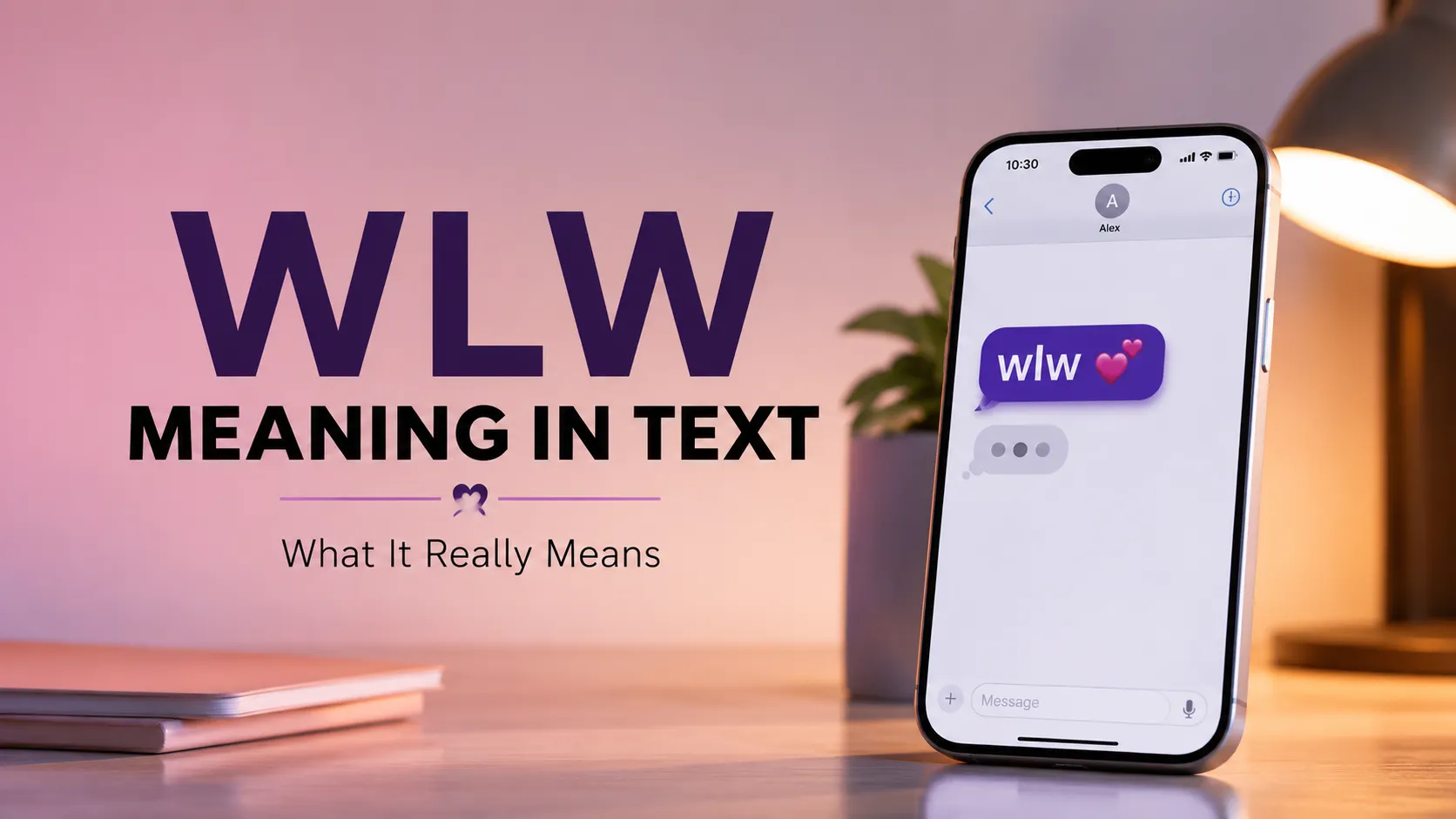
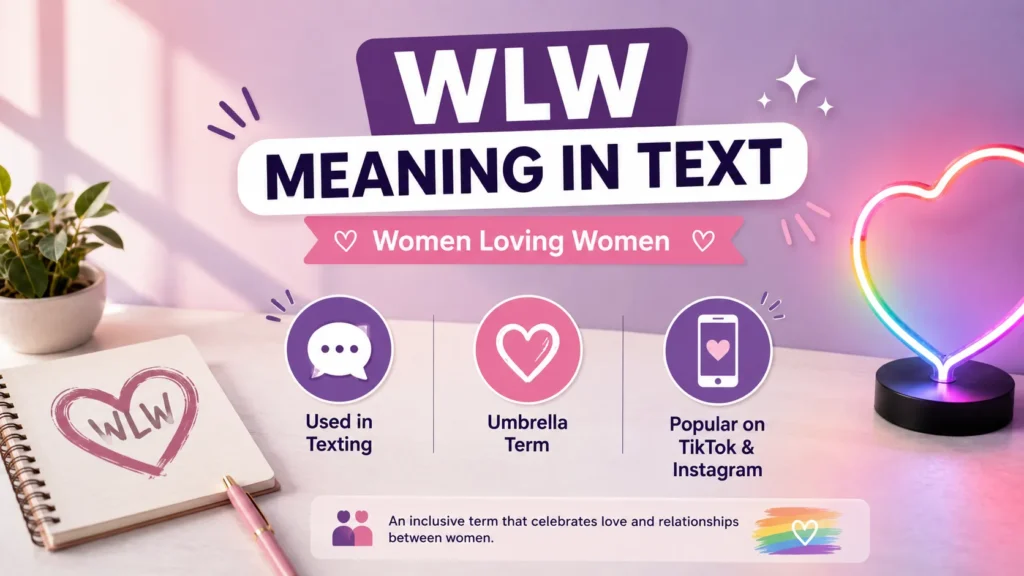
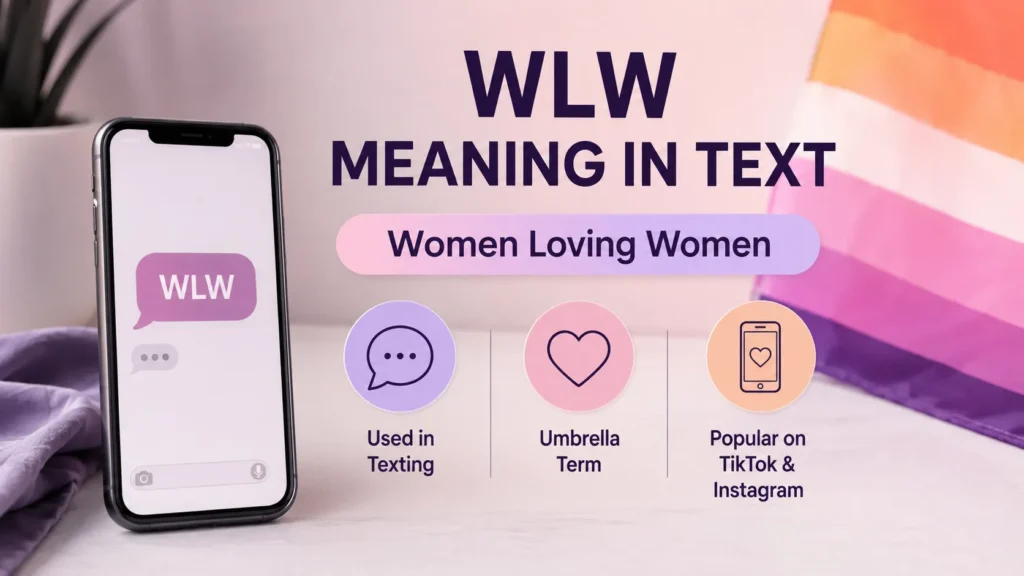
Here’s the short answer: WLW stands for “Women Loving Women.” It’s an umbrella term used to describe women who are romantically, emotionally, or physically attracted to other women — whether they identify as lesbian, bisexual, pansexual, or queer.
That one-line definition is where most guides stop. This one doesn’t. Below, you’ll get the actual origin of the term, how it’s used differently across TikTok, Instagram, dating apps, and group chats, how WLW compares to “lesbian” and “sapphic,” a full table of related acronyms, etiquette around who should (and shouldn’t) use it, and answers to the questions people actually search for.
Quick Meaning Summary
| Question | Answer |
| What does WLW stand for? | Women Loving Women |
| What does it describe? | Women romantically/emotionally/physically attracted to other women |
| Is it a specific identity? | No — it’s an umbrella term (includes lesbian, bi, pan, queer women) |
| Where is it used most? | TikTok, Instagram, texting, dating apps, fandom spaces |
| Is it offensive? | No — it’s a positive, community-created term |
| Male equivalent | MLM (Men Loving Men) |
| Closest synonym | Sapphic |
What Does WLW Mean in Text? (Quick Definition)
WLW = Women Loving Women.
It’s used as shorthand to describe:
- A woman attracted to other women (regardless of whether she labels herself lesbian, bi, pan, or queer)
- A relationship or dynamic between two women (e.g., “that’s such a WLW couple”)
- Content, media, or characters depicting women who love women (“this show is so WLW”)
Unlike “lesbian,” which usually implies exclusive attraction to women, WLW is intentionally broad. It doesn’t ask anyone to pick one specific label — it just describes the attraction itself. That’s why you’ll see bisexual and pansexual women using it just as often as lesbians do.
Think of it less like a fixed identity label and more like a descriptive umbrella — similar to how “sapphic” works, but shorter and more common in fast-moving text conversations.
Where Did WLW Come From? (Origin & Timeline)
WLW isn’t brand-new slang — it’s been building for over a decade, mostly out of necessity rather than trend-chasing.
- Early-to-mid 2000s–2010s: Long-form communities on LiveJournal and early Tumblr needed a quick way to talk about women-loving-women relationships and media without constantly writing out “lesbian, bisexual, and pansexual women.” WLW (alongside its counterpart MLM, “men loving men”) started appearing as practical shorthand in fandom and identity spaces.
- Tumblr era (early-to-mid 2010s): This is where WLW really took hold as everyday vocabulary — used in fanfiction tags, callout culture, and personal identity posts. Tumblr’s tagging system rewarded short, searchable acronyms, which cemented WLW as the term for this kind of content.
- Twitter (2015–2020): WLW moved into hashtags (#WLW, #WLWCommunity) used for visibility, dating threads, and fan discussion of sapphic ships and couples in TV and film.
- TikTok & Instagram (2020–present): The acronym exploded into mainstream Gen Z vocabulary. It’s now common in bios (“WLW 🏳️🌈”), captions (“WLW energy”), and comment sections reacting to on-screen representation.
- Today (2026): WLW sits comfortably alongside terms like “sapphic” and is understood well beyond LGBTQ+-specific spaces — though it’s still primarily used within the community, by and for women who love women.
The consistent thread through all of this: WLW exists because the community needed one word that didn’t force anyone into a narrower label they might not fully identify with yet — or ever.
WLW vs. Lesbian vs. Sapphic vs. MLM: What’s the Difference?
People often use these terms interchangeably, but they don’t mean exactly the same thing. Here’s how they actually break down:
| Term | Who It Describes | Implies Exclusive Attraction to Women? | Common Context |
| WLW | Any woman attracted to women (lesbian, bi, pan, queer) | No — umbrella term | Social media, texting, casual identity talk |
| Lesbian | A woman attracted exclusively (or primarily) to women | Usually yes | Formal identity label, dating apps |
| Sapphic | Same as WLW — women/non-binary people attracted to women | No — umbrella term | Literary/media discussions, book communities, TikTok |
| MLM | Men Loving Men (gay, bi, pan, queer men) | No — umbrella term | Parallel term used alongside WLW |
| NBLW | Non-binary people who love women | No | Inclusive extension of WLW spaces |
| WLNB | Women who love non-binary people | No | Same family of acronyms |
Key takeaway: “Sapphic” and “WLW” are essentially synonyms — both are umbrella terms. The real difference in daily use is tone and setting: sapphic shows up more in book/media discussion (“sapphic romance novel”), while WLW dominates in texting, bios, and quick social commentary. “Lesbian,” meanwhile, is a specific identity label, not an umbrella term — not every WLW person identifies as a lesbian.
How WLW Is Actually Used: Real Examples by Platform
Generic definitions don’t show you how the word behaves in the wild. Here’s what it looks like in context.
In an Instagram bio:
“22 🌻 WLW 🏳️🌈 dog mom”
Here, WLW is functioning almost like a mini identity tag — quick, visible, and searchable.
In a TikTok comment section (under a show clip):
“the way they wrote this WLW couple with an actual happy ending?? we are so back”
Used to describe the relationship being depicted, celebrating representation.
In a group chat:
“wait is she WLW or was that just a joke”
Used casually to ask about someone’s orientation — informal, low-stakes phrasing.
On a dating app bio (like HER):
“WLW looking for something real, not just situationships”
Used almost like a self-identifier, similar to how someone might write “bi” or “queer.”
In a caption about media/fandom:
“give me more canon WLW leads in 2026, I’m begging”
Used to talk about representation trends in TV, film, or books.
Is WLW Just for Lesbians?)
No — this is the single biggest misunderstanding about the term. WLW is deliberately broader than “lesbian.” It includes:
- Lesbians
- Bisexual women (when attracted to/dating women)
- Pansexual women (when attracted to/dating women)
- Queer-identifying women
- Some non-binary people who relate to the “woman-loving” framing
If someone says “I’m WLW” instead of “I’m a lesbian,” it’s often intentional — they may not want to commit to (or may not fully identify with) a more specific label, or they simply find WLW a more comfortable, low-pressure way to describe their attraction.
Is It Okay to Use WLW If You’re Not LGBTQ+? (Etiquette)
This is where a lot of guides go quiet — but it matters, and it’s a big part of why people search this term.
Generally fine:
- Using WLW to describe or discuss media, characters, or couples (“that movie had great WLW representation”)
- Asking respectfully what it means if you genuinely don’t know
- Using it in a supportive, non-mocking way as an ally
Generally not okay:
- Straight people jokingly calling themselves or a friend “WLW” for a bit or a laugh
- Using it to speculate about someone’s sexuality without their input, especially publicly
- Treating WLW relationships as a punchline, aesthetic, or “content” rather than real relationships
The community pushback you’ll sometimes see online (e.g., “don’t joke about being WLW with your best friend”) isn’t about gatekeeping the word — it’s about not trivializing an identity that real people have had to fight for space to express.
Is WLW Offensive?
No. WLW is a positive, self-affirming, community-created term — not a slur and not derogatory. It was built by the community for the community as a more comfortable, inclusive alternative to narrower labels. The only time it becomes a problem is in the misuse cases above (mocking, joking, or misapplying it to people without their consent).
Related Acronyms You’ll See Alongside WLW
| Acronym | Meaning |
| MLM | Men Loving Men |
| NBLW | Non-Binary Loving Women |
| WLNB | Women Loving Non-Binary people |
| MLNB | Men Loving Non-Binary people |
| NBLM | Non-Binary Loving Men |
| NBLNB | Non-Binary Loving Non-Binary people |
| GNC | Gender Non-Conforming |
| Sapphic | Umbrella term, functionally identical to WLW |
You’ll often see combined tags like “WLW/NBLW” in bios — this signals inclusivity toward both women and non-binary people who love women
Why WLW Matters
WLW isn’t just internet shorthand — it does real cultural work:
- Visibility: It gives women-loving-women relationships a searchable, shareable identity online, which matters hugely for representation in media and fandom.
- Flexibility: It lets people describe their attraction without locking into a label before they’re ready — or ever, if they don’t want to.
- Community: Hashtags and bios using WLW help people find community, media recommendations, and each other, especially on apps like TikTok, Twitter/X, and dating platforms like HER.
People Also Ask
WLW means “Women Loving Women.” It describes women who are romantically, emotionally, or physically attracted to other women, and is used across texting, social media, and dating apps.
Not exactly. WLW is a broader umbrella term that includes lesbian, bisexual, pansexual, and queer women. “Lesbian” typically refers to exclusive attraction to women, while WLW doesn’t require that.
Functionally, yes — both are umbrella terms for women who love women. “Sapphic” is used slightly more in literary/media contexts, while “WLW” is more common in texting and social media.
No. It’s a positive, community-originated term. It only becomes disrespectful when used to mock, joke about, or speculate on someone’s sexuality without their consent.
Yes. WLW is inclusive of any woman attracted to women, including bisexual and pansexual women, not just lesbians.
Men can reference or discuss WLW content and relationships, but the label itself specifically describes women’s attraction to women — it isn’t used to describe men’s identities.
Conclusion
WLW means “Women Loving Women” — a broad, respectful, community-built term covering lesbian, bisexual, pansexual, and queer women who are attracted to other women. It shows up everywhere from Instagram bios to TikTok comment sections to dating app profiles, and it exists precisely because the community wanted language flexible enough to include everyone without forcing a narrower label.
Next time you see it in a text, a bio, or a comment, you’ll know exactly what’s being said — and how to use the term yourself, respectfully and correctly.