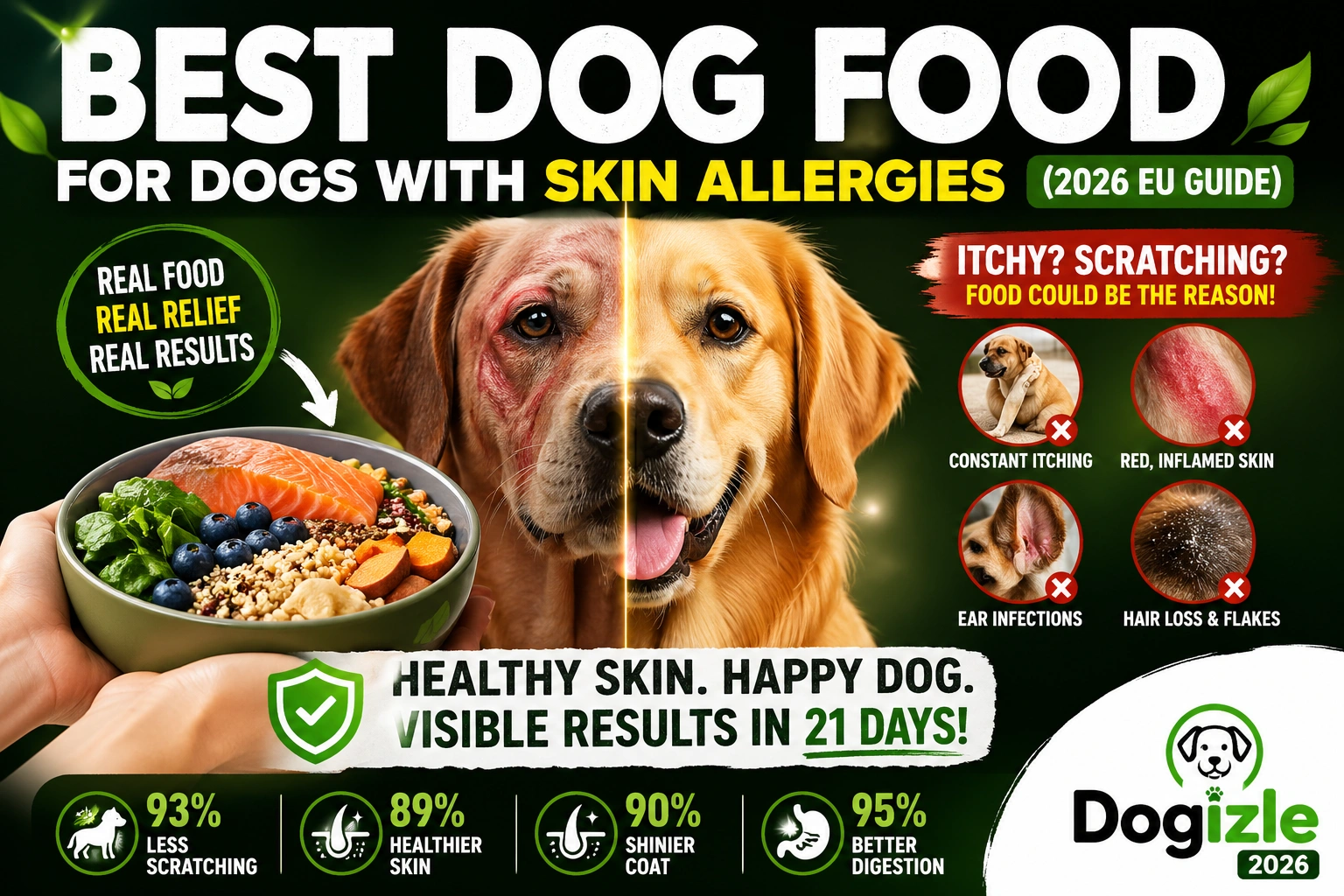
Best Dog Food for Dogs With Skin Allergies — Hidden Allergy Fix Most Owners Miss
The best dog food for dogs with skin allergies is a limited-ingredient, hypoallergenic formula with clean protein and omega-3s. It can calm itching, reduce flare-ups, and support a healthier coat when common triggers like chicken, wheat, or dairy are the problem. Here’s how to choose the right one fast.
Skin Allergies in Dogs are becoming more visible, more frustrating, and more complex across Europe. In the UK, Germany, France, the Netherlands, and many other European countries, veterinarians are seeing more Best Dog Food for Dogs With Skin Allergies with chronic itching, inflamed skin, recurring ear infections, paw licking, and repeated flare-ups that never seem to fully settle. For many families, the first assumption is that food must be the cause. In reality, the problem is often broader than that.
A dog’s skin is not just a protective outer layer. It is an immune-active organ. When the body becomes hypersensitive, the skin often becomes one of the first places where the problem shows itself. This is why a dog may scratch, rub, lick, chew, shake its head, or develop red patches even when nothing obvious seems wrong at first glance. The symptoms can look simple on the surface, but the underlying cause is usually a mix of immune triggers, environmental exposure, diet history, breed tendency, and long-term inflammation.
What Actually Triggers Skin Allergies in Dogs?
Many European dogs live in highly processed feeding environments. Their meals may contain repeated proteins, multiple additives, frequent treats, and highly refined ingredients that are easy to digest but not always ideal for sensitive immune systems. Add to this urban pollution, indoor living, seasonal pollen, dust mites, flea exposure, and inherited breed predisposition, and it becomes clear why skin problems are so common.
One of the most important truths in canine allergy management is this: most dogs are not “allergic to food” in a broad sense. They are usually reacting to specific proteins, ingredients, or external allergens that the immune system has learned to misread as threats. That means the solution is not random food switching. It is a structured nutrition strategy based on identification, elimination, and controlled reintroduction.
This guide is designed to walk you through that process in a practical, vet-style way. You will learn what causes skin allergies in dogs, how to tell food allergy from food sensitivity and environmental allergy, which nutrition approaches work best, how to run an elimination diet properly, what mistakes to avoid, and how to build a long-term feeding plan that supports healthier skin and a calmer immune response.
What Causes Skin Allergies in Dogs? Simple Science, Clear Logic
Skin allergies usually begin when the immune system becomes overly reactive. Instead of ignoring harmless substances, the body starts responding as though those substances are dangerous. Once the trigger is encountered through food, touch, or the environment, immune cells release inflammatory chemicals that create itching, swelling, redness, and discomfort.
This immune overreaction is why skin allergy symptoms often appear repetitive and persistent. A dog may seem fine for a few days and then suddenly start scratching again. The condition may worsen after certain meals, during specific seasons, or after exposure to grass, dust, shampoo, or fleas. The body is not “choosing” to be irritated. It is reacting through a pathway that has become hypersensitive.
The most common visible signs include intense itching, red or inflamed skin, hot spots, excessive licking of the paws, chewing at the body, ear infections, head shaking, and sometimes patchy coat quality or hair loss. Some dogs also show secondary symptoms such as skin odor, greasy coat texture, or repeated bacterial and yeast infections. These are not separate problems. They are often the downstream consequences of ongoing inflammation and skin barrier disruption.
The important thing to understand is that skin allergy symptoms are not always caused by one single factor. A dog might have food-related triggers and environmental triggers at the same time. That is why diagnosis can be confusing. A food change may improve the condition a little, but not completely. Or a dog may respond briefly to a new diet, only to flare again when pollen rises, or fleas appear.
To solve the problem properly, you need a system, not guesses.
Common Food Triggers in Dogs
In many European households, the same protein sources are fed again and again. Chicken is especially common in kibble, wet food, training treats, and flavored supplements. Beef, dairy, wheat, soy, corn, and artificial additives are also common in commercial diets. Over time, repeated exposure can make the immune system more likely to notice these ingredients and react.
The most frequent dietary triggers include chicken, beef, dairy, wheat, corn, soy, artificial flavors, synthetic colors, chemical preservatives, and mixed-protein formulas. These ingredients are not automatically bad for every dog. Many dogs tolerate them well. But in a sensitive dog, repetition can matter. The immune system learns patterns. If the same proteins keep showing up in many meals and snacks, the body has more chances to become reactive.
This is why many pet owners are surprised to learn that the ingredient list on the bag is only part of the story. A dog may eat a chicken-based kibble, chicken treats, chicken-flavored dental chews, and chicken-flavored medicines. Even if the food itself is changed later, the dog may still be exposed to the same trigger from multiple hidden sources. That is one reason elimination diets often fail. The diet is not truly an elimination unless every source of the trigger is removed.
In a European context, chicken remains one of the most common base proteins in everyday dog food. That means it is also one of the most likely ingredients to appear in a dog’s long-term exposure history. If a dog has been eating the same protein for years and now has chronic itching, it is worth considering whether repeated exposure is part of the problem.
Food Allergy vs Food Sensitivity vs Environmental Allergy
Many dog owners use the word “allergy” to describe every itchy or uncomfortable symptom, but the terms are not identical. Understanding the differences helps you choose the right solution.
A true food allergy is an immune-mediated reaction. The body treats a food protein as a threat and responds with inflammation. The symptoms are often skin-related and may include intense itching, ear infections, and skin irritation. A food sensitivity, on the other hand, is usually less dramatic and more closely associated with digestive issues such as loose stool, gas, bloating, or general discomfort. Environmental allergy is triggered by external substances such as pollen, dust mites, mold, grass, or flea bites. These often cause seasonal flare-ups or irritation that changes with the weather, location, or exposure pattern.
Why Your Dog Keeps Scratching Even After Treatment
The difficulty is that these conditions overlap. A dog may have environmental atopy and also be sensitive to a food ingredient. Another dog may have flea allergy dermatitis along with skin irritation from the diet. This overlap can make one condition look like another. A dog that licks its paws may be reacting to pollen, food, or both. A dog with constant ear infections may have an immune imbalance rather than a single ingredient problem.
This is why it is a mistake to assume that changing food alone will solve every itchy skin case. constantly it helps a lot. Sometimes it helps partially. Sometimes it does little because the main trigger is not in the bowl. The best strategy is to work through the problem methodically and avoid jumping from one food to another without a plan.
The clearest takeaway is this: if the symptoms are recurring, the solution should be diagnostic as well as nutritional. You are not just feeding a dog. You are trying to identify and remove the trigger pattern.
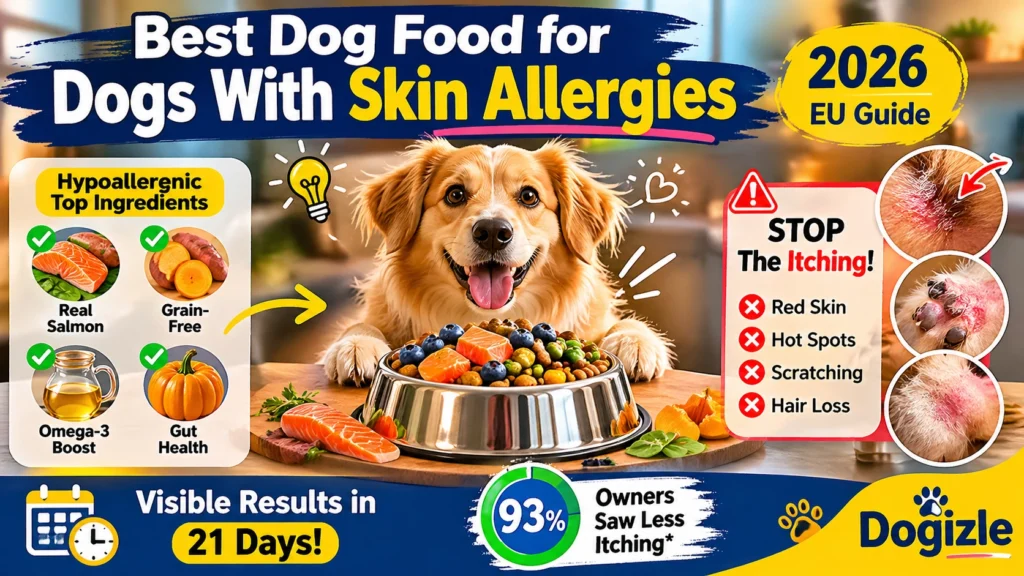
Best Dog Food for Dogs With Skin Allergies:
Instead of focusing on trendy brands alone, veterinarians usually focus on nutrition systems. That means they choose a diet method that reduces immune stimulation and simplifies the ingredient list enough to make the cause easier to identify.
There are three major feeding strategies commonly used for dogs with suspected skin allergies: hydrolyzed protein diets, limited ingredient diets, and novel protein diets.
1) Hydrolyzed Protein Diets
Hydrolyzed diets are often considered the most medically controlled option. In these formulas, the protein is broken down into very small fragments through a special manufacturing process. The goal is to make the protein less recognizable to the immune system. When the immune system cannot easily identify the protein as an allergen, the dog may stop reacting.
These diets are especially useful for severe itching, chronic ear infections, complicated multi-trigger cases, or situations where previous food trials have failed. They are also one of the strongest tools for elimination testing because they reduce the chances of accidental exposure to familiar proteins. In many veterinary settings, hydrolyzed diets are used as the “reset” phase of a nutritional investigation.
This type of diet is often prescription-based and should be used with veterinary guidance, especially if the dog already has significant inflammation, poor body condition, or a history of repeated treatment failures.
2) Limited Ingredient Diets
A limited ingredient diet, often shortened to LID, reduces the number of components in the recipe. Instead of dozens of ingredients, the formula uses one main protein source and one main carbohydrate source, often with fewer additives and no unnecessary flavor blends. This makes it easier to control what the dog is eating and easier to spot a response.
Limited-ingredient diets are usually a good option for mild to moderate allergy cases or as part of a structured elimination trial. They are not magically hypoallergenic just because they are simpler. The quality and novelty of the proteins still matter. A limited ingredient chicken recipe will not help a dog that reacts to chicken. The ingredient simplicity is useful only when the chosen protein is actually appropriate for the dog’s history.
Common proteins used in these diets include salmon, duck, lamb, and turkey. Some formulas also use sweet potato, rice, or other simple carbohydrate sources to reduce complexity.
3) Novel Protein Diets
A novel protein diet uses a protein source that the dog has not eaten frequently before. The logic is straightforward: if the dog has never had much exposure to rabbit, venison, or certain fish proteins, the immune system may be less likely to react. This makes novel proteins useful for dogs whose trigger is believed to come from overexposure to common proteins like chicken or beef.
These diets are often used for long-term maintenance after the elimination phase, especially if the dog responds well and the chosen protein remains well-tolerated. Novel protein diets can be a very effective option, but they must still be chosen carefully. “Novel” for one dog may not be novel for another. A thorough diet history matters.
Examples often used include rabbit, venison, duck, and salmon. The best choice depends on what the dog has eaten before, what the symptoms look like, and whether the dog also has digestive sensitivity.
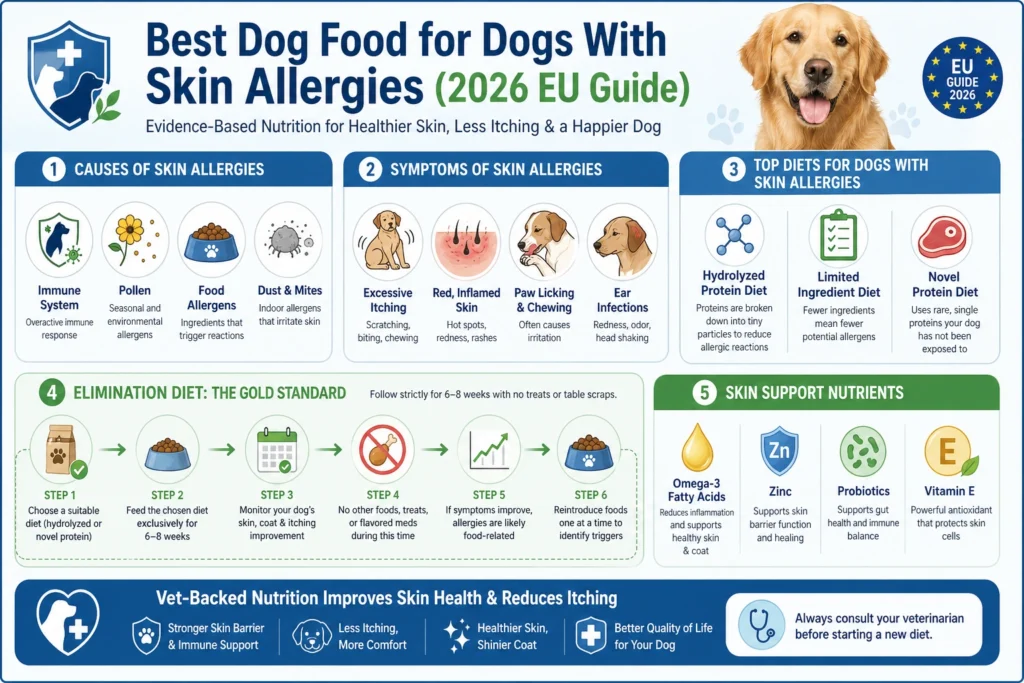
Step-by-Step Elimination Diet Plan: The Most Important Part
If you want a reliable answer to whether food is driving the skin problem, an elimination diet is the most valuable tool you have. It is not fast, but it is the clearest way to separate guesswork from evidence.
Step 1: Remove All Potential Allergens
The first step is to remove the most likely problem ingredients from the dog’s diet and from all hidden sources. That means no chicken, no beef, no dairy, no mixed-protein treats, no flavored chew products, and no accidental extras. If possible, even flavored medications should be reviewed so the trial stays as clean as possible.
The purpose here is not to make the dog eat the least exciting food possible. The purpose is to strip away variables. Every hidden ingredient creates uncertainty. Every unplanned snack weakens the diagnostic value of the trial. A real elimination process needs consistency.
Step 2: Start a Strict Diet for 6 to 8 Weeks
The dog should eat only the selected diet during this period. That means the same protein, the same carbohydrate source, and no table scraps, no treats from the counter, and no chewed-up leftovers from other pets. The diet needs to be boring on purpose.
Why so strict? Because the immune system does not reset instantly. Inflammation takes time to settle. Skin cells need time to recover. Ears and paws need time to calm down. Even if the right food is chosen, results may not be visible immediately. A trial that ends too early can produce false conclusions.
Step 3: Monitor Progress Carefully
Most dogs do not heal overnight. A common pattern is that itching starts to reduce within the first couple of weeks, while deeper skin healing takes longer. By weeks three to six, the skin barrier may begin to look healthier, and by week six to eight, the full response can often be evaluated more accurately.
You need to observe not only scratching, but also paw licking, ear odor, head shaking, skin redness, coat quality, sleep quality, and mood. A dog that scratches less but still has recurring ear discharge may not be fully stable yet. The full picture matters.
If there is no meaningful improvement after eight weeks, the issue may not be food-related, or the dog may still be getting accidental exposure to triggers. In that case, environmental allergy or another medical problem may need attention.
Step 4: Reintroduce Foods in a Controlled Way
Once the dog has stabilized, ingredients can be tested one by one. This is where the diagnosis becomes visible. A single food is added back for a short period, and the dog is observed closely for a reaction. If the symptoms return, that ingredient may be a trigger.
This step must be done carefully. Reintroducing too many foods at once destroys the value of the test. It should be a controlled process with clear observation windows. Chicken can be tested, then paused. Beef can be tested later. Grains can be tested separately if needed. The goal is not to feed everything again. The goal is to identify what specifically causes the flare.
This process takes patience, but it gives you something that random food switching cannot: evidence.
Elimination Diet Timeline
A practical elimination plan usually follows a sequence like this:
The elimination phase lasts about six to eight weeks and is used to reset exposure and calm the immune response. The recovery phase may take another two to four weeks, depending on the severity of the symptoms and the level of skin damage. After that, the reintroduction phase can take several weeks more, because each ingredient must be tested in isolation and monitored closely.
The exact timeline varies from one dog to another, but the key principle stays the same: first remove, then stabilize, then test. Skipping a phase creates confusion. Following the full process creates clarity.
Best Dog Food Strategy by Allergy Severity
Not every dog needs the same feeding approach. The best diet depends on how intense the symptoms are and how long they have been happening.
For mild allergies, a limited-ingredient diet with a simple, well-tolerated protein such as salmon or duck may be enough. Some dogs with mild symptoms also improve when the diet becomes less complex and more consistent. In these cases, the feeding plan is often focused on simplification, clean ingredients, and elimination of unnecessary additives.
For moderate allergies, a novel protein diet is often more useful, especially if the dog has already eaten common proteins like chicken, beef, or lamb for years. In moderate cases, an elimination diet becomes more important because symptoms are usually repeated enough to suggest a real trigger pattern.
For severe allergies, hydrolyzed prescription diets are often the safest and most reliable option. These cases may involve chronic ear infections, extensive scratching, skin lesions, or multiple failed food attempts. Veterinary supervision is especially important here because the dog may need a more structured, medically guided plan.
The severity level matters because a dog with occasional paw licking is not always best managed the same way as a dog with daily inflammation, constant infections, and sleep-disrupting itching. The diet strategy should match the clinical picture.
Natural Nutritional Support for Skin Health
Food selection is only one part of the recovery process. Skin health also depends on the nutritional support that helps reduce inflammation, strengthen the skin barrier, and support immune balance.
Omega-3 fatty acids are among the most useful support nutrients because they can help modulate inflammatory pathways and improve coat quality. Fish oil is commonly used for this purpose. Zinc is also important because it supports skin repair and barrier integrity. Vitamin E plays a role in antioxidant protection and may help balance the effects of long-term inflammation. Probiotics are increasingly discussed because the gut and skin are closely connected through immune signaling and microbiome balance.
This gut-skin connection is often overlooked by pet owners who focus only on the surface symptoms. A dog’s skin may improve when the digestive system is calmer, the diet is less reactive, and the intestinal environment is more stable. That does not mean every itchy dog needs the same supplement stack. It means the feeding plan should be viewed as part of a whole-body system, not just a response to itching alone.
Common Mistakes Dog Owners Make
One of the biggest reasons allergy diets fail is not the diet itself. It is the way the diet is used.
A common mistake is switching food too quickly. Best Dog Food for Dogs With Skin Allergies with sensitive skin need time to adjust. A second mistake is giving treats, chews, or flavored extras during the elimination period. Even one small cheat can undo the diagnostic value of the trial. A third mistake is failing to track symptoms consistently. When the owner relies only on memory, it becomes hard to tell whether the dog is truly improving or simply having a better day.
Another major issue is confusing flea allergy dermatitis with food allergy. Fleas can produce severe itching and are often underestimated, especially in dogs that spend time indoors. Owners also sometimes overuse steroids without identifying the trigger, which may suppress symptoms temporarily but does not solve the underlying cause. As soon as the medication is reduced, the itch often returns.
All these mistakes share one theme: they interrupt the process of identification. That is why the most successful allergy plans are disciplined, simple, and consistent.
Expert Veterinary Tips from a European Perspective
European Veterinarians often emphasize a full elimination diet before making long-term assumptions. This is because incomplete dietary trials are one of the main reasons dogs stay undiagnosed. They also pay close attention to flea allergy dermatitis, which remains a very common contributor to skin irritation.
Another useful tip is to use omega-3 support consistently rather than sporadically. Skin tissues often need several weeks of steady support before the benefits become noticeable. Protein rotation should also be avoided during a treatment trial, because changing proteins too often makes it difficult to understand what the dog is reacting to.
In some cases, seasonal allergy testing may be worth exploring, especially if the dog flares during spring or summer. This is particularly important when the pattern suggests environmental allergy rather than food reaction alone. The goal is not to over-test every dog. The goal is to match the diagnostic method to the symptom pattern.
Breed-Specific Allergy Risk
Some breeds appear to be more prone to skin problems than others, especially when genetics, body structure, and immune sensitivity combine. French Bulldogs, Labrador Retrievers, German Shepherds, West Highland White Terriers, and Boxers are often discussed as higher-risk breeds because they frequently show allergy-related skin symptoms.
That does not mean every dog in those breeds will develop allergies. It means the threshold for irritation may be lower, and skin symptoms may appear earlier or more intensely. Small apartment dogs in crowded urban settings may also be more exposed to indoor allergens such as dust mites and poor air quality, which can make the skin condition more noticeable.
Breed risk is useful because it helps owners stay alert. If a dog belongs to a higher-risk group and begins scratching repeatedly, the problem should not be brushed off as minor. Early intervention is easier than managing months of inflammation.
Real-Life European Scenarios
In apartment-heavy cities such as Berlin, Paris, and London, dogs often spend more time indoors. That means greater exposure to dust mites, cleaning products, dry air, and reduced natural environmental variation. The best dog food for Dogs With Skin Allergies in these settings develops more persistent itch because the balance between indoor irritants and immune exposure shifts over time.
In colder Northern European regions, dry air can make the skin barrier more fragile. Dogs in these environments may need more support from healthy fats and moisture-sensitive feeding strategies. In heavily urbanized areas with more pollution, inflammation may be amplified by air quality, stress, and ongoing environmental load.
These regional patterns do not prove that a dog’s problem is purely environmental, but they do matter. A complete plan considers climate, housing style, activity level, and local exposures rather than looking only at the bowl.
Safety and Health Rules
Skin disease should not be self-diagnosed forever. The best dog food for Dogs With Skin Allergies that keep scratching, losing hair, getting ear infections, or developing infected skin lesions may need professional evaluation. Repeated steroid use without diagnosis is also risky because it can hide symptoms without solving the cause.
Nutrition must remain balanced even during elimination. A very restrictive plan that lacks essential nutrients can create new problems while trying to solve the old ones. It is also important to watch for bacterial or fungal infections, because these often develop on top of allergic skin and can worsen the discomfort.
The safest mindset is simple: treat the skin problem seriously, remove variables carefully, and do not ignore signs of infection or worsening distress.
FAQs
Hydrolyzed or limited-ingredient diets are usually the most effective starting points, especially when they are used as part of a structured elimination plan. The best option depends on how severe the symptoms are, what the dog has eaten before, and whether the allergy is likely food-related or environmental.
Most dogs need several weeks before improvement becomes clear. Some show early reduction in itching within three to six weeks, while a full evaluation often takes up to eight weeks or longer. The timeline depends on the severity of the inflammation and whether there are hidden triggers.
Yes. Puppies can absolutely develop food allergy symptoms, especially after repeated exposure to the same protein or ingredient over time. Symptoms may not appear immediately, which is why early signs are sometimes missed.
Not always. Grain-free diets are not automatically better for itchy dogs. The protein source matters more than the grain label in many cases. A dog reacting to chicken will not improve just because the food is grain-free if the recipe still contains chicken.
Mild cases may respond to a limited-ingredient diet, especially when the suspected trigger is known, and the feeding plan is controlled. However, severe or persistent cases often need prescription hydrolyzed food and veterinary supervision to avoid guesswork and repeated flare-ups.
Conciusion
If a Ddog is Constantly Scratching, licking the paws, shaking the head, or suffering from red and irritated skin, the answer is rarely random food hopping. The better path is structured, consistent, and evidence-based. Start with a proper elimination diet system. Use veterinary guidance when symptoms are severe. Choose hydrolyzed or limited-ingredient food when appropriate. Track the dog’s response carefully over time.
The most effective allergy plan is not the most complicated one. It is the one that removes confusion, identifies the trigger, and supports the skin through the healing process. When the diet is stable, the ingredients are controlled, and the timeline is respected, many dogs finally begin to recover.
A clear feeding strategy can change everything: less itching, fewer flare-ups, calmer skin, and a much better quality of life for both dog and owner.