Can Dogs Eat Popcorn? — [Safe Treat or Hidden Vet Warning?] | 2026
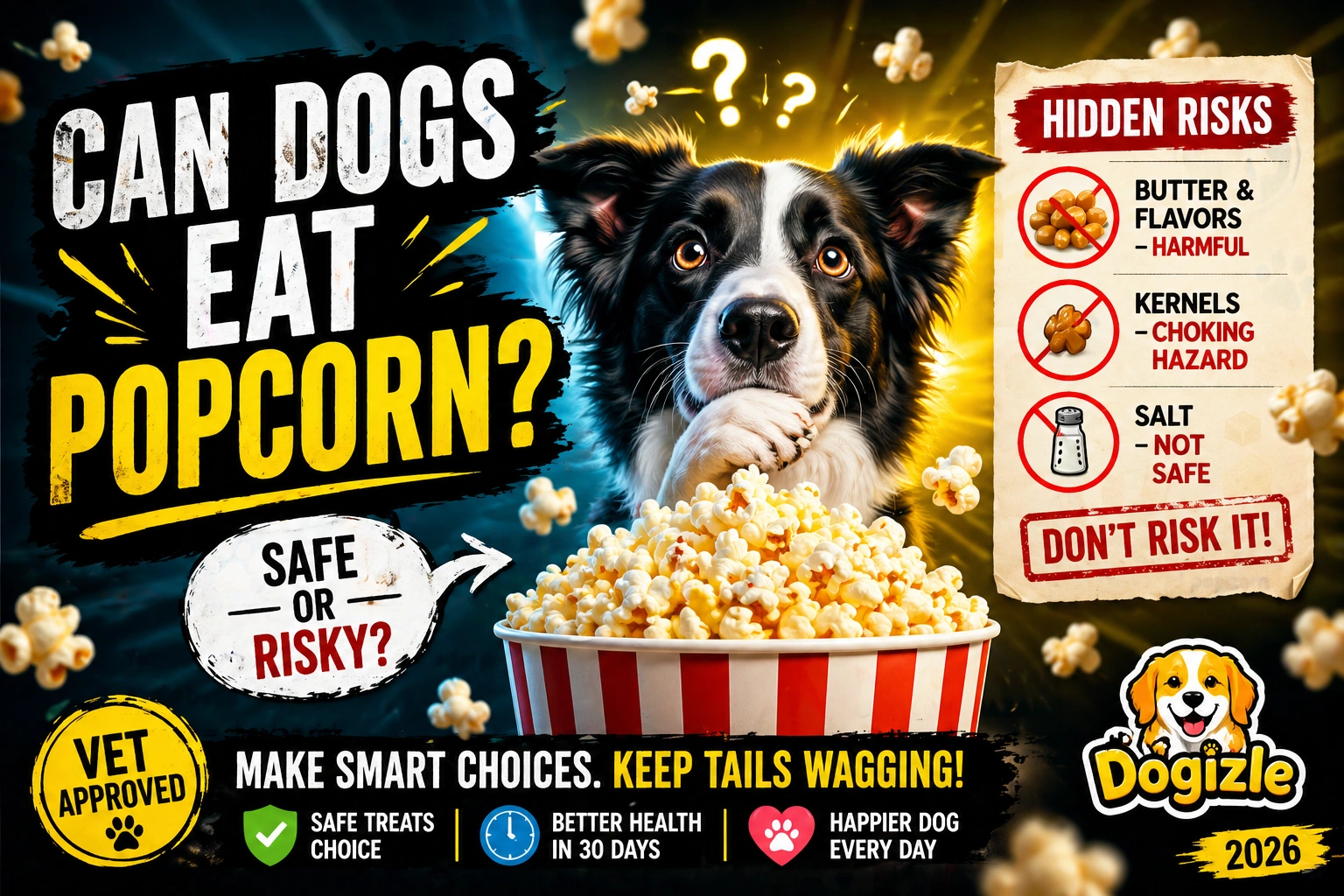
Yes, dogs can eat plain popcorn in small amounts, but only when it is fully popped and free from butter, salt, oil, or toppings. In this guide, you will learn which popcorn is safe, what hidden risks to watch for, and how to avoid choking or stomach upset. One small snack can turn risky fast for many curious dog owners. Popcorn is one of those snacks that feels harmless to humans. It shows up at movie nights, family gatherings, parties, and lazy evenings on the couch.
The smell alone is enough to make a dog appear out of nowhere, staring with that hopeful face every pet owner knows. That is exactly why this question matters: can dogs eat popcorn safely, or is it one of those human foods that should stay off the menu? Veterinary guidance from AKC and PetMD is consistent: plain, air-popped popcorn can be shared with dogs in small amounts, but butter, salt, flavoring, and kernels change the risk completely.
Can Dogs Eat Popcorn Safely or Is It Risky?
The real issue is not popcorn itself. It is the way people usually prepare it. Once popcorn is covered in butter, oil, salt, sugar, cheese powder, caramel, or other flavor coatings, it becomes a snack that can trigger digestive upset, add unnecessary calories, and, in some cases,
create more serious health problems. Unpopped kernels also bring a choking hazard, especially for small dogs. That is why the safest answer is simple: plain, air-popped popcorn is okay in moderation, but anything heavily seasoned or processed should be avoided.
Quick Answer (Featured Snippet Style)
Yes, dogs can eat popcorn, but only plain, air-popped popcorn in small amounts. Buttered popcorn, salted popcorn, flavored popcorn, and microwave popcorn with additives can be risky or harmful. Popcorn kernels are also a choking hazard, and too many treats can push a dog past the recommended daily treat limit.
What Is Popcorn Made Of?
Popcorn starts as a simple corn kernel. When heated, the moisture inside the kernel turns to steam, pressure builds, and the kernel pops open. In its plain form, popcorn is basically a light, crunchy plant food. AKC notes that plain popcorn can contain small amounts of riboflavin, thiamine, iron, protein, and fiber, while PetMD describes air-popped popcorn as a low-calorie snack when it is served without toppings. That means the base ingredient is not the problem. The problem begins when the snack is turned into a human-style treat.
In dog nutrition, simplicity matters. A plain ingredient can be one thing; the final product on your plate can be something completely different. Popcorn that looks innocent in a bowl may carry oil, salt, seasonings, sweet coatings, preservatives, or artificial flavor compounds. Those additions are exactly where the risks increase. In other words, dogs are not usually reacting to the popcorn itself; they are reacting to what humans put on it.
Is Popcorn Safe for Dogs?
The safest answer is a qualified yes. Plain, air-popped popcorn is generally safe for dogs when it is given in moderation, but it should not become a regular habit. AKC and PetMD both say plain popcorn is acceptable in small portions, and AKC also reminds owners to keep treats at around 10% or less of a dog’s daily calories. That is the key rule: occasional, small, and plain.
Safety changes once toppings enter the picture. Butter and oil add fat, which can upset the stomach and raise the long-term risk of weight gain. Salt creates another problem because high sodium intake can lead to dehydration and, in serious cases, salt toxicity. Flavored popcorn can also hide ingredients that are dangerous to dogs, such as garlic, onion, chocolate, or xylitol. ASPCA specifically warns that xylitol can cause low blood sugar and liver injury in dogs, and PetMD notes that sugary popcorn varieties such as caramel or kettle corn are not good choices for dogs.
Why the Preparation Method Matters So Much
A plain popped kernel is not the same thing as the popcorn sold at cinemas or made in packaged microwave bags. Human snack versions are often engineered for taste, not canine digestion. That usually means more salt, more fat, more sugar, and more additives. PetMD explains that buttered popcorn can cause upset stomach, obesity, or pancreatitis, while too much salt can lead to salt poisoning. Merck also notes that high-fat diets are relevant in pancreatitis management, and low-fat treats are preferred for dogs with pancreatic concerns.
This is why “a little popcorn” can mean very different things. A few plain pieces from an air-popped bowl are one thing. A handful of buttery cinema popcorn or a heavily seasoned microwave serving is another. The more processed the popcorn, the less it resembles a safe dog treat and the more it behaves like junk food. That distinction matters because dog bodies are not built to handle the same salt, fat, and sugar load that humans often tolerate without immediate trouble.
Popcorn Risk Levels for Dogs
Low risk: plain, air-popped, unsalted, unbuttered popcorn. This version is the closest thing to a safe popcorn treat for dogs, and even then, it should remain occasional rather than routine. AKC and PetMD both support this category, provided the portion is small and the kernels are fully popped.
Medium risk: lightly buttered, lightly salted, or minimally processed microwave popcorn. These versions are not automatically dangerous in every tiny exposure, but they are not ideal. They can lead to stomach upset, extra calorie intake, and a more fragile digestive balance, especially if a dog is sensitive or already prone to GI problems.
High risk: caramel popcorn, cheese popcorn, chocolate-topped popcorn, garlic or onion popcorn, or any popcorn containing xylitol or similar sweeteners. These versions should be treated as off-limits. ASPCA warns that xylitol can be life-threatening for dogs, and PetMD specifically points out that sugary popcorn varieties may contain ingredients that are toxic or irritating. Garlic and onion are also well-established toxic foods for dogs.
Can Dogs Eat Buttered Popcorn?
No, buttered popcorn is not a good choice for dogs. Butter adds a concentrated dose of fat, and excessive fat intake can trigger stomach upset and contribute to pancreatitis risk. PetMD warns that buttered popcorn can cause upset stomach, obesity, or pancreatitis, while Merck notes that lower-fat feeding is preferred when pancreatitis is a concern.
Butter also tends to come with salt, and the combination of fat plus sodium makes the snack even less suitable. Salt can increase thirst and, if the intake is high enough, can contribute to salt toxicity. VCA explains that high sodium exposure can cause vomiting and can progress to elevated sodium in the blood, which may lead to seizures. That is not the kind of risk most owners want from a movie-night snack.
Even if a dog does not immediately vomit after eating buttered popcorn, that does not make it a smart treat. Repeated exposure to rich human snacks is one of the easiest ways to create long-term weight problems. AKC notes that dogs gain weight quickly when they regularly eat excessive treats and table scraps, especially if they are not very active. So the issue is not just one greasy bite; it is the habit that can follow.
Are Popcorn Kernels Dangerous for Dogs?
Yes, popcorn kernels are dangerous, and this is one of the most important parts of the entire topic. AKC and PetMD both warn that unpopped or partially popped kernels can become choking hazards, and they can also get stuck in the teeth or be hard to digest. For smaller dogs, a kernel that seems tiny to a person can be a much bigger problem.
The risk is not only choking. A hard kernel can also irritate the mouth, damage teeth, or contribute to gastrointestinal blockage if swallowed. PetMD specifically notes that small dogs such as Chihuahuas can be at higher risk from swallowed kernels, because their airways and digestive tracts are smaller. That is why “make sure every kernel is popped” is not a minor detail; it is a real safety step.
Owners sometimes assume that if a kernel made it through the popping process, it is automatically harmless. In reality, the leftover kernels are often the least dog-friendly part of the bowl. They are hard, dry, and difficult to chew, which is exactly what makes them a choking hazard. The safest course is to keep popcorn only and to remove the kernels before any sharing happens.
How Much Popcorn Can Dogs Eat?
The right amount is small. AKC says treats should make up about 10% or less of a dog’s daily calories, and plain popcorn should be treated like an occasional snack rather than a feeding staple. For a small dog, that may mean just a few pieces. For a medium or large dog, a small handful may be enough. The exact amount depends on body size, weight goals, and whether your dog has any digestive sensitivity.
A useful way to think about popcorn is this: it should be an example of “tiny treat, not meal replacement.” Dogs need nutritionally complete dog food as their main diet, and human snacks are always secondary. Even when a food is technically safe, too much of it can still create problems by replacing balanced calories with empty ones. That is especially true for popcorn, because it can be easy to overfeed without realizing how much has been consumed.
For owners who like simple rules, this one works well: the smaller the dog, the fewer pieces; the richer the popcorn, the lower the number should be; and the more active or medically sensitive the dog, the more conservative you should be. That approach keeps the snack in the “occasional reward” category instead of turning it into an everyday issue.
What Happens If a Dog Eats Popcorn?
Most dogs will be fine after eating a small amount of plain popcorn. In those cases, the outcome is often nothing more than a temporary interest in the snack. The concern rises when the popcorn is buttered, salted, heavily flavored, or eaten in large quantities. Then the dog may develop gas, bloating, diarrhea, vomiting, discomfort, or a reduced appetite. PetMD and ASPCA both support the idea that added ingredients are the real hazard, not the plain corn itself.
Serious symptoms are less common, but they matter. Choking, repeated vomiting, abdominal pain, lethargy, and breathing difficulty should never be ignored. If a dog shows signs of distress after eating popcorn, the response should depend on the symptoms and on what type of popcorn was eaten. A few plain pieces usually do not require panic. A large amount of rich popcorn or any popcorn containing toxic ingredients is a different story.
The practical point is that the dog’s reaction tells part of the story, but the ingredient list tells the other part. A dog may appear normal at first and still have eaten something problematic. That is why the popcorn type matters so much. Butter, salt, sugar, xylitol, chocolate, onion, and garlic all raise the concern level, even if the dog has not yet shown symptoms.
Emergency Guide – Dog Ate Popcorn
Step 1: Identify the popcorn type.
Plain air-popped popcorn is usually far less concerning than buttered, salted, flavored, or sweet popcorn. If the packaging or ingredients list is available, check it right away for salt, butter, oils, sweeteners, chocolate, onion, garlic, or xylitol. ASPCA advises pet owners to inspect ingredient labels whenever a potentially risky food is involved.
Step 2: Watch for symptoms.
If the dog is calm, breathing normally, and behaving normally, monitoring may be enough after a small amount of plain popcorn. If the dog is vomiting, coughing, gagging, having trouble breathing, acting weak, or showing abdominal pain, veterinary help is needed more urgently. VCA and ASPCA both emphasize that salt toxicity and toxic-food exposures can lead to serious illness, while AKC and PetMD note that kernels can create choking issues.
Step 3: Offer water and stop the snacks.
Fresh water is reasonable, but giving more treats or trying to “balance out” the snack with extra food is not a solution. The goal is simply to avoid adding more irritation, fat, or salt while you monitor the dog’s condition. That is especially important if the popcorn was rich or heavily seasoned.
Step 4: Contact a vet or poison control when needed.
If the popcorn included xylitol, chocolate, or another toxic additive, the safest move is to seek immediate guidance. ASPCA Poison Control recommends calling right away if a pet may have ingested a poisonous substance.
Can Puppies Eat Popcorn?
Puppies are better off skipping popcorn. That is partly because they are still learning how to chew carefully, and partly because their digestive systems are more delicate. The risk of choking is more important in small, young dogs, and the chance of overfeeding is easier to create in a puppy who is still small and growing. AKC and PetMD both emphasize the need for small, fully popped pieces even in adult dogs, which is why puppies are usually a poor match for this snack.
Puppies also do best with treats that are easy to portion, easy to digest, and useful for training. That is why many veterinarians and pet nutrition resources favor tiny commercial puppy treats or very simple dog-safe foods over casual human snacks. For puppy feeding, the safer rule is not “how much popcorn can they have?” but “what treat gives us the reward without the risk?”
So while a perfectly supervised tiny bite of plain popcorn may not be catastrophic, it is not an ideal puppy treat. For most owners, the better choice is to reserve popcorn for adult dogs and keep puppies on more predictable, age-appropriate rewards.
Healthier Alternatives to Popcorn for Dogs
If your goal is to give your dog a crunchy, pleasant reward, there are usually better options than popcorn. AKC and PetMD both list safe fruits and vegetables that can be used as dog treats in moderation, including carrots and apples. Carrots are widely described as low-calorie and safe for dogs, while apples are a healthy option when the seeds and core are removed.
Simple, plain, dog-safe treats tend to be easier on the stomach than buttered snack food. Commercial dog biscuits, training treats, and vet-approved homemade snacks also make more sense when you want a reward that fits a dog’s nutritional needs. AKC notes that homemade dog snacks can be useful for training when they are made in smaller sizes and free from harmful ingredients.
A practical alternative strategy is to keep “human snack sharing” rare and make dog-safe rewards the default. That protects the dog from excess salt and fat while still giving you the pleasure of treating them. If the moment is movie night, a small dog treat is often a better cinematic companion than a handful of popcorn.
Popcorn vs Dog Safety Comparison
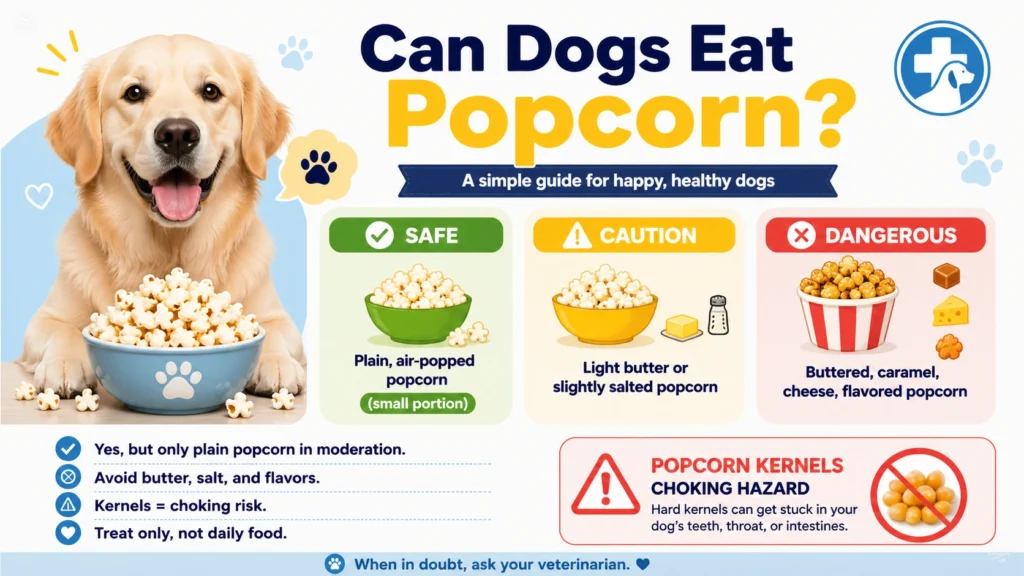
Plain, air-popped popcorn is the only version that really belongs in the “occasionally acceptable” category. It is simple, low in calories, and acceptable in small amounts. Even then, the kernels must be fully popped, and the serving must remain modest. That is the safe end of the spectrum.
Once butter, salt, sugar, cheese, seasoning, or flavored coatings enter the picture, the snack becomes progressively less suitable. Butter and oils raise fat content, salt raises sodium load, sugar increases calorie density, and hidden ingredients can introduce toxic exposure. Popcorn that looks “just a little dressed up” to a person can be far more demanding on a dog’s body than it appears.
Microwave popcorn deserves special caution because the label can vary widely. Some versions are not especially dangerous, but many contain oils, salts, flavorings, and sometimes additives that are not suitable for dogs. Because the package may contain multiple ingredients and servings can be easy to underestimate, the simplest approach is often to avoid sharing it.
Common Mistakes Dog Owners Make
One common mistake is sharing popcorn directly from the bowl during movie night without checking the ingredients first. That creates a situation where the dog may receive salted, buttered, or flavored Popcorn before the owner even notices. This kind of casual sharing is exactly how hidden risk slips into a dog’s routine.
Another mistake is forgetting about kernels. People often focus on the popped pieces and ignore the hard bits left at the bottom of the bowl or in the teeth. AKC and PetMD both warn that kernels can be a choking hazard, and they can also be irritating or difficult to digest.
A third mistake is turning a “small treat” into a repeat habit. Even safe foods can become a problem when they are fed too often or in too much volume. AKC’s 10% treat rule exists for a reason: dogs need most of their calories to come from a complete, balanced diet, not from leftover snacks on the couch.
Expert Veterinary Tips in Simple Language
Read the ingredients before sharing anything from your plate. That single habit eliminates a lot of accidental exposure to salt, fat, sugar, xylitol, onion, garlic, and other additives that are risky for dogs. ASPCA’s poison guidance repeatedly emphasizes label checking when a pet may have eaten a concerning food.
Keep popcorn as a rare extra, not a regular snack. The best-case version is plain and air-popped, but even that should stay small. If you want to reward your dog more often, use dog treats that are designed for their digestive needs rather than human foods that were designed for flavor.
Pay special attention to dogs with a history of stomach sensitivity, weight problems, or pancreatic concerns. Merck notes the importance of low-fat feeding in pancreatitis management, and AKC highlights how overuse contributes to weight gain. Those are strong reasons to keep rich snacks out of the normal routine.
Breed-Specific Risks
Small dogs generally face greater danger from popcorn kernels because their mouths, throats, and digestive tracts are smaller. PetMD specifically mentions small breeds such as Chihuahuas as being more vulnerable to the choking and blockage risk from unpopped kernels. That does not mean larger dogs are immune; it means smaller dogs have less margin for error.
Medium and large breeds may be able to handle a tiny amount of plain popcorn more easily, but the same ingredient rules still apply. Butter, salt, sugar, and toxic flavorings do not become safe just because the dog is bigger. Bigger dogs simply have a little more room before the problem becomes obvious. The basic rule stays the same: plain only, small amounts only, and no kernels.
Breed size is only one part of the picture. Health status, age, body weight, and digestive history also matter. A dog with prior GI issues or a tendency toward pancreatitis should be handled more cautiously than a healthy dog with no history of stomach trouble. That is why there is no universal “perfect amount” that fits every pet.
FAQs
Usually no, or at least not as a routine choice. Microwave popcorn often contains oil, salt, and flavor additives that are not ideal for dogs, and the package may also include ingredients that create a toxic risk. Plain air-popped popcorn is the safer version.
Not especially. Plain popcorn is not toxic in small amounts, but it is not a major source of nutrition for dogs either. AKC notes that plain popcorn has some small nutritional components, but it is still best treated as an occasional snack rather than a meaningful part of the diet.
No. Daily popcorn is not a good idea because treats should stay under about 10% of daily calories, and popcorn can quietly turn into a salt, fat, or calorie habit if fed too often. A balanced dog food should remain the main source of nutrition.
Plain popcorn is very unlikely to be lethal in a small, supervised amount. The danger comes from choking, large amounts, or toxic additives such as xylitol, chocolate, onion, or garlic. ASPCA warns that xylitol can cause low blood sugar and liver injury, which can become severe quickly.
Watch for coughing, gagging, trouble breathing, vomiting, abdominal discomfort, or signs that the dog cannot pass the kernel normally. Kernels are a choking hazard and can also cause digestive problems, so it is wise to contact a veterinarian if the dog seems unwell or if many kernels were eaten.
Conclusion
So, can Dogs Eat popcorn? The honest answer is yes, but only under strict conditions. Plain, air-popped popcorn can be shared in small amounts, and only when the kernels are fully popped. Once butter, salt, sugar, cheese powder, caramel, chocolate, onion, garlic, or xylitol enter the bowl, the snack moves from “maybe okay” to “avoid.”
The safest mindset is simple: popcorn is an occasional novelty, not a dog food, and not a training staple. Keep portions tiny, keep ingredients plain, and keep the kernels out of reach