Can Dogs Eat Cheese? — Vet Truth Most Owners Miss
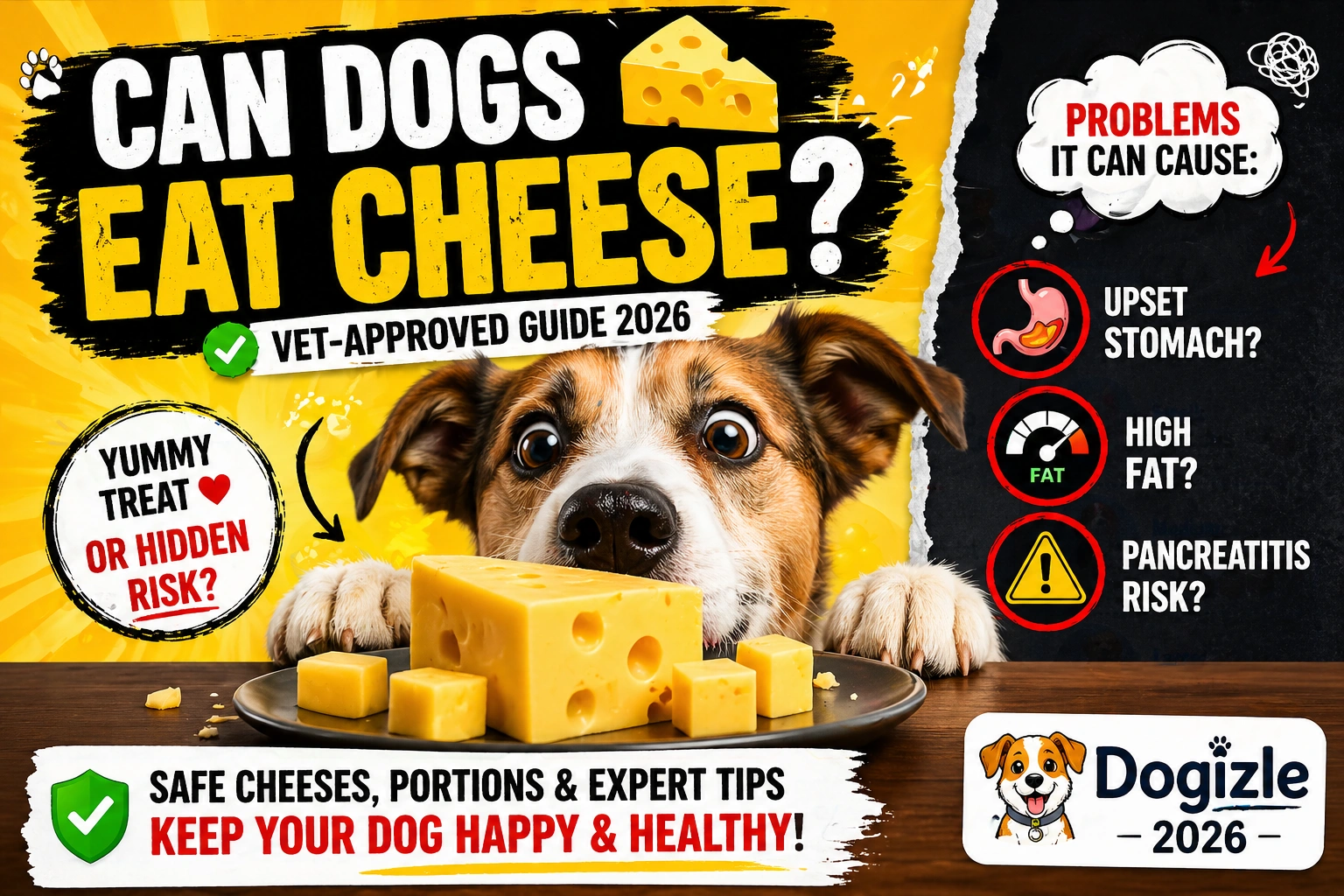
Yes, dogs can eat cheese in moderation. Can Dogs Eat Cheese? — worried about tummy troubles, lactose, or the wrong kind? This guide shows which cheeses are safe, how much to offer, and what to avoid so you can treat your dog without stress. Some cheeses seem harmless, but a few can trigger digestive issues, pain, or worse later. If you have ever opened the refrigerator and found your dog fixed on a slice of cheese with laser focus, you already know how irresistible this food can be. Cheese is rich, fragrant, soft, and emotionally powerful in the world of dog treats. Many owners use it to reward good behavior, hide medication, or simply tempt a picky eater. But the bigger question remains: can dogs eat cheese safely, or is it a food that belongs firmly in the “Better not” category?
The answer is not a simple yes or no. According to veterinary guidance, dogs can eat cheese in small to moderate amounts, but it should remain an occasional treat rather than a daily staple. Cheese is not toxic like chocolate, grapes, onions, or xylitol, yet it can still cause trouble because it is often calorie-dense, high in fat, and sometimes difficult for dogs to digest if they are lactose-sensitive. In other words, cheese can be useful, but it is not automatically harmless.
This matters because feeding habits shape long-term health. Whether you live in an apartment, a suburban neighborhood, or a rural setting with a very active dog, treat choices influence weight, digestion, energy balance, and overall wellness. Treats are supposed to support training and enjoyment, not quietly push a Can Dogs Eat Cheese toward obesity or stomach upset. Veterinary sources consistently caution that human foods can add up quickly, especially for small dogs, and that fatty foods can contribute to pancreatitis in susceptible pets.
This guide breaks the topic down clearly so you can make confident feeding decisions. You will learn whether cheese is safe for dogs, which cheeses are best and worst, how much to give based on size, when to avoid it entirely, how it can be useful in training or medication routines, and which warning signs should prompt you to stop immediately. For European readers, FEDIAF’s nutritional guidelines are also a useful reference point for understanding how treats fit alongside complete and balanced feeding.
Can Dogs Eat Cheese Safely or Is It Risky?
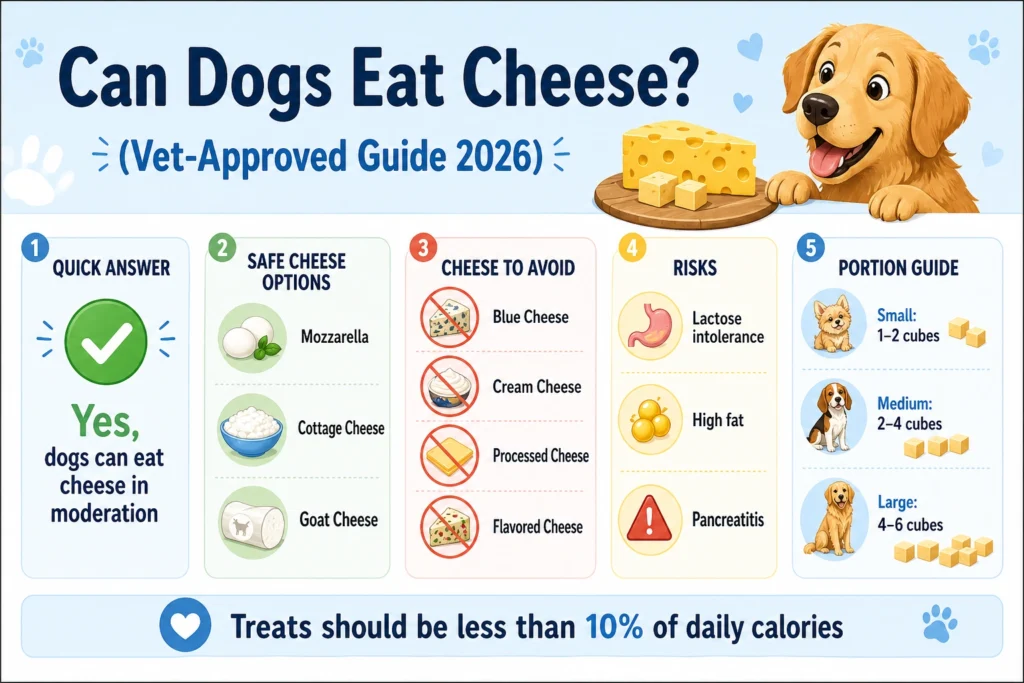
Yes, dogs can eat cheese in moderation. That is the most accurate and practical answer.
Cheese can be a convenient high-value reward, and many dogs enjoy it intensely. But it should be treated as a supplemental snack, not a nutritional foundation. Too much cheese may lead to digestive upset, excess calorie intake, weight gain, and, in some cases, a higher risk of pancreatitis because of its fat content. Dogs that are lactose sensitive may also react with gas, loose stool, bloating, or vomiting.
So the bottom line is simple: cheese is generally safe as an occasional treat, but it is not something to feed casually or frequently in large amounts.
Is Cheese Safe for Dogs?
Cheese is not considered toxic for dogs when it is plain and served in sensible portions. That is an important distinction. Safe does not mean unlimited, and safe does not mean ideal every day. Veterinary sources commonly classify cheese as a treat food, meaning it can be used sparingly, especially when you need something more motivating than regular kibble.
When Cheese Is Safer
Cheese is more appropriate when it is:
- given occasionally rather than daily
- plain and unseasoned
- low in fat and not heavily processed
- offered in tiny pieces
- used purposefully, such as for training or medication
When Cheese Becomes a Problem
Cheese becomes more risky when it is:
- served in large quantities
- very fatty, oily, or creamy
- processed with salt, preservatives, or flavorings
- mixed with ingredients that are harmful to dogs
- Given to dogs with digestive or metabolic conditions
In practical terms, cheese is best seen as a strategic indulgence, not an everyday dietary habit. That framing fits both veterinary advice and broader pet nutrition guidance: treats should support the diet, not replace it.
Nutritional Benefits of Cheese for Dogs
Cheese is not essential for dogs, but it does offer a few nutritional advantages when used carefully. It contains protein, calcium, and other nutrients that can make it feel more substantial than many low-value treats. Because of its aroma and texture, it is often especially effective in training.
What Cheese Can Contribute
Protein helps support muscle maintenance and general body repair.
Calcium contributes to healthy bones and teeth.
Vitamin A supports vision and immune function.
B vitamins help with energy metabolism.
These benefits are real, but they do not make cheese a health food in the strict sense. It is still a calorie-rich treat and should be evaluated through the lens of portion control and balance.
Why Trainers Love Cheese
Cheese is one of the classic high-value reinforcers because many dogs find it highly rewarding. VCA notes that food rewards can be effective in training, and cheese is among the foods dogs often enjoy. That makes it useful for recall practice, obedience sessions, crate training, and short reinforcement bursts where motivation matters.
Risks of Feeding Cheese to Dogs
Cheese may seem harmless because it is familiar and widely used, but several risks are worth taking seriously. The three main concerns are lactose intolerance, excess fat, and ingredient contamination.
1. Lactose Intolerance and Digestive Sensitivity
Some dogs do not digest dairy comfortably. Even though cheese usually contains less lactose than milk, sensitive dogs may still experience digestive irritation. Signs can include diarrhea, gas, bloating, nausea, or vomiting. Veterinarians advise watching closely the first time a dog tries cheese, especially if the dog has a history of stomach sensitivity.
The important point is not that every dog will react badly, but that individual tolerance varies. A dog may do perfectly fine with a tiny amount and then struggle if the portion increases. That is why gradual introduction is the safest approach.
2. High Fat Content and Pancreatitis Risk
Cheese can be quite rich in fat, and repeatedly feeding fatty foods is not harmless. Excess fat contributes to weight gain and can increase the risk of pancreatitis, a serious inflammatory condition of the pancreas. Veterinary sources describe pancreatitis as potentially severe and even fatal in dogs, which is why fatty human foods deserve caution.
This risk is especially important in dogs that are already overweight, prone to digestive trouble, or have a history of pancreatitis. In those cases, cheese is often a poor choice, even if the dog seems to love it.
3. Harmful Ingredients in Flavored Cheese Products
Not all cheese products are plain cheese. Some contain garlic, onion, chives, herbs, extra salt, or other flavorings that can be problematic. Onion and garlic are toxic to dogs, and veterinary sources warn that the allium family can damage red blood cells and cause serious illness. That means flavored cheese, cheese spreads, and seasoned dairy snacks deserve special caution.
The simplest rule is this: if the ingredient list is not boring, the cheese is probably not the right choice for your dog. Plain always beats fancy.
Best and Worst Cheese Types for Dogs
Not every cheese is equal. Some are easier for dogs to digest and lower in risk, while others are much too rich or too heavily processed to be wise choices.
Safer Cheese Options
Mozzarella
Often a better choice because it is typically lower in fat and milder in flavor. Veterinary sources frequently list it among the safer options.
Cottage Cheese
A common favorite because it is soft, usually lower in fat, and often lower in lactose than many other cheeses. It is frequently recommended as a better alternative.
Soft Goat Cheese
Sometimes easier for some dogs to handle than richer options, though it should still be given conservatively.
Cheese to Limit
Cheddar
Can be used occasionally in tiny amounts, but it is usually richer than the lowest-fat choices.
Cheese to Avoid
Blue Cheese
This is commonly flagged as a cheese to avoid for dogs. PetMD specifically advises avoiding it, and it should not be treated as a safe casual treat.
Cream Cheese
Very rich and easy to overfeed, making it a poor everyday choice. Its texture makes it tempting, but its fat density makes moderation especially important.
Processed Cheese Slices
Often contain excess sodium, additives, emulsifiers, and extra ingredients that do not help your dog. VCA warns that Table Food can add up quickly, especially for smaller dogs.
Flavored or Seasoned Cheese
If garlic, onion, chives, herbs, or spice blends are included, skip it. Those ingredients can make a snack unsafe.
How Much Cheese Can Dogs Eat?
The safest approach is to follow the familiar treat rule: treats should stay within about 10% of a dog’s daily calories. PetMD specifically states this limit for cheese, and the broader principle aligns with standard pet nutrition guidance that snacks are not meant to replace a complete and balanced diet.
That does not mean every dog should get the same amount. Size, activity level, digestive sensitivity, and overall health all matter.
General Portion Guide
- Small dogs: 1–2 tiny cubes
- Medium dogs: 2–4 tiny cubes
- Large dogs: 4–6 tiny cubes
These are not rigid prescriptions; they are practical starting points for occasional use. Tiny pieces matter because cheese is dense, and one oversized chunk can quickly become too much. VCA notes that small bites of table foods may not seem significant, but the calories add up quickly.
Feeding Frequency
Cheese is best offered only two to three times per week, not as a daily habit. The more frequently it appears, the easier it is to overfeed and the more likely a dog is to develop digestive issues or calorie creep.
Can Puppies Eat Cheese?
Yes, puppies can eat cheese, but the margin for error is smaller. Their digestive systems are still developing, and they are generally more sensitive to rich foods. That means very small quantities are the right place to start.
Puppies often respond very well to cheese in training, which is one reason it is used so frequently. Still, the same caution applies: choose a low-fat, plain variety; use small pieces; and stop immediately if stool changes or stomach upset appears. AKC also notes that cheese can be an effective training reward, especially for puppies, provided it is fed in moderation.
A puppy should never be “introduced” to cheese in a large serving. Think sample, not serving.
When Cheese Is Actually Useful
Cheese is not just a guilty pleasure. In some situations, it is genuinely practical.
Training Reward
Because cheese has a strong smell and soft texture, it can be especially motivating in obedience work. That makes it useful for recall, leash training, house manners, and short learning sessions where a dog needs a stronger payoff than kibble. VCA and AKC both support food rewards in training contexts, and cheese is one of the commonly used options.
Hiding Medication
Many dogs swallow pills more easily when they are wrapped in a small piece of soft cheese. PetMD specifically mentions softer cheeses as helpful for giving medication. This can be a practical trick, especially if the medicine is bitter or the dog is skeptical.
Positive Reinforcement
For dogs that are reluctant learners, a tiny piece of cheese can dramatically improve engagement. It can turn a boring exercise into a worthwhile one. The key is to use the smallest amount that still gets the job done.
When NOT to Feed Cheese
Even a safe food can be the wrong food for the wrong dog. Cheese should be avoided or used only under veterinary guidance if your dog has any of the following:
- lactose intolerance or a history of dairy sensitivity
- obesity or poor weight control
- past pancreatitis or pancreatic vulnerability
- kidney disease
- heart disease or sodium restrictions
- chronic digestive issues
Dogs with these concerns may not handle cheese well, and the fat, salt, or lactose can make an existing issue worse. Veterinary sources emphasize the risk of fatty foods for pancreatitis and the need to be careful with calorie-dense table foods.
If a dog already has a medical condition, cheese should never be treated as a harmless shortcut. It is better to choose a lower-risk reward or follow your vet’s feeding plan.
Real-Life Feeding Scenarios
Different dogs live different lifestyles, and that matters more than many owners realize.
Apartment Dogs
Dogs who live in apartments often get less spontaneous movement than dogs with yards or more open access to activity. That does not mean they cannot have cheese, but it does mean the portion should be extra small. Dense treats can quietly tip their calorie balance in the wrong direction.
Highly Active Dogs
Working Dogs, sport dogs, and very active companions may burn more calories. Even so, cheese should still be controlled. More activity does not erase the risk of a rich treat; it just means the treat might fit more comfortably within the day’s calorie budget.
Cold-Weather or Outdoor Dogs
In colder conditions, owners sometimes feel more comfortable “spoiling” a dog with richer foods. That instinct is understandable, but fat still needs to be managed carefully. A dog being outdoors more often is not a reason to feed cheese freely.
Common Mistakes Dog Owners Make
A lot of cheese problems come not from the cheese itself, but from the way it is used.
Feeding Cheese Every Day
Routine daily feeding makes it too easy to create calorie overload. What starts as a tiny reward can become a habit that adds weight over time.
Giving Large Chunks
Big pieces are unnecessary and make overfeeding more likely. For a dog, a small cube is usually enough to do the job.
Using Processed Cheese Slices
Processed slices often contain more sodium and additives than plain cheese. They are convenient for humans, but not optimal for dogs.
Ignoring Digestive Symptoms
If your dog gets loose stool, vomiting, bloating, or unusual discomfort after cheese, treat that as important information, not a one-time accident. Repeated feeding without reassessment can worsen the issue.
Assuming “Natural” Means Safe
Natural foods can still be too rich, too salty, or incompatible with your dog’s digestion. Safety depends on the whole picture, not a label.
Pros and Cons of Feeding Cheese to Dogs
Pros
- very palatable
- useful for training
- can help administer medication
- contains protein and calcium
- easy to portion in small amounts
Cons
- calorie-dense
- can be high in fat
- may trigger digestive upset
- not suitable for every dog
- can contribute to weight gain if overused
Veterinary guidance generally supports the “pro in moderation, con in excess” view. That is the right lens for cheese.
Expert Tips for Safer Cheese Feeding
A few habits can make cheese much safer and more effective.
Introduce Slowly
Start with a tiny piece and observe your dog for digestive changes. If your dog does well, you can keep cheese as an occasional option.
Choose Low-Fat Options
Lower-fat cheeses reduce the overall burden of calories and richness. AKC and PetMD both recommend leaning toward mozzarella, cottage cheese, or similar lighter varieties.
Read the Ingredient Label
Avoid added garlic, onion, chives, spice blends, or other seasonings that can create a risk.
Keep Portions Tiny
Treats are most useful when they are small and strategic. Your dog should feel rewarded without receiving a full snack-sized serving.
Use Cheese for a Purpose
Cheese works best when it has a job: training, medication, or a special one-off reward. Unstructured handouts are where problems begin.
Cheese vs Other Dog Treats
Cheese is not the only reward available, and in many cases, it should not be the main one.
| Treat Type | Health Value | Risk Level | Best Use |
| Cheese | Moderate | Medium | Training reward |
| Commercial dog treats | Variable | Low–Medium | Daily reward in measured amounts |
| Fruits | Often high in fiber and micronutrients | Low | Light snacks |
| Lean meat treats | High protein | Low–Medium | High-value training |
The exact best option depends on the dog, the training goal, and the calorie budget. Cheese is powerful, but it is not automatically the healthiest reward.
Signs Your Dog May Have Eaten Too Much Cheese
Watch for:
- diarrhea
- vomiting
- gas
- bloating
- abdominal discomfort
- reduced appetite
- restlessness
- lethargy
These signs do not always mean a medical emergency, but they do mean the food did not sit well. If symptoms are severe, persistent, or paired with pain, contact a veterinarian promptly. Pancreatitis, in particular, can be serious and should not be ignored.
European Feeding Perspective
For European dog owners, FEDIAF’s Nutritional Guidelines are a strong reference for understanding how complete and complementary pet foods are framed in practice. Their purpose is to support nutritionally sound feeding across life stages, while treats remain just that: treats. That lines up well with the advice from veterinary sources that cheese should not replace a complete diet or push overall calorie intake too high.
FAQs
No. Cheese should be an occasional treat, not a daily feeding habit. Regular use increases the chance of excess calories, digestive upset, and poor weight control.
Too much cheese may cause diarrhea, vomiting, bloating, gas, or more serious issues such as pancreatitis in vulnerable dogs.
Yes, cheddar can be given in small amounts, but it is richer than lower-fat options such as cottage cheese or mozzarella. Moderation is essential.
Occasionally, yes, but sliced processed cheese is not the best choice because it may contain extra sodium and additives. Plain, simple cheese is better.
They can be a better option for dogs that are sensitive to lactose because they may reduce digestive upset. Even then, portion size still matters.
Small breeds can eat cheese, but they have less room for excess calories, so their portions must be especially tiny. A small piece can go a long way.
Yes. Cheese is often an excellent training reward because it is aromatic, highly motivating, and easy to portion into small bits.
Final Verdict: Should You Give Your Dog Cheese?
Cheese can be a safe and enjoyable treat for dogs—but only when used responsibly. While it offers some nutritional value and works exceptionally well as a training reward or a way to hide medication, it should never become a regular part of your Dog’s daily diet.
The key is balance. Too much cheese can lead to digestive issues, unnecessary weight gain, and in some cases, serious conditions like pancreatitis. Every dog is different—some tolerate cheese well, while others may struggle due to lactose sensitivity or existing health conditions.