
Can Dogs Eat Strawberries? — Hidden Risks Most Owners Ignore
Yes, dogs can eat strawberries in moderation. Can dogs eat strawberries — worried about sugar, choking, or stomach upset? This quick guide explains safe portions, real benefits, and hidden risks most owners miss. Learn exactly how to prepare strawberries, when to avoid them, and how to keep your dog safe without second-guessing every bite. Yes — dogs can eat strawberries, but the safest answer is not just “yes.” The real answer is: strawberries are a safe, non-toxic, Occasional treat for most dogs when they are fresh, plain, washed well, and served in controlled portions. Veterinary and animal-poison resources consistently treat strawberries as a dog-safe fruit in moderation, while also reminding owners that treats should stay limited and should never replace a balanced, complete diet.
That distinction matters because many pet owners hear the word “fruit” and assume “healthy” automatically means “unlimited.” It does not. Strawberries can fit into a dog’s diet, but only as a small add-on, not a daily staple, and not as a substitute for proper canine nutrition. WSAVA guidance on treats is especially clear: snacks and treats should stay within about 10% of daily calories.
This guide gives you a practical, vet-style framework for feeding strawberries safely. You will learn the benefits, the hidden risks, how to prepare them properly, how to think about portions, what to do with puppies, and how to use strawberries as an enrichment treat without overdoing it.
Is It Safe for Dogs to Eat Strawberries?
The confusion starts because many search results answer the question too quickly. They say, “Yes, dogs can eat strawberries,” and stop there. That answer is technically correct, but incomplete. A dog owner still needs to know how much is safe, how often they can offer it, whether frozen strawberries are okay, and what changes if the dog has a sensitive stomach, diabetes, or weight issues. Veterinary nutrition guidance emphasizes that treats need to be considered in the context of the full diet, not as isolated “good food” choices.
Another reason people get mixed messages is that fruit safety is often discussed in broad terms. Some fruits are harmless, some are dangerous, and some are safe only with rules. Strawberries fall into the first group, but that does not mean they should be eaten casually. The safest approach is to think in terms of portion, frequency, and preparation. That simple framework keeps the topic practical and lowers the chance of digestive upset or unnecessary calorie creep.
So the better question is not only, “Can dogs eat strawberries?” It is: How much, how often, and in what form should strawberries be offered so they remain a treat rather than a problem? That is the question this article answers in a clear, dog-owner-friendly way.
Are Strawberries Safe for Dogs?
Yes. Fresh strawberries are considered non-toxic to dogs by ASPCA poison-control resources, and major veterinary sources also describe strawberries as safe for most dogs when fed in moderation. That is the core safety message.
Still, “safe” does not mean “limitless.” Strawberries contain natural sugar, water, and fiber, which means they can be a pleasant treat but can also create issues if a dog eats too much at once. AKC specifically notes that strawberries should be offered in moderation and that frozen strawberries can work well as an enrichment treat.
A useful way to think about strawberries is this: they are a supporting snack, not a nutritional foundation. They can be part of a healthy dog lifestyle, but only when they complement a balanced diet instead of competing with it. That is fully aligned with WSAVA’s guidance that treats remain a small fraction of total intake.
Nutritional Benefits of Strawberries for Dogs
Strawberries are popular because they offer a lot of visual appeal for a relatively small calorie load. They provide water, fiber, vitamin C, and other plant compounds that make them a refreshing occasional snack. AKC and VCA both recognize strawberries as a dog-appropriate treat option, especially when owners are looking for a low-calorie food to use during training or enrichment.
From a practical dog-owner perspective, the biggest benefit is not that strawberries are “superfood magic.” The real benefit is that they are easy to portion, easy to freeze, easy to cut, and easy to use strategically. That makes them more useful than many processed treats that are heavier in calories and harder to control. VCA specifically lists strawberries among foods that can be used as safe training treats, and AKC notes that frozen fruit pieces can serve as a fun summer snack.
Here is the simplest benefit summary:
- Water content can make strawberries feel refreshing.
- Fiber can support normal digestion when portions are small.
- Natural sweetness can make them useful as a high-value reward.
- Low calorie density makes them easier to fit into treat budgets.
That said, benefits only matter when the feeding pattern stays disciplined. Even a good fruit becomes a poor choice if it is offered too frequently or in too large amounts.
Real-Life Benefit Example
In warmer climates, strawberries can be especially handy as a cooling treat because they can be served chilled or frozen. AKC specifically recommends frozen strawberries as an easy enrichment option, and VCA also supports the use of safe fruits in training and treat routines. That makes strawberries particularly useful during hot weather or when you need a small reward that is more interesting than plain kibble.
In real life, that might look like this: a few frozen strawberry pieces after a walk, a tiny strawberry cube during training, or a small berry-filled enrichment toy on a hot afternoon. Those uses are sensible because they keep strawberries in their proper role — a treat, not a meal.
Risks of Feeding Strawberries to Dogs
Strawberries are safe for most dogs, but there are still risks if they are fed carelessly. The biggest ones are too much sugar, too much volume, choking risk, and digestive upset. That does not make strawberries dangerous by default; it simply means owners need to use common sense and moderation. AKC’s advice is consistent on this point: strawberries are fine in moderation, but they are still fruit and still contain natural sugar.
1. Sugar Content Risk
Strawberries are not candy, but they do contain natural sugars. For healthy dogs, the sugar load from a small portion is usually not a problem. For dogs with diabetes, obesity, or calorie control needs, however, even “healthy” fruit must be counted carefully. WSAVA’s treat guidance matters here because extra calories from snacks can quietly add up and affect body condition over time.
2. Digestive Upset
Too many strawberries can irritate a dog’s stomach and lead to loose stool, gas, or vomiting. This is especially likely in dogs that are not used to fruit or that already have sensitive digestion. The fact that strawberries are non-toxic does not remove the possibility of a stomach reaction when the portion is too large.
3. Choking Hazard
Whole strawberries can be a poor choice for small dogs, puppies, and dogs that gulp food quickly. Cutting the fruit into bite-sized pieces is the safer method. ASPCA’s general food-safety advice for pets also emphasizes bite-sized preparation and removal of stems, seeds, and other non-essential parts where relevant.
4. Rare Allergic or Sensitivity Reactions
Food sensitivity is always possible, even with foods that are widely considered safe. If your dog shows itchiness, ear irritation, facial swelling, skin redness, vomiting, or persistent digestive changes after strawberries, stop feeding them and speak with a veterinarian. The point here is not to assume strawberries are unsafe; it is to recognize that no treat suits every individual dog equally.
5. High-Risk Dogs Need More Caution
Dogs with diabetes, obesity, chronic digestive sensitivity, or special veterinary diets should not receive fruit casually. Their treat plan should be more conservative, and in some cases, strawberries may need to be limited or skipped entirely. This is consistent with WSAVA’s broader guidance that nutrition must be individualized, especially when treats could interfere with diet goals.
How Many Strawberries Can Dogs Eat?
There is no single perfect number for every dog because body size, activity level, and health status all matter. Still, a sensible feeding rule is to keep strawberries in the “small treat” category and use them sparingly. WSAVA says treats should make up no more than 10% of daily calories, and veterinary nutrition sources recommend using low-calorie foods only in controlled amounts.
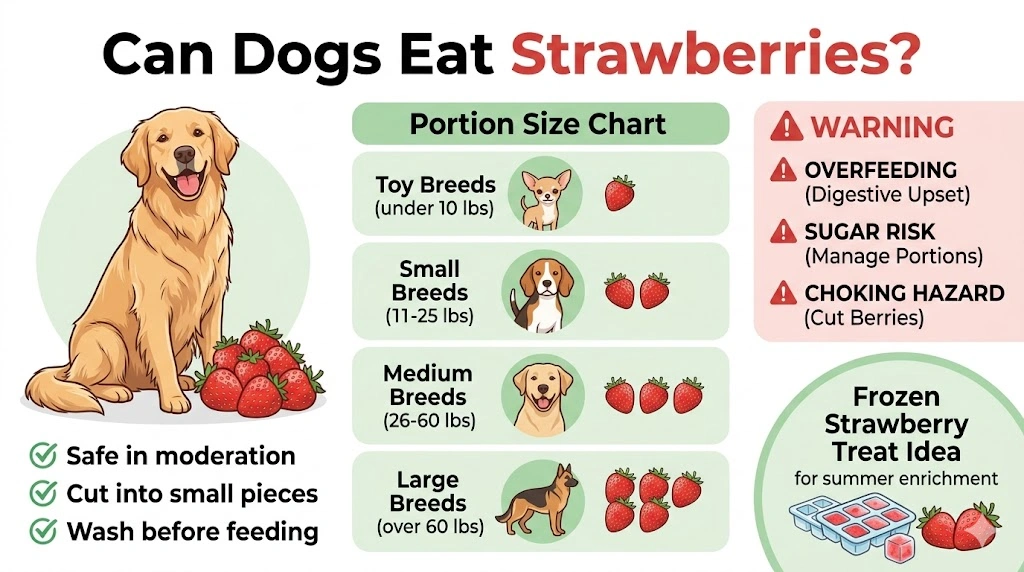
A practical starting point looks like this:
| Dog Size | Practical Starting Portion | Frequency |
| Toy breeds | 1 small piece or 1 very small strawberry slice | 1–2 times per week |
| Small breeds | 1–2 small pieces | 1–2 times per week |
| Medium breeds | 2–3 small pieces | 2 times per week |
| Large breeds | 3–5 small pieces | 2–3 times per week |
This table is best treated as a starting framework, not a rigid medical rule. The safest method is to begin with a tiny amount, observe tolerance, and only increase if your dog handles it well. That approach fits the general veterinary principle of moderation and individualized nutrition.
Golden Rule
Start with a very small piece the first time you offer strawberries. If the dog does well, keep portions modest and occasional rather than turning fruit into a daily habit. That single habit prevents most avoidable problems.
Can Puppies Eat Strawberries?
Yes, puppies can eat strawberries, but puppies deserve extra caution because their digestive systems are still developing and they are generally more sensitive to dietary changes. A puppy that tolerates a tiny amount may still react poorly if the serving is too large or the fruit is introduced too quickly. That is why small, gradual exposure is the safest approach.
For puppies, strawberries should be tiny, plain, and infrequent. They should never be used as a main reward source or offered in a way that crowds out proper puppy food. Puppies need a complete, balanced diet designed for growth; treats should stay a small extra, not a nutritional shortcut. WSAVA’s nutrient and treat guidance supports that general principle.
A good puppy approach is simple: give a tiny strawberry piece, watch for digestive changes, and avoid making fruit part of every training session. If the puppy has loose stool, discomfort, or unusual behavior, stop and return to the basic diet.
Best Ways to Feed Strawberries to Dogs
How you serve strawberries matters nearly as much as how much you serve. The fruit should be plain, fresh, and prepared in a way that makes it easy to chew and easy to digest.
1. Fresh Strawberries
Fresh strawberries are the simplest choice. Wash them thoroughly, remove the stems, and cut them into safe bite-sized pieces. That is the cleanest and most straightforward way to feed the fruit.
2. Frozen Strawberries
Frozen strawberries are a useful summer treat. AKC specifically mentions frozen strawberries as a fun enrichment option, and they can be especially appealing during hot weather because they add cooling value along with flavor. Always keep the pieces small enough to prevent choking or overstuffing.
3. Training Treats
Tiny strawberry cubes can work well in training because they are small, tasty, and generally low in calories compared with many commercial treats. VCA’s training guidance explicitly lists strawberries among foods that can be used safely without seasoning. That makes them a good choice when you need a quick reward but do not want to overfeed.
4. Enrichment Recipes
If you want a longer-lasting treat, you can mix a small amount of strawberry with a dog-safe base and freeze it in an enrichment toy. The key is to keep the recipe simple and sugar-conscious. Avoid sweetened yogurt, syrup, jam, or other added ingredients that turn a light snack into a dessert. WSAVA’s calorie guidance is a reminder that treat calories still count.
What Happens If a Dog Eats Too Many Strawberries?
If a dog overeats strawberries, the most likely result is digestive upset rather than poisoning. Because strawberries are non-toxic, the issue is usually too much volume, too much sugar, or too much fiber at once. Symptoms can include soft stool, diarrhea, gas, stomach discomfort, or vomiting.
You should contact a veterinarian if symptoms are severe, if they last more than a day, or if your dog seems weak, refuses food, or acts unusually lethargic. That advice is just common-sense pet care: a safe food can still cause problems when the amount is excessive.
The most important takeaway is this: the fruit itself is usually not the problem; the portion size is. That is why moderation matters so much with every healthy snack.
Strawberries vs Other Fruits for Dogs
Not all fruits carry the same risk profile. Some are commonly used as safe treats, while others are dangerous and should never be fed. ASPCA’s poison-control resources are clear that grapes and raisins are toxic to pets, while strawberries are non-toxic. AKC and VCA both also list strawberries among safe fruit options for dogs when fed in small quantities.
A simple comparison looks like this:
- Strawberries: safe in moderation.
- Blueberries: also a common, safe option in small amounts.
- Apples: safe if seeds and core are removed.
- Watermelon: safe when plain and seedless.
- Grapes and raisins: toxic and should be avoided completely.
This comparison is useful because it shows how strawberries fit into the bigger picture. They are one of several dog-safe fruit treats, but they are not special enough to be unlimited, and they are not the best choice for every dog in every situation.
Vet-Approved Safety Tips
The safest strawberry routine is surprisingly simple. Wash the fruit well, remove the stem, cut it into manageable pieces, and serve only plain strawberries without added sugar or seasoning. That basic approach follows the same practical advice veterinary sources give for safe food sharing and training treats.
A few practical rules make the feeding experience much safer:
- Keep strawberries plain.
- Feed them occasionally, not daily.
- Use tiny portions first.
- Cut them for small dogs and puppies.
- Count calories within the overall daily diet.
This is also the best place to reinforce a very important point: healthy human foods still need a feeding plan. A fruit treat becomes much more responsible when it is treated as part of the dog’s total intake rather than as a bonus that “does not count.” WSAVA’s 10% treat guidance exists precisely because calories from snacks can quietly push a pet’s diet out of balance.
Common Mistakes Dog Owners Make
The most common mistake is giving strawberries too often. Owners usually mean well, but repeated “tiny extras” can become a meaningful calorie load over time. That is why a treat budget matters, even for fruit.
Another frequent mistake is serving whole strawberries to small dogs. That increases chewing difficulty and can make the treat less safe than it needs to be. Cutting the fruit into smaller pieces is a better habit.
A third mistake is mixing strawberries with sweetened ingredients. Strawberry yogurt, syrup, jam, or dessert-style toppings change the nutritional profile completely and often add unnecessary sugar. The safe choice is the plain fruit itself.
The final mistake is assuming “natural” automatically means “unlimited.” That idea leads many owners to overfeed fruit, overestimate its benefits, and underestimate how quickly small treats add up. Veterinary nutrition guidance is very clear that even natural extras should remain controlled.
Expert Dog Nutrition Advice
Good dog nutrition is about patterns, not one-off treats. If strawberries become a regular reward, they should still stay inside a balanced overall feeding plan. WSAVA guidance encourages owners to think carefully about snacks, treats, and the total calorie picture rather than focusing only on one food item.
A practical nutrition-minded approach looks like this:
- Rotate treats so one food does not dominate.
- Use fruit as enrichment, not as a dietary base.
- Keep training treats tiny.
- Monitor stool changes when introducing anything new.
- Stay inside the treat calorie budget.
This approach is especially useful for dogs that are overweight, sedentary, or medically sensitive. For those dogs, the difference between “healthy treat” and “too much treat” can be small, so careful portion control becomes even more important.
Pros and Cons of Feeding Strawberries
Pros
Strawberries are non-toxic, widely accepted as safe in moderation, easy to portion, and useful as a low-calorie enrichment reward. They can also be served fresh or frozen, which adds flexibility for training or hot weather.
Cons
They still contain natural sugar, they can cause digestive upset if overfed, they may be awkward for small dogs if not cut properly, and they are not ideal for every dog with a medical condition. The main issue is not danger in the toxic sense; it is overuse in the nutritional sense.
FAQs
It is better not to feed strawberries every day. Veterinary guidance is focused on moderation, and treat intake should remain a small part of total daily calories. For most dogs, occasional use is a better fit than daily feeding.
The safest habit is to remove stems and leafy tops before feeding. The fruit itself is the part most commonly used as a treat, and simple preparation lowers the chance of digestive irritation or swallowing awkward bits.
Yes. AKC specifically notes frozen strawberries as a fun treat option, especially during hot weather. Just keep the pieces small and serve them plain.
They are not automatically off-limits, but diabetic dogs need individualized veterinary advice before any fruit is introduced. Because strawberries contain natural sugar, they should be handled carefully in dogs with blood sugar concerns.
Yes, but only in tiny amounts and only if they tolerate them well. Puppies are more sensitive to dietary changes, so strawberries should be introduced slowly and treated as an occasional extra rather than a regular food.
Conclusion
Yes, dogs can eat Strawberries safely — when the fruit is fresh, plain, washed, cut properly, and served in moderation. That is the most accurate and most useful answer. ASPCA classifies strawberries as non-toxic to dogs, and veterinary sources such as AKC and VCA include strawberries among safe treat options when owners keep portions small.
The real danger is not the strawberry itself. The real danger is overfeeding, careless preparation, or treating fruit as if it is automatically exempt from calorie control. WSAVA’s treat guidance is the best reminder that every snack counts, even a healthy one.
Used properly, strawberries can be a refreshing training reward, a summer enrichment snack, or a simple low-calorie treat that dogs genuinely enjoy. Used poorly, they can lead to digestive upset and unnecessary calories. That is why portion control is the difference between a smart treat and a messy one.