Before You Give Your Dog Ice Cream, Read This First
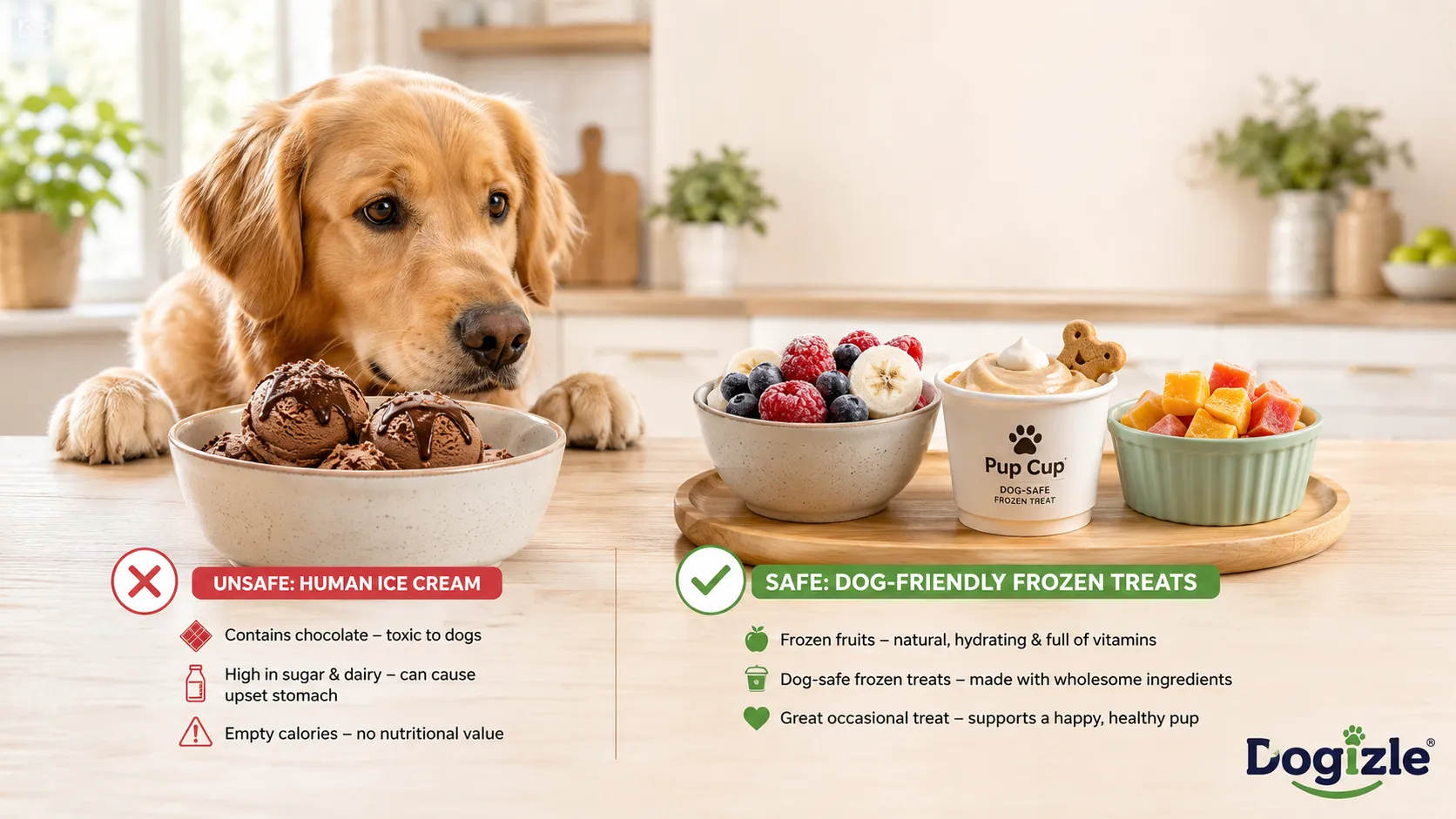
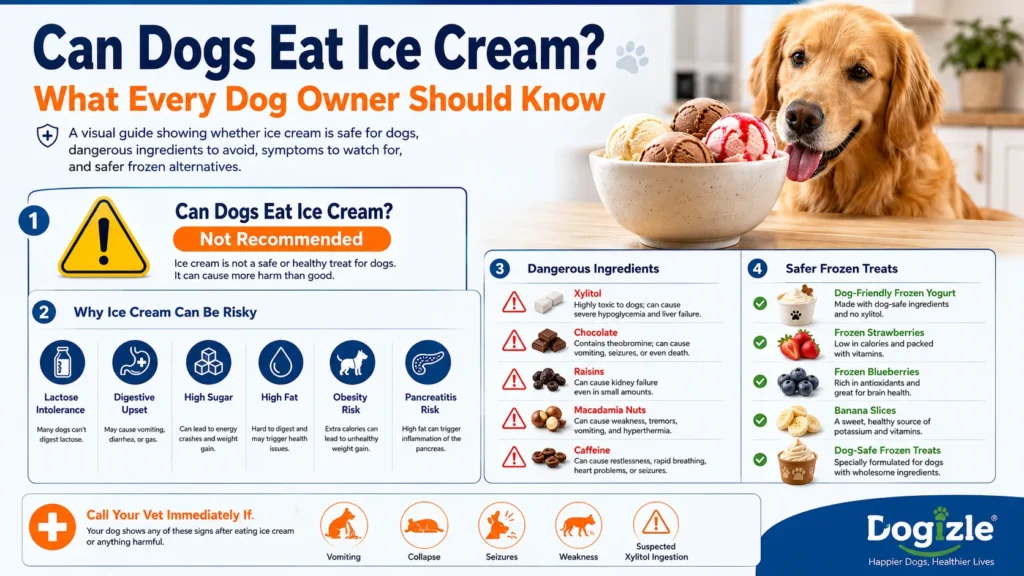
When a dog begs for a spoonful of ice cream, it is easy to think, “Just one lick cannot hurt.” The problem is that human ice cream is not made for dogs. Even when it is not toxic, it can still trigger gas, bloating, diarrhea, vomiting, and belly pain because many dogs have trouble digesting lactose after puppyhood. Ice cream is also usually high in sugar and fat, which can contribute to weight gain and may increase pancreatitis risk.
The bigger danger is that some ice creams contain ingredients that are truly unsafe for dogs, especially xylitol, chocolate, raisins, caffeine, and macadamia nuts. Xylitol is the ingredient pet owners need to treat with the most caution because it can cause dangerous low blood sugar, collapse, seizures, and even liver injury.
This guide gives you the direct answer first, then the ingredient risks, warning signs, emergency steps, safer frozen treats, and Europe-friendly label tips. It is written to help you make a fast, responsible decision without guesswork.
Can Dogs Eat Ice Cream?
The safest answer is no, human ice cream should not be a regular treat for dogs. Some veterinary-style pages allow a very small amount of plain ice cream occasionally, but even those pages still say it is not recommended because of lactose, sugar, fat, and the possibility of harmful ingredients. For a clear ownership decision, ice cream is best treated as a human food to avoid.
The reason this matters is simple: a dog can react badly even when the ice cream looks harmless. A plain vanilla scoop may cause only mild stomach upset in one dog, while another dog may struggle with lactose intolerance, and a third dog may be exposed to a toxic sweetener or chocolate mix-in. That is why the safest content strategy is not “how much can a dog eat,” but “why this is a poor choice and what to give instead.”
Snippet-ready answer: Dogs should not eat human ice cream. Even small amounts can upset the stomach, and some flavors contain toxic ingredients such as xylitol or chocolate.
Why Ice Cream Is Risky for Dogs
1) Lactose can upset many dogs
Adult dogs often produce less lactase than puppies, which makes dairy harder to digest. That is why ice cream can lead to gas, bloating, diarrhea, vomiting, and stomach discomfort. Some dogs tolerate a little dairy better than others, but many do not.
2) Sugar and fat create a second problem
Traditional ice cream is usually packed with sugar and fat. That combination is not just empty calories. It can support weight gain, obesity, and poorer long-term health, and fatty meals are one of the reasons clinicians worry about pancreatitis in dogs.
3) “Sugar-free” does not mean dog-safe
Many people see “sugar-free” and assume the product is safer. For dogs, that can be the opposite of true. Sugar-free desserts may contain xylitol, and the FDA warns that xylitol poisoning in dogs can begin quickly and can cause vomiting, weakness, collapse, seizures, liver failure, and bleeding problems.
4) Flavor add-ins can be toxic
Ice cream is often not just dairy and sugar. Mix-ins such as chocolate, cocoa, raisins, caffeine-containing ingredients, or nuts can make the treat much more dangerous. PetMD and AKC both flag these ingredients as harmful, and chocolate is specifically toxic for dogs.
Mini summary: The risk is not only stomach upset. Ice cream can also introduce dangerous sweeteners and toxic mix-ins, which is why the safest answer is to avoid it.
Which Ice Cream Ingredients Are Dangerous?
| Ingredient | Why is it risky | Practical owner note |
| Lactose/dairy | Can trigger gas, bloating, diarrhea, and vomiting in dogs that are lactose intolerant. | Plain dairy is still not a free pass. |
| Sugar | Adds calories and can contribute to weight gain, obesity, and dental issues. | “Just a few spoonfuls” can still add up. |
| Fat | High-fat foods can be a pancreatitis concern in dogs. | Especially important for sensitive or overweight dogs. |
| Xylitol | Can cause rapid hypoglycemia, collapse, seizures, liver injury, and even death. | Treat as an emergency if the label includes xylitol or E967. |
| Chocolate/cocoa | Toxic to dogs. | Chocolate ice cream should be a hard no. |
| Raisins | Toxic to dogs. | Common in some dessert flavors. |
| Macadamia nuts | Harmful to dogs. | Watch for nut-heavy flavors and toppings. |
| Caffeine | Harmful to dogs. | Found in mocha and coffee-style desserts. |
The ingredient that deserves the biggest warning: xylitol
Xylitol is a sugar alcohol used in many sugar-free foods and products. The FDA says exposure can start causing signs within about 20 minutes, and dogs may show vomiting, weakness, staggering, collapse, seizures, liver failure, or bleeding problems. Merck Veterinary Manual also notes that profound hypoglycemia is the most common sign, and severe liver injury can occur.
Europe and the UK note
On labels in the UK and much of Europe, xylitol may appear as E967. That is useful for pet owners who shop across countries or buy imported dessert products. In practical terms, “sugar-free” and “reduced sugar” are not enough to make a dessert safe for a dog. Always read the ingredient list.
What Happens If a Dog Eats Ice Cream?
The outcome depends on what kind of ice cream it was, how much your dog ate, and your dog’s size and health. A small taste of plain ice cream may only cause mild stomach upset in some dogs, but it can still lead to diarrhea, gas, vomiting, or abdominal discomfort. This is especially likely in dogs with lactose intolerance.
If the ice cream contained xylitol, the situation becomes urgent. Xylitol can trigger a sudden drop in blood sugar, and the FDA warns that signs can progress quickly to collapse, seizures, coma, liver failure, and bleeding problems. Merck also reports that hypoglycemia may appear within 30 minutes, though it can be delayed in some cases.
If the dessert was chocolate ice cream or contained chocolate sauce, chips, brownies, or cocoa, you should treat it as unsafe because chocolate itself is toxic to dogs. The same caution applies if the product includes raisins, macadamia nuts, or caffeine.
Symptom watch table
| Situation | Possible signs | What it usually means |
| Plain ice cream, small amount | Gas, loose stool, diarrhea, vomiting, and mild belly discomfort. | Often digestive upset, especially if lactose-intolerant. |
| A large amount of rich ice cream | Vomiting, belly pain, diarrhea, lethargy, and poor appetite. | More concerning for GI irritation and fat-related problems. |
| Xylitol-containing dessert | Vomiting, weakness, staggering, collapse, seizures, coma, liver failure, bleeding problems. | Emergency. Call a vet immediately. |
| Chocolate dessert | Vomiting, restlessness, abnormal heart signs, and GI upset. | Toxic exposure risk. Seek veterinary advice. |
What to Do Right Now If Your Dog Ate Ice Cream
- Check the ingredients immediately. Look for xylitol, chocolate, cocoa, raisins, caffeine, macadamia nuts, or other mix-ins. FDA guidance makes clear that sugar-free desserts and similar products are common xylitol sources.
- Estimate how much was eaten. A lick, a spoonful, and a full bowl are not the same situation. The amount matters, especially if the product contains xylitol or chocolate.
- If it was plain and the amount was tiny, monitor closely. Watch for vomiting, diarrhea, gas, bloating, belly pain, or unusual tiredness. These are the common signs reported across the current top articles.
- If it may have contained xylitol, call a vet immediately. The FDA explicitly says to contact your vet, an emergency animal clinic, or poison control right away. Do not wait for symptoms.
- If your dog has vomiting, collapse, seizures, severe lethargy, or trouble standing, treat it as urgent. Those are red-flag signs of xylitol poisoning and other serious toxicity problems.
- Bring the packaging if you go to the vet. Ingredient lists help clinicians act fast, especially when sugar-free products or imported labels are involved.
Mini summary: Plain ice cream usually causes stomach upset at worst, but xylitol or chocolate turns the situation into a real medical concern.
When Ice Cream Becomes an Emergency
A dog that ate xylitol-containing ice cream or dessert should be treated as an emergency, even if the dog looks normal at first. The FDA says signs can begin within minutes, but they can also be delayed, which is why waiting for symptoms is risky. Merck notes that severe hypoglycemia and liver injury can occur.
You should also seek urgent veterinary advice if your dog ate a large amount of ice cream and then starts vomiting repeatedly, looks painful, refuses food, becomes weak, or seems bloated. High-fat foods are the reason pancreatitis is always part of the conversation when dogs eat rich human food.
Safer Frozen Treats for Dogs
The best frozen treat is one made for dogs, or a simple dog-friendly option with a short ingredient list. PetMD, AKC, and Chewy all point toward dog-safe alternatives instead of human ice cream, and AKC notes that plain yogurt may be easier to digest than milk because it contains less lactose.
| Safer option | Why is it better | Best use case |
| Dog-specific ice cream | Formulated for dogs, often with simpler ingredients. | Dogs that love creamy textures. |
| Frozen fruit | AKC recommends frozen strawberries, raspberries, apples, or pineapple as a sweet icy treat. | Warm days, small training reward. |
| Plain, unsweetened yogurt | Easier to digest than milk for some dogs because it contains less lactose. | Dogs that tolerate dairy well. |
| Homemade frozen banana mash | Chewy suggests simple frozen fruit-style alternatives. | Easy budget-friendly option. |
| Pupsicle-style treats | Chewy suggests dog-friendly frozen treat ideas instead of human ice cream. | Enrichment and summer cooling. |
Practical frozen treat rule
Keep the treat simple, small, and low in sugar. The safest frozen snacks are the ones with the fewest ingredients and no sweeteners. That means no xylitol, no chocolate, and no rich dessert base built for humans.
Can Dogs Eat Vanilla Ice Cream?
Human vanilla ice cream is still not a great choice. PetMD says small amounts of plain vanilla may be tolerated by some dogs occasionally, but it is still not recommended. Chewy draws a sharper line between human vanilla ice cream and dog-safe vanilla-flavored products made for pets. That is the best distinction to make in your article: dog-safe vanilla flavor is not the same thing as human vanilla ice cream.
Can Dogs Eat Chocolate Ice Cream?
No. Chocolate ice cream is unsafe because chocolate is toxic to dogs, and dessert versions often include other high-risk ingredients, too. If the flavor includes cocoa, chocolate chips, fudge, brownie pieces, or chocolate sauce, it should be treated as off-limits.
Can Dogs Eat Ice Cream Cones?
Ice cream cones are not a smart dog treat. Chewy notes that cones themselves are highly processed and full of sugar, even before the ice cream is added. They are not a meaningful nutritional win, so there is no real reason to use them as a dog snack.
Pros and Cons of Sharing Human Ice Cream With Dogs
| Pros | Cons |
| Easy to share. | Can cause lactose-related stomach upset. |
| Dogs often enjoy the taste. | High in sugar and fat. |
| Feels like a “special moment.” | May contain xylitol, chocolate, raisins, caffeine, or macadamia nuts. |
| Convenient in summer. | A safer dog-specific frozen treat does the job better. |
Europe-Specific Practical Advice
For readers in the UK and much of Europe, one useful label habit is to look for E967, which is the xylitol code listed by the UK Food Standards Agency. That matters because the word “xylitol” is not always what people notice first on packaging. Imported desserts, sugar-free sweets, and “diet” treats deserve extra label checking.
In busy European cities, many dog owners rely on convenience foods and quick treats from supermarkets, cafés, and kiosks. That makes label reading even more important, because a “small dessert cup” or “sugar-free” frozen snack may look harmless but still contain xylitol or other risky ingredients.
In warmer months, especially in apartments and city homes, frozen treats are tempting because they feel refreshing. That is fine as long as the treat is truly dog-safe. A simple frozen fruit cube or dog-specific frozen snack is a much better choice than sharing your own dessert.
Common Mistakes Dog Owners Make
- Thinking that a tiny lick of sugar-free ice cream is automatically safe. Sugar-free can still mean xylitol, and xylitol is the big emergency ingredient.
- Assuming vanilla means harmless. Human vanilla ice cream can still contain sugar, fat, and lactose.
- Forgetting to check mix-ins. Chocolate, raisins, macadamia nuts, and caffeine are the kinds of add-ins that change the risk level fast.
- Treating every dog the same. Dogs with sensitive stomachs or a history of pancreatitis need even more caution with rich foods.
Expert Tips for Safer Treatment
- Keep frozen dog treats simple and low in sugar. The shortest ingredient list is usually the safest.
- If you use yogurt, choose plain and unsweetened, and introduce it slowly. AKC specifically warns that some dogs still do not tolerate lactose well.
- Use frozen fruit as a summer enrichment tool. It gives dogs something cool and special without the dairy and sugar load.
- For dogs with a sensitive stomach, leave human desserts out of the routine entirely. That removes the “trial-and-error” guesswork.
People Also Ask
Plain ice cream is usually not toxic by itself, but it is still not a good food for dogs because of lactose, sugar, and fat. Ice cream with xylitol, chocolate, raisins, macadamia nuts, or caffeine can be Dangerous or toxic.
There is no ideal regular amount to recommend. The safest approach is to avoid human ice cream and use a dog-safe frozen treat instead.
Check the ingredient list for xylitol and contact your vet immediately if xylitol may be present. The FDA says xylitol poisoning can start quickly and can become life-threatening.
Puppies are not a good match for human ice cream. Their digestive systems are still developing, and it is better to use puppy-safe treats instead of dairy desserts. The current top veterinary-style pages already emphasize that dogs lose the ability to digest lactose as they grow out of puppyhood.
Some sources say a very small amount of plain ice cream may not cause harm in every dog, but it is still not recommended. A dog-safe alternative is the better choice.
Yes, dog-specific frozen treats are the safer route because they are made for canine digestion. Even then, portion size matters, and new treats should be introduced gradually.
Xylitol is the most urgent ingredient to watch for because it can cause a rapid blood sugar crash and severe illness. Chocolate is also dangerous and should never be shared.
Conclusion
So, can dogs eat ice cream? The responsible answer is no, not as a regular treat. Human ice cream is too unpredictable for dogs because of lactose, sugar, fat, and the possibility of toxic ingredients. The risk rises sharply if the dessert contains xylitol, chocolate, raisins, macadamia nuts, or caffeine.
The smartest move is to keep human ice cream for people and give dogs a safer frozen option instead. A dog-specific frozen treat, a little frozen fruit, or plain unsweetened yogurt for dogs that tolerate dairy will usually be the better choice. That protects your dog’s stomach, reduces avoidable risk, and still gives them something fun on a hot day.
For Dogizle.com, this topic works best when the page gives a clear answer, a practical emergency path, and safer alternatives in one place. That is what builds trust, dwell time, and repeat visits from dog owners who want real-world guidance they can use immediately.