Best Dog Food for Shih Tzu — Vet-Backed Foods That Change Health Fast
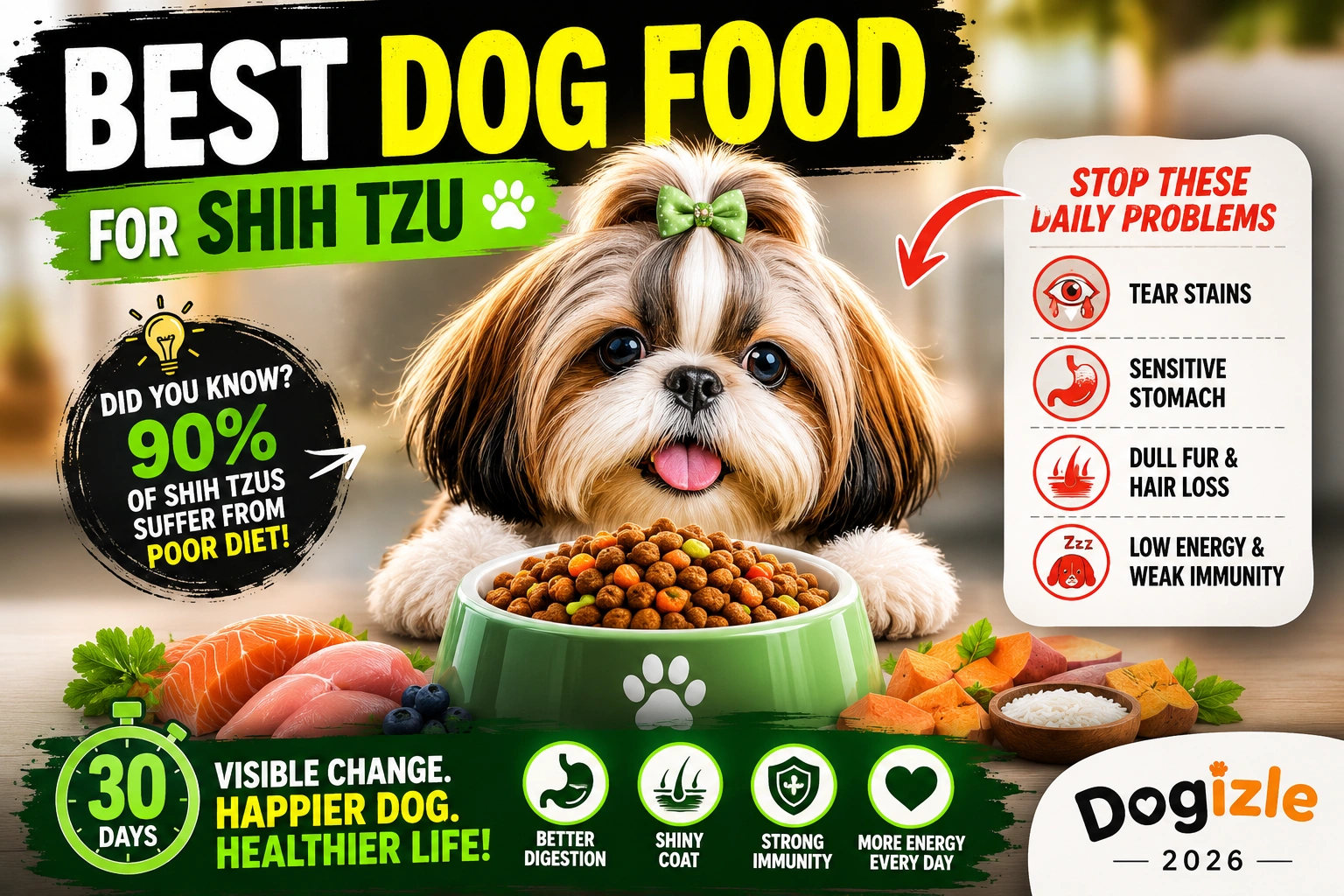
The best dog food for Shih Tzu can make a huge difference in digestion, tear stains, and coat health. In this guide, you’ll discover vet-backed options, key ingredients, foods to avoid, and feeding tips designed for picky, sensitive little pups. The right choice may surprise you—for happier meals and healthier daily routines. The Shih Tzu is a small companion breed with a surprisingly specialized nutritional profile. Many owners assume that any food made for small dogs will work equally well, but that idea often leads to avoidable health issues. This breed is known for digestive sensitivity, tear staining, skin irritation, bad breath, and selective eating behavior. These concerns are not random quirks. In many cases, they are closely tied to the quality, composition, digestibility, and balance of the diet.
A Shih Tzu does best on food that supports the whole body rather than just filling the bowl. The right nutrition can help stabilize digestion, improve stool quality, support skin resilience, maintain a glossy coat, manage weight, and even reduce irritation around the eyes and mouth. The wrong nutrition, on the other hand, can contribute to recurring loose stools, itching, dull fur, excessive shedding, bloating, gas, and stubborn tear stains.
Why Choosing the Right Food Matters for Shih Tzu
This guide is designed to help you identify the best dog food for Shih Tzu using a practical, symptom-based approach. Instead of relying on flashy packaging or marketing claims, you will learn how to evaluate food by ingredients, digestion support, coat-supporting nutrients, and life-stage needs. The goal is to make feeding decisions easier, smarter, and more aligned with veterinary nutrition principles.
Inside this guide, we will cover how to choose food based on symptoms, which ingredients matter most, how much to feed, how often to feed, how to transition between foods safely, what foods to avoid, and how to build a long-term nutrition plan that supports your Shih Tzu’s health from puppyhood through the senior years.
What Makes Shih Tzu Nutrition So Unique?
A Shih Tzu is not simply a small dog. It has a compact jaw, a delicate digestive system, a coat that requires ongoing maintenance, and a face shape that can make eating less comfortable than in longer-nosed breeds. These features shape the way nutrition should be approached.
1. Small Digestive Capacity
Shih Tzus tend to have a smaller stomach capacity and can be more reactive to sudden dietary changes, rich foods, heavy fats, and low-quality fillers. A diet that is overly greasy or difficult to digest may result in:
- Gas
- Soft stool
- Diarrhea
- Vomiting
- Reduced appetite
Because the breed is small, even a modest digestive upset can have a noticeable effect on energy, hydration, and comfort. That is why gentle, highly digestible formulas often perform better than overly complex or aggressively rich foods.
2. Flat Face and Eating Difficulty
Shih Tzus are brachycephalic, meaning they have a shortened muzzle. This can make eating more awkward, especially when kibble is too large, too hard, or shaped in a way that is difficult to grasp. Some dogs eat too quickly in frustration, while others become hesitant or picky.
Appropriate kibble size, texture, and palatability matter more than many owners realize. The best dog food for Shih Tzu should be easy to pick up, chew, and swallow without causing strain.
3. Tear Stain Sensitivity
Many Shih Tzu owners notice staining beneath the eyes, along the muzzle, or around the face. While tear staining can have multiple causes, diet can influence inflammation, skin comfort, and overall irritation levels. A food that is clean, digestible, and free from unnecessary additives may support better skin balance and reduce some of the dietary triggers that worsen the appearance of tear stains.
4. High Coat Maintenance Needs
The Shih Tzu’s coat is one of its defining features. Whether the coat is kept long and luxurious or trimmed short for easier maintenance, hair and skin health still depend on nutrition. Protein quality, omega fatty acids, essential vitamins, and mineral balance all play a role in coat shine, texture, and resilience.
A well-fed Shih Tzu typically shows it through brighter eyes, healthier skin, improved stool quality, and a coat that feels softer and looks more vibrant.
How to Choose the Right Food:
Instead of choosing food based only on brand reputation or price, it is more effective to match the diet to the dog’s symptoms and body needs. This problem-first method is especially useful for Shih Tzu owners because many common issues are food-related or food-sensitive.
If Your Shih Tzu Has Diarrhea or Gas
If your dog regularly experiences loose stool, abdominal discomfort, or frequent gas, the diet should become easier to digest and more predictable. In this case, look for:
- Limited ingredient diets
- Single-animal protein formulas
- Probiotic support
- Simple carbohydrate sources
- Gentle, highly digestible ingredients
Useful protein choices may include chicken, turkey, lamb, or fish, depending on tolerance. The purpose is to reduce digestive workload and avoid excessive ingredient complexity.
Foods to limit or avoid include:
- Fatty table scraps
- Sudden food changes
- Heavy artificial flavoring
- Highly processed treats
- Overly rich formulas
The main objective is to calm the gut, improve stool consistency, and reduce inflammation in the digestive tract.
If Your Shih Tzu Has Itchy Skin or Allergies
When skin itchiness, paw licking, redness, ear irritation, or recurring flare-ups appear, diet quality should be examined closely. Some dogs do better on formulas with novel proteins or fish-based recipes, while others simply need a cleaner ingredient list.
Look for:
- Hypoallergenic or sensitive-skin recipes
- Salmon or other fish-based formulas
- Novel proteins such as duck or venison
- Omega-3-rich nutrition
- No unnecessary artificial dyes or preservatives
Common irritants to watch for include:
- Wheat
- Corn
- Soy
- Artificial coloring
- Low-grade filler ingredients
The goal is to minimize immune stress and support skin barrier health. Better skin often means less scratching, less irritation, and a more comfortable dog overall.
If Your Shih Tzu Has Tear Stains
Tear stains can be frustrating because they are visible and persistent. While they may not disappear through diet alone, food can still influence the severity of irritation. A cleaner formula with fewer additives and a more digestible protein source may help support facial comfort.
Look for:
- Simple, clean protein sources
- Low-irritation formulas
- Balanced wet and dry feeding when appropriate
- Fewer artificial ingredients
- Better overall nutrient quality
Avoid foods with:
- Artificial colors
- Low-quality meat meals
- Excess additives
- Unnecessary chemical preservatives
The aim is to reduce inflammatory triggers that may worsen ocular discharge or facial staining.
If Your Shih Tzu Is Overweight
Extra weight can sneak up quickly in small breeds. Even a small increase in body fat can place more stress on joints, breathing, and overall mobility. If your Shih Tzu is gaining weight, choose a food that is satisfying but not calorie-dense.
Look for:
- Low-calorie small-breed formulas
- High protein with moderate fat
- Fiber-rich ingredients
- Measured feeding portions
- Controlled treats
Avoid:
- Free feeding
- Frequent snacks
- High-carb low-quality kibble
- Large portions without adjustment
The objective is to preserve lean mass, protect joints, and maintain healthy energy without excess calories.
Best Ingredients for Shih Tzu Health
Nutrition should always start with ingredients. Branding matters far less than the nutrient profile, ingredient digestibility, and biological suitability of the food. A high-performing dog food for Shih Tzu should support digestion, skin, coat, immune health, and appropriate body weight.
Core Beneficial Ingredients
1. Lean animal proteins
Examples include salmon, chicken, turkey, and other high-quality proteins. Protein supports muscle maintenance, tissue repair, immune function, and satiety.
2. Omega-3 fatty acids
These are especially helpful for skin comfort, coat shine, and anti-inflammatory support. Fish oil and naturally omega-rich ingredients are commonly used for this purpose.
3. Probiotics
Beneficial bacteria can support intestinal balance and stool quality, especially in dogs that are prone to digestive upset.
4. Gentle carbohydrates
Ingredients such as sweet potato or rice are often easier for sensitive dogs to tolerate than overly complex or highly processed fillers.
5. Antioxidant-rich plant ingredients
Blueberries and similar ingredients can contribute helpful micronutrients and support cellular health.
Ingredients to Limit or Avoid
Not every ingredient is harmful, but some are more likely to create problems for sensitive dogs, especially if they appear in low-quality or excessive forms.
Be cautious with:
- Corn, soy, and wheat fillers
- Artificial flavors
- Artificial colors
- Cheap oils of poor quality
- Excessive fat levels
- Heavily processed by-products without clear quality standards
A cleaner recipe is usually easier on the digestive system and more consistent in daily feeding.
Best Dog Food Categories for Shih Tzu
Instead of selecting food only by brand, it helps to understand which category of food best matches your dog’s needs.
Best Overall Dog Food for Shih Tzu
The best daily option is usually a balanced small-breed kibble with moderate protein, moderate fat, and a digestible formula. It should support regular stool quality, maintain energy, and include useful fatty acids for skin and coat health.
This type of food is ideal for long-term feeding because it tends to provide stability, convenience, and balanced nutrition.
Best for Sensitive Stomach
For dogs with frequent loose stools, gas, or vomiting episodes, limited ingredient diets are often a strong choice. These formulas reduce complexity and may improve tolerance by limiting the number of proteins and other components in the bowl.
A sensitive-stomach food should be easy to digest, predictable, and free from unnecessary additives that can irritate a delicate gut.
Best for Skin & Coat Health
If your Shih Tzu struggles with itching, dryness, flaky skin, or a dull coat, a salmon-based or fish-enriched diet is often a practical choice. These foods tend to be higher in omega-3 fatty acids and may help reduce visible skin discomfort over time.
Best for Puppies
Shih Tzu puppies need food that supports rapid growth, healthy brain development, and proper bone formation. Puppy formulas should be nutrient-dense, small in kibble size, and rich in high-quality protein with appropriate DHA support.
Best Budget Option
Not every owner wants to purchase premium formulas, and affordability matters. A budget-friendly food can still be suitable if it is a vet-approved commercial kibble with balanced nutrients, clear labeling, and no major filler issues. The key is to avoid the cheapest option simply because it is cheap. Nutritional quality still matters.
Comparison Table: Shih Tzu Food Types
| Food Type | Best For | Key Benefit | Risk Level |
| Dry Kibble | Daily feeding | Supports dental health and convenience | Low |
| Wet Food | Picky eaters | Improves hydration and palatability | Medium |
| Raw Diet | Advanced owners | Can offer a natural-feeding approach | High |
| LID Diet | Allergies and sensitivities | Reduces ingredient reactions | Low |
| Grain-Free | Dogs with specific grain issues | May help certain sensitive dogs | Medium |
Each of these formats can work in the right situation, but the best choice depends on your dog’s health, tolerance, and the quality of the formulation.
Feeding Guide for Shih Tzu Owners
Feeding is not just about what you choose. It is also about how much, how often, and how consistently you serve it. Small breeds can become overweight easily, so measuring portions matters.
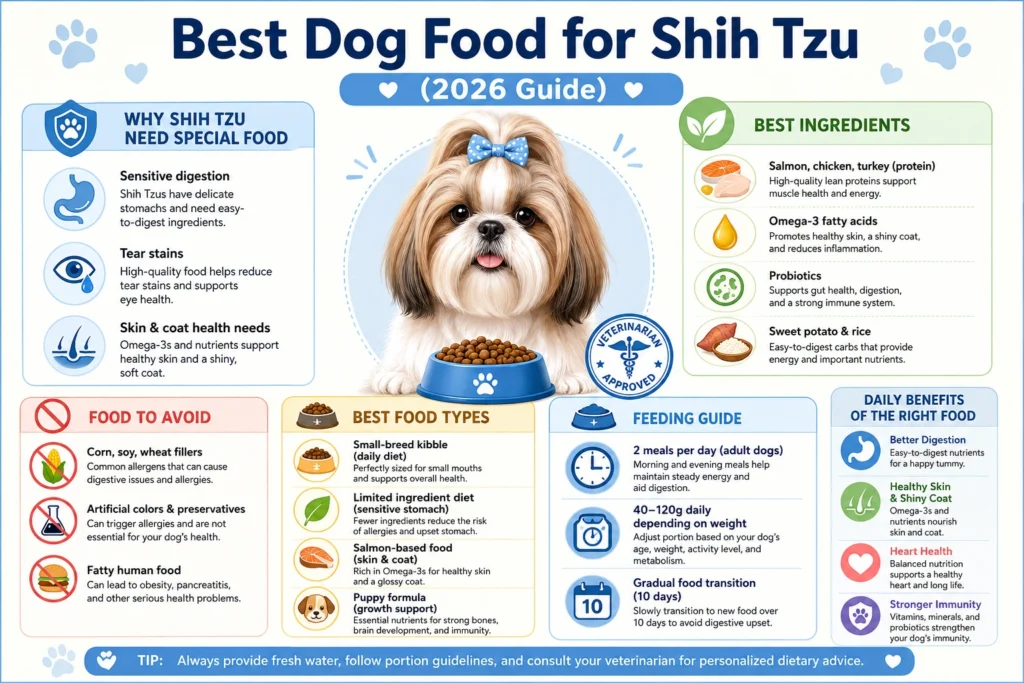
Daily Feeding Amount
A general guide for adult Shih Tzus is:
- 2–4 kg: 40–90g/day
- 4–7 kg: 90–120g/day
These are starting ranges, not fixed rules. Daily needs vary based on age, activity level, metabolism, neuter status, and whether your dog eats dry food, wet food, or a mixed diet. Very active dogs may need more. Less active dogs may need less.
Feeding Frequency
A Shih Tzu’s age influences feeding rhythm.
- Puppies: 3–4 meals per day
- Adults: 2 meals per day
- Seniors: 2 smaller meals per day
Regular meal timing helps stabilize digestion and can reduce begging, energy crashes, and overeating.
Food Transition Plan
Any diet change should be gradual. Small dogs often have sensitive stomachs, and switching food too quickly can lead to diarrhea or refusal to eat.
A safe transition often looks like this:
- Day 1–3: 25% new food, 75% old food
- Day 4–6: 50% new food, 50% old food
- Day 7–9: 75% new food, 25% old food
- Day 10: 100% new food
This slow adjustment gives the digestive system time to adapt.
Wet + Dry Food Mix
Many owners find that a mixed feeding approach works well for Shih Tzus, especially picky eaters or dogs that need more moisture in the diet. A common ratio is:
- 70% dry kibble
- 30% wet food
This combination can improve taste, add moisture, and make meals more appealing while still maintaining the structure and convenience of kibble.
Foods to Avoid for Shih Tzu
Some ingredients and human foods are simply unsafe or unsuitable for regular feeding. Avoid giving your Shih Tzu:
- Chocolate
- Onion
- Garlic
- Fried human food
- Excess dairy
- Sugary treats
- Cheap filler biscuits
- Highly seasoned leftovers
These items can lead to digestive upset, toxicity, weight gain, or long-term health issues. A small dog does not need many extra calories before the impact becomes visible.
Common Mistakes Shih Tzu Owners Make
Many Shih Tzu health issues start with simple feeding mistakes that are easy to overlook.
Switching Food Too Fast
Sudden changes are one of the most common causes of digestive disturbance. The intestinal system needs time to adapt, especially in dogs with sensitive stomachs.
Feeding Table Leftovers
Human food may be tempting to share, but it often contains too much salt, fat, seasoning, or hidden ingredients that are not suitable for dogs.
Ignoring Ingredient Labels
Packaging claims can be misleading. The ingredient list and guaranteed analysis tell a much clearer story than advertising slogans.
Overfeeding Treats
Small dogs gain weight quickly. Treats should remain a small portion of the daily intake, not an extra meal in disguise.
Choosing Food Only by Price
Low-cost food is not always bad, but extremely cheap formulas often cut corners on ingredient quality and digestibility. The cheapest bowl is not always the healthiest or most economical choice if it leads to stool problems, skin issues, or vet visits.
Pro Expert Tips for Better Results
A few practical habits can make a noticeable difference in your Shih Tzu’s daily comfort and long-term health.
Check the protein source first. Protein quality matters more than marketing terms like “premium” or “natural.”
Use probiotics during food changes if your dog is prone to digestive sensitivity.
Consider a slow-feeder bowl if your dog eats too quickly.
Rotate proteins every few months only if your dog tolerates variety well and has no known allergy pattern.
Monitor stool quality daily because it is one of the simplest health indicators you can observe at home.
These habits create a more responsive feeding system and help you catch problems early.
Long-Term Shih Tzu Diet Plan
A strong diet plan works best when it is consistent, adaptable, and built around your dog’s actual behavior and needs.
Morning Meal
A balanced morning meal might include dry kibble with a small amount of wet food mixed in. This can make the meal more appealing while preserving the structure and convenience of dry food.
Evening Meal
In the evening, many owners prefer a second portion of balanced kibble, sometimes with a protein topper to increase palatability and nutrient density.
Weekly Add-Ons
A few thoughtful extras can complement the main diet:
- Fish oil two to three times per week
- Small portions of dog-safe vegetables
- Limited healthy toppers for variety
These additions should remain controlled. The purpose is support, not overload.
Building the Best Dog Food Strategy for Your Shih Tzu
The best dog food for Shih Tzu is not always the most expensive, and it is not always the one with the boldest promise on the bag. It is the food that supports your dog’s individual needs most effectively.
A good formula should:
- Be easy to digest
- Use quality animal protein
- Support coat and skin health
- Help maintain a healthy weight
- Fit your dog’s age and activity level
- Work consistently over time
The right food is the one that keeps your Shih Tzu comfortable, energetic, and healthy day after day.
FAQs
A limited-ingredient diet with probiotics and simple proteins such as chicken or turkey is often a helpful starting point for dogs with diarrhea.
Yes, but only when grains are actually a problem for that individual dog. Balanced grain-inclusive formulas are also perfectly acceptable for many Shih Tzus.
A general range is between 40g and 120g per day, depending on the dog’s size, age, and activity level.
Yes. Wet food can help with hydration and may be especially useful for picky eaters or dogs that need extra moisture in their meals.
Low-irritation diets with clean protein sources and minimal additives are often a sensible choice when tear stains are a concern.
A balanced small-breed diet with quality protein, omega-3 fatty acids, and probiotic support is often the healthiest all-around option.
Conclusion:
Choosing the best dog food for Shih Tzu is really about understanding the breed’s unique needs and responding with a diet that supports digestion, skin condition, coat quality, and Healthy weight management. This breed benefits from thoughtful nutrition, not random feeding decisions.
When you focus on ingredient quality, digestibility, and symptom-based feeding, you give your Shih Tzu a much better chance at daily comfort and long-term vitality. A proper diet can lead to fewer stomach issues, a shinier coat, better energy, and improved overall well-being.
The most effective feeding plan is not built around hype. It is built around your dog’s body, your observations, and consistent nutrition choices.