Why Most Dog Toys Fail Aggressive Chewers
Best Dog Toys for Aggressive Chewers can save you from wasting money on destroyed toys and nonstop mess. This guide reveals the toughest, vet-backed chew toys that actually survive powerful dogs. You’ll discover durable picks, hidden safety risks, and shocking toy failures most owners never expect—before your dog destroys another toy again. If you own a powerful chewing dog, you already understand the frustration.
You purchase a toy labeled “durable,” “tough,” or even “indestructible”…
and within minutes—or sometimes seconds—it is destroyed.
This is not a random failure. It is a design mismatch problem between dog behavior and toy engineering.
Most commercially available toys are designed for average chewing dogs, not for:
- German Shepherds
- Rottweilers
- Pit Bulls
- Belgian Malinois
- Labrador Retrievers with high bite pressure
But the truth is more complex than just “strong jaws.”
Aggressive chewing is a combination of instinct, emotion, Genetics, and environment.
Dogs chew because of:
- Stress and anxiety relief
- Teething discomfort
- Natural predatory instinct
- Boredom and lack of stimulation
- Learned behavioral habits
So when owners choose toys incorrectly, failure is inevitable.
This guide will help you understand:
Why do dog toys break so quickly
Which materials actually last
How to match toys with chewing behavior
Which toy categories provide the best durability and safety
Let’s go deep into the science and strategy of durable dog toys.
Understanding Aggress
One of the biggest mistakes dog owners make is assuming all aggressive, lively chewers are the same.
They are NOT.
Aggressive chewing behavior falls into distinct psychological and behavioral categories.
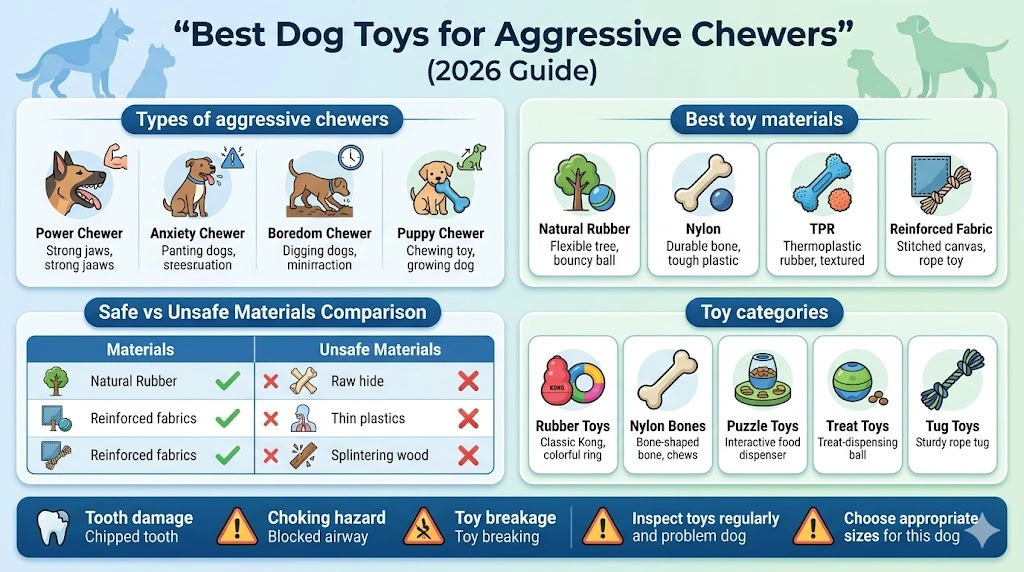
Power Chewers
These dogs do not chew out of boredom or anxiety—they chew because of jaw strength and persistence.
Common breeds:
- German Shepherds
- Rottweilers
- Pit Bulls
- Belgian Malinois
Behavior traits:
- Extremely strong bite force
- Long chewing endurance
- High focus on object destruction
- Rapid material breakdown
Best toy types:
- Solid natural rubber toys
- Reinforced nylon bones
- Dense, impact-resistant chew objects
Anxiety Chewers
These dogs chew as a coping mechanism for emotional stress.
Behavior traits:
- Chewing during isolation
- Destroying furniture when alone
- Repetitive chewing patterns
- Restlessness and pacing
Best toy types:
- Treat-dispensing toys
- Comfort-based chew objects
- Puzzle feeders for distraction
Boredom Chewers
These dogs are not stressed—they are simply under-stimulated.
Behavior traits:
- Random chewing behavior
- Alternating between play and destruction
- High energy levels
- Attention-seeking actions
Best toy types:
- Puzzle toys
- Interactive feeding systems
- Multi-step challenge toys
Puppy Chewers: Puppies chew due to natural growth and teething.
Behavior traits:
- Constant biting of objects
- Inability to differentiate toys from furniture
- Exploratory chewing
Best toy types:
- Soft rubber teething toys
- Cooling chew toys
- Gentle resistance materials
Key Insight:
Most toy failures happen not because dogs are “too strong,”
But owners choose based on breed instead of behavior type.
2. What Actually Makes a Dog Toy Durable?
Durability is not about marketing claims—it is about material science.
No toy is truly indestructible, but some materials significantly outperform others.
Natural Rubber (Top Recommended Material)
Natural rubber remains the gold standard in dog toy manufacturing.
Why it works:
- High elasticity absorbs pressure
- Resists cracking under force
- Safe for teeth when properly engineered
- Ideal for long chewing sessions
Best use cases:
- Power chewers
- Fetch + chew combination toys
Nylon (Extreme Durability Material)
Nylon is one of the strongest synthetic materials used in chew toys.
Why it works:
- Extremely dense structure
- Very slow wear rate
- Long-lasting under heavy chewing
Caution:
- Can cause dental wear if overly rigid
- Should be used under supervision
Thermoplastic Rubber (TPR)
A hybrid material balancing strength and flexibility.
Why it works:
- Soft enough for comfort
- Strong enough for durability
- Safer than hard plastics
Best for:
- Moderate to strong chewers
- Mixed behavior dogs
Reinforced Fabric Toys
Used mainly for tug-style toys.
Why it works:
- Multi-layer fiber reinforcement
- High resistance to tearing
- Great for interactive play
Materials to Avoid
- Cheap latex toys
- Hollow plastic toys
- Low-grade plush toys
- Rawhide chews (digestive and choking risks)
Expert Framework: How to Choose the Right Dog Toy
Instead of guessing, professionals use a structured decision system.
Identify Size & Jaw Strength
| Dog Size | Risk Level | Recommended Toys |
| Small | Low | Soft rubber toys |
| Medium | Moderate | Reinforced rubber |
| Large | High | Heavy-duty nylon |
| XL Power Chewers | Very High | Industrial-grade rubber |
Identify Chewing Style
| Style | Behavior | Best Toy Type |
| Shredder | Destroys quickly | Solid rubber |
| Gnawer | Slow chewing | Nylon bones |
| Destroyer | Rapid breakdown | Reinforced toys |
| Comfort Chewer | Anxiety-based | Treat toys |
Define the Purpose of the Toy
Ask yourself:
- Is this for chewing only?
- Is it for mental stimulation?
- Is it for anxiety relief?
- Is it for interactive play?
Matching purpose increases the success rate by up to 70%.
Best Dog Toy Categories for Aggressive Chewers
Instead of listing random products, we focus on proven categories.
Heavy-Duty Rubber Toys
These are the most reliable long-term chewing solutions.
Why they work:
- Shock-absorbing material
- Safe elasticity
- Excellent durability
- Nylon Chew Bones
Designed for extreme chewing resistance.
Why they work:
- Extremely dense material
- Long lifespan
- Minimal fragmentation
Learn safe materials, vet-approved toy types, and expert tips to stop destruction and keep your dog happy, safe, and mentally stimulated.
Treat-Dispensing Toys
Perfect for mental stimulation and anxiety relief.
Benefits:
- Reduces boredom
- Slows eating speed
- Improves focus
Tug & Interactive Toys
Best for bonding and controlled play.
Benefits:
- Strengthens the owner-dog relationship
- Provides physical stimulation
Puzzle Chew Toys
Combine brain stimulation with chewing satisfaction.
Benefits:
- Prevents boredom
- Encourages problem-solving
Toy Comparison Overview
| Toy Type | Durability | Safety | Mental Stimulation | Best For |
| Rubber Toys | Power chewers | |||
| Nylon Bones | Extreme chewers | |||
| Treat Toys | Anxiety dogs | |||
| Tug Toys | Active play | |||
| Puzzle Toys | Bored dogs |
Safety Risks Most Owners Ignore
Aggressive chewing is not risk-free.
Potential dangers:
- Broken teeth
- Gum injuries
- Choking hazards
- Intestinal blockages
Veterinary Insight
Harder does NOT always mean safer.
Excessively hard toys can:
- Crack enamel
- Damage gums
- Cause long-term dental issues
Warning Signs of Unsafe Toys:
- Visible cracks
- Missing chunks
- Sharp edges
- Strong chemical odor
How to Extend Dog Toy Lifespan
Rotate Toys Weekly
Prevents boredom and reduces overuse damage.
Freeze Treat Toys
Improves durability and engagement.
Supervise Early Usage
Especially during the first 7–10 days.
Replace Early
Do not wait for full destruction.
Real-Life Usage Scenarios
Apartment Dogs
Best toys:
- Quiet chew toys
- Puzzle feeders
Rural Active Dogs
Best toys:
- Tug ropes
- Outdoor fetch toys
Cold Regions
Best toys:
- Indoor stimulation toys
- Durable rubber toys
Common Mistakes Dog Owners Make
- Buying based on price
- Ignoring the chewing behavior type
- Using one toy for all needs
- Not rotating toys
- Leaving dogs unsupervised
People Also Ask
Natural rubber toys designed for power chewers are safest and most durable.
Yes, but only with supervision due to potential tooth wear.
Immediately, once damage appears.
No, but it can be redirected safely.
Soft rubber teething toys designed for young dogs.
Not always—material quality matters more than price.
Solid natural rubber chew toys.
Conclusion
Choosing the best dog toys for Aggressive chewers is not guesswork.
It is a structured process based on:
✔ Behavior type
✔ Material science
✔ Purpose alignment
When these factors are correctly matched, you achieve:
- Longer-lasting toys
- Reduced destruction
- Improved safety
- Happier, healthier dogs
A dog toy is not just entertainment—it is a tool for behavior management, mental stimulation, and physical health.