Can Dogs Eat Salmon Safely? — Hidden Risks Every Owner Should Know
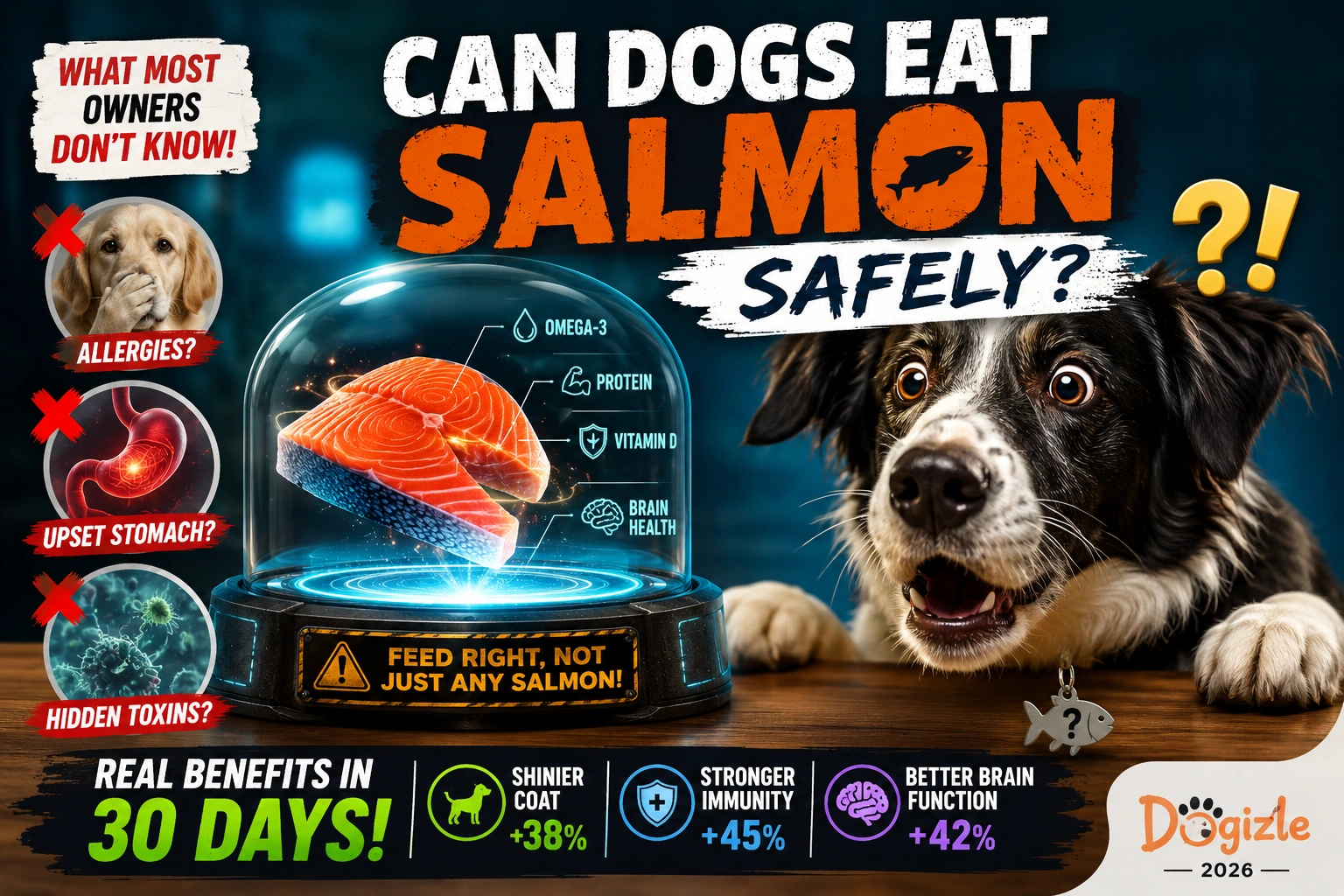
Yes, dogs can eat salmon — but only when it is fully cooked, plain, deboned, and served in small portions. Raw or undercooked salmon can expose dogs to dangerous parasites and bacteria, including those that cause salmon poisoning disease, which can be serious or even fatal if not treated promptly. Cooked salmon, on the other hand, can be a nutrient-dense treat that supports skin, coat, joints, and overall vitality when used correctly.
Across Europe and beyond, more owners are paying attention to ingredient quality, protein variety, and nutrient density in dog food. That is one reason salmon appears so often in premium diets and functional treats. FEDIAF, which represents the European pet food industry, maintains nutritional guidelines for complete and complementary pet food, while veterinary bodies such as BVA emphasize that dogs have specific nutritional needs that must still be met carefully and responsibly.
The problem is not salmon itself. The problem is how it is handled. Serve it raw, over-seasoned, too fatty, or with bones, and a helpful food can become a hazard. Serve it properly, and it can be a smart, occasional addition to your dog’s menu. This guide walks through the exact benefits, the hidden dangers, safe portions, cooking methods, and the most common mistakes owners make.
Can Dogs Eat Salmon Safely or Is It Dangerous?
Safely, yes — when it is cooked, plain, and given in moderation. Dangerously, yes — when it is raw or improperly prepared. That is the simplest and most accurate answer. Dogs can benefit from salmon’s protein and omega-3 content, but safety depends on preparation, portion control, and your dog’s health status.
Raw or undercooked salmon is the major red flag. Veterinary sources explain that dogs can develop salmon poisoning disease after eating raw or undercooked salmonid fish infected with parasites carrying the bacterium Neorickettsia helminthoeca. Signs commonly include fever, vomiting, diarrhea, weakness, reduced appetite, and enlarged lymph nodes. UC Davis notes that the disease can be fatal if left untreated, while Merck Veterinary Manual describes it as an acute systemic disease in dogs.
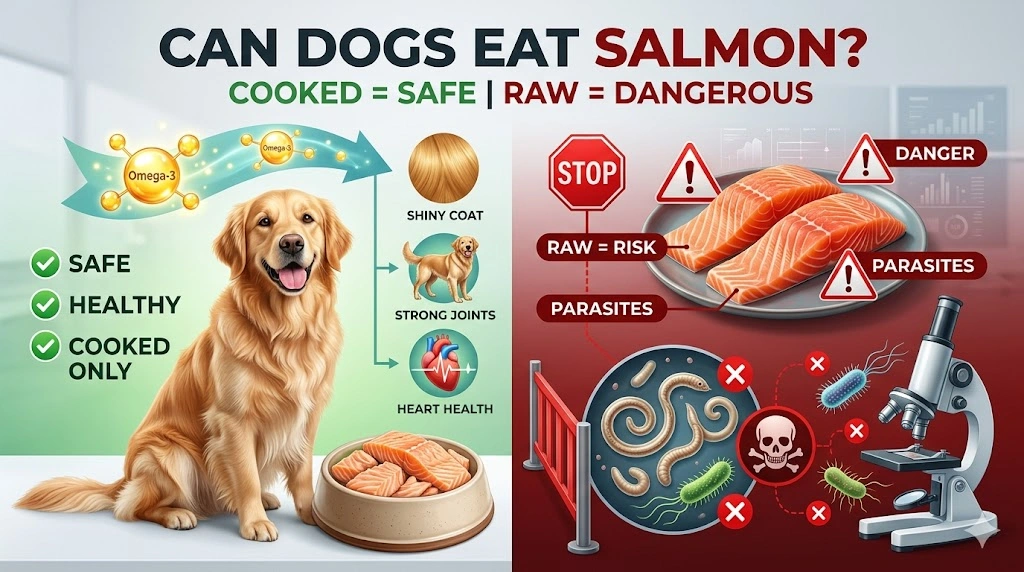
So the rule is simple: cooked = safe enough for occasional feeding; raw = not safe. For most dogs, a properly cooked, unseasoned bite of salmon can be an excellent treat. For dogs with pancreatitis, food allergies, or strict veterinary diets, salmon may not be appropriate at all without a vet’s approval.
Is Salmon Safe for Dogs?
The Short Answer
Yes — cooked salmon is generally safe and nutritious for dogs.
No — raw or undercooked salmon is unsafe and should be avoided.
Salmon is widely used in commercial dog food because it is protein-rich and naturally contains omega-3 fatty acids. The American Kennel Club highlights salmon as one of the healthiest fish for dogs, while FDA seafood guidance places salmon among the lower-mercury fish choices for people, which also supports its reputation as a relatively moderate fish when compared with species like tuna or swordfish.
Still, “safe” does not mean “free for all.” Dogs do best when salmon is offered as a small add-on, not a daily staple, and when it is prepared without oil, salt, garlic, onion, spices, sauces, or bones. AKC advice on feeding fish to dogs is clear: fully cooked, no bones, and no seasoning.
Health Benefits of Salmon for Dogs
Salmon is popular for a reason. When served properly, it brings several meaningful nutritional advantages to your dog’s bowl. The key is to view it as a supportive food, not a miracle cure. It can enrich a balanced diet, but it cannot replace one. FEDIAF’s nutritional framework and BVA’s position on companion-animal feeding both reinforce the idea that dogs need complete, balanced feeding patterns rather than random human-food supplementation.
1. Omega-3 Fatty Acids for Skin, Coat, and Joints
Salmon is naturally rich in omega-3 fatty acids, especially EPA and DHA. These fats are often linked with skin comfort, coat gloss, joint support, and inflammation balance. AKC notes that fish oil and fish-based omega-3s can support the heart, joints, coat, skin, and immune system, while its salmon-specific guidance highlights similar benefits for dogs.
For dogs that scratch frequently, shed heavily, or have dry, dull coats, salmon can be a useful dietary boost. Older dogs may also benefit because omega-3s are commonly used in support of joint comfort and mobility. That does not mean salmon is a treatment for disease, but it can be a helpful nutritional ally in the right diet plan.
2. High-Quality Protein for Muscle Maintenance
Salmon provides high-quality animal protein, which helps support lean muscle tissue, tissue repair, and daily energy needs. AKC’s fish guidance explains that fish can be a healthy part of a dog’s diet when cooked properly, and its nutrition articles repeatedly point to fish as a convenient source of digestible protein.
This matters most for active dogs, working dogs, and growing puppies that need steady nutrient intake. Protein is not just about muscle size; it also plays a role in recovery, satiety, enzymes, hormones, and immune function. That is one reason salmon appears frequently in premium dog foods and performance formulas.
3. Brain and Immune Support
Omega-3s, especially DHA, are often discussed in relation to brain development and cognitive support. AKC notes that dietary DHA sources include fish such as salmon, and that omega-3 fatty acids can support puppies as well as older dogs. Salmon also contributes vitamins and minerals that help the body maintain normal function.
That makes salmon attractive in both puppy and senior nutrition conversations. Puppies may benefit from DHA as part of a carefully formulated diet, while older dogs may benefit from the same nutrient family in a different way, especially when the goal is to support healthy aging and mental sharpness.
4. Heart Health Support
The omega-3s in salmon may also support cardiovascular wellness. AKC’s fish-oil overview explains that omega-3 fatty acids are associated with heart support, among other benefits. That is one reason many veterinary diets and supplements feature fish-derived fats.
Again, this is not a reason to feed large amounts of salmon every day. It is simply one more reason salmon can be a smart occasional ingredient in a broader, balanced feeding plan.
Hidden Risks of Feeding Salmon to Dogs
Salmon’s benefits are real, but so are the hazards. A safe article must cover both sides honestly, because the risk comes from the way the fish is served, not from the idea of fish itself.
1. Salmon Poisoning Disease
This is the most serious danger. Dogs that eat raw or undercooked infected salmonid fish can develop salmon poisoning disease, a potentially fatal infection associated with the parasite-bacterium cycle described by veterinary sources. Merck Veterinary Manual, UC Davis, and VCA all identify raw or undercooked fish as the danger point. Symptoms often include vomiting, diarrhea, fever, weakness, weight loss, and decreased appetite.
The disease name is misleading. It is not simply “fish poisoning” in the casual sense. It is a specific infectious process involving a fluke and a bacterium. That is why cooking matters so much: heat interrupts the parasitic life cycle and makes the food safer.
2. Salmon Bones
Salmon bones are small, sharp, and easy to miss. They can become a choking hazard or cause irritation, blockage, or injury in the mouth, throat, stomach, or intestines. AKC’s fish guidance specifically says fish for dogs should be fully cooked and free of bones.
Even if a bone seems tiny, it can still be a problem. The safest policy is simple: debone carefully before the food ever reaches your dog’s bowl.
3. Seasonings, Oils, Butter, Salt, Garlic, and Onion
Human-style salmon is often prepared with ingredients dogs should not eat. Garlic and onions are toxic to dogs, whether raw, cooked, powdered, or mixed into seasoning blends. AKC warns that onions and garlic can damage red blood cells and cause anemia; it also advises avoiding seasonings, oils, and salt when sharing human foods with dogs.
That means restaurant salmon, smoked salmon, glazed salmon, spicy salmon, and buttery salmon are all poor choices for dogs. Plain is best. Boring is safer.
4. Too Much Fat
Salmon is naturally fatty, which is part of why it tastes so good and why it is so rich in omega-3s. But too much fat can upset a dog’s stomach and, in sensitive dogs, may contribute to pancreatitis risk. AKC repeatedly cautions against feeding dogs greasy, fatty, heavily seasoned foods.
This is especially important for dogs with a history of digestive sensitivity, overweight dogs, and dogs already on limited-calorie plans. In those cases, even healthy treats have to be measured carefully.
5. Mercury and Contaminant Concerns
Salmon is generally considered a lower-mercury choice compared with fish like tuna or swordfish. FDA seafood guidance lists salmon among the fish commonly considered lower in mercury for people, while AKC’s fish guidance specifically notes that tuna is a more mercury-prone choice. That makes salmon a sensible option when fish is being added occasionally to a dog’s diet.
Still, lower mercury does not mean zero concern. All fish can contain trace contaminants, so moderation remains the right strategy. The best approach is not “more fish is always better,” but “the right fish, in the right amount, prepared the right way.”
Can Dogs Eat Raw Salmon?
No — raw salmon should not be fed to dogs. That is the safest answer and the one supported by veterinary sources. Raw or undercooked salmon can contain the parasites and bacteria involved in salmon poisoning disease, especially in certain geographic regions, and it can also carry other foodborne risks.
Some pet owners assume dogs can handle raw fish because they are carnivores or because humans occasionally eat sushi. That comparison is misleading. Dogs are not immune to the risks hidden in raw fish, and the consequences can be severe. UC Davis specifically says to seek veterinary care if a dog may have been exposed, and Merck describes the disease as potentially systemic and serious.
If your dog has already eaten raw salmon, monitor closely and contact a veterinarian immediately, especially if symptoms such as vomiting, diarrhea, fever, lethargy, or appetite loss appear. Rapid action matters.
Can Dogs Eat Cooked Salmon?
Yes — cooked salmon is the safest way to offer salmon to dogs. The key is to cook it thoroughly, serve it plain, and remove every bone. AKC says fish for dogs should be fully cooked without oils, seasonings, or bones, and other guidance from the same source reinforces that cooked fish can be a healthy addition when handled correctly.
Boiled, baked, or grilled salmon can all work well, as long as there is no added butter, spice blend, lemon pepper, garlic, onion, soy sauce, or heavy oil. The simpler the preparation, the safer it usually is.
Cooking does more than improve safety; it also reduces the microbiological risks associated with raw seafood. That matters because dog owners are not just feeding a pet. They are managing a food-safety decision.
Can Dogs Eat Salmon Skin?
Yes, but only in moderation and only when it is plain and cooked. Salmon skin is rich and flavorful, which is exactly why many dogs love it. It also contains fat and nutrients, but that same fat content can make it a poor choice for dogs with sensitive stomachs or weight-control needs.
Think of salmon skin as a small bonus, not a serving in itself. If the skin is greasy, heavily seasoned, smoked, or fried, it should not be shared with your dog. Plain, cooked skin in a tiny amount is the safer route.
How Much Salmon Can Dogs Eat?
The right amount depends on your dog’s size, activity level, overall diet, and health history. Salmon should be an occasional treat or topper, not the foundation of the diet. FEDIAF and BVA both stress the importance of balance and species-appropriate feeding rather than improvised human-food diets.
A practical weekly guide looks like this:
- Small dogs under 10 kg: about 1–2 oz per week
- Medium dogs 10–25 kg: about 3–4 oz per week
- Large dogs 25 kg and above: about 4–6 oz per week
These are conservative treat-style ranges, not medical prescriptions. If your dog already eats a fish-based complete food, or if your dog has a sensitive digestive system, the right amount may be lower. Introduce salmon gradually and watch for vomiting, loose stool, itching, or unusual gas.
Best Ways to Feed Salmon to Dogs
Safe Preparation Methods
The safest approaches are:
Boiled salmon — simple, plain, and easy to portion
Baked salmon — good if no seasoning or oil is used
Grilled salmon — acceptable if it is cooked fully and kept plain
Boiling is often the cleanest option because it leaves less room for hidden ingredients. Baking is also excellent. Grilling can work, but only when the surface is not coated in marinades, sauces, butter, or spice rubs.
What to Avoid
Avoid the following:
- Raw salmon
- Smoked salmon
- Fried salmon
- Salmon cooked with garlic, onion, salt, butter, or spicy seasoning
- Any salmon with bones still inside
Smoked salmon is especially problematic because of its salt content, and fried salmon is usually too greasy for canine digestion. When in doubt, imagine the plainest version of the fish possible. That is usually the correct version for dogs.
Is Salmon Better Than Other Fish for Dogs?
Salmon is one of the strongest fish choices for dogs because it tends to offer a good balance of omega-3s, digestibility, and lower mercury risk. AKC and FDA sources both support salmon’s reputation as a reasonable fish option, especially compared with higher-mercury species.
Salmon vs Other Fish for Dogs
| Fish Type | Omega-3 Level | Mercury Risk | Dog Safety |
| Salmon | High | Lower | Excellent when cooked |
| Sardines | High | Very low | Excellent when plain |
| Cod | Lower | Lower | Good in moderation |
| Tuna | Moderate | Higher | Limited use only |
Sardines are also an excellent fish choice because they are small, oily, and generally lower in mercury. Tuna, by contrast, is usually the less attractive option for routine feeding because of mercury concerns. That is why many nutrition-conscious owners prefer salmon or sardines over tuna when they want to add fish.
When Should You NOT Feed Salmon?
There are times when salmon is not a good idea, even if it is cooked properly. The right food for one dog can be the wrong food for another.
Avoid or tightly limit salmon if your dog:
- has pancreatitis or a history of digestive flare-ups
- is on a strict veterinary diet
- has a known or suspected fish allergy
- is overweight and needs calories controlled
- has been instructed by a veterinarian to avoid rich foods
If your dog belongs to one of these groups, salmon may still be possible in a tiny controlled amount, but only after professional guidance. Dogs with special health needs should not be fed “healthy human foods” casually, even when the food has a good reputation.
Real-Life Scenarios for Dog Owners
Apartment Dogs
Apartment dogs often get less exercise and burn fewer calories than highly active outdoor dogs. For them, salmon should stay small and occasional. A nutrient-rich treat is helpful only when the calorie load stays under control.
Cold-Climate Dogs
Dogs living in colder climates or dogs with thicker coats may especially benefit from omega-3-rich foods that support skin and fur quality. Salmon can fit neatly into that goal, especially when paired with a complete and balanced diet.
Urban Dogs
City dogs often rely on processed diets and have fewer opportunities for varied whole-food nutrition. In that context, plain cooked salmon can act as a useful enrichment food, but only as a supplement to a proper base diet. FEDIAF’s nutrition framework still matters here because the foundation must remain complete and balanced.
Common Mistakes Dog Owners Make
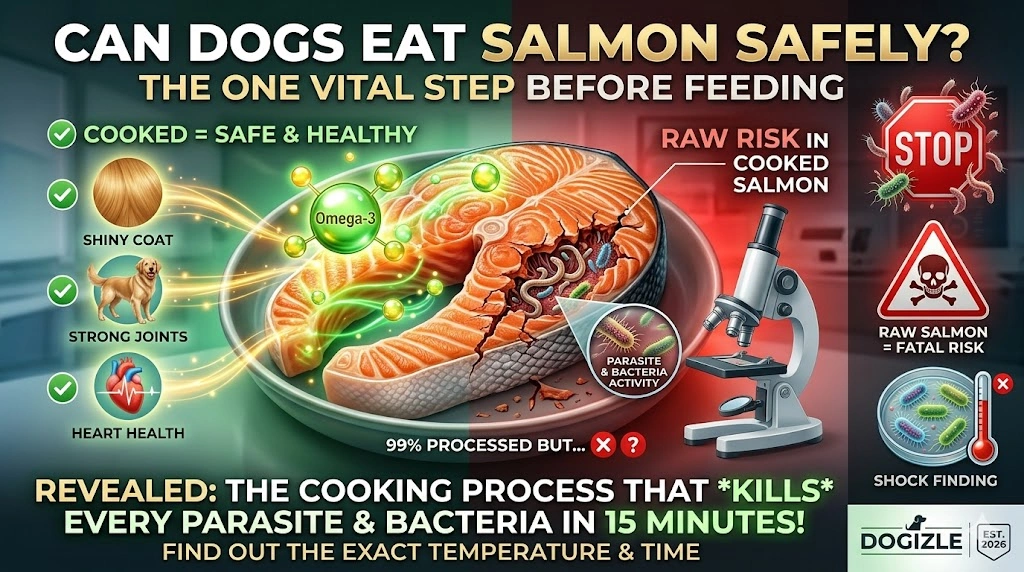
These are the mistakes that turn a good idea into a bad one:
- feeding raw salmon
- leaving bones in the fish
- adding spices, salt, garlic, onion, or sauces
- serving too much fat
- using smoked or fried salmon instead of plain cooked salmon
Most of these errors happen because people prepare dog food the same way they prepare their own meals. That is where things go wrong. Dogs need a far simpler version.
Expert Tips
Veterinary nutrition specialists and authoritative feeding bodies point to a few consistent best practices: keep fish plain, keep portions modest, and keep the diet balanced. ESVCN exists to stimulate and disseminate knowledge in veterinary nutrition, while ECVCN works to advance animal health care in Europe through veterinary nutrition expertise.
Use these practical tips:
- introduce salmon slowly
- Mix small amounts with your dog’s usual food
- Watch for itching, loose stool, vomiting, or unusual gas
- Use salmon as a rotation protein, not the only protein
- Ask a veterinarian before feeding it to dogs with medical issues
If you are feeding in Europe, FEDIAF’s nutritional guidelines are the right place to anchor broader pet-food decisions, because they exist specifically for complete and complementary pet foods in the European market.
Pros and Cons of Feeding Salmon to Dogs
Pros
- rich in omega-3 fatty acids
- supports skin and coat health
- provides high-quality protein
- may support joints, brain function, and heart health
Cons
- dangerous if raw or undercooked
- high in fat for some dogs
- must be prepared very carefully
- can trigger digestive upset or allergies in some dogs
FAQs
Yes, but only in very small, fully cooked, plain portions. Puppies have special nutritional needs, so salmon should never replace a complete puppy diet.
Yes, if it is low-sodium and served carefully. Rinse it first if needed, and avoid products with added salt or flavoring.
No, not as a routine daily food. Salmon is best treated as an occasional topper or reward, not the main diet.
It may develop salmon poisoning disease, which needs urgent veterinary attention and can be fatal if left untreated.
Yes. Properly prepared salmon can fit into dog diets in Europe, especially when the overall feeding plan follows FEDIAF’s nutritional guidance.
Sometimes yes, sometimes no. It depends on the dog. Any dog with an allergy history should be assessed by a veterinarian before salmon is introduced.
Conclusion
Yes, dogs can eat salmon—but only when it’s fully cooked, plain, boneless, and served in moderation. When prepared correctly, salmon can be a powerful addition to your dog’s diet, offering omega-3 fatty acids, high-quality protein, and essential nutrients that support skin, coat, joints, and overall health.
However, the risks are real and should never be ignored.
Raw salmon is dangerous and can expose your dog to parasites that may lead to serious illness.
Seasonings, oils, and bones can turn a healthy food into a harmful one.
Overfeeding can lead to digestive issues and weight gain.
The difference between a superfood and a safety risk comes down to how you prepare and serve it.