Can Dogs Have Apples? Complete Vet-Backed Safety Guide
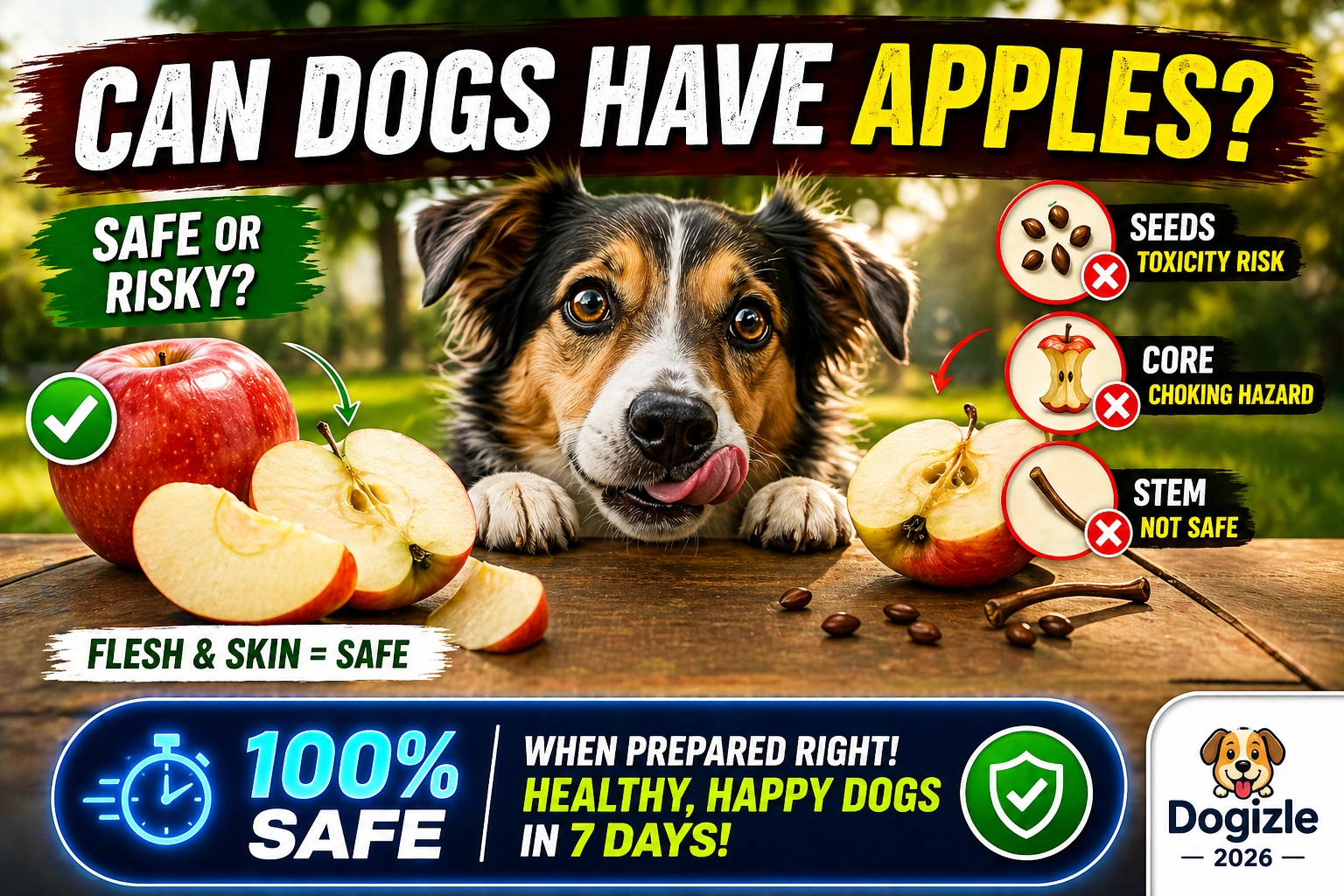
Can dogs have apples? Yes—dogs can safely eat apples if you remove the seeds and core. Can Dogs Have Apples? — Worried about safety & hidden risks? Learn safe parts, toxic dangers, and exact feeding rules to protect your dog + surprising mistakes most owners make. If you are standing in the kitchen with an Apple in your hand and your dog is staring at you like you just found the greatest treasure on earth, you are not alone.
This is one of the most common questions dog owners ask: Can dogs have apples safely, or is this sweet, crunchy fruit secretly a problem?
The answer is reassuring, but there is an important detail that many people overlook:
Yes, dogs can have apples — but only when they are prepared the right way.
Apples may look simple, harmless, and completely natural, yet a few small mistakes can quickly turn a healthy treat into a choking hazard, stomach irritant, or toxic exposure. Apple flesh can be a refreshing, low-calorie snack for many dogs, but apple seeds, the core, and overly large portions are not safe.
That is why a clear, practical feeding guide matters. The goal is not just to answer “yes” or “no.” The goal is to help you understand how apples fit into your dog’s daily routine, what benefits they can offer, where the risks begin, how much is too much, and how to serve them in a way that supports your dog’s health.
In this complete guide from Dogizle.com, you will learn:
Whether dogs can have apples safely
What makes apples a useful treat
Which parts of the apple are dangerous
How many apples can different dog sizes eat?
Whether puppies can eat apples
Whether apple skin is okay
What happens if a dog eats apple seeds or a core
Real-world safety scenarios
European feeding considerations
Frequently asked questions dog owners search for before feeding apples
Let’s begin with the basics.
Are Apples Safe for Dogs?
Yes, apples are generally safe for dogs when served correctly.
In fact, many veterinarians and pet nutrition resources consider apples a sensible treat option because they are naturally sweet, low in fat, and easy to portion. For dog owners who want a fresh alternative to highly processed snacks, apples can be a convenient choice.
But safe feeding depends on one essential rule:
Only the apple flesh is safe in normal amounts. The seeds, core, and stem should always be removed.
That means you should not hand your dog a whole apple and assume everything is fine. Instead, serve small, bite-sized pieces of washed apple flesh, with the core and seeds discarded first.
When prepared properly, apples can be a simple treat that fits into an otherwise balanced canine diet.
Nutritional Benefits of Apples for Dogs
Apples are not just crunchy and tasty. They also contain several nutrients that can support a dog’s wellbeing when offered in moderation.
Fiber
Apples contain dietary fiber, which may help support healthy digestion. Fiber can contribute to firmer stools, smoother bowel movement patterns, and a more balanced digestive rhythm in some dogs.
Vitamin A
Vitamin A supports eyesight, skin health, and normal body function. While apples are not a major source of this nutrient compared to some other foods, they still contribute a small amount.
Vitamin C
Vitamin C plays a role in immune support and overall cellular function. Dogs naturally produce vitamin C in their own bodies, but a fruit like an apple can still contribute helpful plant-based nutrients.
Low fat
Apples are naturally low in fat, which makes them appealing as a treat for dogs that need lighter snack options.
Hydration support
Because apples contain a lot of water, they can add a small hydration boost, especially during warmer months or after light activity.
This is one reason apples are often viewed as one of the better fruit choices for dogs when compared with fattier, heavily processed, or sugar-heavy treats.
Apple Parts Safety Guide: What Is Safe and What Is Not?
Not every part of an apple belongs in your dog’s bowl. This section is the most important part of the entire article, because a healthy fruit can become unsafe when the wrong pieces are included.
| Apple Part | Safe for Dogs? | Risk Level | Notes |
| Flesh | Yes | Low | Safe when served plain and in moderation |
| Skin | Yes, with caution | Medium | Wash thoroughly; it may be harder to digest for some dogs |
| Seeds | No | High | Contain compounds that can release cyanide when broken down |
| Core | No | High | Choking hazard and difficult to digest |
| Stem | No | Medium | Not toxic in the same way as seeds, but not appropriate |
The safest approach is simple: wash the apple well, remove the core and seeds, and cut the flesh into manageable slices.
Never feed the apple the way you would eat it yourself. Dogs need a cleaner, simpler version.
Health Benefits of Apples for Dogs
Apples are often described as a “smart treat” because they can offer enjoyment without many of the downsides associated with highly processed snacks. Here is why they are popular.
1. They may support digestion
The fiber in apples can help encourage healthy digestive movement. For some Dogs, moderate fiber intake may support stool quality and contribute to a more settled gut.
2. They can help with weight control
Apples are naturally low in calories compared with many commercial treats. That makes them useful for dogs that need lighter snacks, such as:
Older dogs
Less active dogs
Indoor dogs
Dogs working on weight management plans
A juicy apple slice can satisfy the urge to chew and taste something sweet without adding a heavy calorie load.
3. They provide a naturally appealing snack
Many dogs love the crisp texture and mild sweetness of apples. That makes them a practical reward for training, enrichment, or occasional variety.
4. They may help freshen breath a little
Chewing a crunchy fruit can help remove a small amount of debris from the mouth, though this is not a replacement for dental care. Apples are not toothbrushes, and they should never be treated as a substitute for brushing or professional dental checkups.
5. They are easy to prepare
Unlike many dog-safe foods that require cooking, mixing, or special handling, apples are easy to rinse, slice, and serve. That convenience is part of why many dog owners choose them.
Risks of Feeding Apples to Dogs
Even healthy foods can cause problems when given carelessly. Apples are no exception.
1. Apple seed toxicity
Apple seeds contain amygdalin, a compound that can release cyanide when metabolized. This is why seeds should never be intentionally fed to dogs.
A tiny accidental exposure is not usually an emergency by itself, but repeated ingestion should be avoided completely. The safest practice is to remove all seeds before serving the fruit.
2. Choking hazard
Apple chunks that are too large can become a choking risk, especially for small dogs and fast eaters. The core is particularly problematic because it is firm, awkward to chew, and hard to digest.
Small breeds such as Chihuahuas, Yorkshire Terriers, and Pomeranians may be at higher risk if they are given large pieces or a whole apple.
3. Sugar content
Apples contain natural sugar. While that is not inherently harmful in small amounts, too much fruit can lead to unnecessary calorie intake, digestive upset, or blood sugar fluctuations.
4. Sensitive stomach reactions
Some dogs have delicate stomachs. Even a safe food can cause problems if introduced too quickly or given in excess.
Possible reactions include:
Loose stool
Gas
Mild bloating
Stomach discomfort
Reduced appetite for the next meal
That is why new foods should always be introduced gradually.
How Much Apple Can a Dog Eat? Feeding Chart by Size
Portion size matters. A food that is harmless in small amounts can become a problem when overfed.
The general rule is simple: treats, including fruit, should not exceed about 10% of your dog’s daily calories.
Here is a practical feeding guide.
| Dog Size | Approx. Weight | Safe Apple Portion | Frequency |
| Small | 1–10 kg | 1–2 small slices | 2–3 times per week |
| Medium | 10–25 kg | 2–4 slices | 3–4 times per week |
| Large | 25+ kg | 4–6 slices | 3–5 times per week |
This table is a general guide, not a rigid rule. A very active dog may tolerate slightly different portions than a sedentary dog, and dogs with medical conditions may need a more cautious approach.
The safest mindset is moderation, not indulgence.
Can Puppies Have Apples?
Yes, puppies can have apples, but they need extra care.
Puppies are not miniature adults. Their digestive systems are still developing, their airways are smaller, and they can be more sensitive to changes in food.
Safe puppy guidelines
Start only after your puppy is old enough to handle new foods comfortably, and only after checking with your vet if you have concerns about age or breed-specific sensitivity. Offer tiny pieces, always remove the seeds and core, and introduce the fruit slowly.
Why puppies need extra caution
Puppies are more likely to:
Swallow things too quickly
Choke on large pieces
Develop loose stools from sudden diet changes
React poorly to too much sugar or fiber at once
For puppies, less is more. A tiny slice is enough to test tolerance.
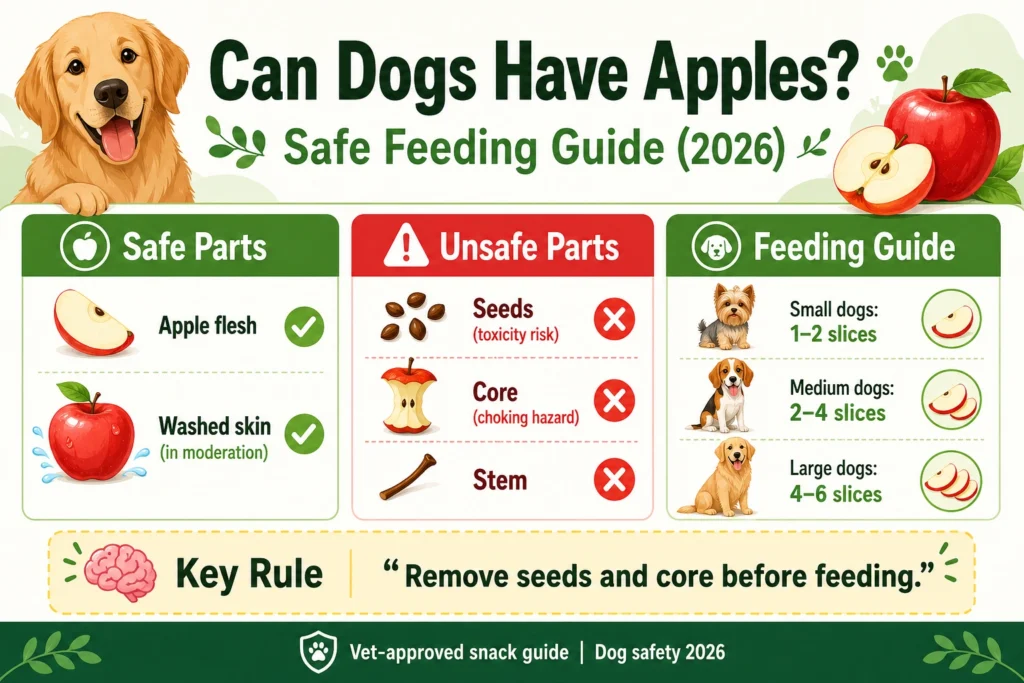
This quick vet-approved infographic shows exactly which parts are safe, which are dangerous, and how much apple your dog can eat based on size. Simple, clear, and life-saving feeding guide for dog owners in 2026.
Can Dogs Eat Apple Skin?
Yes, dogs can eat apple skin, but there are a few conditions.
Apple skin itself is not the main concern. The real issues are pesticide residue, dirt, and occasional digestive sensitivity.
Benefits of skin
Apple skin contains extra fiber and some antioxidant compounds. That means it can add a small nutritional benefit.
Risks of skin
The skin may carry pesticides if the fruit was not washed thoroughly. It can also be a little harder to digest for dogs with sensitive stomachs.
Best practice
Wash the apple carefully before slicing it. Whenever possible, choose high-quality fruit and consider organic apples if you prefer a lower-exposure option.
If your dog has a delicate gut, peeled slices may be easier to tolerate.
Can Dogs Eat Apple Seeds or Core?
No, dogs should not eat apple seeds or the core.
This is one of the most important points in the entire article.
Apple seeds
Seeds contain compounds associated with cyanide release when broken down in the body. That is why they are not appropriate for dogs.
Apple core
The core is firm, tough, and difficult to digest. It also creates a choking and blockage risk, especially for smaller dogs or dogs that gulp food quickly.
Apple stem
The stem is not something you should intentionally feed either. It has no nutritional value for dogs and should be removed along with the seeds and core.
Think of apple preparation as simple, clean, and precise: flesh only, nothing else.
Real-Life Safety Scenarios
Sometimes the easiest way to understand a food’s risk is to look at real situations.
Scenario 1: Your dog eats a whole apple
A whole apple may cause choking or digestive trouble, especially if the core is involved.
What to do: watch your dog closely, and contact a veterinarian if your dog coughs, vomits, appears distressed, or has trouble breathing.
Scenario 2: Your dog eats a few seeds
A few seeds are usually not a major emergency on their own, but they should still be taken seriously enough to prevent repeat exposure.
What to do: monitor your dog and contact a vet if unusual symptoms appear.
Scenario 3: A diabetic dog eats an apple
Apples contain sugar, so diabetic dogs may need tighter control over fruit intake.
What to do: speak to your vet before offering apples to a diabetic dog, and follow any feeding plan already provided.
Scenario 4: A small dog eats an apple core
This can become a choking issue quickly.
What to do: seek veterinary help if your dog is coughing, gagging, panicked, unable to swallow, or showing any signs of respiratory distress.
A calm response matters, but so does quick action when symptoms are present.
European Lifestyle Considerations
Because this article is written for readers in Europe, it helps to think about the local lifestyle context too.
Cold-weather regions
In places with long winters or lower seasonal activity, Dogs may move less and burn fewer calories. That means treats should be reduced slightly if the dog is less active.
Urban environments
Dogs in cities often get fewer extended exercise sessions. Apple slices can be a lighter snack choice than richer treats, but portion control is still important.
Rural and mixed environments
Dogs with more outdoor access may have different activity patterns, but natural conditions do not make unlimited fruit safe. Even active dogs can be overfed.
The key principle remains the same across Europe: treat apples as a snack, not a meal replacement.
Common Mistakes Dog Owners Make
A lot of apple-related mistakes happen because owners assume “healthy” automatically means “safe in any quantity.”
Here are the most common errors:
Feeding a whole apple without preparation
Leaving seeds inside the slices
Forgetting to remove the core
Offering apples every single day in large amounts
Using fruit as a replacement for balanced meals
Giving an apple treat too quickly to a dog with a sensitive stomach
Assuming all fruits are safe in the same way
Healthy food still requires healthy judgment.
Expert Veterinary Tips
Good feeding habits make a big difference.
Wash apples thoroughly before serving them
Cut them into small, manageable pieces
Start with a tiny amount the first time
Observe stool quality after introduction
Use apple slices as occasional rewards, not daily staples
Freeze slices for a refreshing summer treat
Do not mix apples with sugary sauces or sweeteners
Avoid applesauce unless it is plain, unsweetened, and xylitol-free
A thoughtful approach is always safer than an impulsive one.
Pros and Cons of Apples for Dogs
Every food has advantages and drawbacks. Apples are no different.
Pros
Natural and familiar treat
Low in fat
Easy to prepare
Widely available
Can support hydration and digestion
Appeals to many dogs
Cons
Seeds are unsafe
Core is a choking hazard
Sugar content can add up
Not every dog digests fruit well
Not suitable in large amounts
When the pros are matched with careful preparation, apples can be a nice occasional snack.
Best Fruit Alternatives for Dogs
If your dog enjoys Apples, other fruit options can also work well in moderation.
Blueberries
Watermelon
Strawberries
Bananas
Each of these has its own nutritional profile, so treat size and frequency still matter. A varied snack routine can keep things interesting without relying on one food too often.
FAQs
Yes, but only in small portions and not as a major part of the diet. Apples should remain a treat, not a daily staple in large amounts.
Yes, green apples are safe for dogs when prepared correctly. They may taste a little more tart or acidic than red varieties, but the same basic rules apply.
Yes, but only if it is plain, unsweetened, and free from xylitol or harmful additives. Many commercial applesauce products contain extra sugar or ingredients that do not belong in a dog’s diet.
A small number of seeds is usually not an emergency, but seeds should still be avoided because of the cyanide-related risk. Repeated ingestion is the bigger concern.
Yes, apples can be a better treat choice than many calorie-dense snacks because they are relatively low in fat and can feel satisfying in small portions.
Only with veterinary guidance. Apples contain natural sugar, so diabetic dogs may need tighter dietary control.
Yes, but dried apples are more concentrated in sugar and calories than fresh slices. That means smaller portions are needed, and plain, unsweetened varieties are best.
Conclusion:
Yes, dogs can have apples safely when the fruit is prepared correctly and served in moderation.
Apples can be a crisp, refreshing, low-fat treat that fits well into many dogs’ snack routines. They offer some fiber, hydration, and natural sweetness that dogs enjoy. But the fruit only stays safe when the dangerous parts are removed, and the portion size remains sensible.
The golden rules are straightforward:
Remove the seeds
Remove the core
Remove the stem
Wash the fruit well
Cut it into small slices
Feed in moderation
Introduce slowly if your dog has never eaten apples before
Done properly, apples can be one of the simplest and most practical natural treats for dogs.